The Dark Case Of Major Herbert Armstrong
The Dark Case Of Major Herbert Armstrong
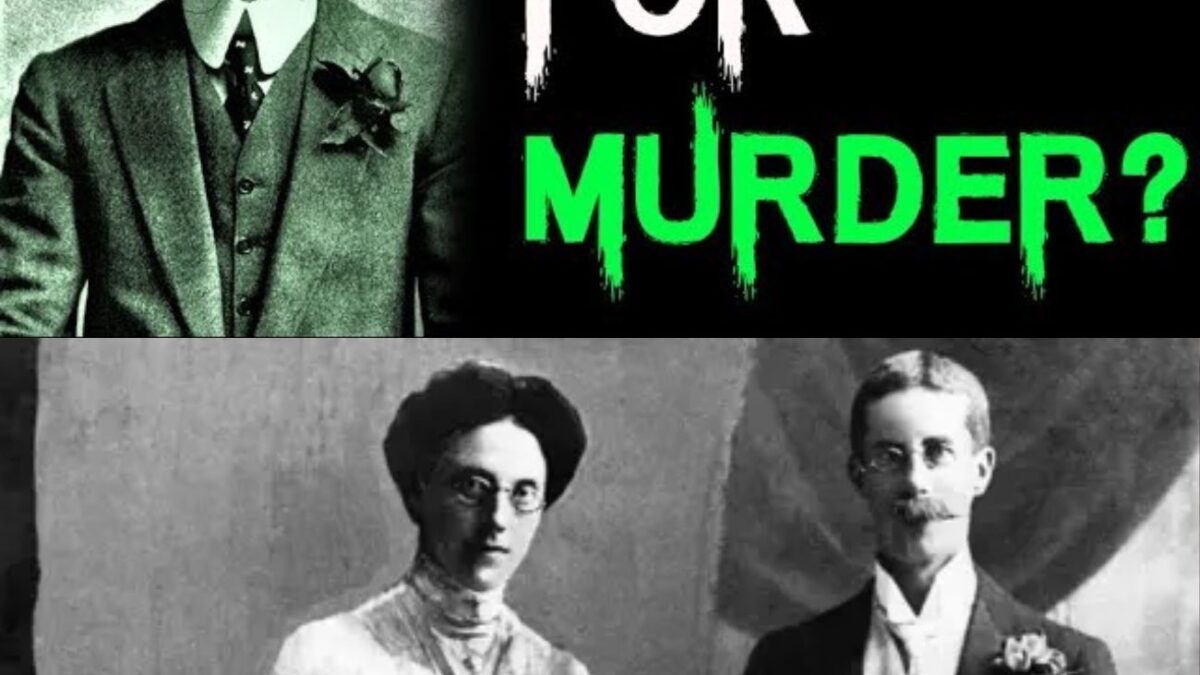
Herbert Rouse Armstrong was born in 1870 at Newton Abbot in Devon. He did not come from a wealthy background, but obtained a good education and went to Cambridge University. He graduated in law and became a solicitor in 1895. His first position was in his hometown of Newton Abbot. Later, he moved to Liverpool, then in 1906, Herbert took up a position in a town called Hay. Here, he put some of his savings into a partnership, and when the oldest of the partners died, he succeeded to the practice.
Being a partner certainly improved Herbert’s finances, so much so that he married a friend from his Newton Abbot days. They moved into a house in the valley of Cusop Dingle; the stream of this valley formed part of the border between England and Wales. They had three children before moving into a larger house in 1910, which was also located in Cusop Dingle. Herbert loved his garden and was obsessed with eradicating garden weeds. After he read about how to eradicate dandelions, it became a particular practice of his to put small portions of arsenic into individual pouches, which he then squirted into the ground near the dandelions, which eradicated them.
Herbert worked from rather plain business premises in Broad Street, Hay, which was part of a shop; the remaining portion was occupied by a firm of estate agents. Across the street were the offices of Mr. Griffiths, who was a solicitor. Mr. Griffiths was Welsh and a local man, whereas Herbert was considered a stranger to the small, conservative town. However, his business was doing reasonably well.
With the outbreak of the First World War in August 1914, Herbert, who had previously been a member of the Territorial Army, was called up to the rank of captain, and he was later promoted to major. After a short posting to France, he returned to the UK, which enabled him to again look after his practice in Hay. As his business grew, the business of his rival, Mr. Griffiths, was becoming less successful. So Herbert saw an opportunity to expand his practice and offered to amalgamate the two practices. Mr. Griffiths, however, had other ideas and, in early 1919, took a partner named Mr. Oswald Norman Martin. This person is important to the story, so remember Oswald Martin. At the end of 1920, Mr. Griffiths died, leaving Oswald Martin the sole partner in the practice.
Herbert was just over five feet tall and only weighed seven stone, which is about 98 pounds or 45 kilograms. He was dominated by his wife. Although she was a devoted wife and mother, she treated her husband and children with a strictness which denied them many harmless activities. For example, Herbert was only allowed to smoke in one room and never outdoors, and he was not allowed to drink alcohol.
During the period between May 1920 and February 1921, a series of highly significant events occurred. Herbert was in London and met with a lady he had previously met in 1915 while he was in the army. He had previously drawn up a new will for his wife, or at least a will in her name, in which she left everything to him with no provision for their children. During August 1920, Mrs. Armstrong’s physical and mental health deteriorated to such an extent that she was admitted to the Barnwood Asylum in Gloucester. During January 1921, at the request of both Mrs. Armstrong and her husband Herbert, she was discharged from the asylum and returned home on the 22nd of January.
It was during January 1921 that Herbert made another purchase of a quarter pound of arsenic. On the 11th of January 1921, he made what was to be his last purchase of arsenic. Now, this is very important: he made the purchase at a chemist shop which was owned by his rival solicitor Mr. Martin’s prospective father-in-law, named Mr. Davis. One month after Mrs. Armstrong returned home, she died. It was February the 22nd, 1921. Her doctor, Dr. Hinks, certified her cause of death to have been heart disease. Three days later, Mrs. Armstrong was buried in the church at Cusop.
After Mrs. Armstrong’s death, life at Mayfield went on very much as it was before, but Herbert was now master of his own home. He still had a housekeeper and a maid, his youngest child was at home, and he had the companionship of school friends during the school holidays. Herbert’s practice had continued to develop; he was now clerk of the Justices of Hay, Bredwardine, and Painscastle, and in addition to these posts, he was hopeful of being appointed to a similar position on the bench at Talgarth.
The only business worry was Mr. Martin, who was pressing Herbert to complete long-overdue formalities arising out of the sale of a property, in which there was a matter of 500 pounds paid to Herbert as a deposit. Around the time that he was pressing for the completion of the property, Mr. Martin was anonymously sent a box of chocolates to his home. Mr. Martin ate some of the chocolates. They were later produced at a dinner party held by Mr. and Mrs. Martin. One of the guests was taken ill, and after examination, it was discovered that arsenic had been inserted through holes pierced in the base of the sweets. Later, these holes were found to correspond with the nozzle of the weed eradicator used by Herbert.
Suddenly, professional relations between Martin and Herbert improved as the closing of the building sales seemed to be drawing to a close. On the 26th of October 1921, Herbert invited Martin to visit his house for afternoon tea. During tea, Herbert passed Martin a scone, apologizing for using his fingers, but contracts and the 500 pounds were not discussed, although Martin could have raised the subject later.
That evening, after returning home, Martin became ill. Dr. Thomas Hinks, who had treated Mrs. Armstrong, called at the Martin’s house early the next morning. He found Martin in bed with a severe bilious attack and a very rapid pulse. Dr. Hinks made daily calls to examine Martin, who was slowly improving, but he still had a high pulse rate. On the 31st of October 1921, Dr. Hinks sent a sample of Martin’s urine to the Clinical Research Association for analysis.
A week later, when Martin had recovered sufficiently to return to work, the results arrived with Dr. Hinks. The report stated that the urine sample contained one-thirty-third of a grain of arsenic. Dr. Hinks knew that none of the medicines prescribed by him for Martin contained arsenic. He had questioned Martin about the food he had consumed immediately before his illness started. He knew that Martin had eaten lunch on the 26th of October 1921, which had been shared by Mrs. Martin and their maid; both these ladies were fine and had suffered no ill effects.
Dr. Hinks was struck by the similarities between Martin’s illness and the illness suffered by Mrs. Armstrong in the period leading up to her admission to Barnwood Asylum. Dr. Hinks’s suspicions were raised when he contacted the asylum, and doctors there confirmed that they may have also been misled as to Mrs. Armstrong’s physical ailments. Dr. Hinks then forwarded his concerns to the Home Office in London. Dr. Hinks kept his concerns to himself, although he did warn Martin.
The authorities eventually decided to take action on Dr. Hinks’s suspicions, but the investigations had to be conducted carefully: if Herbert was guilty, they could not afford to alarm him; if he was innocent, then they could not afford to cause unnecessary scandal. The investigating police officers, led by Chief Detective Inspector Crutchett, went to Hay after dark and made discreet calls on Mr. and Mrs. Martin, Dr. Hinks, and Mr. Davis—Mr. Davis being the chemist and Martin’s father-in-law.
During the period from Martin’s return to work until Christmas 1921, Herbert made numerous attempts to invite both Martin and his wife to visit him for tea. Martin, who was aware of the police investigations, repeatedly declined the invitations. On the 2nd of January 1922, Mrs. Armstrong was exhumed, and the pathologist Bernard Spilsbury removed some samples before she was reburied. The samples were examined and found to contain three and a half grains of arsenic.
On the 19th of January 1922, Herbert Armstrong was charged with the murder of his wife. His trial was at Hereford, and the judge was Mr. Justice Darling, who had a reputation of being a hanging judge. During the 10-day trial, which started in April 1922, Herbert was kept in Gloucester prison. Every day of the trial, he was taken to court. On the first day, the 3rd of April 1922, a legal debate took place with the trial jury removed. The legal argument concerned the omission of evidence regarding the poisoning of Martin. Although Armstrong had been charged with poisoning Martin, the case went no further. Mr. Justice Darling ruled that evidence regarding the Martin case could be omitted, though he later stated in his summing up that the defendant had arsenic in his possession and that he would use it to poison a human being.
During the trial, the defense claimed that Mrs. Armstrong had been suicidal and that she had finally committed suicide by swallowing the arsenic which she found that her husband had purchased to kill the garden weeds. This was countered by the prosecution showing that Mrs. Armstrong was not capable of leaving her bed in the week before her death and that she had said to her nurse on the morning of the day she died, “I’m not going to die, am I? Because I have everything to live for, my children and my husband.” A lady who first met Herbert in Christchurch and later in London, three months after Mrs. Armstrong’s death, testified to the prosecution that Herbert had spoken to her about marriage. Bernard Spilsbury testified that the amount of arsenic in Mrs. Armstrong’s body could only have occurred through poisoning. Mrs. Armstrong’s own doctor, Dr. Hinks, testified that she could not have administered any medicine herself on the day of her death.
It was to be expected that a well-educated and professional man like Herbert Armstrong, who was also Worshipful Master of the Hay Lodge of Freemasons and a churchwarden who read the lessons on Sunday, would testify in his own defense. After completing his testimony and cross-examination, Herbert was about to leave the witness box when the judge asked him to wait as he had some questions to put to him. The judge’s questions exposed being inaccuracies in Herbert’s earlier replies. It was presented in the earlier prosecution evidence that he had made up some 20 small bags of arsenic, as he stated, to put into individual dandelion holes to kill these weeds. Now the judge asked why he had done that when it would have been easier to pour the poison straight from the original packet into holes in the ground. Armstrong replied, “I really did not know; at the time it seemed the most convenient way of doing it.” The judge continued by asking why Armstrong, who was a solicitor by profession, did not tell the police earlier about the two packets found in his desk at home. The questions continued to be asked by the judge, and Herbert was showing more signs of floundering as the questioning continued.
After the prosecution and defense arguments had been completed, the judge summed up the case for the 12-man jury, which was composed of eight farmers, a fruit grower, and three professional gentlemen. The judge stated that the possession of the two bags of arsenic in Herbert’s desk showed just possession of arsenic and nothing else; the main point was the state of Mrs. Armstrong in her last few days before her death at her home. Mr. Justice Darling also reminded the jury that if it was wrong for him to have allowed the evidence of Martin’s poisoning, then this was a matter for the Court of Criminal Appeal should Armstrong be found guilty.
Armstrong was found guilty of murdering his wife and sentenced to death by hanging. On the 31st of May 1922, at the age of 53, Major Herbert Armstrong was hanged in his best tweed suit, the only English solicitor to go to the gallows. Seventy years later, however, doubts over his guilt started to surface. There were suggestions that Mrs. Armstrong may have dosed herself accidentally with her husband’s arsenic. Furthermore, the chemist Herbert bought it from was Oswald Martin’s father-in-law, and he had a double grudge against Major Armstrong: not only had Major Armstrong helped a rival chemist set up a practice in Hay, but he also posed a threat to his son-in-law, who wanted a monopoly on Hay’s legal affairs. We will probably never know if Major Herbert Armstrong was truly guilty or if he suffered a gross miscarriage of justice, leaving history to forever ponder the chilling secrets locked within the quiet lanes of Hay.

