The Dark Case Of Early American Killer | John Billington
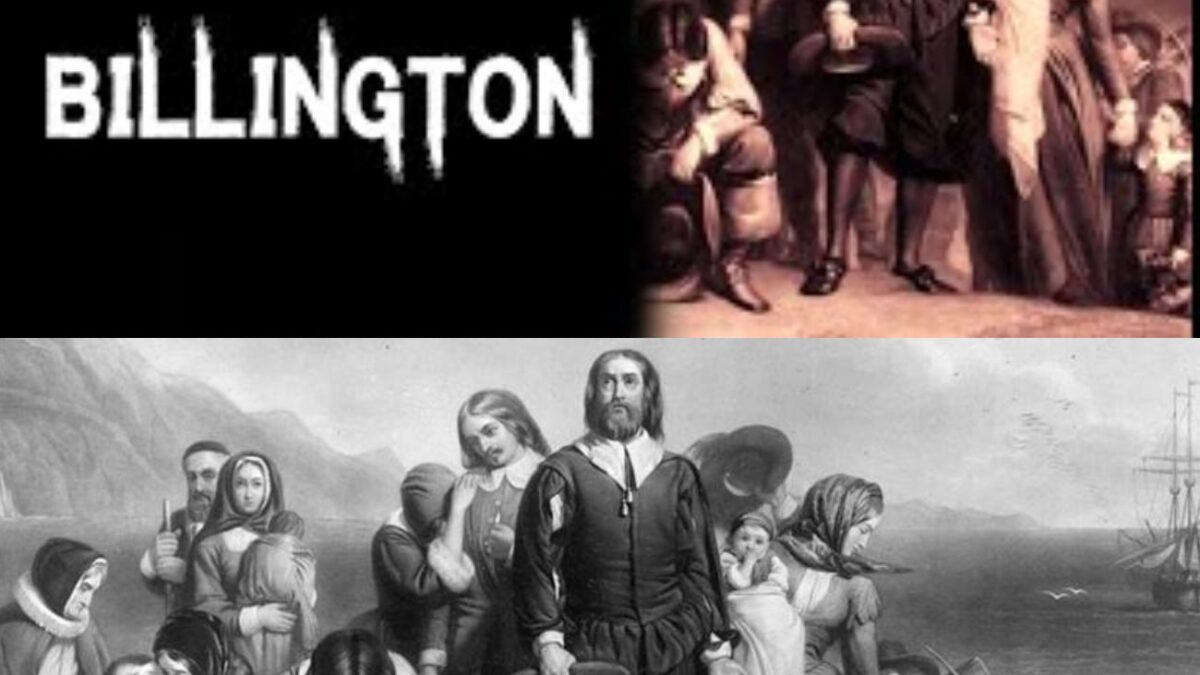
The Dark Case Of Early American Killer | John Billington
John Billington was born in the English county of Lincolnshire around 1580. At the time of his birth, Queen Elizabeth the First was on the English throne. This was a time when most of the population lived in small villages and made their living from farming, however, towns and cities were starting to grow larger and more important. Trade and industry were growing rapidly, and England was becoming a more commercial country. The mining of coal, tin, and lead flourished, so did the iron industry, and as they flourished, England became richer and richer. This period is often referred to as the Golden Age.
As England grew more prosperous, life for the well-off became more comfortable. Upper-class and middle-class people benefited from the growing wealth of the country and they started looking overseas for further ways to increase their wealth. However, for the poor in Elizabethan England, life did not improve. For them, life was hard and tough. Like many poor people at the time who lived in the countryside, John Billington came to work in London at around this time. He married his wife Eleanor, and they had two sons named John Jr. and Francis.
The Elizabethan period came to an end on the 24th of March 1603 upon the death of the Queen, and James the First became King of England, starting the Jacobean era. The Jacobean era was far from golden, and many people lived in terrible conditions. The year ended with a severe economic depression. John Billington found it hard to provide for his family and lived in debt and on the brink of poverty. In order to try and improve his circumstances, he made a deal with a prominent London businessman which enabled him and his family to travel to America on board the ship the Mayflower. It was agreed that he would sail to Virginia, and on the ship’s arrival in Virginia, he and his family would work on behalf of the colony until 1627. A seven-year contract tying him to the colony was a big commitment, but John calculated that life in a new world must be better than his impoverished existence in London.
On September the 16th, 1620, the Mayflower left Plymouth, England, bound for America with a hundred and two passengers on board, including the Billington family. The ship was heading for Virginia. John Billington, who was loyal to the Church of England, soon realized that he was vastly different from many of his fellow passengers. Thirty-five of them were members of the radical English separatist church who were travelling to America to escape the jurisdiction of the Church of England, which they found corrupt. Ten years earlier, English religious persecution had led a group of separatists to go and live in self-exile in Holland in search of religious freedom. However, many were dissatisfied with their economic opportunities in Holland, and under the direction of their leader William Bradford, decided to emigrate to Virginia, where an English colony had been founded in Jamestown in 1607. The separatists had financial backing from a group of investors called the London Adventurers, who were promised a sizeable share of the colony’s profits.
As the Mayflower had been delayed leaving England by one month, the journey to America was very difficult, and the ship encountered rough seas and storms. The conditions resulted in the Mayflower being blown off-course by more than 500 miles. On November the 21st, 1620, after a 66-day voyage, the ship landed on the tip of Cape Cod at what is now Provincetown, Massachusetts. As the supplies were running low and the storms and high winds continued, it was decided to draft a document to serve as a basis for self-government, known as the Mayflower Compact, and settle in Cape Cod instead of trying to continue their journey to Jamestown.
During the journey across the Atlantic, John Billington had made multiple enemies and had already established a reputation as a troublemaker. His son Francis also left an indelible impression on his fellow passengers following his father’s gun near a powder keg in the ship’s crowded cabin on December the 5th, 1620, a rash act that resulted in a fire on board and could have sunk the ship before most of the passengers had even set foot on American soil.
Upon establishing camp, the settlers went on to face the harsh realities of a New England winter. Nearly half of them died during this time, which left the population at about 50. The Billington family all survived the winter, and when spring came, the two boys were soon off exploring their new home. Francis, hoping to discover a new ocean, found a small lake behind the town that was given the name Billington Sea, which I believe is still called today. John Jr. became lost in the woods and turned up on Cape Cod after a search party was sent out to find him.
In March 1621, John Billington was brought before the company and charged with contempt of the captain’s lawful commands and abusive speeches when called to all military duty, but he escaped punishment as this was his first offense and he expressed some humility during his hearing. In April 1621, Governor Carver collapsed while working in the fields on a hot day. He died a few days later. The settlers of Plymouth then chose William Bradford as the new governor. This was not good for John Billington, as the new governor didn’t like his attitude, unlawful behavior, or his religion.
In 1622, there was an unexplained arson that destroyed four houses. Many considered John to be responsible, but this was only due to his reputation, as there was no evidence to suggest that he was the culprit. John was in trouble again in 1624 when John Oldham and John Lyford were banished from Plymouth for writing letters critical of the colony. When questioned before the governing council, Lyford implicated others, including John Billington. No proof was actually found against him, and when questioned, John said he had no knowledge of the plot and was never officially charged. Shortly after, John’s wife Eleanor was found guilty of slander and sentenced to a whipping.
After the issue of the exile of John Oldham and John Lyford died down, John Billington’s anti-government agitation continued. In 1626, the people of the colony received full ownership of the plantation, so they divided the land among themselves. John Billington did not receive a particularly good deal, receiving a modest house, 63 acres of land, and future land rights. His lack of social status, loyalty to the Church of England, and repeated run-ins with authorities seemed to have made him a permanent outsider.
In 1630, John Billington was caught in an argument with his neighbor John Newcomen, and records are unclear as to just why or how this argument started. A few days later, Newcomen was seen leaving the town, and shortly afterwards, John Billington was observed heading in the same direction. Later that day, Newcomen was found dead; he had been shot. John Billington was accused of the crime. He apparently had a motive, and according to Governor William Bradford, the weapon used could be traced to him. John was tried by a jury who found him guilty of willful murder, and the governor William Bradford concluded that Billington should be sentenced to death by hanging.
Governor Bradford was probably not reluctant to hang John Billington, given his past activity as a leading dissident in Plymouth. There was a substantial legal question as to whether the local authorities governing the Plymouth Colony possessed criminal jurisdiction sufficient to impose capital punishment. William Bradford was able to persuade John Winthrop, the newly appointed governor of the Massachusetts Bay Colony, to concur in the death sentence. Some say that the conviction was based solely on circumstantial evidence, and John Billington may have quarreled with Newcomen, but researchers for the Society of Mayflower Descendants have questioned the accuracy of Bradford’s commentary on the trial, observing that the governor obviously disliked and criticized the entire family from the beginning.
John Billington was hanged not far from Plymouth Rock and buried in an unknown location. He was the first recorded murderer in what would become the United States of America. Though his life ended in the shadow of the gallows and disgrace, the legacy of his tumultuous existence left a dark and permanent stain on the early annals of Plymouth Colony, ensuring that the Billington name would forever be remembered as a symbol of rebellion and tragedy in the dawn of American history.

