The Dark and Twisted Story of 2 Teenage Killers | The Parker Hulme Case
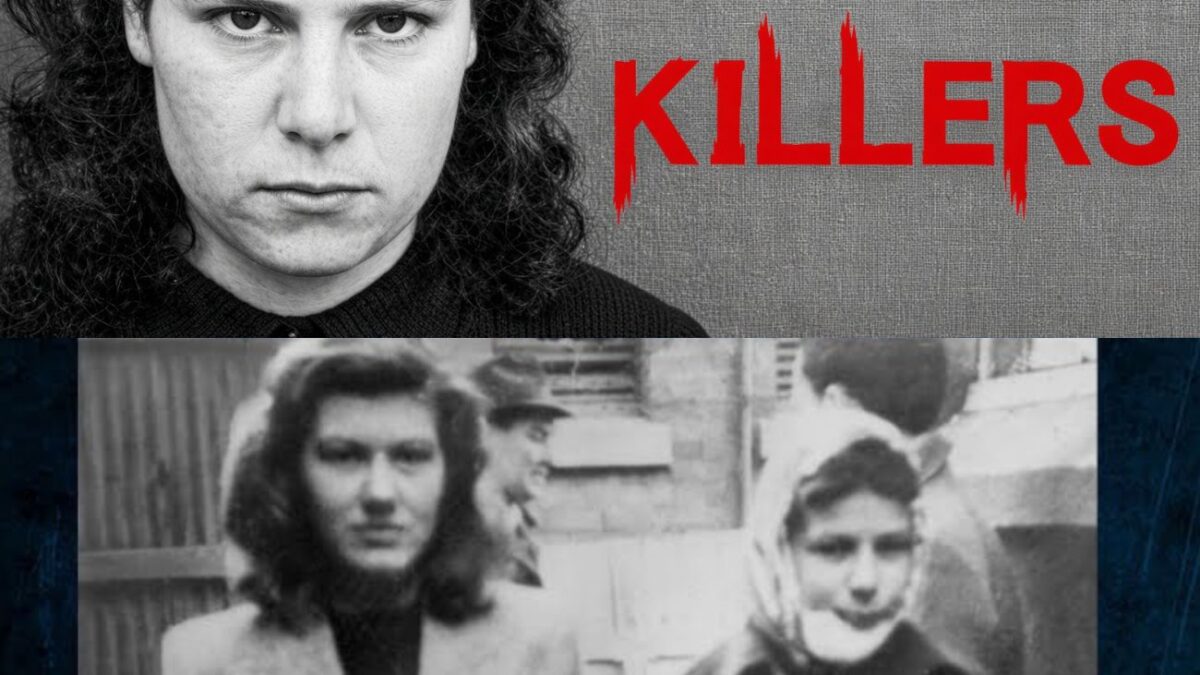
The Dark and Twisted Story of 2 Teenage Killers | The Parker Hulme Case
Pauline Parker was born on May 26, 1938, and was the second daughter of a Christchurch couple. At the age of five, she was hospitalized with a crippling bone marrow infection. Though she survived the painful treatments, she suffered terrible leg pain throughout her youth. This prevented her from participating in physical activities, so she developed a deep interest in art, writing, and sculpting. Pauline and her elder sister Wendy spent some time attending the East Belt Methodist Church and often went on church-organized outings and holidays.
Junior Marian Hume was born on October 28, 1938, in the London suburb of Blackheath, England, and was the daughter of physicist Dr. Henry Rainsford. When she was a child, she suffered from tuberculosis and spent much time in the hospital. She was sent to live in South Africa and the Caribbean in the hope that the warmer climates would be beneficial to her health. When Juliet was 13, her father Henry was appointed rector at the University of Canterbury, and the family moved to Christchurch, New Zealand.
Pauline and Juliet met when they both attended Christchurch Girls’ High School, and they soon became inseparable. They both had wonderful imaginations and together created an intricate fantasy world. They would spend many hours thinking up stories where they became rich and famous actresses in America, renaming themselves Gina and Deborah. Both families were initially pleased with the friendship, but as the girls grew more and more inseparable, the parents of Pauline and Juliet soon grew concerned.
During their friendship, the girls invented their own personal religion with its own ideas on morality. They rejected Christianity and worshiped their own saints, inventing a parallel dimension called the Fourth World, which was essentially their version of heaven. The Fourth World was a place that they felt they were already able to enter during moments of spiritual enlightenment, and their grand plan was to eventually flee to Hollywood together.
When Juliet was once again in the hospital, the families were relieved for a time, as the girls had to spend some separation. However, when Juliet came out of the hospital, their friendship resumed with the exact same intensity. Pauline’s parents became very concerned about their daughter’s intense dependence on Juliet, so they took her to see a psychiatrist. Juliet’s parents also had concerns about the girls’ relationship and discussed the situation with medical friends, but they received advice that it would be unwise to have her psychoanalyzed at such an early age.
In 1954, it was discovered that Juliet’s mother was having an affair with their lodger, Walter Perry. Her father then resigned his position at the University College to return to England, where his outstanding scientific talent was required in the British atomic research team. Her parents thought it best that Juliet should be sent to live with relatives in South Africa, as due to her past illness, her lungs weren’t considered strong enough to withstand an upcoming English winter.
Pauline and Juliet were utterly distraught by the decision and decided that it would be best if Pauline accompanied Juliet to South Africa. Unsurprisingly, both sets of parents flatly refused this suggestion. The girls then formed a dark and desperate plan to murder Pauline’s mother and leave New Zealand for the United States, where they firmly believed they would publish their writing and work in film.
Pauline’s mother was called Honora Mary Parker, and when she told her daughter that she could not go to another country to live with her friend, Pauline did not take it lightly. She and Juliet planned Pauline’s mother’s murder with all the enthusiasm and excitement which two high school girls might display in arranging the details of a school dance.
At 3:00 p.m. on June 22, 1954, Pauline’s mother, Honora, accompanied Pauline and Juliet to Victoria Park on the outskirts of Christchurch. They first stopped for refreshments at a kiosk and then walked down a secluded track, with Juliet walking in front. Juliet’s hand was deep in her pocket as she clutched part of the plot, which was a collection of brightly colored pebbles picked up on the roadside during the preceding few days. When she had rounded a bend in the track and went out of sight of the Parkers, she scattered the pebbles.
Pauline Parker walked by her mother’s side and also had her hand in her coat pocket, clutching half a brick which Juliet had brought from her home earlier that day. Pauline had slipped the piece of brick into the foot of an old stocking. Juliet was about sixty yards in front and out of sight down the track when Honora caught sight of a pink pebble and Pauline remarked how pretty it was. As Honora bent down to pick it up, her daughter pulled out the brick-laden stocking from her pocket and smashed it mercilessly into her mother’s head.
The brick crashed down on her mother’s skull, and she collapsed instantly. Pauline struck her mother again and again as blood was spurting from the many wounds in Honora Parker’s face and head. Sobbing hysterically, the girls looked at each other and at their victim. The blood was only trickling now; they had beaten Honora Parker to death.
A short while later, the two girls ran back to the kiosk covered in blood and screaming for help. Pauline explained that her mother had tripped on a plank of wood and hit her head when she landed, claiming she kept falling and her head kept banging and bumping as she fell. The kiosk manager and her husband told the girls to go to a sink and wash the blood off themselves. They then ran down the track and, under a tall pine tree lying on a bed of pine needles, discovered the battered body of Honora Mary Parker. They hurried back to the kiosk and telephoned the police and the ambulance. The police took the girls away, and the ambulance took the body away.
A post-mortem revealed that the victim’s skull had been severely smashed, with about 45 injuries mainly concentrated on the head and face. It had been a ferocious attack. A blood-stained brick lay beside her head, and on a nearby grassy bank lay a stocking with a knot tied at the ankle. Police photographed the scene and searched thoroughly for further evidence. At 8:00 p.m., two detectives went to interview the two girls. Both girls initially stuck to the story that Mrs. Parker had fallen and hit her head, but it quickly became apparent that Mrs. Parker had not died from a fall, and within a day, the girls had been arrested for murder.
Three weeks later, a magistrate committed Pauline Yvonne Parker and Juliet Marion Hume for trial on a charge of having murdered Honora Mary Parker. The trial was one of the most captivating events in the history of Christchurch. The main focus of the trial was the girls’ state of mind and Pauline’s revealing diary entries. The entries were said by defense lawyers to point to insanity, but senior crown counsel argued the entries showed the killing to be a callously planned and premeditated murder committed by two highly intelligent girls.
Two nights before the killing, Pauline Parker wrote in her diary: “We discussed our plans for murdering mother and made them a little clearer. Peculiarly enough, I have no qualms of conscience. Or is it peculiar? We are so mad.” On the eve of the murder, she wrote: “We decided to use a brick in the stocking rather than a sandbag. We discussed the murder fully. I feel very keyed up, as if I was planning a surprise party. So the next time I write in the diary, mother will be dead. How odd, yet how pleasing.”
The girls showed little emotion as the unpleasant evidence unfolded before them in the packed courtroom. They looked uncomfortable only when anything was said which disturbed their vanity, often bowing their heads while sensitive matters were discussed. On the sixth day of the trial, counsel for both girls and the crown addressed the court, and the judge summed up the case. The central question for the jury was whether the girls knew what they were doing was wrong. According to the defense, they were problem children who at the time of the committee were ill and not criminally responsible for their actions. According to the prosecution, they were two highly intelligent and perfectly sane girls.
Mr. Justice Adams told the jury that the burden of proof of insanity rested on the defense. He said if the jury found the defendants to be insane, their duty was to return a verdict of not guilty by reason of insanity. The jury took just two hours and 15 minutes to reach its verdict of guilty. Because Pauline and Juliet were too young to hang under the laws of the time, Mr. Justice Adams jailed the pair at Her Majesty’s pleasure, giving them an indefinite term of detention. They were sent to Mount Eden prison but were kept strictly apart, and neither was given psychiatric treatment, as the prison authorities apparently pointed to the jury’s verdict that the pair were not legally insane.
So ended New Zealand’s most sensational and most tragic murder of 1954, and some would argue, the most tragic of the 20th century. It was a premeditated, carefully planned crime by two girls who lived entirely in a world of their own. Both girls served five and a half years in prison before their release. After her release from prison, Juliet spent time in the United States, later settling in England and becoming a successful and acclaimed historical detective novelist under the pen name Anne Perry. Following her release, Pauline spent time in New Zealand under close surveillance before being allowed to leave for England. As an adult, she converted to the Roman Catholic faith and expressed profound, lifelong remorse for having taken her mother’s life. In 1994, director Peter Jackson immortalized this chilling true story in his acclaimed movie Heavenly Creatures, ensuring that the shadows of the Fourth World would remain locked in history.

