The Crimes Of Yvonne Chevallier
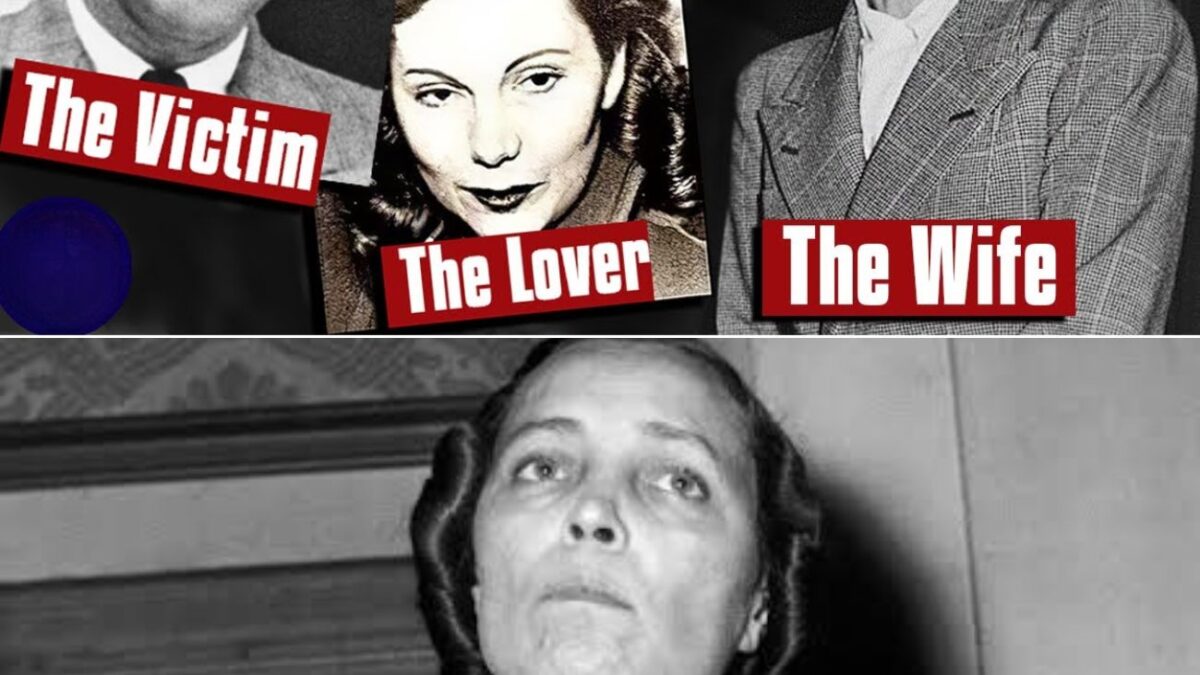
The Crimes Of Yvonne Chevallier
A few weeks ago, I spoke about the French case of serial killer Dr. Georges, and many of you left comments about how French authorities handled the case and the sentencing after he was found guilty. For anyone who hasn’t seen the video, I’ll leave a link at the end. Well, today we are going back to France for another true case, and I emphasize the words “true” as you would all be forgiven in thinking that from start to finish this is the work of fiction. I assure you, it’s all true. So sit back as we go back to 1950s France.
Yvonne Chapelier was born in 1911 in France. She was from a poor family and lived on a farm near the city of Orléans, which is about 75 miles south of Paris. Yvonne did well at school and became a midwife at the local hospital. Colleagues in the hospital described her as shy, and when she was 24 years old, she met 26-year-old Pierre Chevalier, a medical student. He was confident and from an eminent Orléans family. They were instantly attracted to each other despite their social differences. Yvonne moved into Pierre’s apartment just weeks after they met.
From the start, the relationship was intense physically and emotionally. Although Pierre was a very busy medical student, he observed very closely the political developments on the continent. In 1939, the Second World War began, and in 1940, the German army invaded France and quickly occupied most of the country. Orléans was only the tenth largest city in France, but it became a tactical target because of the Loire River, which was considered a line of demarcation. The German forces relentlessly bombed Orléans, destroying many of its historic treasures, including a museum dedicated to its hometown hero, Joan of Arc.
France surrendered on June 22, 1940. Military forces occupied three-fifths of the country, including Paris and Orléans. When the war started, Yvonne had just given birth to their first son, Mateo, and Pierre was in his final months of medical training before finishing his studies. However, he made a brave decision to join the Free French movement of just 7,000 Frenchmen, and soon he became a leading figure of the resistance in Orléans. With recruitment and momentum, the movement grew over the next four years of occupation. Some, like Pierre, participated in cells of resistance fighters who managed to pull off great acts of sabotage against the German occupiers.
By D-Day in 1944, the Free French movement had grown to 400,000 people. Orléans was bombed by the Allies that summer as they tried to cut off river crossings from the retreating Germans. When Allied soldiers arrived in the city on August 16, 1944, ten weeks after D-Day, the Allies liberated Orléans and they discovered that the city had a thriving shadow government led by Pierre and a handful of others. For his bravery, Pierre Chevalier received the French Légion d’Honneur for his wartime heroism.
After the war, he was elected mayor of Orléans, and in 1945, Yvonne gave birth to the couple’s second son. Despite his career in medicine, Pierre had always wanted to go into politics and spent more and more time in Paris, while Yvonne was left behind in Orléans to care for their children. In 1950, he was elected to the National Assembly, which meant even more time would be needed in Paris. He took an apartment there and frequently stayed overnight. Like any politician, he maintained a busy schedule of appearances at political and social functions to which his wife rarely accompanied him. Pierre was described as handsome, dashing, and socially adept. Yvonne, on the other hand, was described as dull, witless, and socially not acceptable in French high society.
Pierre was spending more and more time away from the family, and Yvonne, who still very much loved her husband, realized that unfortunately her feelings were not being reciprocated. Yvonne decided to change her image in an attempt to win back her husband’s love. She read about art, literature, and politics; she frequented fashionable beauty salons and bought more flattering clothes, but none of this worked, and she eventually turned to drugs and alcohol to provide the comfort that was denied to her by Pierre, who had made it pretty clear that he had lost all interest in intimacy with his wife. The couple’s lives just went on.
Then, in the spring of 1951, Yvonne received an anonymous letter suggesting her husband was having an affair. She was shocked and angry, and immediately went and searched his closets for evidence. She didn’t have to look very hard and found a love letter in the pocket of one of his suits. It read, “Without you, life would have no beauty or meaning for me.” The letter was signed “Jen.” She knew who Jen was; she was her neighbor, Jen Perrault—beautiful, intelligent, well-educated, and ultra-sophisticated. She was married and 15 years younger than her rich husband named Léon, maybe the sort of woman Pierre should have married in the first place.
Like Yvonne and Pierre, Jen Perrault and her husband seemed a total mismatch. He was middle-aged, old, short, and rotund, the owner of one of Orléans’s most prestigious and profitable department stores. He worked long hours, meaning he often stayed away during the week. The couples would meet at social events, which would always seem to draw Pierre back home from Paris. The city’s gossips loved to talk about Jen Perrault; there were rumors about her romantic affairs and lovers within the Loire region.
In the meantime, Yvonne had grown increasingly anxious about her own relationship with her husband. She had nervous tension that led to doctors prescribing her prescription drugs. She became addicted to Maxiton, which is an amphetamine, and Veronal. She was chain-smoking and drinking excessive amounts of coffee; her sleep became sporadic, and she developed hooded eyes. The French rules of marital manners demand discretion if not fidelity. Yvonne made inquiries and learned that the affair was an open secret in Paris and Orléans.
So Yvonne decided to confront her husband. She left the children in the care of the maid and boarded a train bound for Paris, but she returned home utterly humiliated. She was turned away from the National Assembly by an usher who was under strict orders not to allow her admittance, and Pierre refused to meet with her. Yvonne returned home and went to confront her husband’s lover. The women argued about various moral and marital issues, and the confrontation ended badly with screaming and shouting. Yvonne next paid a visit to Jen’s husband, Léon. He told her that he knew about the affair and would just let it run its course. All Yvonne could think about was the affair, and it was constantly eating away at her.
Pierre eventually returned to Orléans to face his wife, but refused to discuss the affair with her, claiming it was a private matter, and continued to treat her with contempt. The same week, he had been nominated to a cabinet position as government minister for education, youth, and athletics. Pierre believed that a divorce would end his political career, as France was a Catholic nation that tolerated affairs but not a divorce minister.
Yvonne decided to take the boys to the coast for a week’s holiday, hoping the time and distance apart from his children would bring Pierre back to his family, but when she returned, nothing had changed. Yvonne was very distressed. Here she was, a mother and a wife trying to bring up two children pretty much on her own, and when she returned to Orléans, she overdosed on pills in what was considered to be either a suicide attempt or a cry for help.
Fortunately, she recovered, and she went to the police station near her home and applied for a handgun license. She explained that she needed protection since her husband was about to assume a government ministerial position. She obtained the permit and went to the gun shop, asking the owner to show her a pistol that can kill with one shot. The owner recommended a MAC 7.65, a French-made semi-automatic with a nine-round magazine. She returned the next day and bought the MAC and 25 rounds of ammunition.
On August 11, 1951, Pierre was sworn into his ministry post in Paris. The next day, he had an appointment for his first public appearance at a county fair not far from Orléans. When going to the fair, he instructed his chauffeur to stop at his house so he could change his clothes. He entered his house, spoke to his children, and went up to his dressing room to change for his public appearance.
Yvonne decided this was a good chance to make one last-ditch effort to save their marriage. She threatened Pierre, saying she would send the boys to boarding school and deny him visits, then she pleaded, saying she could not possibly love another man and that it broke her heart to see him in the arms of another woman. She said she could change and she would work hard to make herself a more socially acceptable wife. Finally, as Pierre was changing, Yvonne fell on her knees begging him to love her.
Pierre’s dismissal was brutal. He explained to his wife that he no longer wished to have anything else to do with her, and after consideration, despite being a minister, he wanted to divorce her and marry his mistress. Yvonne left the room emotionally stressed and very angry with the way he had treated her. She got the gun from the linen closet where she had hidden it and returned to Pierre’s dressing room. She turned the gun on herself and told her husband that she would kill herself if he tried to leave her for another woman. Pierre mocked her, telling her to go ahead and shoot herself, but please wait until he had left the room.
Then her emotions took over, and with deadly precision, she pointed the gun at Pierre and fired four shots, hitting him in the chest, forearm, thigh, and chin. As she stood over him, their oldest child, Mateo, burst into the room and saw his father lying on the floor. Yvonne calmly led him back downstairs and handed him over to the maid. She returned to Pierre’s dressing room and shot him a fifth and final time in the back.
Minutes later, she called the police station, simply stating, “Please come here at once, my husband needs you urgently.” The gendarme arrived and arrested her. Yvonne was accused of murder and confined to jail for more than a year while awaiting trial. The proceedings were moved to Rennes, 150 miles northeast of Orléans, in a failed attempt to reduce the public interest. For months, the story was front-page news in France; it was also high-profile in Spanish, Italian, and British newspapers, as well as being reported in the New York Times and featured in The New Yorker magazine.
Yvonne had not mentioned the love triangle motive in her first interview with the police, but she later confessed that she had been jealous of her husband’s affections for Jen. Initially, most French people were angry that their war hero had been taken from them. Newspapers portrayed Yvonne as a woman who married above her station and who was outmatched culturally and intellectually by her husband. The French public’s general opinion was, “Who could blame Pierre for seeking a more sophisticated companion?”
As time went on, however, public opinion began to change as details of Pierre’s affair and the cold, cruel treatment of his wife began to appear in the press. French journalist Jean Laborde, a reporter with France-Soir, spent time interviewing Yvonne’s family and was given access to her letters. Again and again, she swore emotional love to Pierre even as she revealed her anxiety over his relationship with his lover.
As the trial approached, the French wrote about the story every day—reporters, psychologists, sociologists, criminologists, and other commentators all giving their opinion on the case. Characteristically in class-conscious France, much was made of her background: she a peasant’s daughter, he the son of a prominent family. But by now, most of France was blaming Pierre for his misbehavior.
Yvonne Chevalier went on trial on November 5, 1952. In those days, the French Penal Code included a love-triangle provision that absolved from punishment any man who committed homicide after finding his wife in bed with another man. In this case, the roles were reversed. The Yvonne Chevalier case was widely viewed throughout France as a crime of passion which fell under this provision. At the trial, the defense decided to portray Yvonne as a victim, a woman who fell in love and married a man, bore him two children, and then was discarded as he climbed the political ladder. The prosecution case was simple: Yvonne shot her unarmed husband five times in a cold-blooded, unprovoked killing.
Yvonne arrived in court dressed in a gray suit. Jail had been hard on her; she was thin and pale, which evoked even more sympathy from the spectators, reporters, and the judge. His name was Raymond Jardillier. Jardillier was very interested in Yvonne; he wanted to know about her marriage and what she had or hadn’t said to her husband’s lover when she confronted her. The judge asked her a series of questions about her marriage. Yvonne began to sob as she described her relationship with her husband’s family. “They regarded me as a mistake of Pierre’s youth,” she said. Judge Jardillier questioned Yvonne closely about the hostile meeting she had with Jen after the affair came to light. The judge asked if she told her husband’s lover that she was going to kill Pierre. “No,” Yvonne replied. The judge asked her for her reaction when Pierre coldly informed her that he would divorce her so he could marry Jen, who was sitting in the courtroom. Yvonne started to answer, uh… and she fainted.
After a 15-minute recess, the judge asked Yvonne to explain the circumstances of the fifth shot. She replied that she had intended to return to her bedroom to commit suicide beside the love of her life. She explained that the gun fired accidentally, hitting her husband in the back.
The next witness was Léon Perrault, the very wealthy husband of Pierre’s lover. He testified that he, like Pierre, knew of the affair and deemed the war hero very worthy of his wife’s affections. The next witness was Pierre’s lover, Jen Perrault. She approached the witness stand like she was walking onto a movie set. She was 34, glamorous, and cool, despite frequent jeers from the gallery. In response to questions, she said the affair had begun in May 1950 and had continued to the day of the killing 15 months later. She said the lovers rendezvoused in Paris two or three times a week. When asked whether she was ashamed of her affair, as she was after all the mother of three young children, she replied, “Not at all.” She said she felt pity for Yvonne, but that she felt deep affection for Pierre and did not plan to end the affair even after she was confronted by her lover’s wife.
After Jen testified, the trial continued with different witnesses. The prosecution called relatives of Pierre who said that Yvonne was a virtual recluse and refused to attend Pierre’s family functions and was suspicious of any female who spoke to her husband. A policeman testified that Yvonne had given a series of differing accounts on the fatal events in the bedroom. The last witness was a psychiatrist who revealed that the Chevaliers had had a sexless marriage for years, which caused her physical depression. He also said Yvonne suffered from social, physical, and intellectual inferiority complexes. The psychiatrist said that Yvonne had retained the mentality of a teenager in love with a student.
At the end of the trial, it seemed the judge and even the prosecution were feeling very sympathetic towards Yvonne. Judge Jardillier even swerved French judicial protocol because instead of referring to Yvonne as the accused, he referred to her as “Madame.” He did, however, in his summing up, state that Yvonne had no right to take the life of another person and she should have controlled her jealousy. While the judge summed up, Yvonne began to cry, and she repeatedly said, “I’m sorry, I’m sorry.”
While the jury retired to begin deliberations, a big crowd gathered outside the Rennes Palace of Justice located on the city square. Jurors watched from a window as the crowd grew to thousands in just 30 minutes. The crowd started to chant, “Free her! Free her!” The jury deliberated for only 45 minutes and returned with the verdict: not guilty.
The crowd outside erupted in jubilation. After the trial and subsequent media frenzy, Yvonne rejoined her sons at her family’s farm. The Catholic Church then granted Yvonne absolution for the murder. She tried to resume a normal life, but her reputation as part of France’s most notorious crime of passion would not allow it. Even though she had been absolved of the crime by the church, Yvonne could not rid herself of the overwhelming guilt she felt, so she devised her own form of penance by moving to French New Guinea with her sons, where she worked as a volunteer nurse in a hospital for the poor until her death in the 1970s, quietly closing a chapter of tragedy, obsession, and irreversible consequences.

