The Crimes Of Guy Georges | The Beast Of The Bastille
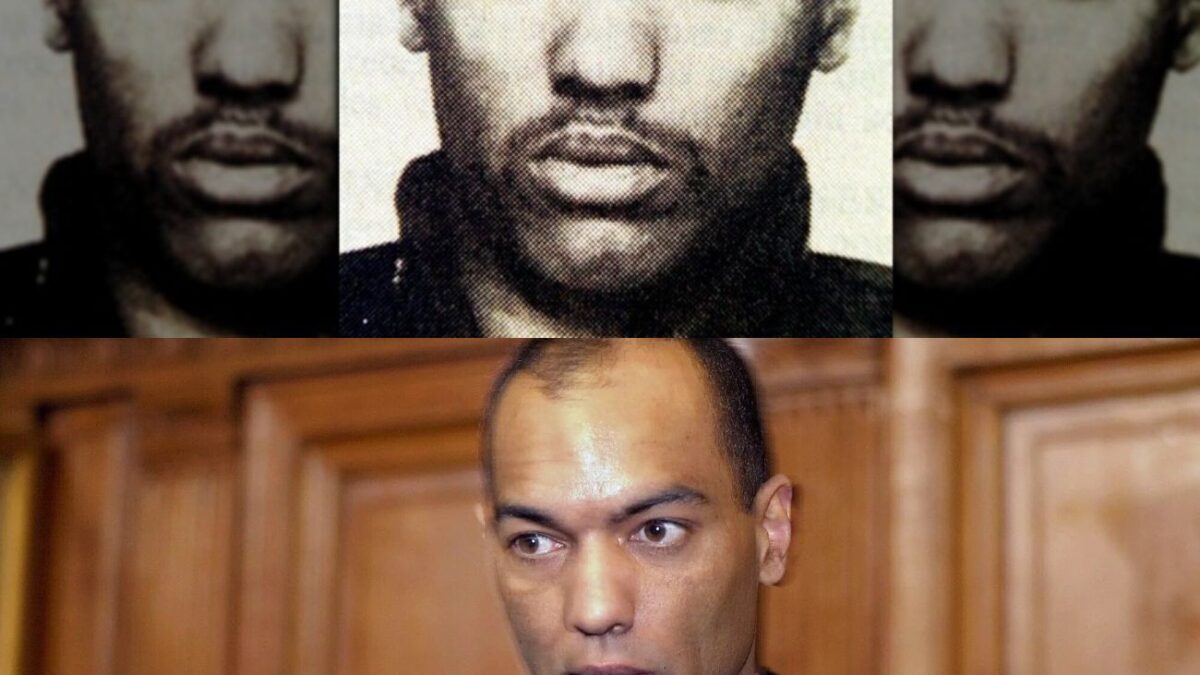
The Crimes Of Guy Georges | The Beast Of The Bastille
Guy was first registered as Guy Rampion after his birth to a single mother in Vassy-sous-Punaie, eastern France, on October the 10th, 1962. His birth certificate states that he was born in the central city of Langres on the 15th of October of the same year, but this is incorrect. His father is described as “inconnu”, which means unknown, although it is now established that he lived with Guy’s mother for some time and was an American soldier named George Cartwright who worked as a cook on the NATO bases.
Guy’s mother, Hélène, abandoned him to state custody at the age of six because she wanted to marry a US serviceman and emigrate to California, where she lives today. She took with her another son, Stéphane, who was three years older than his brother and conceived with another American serviceman. Guy’s mother, Hélène, was from a French military family; her father was a retired NCO and he fostered his daughter’s first child, Stéphane, until she emigrated, but he refused to foster Guy. For him, it was bad enough that his daughter had produced one child out of wedlock due to her fascination for Americans in uniform, but in her small town of Langres, there was a social stigma attached to a woman who had two children without being married.
By this time, Guy was six years old and was taken in by the French social welfare service to be placed with a foster family. In an attempt to aid his adoption, he was given the surname Georges after his foster father. He was adopted by a family named Morin and grew up in a household of 12 adopted children. The young Guy never really received the love, attention, and stability he needed, and soon began to show a violent and aggressive streak. At the time in France, the custom for a foster family was to issue a new birth certificate with false details to prevent the child from discovering their origins. This procedure was used for decades, but now in France it is eventually banned as it is against basic human rights. Guy would go through the next 32 years of his life wondering who his father was.
Guy was very close to his Catholic foster mother, who was rewarded in France for bringing up 12 foster children in addition to seven of her own, but in pre-adolescence he began to steal from the family food store. More significantly, he acquired a knife to hunt and kill animals in the countryside behind his village home. By the age of 16, he had attacked two of his foster sisters, not for sexual reasons, but was sent to a state orphanage for adolescents. At 17, he was jailed for stealing a woman’s handbag after ripping her face open with a knife. For this, he went to prison.
A month after his 19th birthday, Guy committed his first rape. It was now the 16th of November 1981, and he attacked a neighbor named Nathalie when she was returning home. He raped her, stabbed her, and left her for dead. Incredibly, Nathalie survived the attack. His next known crime was committed on the 7th of June 1982 in a car park, where he raped, stabbed, and strangled a young French woman named Violette, but again she managed to escape and went to the police. A few days later, Guy was arrested and sentenced to 18 months in prison.
He was released in early 1984, and soon after his release he attacked a 21-year-old girl named Pascale, again in a car park. He raped and stabbed her, but she managed to break free and run away. Later that evening, police again arrested Guy. This time, the French sentenced him to 10 years in prison. Guy was undoubtedly a person who was a danger to women, but due to good behavior, the French court allowed him out of prison during the day, though he was required to report back each evening to spend the night in a cell.
On the evening of the 24th of January 1991, Guy did not report back to prison and instead traveled to Paris. He spotted an attractive young woman walking down the road; it was 19-year-old Pascale Escurriol, a student at the Sorbonne. He followed her home and grabbed her as she was opening her front door. Holding a knife to her throat, he forced his way in, tied her up, and raped her before slitting her throat and watching her die. A week after the murder, Guy calmly returned to prison as if nothing had happened.
Just over a year later, he was released from prison and wasted no time in finding another young female victim. On the 22nd of April 1992, just 18 days after his release, he attacked a young French female named Anne, who escaped and reported the incident to the police. Guy was arrested once more and again returned to prison at the end of 1993.
Even though Guy had attacked a young lady 18 days after his release from prison, the French authorities amazingly decided that he should be allowed back into society. Guy took no time to start his crime spree again. On the 7th of January 1994, Guy attacked 27-year-old Catherine Roch in an underground parking garage; he raped and murdered her. Six days later, he struck again; his victim was a French radio host named Annie Pietri, whom he raped and murdered on the patio of her home.
Guy then stopped killing for ten months, but on the 9th of November 1994, in the underground parking garage of 22-year-old Elsa Benveniste’s home, he raped and killed her. A month later, on the 5th of December 1994, he raped and murdered a 33-year-old Dutch architect named Agnes Nijkamp in her home. The media began to report a killer in East Paris.
In June 1995, Guy attacked another young lady named Elizabeth Ortega, and despite his best attempts to kill her, she made a narrow escape. She did this by climbing through a ground floor window of her flat after having a lengthy conversation with him before he could assault her. She went to the police and managed to give a vague description of her attacker; however, when she was eventually shown a picture of Guy, she failed to identify him. A few days later, on the 8th of July 1995, he raped and murdered 27-year-old Hélène Frinking in her apartment after she returned from an evening out.
His lust for rape and murder was now out of control, and a few weeks later he assaulted another young French girl named Mélanie, again in Paris. The media gave all the attacks a lot of coverage, and pressure was now on the police to find the culprit. The police, however, were failing; it was the press that alerted the country to the similarities between the murders. Journalists invented the description “The Bastille Killer” because two cases were located near the monument, and the authorities were eventually forced to accept that they had a serial killer on the loose. It was claimed that the police didn’t even question Hélène Frinking’s neighbors about the murder until 23 months after she was killed, and Elizabeth Ortega was shown a picture of her attacker over two years after she was attacked, so it’s no wonder she failed to recognize him. It is also claimed that police ignored accurate descriptions from other survivors and witnesses. Some claim that the police were distracted in Paris due to the 1995 Paris Metro bombing and the 1997 investigation into Princess Diana’s death, when the entire force was mobilized to satisfy public opinion.
On the 23rd of September 1997, Guy broke into the apartment of 19-year-old student Magali Sirotti, and he raped and stabbed her to death. She was killed in the late afternoon on her return from work in the flat where she lived with her fiancé; they were planning to get married in the spring, and her wedding dress was in the wardrobe. Five days later, Guy assaulted a young French woman in the stairwell of her apartment block; luckily, she managed to run away. His crimes continued, and less than a month after, on the 16th of November 1997, Guy entered the home of 25-year-old Estelle Magd; he raped and murdered her.
The police investigation was finally gaining impetus, and investigators knew for certain that several of the unsolved crimes were linked and that they potentially had a serial killer on their hands. The media frenzy surrounding the killings had unleashed a level of panic in the population of Paris; everyone now knew of the Beast of the Bastille due to the fact that several of his attacks had occurred in this quarter of Paris. It was one of the largest manhunts in French criminal history.
Police finally found Guy in Montmartre and arrested him on the 27th of March 1998. It transpired that his DNA matched that found on four crime scenes as well as one attempted rape. Confronted while in custody with this irrefutable DNA evidence, Guy confessed to these four murders as well as three others. He was kept in custody, but tried to escape in December 2000, a few weeks before his trial was due to begin. He and three cellmates attempted to saw through the bars of their cell, but were caught by prison guards.
Before his trial, Guy was assessed by psychiatrists and he was declared legally sane. The media were all over the trial, questioning how the French prison system, having diagnosed him as extremely dangerous nearly 20 years before, had continually released him on the streets without treatment, money, or meaningful care. The media surmised that Guy’s attempts to find out who his father was caused him stress. Before the trial began, the original birth certificate was released, and Guy was finally told his father’s name and nationality. When he learned that his father was from the USA, it was if he had been reborn; he leaped with joy. He retrieved the identity he had been looking for all of his life. His father was from the USA, and knowing this raised his self-importance and self-confidence.
The three-week trial began on Monday the 19th of March 2001. The 50 witnesses included four women previously attacked and raped by Guy, members of the families of some of his victims, and his 71-year-old foster mother. Despite the prosecutor presenting the DNA evidence as well as the confession given after his arrest, Guy pleaded not guilty to all charges. He retracted his confession, claiming the police had tortured and beaten it out of him.
Eight days into the proceedings, a defeated Guy broke down in tears and confessed. He admitted the original four murders as well as the rape and murder of Hélène Frinking in 1995, Magali Sirotti in 1997, and Estelle Magd in 1997, asking forgiveness from the victims’ families. On Thursday the 5th of April 2001, Guy Georges, by now 38 years old, was sentenced to life imprisonment with the possibility of parole after 22 years, meaning he could theoretically become eligible for release in the future.
Reflecting on the legacy of the case, the terror that Guy Georges instilled in the streets of Paris remains a dark chapter in modern French criminal history. While justice was ultimately served within the courtroom, the institutional failures, missed clues, and systemic gaps that allowed a violent predator repeated chances to reoffend continue to serve as a haunting reminder of the high cost of complacency in the face of absolute evil.

