The Crimes of George Joseph Smith
The Crimes of George Joseph Smith
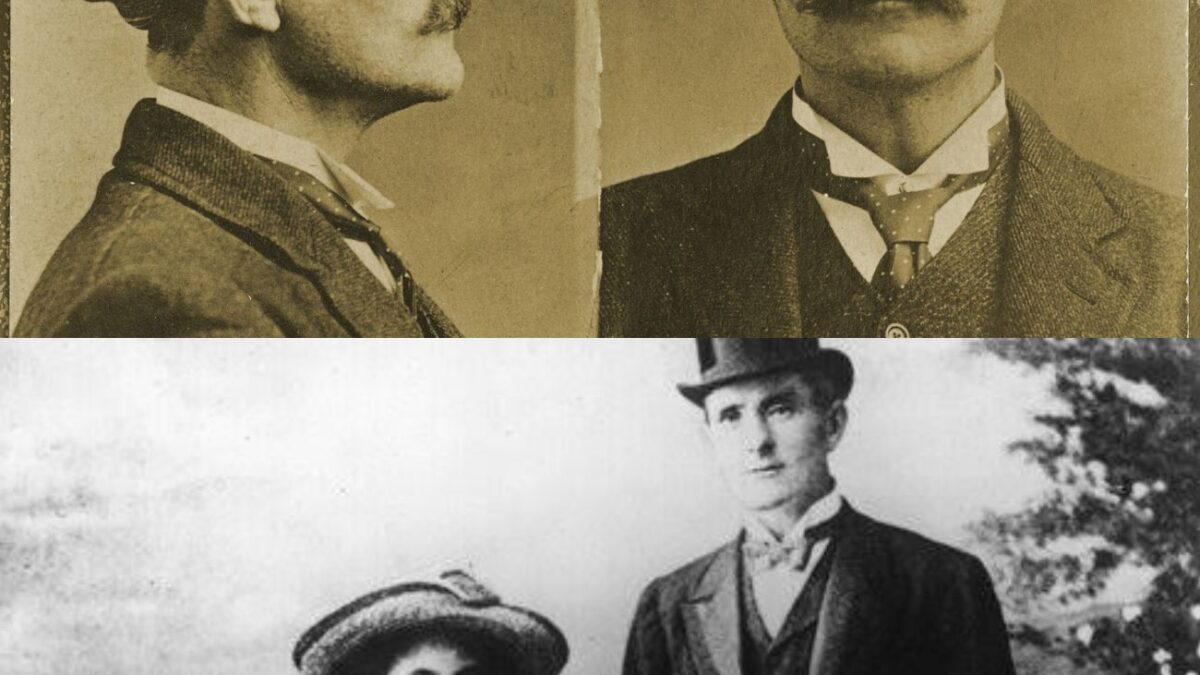
George Smith was born in London on January the 11th, 1872. His father was an insurance agent, and while his family were not rich, they were financially comfortable. George was born in Bethnal Green, London, and when he was nine, he was sent to a reformatory in Gravesend as he was caught stealing. The punishment was designed to be a short, sharp shock treatment to stop young children from offending again.
Being locked up for seven years from the age of nine to sixteen led to what many considered to be a harsh punishment on a boy so young. Far from serving as a deterrent, being locked up did not deter George Smith from going on to commit far more serious crimes. He probably learned a lot from his fellow inmates, such as how to use false identities and how to commit fraud. In 1898, George married Caroline Beatrice Thornhill. He used a false name, Oliver George Love. She was 18 and probably thought she was marrying a prosperous businessman who owned a bread shop. The shop, however, went bankrupt, so Caroline started working as a maid for a number of employers, stealing from them before leaving in order to stay one step ahead of the law. They moved to Brighton and Eastbourne so Caroline could continue to work as a maid and steal from her employers. When George instructed Caroline to pawn some stolen jewelry, she was arrested when a suspicious pawnbroker called the police. She went to prison for a year while George just disappeared.
When Caroline was released from prison after serving a 12-month sentence, by complete chance she saw George, so she called the police. He was arrested, and due to Caroline’s statement, he was sentenced to two years in prison in January 1901. They never got divorced, but Caroline then emigrated to Canada. After Caroline went to Canada, George went on a campaign of bigamy, marrying different women, always for money. He would either persuade them to hand over their money, usually saying it was for a business venture, or he would insure their lives. Once he had what he wanted, he would simply disappear, leaving victims with broken hearts and empty bank accounts. He was lucky, as in the early 20th century, large numbers of young men had emigrated to countries such as Australia and Canada, which meant that by 1910, British females outnumbered men by more than half a million. The newspapers were full of stories about women who could not find husbands; such spinsters were perfect prey for George. He was smooth-talking, slim, with a muscular physique, and always wore brightly colored bowties. He liked to walk along seafront promenades and parks in search of lonely and vulnerable women.
In the summer of 1910, he was walking in Clifton, Bristol, when he met Essie Mundy, a woman in her mid-30s whose father, a bank manager, had died, leaving her an inheritance of 2,500 pounds. George introduced himself as Henry Williams, saying he worked as a picture restorer in London. They went out together for walks, and very soon after they met, they were married at a registry office in Weymouth. George, however, was unable to get his hands on all of her money, as it had been placed in the hands of trustees. He did manage to persuade Bessie to give him 150 pounds in cash, and when she did, he left, accusing her of infecting him with a venereal disease.
Eighteen months later, Bessie was walking in the popular seaside resort of Weston-super-Mare and saw George. They spoke, and she was very happy to take back her husband after he explained that having contracted a venereal disease, he considered it best to leave rather than pass it on to her. He told her that he had been looking for her for a long time and would like to continue the marriage. In May 1912, the couple moved to Herne Bay in Kent, and George persuaded his wife to make a will leaving everything to him. Afterwards, they visited an ironmonger and purchased a cast-iron bath. George then convinced his wife that she was an epileptic, and on Friday, July the 12th, took her to see a doctor. Bessie had no history of fits but agreed to be examined by the local doctor and repeated the symptoms that George had described to her.
The following morning, the doctor received a pencil-written note from George: “Come at once,” it read, “my wife is dead.” But the doctor arrived to find Bessie on her back in the bath, her face still partially submerged. George claimed this was how he found her. The doctor attributed the death to drowning, and George was awarded the full inheritance of 2,500 pounds by an inquest jury. Despite his sudden wealth, George did not spend much on the funeral; he chose the cheapest coffin and refused to pay for a private plot, so Bessie had to be buried in a common grave. He even returned the bath to the ironmonger and obtained a refund. With the murder weapon disposed of, it seemed he had committed the perfect crime, but he had overlooked one thing: unbeknown to him, Bessie was holding a bar of soap in her right hand when she died, and the doctor had noted that her fingers remained clamped tightly round it.
Just over a year later, in November 1913, George married 25-year-old Alice Burnham, who was a nurse. They met in Southsea. On their wedding day, November the 4th, he took her to a doctor who certified that she was healthy enough to take out a 500-pound insurance policy on her life with George as the sole beneficiary. The same pattern followed; he also persuaded her to make a will leaving everything to him. They went to Blackpool on a belated honeymoon and found accommodation with a bathroom at Mrs. Crossley’s. Just as before, George’s wife had cause to see a doctor, and George told the doctor that his wife was suffering from persistent headaches. On the evening of Friday, December the 12th, three days after they arrived in Blackpool, George was talking to Mrs. Crossley in the kitchen when they noticed small drops of water leaking through the kitchen ceiling. While Alice was upstairs having a bath, George quickly went upstairs and discovered his wife dead in the bath. Once again, there were no signs of anything suspicious, very little was spent on the funeral, and the inquest jury decided Alice had drowned after fainting, so George inherited 600 pounds.
At the time of her death, they had been married just over a month. George carried on his bigamous ways, and in November 1914, he met Margaret Loftus in, of all places, the English city of Bath. This time George’s alias was John Lloyd. They married on December the 18th, 1914. After they got married, they began a brief honeymoon in Highgate, North London, with George again insisting his new wife see a local doctor. On their wedding night, the first evening there, George played some music on the piano in the living room, then he left the house, telling the landlady that he was going out to buy some tomatoes. On his return, strangely, he rang the bell so the landlady would let him in, even though he had a key. He went upstairs, where he discovered the drowned body of his wife. Again, there was no money spent on the funeral, and George claimed the insurance payment, but this time there was a delay because one of her witnesses was ill.
Strange deaths at seaside resorts were always reported in local newspapers in Edwardian Britain and were read by local people, but a bride drowning on her honeymoon in a bath in London featured in national newspapers and was read about all over the country by readers like Charles Burnham, Alice Burnham’s father, and William Haynes in Blackpool, who lived near to Mrs. Crossley’s where Alice was murdered. The husbands involved had different names, but in each case were newly married and in each case had discovered their wives dead in the bath. On receiving letters from the public, the Metropolitan Police looked at the similarities with the deaths and decided it was probably not a coincidence, so they gave the case to a highly skilled detective named Arthur Neil.
Inspector Neil was certain that Mr. Smith and Mr. Lloyd were the same person, and by piecing together their movements across the country over the previous years, he discovered the case of Bessie Mundy, who died in exactly the same way in 1910 in Herne Bay. In the Margaret Loftus case, Inspector Neil quickly discovered that a will had been made in which her sole beneficiary was her husband. The inspector contacted a coroner named Dr. Bates, who had examined the body, and he revealed that he had been contacted by an insurance company in Yorkshire. On speaking to the insurance company, they confirmed that Margaret Loftus had taken out a life insurance policy worth around 700 pounds with her new husband as sole beneficiary. The inspector also found that Alice Smith had taken out a similar life insurance policy shortly before she died.
Hoping that George, or as he called himself, Mr. Lloyd, would want to collect the money, Inspector Neil instructed a doctor to issue a favorable report to the insurance company. On the 1st of February, 1915, a man fitting the description of both Smith and Lloyd appeared to collect the money. Inspector Neil was there. Inspector Neil asked if he was John Lloyd; he confirmed this, but when asked if he was also George Smith, he vigorously denied this, but was nevertheless arrested for making a false entry on a marriage certificate.
While George was in custody, Home Office pathologist Bernard Spilsbury was tasked with exhuming the victims and establishing whether they drowned and, if this was the case, were they drowned by force. No evidence was found of foul play, but the fact that Bessie Mundy was still holding on to a bar of soap when she died was interesting, as if she really had suffered a fit or fainted as the inquest had suggested, her hand would have relaxed and let the soap go. This suggested that she, and by implication the other women, had died very suddenly without time to put up a fight. The big question, however, was how did George drown his wives without them screaming or putting up a fight? The theory Spilsbury came up with was that George had pulled their legs so quickly out of the bath he sent their heads underwater so fast that they lost consciousness instantly. Modern science gives some credibility to his theory, while other people suggested that George had first hypnotized his victims.
George Joseph Smith was formally charged with the three murders and went on trial at the Old Bailey in London on June the 22nd, 1915. Although he could only be tried for the murder of Bessie Williams in accordance with English law, the prosecution used the deaths of the other two to establish a pattern of George’s crimes. This was allowed by Mr. Justice Scrutton despite the protests of George’s counsel. George decided not to give evidence in his own defense. Caroline Thornhill, who was still George’s lawful wife, turned up to watch the trial. George was very confident of acquittal, although he lost his temper at one point, telling the court during police evidence that he had not committed murder and could not be sentenced to death.
Then came the testimony of Dr. Spilsbury. The bath used for the murder of Alice Burnham was produced, and the pathologist prepared to demonstrate how, in his view, George had drowned his brides. The jury were taken to a private room to see a young woman model wearing a bathing costume. She stepped and reclined into the bath, and Dr. Spilsbury then suddenly raised her legs, and the water rushed up her nose and into her mouth. It was so effective that she had to be revived by artificial resuscitation. There was no doubt that George Smith had both the motivation and the character to commit this trio of murders.
After an eight-day trial, the jury took just 22 minutes to find George guilty, and he was sentenced to death. George appealed against the verdict, but the appeal was dismissed. On the 13th of August, 1915, George was hanged in Maidstone Prison, protesting his innocence to the end and taking with him the secret of how he killed his three wives.

