The Creepy Case Of Suzane Von Richthofen | The Evil Blonde
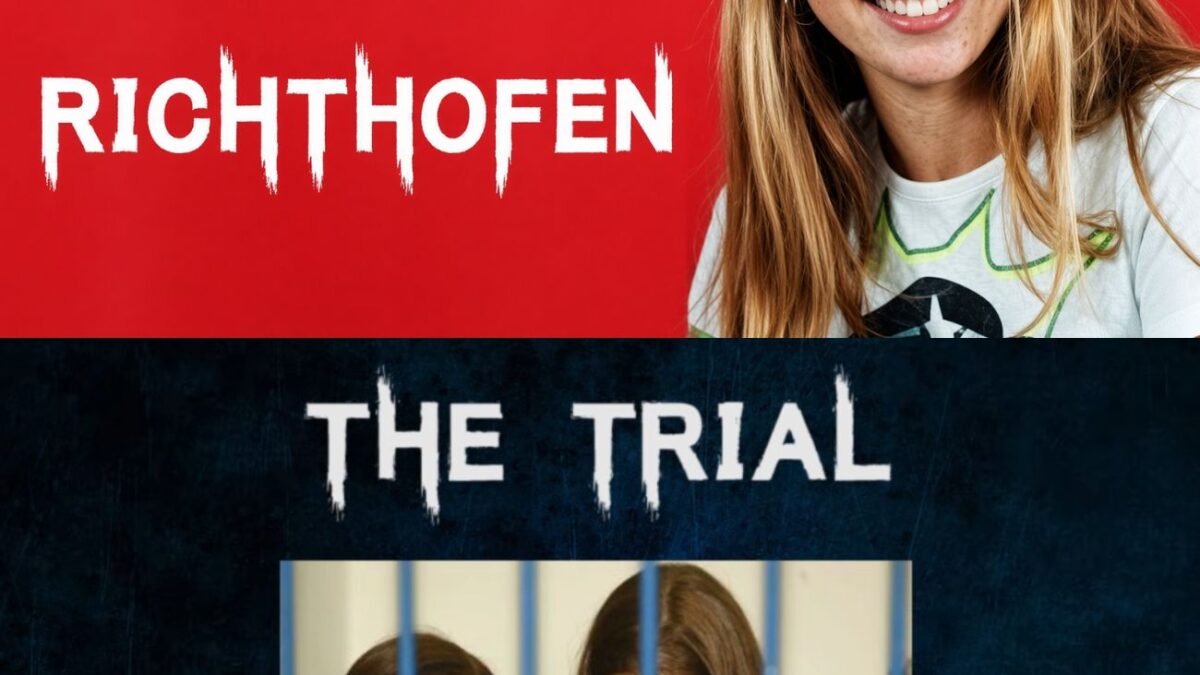
The Creepy Case Of Suzane Von Richthofen | The Evil Blonde
In 2002, the Suzane von Richthofen case gripped Brazil in the year when the nation’s football team won the football World Cup against Germany in Japan. This football-mad country’s main talking point turned from football to Suzane von Richthofen. I say football, but those of you from North America, I am of course referring to soccer.
Suzana was born on the 3rd of November 1983 in São Paulo. She had a German father and a Brazilian mother. Her father was an engineer named Manfred Albert von Richthofen, and her mother, Marísia, was of Lebanese descent. Her father was the director of the state company for highway development in São Paulo, and her mother was a psychiatrist. Suzana also had a younger brother named Andreas, who was born in 1987. Suzana studied at a German high school before moving on to study law at a Catholic university in São Paulo. She was described as happy but a little shy.
Suzana was known to have a very good relationship with her parents and her brother. They all lived together in a comfortable house in a gated community in the Campo Belo neighborhood of São Paulo. She was well-educated, pretty, and had parents with an estimated wealth in 2002 of 5.5 million dollars. In the summer of 1999, she started practicing Brazilian jiu-jitsu, where she got to know Daniel Cravinhos de Paula e Silva, who soon became her boyfriend.
Suzana’s parents at first allowed her relationship with Daniel, but soon changed their opinion of him when they discovered that he used marijuana almost daily, did not work or attend college, and did not come from a particularly good neighborhood. In July 2002, her parents were on vacation, so Daniel moved in with Suzana for a month, much to her delight. When her parents returned home, Suzana suggested that they buy her a flat in which she could live with Daniel, but her father refused, saying that she could do whatever she liked only if she earned money herself.
Suzana’s relationship with Daniel started to put a strain on her relationship with her parents. Her parents pressured her to break off the relationship, but she refused. They then threatened to cut off her allowance. On the night of the 31st of October 2002, Suzana took her brother to a cyber cafe to meet friends and play video games. Then Suzana, along with her boyfriend Daniel and his 26-year-old brother Cristian, went to her home. Earlier that evening, she had deactivated the burglar alarm and turned off the video security cameras.
Upon arrival at her home, she opened the electric gates and drove into the garage. Her boyfriend Daniel and his brother Cristian put on hoods and entered the house. She entered first, going up the stairs to her parents’ bedroom, turned on the light in the hall, and verified that her father and mother were asleep. She went downstairs and sat on the couch. The brothers went upstairs to the parents’ bedroom and hit her parents with iron bars. The parents, however, did not die quickly despite suffering severe brain trauma. To finish them off, Daniel ran to the bathroom and came back with two wet towels. They put them over their victims’ faces in an attempt to drown out the sounds they were making, but this didn’t work. So Daniel went to the kitchen and returned with a jug of water and attempted to drown Suzana’s parents. This managed to kill her father Manfred, but at this point, her mother Marísia was still alive, so they tied her head in a plastic bag until she finally suffocated.
Once it was over, Suzana came upstairs to see for herself that her parents were dead. The three of them then put the second stage of their plan into action by making the scene look like a break-in. They pocketed money they found and spread papers over the house, creating a mess. This part of the plan was not executed well, as they left valuables, cell phones, and a gun, all of which are things burglars would be unlikely ever to leave behind. They did, however, take the family’s stash of cash, a considerable amount of money in both U.S. dollars and euros. Then they left.
Daniel and Suzana checked into a motel to establish an alibi, and Cristian went to a fast-food restaurant. Just before 3:00 in the morning, they checked out of the motel, and Suzana dropped her boyfriend off, picked up her little brother Andreas—then aged 15—at an internet cafe, and went home, where they discovered the crime. They instantly called the police.
The investigating officers, however, doubted that this was a burglary that had gone wrong and very quickly thought that it had been committed by someone known to the victims. They soon began to question the children and the employees of the Richthofen family. What made them suspicious was not only the crime scene—the alarm system switched off and papers spread very regularly and as if by design—but also the extraordinary coolness of Suzani, who was seen in the house swimming pool with Daniel the day after the murder and who celebrated her 19th birthday with friends just hours after her parents’ burial.
The investigators focused their attention on Suzana and her boyfriend. The clue for the arrest came with Cristian, who had bought a motorcycle a few days later and paid cash in 100-dollar bills. A few days later on November the 9th, 2002, he was arrested along with his brother Daniel and Suzana. Suzana very quickly broke down and confessed to the murder. The investigation was concluded within a week.
The case generated massive media attention in Brazil due to the stark contrast between the brutal crime and the personality of Suzana. While the brothers fitted the usual profile of the uneducated, unemployed, drug-addicted killers, this was not true for Suzane. She was a pretty blonde girl from an upper-middle-class family of German and Lebanese descent, well-behaved, always doing well at school, speaking three foreign languages, and doing ballet. The contrast between her affluent upbringing and the cruelty of the crime shocked the nation. The Brazilian public questioned whether Suzane was the evil mastermind behind the crime or just Daniel’s tool.
Many people who initially were emotionally on Suzana’s side changed their opinion when a TV interview with her was shown. Before the interview took place, the cameras had already started rolling, and she was instructed to cry out loud during the broadcast so it would create public sympathy. In the end, however, the interview was a major blow for her credibility.
In July 2006, almost four years after the murders, Suzana, along with Daniel and Cristian, were put on trial in São Paulo for first-degree murder. On trial, Suzana blamed Daniel for everything, while the brothers claimed that they acted upon her desire. In court, Suzane was very cold, without emotion, while the brothers were crying most of the time. On one occasion, she even started to laugh. Suzana claimed she did it all for love, for fear that Daniel would leave her if her parents were not killed. Her lawyer said that Suzane had no motive at all to kill, but was forced to the crime by Daniel, whom she adored like a god.
Another part of the motive may have been the parents’ wealth, which Suzane would inherit in the event of the parents’ death. The prosecution said that Suzane wanted to get her hands on the money and assets of her parents and she wanted freedom and independence without having to work for it. On trial, her defense lawyer claimed that Suzana was physically violated by her father, which she and her brother Andreas denied. It was also claimed that Suzana’s parents were alcoholics, but the autopsy found no alcohol in their bodies. The prosecution called Suzana the personification of the evil blonde and demanded 50 years’ imprisonment for each of the three defendants.
On July the 22nd, 2006, Suzana was sentenced to 40 years in prison for the crime. Daniel, her boyfriend, received the same sentence, and his brother Cristian was sentenced to 38 years for conspiracy. In 2009, Suzana tried to get her sentence changed to house arrest; her appeal was denied. She then tried again two years later with the same result. In 2011, her younger brother Andreas sued his sister for her half of the inheritance, including the money paid out on her parents’ life insurance, and he won.
Years later, after serving a significant portion of her sentence behind bars and transitioning to a semi-open prison regime where she exhibited good behavior, Suzane von Richthofen was finally released on parole to serve the remainder of her sentence in freedom. Today, she has attempted to rebuild a quiet life away from the blinding glare of the media spotlight that once consumed her youth, though the chilling legacy of that fateful night in 2002 remains etched forever in the history of Brazilian true crime.

