The Chilling Case of Lula Mercer — the Missouri Ozarks’ Most Infamous Crime
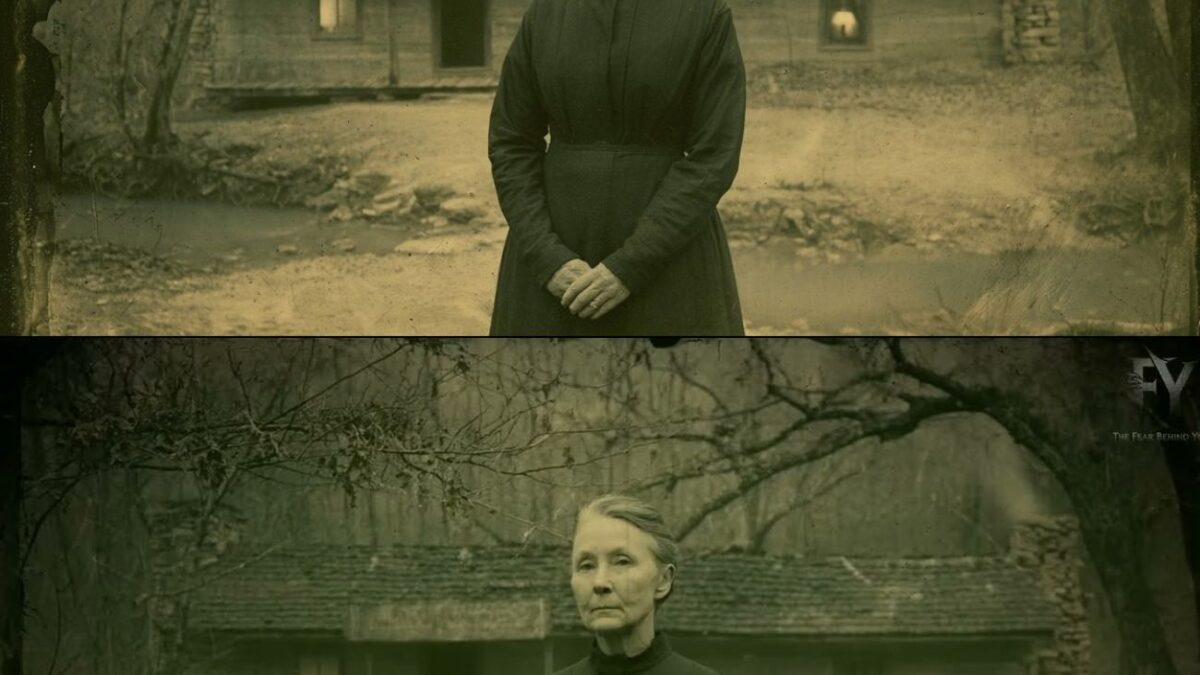
The Chilling Case of Lula Mercer — the Missouri Ozarks’ Most Infamous Crime
A note before this one begins. If the kind of case I tell here is one you’d want to hold in your hands, the actual depositions, the ledgers, the photographs, I’ve gathered seven of them into a dossier. The Appalachian Dossier. Seven files withdrawn from county record between 1843 and 1891, restored exactly as the clerk copied them. The link is in the description and pinned at the top of the comments. Now then, there’s a road in the Missouri Ozarks that the mapmakers gave up on. Not because they couldn’t find it, but because the people who lived near it asked them quietly to leave it off. You won’t read that in any history. You’ll only hear it the way I’m telling it now, from a man who went looking for three wagons that never came home and found something the county decided was better left unwritten. Before I go on, I want to know where you’re hearing this. Leave the name of your town in the comments. Some nights it’s the only thing that makes a story like this one feel like it’s being told to somebody and not just out loud to an empty room.
So, the autumn of 1904. The man whose account most of this comes from was named Lester Ashmore, 41 years old, a claims agent for the Cole and Faraday Overland Express out of Springfield. He was tall and gone a little soft through the middle the way men do who spend their lives on a wagon seat instead of behind a plow. He had a careful, unhurried way of talking, a face that had been handsome before the weather got at it, and hands that were soft on the palms and hard across the knuckles because his work was mostly paper, but his temper, when it came, was not. He’d spent 11 years settling claims, lost freight, drowned mules, the ordinary griefs of moving goods across a country that didn’t much want them moved. He was good at it because he didn’t believe people. He believed ledgers. What brought him into the hills was simple arithmetic that had stopped adding up. Cole and Faraday ran a freight line that crossed the high country by way of a long crooked notch the locals called Weather Hollow off the old Springfield Road a day and a half from anywhere with a telephone. Three times that fall a driver had gone in with a loaded wagon and never come out the far side. The first time the company wrote it off to weather and a bad ford. The second time they sent a letter. The third time when a man named Coy Pruitt and $2,000 of dry goods and a span of good mules simply ceased to exist somewhere inside that hollow, they sent Lester Ashmore.
He went in alone on horseback in the last week of October with a revolver he’d never fired at anything but a fence post and a leather case full of route maps and signed receipts. He told me years later that he remembered the exact moment the country changed. There was a stretch where the road climbed through oak and hickory ordinary woods full of the racket woods are full of jays and squirrels and the wind talking in the dry leaves and then the road dipped and the noise stopped, not faded, stopped, the way a music box stops when you close the lid. He set his horse at the top of that dip for a long minute listening to a silence that had a kind of weight to it like a held breath and he thought that’s just a man’s nerves that’s the quiet you make up for yourself when you’re tired and a little afraid. He rode down into it anyway, that was his job.
The roadhouse stood at the bottom of the hollow where the road forded a creek the maps did not name and the old people called Bitter Cane. It was a long low building of squared logs gone silver with age with a dogtrot down the middle and a stone chimney at either end and a hand-painted board over the door that read simply Mercer’s. The kind of place that in those days fed and bedded the men who hauled freight and the peddlers who walked the hills and any soul the dark caught between one town and the next. Smoke was coming off both chimneys. A lamp was lit in the front window though it was barely dusk. And standing on the porch as though she’d been told he was coming was the woman the case is named for.
Lula Mercer was a widow somewhere in her 50s, small and straight-backed with iron gray hair pinned so tight it pulled at the corners of her eyes and a black dress so clean and so plain it looked less like clothing than like a decision she’d made about herself a long time ago. Her hands were the hands of a woman who had worked red across the knuckles but her face was the smooth unbothered face of a woman who slept well. That was the thing Lester said he noticed first and could never afterward forget. She had the calmest face he ever saw on a living person. She welcomed him by name before he’d given it. She said the company had wired ahead which was a lie because there was no wire within a day’s ride and they both knew it and neither of them said so. She told him there was stew on and a clean bed and that the hollow was no place to be after full dark and would he please bring his horse around back to the barn himself because she didn’t keep a man on the place anymore.
He should have heard all of it. He told me he heard none of it not really because the stew was good and the bed was clean and he was 41 years old and tired down into his bones and a man at the end of a long road will forgive a great deal for a warm room. He ate. She sat across the table from him and watched him eat without eating herself and asked him careful little questions about the company, about who knew he’d come, about whether they’d send another man if he was delayed. He answered without thinking the way you do. Only later, lying awake in that clean bed, did he run the questions back through his head and feel the shape of them, the way you feel the shape of a hole in the dark with your foot before you feel it with your eyes. She hadn’t asked about the missing drivers, not one word. A woman who kept a roadhouse on a road where three men had vanished and she had not asked.
He didn’t sleep much. Around what he guessed was 3:00 in the morning, he heard it for the first time. A sound from below the floor, from the cellar. A slow dragging and then a settling and then nothing. He lay rigid and told himself it was a hog. People kept hogs in cellars in winter, in root rooms. He’d seen it. But there was no grunt to it, no snuffle, none of the busy idiot noise a hog makes. It was a patient sound. It was the sound of something being moved that did not want to move and had stopped fighting about it a long time ago. And then, underneath the dragging, so faint he wasn’t sure he’d heard it at all, there was a smell that came up through the floorboards. Tallow and wood smoke and beneath that something sweetish he knew and couldn’t place and didn’t want to. He lay there until the window grayed. When he came out for breakfast, Lula Mercer was at the stove, calm as Sunday. And she said, “You slept poorly. The hollow does that the first night.” And she set down a plate and her sleeve fell back and there was fresh dirt under her fingernails in late October in ground already half froze.
I want to stop here a moment because I think this is the part of the story where most of you would have done what Lester did, which was nothing. You tell yourself stories all your life about the brave thing you’d do the moment you’d see clear and act. And then the moment comes dressed in the ordinary clothes of a tired morning and a kind old woman and a plate of eggs and you eat the eggs. Lester ate the eggs, then he did the one thing his whole training pushed him toward, the only brave thing he knew how to do. He went looking for paper.
There was a man named Silas Grimshaw who trapped the high reaches of the hollow, a stooped leather-faced bachelor of perhaps 60 with a white beard stained yellow at the mouth and a single milky eye. And Lester found him by following wood smoke up a side draw to a cabin not much bigger than the wagons Lester was hunting. Grimshaw didn’t ask his business. He just looked at him with the good eye for a long while and said, “You’re the expressman. They sent you for the wagons.” Lester said he was. And Grimshaw said a thing that Lester wrote down word for word that same night because it was the first true thing anyone had told him since he rode into the hollow. He said, “Son, the wagons are still here. Everything that comes into this hollow is still here. It just don’t leave.”
A breath here before what comes next. If these are the kind of cases you’d want to read for yourself, not just here, but sit with the documents, I keep a fuller archive. The Appalachian dossier, seven files, 69 pages with the plates and depositions the county tried to unfile. The link’s in the description below and at the top of the comments. And if you’ve gotten this far and you’re still here, do me the kindness of subscribing. This channel runs on it. And if you’re hearing my voice on some other channel that didn’t make this, know they took it without asking, and you can tell us. Now, let’s go back to it.
Grimshaw told Lester what the maps would not. That Weather Hollow had a bad name going back further than anyone could rightly say. That the first settlers had found it already abandoned, with cabins standing and gardens gone to seed and not a soul in them, as though everyone had walked out one afternoon and simply not come back. That the road through it had always been the short way, and always been the wrong way. And that the old families used the long way around, even when it cost them a day, and laughed at the strangers who didn’t. Except they didn’t laugh, not really. And that Lula Mercer had come into the hollow as a young bride 40 years before with a husband named Orris Mercer. And that Orris Mercer had died or gone the same year. And that in the four decades since, the Widow Mercer had kept her roadhouse and grown old, and never once left the hollow. Not for a funeral, not for a doctor, not for anything. And that she did not age the way other people aged. Grimshaw said the last part looking right at Lester with that one good eye. And he said it flat, the way you’d report the weather. “She don’t change,” he said. “I’ve been watching her since I was a young man. She has not changed.”
Lester asked the obvious thing. He asked, “Then where are they? The drivers? The wagons?” And Grimshaw turned his head and spat, and was quiet a while. And then he said, “You’ll have noticed she keeps her cellar.” Lester said he had. And Grimshaw said, “You’ll have noticed she keeps it like a man keeps cattle. Like a man keeps a thing he means to have the use of later. Don’t go down there, expressman, whatever you do. Whatever she tells you, don’t you go down in that cellar.” He wouldn’t say more. He gave Lester a strip of dried venison and a hard look and told him the long way around started at the split oak below the ford and that a man on a good horse could be clear of the hollow by dark if he left now and didn’t stop and didn’t look back and that Lester should do exactly that and that he, Grimshaw, was going to sit up on his ridge tonight with his rifle across his knees the way he did every night watching the lamp in the window of Mercer’s the way he’d watched it for 30 years because that was the most a man could do, which was nothing, which was watch.
Lester rode back down toward the ford meaning to take the long way around. I want you to understand that. He’d decided. He was a careful man and he’d been given a clear warning by the one person who knew and he’d chosen to live. But to take the long way he had to pass the roadhouse and to pass the roadhouse he had to get his horse and his case and to get his case he had to go inside because Lula Mercer had carried it to his room herself kindly while he was gone.
So he went inside and it was already getting on toward dark, the early hard dark of the hollow that came down sooner than the sky said it should, and the lamp was lit and the stew was on and she was waiting at the table with that calm clean face and she said, “You’ve been up to see old Grimshaw. He’ll have told you I keep my dead.” And Lester stood in the doorway with his hand on the cold revolver in his coat and could not make a single word come out of his mouth.
She told him then, not all of it, but more than a sane woman would tell a stranger, which was how he came to understand she did not consider him a stranger anymore and did not consider herself bound by the rules a sane woman would mind. She said the hollow had taken her Orris the first winter that the hollow took, that it had always taken, that it was hungry the way the ground is hungry, slow and certain and without any malice you could blame it for. And that long ago she had made an arrangement with it. She didn’t say with what. She said arrangement the way you’d say a word for a thing too large to look at directly. She said that the hollow would take whatever came, that it would always take, but that a clever woman could choose, could decide who could keep the rest, could trade. And that as long as the road brought her travelers, men passing through, men with no one near to ask after them, men whose company would send one more and one more and one more, she could go on choosing. And she could go on not changing, and the hollow stayed fed and stayed satisfied and stayed down in its cellar where she kept it.
She said all this gently. That was the worst of it, Lester told me. She said it the way you’d explain a hard chore to a child you were fond of, with a kind of weary patience as though she were sorry he had to learn it but glad at last to have someone to tell. And then she said the thing that finally broke the spell the warm room had put on him. She looked at him with those calm eyes and she said, “I’ve kept this hollow fed for 40 years so it wouldn’t take from the towns. You think me a monster, Mr. Ashmore, but the towns sleep sound because I don’t, and the company keeps sending me men.” She almost smiled when she said that last part. “The company keeps sending me men.”
And Lester understood all at once and all the way down that the three missing drivers were in the cellar. That Coy Pruitt was in the cellar. That the warm bed and the good stew and the careful little questions on the first night had all been the same thing the spider’s web is, hospitality with a purpose, and that he had ridden a day and a half to deliver himself.
He ran. There’s no shame in it and he never pretended otherwise. He went out the door and across the dark dooryard toward the barn and his horse. And the dark of that hollow was not like any other dark. It was thick. It pushed back and the cold came up out of the ground through his boots. And behind him he heard the cellar door, which he had never seen open, come open and from it came that patient dragging sound. Many times over now, many slow draggings all at once. And the tallow and sweetish smell rolled out across the yard like a fog and he did not look back because old Grimshaw had told him not to and it was the only instruction left in his head.
He got to the barn. His horse was gone, the stall was open and the horse was gone, and in its place, hanging from the peg where his saddle should have been, was his own leather case, the one she had carried up so kindly. And when he tore it open his maps were gone and his receipts were gone and in their place was a single sheet of paper and on it, in a small tidy hand, was a list of names. Drivers, peddlers, men, dozens of them going back decades and at the bottom, freshly inked, still wet, was his own: Lester Ashmore, Cole and Faraday. And after his name, a single word in that same tidy hand: soon.
Now I have told this story enough times to know that this is the place where you want me to tell you he died in that hollow because that would be clean, or that he killed her because that would be just. And I can’t give you either one because neither one is what the county record says, what little of it survived. What the record says is that on the 3rd of November, 1904, a freight crew sent to look for both Lester Ashmore and Coy Pruitt found the roadhouse called Mercer’s standing empty and cold, both chimneys dead, the lamp in the window burned dry, and the door hanging open on a house that had not been lived in, by the look and the dust of it, for a great many years. They found no Lula Mercer. They found no widow, no stew, no clean bed, only a ruin that the hollow had been quietly taking back with saplings grown up through the dogtrot floor and a roof half fallen and 40 years of weather in a building a man had eaten supper in two weeks before.
And they found the cellar. I am not going to describe to you what was in the cellar and I want you to understand that I’m not being coy when I say that and I’m not sparing your nerves. I’m telling you the truth, which is that the men who went down into it would not describe it either. The freight crew came up white and shaking and would not speak. And the county sheriff who came after sealed the report and ordered the roadhouse burned to the foundation stones and the few men who saw the inside of that cellar carried it to their graves without putting words to it, except for one who said only that there were a great many boots, all paired and set neat against one wall, the way you’d leave your boots at the door of a house where you meant to stay, and that the number of them was wrong, was far too many for the years the place had stood. And that was the part that the man could not get past. Not the smell, not the dark, but the arithmetic of all those waiting boots.
They found Lester Ashmore alive. That’s the part nobody believes and the part that’s truest. He came walking out of the long way around out of the split oak two days after he ran with no horse and no coat and no memory of those two days, his hair gone white at the temples, though he was only 41, carrying nothing but that single sheet of paper with the list of names, which he would not let go of, which they had to take from him later by force. He could not say where he’d been. He could not say how he’d gotten loose. He said only, over and over, that he had run for the barn and there had been no horse, and then he had been at the split oak in daylight, and the two days in between were simply gone, the way the noise of the woods was gone at the top of that dip in the road. A held breath, a closed lid.
The case became for a few years the most talked about crime in that part of the Ozarks, the way these things do, told and retold until the tellings wore smooth and lost their corners. They called it the Mercer case after the only name anyone had. And the official finding, the one the county put its seal to, was that an unknown party or parties had used the abandoned roadhouse as a place to do away with travelers for the goods they carried, and that the perpetrator had fled and that the matter was closed. That was the finding. It used the word perpetrator, which is a clean lawyer’s word for a thing that fits in a courtroom. It did not use the word the freight crew used or old Grimshaw used or Lester Ashmore used to the end of his days, which was simply the hollow. It does not, the official finding, account for the boots. It does not account for a widow who didn’t age or a building 40 years gone to ruin that a man slept warm in two weeks prior or two days that fell out of a man’s life like the floor out from under him. The record squares none of it. The record was never meant to. The record was meant to let people in the towns sleep sound, which if you think back on what Lula Mercer said to Lester across that table, is exactly the thing she said she’d spent 40 years doing herself.
Have you ever stood in a place and felt all of a sudden and for no reason you could name that you were not welcome there, that the ground itself was waiting for you to leave? Leave it in the comments if you have. I read them. And I’ve come to think there are more such places than we let ourselves believe, and that most of us are luckier than we know to have only felt the warning and not stayed for the rest of it. Because here is the part of the story that I think about most, the part that isn’t horror, exactly. That’s something quieter and worse. Lula Mercer was not, in the way she told it, a monster who wanted to do harm. She was a woman who had been caught by a thing older and hungrier than herself and who had spent her whole long unnatural life making the only choice that thing left her, which was not whether men would be taken, but only which ones and how few. She believed, I think she truly believed, that she was the wall between the hollow and the world. And the most frightening thing in this whole account is not the cellar and not the boots and not the smell that came up through the floor at 3:00 in the morning. It’s that she might have been right.
Lester Ashmore lived another 31 years. He never went back into the hills. He left Cole and Faraday inside the month and took a clerk’s job in Springfield that kept him behind a desk and behind glass in a building full of the ordinary noise of people because he could not abide a quiet room. He married late and he was, by the account of the woman who knew him best, a gentle and a haunted man who slept with a lamp burning every night of his life. And he told her near the end the one thing he’d never put in any statement to any sheriff. He told her that the white in his hair and the two lost days and the list of names were not the worst of it. The worst of it was that some nights, still more than 30 years gone and a hundred miles away in a city with streetlights and streetcars and the comforting clamor of a world that had moved on, he would come awake in the dead middle of the night in the dark before he reached the lamp and in that little space before the light he could smell it again: tallow, wood smoke, and underneath, faint and patient and waiting, that sweetest smell he never could place, drifting up as though through a floor, as though from a cellar, as though the hollow having let him go had never quite finished with him and was only being patient the way it had always been patient because the hollow could afford to wait and a man cannot.
And you listening to me now, wherever you are, do you believe there are places that keep what they take? If you know of one, a road the maps leave off, a house that sits too quiet, a hollow the old people go the long way around, tell me about it down below because it might be the next story I tell. Stay with us for the next account and until then, when you come awake some night before you reach the light, do yourself a kindness, don’t go down in the cellar.

