Not Even Her Own Children Were Safe – The EVIL Crimes of Mary Ann Cotton
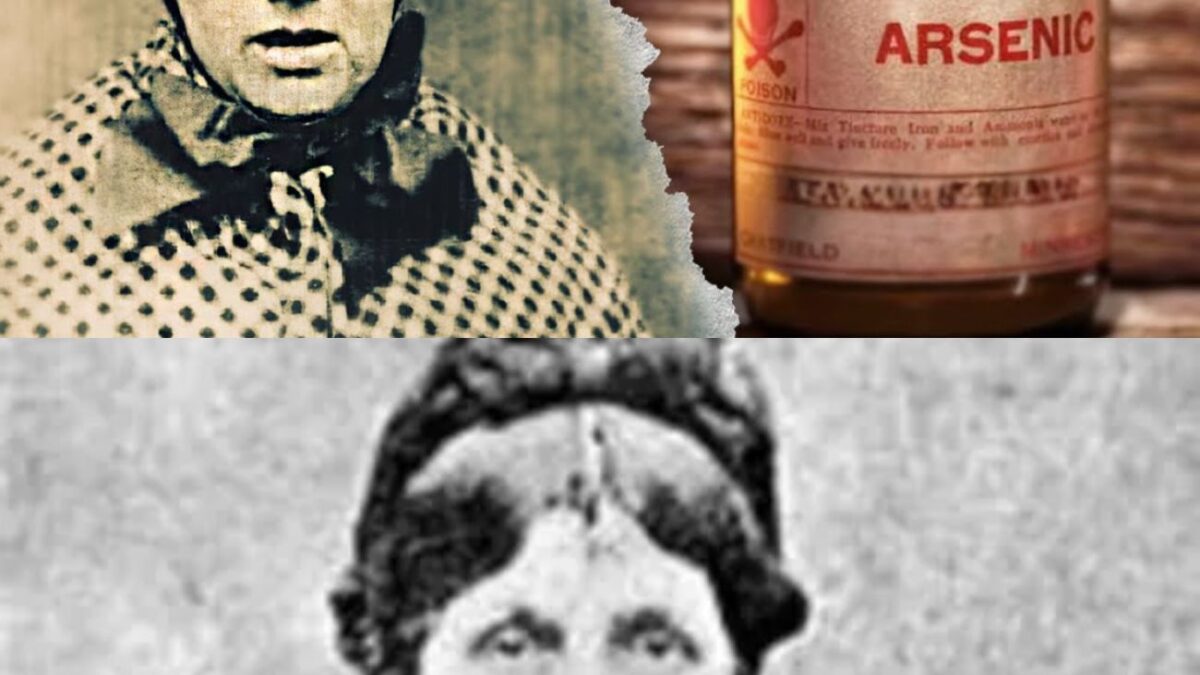
Not Even Her Own Children Were Safe – The EVIL Crimes of Mary Ann Cotton
Back in mid-March of 1873, the London press was all abuzz with stories about a woman named Mary Ann Cotton. The Times and other outlets reported she had just been convicted of murdering her stepson, Charles Edward Cotton, by poisoning him. But Mary Ann was suspected of many other deaths as well. A few days later, despite rumors that she might receive a royal pardon because she had recently given birth, Mary Ann was executed by hanging at Durham Jail. It was a gruesome end to a gruesome life—one in which Mary Ann killed over a dozen people, many of them her own children.
Before looking more deeply into Mary Ann Cotton’s life and grizzly marriages, it helps to briefly examine the phenomenon of serial killers. It is generally understood that serial killers have existed throughout history. For instance, the Roman historian Livy described a ring of female poisoners active in Rome in the middle of the 4th century BC in his monumental work Ab Urbe Condita. In the mid-15th century, the Breton nobleman Gilles de Rais allegedly abducted and killed well over a hundred people. Elizabeth Báthory, a Hungarian countess often referred to as the Blood Countess, is believed to have kidnapped possibly hundreds of people from the countryside surrounding her castle and had them tortured to death. Yet, there are suspicions around many of these historical examples that the charges brought against the individuals involved were politically motivated. Moreover, many of those involved were from the upper classes and often had willing accomplices. The instances of psychotic serial killers acting on their own and seemingly murdering people at random are more of a modern phenomenon. It developed as society became more urbanized, making it possible for people to cover up their crimes, and also as the methods one might use to kill increased. A person wielding an axe in a small village in 15th-century England would probably be found out quite quickly, whereas a person poisoning strangers in a vast Victorian city was much more likely to escape detection, particularly in an age before CCTV, fingerprinting, and DNA evidence.
As such, the first famous instances of serial killers emerged during the 19th century when Jack the Ripper, H.H. Holmes, and others carried out their grisly work. Mary Ann Cotton was amongst these. The woman known to posterity as Mary Ann Cotton was actually born Mary Ann Robson on October 31, 1832, at Low Morley in the county of Durham in the northeast of England. Cotton was her married name from her fourth marriage. Her family was not well off, and her father, Michael, worked as a cury sinker, a man who dug shafts in the coal mines of northern England. Their circumstances were made worse in 1842 when Mary Ann was nine years old, as her father fell 150 feet through a mine shaft he was helping sink and died destitute. Left without a home—since the Robson’s cottage had been granted to them by the South Hetton Coal Company where Michael worked—Mary Ann’s mother quickly remarried George Stott. The coal company did compensate the family to some extent, paying for Mary Ann and her brother Robert to attend boarding school. After that, Mary Ann returned to South Hetton in Durham and began training as a dressmaker. The tough circumstances of her upbringing may have made her particularly anxious about financial security, a factor that might explain her subsequent behavior in some part, though it in no way justifies it.
In 1852, when she was 20 years of age, Mary Ann married for the first time to William Mowbray, a coal miner as many other men in northern England were at the height of Britain’s industrial revolution. They were married for over 12 years, living for a time in the English West Country before returning to the industrial North. To the outside world, theirs was a tragic union. There are unconfirmed reports that while living in the west country, Mary Ann gave birth to at least four children, each of them dying young. The curse apparently followed the pair back North as several more children passed away there, seemingly of gastric fever. It must be remembered in any assessment of this that even though medical knowledge was improving markedly during the 19th century, infant and child mortality still remained extremely high, with any child born to lower-income families having a roughly 25% to 30% chance of dying before they reached their tenth year. Even so, Mary Ann and William Mowbray seemed to be particularly unlucky, all the more so when William himself died in January 1865 from an intestinal disorder. Suspensions seemed not to have been raised at this point. The fact that Mary Ann was profiting from their demise also failed to raise eyebrows; in 1865, she received over £37 as compensation for the death of her husband and son from the British and Prudential Insurance Office, which amounted to nearly half a year’s wages for a laborer.
Mary Ann did not wait long after the death of her first husband to marry again. She began working as a nurse at the old Sunderland Infirmary, where she cared for a man named George Ward. The pair began a relationship that quickly led to marriage in August 1865, just eight months after the death of her first husband William. By this point, Mary Ann had only one surviving child of possibly nine she had given birth to while with William Mowbray: a daughter named Isabella, whom Mary now sent to live with her mother. This second marriage of Mary Ann’s did not last anywhere near as long as her first. Just over a year after their union, George’s health took a drastic turn for the worse. He suffered severe nosebleeds, with doctors telling Mary to apply up to 12 leeches to his body. These had little effect, and in October 1866, just 14 months after he married Mary Ann, George passed away. His illness had been characterized by a wide range of symptoms, including fever and stomach and intestinal problems, just like Mary Ann’s first husband and children. However, in George’s case, there was a plausible explanation for what had happened. The period between the 1830s and the 1890s in Europe witnessed five pandemics of cholera, which claimed millions of lives owing to poor sanitation and public health in cities across the UK and other countries. Consequently, it was assumed that individuals who died in the fashion George Ward did had fallen victim to what was known at the time as the blue death. The fact that he and Mary Ann spent time at the infirmary would have cemented the idea that he had contracted a disease there, and so his cause of death was recorded as English cholera and typhoid. As such, no suspicions arose concerning his demise. Mary Ann yet again collected a large insurance payout—her second in two years—for the death of her husband.
Within weeks of her second husband’s death, Mary Ann acquired a new job working as a housekeeper in the home of James Robinson, a shipbuilder in Sunderland. He too had recently lost his partner. In November 1866, his wife Hannah died, leaving him as the sole carer for their five children: William, 9; Elizabeth, 8; James Jr., 5; Mary Jane, 2; and 9-month-old John. Sadly, John died of gastric fever shortly after Mary Ann moved in, and James found solace in his new housekeeper. From this point, deaths began to mount rapidly. In March 1867, Mary Ann was called away from her new beau when she was informed her mother had fallen ill. She wasn’t separated from him long, however, as shortly after her arrival, Mary’s mother Margaret died suddenly. It is said that while Mary did not benefit financially from her death, she made sure to collect as many items as she could carry to take back to the Robinson’s home, much to the chagrin of her stepfather, George Stott. It wasn’t just items she found herself returning with, as she was forced to bring her daughter from her first marriage, Isabella, back with her. Her mother had been caring for Isabella, and it’s unclear if Mary had told James about her beforehand. It seems that instead of embracing the union of families, Mary Ann was keen to wipe the slate clean. Over the course of the next five or so weeks, James Jr., Elizabeth, and Isabella all fell ill and passed away. Each had exhibited the same symptoms: stomach pains, vomiting, and seizures. A newspaper claimed that Isabella was so ill she at one point vomited in her mother’s face, at which point she too fell ill but quickly recovered. The fact that death seemed to follow Mary didn’t go unnoticed. James would later state that he believed at the time of his children’s deaths that Mary Ann was involved, however, he also said that he decided not to dwell on the matter.
As time passed, it became clear that his housekeeper had fallen pregnant, and in August the pair were married. In November, Mary Ann gave birth to a daughter whom they named Margaret Isabella. Sadly, in February of the following year, she too would pass away. In June 1868, Mary would give birth to their second child, a boy whom they named George. By this point, despite apparently suspecting that she had had a hand in his children’s deaths, James entrusted Mary Ann with the family’s purse strings, taking care of the money he brought home and paying any bills. So when his building society contacted him to say he owed them the not-insubstantial amount of £5, he began asking questions. As he pulled at the string, things began to quickly unravel, and it was revealed that Mary Ann had all but emptied his savings account, while his son James Jr. had informed him she had also pawned furniture and items from around the house. These actions proved to be the final straw for James, and he arranged to meet with Mary to tell her that they were finished. But she never turned up; she had disappeared from the home and taken baby George with her. Where she, George, and indeed the money went after this point is unclear. Some sources say that she gambled the money away and was left to walk the streets after leaving James, while others claim she had squirrelled the money away in preparation to run away with a man named Joseph Nattress, who himself was a recent widower.
Mary Ann would resurface in Sunderland on New Year’s Eve in 1869. That day, she appeared at a friend’s house telling them she needed to send a letter and asking if they could take care of George while she did. They accepted, but Mary would never return for her son; George was eventually returned to his father’s care early the following year. Mary Ann was then contacted by an old friend, Margaret Cotton—the pair having met in their youth when both worked as domestics. She had recently moved into her brother Fred’s home after he lost his wife and two of his four children to illness. Margaret asked Mary to visit her and stay for a while, perhaps in an effort to support her friend during a difficult period, or maybe she believed her time working as a nurse might help ward off further deaths in the home. This would not be the case. Roughly two months later, in March of 1870, Margaret died after a short illness. Though Mary Ann’s involvement in her death was disputed, this further loss pushed Frederick into an even darker space. However, Mary Ann was more than happy to comfort him. She had been working as a maid in the home of a local doctor, but by July she had been fired along with a groom after it was found that items had been disappearing from the house, with both seemingly in need.
Frederick allowed Mary to move in and become his housekeeper, and the pair quickly began a relationship. Some sources believe that this coupling had its roots in their previous meeting earlier in the year, as by the time Mary moved in, she was once again expecting. Others believe the child may have belonged to the groom who had also been expelled from the doctor’s home. Frederick didn’t seem to question the pregnancy, and in September the pair were married, with Mary Ann adding bigamy to her list of crimes as she was still technically married to James. In February of 1871, she gave birth to a son she named Robert. The couple’s neighbors were no fans of Mary, and the birth coming just five months after the marriage gave them ample ammunition to use against her. That was until tragedy seemingly struck in September of 1871, a year after his marriage. Frederick suddenly fell ill at the colliery he worked at, and within two weeks he was dead. Almost overnight, Mary Ann was engulfed in a wave of support as those who had initially seen her as a pariah now believed her to be a grieving widow. The pit company that Fred had worked for owned his home, and they now allowed Maryanne to continue living there rent-free. Locals raised a fund for her, which the company contributed to, and she once again collected a hefty insurance payout.
Before the year was out, Mrs. Cotton had accepted three lodgers into the home. Among them was Joseph Nattress, the widower who had been her lover; some accounts state the pair were engaged. It may be easy to assume that this had been her plan all along, but her goal was much darker, and more deaths were to come. March of 1872 would see both Frederick Cotton Jr. and Robert Cotton pass away after a brief, violent illness. Come April 1, they were joined by Joseph Nattress; his death came so quickly that Robert’s body was still in the room when he passed. These deaths once again saw money flow to Mary Ann, but by now the suspicions of those in the village had begun to rise. However, it would take one final death before Mary Ann’s murder spree was brought to an end.
By July, her only dependent was Frederick Cotton’s last surviving child, Charles Edward. She made it obvious that he was not her child and that she wanted him gone. One person she made this desire clear to was a man named Thomas Riley. He was a well-known figure in the West Auckland community, and aside from being a farmer and butcher, he was also overseer of the local workhouse. Mary Ann wished for Charles Edward to be committed to the workhouse and taken off her hands, telling Riley that he had caused her to lose out on potential earnings as she had a respectable lodger who wouldn’t move in unless the boy was gone. It is believed by some that she may have been referring to an excise officer named either Richard Mann or Richard Quick-Manning; there were rumors at the time that the pair were engaged. You can’t say that Mary didn’t move quickly. Thomas Riley informed her that Charles couldn’t be sent to the workhouse unless she too was committed there. In a later statement, Riley would recall part of the conversation: “I suppose you’re going to get married to Mr. Mann, the excise officer.” She replied, “Perhaps it might be so, but the boy is in the way, but he will go like the rest.” Riley said, “Nonsense, he appears to be a very healthy little fellow.”
Days after the refusal, on July 12, 1872, Charles Edward was dead. His death, much like the others, was recorded as being due to natural causes—that was until Thomas Riley made his suspicions known to authorities. Word began to spread among those in the village, and it seemed Mary Ann felt the net may finally be closing in on her. She began to sell items of furniture in order to build further funds before she could make her escape. However, before she could flee, news came back from the coroner. Though Charles had already been buried, the doctor who carried out the initial autopsy had kept the body’s stomach contents. A test on these revealed the presence of arsenic. The following day, July 18, Mary Ann Cotton was arrested, and Charles’s body was later exhumed for further testing. By the time of her committal hearing, arsenic had been found throughout the boy’s body, and Mary Ann was sent to Durham Jail to await trial.
While there, it was discovered that she was pregnant, and a decision was made to delay the trial until after the child’s birth. The father of the child isn’t known for sure, but when she gave birth, Mary named her new daughter Margaret Edith Quick-Manning Cotton. When the case finally came before the court, Mary Ann was charged solely with the murder of Charles Edward, as the prosecution believed this was the best means of gaining a conviction. But as information was collected, it was soon being reported across England that Mary Ann had most likely been responsible for murdering many others, including three of her four husbands, her own mother, several stepchildren, and numerous offspring of her own. All the deaths seemed to match a pattern of the victim having developed a fever and severe stomach and intestinal cramps before dying. It was suspected that Maryanne had poisoned each of them with arsenic, just as she had Charles Edward. The case caused a nationwide sensation, and these stories filled national newspapers.
The trial began on March 5, 1873, with Mary’s defense claiming the arsenic found in the bodies came from the deceased inhaling it from the dye used in the wallpaper hung in the home. It seems the jury didn’t buy this explanation, and after deliberating for 90 minutes, they found Mary Ann Cotton guilty of the murder of Charles Edward, sentencing her to death. It is said that the convicted exhibited strong emotion upon hearing the verdict, but soon returned to her apparent habitual cold demeanor. She held a strong hope of receiving a royal pardon due to having recently given birth, but this wasn’t to be. On March 24, Mary Ann was led to the scaffold at Durham County Jail, praying for mercy from God. A noose was placed around her neck, and moments later she was dropped to her death. Instead of her neck breaking immediately, her body writhed as she was strangled to death because the hangman had rigged the rope too short, possibly on purpose.
In the years after the initial furor had died down, the question of how many people Mary Ann had actually killed remained. While some believed she was involved in the deaths of her own mother and even Margaret Cotton among many others, because the court case only looked into the death of Charles Edward, it is impossible to say for sure. Some, such as author Martin Connolly who wrote the book Mary Ann Cotton: Dark Angel, believe she may have been involved in far fewer deaths, if any. He states that they occurred during a time when many diseases were endemic, with multiple deaths in a family being a common occurrence. He also points to arsenic being present in the environment—such as in the wallpaper—as a potentially contributing factor. Yet, looking back at the chilling pattern of insurance payouts and sudden illnesses that followed her everywhere, her dark legacy remains an unsettling reminder of the shadows of the Victorian era.

