Murder in Hodgemoor Wood | The Puzzling Death of Dr Helen Davidson
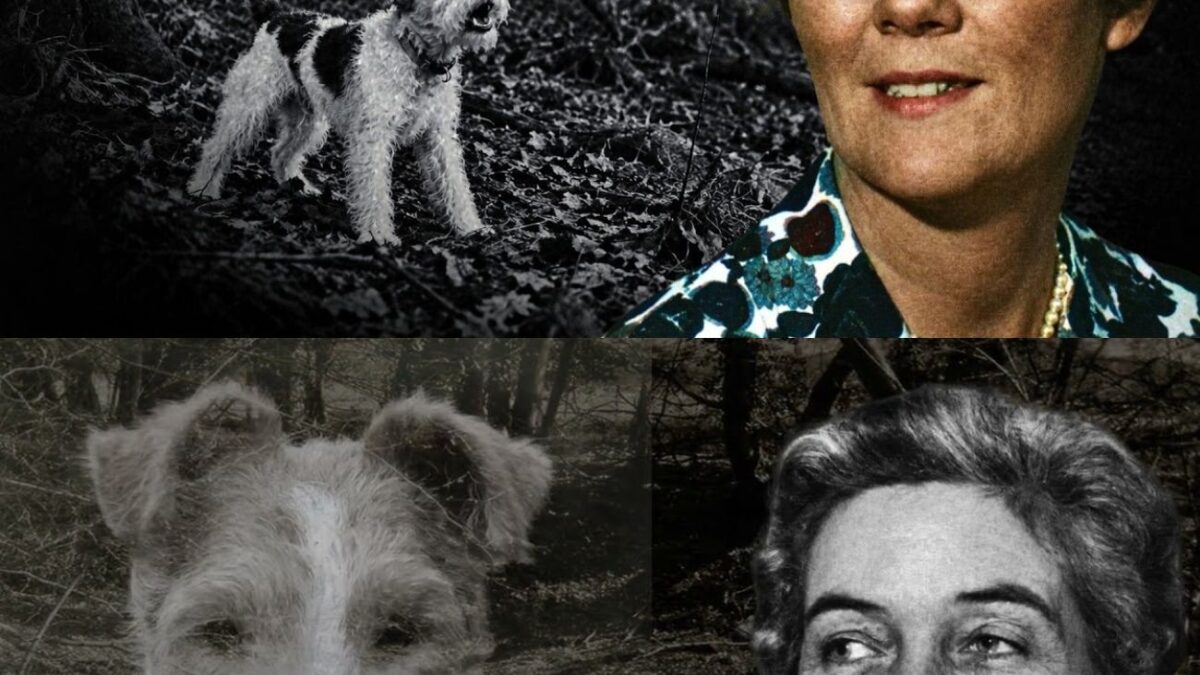
Murder in Hodgemoor Wood | The Puzzling Death of Dr Helen Davidson
Dr. Helen Davidson was reported missing on Wednesday 9th of November 1966 after failing to return home from her weekly dog walk in Hodgemore Wood, Buckinghamshire. When police found her body in a woodland clearing the following afternoon, fiercely guarded by her grief-stricken fox terrier Fancy, they were appalled by the level of brutality. Helen was a well-respected village doctor with no known enemies, so who would want her dead? The only living witness was Fancy, who had seen what happened but could not tell detectives about his owner’s final moments. I’m your host, Prash, and welcome to Prash’s Murder Map.
Helen Davidson was born on 1st of October 1917 to parents Alan and Sybil Davidson. She grew up in an affluent household in St. John’s Wood, London near Lord’s Cricket Ground with her parents and older brother Anthony. Her grandfather had made his fortune gold mining in Australia before founding a successful paper company in England called Davidson and Sons Limited, later managed by Helen’s father. Educated at Putney High School for girls and later at a boarding school in Dorset, Helen learned to ride horses, fence, and ice-skate. The family employed three servants, a reflection of their status at a time when the upstairs-downstairs divide and traditional social structures were beginning to fade, and her father often rubbed shoulders with politicians and aristocrats.
In 1935, 18-year-old Helen, who had dark hair and blue eyes, enrolled at the London School of Medicine for Women. Although the number of women entering medicine was slowly increasing, they were still very much in the minority. By 1939, Helen was training at the Royal Free Hospital, founded more than a century earlier by surgeon William Marsden as the first British hospital to provide free health care to those unable to pay prior to the NHS. Despite the interruptions of World War II and the bombing of London, Helen graduated in April 1941 with degrees in medicine and surgery.
After the war, Helen worked at the Gore Hill GP practice in Amersham, Buckinghamshire, a market town in southeast England, and lived in a semi-detached house in the nearby village of Chesham Bois. The house, named Ashlin, overlooked the common and was 5 miles from Hodgemore Wood, an ancient stretch of woodland in Chalfont St. Giles. Helen was a regular visitor to the woods, often taking her binoculars to enjoy bird watching as she walked her dog. She also bought a nearby house with an extensive garden for her recently widowed mother, Sybil.
Helen was popular with her patients and easily recognizable around the area, habitually dressed in tweed suits with a diamond brooch pinned to her lapel. She drove a blue Hillman Minx and was often seen speeding along the narrow country roads to make house calls, a fox terrier in the passenger seat. She regularly attended church at Little Missenden, a small village 3 miles to the west, and moved comfortably in local social circles, including those of Chief Constable John Cheney. As a side note, the Cheneys had been a prominent family in the area since the 1400s, acquiring wealth and power through crime, rigging local elections and juries, and were even accused of violence and torture. Over time, the family became more respectable, and the remains of their manor house in Chesham Bois was the subject of a Time Team documentary with Tony Robinson. However, there is no evidence that Chief Constable John Cheney was related to the historic Cheney family, and this may be just a coincidence.
One of Helen’s regular patients was retired bank employee Herbert Charles Baker. He lived with his wife Ruby in a small run-down bungalow in the neighboring village of Hyde Heath. Ruby, a former teacher at a local Methodist church, had been bedridden for years with arthritis, but when she was able, she knitted dishcloths to raise money for Barnardo’s children’s charity. The Bakers employed a housekeeper named Kathleen Cook, a quiet young woman a few years younger than Helen. Kathleen’s upbringing couldn’t have been more different from the doctor’s, as she had grown up in poverty, was beaten by her foster father, and left school at 14 to go into service for the Bakers, where she had remained ever since. They treated her well, and Herbert taught her to drive his black Morris 10.
Ruby Baker died on 5th of February 1960, the day before her husband’s 74th birthday. The following year, on Friday 30th of June 1961, Dr. Helen Davidson was involved in a serious traffic collision. She was driving along Station Road in Amersham behind a lorry when she became impatient and pulled out onto the wrong side of the road to turn right into First Avenue. Her view was obscured, and she failed to see two motorcyclists approaching from the opposite direction. As she turned, she cut across their path, throwing both riders from their bikes.
Twenty-two-year-old artist Brian Walsie suffered a broken leg, while his friend, 21-year-old industrial baker Michael Larkcom, sustained 15 facial fractures, a dislocated hip, a fractured femur, and lost seven teeth. Larkham spent a month in a coma, and when he regained consciousness, doctors considered him a suicide risk. After leaving the hospital, he returned to his parents’ home and remained bedbound for several months. He later worked for short periods as a General Post Office telephonist, a gardener, and at a greengrocer’s, but needed regular psychiatric support. Larkham later admitted visiting Dr. Davidson’s home twice with the intention of killing her in revenge for the accident. On both occasions, she wasn’t there, and no attack occurred.
Disillusioned by how the accident was handled, Larkham and Walsie felt Helen had escaped justice due to her social connections. At the court hearing in February 1962, the young men were convinced that Chief Constable Cheney, a friend of Helen’s, had withheld information. Dr. Davidson was defended by a leading law firm, and Chief Constable Cheney himself led the prosecution. When the impression was given in court that the motorcyclists had been speeding, Brian Walsie rose and protested to the judge, “Your Honor, that’s not how the accident happened.” Helen Davidson was cleared of all charges, and Michael Larkcom would later say bitterly, “It was a cover-up. She was guilty as sin. Dr. Davidson omitted all the factual detail. She turned right across in front of us. She didn’t see us.”
Shortly after the accident, 44-year-old Dr. Helen Davidson married 75-year-old widower Herbert Baker, surprising many of the villagers. Herbert moved in with Helen and her fox terrier Fancy, and left his bungalow in the care of his loyal housekeeper, Kathleen Cook. Kathleen continued to live there as a recluse, rarely speaking to neighbors, who suspected she was disappointed that Herbert had married Helen instead of her. Herbert suggested that Kathleen move into the couple’s home, sparking rumors that he might be having an affair with her. Helen refused the idea, though she allowed Kathleen to visit weekly to help with the cleaning.
Herbert had a part-time clerical job and was an active lay minister in the Church of England, assisting with sermons and other religious duties. He seemed self-conscious about the 31-year age gap between himself and Helen, often downplaying the difference by claiming she was 10 years older than she actually was. They were rarely seen together socially, except at choir practice in Amersham. Dr. Davidson was popular with her patients, but the couple had few friends in the local area. One local builder named Michael spoke harshly of Herbert, recalling that the elderly man had once chastised him for working on a Sunday, insisting it went against the law of God. “He was objectionable,” Michael remarked, “the last person anyone would want to marry.”
By the summer of 1966, the country was immersed in the swinging sixties with a booming economy, daring new fashions like miniskirts, England’s football World Cup victory, exciting music trends, and a sense of social freedom that previous generations had never known. But trouble was brewing closer to home in Chesham and the surrounding villages. There had been a spate of arson attacks on empty houses with creosote or tar spread across the ground. On the wall of one property in Springfield Road, the anonymous arsonist had scrawled a message using a piece of charred timber which read, “Help DD.” Curiously, this house was just a stone’s throw from Chesham Cottage Hospital, where Dr. Helen Davidson, who kept her maiden name for professional use, held weekly clinics.
Hodgemore Wood had also become a point of local controversy. Managed by the Forestry Commission, the woodland was filled with native trees, including oak, ash, beech, hazel, hornbeam, and birch, and a carpet of bracken, foxgloves, and bluebells. In the 1960s, it was overgrown and had no proper tracks or paths, forcing visitors to pick their way through the dense undergrowth. Botrol’s Lane, which provided access to the woods, had once served as a billeting camp for Polish soldiers after the Second World War and later Cold War refugees housed in Nissen huts, which were demolished in 1961.
Locals loved the woods for dog walking, horse riding, picnics, and bird watching, as well as the area’s history, but that enjoyment was under threat. Plans were underway to fell older beech trees and replace them with fast-growing softwoods like spruce and conifers, which would be chopped down for commercial timber. Concerned this would damage the woodland’s natural beauty and restrict public access, residents formed the Hodgemore Woods Association to oppose the plans. Despite these objections, the Forestry Commission employed charcoal burners to clear sections of the woods. The charcoal burner yard, home to five wood-burning kilns near a small pond, became a familiar if remote part of Hodgemore. In September 1966, a high court injunction blocked the Forestry Commission and Buckinghamshire County Council from continuing the felling and banned all bonfires. A landscape expert was appointed to review the situation, and a meeting was scheduled for the end of November to decide the next steps.
On Wednesday, 9th of November 1966, a couple of weeks before the scheduled meeting about Hodgemore Woods, Dr. Helen Davidson, who had recently turned 49, took Fancy for an early walk at 6:00 a.m. The air was chilly, and she wore a blouse, a brown jumper, a black-and-white check skirt, a raincoat, brown shoes, and fur-lined gloves, along with her diamond brooch and gold wristwatch. After crossing Chesham Bois Common, she visited a family with two sick children, then had the rest of the day free as she didn’t work on Wednesday afternoons. At 1:30 p.m., her husband Herbert Baker, now 80, left for his part-time job, unusually taking the bus instead of his car. Later, housekeeper Kathleen Cook arrived for the weekly cleaning, while Helen stopped at the shops for milk and visited her mother on the way home.
Just after 4:00 p.m., she pulled into a layby opposite the Magpies public house near Hodgemore Wood for Fancy’s afternoon walk. She let him off the lead and left her black Gladstone bag in the car containing her stethoscope, money, and various medicines, taking only her binoculars. As an avid bird watcher myself, I can say that 4:00 p.m. in November would have been rather late for bird watching, with daylight already beginning to fade. At that time of year, the woods would have been much quieter than during the breeding season. Aside from the occasional robin or blackbird darting through the undergrowth, other resident species like dunnocks, tits, wrens, chaffinches, and goldcrests are mostly quiet in winter, while in spring and summer, the woods would come alive with the songs of summer visitors like chiffchaffs, blackcaps, and willow warblers.
If Helen was lucky, she might have glimpsed a blue-gray nuthatch shimmying up and down a tree trunk, a secretive treecreeper spiraling for insects, or perhaps a jay hunting for acorns. Exotic winter visitors like fieldfares and redwings would have been an unexpected treat, but as darkness fell quickly in the late afternoon, visibility was limited, and sightings were unlikely. Her decision to take her binoculars into the woods that day would later be debated, inviting speculation about her intentions and the presence of others who may have been roaming Hodgemore. However, it’s possible that she simply carried her binoculars out of habit rather than with any specific goal. As the light faded, it would have been prudent for the nature-loving doctor to head back to her car, as there were no lights on marked paths, making it easy to get lost.
By day, Hodgemore Wood was a haven for wildlife and dog walkers, but by night, it was notorious as a meeting spot for gay men at a time when homosexuality was still illegal, forcing them to keep their lives secret. Helen, however, knew the woods well and pressed on for almost a mile, nearly reaching the charcoal burner’s kilns deep in the thicket. It would be the last walk she ever took.
When Herbert Baker arrived home from work at 5:30 p.m., he was surprised to find his wife wasn’t there. The couple had planned to dine out that evening with the Reverend Francis Roberts and his wife, so it was unusual for Helen to be late. When she failed to return, Herbert called the police and then gathered friends to search the area. At 2:00 a.m. on Thursday, 10th of November, the police found Helen’s locked car in the layby just off Hodgemore Wood. Herbert continued searching until dawn, when he was joined by 100 soldiers from the Army Educational Corps at nearby Wilton Park assisting the Amersham police.
At 2:30 p.m., the inspector blew his whistle. In a small glade measuring about 12 feet across, 200 yards from the charcoal burner’s kilns, was the body of Helen Davidson. Her fox terrier Fancy lay across her knees, whimpering and growling at the approaching police officers as if trying to protect his owner from further harm. The scene was horrific. Blood splattered the surrounding shrubs and trees, an indication of the violence that had been inflicted.
When police approached Helen Davidson’s body, the extent of the attack became clear. Her skull had been fractured by a heavy blow which had knocked her onto her back. The killer had then ground her head into the earth with their foot, gouging her eyes with such force that when the body was later removed to the mortuary, a deep hole was left in the ground from where her head had been. There were multiple wounds to her face, along with half a dozen smaller injuries consistent with repeated impacts from someone’s foot. There were no defensive wounds on her hands, and her gloves had protected her fingernails, eliminating any chance of recovering skin or debris from beneath them.
Forensic pathologist Dr. David Bowen conducted the postmortem at Amersham Hospital, cataloging all the items found on Helen’s body, including the bloodstained binoculars around her neck and the dog lead in her pocket. Her time of death was estimated between 4:00 p.m. and 10:00 p.m. The following day, investigators discovered the murder weapon: a bloodstained, charred piece of poplar wood roughly 2 and a half feet long. Local charcoal burner David Mulcarn later expressed surprise, saying, “I can’t recall seeing any poplar in the wood. I would be very surprised if it had grown there. Poplar certainly was not the sort of wood that grows in mixed woodland.” Other pieces of timber lay scattered from the remnants of the wood clearance, and police concluded the plank of poplar had likely been intended for a bonfire used to burn surplus wood. But if poplar wasn’t native to Hodgemore Wood—a fact confirmed by the Forestry Commission—then where had it come from? Had someone deliberately brought it to the scene with the intention of harming Helen?
Her diamond brooch and gold watch were untouched, and the killer had made no attempt to break into her car to steal her handbag. There had been no sexual assault. Detective Chief Superintendent Jack Williams of Scotland Yard was sent from London to assist the Buckinghamshire police and told the press, “I’ve never seen a murder like it. It seems entirely motiveless.”
The police allowed Herbert Baker to drive his wife’s car away from the crime scene. Strangely, rather than take it home, he left it in the car park of the Gore Hill GP surgery in Helen’s usual spot, which distressed the staff. The 80-year-old appeared unemotional about the murder, citing 1 Corinthians 15:55: “O death, where is thy sting?” He explained that he wished to celebrate life over death, refusing to see it as something to fear, and asked his church congregation to forgive the murderer and pray for him or her. Some villagers found his stoicism suspicious, but it may have been the product of his deep religious faith and Victorian upbringing.
Detective Chief Superintendent Williams initially believed the killing was random, possibly linked to a clandestine rendezvous in the woods, suggesting that the killer had seen her binoculars and assumed she was a private detective spying on them. Other officers disagreed, believing the doctor had known her killer, but they struggled to identify anyone with a motive. Locals pointed out that the clearing where she died was an unlikely spot for secret trysts, as couples would risk being seen by charcoal burners and typically parked in laybys rather than venturing deep into the cold, dark woodland.
Charcoal burner David Mulcarn was briefly considered a suspect due to his familiarity with the area, but police soon confirmed he’d been in London at the time of the murder. Police interviewed all three and a half thousand patients registered with Helen’s GP practice, as well as local criminals and sex offenders. Herbert Baker was also questioned, given his unemotional reaction to his wife’s death and the fact that he stood to inherit her sizable 24,000-pound legacy, worth more than 400,000 pounds today. Officers described him as a bit odd and far too virtuous, but he had an alibi, as he was at work at the time of the murder. Baker insisted the killing could not have been premeditated, telling police, “My wife did not have an enemy in the world. Any suggestion that animosity was involved is way off the beam. This is the work of some poor demented soul who needs our help and our prayers.”
Attention turned to his 44-year-old housekeeper, Kathleen Cook, whom neighbors found strange and reclusive. Some said she was jealous of Helen, having hoped to marry Herbert herself, and she was one of the few people able to handle Fancy, meaning the dog would not have considered her a threat if she’d been lurking in the woods that day. Her home and garden were searched thoroughly, but police found no evidence linking her to the murder.
When detectives learned about the 1961 traffic accident, they thought it might offer a lead. Michael Larkcom had a motive to be angry with Helen Davidson and a history of crime, as in the years following the collision he had been charged with breaking and entering as well as stealing a company van and 95 pounds from a safe while employed as a petrol pump attendant. Larkham had served six months at Oxford Prison, and to the detectives’ frustration, he’d been there at the time of Helen’s murder, so he could not have been involved.
Next, investigators checked with chemists and hospitals to see if anyone had sought treatment for a dog bite, reasoning that Fancy might have bitten the killer while defending his owner, but the inquiries yielded nothing. Another theory was that one of Dr. Davidson’s patients had acted in revenge after being denied drugs, but this line of inquiry went nowhere. Detective Chief Inspector Mike Whiting, head of Amersham CID, remarked, “This murder has become more than a file. It is a complete filing cabinet.”
On Saturday, 19th of November 1966, 10 days after her death, Helen Davidson was buried at Little Missenden Church beside Herbert’s first wife, Ruby Baker. The church was packed with almost 700 relatives, patients, and colleagues. No further progress was made, and the case went cold, with Detective Chief Superintendent Williams returning to Scotland Yard empty-handed after six fruitless months.
A year later, Herbert Baker contacted the police to request the return of his late wife’s binoculars, saying he wanted them for a holiday in Scotland. This struck the police as unusual, especially given the violent circumstances of Helen’s death, which had left the binoculars stained with blood. With ample money to buy a replacement, the focus on this item with such tragic memories attached might have seemed questionable. In 1971, the News of the World offered a 100,000-pound reward for any information leading to the killer’s arrest, but the case remained stagnant. Four years later, in 1975, Herbert Baker died at the age of 88. His housekeeper, Kathleen Cook, inherited the bungalow, Herbert’s car, and a large portion of Helen’s estate. She looked after Fancy the fox terrier until his death.
So, who killed Dr. Helen Davidson? It was well known that she took Wednesday afternoons off and regularly visited Hodgemore Wood, so someone could have lain in wait, but they wouldn’t have known exactly what time she would arrive or which path she would take. Could two people have conspired, one holding back the dog while the other struck? Rumors persisted in Chesham Bois long afterwards that Herbert Baker, Kathleen Cook, or both had killed Helen for her money. Or perhaps she had stumbled across someone violating the court order and burning illegal bonfires and was murdered to avoid discovery and prosecution.
Some wondered if Brian Walsie, the other motorcyclist involved in the 1961 accident, could have been behind the killing. He had been the least badly injured, making it unlikely that his resentment could have escalated to such an extreme degree, although some speculated that the gouging of the eyes was symbolic, a gesture implying she should have kept her eyes on the road. Walsie spent time in Bodmin Psychiatric Hospital in Cornwall, but in 1993 he was released into a residential care home where he stayed for just 16 days before taking his own life. His friend Michael Larkham, who had borne the brunt of the injuries in the crash, survived into his 70s and lived in Essex as a woman. His earlier admission of visiting Dr. Davidson’s home intending to kill her would have made him an ideal suspect if it hadn’t been for prison records confirming he was behind bars at the time.
Author Monica Weller described an incident involving George Garbett, a bus driver and gardener in Amersham born the same year as Helen Davidson. Garbett suffered a brain injury in World War II and struggled with depression and suicidal thoughts. A local GP later revealed to police that he thought Garbett could be the killer due to his schizophrenia and strong sexual urges, but had chosen not to report it due to patient confidentiality. On 23rd of July 1971, five years after the murder, Garbett doused himself with petrol, climbed into the front seat of his car, and set himself on fire with a lit match. A week later, the GP finally revealed his suspicions.
Given that self-immolation as a method of suicide is extremely rare in the Western world, could Garbett have had a fixation with fire and been responsible for the 1966 arson attacks and the cryptic message “Help DD” scratched onto a wall using a charred piece of wood? Could DD stand for Dr. Davidson? And could the fact that Helen was bludgeoned with a similar charred piece of wood hint at Garbett’s involvement? Perhaps she stumbled upon him in the woods while he was lighting an illegal bonfire, leading to an angry confrontation. On the day of the murder, Garbett had been working from 7:00 a.m. to 3:00 p.m., so it was possible he could have reached the woods by 4:00 p.m. But there is no evidence that the police ever found any reason to link him to the murder of Helen Davidson.
Sixty years on, the case remains officially unsolved, buried beneath decades of silence, fading memories, and institutional dead ends. Yet, the ghost of Hodgemore Wood continues to linger over the quiet Buckinghamshire lanes, a haunting reminder of how easily a life of immense promise and daily healing can be swallowed by senseless darkness. Whether justice was evaded through cunning manipulation, hidden behind the walls of an asylum, or burned away in the tragic despair of a disturbed mind, Dr. Helen Davidson’s brutal final moments remain locked away in the shadows of the ancient trees, waiting for a truth that time may never fully reveal.

