Isaiah and the figure of the Antichrist: what the prophet really wrote
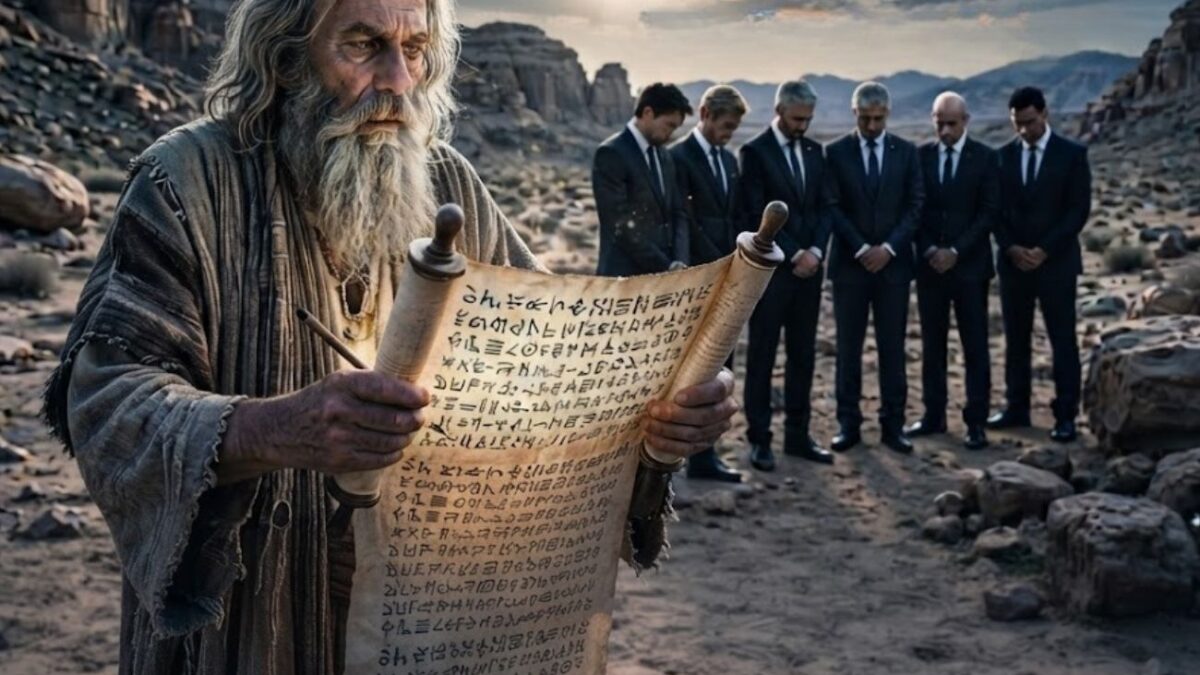
Isaiah and the figure of the Antichrist: what the prophet really wrote
Year 405 AD. In a stone cell in the city of Bethlehem, an elderly man works by lamplight, surrounded by manuscripts in Hebrew, Greek, and Latin. His name is Jerome. He spent over 20 years translating the entire Bible into Latin, the language of the common people of the Roman Empire. Therefore, his translation became known as the Vulgate, which comes from vulgar, in the sense of popular. That night, or on a night similar to that one, Jerome came across a verse in the book of Isaiah. In Hebrew, there was a rare poetic expression that appears only once in the entire Bible. He needed to choose a Latin word for it, and he chose a common Latin word that any Roman used to describe the planet Venus shining at dawn. Jerome couldn’t have known it, but that translation choice would span 16 centuries, become a proper name, become a character, and end up emblazoned in films, books, and thousands of sermons. The word was Lucifer, but here’s the detail that changes everything. That word does not exist in the text that Isaiah wrote.
And the prophet who wrote that verse wasn’t thinking about the devil, nor about a villain of the end times. He was mocking a king, a king of flesh and blood, with an army, a throne, and a crown, who oppressed entire nations and considered himself a god. To discover who this king was and to understand how the satire of a prophet became the supposed biography of the Antichrist, we need to go back even further in time, long before Jerome, 1,145 years before that cell in Bethlehem. We are now around the year 740 BC, capital of the kingdom of Judah. And it is important to understand the size of Judah at that time: a small kingdom, nestled in the mountains, living off agriculture and trade that passed through its roads. To the north existed the other Israelite kingdom, the kingdom of Israel, with its capital in Samaria, because the nation had split in two after the death of Solomon. And surrounding these two, giant powers vied for control of the world. The greatest of them at that time was not Babylon. This is the first point that almost no one mentions. At the time Isaiah began to prophesy, Babylon was an important, ancient city, respected for its culture and religion, but politically it lived under the dominion of another empire, Assyria. Assyria ruled the world of Isaiah. The Assyrian kings would leave the region that is now northern Iraq and descend with enormous armies, collecting tribute from all over the world. Those who paid survived in humiliation. Those who did not pay saw their cities surrounded, their walls torn down, and their population deported to distant lands. It was Assyria that invented on an industrial scale this policy of uprooting entire peoples from their land.
The book of Isaiah introduces itself right in the first verse, stating the era in which the prophet ministered: in the days of Uzziah, Jotham, Ahaz, and Hezekiah, kings of Judah, covering decades of ministry. And Isaiah himself recounts the moment when it all began for him: “In the year that King Uzziah died, I saw the Lord sitting on a throne, high and exalted, and the train of his robe filled the temple” (Isaiah 6:1). The year of Uzziah’s death was around 740 BC. Notice the contrast that the text itself creates. The throne of Judah had just become vacant; the human king had died. And it is precisely at this moment that Isaiah sees the throne that is never empty. This vision defines the prophet entirely. For Isaiah, there is only one true king in the universe, and any human ruler who forgets this has their days numbered. Keep this idea in mind, because it is the key to chapter 14.
In the following years, Isaiah lived through one of the most tense political crises in the history of Judah. King Ahaz ascended the throne young and found himself squeezed. The northern kingdom of Israel allied itself with Syria and attempted to force Judah into a military alliance against Assyria. Since Ahaz refused, the two came to attack Jerusalem to overthrow him from the throne. Isaiah chapter 7 says that when the news arrived, the heart of the king and the heart of the people trembled like the trees of the forest tremble in the wind. Isaiah went to reassure Ahaz: stay quiet, don’t be afraid, have faith, because those two kings who threaten you are like two smoldering logs, almost extinguished. But Ahaz didn’t trust him. Instead of resting in God, he sent messengers to Assyria, emptied the temple treasures, and bought the protection of the most violent empire on earth. It was like calling a lion to settle a fight between two cats. Assyria came, destroyed Syria, and devastated the kingdom of Israel. In 722 BC, the capital Samaria fell, ten tribes were deported, and Judah turned into a vassal state, paying heavy tribute and living with the Assyrian army breathing down its neck.
It is within this world, with this pain and national humiliation, that Isaiah writes. And this is where his book does something impressive. Starting in chapter 13, a long section of oracles against the nations begins. These are messages of judgment against the empires and peoples around them: Babylon, Assyria, Philistia, Moab, Damascus, Egypt, Edom, Arabia, and Tyre. God is saying through the prophet that no power on earth is beyond the reach of His justice. The first target on this list, the one that opens the session, is Babylon: “A judgment against Babylon that Isaiah, son of Amoz, received in a vision” (Isaiah 13:1). Why begin with Babylon if Assyria was the dominant empire? Scholars point to its symbolic weight. Babylon was the oldest and most prestigious city in Mesopotamia, the birthplace of the Tower of Babel in Genesis 11, the ultimate symbol of humanity’s self-made ambition to reach heaven. Even though it was dominated by Assyria at that time, Babylon carried that name, that fame, and that age-old arrogance. In Isaiah’s prophetic vision, it would still rise again, swallow up Assyria itself, and become the empire that would one day destroy Jerusalem in 586 BC. Isaiah sees far ahead, speaking of Babylon as the ultimate portrait of all human power that inflates itself, crushes the weak, and considers itself eternal.
And that brings us to chapter 14. Before reading any verse of it, there is information that the text itself provides that resolves half the debate on its own. Verse 4 says: “You will utter this satire against the king of Babylon and say: ‘How the oppressor has ceased, how tyranny has ended!'” The text presents itself and says what kind of satire it is. In Hebrew, the word used there is mashal. A mashal is a type of composition well known in the ancient world, which could be a proverb, a parable, or a mocking song. When a tyrant fell, the oppressed peoples composed these songs mocking him, singing of his downfall as if singing at a funeral in reverse, where no one cries and everyone celebrates. Isaiah chapter 14 even has the typical Hebrew poetic rhythm of funeral lament called kinah, only used in an ironic way—a mocking funeral where God teaches the people of Judah the lyrics to the song they will sing on the day the oppressor falls.
As Isaiah constructs the scene, it becomes one of the most cinematic in the entire Bible. The song begins by showing the land in silence: the tyrant is dead, and the whole world breathes. Verse 7 says that the whole earth is at rest and at peace, and that everyone breaks into songs of joy. Even nature joins the party; the cypresses and cedars of Lebanon rejoice, saying that since the king has fallen, no one goes up to cut them down anymore. This historical detail is real, as the kings of Mesopotamia cleared the forests of Lebanon to build their palaces and proudly recorded this in their inscriptions. In Isaiah’s song, even the trees celebrate his end.
Then the camera pans down, shifting from the ground to underground. Verse 9 refers to Sheol, the Old Testament term for the world of the dead, the deep region where everyone descended. Sheol stirs, moves, awakens the spirits of the dead, and raises from their thrones all the ancient kings of the nations. These tyrants, who died too, welcome the newcomer with a cutting mockery: “You too, like us, are weak. You have become like us. Your pride and the sound of your harps are brought down in the grave. The worms will spread out beneath you, and maggots will cover you” (Isaiah 14:10–11). Consider the weight of that image for an ancient reader: the man who used to make the earth tremble now has worms for a mattress and larvae for a blanket.
It is at this exact point in the song that the most famous and most misunderstood verse of the entire book appears: “How you have fallen from heaven, morning star, son of the dawn! You have been cast down to the earth, you who once laid low the nations!” (Isaiah 14:12). The song continues, putting into the mouth of this king the five most famous arrogant phrases of the Old Testament. He said in his heart: “I will ascend to heaven; I will raise my throne above the stars of God; I will sit enthroned on the mount of assembly; I will ascend above the tops of the clouds; I will make myself like the Most High.” The verb points upwards five times, and God’s response occupies only one line in verse 15: “However, you will be thrown into the deepest pit.” Five steps up in the mouth of man, just one push in the word of God. The song also ends with a detail noted in verse 19: this king was cast out of his grave like a rejected branch, like blood-stained clothing, trampled like a corpse on the stones. In the ancient world, not receiving a proper burial was the greatest possible misfortune for a monarch, and history records a specific king to whom this actually happened.
Before that, we need to look at verse 12 in the original Hebrew to clear up the confusion between a king of Babylon and the devil. In Hebrew, the phrase uses helel ben shahar. Translated piece by piece, helel comes from halal, which means to shine, to gleam, sharing the same root as hallelujah because praising someone means making their name shine. Ben means son, and shahar means dawn or aurora, the bright light appearing on the horizon before sunrise. Thus, helel ben shahar literally means “brilliant one, son of the dawn.” And what shines in the sky with an otherworldly intensity in the early morning hours before disappearing completely when the sun rises? The planet Venus. Academic dictionaries of biblical Hebrew define helel exactly as the morning star, the bright star of dawn. This word appears only once in the entire Hebrew Bible, used as a mocking nickname where Isaiah is calling the king the morning star because he shone brightly, scared everyone, thought he was going to take over the sky, and disappeared when the real day dawned. Furthermore, the kings of Mesopotamia associated themselves with the stars in their royal inscriptions and placed themselves under the protection of gods linked to Venus, meaning Isaiah took the religious propaganda of the empire and returned it as a joke.
So where did Lucifer come from? Around 200 BC, Jewish scholars in Alexandria translated the Old Testament into Greek, creating the Septuagint. When they reached this term, they chose the Greek word eosphoros, meaning “he who brings dawn,” which was the common Greek name for Venus. Six hundred years later, Jerome translated the Bible into Latin in Bethlehem, and the common Latin name for Venus was lucifer, composed of lux (light) and ferre (to carry or bear), meaning light-bearer. It wasn’t a proper name, but an everyday word used by Roman farmers to describe the morning star. Definitive proof that Lucifer wasn’t the devil’s name is that the word appears several other times in Jerome’s own Vulgate in entirely positive contexts: Job 11:17 describes the morning that dawns for the righteous; 2 Peter 1:19 uses lucifer to refer to Christ, the morning star rising in our hearts; and Revelation 22:16 has Jesus presenting himself as the bright morning star. If the morning star were a title for the devil, the New Testament would never have applied that image to Christ.
What happened next was an accident of history. Over the centuries, copyists and readers began to capitalize Lucifer in that verse from Isaiah, transforming an adjective into a proper noun. The 1611 King James Version retained the capital letter, and as it became the most influential English Bible, the name spread. Literature finished the work when John Milton’s 1667 poem Paradise Lost created an entire character named Lucifer, the proud angel who fell from heaven. Millions of people came to read Isaiah through Milton without realizing it, though modern translations have corrected this by using “morning star.”
The question left hanging in the air is: if helel ben shahar is a mocking nickname for a human king, which king was it? While the text mentions the king of Babylon without giving his name, historians debate three main candidates. The first is Sargon I, king of Assyria who also ruled Babylon and completed the deportation of Israel. Sargon died in battle in 705 BC, and his body was never recovered or given a royal burial, fitting verse 19 (“cast out of your grave like a trampled corpse”) like a glove. The second candidate is Sennacherib, his son, who destroyed Babylon in 689 BC and was assassinated by his own sons inside a temple. The third candidate is that it refers to no single king in particular, but to all of them at once—the crown of Babylon itself and the spirit of that throne, making any tyrant who sat there subject to the same sentence. None of these interpretations point to a report about the devil or the Antichrist, which was simply not on Isaiah’s horizon.
For centuries, Jewish readers understood the text as a judgment against the arrogance of a human throne. About 150 years after Isaiah, the prophet Ezekiel received a similar order in chapter 28 to raise a lament against the king of Tyre, described as being in Eden, covered in precious stones, and a guardian cherub until iniquity was found in him. Both Isaiah and Ezekiel used prophetic satire by dressing tyrants in the costume of religious propaganda they chose for themselves and tearing it off in public. Between the testaments, Jewish writings began reflecting on the origin of evil and telling stories about angels falling through pride. Later, Jesus’s words in Luke 10:18 (“I saw Satan fall like lightning from heaven”) and interpretations by early church fathers like Origen, Tertullian, Augustine, and Gregory the Great led to the belief that behind the kings of Babylon and Tyre lay the invisible power and fall of Satan. Combined with the Vulgate’s translation of Lucifer, the adjective became a name, the king became an angel, and the satire became a biography, eventually merging with end-times enemy figures into an Antichrist narrative.
Searching the entire Old Testament for the word “antichrist” yields zero results. In the New Testament, the term appears five times exclusively in the letters of the Apostle John, who defined it as anyone who denies the Father and the Son or opposes Christ’s incarnation in the flesh. None of the biblical authors point to Isaiah 14 to describe the Antichrist; that composite figure was assembled centuries later through a collage of various texts. Every biblical passage requires asking first what the author intended to convey to the original readers, and second what it means for today. Misinterpretations stem from rushing to the second question without understanding the first. The eternal principle in Isaiah 14 is clear: God brings down all power that exalts itself.
History confirmed Isaiah’s prophecy with chilling precision when Nebuchadnezzar ascended the throne, destroyed Jerusalem in 586 BC, and made Babylon appear eternal, only for Cyrus’s Persian army to conquer it on a single night in October of 539 BC. Today, the ruins remain uninhabited, just as Isaiah 13:20 predicted. Furthermore, while people search Isaiah for a villain he never described, they often overlook his detailed portraits of the Messiah: the birth sign of Immanuel in Isaiah 7:14, the child whose government rests on his shoulders in Isaiah 9:6, and the shoot springing from the stump of Jesse in chapter 11. Ultimately, through this unfolding tapestry of history, divine judgment, and prophetic truth, the eternal word endures, pointing humanity not toward the fleeting shadows of human tyranny, but toward the ultimate redemption found in the true King.

