Exploring the Life and Deaths of Louise Peete
Exploring the Life and Deaths of Louise Peete
Warden Clinton Duffy appeared in the door of the death house cell a few minutes before 10:00 in the morning and asked the occupant if she was ready. Prisoner 35692, a plump, middle-aged woman, looked up from the cot where she sat, her violet eyes meeting his as she smiled warmly and told him that she had been ready for a long time. Duffy detected the faint scent of Chanel Number Five, a popular fragrance favored by Marilyn Monroe, and in the years to come whenever he caught a trace of it, he associated it with the condemned woman and shuddered. Prisoner 35692 rose from the cot, straightened her brown and tan print dress, and stood five feet two inches tall, looking about as dangerous as a spinster in a sewing circle. When the warden asked if she had changed her mind about wearing the hood, she calmly reaffirmed that she did not wish to wear one, having already refused the sedatives offered to calm her.
Acknowledging her decision, Warden Duffy indicated it was time to proceed and escorted the prisoner on her last mile to the gas chamber twenty feet away, followed by two associate wardens, two nurses, two doctors, twelve prison guards, and a crowd of seventy-nine witnesses in the viewing area. The gas chamber was a metal monstrosity straight out of Jules Verne, featuring large windows in its octagonal hull that created a fishbowl effect. As they stopped before the death chamber, a guard spun the five-spoked hand wheel and swung the bank vault style door open to reveal two metal seats marked A and B. Warden Duffy turned to face his prisoner one last time, quietly instructing her to count to ten and take a deep breath when she heard a thud to make the ordeal easier.
The condemned woman acknowledged his advice with a smile, said thank you, and straightened her back as she stepped into the device with the ease of getting into a taxi, ready to be taken into the everlasting embrace of death, which had been her only faithful companion throughout an eventful life. Through the glare and the plexiglass, she saw the ghostly faces of the witnesses reflecting a mixture of shame, fear, and self-righteousness, and as she was strapped into seat B, a smile appeared on her ruby lips because she knew the world would forever remember the name Louise Pete. The door swung closed and was secured, followed by a long intermission where she heard only the electric fan with no thud or hiss of gas. Turning her head, she made eye contact with Warden Duffy through the window and said, “Let’s go,” even though she knew he couldn’t hear her. A moment later, a metallic sound echoed at three minutes ten in the morning, and the twice-convicted murderess began her countdown.
Evil walks among us in both shadow and light, greeting us with a gentle smile and soft words rather than the guise of devils. Such was the woman at the center of this tale, who used the hypnotic charm of a viper to lure victims for luxury, wealth, and beautiful things, responsible for the destruction of no fewer than six human beings through her own hand or calculated manipulation, yet going to her gas chamber without ever expressing remorse or acknowledging guilt.
Jacob Charles Denton, a wealthy mining man, bought a large Tudor revival house at 675 Catalina Street in Los Angeles for himself and his beloved wife, Dolly May, but she tragically died of pneumonia at age 28 just a month before they were to move in. Hoping to assuage his grief through an extended trip to the east, the widower listed the house for rent, and on May 25th, a woman appeared at his door whose striking resemblance to his dead wife made him think he was seeing a ghost. In her mid-30s, pretty, and refined, she possessed rare blue eyes that took on a pale violet hue in certain light, and she introduced herself as Louise Pete from Denver with a diluted southern Creole accent. Denton took to her immediately, and she soon moved into the Catalina Street home, living there as a maid according to some accounts, a claim Louise flatly denied.
Whatever her role, they did not remain together long, for around June 1st, Jacob Denton vanished, leaving the mysterious violet-eyed stranger as the only person managing his affairs. As questions mounted, Louise gave conflicting and far-fetched answers, and by September, nearly four months after anyone had seen Denton, his family pushed local authorities before hiring a Phoenix law firm and private investigator A.J. Cody. On September 23rd, Cody visited the home, which was now sublet to Mr. and Mrs. Thomas Miller and their four children. Mrs. Miller explained that she had never met Mr. Denton and had transacted the lease with a Mrs. R.C. Pete, to whom she paid the first month’s rent.
Moving to the basement, Detective Cody noticed a stark change in the atmosphere and found a crudely boarded-up space beneath the stairs that Mrs. Miller knew nothing about. Using a pry bar to remove the wood, Cody discovered a three-foot-tall mound of loose earth and began to dig with a loose board until he hit something solid and uncovered a man’s body wrapped in a blanket. Mrs. Miller let out a choking gasp as she realized the decaying remains belonged to Jacob Charles Denton.
Following the discovery, the Los Angeles DA, police, and sheriff’s department descended on the neighborhood, and while the body was too badly decomposed to reveal a cause of death, it was identified through a ring and belt buckle. James Crowhurst, a 34-year-old plumber and ex-con on parole from San Quentin, emerged claiming to have built the enclosure and possessed a gold ring inscribed with the initials JD that he had a jeweler alter. Taken into custody, Crowhurst swore out an affidavit stating he was hired in early June by Louise Pete to work on the boiler and seal off the space beneath the stairs, while Pete told him the fresh dirt covered valuable household liquor hidden from Denton’s ruthless enemies.
Paid $4.50 and given old clothing, Crowhurst had found the ring in a pocket. Witnesses confirmed Louise was the only one in contact with Denton after June 2nd, and learning she had returned to Denver, police placed her under surveillance. On October 2nd, Louise, her husband Richard, and daughter Elizabeth boarded a train for Los Angeles, confident she could outsmart the police. On October 4th, deputies swarmed her train in Victorville and transported her to a hotel in La Cresenta under house arrest.
The DA interrogated her with evidence including two forged checks drawn on Denton’s account totaling nearly $1,000, a forged will dated May 15th, 1920, and numerous attempts to sell Denton’s valuables, department store spending sprees on credit, and an aborted sale of his Pierro automobile and the Catalina Street house. Witness Ida Gregory recounted arriving in LA at the end of May to move in with Louise, only to be delayed because Denton was leaving town, and later learning on June 3rd that Denton had sheltered a Spanish woman who shot him in the arm during an argument before they both left. Gregory noted that Louise imposed a strict condition that no one enter the basement.
Gardener William Heitzman also testified that on the morning of June 3rd, Louise instructed him to haul dirt from the flower beds into the cellar space, claiming she planned to grow mushrooms. Realizing her web of stories was failing, Louise was indicted by a grand jury on October 27th for the murder of Jacob Denton, with the district attorney announcing he would seek the death penalty.
On October 6th, Louise returned to 675 Catalina Street amid a media circus, walking authorities through the rooms and down to the basement crypt while maintaining her stoic facade and blaming a mysterious Spanish woman and an underworld plot. The dead man’s family and the DA dismissed her claims as incredible, though she broke into tears once when a neighbor expressed support. As her trial approached, the final autopsy report revealed Denton died from a single gunshot wound to the base of the skull with his body intact, prompting Louise to quip that he must have a double. Blood evidence between kitchen floor tiles pointed to the basement door as the spot where the body fell, and Louise changed her story yet again to claim she witnessed Denton shoot the Spanish woman in the shoulder at 2:00 a.m. on June 2nd before bandaging her wound.
Background checks soon unraveled her past aliases and falsehoods. Born Lafy Louise Presler on September 20th, 1887, in Louisiana, she married traveling salesman Henry Bosley in 1904 before having a scandalous affair with Harry Farut in Dallas, leading to Bosley filing for divorce in 1910. Staying at a Dallas boarding house run by Benjamin and Lena Dobs, Louise stole a $700 diamond that Harry Farut sold for her at a pawn shop, though the Dobs declined to press charges. On Valentine’s Day 1913, Harry Farut was found dead from a gunshot wound to the head, officially ruled a suicide despite his family’s suspicions of murder by Louise.
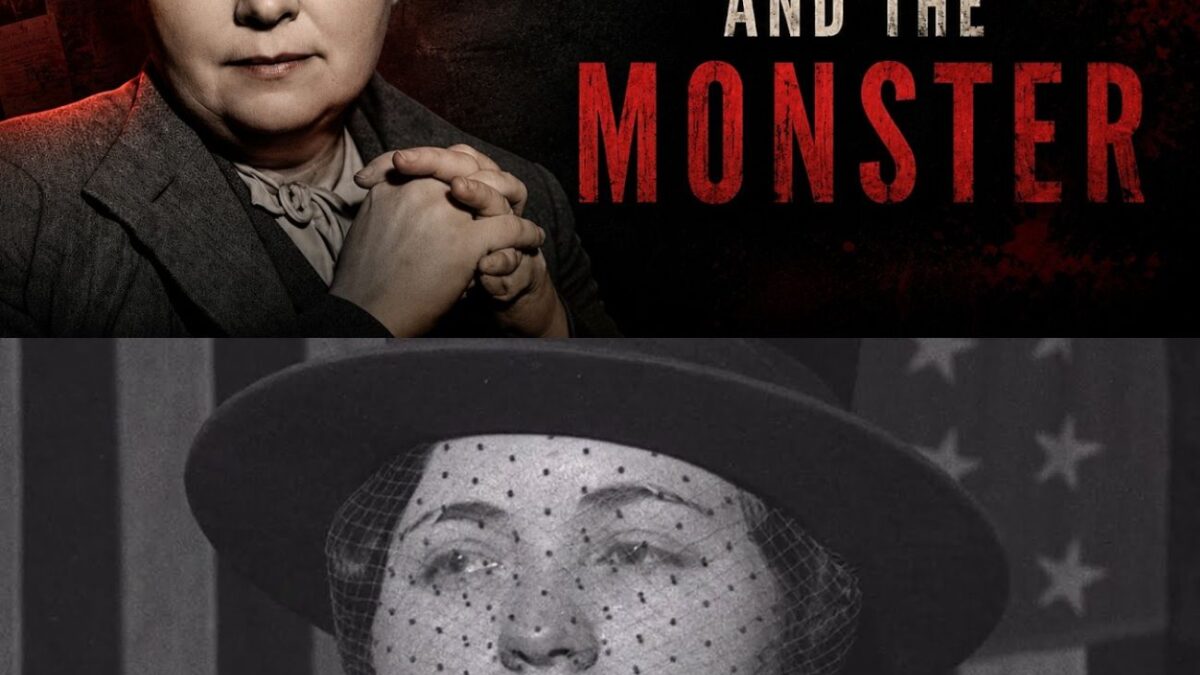
Louise’s trial began on January 19th, 1921, drawing massive unruly crowds and media attention while the defendant wore a polka-dot veil and acted like a star on stage. District Attorney Woolwine portrayed her as a ghoul who plundered Denton’s valuables after murdering him when he caught her in the act, while defense attorney Robert Scott argued the circumstantial nature of the case and questioned how a 145-pound woman could drag a 215-pound man down narrow cellar stairs alone. On February 5th, after five and a half hours and six ballots, the jury found Louise guilty of first-degree murder and spared her execution with a sentence of life in prison, while Mr. Pete broke down sobbing and Louise remained entirely emotionless.
Three years into her sentence at San Quentin, a reporter visited Louise, who remained bitter and angry, denying any confession and blaming circumstantial evidence. She adapted to prison life, maintained her innocence, and floated wild theories—including claiming in 1926 that silent film director William Desmond Taylor was murdered because he was about to name Denton’s true killers. Meanwhile, the 19th Amendment and her trial by an all-male jury galvanized female supporters who believed she was a victim of systemic bias. Her husband Richard returned to Denver, divorced her, and tragically took his own life in Tucson in 1924 while battling tuberculosis, while their daughter Betty was placed in an orphanage and shielded from the notoriety. Prosecutor Woolwine’s political career similarly collapsed after a failed gubernatorial run and subsequent health troubles leading to his death from liver failure in July 1925, fulfilling Louise’s belief that she would ultimately have the last laugh.
As the decades passed within the grim stone walls of San Quentin, Louise Pete grew older, her fiery defiance slowly giving way to the quiet acceptance of an institutionalized life. The world outside forgot the sensational headlines of 1921, moving on to new horrors and modern celebrities, leaving the enigmatic woman behind bars as a ghost of a bygone era. Even when old age weakened her health and her violet eyes lost their vibrant hue, she never once broke character or uttered a word of confession, carrying her dark secrets silently to her final breath. When she eventually passed away in prison, there were no grand parades or weeping crowds, only the quiet closing of a notorious chapter in criminal history, leaving behind a legacy of charm, manipulation, and unsolved shadows that lingered long after she was gone.

