Britain’s Darkest Manhunt: The Hunt for Donald Neilson
Britain’s Darkest Manhunt: The Hunt for Donald Neilson
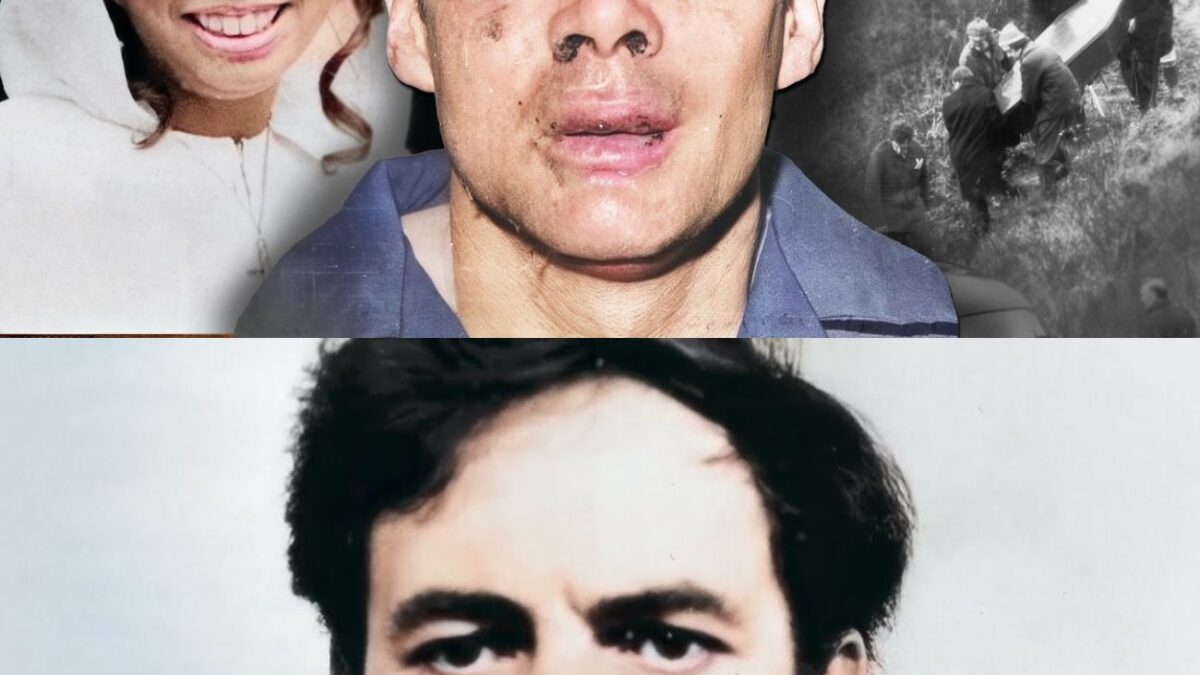
On the morning of January the 14th, 1975, 17-year-old Leslie Whittle vanished from her bedroom without a trace. Sometime during the night, an armed intruder had broken into her family home in Shropshire, England, forced her from her bed, and disappeared into the darkness. There were signs of a struggle, but no clear indication of where she had been taken or who had taken her. In the following days, Leslie’s family began receiving ransom demands. The kidnapper wanted £50,000 and issued a series of instructions, every message warning the family not to involve the police. But with the life of a 17-year-old girl at stake, her family notified law enforcement and detectives launched a massive investigation. What they didn’t know was that Leslie’s kidnapper was already responsible for various burglaries, armed robberies, and murders across Northern England. The newspapers had even given him a name: the Black Panther. But before he became one of Britain’s most wanted men, Donald Nielsen seemed on the outside to just be an ordinary guy. So exactly how did a quiet family man become a calculating murderer?
Donald Nielsen was born Donald Nappy on August the 1st, 1936, in Bradford, West Riding of Yorkshire, England. As an only child, he experienced tragedy at a young age. When he was just 10 years old, his mother died of breast cancer, a loss that had a profound effect on him. Left to be raised by his father, a former soldier, Donald grew up in a household where rigid routines and harsh physical punishments were the norm. School offered little escape as he was often bullied because of his surname, Nappy, which other children mocked. Those who knew him described him as a quiet, withdrawn boy who preferred keeping to himself. He showed a real talent for practical subjects like woodwork and metalwork, hands-on skills that would later prove useful in his criminal career. When Donald turned 14, he left school and took a job at the local repair shop, becoming even more skilled at mechanics and metalwork while developing an interest in firearms. Outside of work, his life remained troubled, and as a teenager, he began getting into minor trouble with the law, seeming to drift toward petty crime.
Everything changed when Donald joined the British army, enlisting in the King’s Own Yorkshire Light Infantry. Finally, after years of feeling powerless, military life gave Donald the purpose and power he had always craved. During postings to Kenya, Cyprus, and Aden, he learned about camouflage, fieldcraft, navigation, marksmanship, and surveillance—skills that he would eventually put to a far more sinister use. Although there is little evidence that Donald saw any serious combat, years later investigators would note that many of his crimes looked more like carefully planned military operations than ordinary robberies. He rarely acted impulsively, preferring instead to rehearse every possible scenario before taking action.
Military life, however, wasn’t an escape from the bullying he had endured as a child. His fellow soldiers continued to mock his surname, while his height—standing around 5 feet 6 inches—made him an even easier target. He also had to repeat parts of basic training, and his oversized uniform became another source of teasing. Refusing to share his cigarette ration with other recruits only made him more unpopular. Instead of trying to fit in, Donald doubled down, fashioning himself into a strict, uncompromising soldier who demanded respect. He became obsessed with rules, kept meticulous lists, and had very little patience for mistakes.
Around the same time, in April 1955, while only 18 years old, he married Irene Tate, a woman two years older than him, at Stanhope Camp on the North Yorkshire Moors. He developed a reputation for pushing himself harder than almost anyone else there, embracing freezing weather and punishing exercises like long runs carrying heavy packs. He often imagined himself commanding an elite military unit capable of outperforming even the SAS. His obsession with order extended into every aspect of his life; he wore two synchronized wristwatches, constantly checked the time, and grew frustrated whenever events fell outside his control. Within a year, he was promoted to lance corporal, finally gaining the authority to give orders instead of just receiving them. His promotion did not make him well-liked, as soldiers under his command found him rigid, overly demanding, and quick to reprimand minor infractions.
In 1958, he left the army when his wife Irene convinced him to return to Bradford to settle down. In 1960, the couple welcomed their daughter, Catherine, and four years later, Donald legally changed the family surname from Nappy to Nielsen to spare his daughter the relentless bullying he had endured. From the outside, the Nielsens appeared to be an ordinary working-class family. Donald tried to build a normal life working as a carpenter, running a taxi business, and working as a security guard, living modestly and keeping to themselves.
Yet Donald struggled to adapt to civilian life, becoming fascinated with survival techniques and military equipment. He purchased army surplus gear, collected firearms, and spent his free time practicing navigation and survival. Family outings resembled military exercises, with his wife and daughter dressed in military-style clothing and marched across the countryside with wooden rifles. At the same time, his financial situation remained unstable, and several of his business ventures struggled. Blaming employers, the government, and society rather than himself, he also developed deeply prejudiced views towards immigrants. These beliefs helped him justify his next steps, and sometime in 1965, he decided that honest work wasn’t going to give him the life he wanted, turning instead to burglary.
Approaching theft like a military mission, he would study buildings for days, identify escape routes, monitor routines, and prepare specialized equipment. As his confidence grew, so did his ambitions. During a burglary in Cheshire, he stole several firearms and ammunition. Realizing that fencing stolen property brought in little money compared to stealing cash directly, he continued his criminal enterprise, eventually committing more than 400 burglaries. Local police gave him nicknames like “The Phantom” and “Handy Andy” long before the media coined the term “Black Panther.” Despite the stolen money, Donald stayed surprisingly frugal; the money wasn’t the main point, as he derived greater satisfaction from feeling that he had outsmarted everyone else.
His crimes soon escalated into extreme violence. In February 1974, he committed his first murder during a robbery at a post office in Harrogate, North Yorkshire, killing postmaster Donald Skipper. Seven months later in Baxenden, Lancashire, he murdered former Royal Marine Derek Aston during another post office burglary. Aston’s wife, Marian, described the attacker as being as quick as a panther, which, combined with his dark clothing, inspired the media nickname. In November 1974, Nielsen attacked a post office in Langley, West Midlands, killing Sidney Gray and severely injuring his wife, Margaret. By the end of 1974, Donald Nielsen had evolved into a dangerous criminal driven by a desperate quest for money and power, ultimately setting his sights on 17-year-old Leslie Whittle.
Leslie was only a year older than Donald’s own daughter, Catherine, but he viewed her purely as an opportunity to solve his financial problems. Born on May 3rd, 1957, Leslie was the younger of two children and the only daughter of George and Dorothy Whittle. Her father had built a successful coach business from humble beginnings as a bus driver, bringing the family considerable wealth. Despite this, the Whittles remained closely connected to their community in Highley, Shropshire. Leslie was described as an intelligent, studious, and compassionate teenager studying for her A-levels in pure and applied mathematics at Wulfrun College in Wolverhampton.
In September 1970, when Leslie was 13, her father died suddenly from a heart attack at age 65, leaving behind a complicated financial situation designed to reduce inheritance taxes. Her brother Ronald received around £107,000, while Leslie received approximately £825,000 placed into a trust fund she could not access until she turned 25. Her mother received three houses and £70,000 in cash. Although wealthy on paper, Leslie’s daily life remained modest, receiving around £20 a week from her mother. However, after reading a 1972 Daily Express article detailing the family’s inheritance dispute, Donald Nielsen locked onto the family and meticulously planned the kidnapping over several years.
He selected Bathpool Park near Kidsgrove, Staffordshire, as his hiding place, utilizing an underground drainage system beneath the park known locally as the “Glory Hall.” On the night of January 14th, 1975, Nielsen returned to Highley. Cutting the telephone line outside the Whittle home and entering through the garage, he placed ransom instructions on a box of Turkish Delight in the lounge before waking Leslie at gunpoint. He forced her to dress in a dressing gown and slippers, led her to his green Morris 1300, and hid her beneath a foam mattress in the back seat before stealing roughly £200 in cash.
He drove her 65 miles to Bathpool Park, descending into the dark drainage system down to a narrow inspection platform roughly 54 feet below ground. He tethered her to the side of the shaft using a wire noose and left her with basic provisions, intending to keep her alive until the ransom was paid, while he returned to Bradford to maintain his alibi.
Back at Beachcroft, Dorothy Whittle discovered Leslie missing the next morning, along with the cut phone line, missing clothing, and the chilling ransom notes demanding £50,000 in a white suitcase and warning against police involvement. Despite the threats, Ronald Whittle immediately contacted West Mercia police. Chief Superintendent Bob Booth led the investigation, advising the family to cooperate to secure Leslie’s safe return. However, within 15 hours, details of the kidnapping leaked to the media, turning it into national news and severely jeopardizing the operation.
Frustrated and panicked by the media exposure, Nielsen forced Leslie to record an audio message on January 15th to prove she was alive and to issue further complex instructions. While scouting a drop point near Dudley Zoo that same evening, he attracted the suspicion of 44-year-old security guard Gerald Smith. When Smith moved to alert authorities, Nielsen shot him six times and fled, leaving behind his green Morris 1300. Ballistics later linked the weapon used against Smith to the murder of postmaster Derek Aston.
On January 16th, Nielsen made direct contact with Ronald Whittle, playing the recorded message and directing him to a telephone box in Kidsgrove for further instructions. Over the next several weeks, multiple ransom drop attempts failed due to missed signals, police miscommunications, and the sheer complexity of Nielsen’s multi-step trails.
Tragically, Leslie did not survive the ordeal. When Nielsen panicked during one of the botched ransom drop attempts or realized the police were closing in, he abandoned the site. Investigators eventually discovered Leslie’s body hanging from the wire noose in the underground shaft at Bathpool Park on March 7th, 1975, after a grueling search. An autopsy confirmed she had died from shock and asphyxiation after being pushed or dropping from the narrow ledge when the noose tightened.
The net finally closed around Donald Nielsen in December 1975 in Mansfield, Nottinghamshire. Two alert police officers, Tony White and Stuart Montgomery, noticed a suspicious man carrying a shotgun near a post office and confronted him. Despite Nielsen pulling a weapon and attempting to hijack a car, the officers bravely subdued and arrested him. Subsequent forensic investigations connected Nielsen to the weapons used in the murders of Donald Skipper, Derek Aston, Sidney Gray, and Leslie Whittle. In July 1976, Donald Nielsen was convicted at Oxford Crown Court of murder, kidnapping, and firearms offenses, receiving multiple life sentences with a recommendation that he never be released. He died in prison in December 2011 at the age of 75, bringing a definitive end to the dark legacy of the Black Panther.

