A Very British Scandal | The Profumo Affair
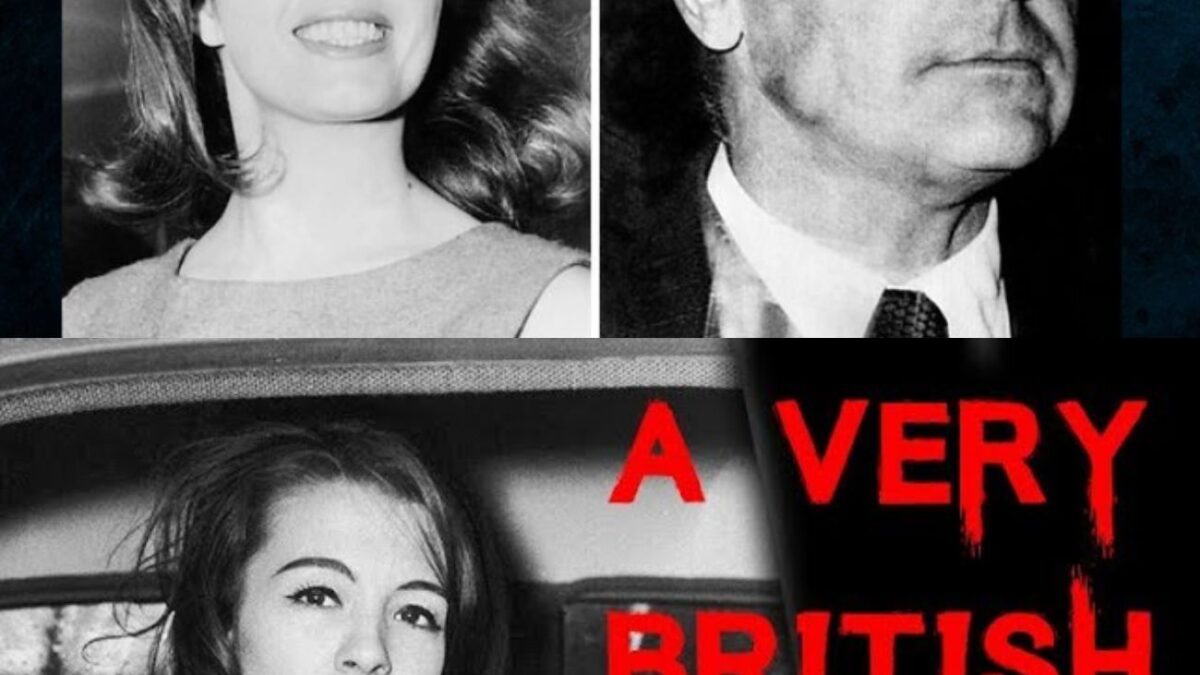
A Very British Scandal | The Profumo Affair
John Profumo was a British soldier and politician born in 1915. He attended Oxford University and in 1940 he became the 5th Baron Profumo of Italy having succeeded his father. He was a British MP from 1940 to 1963 and was an army officer during the war. He was appointed Secretary of War by the British Prime Minister Harold Macmillan in 1960. As war minister, he was in charge of overseeing the British Army. The post was a junior cabinet position, but he looked a good candidate for future promotion. He was a wealthy politician and was even a personal friend of Queen Elizabeth. He undoubtedly had an aristocratic background. In 1960, he married Valerie Hobson, a famous actress. He was a man of great education, wealth, and power.
Stephen Ward was born in 1912 in Hertfordshire. His family had a clerical and military background; his father was a vicar, so his upbringing was centered around religion. He was educated in Dorset at Canford School, one of the most expensive boarding schools in the country. He was, however, seen as a lazy student who achieved very little in his time there. In 1929, he left the UK and went to the United States to study at Kirksville College to become an osteopath. However, it wasn’t until the late 1930s that he became a qualified osteopath due to him returning to London and working in various different fields of work. He served in the British Army during the war, where his skills became known to all around him. In 1944, he was posted to India, and in October 1945, Ward returned to England after being discharged from the Army due to a disability. Being an osteopath allowed him to quickly grow a large social circle, having clients from all walks of life: politicians, sports people, and people in show business. He frequently attended parties and hosted various ones of his own.
Evgeny Ivanov was born in Russia on the 11th of January, 1926. In 1944, he joined the Red Navy and was trained by Soviet military intelligence. In 1960, he was posted to London as an assistant naval attaché. He was accompanied by his wife, Maya. The British MI5 saw him as a Russian spy and tried to make him change allegiance and side with them, however this proved to be unsuccessful.
Christine Keeler was born in London in the year 1942. She had a very different upbringing to Profumo, Ward, and Ivanov; her childhood was difficult and she experienced many hardships. When she was just a young child, her father deserted the family, leading to Christine and her mother living in a converted railway carriage near Windsor. Throughout her teenage years, she was sexually abused by her mother’s lover and his friends. When she left school, her future didn’t look promising; she had no qualifications and was in and out of different jobs. Christine was a very beautiful girl, and men would always approach her. With no qualifications or a trade, she eventually found a job in a nightclub called Murray’s, serving drinks and posing on stage for the clients. It was on one of those nights when Christine was working at Murray’s that she met Stephen Ward, and soon after their first meeting, she moved into his flat. Their relationship, however, was purely platonic. They frequently attended parties together where Ward would introduce his friends to Christine.
Over the weekend of the 8th and 9th of July, 1961, Lord Astor and his wife Bronwyn hosted a small house party at Cliveden, their country estate. Their guests included the Secretary of State for War, John Profumo, and his wife. The same weekend, Stephen Ward was also hosting a house party at his country home, Spring Cottage, which was within the grounds of the estate. Ward’s guests included Christine Keeler and her lover Evgeny Ivanov, a Soviet naval attaché. As it was a warm evening, Ward decided to take his friends to Lord Astor’s house for a dip in the swimming pool, where they were discovered by Lord Astor and his guests. Stephen Ward introduced the 46-year-old British government minister John Profumo to the 19-year-old model Christine Keeler. Despite being a British politician and 27 years her senior, John Profumo found Christine very attractive and continually pursued her. A few weeks later, Christine and John became lovers. The relationship was at first very intense, but sometime before the end of 1961, Profumo ended the relationship. So in 1961, a young British girl was sleeping with the British Government Minister for War and a Russian spy, but the affair with John Profumo had ended, and Christine got on with her life.
In 1962, Christine started seeing Johnny Edgecombe, an ex-merchant seaman from Antigua. He was possessive and violent, so Christine ended the relationship due to his domineering behavior. Edgecombe hated the thought of Christine being with anyone else, so on the 14th of December, 1962, he arrived at Christine’s flat demanding to see her. When he was not allowed in, he fired several shots at the front door. The police were called, and shortly afterwards, Edgecombe was arrested and charged with attempted murder. The story of the shootings was given considerable coverage in the newspapers, and when Christine was questioned during a subsequent police investigation, details of her affair with John Profumo came public. She also admitted a concurrent relationship with Ivanov.
When the Johnny Edgecombe trial started, Christine was due to give evidence but suddenly went missing; she had in fact gone to Madrid. By now it was March 1963, and Westminster and indeed the whole country was full of rumors about John Profumo’s presence at wild parties and his association with Christine, and there were suggestions that she had been packed off to a hiding place in Madrid to avoid an embarrassing cross-examination which was aimed to protect people in high places. Questions were asked in the House of Commons about the suspicious and intriguing circumstances surrounding the missing witness who had fled to Madrid and was eventually tracked down by newspaper reporters. A pretty young lady sleeping with both a British government minister and a Russian spy at the same time was something the members of parliament for the opposition Labour Party were not going to let go.
On March 21st, 1963, the Labour MP for Dudley raised the issue in the House of Commons, inviting John Profumo to affirm or deny the rumors of his improprieties. This was apparently not to embarrass the Conservative government, but because of the Ivanov connection, which meant it was a matter of national security. Behind closed doors, however, British intelligence had already concluded that Profumo had not compromised national security in any way and also found little evidence implicating Ivanov as a spy. Nevertheless, the opposition Labour Party had raised the issue, and Profumo had no choice but to stand up before Parliament on March 22nd and make a statement. He denied all the charges, saying there was no impropriety whatsoever in his friendship with Miss Keeler. He said that he would not hesitate to issue writs for libel and slander if scandalous allegations are made or reported about him. This statement was incredibly accepted by the Prime Minister and the cabinet; Downing Street described the matter as closed. Profumo’s convincing denial diffused the scandal for several weeks.
In May, Dr. Stephen Ward went on trial in London on charges of prostituting Christine Keeler and other young women. In a highly sensationalized trial, Christine Keeler testified under oath about her relationship with Profumo. Ward also wrote to Harold Wilson, leader of the Labour opposition party, and confirmed that Profumo had lied to the House of Commons. On June 4th, Profumo returned from a holiday in Italy and confessed to conservative leaders that Miss Keeler had been his mistress and in fact his March 22nd statement to the House of Commons was untrue. On June 5th, he resigned as war minister.
British Prime Minister Harold Macmillan was widely criticized for his handling of the scandal in the press and in Parliament. Macmillan was condemned as being old, out of touch, and incompetent. In October, he resigned under pressure from his own government; he was replaced by Conservative Alec Douglas-Home, but in the general election of 1964, the Conservatives were swept from power by Harold Wilson’s Labour Party. The Profumo affair is one of the most famous British scandals of the 20th century, and many claimed that the scandal brought down the government.
Stephen Ward went on trial in July 1963 and was abandoned by society friends and exposed to the contempt and hostility of prosecuting counsel and judge. Despite the relative lack of evidence and dismissal of most of the charges against him, he was convicted on two counts of living off immoral earnings. However, before the verdict was announced, Ward took an overdose of sleeping pills and died three days later. Fifty-one years later, in 2014, the trial verdict was put under review by the Criminal Cases Review Commission.
On December 6th, 1963, Christine Keeler was jailed for nine months for perjury; she had lied in court in an attempt to secure the conviction of another lover who she had met after her relationship with Profumo had ended. She was released in 1964 after serving four and a half months in prison. She went on to have two brief marriages and produced two children. She largely lived alone, and most of the money she made from newspaper stories due to the Profumo case was spent on legal fees. Christine spent much of her later life as she had her childhood: poor and living in social housing. Christine died on December 4th, 2017, at the age of 75.
Ivanov was recalled to Moscow in December 1962, prior to the Profumo affair becoming public knowledge. Upon returning to the Soviet Union, he continued his naval career, being assigned to the Black Sea Fleet. His wife, Maya, left him when his affair with Christine became public. He did not remarry, and in 1994, was found dead in his Moscow flat at the age of 68.
John Profumo retreated from public life and dedicated himself to voluntary work, cleaning toilets at the charity Toynbee Hall in East London. He continued to work there for the next 40 years, only reluctantly taking on a more prominent role as chief fundraiser. The good work earned him redemption in the eyes of many, and in 1975, he was awarded the CBE. Twenty years later, he sat next to the Queen at Margaret Thatcher’s 70th birthday party. His wife stayed loyal to him through it all and also devoted herself to charity work until her death in 1998. John Profumo died of a stroke at the age of 91 in 2006, leaving behind a legacy defined by a catastrophic fall from grace followed by a lifetime of quiet atonement that ultimately reshaped how history remembers him.

