A New York Heiress Walked Onto Fifth Avenue to Buy a Book and Never Came Home: Dorothy Arnold
A New York Heiress Walked Onto Fifth Avenue to Buy a Book and Never Came Home: Dorothy Arnold
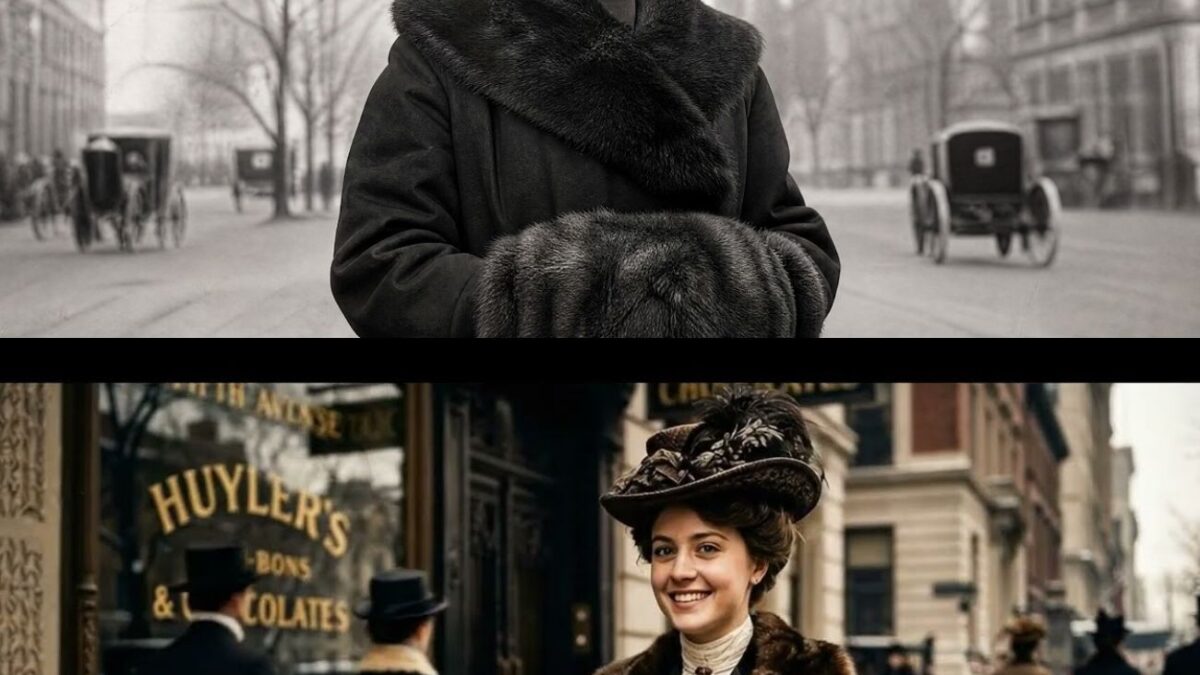
On a cold Monday afternoon in December of 1910, a young woman in a tailored blue suit and a black velvet hat stepped out of a bookshop on Fifth Avenue, waved to a friend she had met on the pavement, and walked north into the winter light. She was 25 years old, the daughter of a New York perfume fortune, and she was never seen again. Her family did not call the police for six weeks. They said nothing at all and hired private detectives to search the morgues in silence because a daughter reported missing was a daughter whose secrets would be read aloud in every paper in the city. They chose the silence. Her name was Dorothy Arnold. And somewhere between a box of chocolates and the gates of Central Park, she walked out of the record of the world.
The last person to speak with Dorothy Arnold watched her lift a hand a second time, turn, and walk north up Fifth Avenue toward the park. It was a little before 2:00 in the afternoon, the 12th of December, 1910, and the light on the avenue was the thin, bright light of a cold day. The friend was a young woman named Gladys King, who had run into Dorothy on the pavement outside a bookshop a few minutes earlier. They had talked easily and warmly about a party that was coming, a coming out for Dorothy’s younger sister, the kind of thing the two of them had talked about a hundred times. Then Gladys King went off to have lunch with her mother. And Dorothy said she would walk home through the park and turned and waved again. The second wave, the unnecessary one, the one you give a friend you expect to see on Thursday. And that is the end of it. That cheerful, redundant second wave is the last certain fact anyone has ever had about the life of Dorothy Arnold.
Everything before it can be reconstructed hour by hour with the strange clarity that the case has always had. She had left the family house that morning at about 11:00. She had walked to a fashionable shop at the corner of Fifth Avenue and 59th Street and charged a small box of chocolates to the family account, and she had tucked the box into the fur muff she carried against the cold. Then she had walked south, more than 30 blocks of it, all the way down the avenue to a bookshop near 27th Street, and there she had bought a book. It was a slim volume of light, funny essays with a title that would come to feel like a small cruelty when people read it back later. The clerks remembered her. She was pleasant. She was ordinary. She was a well-dressed young woman on an errand on the most watched street in the country in the middle of a Monday afternoon. And nothing about her gave the smallest warning of what was or was not about to happen.
And then she was gone. Not into a dark alley, not down some lonely road at night, but off the open pavement of Fifth Avenue in daylight, in a city of millions of eyes, in the very center of the world she belonged to. No cry was heard. No struggle was seen. No body was ever found. In a hundred years and more, through every kind of search that money and grief and the newspapers could mount, not one reliable trace of her has ever surfaced. She simply stepped out of the record between a box of chocolates and the trees of Central Park, and the record closed over the place where she had been.
This is a story about a disappearance, and it is one of the most famous disappearances in the history of the city. But that is not really the part that should keep you awake. Women and men vanish in every age, and most of the time the vanishing, however terrible, is at least met with an alarm, a search, a shout raised at once into the dark. What makes the case of Dorothy Arnold different, what makes it so cold and so permanent, is what the people who loved her did next. They did not raise the alarm. They did not call the police that night or the next day or for six long weeks after. They went instead to a lawyer. They hired private detectives and sent them quietly through the morgues and the jails and the hospitals of three cities. And they said nothing to anyone because the thing they were most afraid of was not that Dorothy might be dead. It was that Dorothy might be talked about, for she had a private life, this cheerful girl on the winter pavement, a life her family had spent a great deal of energy keeping behind closed doors.
There was an older man they had forbidden her to see. There was a week she had spent with him that was not spent where she had said it was. There was a jewel box that had been quietly emptied to pay for it, and an ambition of hers that the family found faintly embarrassing, and a whole small architecture of secrets that a police investigation would have pulled straight out into the daylight. And so, faced with a choice between finding their daughter and protecting their name, the Arnolds hesitated at the door. And in the six weeks of that hesitation, the trail that might have led to her went stone cold. That is the true shape of this story. A young woman who had everything a fortune could buy except the freedom to use it, and a family who had everything except the willingness to be embarrassed, and a front door between them that stayed shut at the exact moment it should have been flung open. The book she bought that afternoon was called, of all things, “Expert Waitress” or “An Engaged Girl’s Sketches,” and she was carrying a love her family had banned, and possibly a secret heavier than that. And she waved a second time to a friend and walked north into the light. What happened after she passed out of Gladys King’s sight is the question that a century has not answered. What is not in question and never has been is that the people best placed to answer it decided for six irreplaceable weeks that they would rather not know.
The house at 108 East 79th Street was the kind of address that did not need explaining in the drawing rooms that mattered. It stood on the upper east side of Manhattan, a comfortable townhouse on a good block. And behind its door lived a family that the city’s own social bible, the register that listed the people who counted, was pleased to include. The door stayed shut in December of 1910 for a reason written into the family’s whole position, and the reason was how much it had to lose, and how new some of it still was. The New York the Arnolds belonged to was a city sorting itself fiercely and minutely into those who counted and those who did not. It was the age of the calling card and the dinner list, of the box at the opera, and the right pew and the right address. A whole elaborate machinery by which old families and rising ones alike proved week by week that they still belonged. A family climbed by being received and fell by being cut, and a single loud scandal could undo in a season what three careful generations had built.
The Arnolds sat comfortably inside that world, neither at its dizziest height, nor anywhere near its edge, and their comfort depended entirely on the machinery running smoothly, on nothing ever showing, on the smooth, closed face of the house, never once slipping to reveal the ordinary human trouble behind it. The money came from trade and from perfume above all. Dorothy’s father, Francis Rose Arnold, was a Harvard man and the senior partner of an importing house that dealt in what the age politely called fancy goods, the scents and small luxuries that a rich country was learning to want. It was a good business and a respectable one, and it had bought the townhouse and the servants and the season, and it had earned the family its place on the register. Exactly how large the fortune was, the record does not honestly say, and this narrative will not pretend to a figure it cannot stand behind.
What can be said is plainer and in its way more telling. This was a family whose father had gone to Harvard, kept a house on 79th Street, married his sister to a justice of the Supreme Court of the United States, and would, when the worst came, spend something on the order of a quarter of a million dollars trying to find one daughter. That is not the wealth of legend, not a Vanderbilt palace on Fifth Avenue. It is something quieter, and for this story, more dangerous. It is respectable money, careful money, the money of a family whose whole standing rested on being beyond reproach. And the standing reached very high. Dorothy’s aunt, her father’s sister, had married a man named Rufus Peckham. And Rufus Peckham was not a lawyer or a banker, but a justice of the Supreme Court of the United States, one of the small handful of men who sat in judgment over the whole republic. He had died the year before Dorothy vanished in 1909. So he plays no part in the events themselves and he should not be made to. But his shadow is the point.
This was a family connected by marriage to the highest court in the land. A family for whom the newspapers were not a nuisance but a threat. A family that understood in its bones that a scandal in the daughter’s generation was not merely embarrassing, but a crack in a wall that reached by way of an aunt’s wedding all the way to the Supreme Court bench. The higher the wall, the more unbearable the crack. That arithmetic, more than anything else, is what would keep the front door shut through six weeks that could not be bought back. Behind the door, the family was large and on the surface entirely ordinary. There were four Arnold children. John was the eldest, born the winter before Dorothy. Then came Dorothy herself, born on the 1st of July, 1885, the second child and the elder daughter. Then a younger brother and last of all a younger sister, Marjorie, born in the summer of 1891, six years behind Dorothy and just now in the winter of 1910 coming to the age when a girl of her class was launched into society. It was Marjorie’s launching, her coming out, that gave Dorothy her errand on that last afternoon. The youngest sister, in other words, sits quietly at the very center of the story. The innocent occasion of the last walk, the party dress that was the reason to go out and was never actually bought.
There is one more thing to hold about this family, and it is the hardest to see from the outside, because from the outside, everything looked correct. The correctness was the whole enterprise. A house like this ran on the invisible labor of servants who answered its door and laid its table and were trained never to be noticed. It ran on calling cards and dinner lists and the exquisite management of who was received and who was not. It ran above all on the confidence that whatever happened inside its walls would stay inside its walls, that the family could present to the avenue a smooth, unbroken face while it arranged its private business behind the plaster. For most families of the sort, most of the time the machine worked. It kept the servants silent and the secrets kept and the door shut. What no one at 108 East 79th Street could have imagined on a Monday morning in December was that within a day the machine would be turned at full power, not to the managing of a marriage or a debt or a difficult guest, but to the hiding of a vanished child. The door that had been built to keep the world out would be used instead to keep a daughter’s disappearance in. And the very skill of it, the very smoothness of the closed face the family showed the avenue, is the reason the world took six weeks to learn that anything at all had gone wrong.
Of the four Arnold children, Dorothy was the one who wanted something the family calendar had no room for. She had been given the education that a careful rising family gave its clever daughters. She had gone first to a good school for girls in the city and then away to Bryn Mawr, one of the finest women’s colleges in the country, where she read literature and language and did well and graduated in 1905. She came home to 79th Street with a first-rate mind, a serious love of books, and precisely nowhere to put either of them, because the life laid out for a daughter of her house had no more use for a literature degree than for a foreign coin. What she wanted was to write, not to dabble, not to keep a pretty diary, but to write and to be published, to see her own name over her own words in the magazines that people read. It is a modest ambition, told plainly, the ambition of a thousand bright young women before and since. In the world of 108 East 79th Street, it was treated as a charming eccentricity, a phase, a thing the family found gently amusing rather than a thing they took seriously, and the difference between amusement and seriousness would turn out to matter more than anyone in that house understood.
Dorothy took it seriously. She wrote. And because she took it seriously, she also began quietly to keep it to herself. She rented a post office box, a small private letter box of her own, so that the correspondence about her work would not pass under her family’s eyes at the breakfast table. It is a tiny detail, and a heartbreaking one, because of what it says about the shape of her life. A grown woman of twenty-five, living in her father’s house, felt that the only way to pursue an honest, respectable ambition was to hide the evidence of it behind a rented box like a woman hiding love letters. In the spring of 1910, she sent a story to McClure’s, one of the great magazines of the day, and it came back rejected. She rented the box. She tried again. The answer was the same. There is nothing unusual in that, of course. Every writer who has ever lived has a drawer full of the same cold letters. What was unusual was that she had at home no one who thought the striving itself was worth respecting, and a great deal to make her feel the failure alone.
To earn a living by her pen was not, in 1910, a wholly impossible thing for a woman. For Dorothy, it was impossible all the same, and what made it so was her own family and her own class. The whole settled weight of an idea that a daughter of the register did not go out and earn, did not take rooms among artists, did not turn a ladylike accomplishment into a working life. She could want the thing with her whole heart, and she did, and she simply could not be permitted to have it, because the permission in that house was never hers to give, for the ambition ran straight into the wall of the house and the wall did not move. At some point in that last year, perhaps two months before she disappeared, Dorothy asked her father a direct and daring question. She asked whether she might take rooms of her own, an apartment down in Greenwich Village, the part of the city where writers and artists lived, so that she might work. It was a bold request for a young woman of her class and time, and it was in its way a request for a life. Her father refused it. And the reason he gave, the line that has come down through every telling of this story, was this. A good writer, he told her, can write anywhere. It is the kind of thing a father says to close a subject, brisk and reasonable on its face, and underneath it a small door swinging shut. There would be no rooms of her own. There would be no Greenwich Village. There would be the house and the season and the calls and the writing squeezed into whatever corners the calendar allowed, and the quiet, steady message, never shouted and never quite spoken, that the thing she wanted most was not a thing that would be permitted to matter.
Here already, before any lover or any disappearance, is the deepest and most bitter irony of Dorothy Arnold’s life, and it is worth seeing clearly before the mystery closes over it. She was an heiress. She had the name, the address, the education, the standing that reached to the Supreme Court, the fortune humming somewhere in the background of every day. And she could not rent a small apartment to write in. She could not choose her own work. She could not, as the next chapters will show, choose her own love. She owned or would inherit a share of real money, and she commanded almost none of it because the money was administered by men and spent on the things the family valued. And the things the family valued did not include a daughter’s wish to be a writer. That is the engine underneath everything that follows. Not poverty, the opposite of poverty. A young woman surrounded by wealth and hemmed in on every side by it, rich in everything except the one currency she actually wanted, which was the freedom to spend her own life on the thing she loved. When she walked out of the house on that last morning, she was walking out of a golden room with the door only ever open a crack. And the question the rest of this story cannot stop asking is whether that afternoon for the first time she simply decided not to come back.
The trouble when the newspapers finally found it had a name and an address in Pittsburgh. The name was George Griscom the Younger, and he was on paper exactly the sort of man a family like the Arnolds ought to have welcomed. He came from money of his own, a comfortable Pennsylvania family, and he was an engineer, a man with a profession and a place in the world. Dorothy had met him years before in the seasons around her time at Bryn Mawr, and by 1910, the attachment between them was the settled fact of her private life. He was no seducer out of a melodrama, no penniless adventurer after her fortune. He was a real suitor, a man she cared for and who cared for her, and under almost any other circumstances, the match would have been unremarkable. He kept rooms at a good hotel in Pittsburgh, the settled bachelor arrangement of a man of means, and he came and went across the country and across the ocean, as such men did, without the daily anchor of an office or a firm.
To Dorothy, meeting him in the years of her early twenties, he must have seemed the very opposite of the boys her family paraded before her, the earnest, occupied, suitable young men of good New York houses. He was older, worldly, unhurried, a man who had already made his own shape in the world and answered to no one. For a young woman kept on a short rein, forbidden her own work and her own rooms, the appeal of a man who lived exactly as he pleased is not hard to understand. He was, whatever else he was, free in all the ways she was not, and she loved him. But her family would not have him. And the reasons, when you lay them side by side, tell you a great deal about the world Dorothy lived in. The first reason was age. George Griscom was about forty years old to Dorothy’s twenty-five, a gap of fifteen years and more, wide enough to make a careful family uneasy. The second reason was subtler and in that house more damning. Griscom, for all his money, seemed to the Arnolds to be a man without enough to do. He kept rooms at a hotel in Pittsburgh and traveled and lived, in their eyes, the life of a man of leisure rather than a man of purpose. And to a household built on the idea that respectability meant occupation, meant a profession that filled a man’s days, that was a quiet mark against him. And there may have been a third reason, never quite stated, which was simply that he was Dorothy’s own choice, arrived at on her own, outside the machinery of introductions and approvals by which a family like theirs expected its daughters to be matched.
That machinery deserves a word, because it was the water Dorothy swam in. A daughter of her class did not simply meet a man and marry him. She was introduced at the right dinners to the right men, vetted in advance for family and fortune and prospects, and steered by a hundred small pressures toward a match her parents could approve. Her heart was treated in effect as a family asset to be invested wisely and never squandered. To love outside that system, to choose a man her parents had not chosen and plainly would not have, was to commit a kind of quiet treason against the whole arrangement. And Dorothy had committed it. She had reached past the approved young men of good New York houses and fixed her heart on an older man from another city, whom her family judged idle and unsuitable, and she would not be moved off him. That stubbornness, that refusal to be matched and married like a piece of property, is the second great act of will in a life the world now remembers only as a disappearance. Whatever the exact weight of the reasons, the verdict was firm. The Arnolds disapproved of George Griscom, and as the attachment deepened, the disapproval hardened into something closer to prohibition.
One small fact belongs here because it would come back to wound the family later. When at last the story broke and reporters pressed Francis Arnold on whether his daughter might have run off with some man, the father answered with a flash of feeling that told more than he meant it to. He said he would have been glad to see Dorothy in the company of more young men, especially young men of brains and position, men whose profession or business would keep them occupied. He did not approve, he said, of young men who had nothing to do. He thought he was defending himself. What he was actually doing in front of a room full of reporters was describing George Griscom so precisely that every man present knew at once where to look. The disapproval that had governed Dorothy’s life in private became in that moment the first thread the newspapers pulled. For now, in the ordinary run of 1910, the disapproval simply sat over the household like weather. Dorothy was a grown woman of twenty-five who loved a man her parents had ruled out and who lived nonetheless under their roof and their rules with her own letters rooted through a rented box and her own wishes filed under things that would not be permitted to matter. It was an impossible position and it was an entirely common one, and the pressure of it was building all through that last year in ways no one in the house was measuring. A daughter kept from her work and kept from her love inside a family whose whole standing depended on nothing ever showing is a kind of sealed vessel. And sealed vessels, given enough heat and enough time, do not stay sealed. What the Arnolds did not know, as the autumn of 1910 came on, was that the vessel had already been breached once in secret months before, and that the breach was about to be discovered.
In September of 1910, Dorothy told her parents she was going to visit a former classmate in Boston, and she was not. It was the ordinary cover of a woman with somewhere else to be, the friend in another city whose name lends respectability to a few days away, and Dorothy used it the way it has always been used. She did not go to Boston, or if she passed through it, Boston was not the point. She spent the time, a week of it, with George Griscom, the man her family had forbidden, in a hotel, as his companion. For a young woman of her exact position in that exact year, it is difficult now to convey how far outside the lines this was. It was a scandal she had chosen, planned, and paid for, with her eyes open, and that is what makes it the true center of the whole case. The double standard of the age hung over such a week like a blade. A man of Griscom’s sort could travel with a woman and come home untouched by it, his reputation as clean as when he left. A woman carried the whole weight of it alone. For a daughter of a family in the register, a single week away with a man she had not married could quietly finish her if it ever became known, close the doors that had stood open to her, turn the calling cards away, and stain by association the whole family whose good name she carried.
Dorothy understood all of that. She was an intelligent woman of twenty-five who knew exactly what she was risking, and who weighed it, and who chose the week anyway. The act took a kind of nerve that the word scandal entirely misses. It was the boldest thing she is known to have done, a deliberate reach for a life of her own choosing, made in full knowledge of the price, and the paying is the detail that lingers. Dorothy did not have free command of money for all the wealth around her. So to finance the week, she pawned her own jewelry, something on the order of five hundred dollars worth of it, carrying her jewels to a pawnbroker and trading them for the cash that would buy her a few days of the life she wanted. Picture the sequence of it plainly, an heiress, a daughter of a family listed in the social register and married into the Supreme Court, quietly pawning her own jewels because it was the only money that was truly hers to spend, and spending it on a week with a man she was not allowed to love. There is the whole tragedy of her position in a single act. The fortune was everywhere around her and none of it was in her hand. And the one time she reached for what she wanted, she had to sell her own diamonds to reach it.
The week ended, as such weeks do, and the secret did not keep. Somehow the truth of where she had been and with whom came home to 79th Street. One can only imagine the scene because the family did not record it. But the outcome is known. The Arnolds discovered the deception and they forbade the relationship outright. Whatever quiet disapproval had governed things before now became a flat prohibition, a door shut and locked. Dorothy was not to see George Griscom again. She did not obey, of course, not entirely. She went on writing to him, the letters still passing through channels her family did not control. But the meetings, so far as anyone can establish, effectively ended. The last time the two of them are known to have been together was in early November of 1910, a few weeks before she vanished, shortly before Griscom left with his own parents on a long trip abroad. A family holiday that would carry him to Italy and, as it happened, place him on the far side of an ocean at the exact moment his name was about to become the most discussed name in New York.
When he sailed, the thing between them was under a ban, watched and unfinished. Dorothy was left in the sealed house, with her forbidden love pushed underground, her secret discovered, her jewelry gone, and her family more vigilant than ever. There is a particular cruelty in the timing of it. She had made her one great bid for a life of her own in September, and by October it had cost her nearly everything the bid was meant to win. The man had been placed under prohibition, and then carried across an ocean. The jewels were pawned and gone. The secret was out, at least within the walls of the house, which meant that the watchfulness that had always hemmed her in now hardened into something closer to a guard. She was a grown woman of twenty-five, and she was living by the autumn of 1910 more closely watched than she had been as a girl. Her letters, the last thin channel to the life she wanted, and even those under a shadow of suspicion. And into that already unbearable autumn came one more blow. A small one by the measure of the world, a large one by the measure of a heart, and it landed in the post.
In November, her second story came back from McClure’s and this time the rejection landed somewhere deeper. She had written another piece, a story she called “The Poinsettia Flames,” and she had sent it out into the world with whatever hope a young writer allows herself, and the world had returned it. It was the second time the same magazine had turned her away, and coming when it did, in the middle of the ruin of her private life, it seems to have struck her much harder than the first. Friends said afterward that she was low, dejected, embarrassed, and it is not difficult to see why. The one arena of her life that was truly her own, the one ambition she had pursued in secret and on her own terms, had now closed its door, too. Love forbidden. Work refused. The two rooms she had tried to make for herself, both shut in the space of a single autumn. McClure’s was no minor sheet to be shrugged off. It was one of the great magazines of the American moment, a place where the finest reporters and storytellers of the age appeared, where a new writer’s whole life could turn on a single acceptance, where to be printed was quite simply to arrive.
And so the second rejection carried a weight far beyond the ordinary sting of a returned envelope. It was the closing of the one door Dorothy had managed to open entirely on her own, without her family’s leave, in her own name, and through her own rented box. She had reached past the walls of her life toward the single thing that might have been hers and no one else’s, a name earned by her own hand, and the answer had come back twice now. And both times it was no. We know something of what she felt because for once her own voice survives. In a letter to Griscom written after that second rejection, Dorothy set down a few sentences that have haunted the case ever since because they can be read so many ways and none of them is comforting. The story had come back, she wrote. McClure’s had turned her down. Failure, she said, stared her in the face. And then the line that everyone who has ever studied this case comes back to. All she could see ahead of her, she wrote, was a long road with no turning. And then one more sentence, stranger still. Her mother, she wrote, would always think that an accident had happened.
Sit with those words for a moment because they are the closest thing we will ever have to hearing her think. A long road with no turning. It is the sentence of a woman who feels her life narrowing to a single grim corridor with no door out of it. And it has been read ever since as everything from ordinary low spirits to the flat announcement of a plan. And that last line about her mother and the accident is stranger yet. Investigators at the time could never work out what she meant by it, and no one since has done any better. Was it a passing thought, a daughter imagining how her mother would explain a spinster’s quiet unhappiness? Or was it something colder? A woman already half deciding on a departure and picturing in advance the story the family would tell to cover it. The honest answer is that we do not know and cannot, and that the not knowing is part of what makes the letter so terrible to read. She left us her despair in her own hand and she did not leave us its meaning. Read the line about her mother once more because it is the strangest thing she left behind. Her mother, she wrote, would always think an accident had happened. The sentence seems to look forward past the writing of it toward some event not yet arrived, and toward the story that would be told about it afterward. A woman merely low in spirits does not usually pause to imagine how her mother will one day explain her. A woman with a plan might, or the words might carry nothing more than the heavy fog of exhaustion.
As the cold of December settled over Fifth Avenue, Dorothy’s world shrank to the boundaries of 108 East 79th Street, a glittering cage where every movement was monitored and every true desire was locked away. When she stepped out on that fateful afternoon to buy a book and a box of chocolates, she carried the quiet weight of a shattered ambition and an exile’s heart. Whether she vanished into the winter dusk of Central Park of her own accord, seeking a final escape from a life that offered no turns, or met a darker fate in the blind spots of the city, the truth slipped away with her. In the end, the family got what they desperately wanted: silence. The newspapers buzzed for months, private detectives scoured foreign ports and distant cities, and George Griscom returned too late from abroad to find anything but an empty room and a wall of quiet denials. But the silence they preserved so fiercely became their own monument, locking Dorothy Arnold forever in the gray mist between history and mystery, a girl who walked into the daylight of New York and simply ceased to be.
Disclaimer: This story is fictional and created for entertainment purposes only.
Any names, characters, places, or events are fictitious or used fictitiously.
No real person or organization is intended to be portrayed.

