A Murder at the Brown Palace Hotel – The Story of Isabel Springer
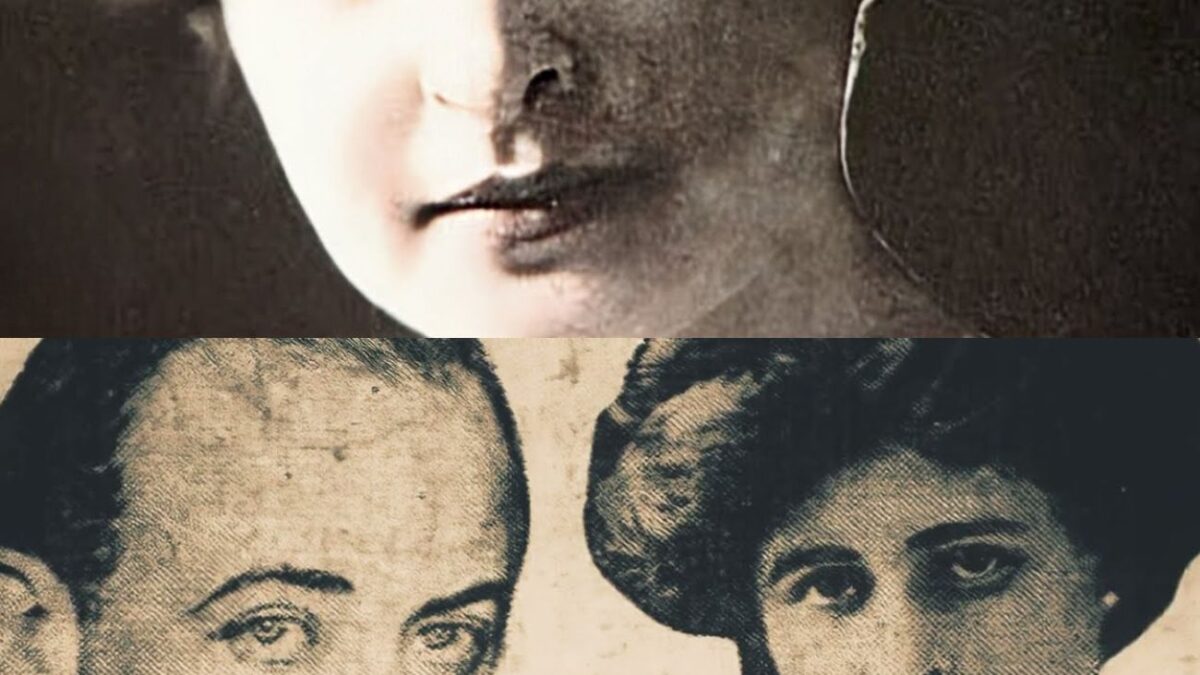
A Murder at the Brown Palace Hotel – The Story of Isabel Springer
A high society love triangle involving a breathtakingly beautiful socialite, two handsome suitors, and scandalous letters sounds like the basis for a melodramatic Hollywood movie, but the events that took place at the Brown Palace Hotel in Denver, Colorado in 1911 are not fiction, but a real story of love, betrayal, and murder.
Born in 1880, Isabel Patterson grew up in St. Louis, Missouri. Described as having exceptional beauty—a woman with soft features, big dark eyes, brown hair, and a flawless figure—Isabel turned heads wherever she went. In 1900, when she was 20 years old, Isabel married a man named John E. Folk and moved to Memphis, Tennessee. John was a shoe salesman who traveled a lot because of his work, but whenever he was back home, he drank heavily and allegedly both verbally and physically abused his wife. It was a marriage doomed from the start, and yet the union ended up lasting for six years before the two finally separated in 1906.
Isabel moved back to St. Louis, where she booked a room at the Jefferson Hotel in order to be at the center of the city’s social scene. She loved attending parties and social gatherings; she was a natural entertainer who lived for attention. The stylish and charming young woman was soon given the nickname “The Butterfly,” which fit Isabel’s gregarious nature perfectly. There were no doubt many men smitten with her, but it was a wealthy widower named John W. Springer who caught Isabel Patterson’s attention.
Springer had made a name for himself as a lawyer and banker in Illinois and Texas before moving to Denver, Colorado in 1896. There, John was very prominently involved in the social scene and local affairs, thanks to his intelligence and wide variety of interests, from business, law, and politics to ranching cattle and horses. John once ran, although unsuccessfully, for the mayor of Denver, and was the president of both the National Livestock Association and the Colorado Cattle and Horse Growers Association. In 1898, he purchased 10,000 acres of land overlooking Denver and built one of the largest cattle ranches in Colorado, Springer Cross Country Horse and Cattle Ranch. He was a very successful man, a man with whom Isabel Patterson knew she could live a very comfortable life.
When the two met in the Jefferson Hotel in the summer of 1906, Isabel was still legally married and John was still healing from the loss of his beloved wife of 13 years, Eliza, who had died of tuberculosis a couple of years earlier. But none of that mattered, nor did the age difference: Isabel was in her mid-20s while John was 47 years old. From the moment the banker laid his eyes on the young woman for the first time, he was besotted.
Only four months after Isabel’s divorce was finalized on April 27, 1907, she and John were married in St. Louis. The newlyweds then headed to Denver, where the beautiful bride didn’t go unnoticed. The newspaper columnists were swift to write about the new Mrs. Springer: “We always thought John W. was pretty fairly looking, but his wife is a stunning beauty, and it is safe to prophecy that the Springer home is going to be a social center.”
The new Mrs. Springer seemingly wanted for nothing. She and her husband lived in a seven-bedroom mansion at 930 Washington Street when they weren’t spending time at the massive Springer Ranch, surrounded by maids, housekeepers, and chauffeurs who took care of their every need. As John W. Springer’s wife, Isabel was thrust straight into the highest level of the city’s party circuit and was soon on the guest list for important social functions with all noteworthy Denver society names.
But tea and dinner parties with politicians and their wives and trips to the theater were not exactly Isabel’s idea of fun. She missed the nightlife and the adventure. John did his best to please her and even rented a sixth-floor suite in the Brown Palace Hotel in downtown Denver to make it easier for her to attend nighttime events and entertain her friends. Unbeknownst to John, those friends also included other men who had an eye on his new wife.
Perhaps it was Isabel’s hunger for attention and excitement that prevented her from completely ending an old fling with a man named Tony Von Phul. Just like Isabel, Tony had a restless, adventurous nature. He grew up in St. Louis and was on his way to a promising career in the city’s brokerage office, but in the end, a desk job wasn’t really Tony’s thing. Instead, he learned how to ride, rope, and master the horse, and became a jockey. In his free time, Tony was an aggressive, fearless, and talented hot air balloon and later airplane pilot who didn’t hesitate to take risks. Reportedly, the young man escaped death more than once while up in the sky thanks to his good looks and reputation as an aeronaut, he was popular among the ladies whom he often entertained at the Jefferson Hotel.
It’s unclear when he and Isabelle first met, but the two were unsurprisingly magnetically drawn to each other and had had some kind of relationship before John Springer entered the picture. Isabel getting married and moving to Denver, however, wasn’t enough to keep her away from the young adventurer. Despite living over 800 miles away, Isabel often visited St. Louis and met with Tony every now and then, keeping their relationship alive.
It says a lot that at the beginning of 1911, four years after marrying John, she was still writing letters to the aeronaut—very intimate letters. One from January 31, 1911 reads as follows: “Dearest love, I can hardly bear to be away from you. I miss you so much. You’re the only one I love in the world, Isabelle.” In other letters, she begged Tony to visit her in Denver, claimed she had never loved anyone else, and expressed her frustration when he didn’t write back as speedily as she wished.
All this while, John often sat in the room next door as Isabel wrote. In April 1911: “My darling, just a little note tonight to let you know your little sweetheart is thinking of you. John is in the next room and likely to come in at any minute, so you know I must hurry. Oh, how I wish you were here tonight to tuck me in my little bed and kiss me good night. I have been sick ever since I left St. Louis, and you can’t imagine how I have longed for you, sweetheart.”
Only one of Tony’s letters was ever published, but it’s an important one, as it indicates that there was some trouble in paradise. It seemed that despite his lover being married to another man, he wasn’t happy about someone else—a third party—showing interest in Isabel. On an unknown date, Tony wrote: “If you are too busy to write me a letter, just say so and I won’t expect them. I have not heard from you for 3 days. I leave here about the 23rd for Denver, if my father does not die, but I’m afraid the old man is in pretty bad condition and I’m holding myself in readiness for a quick trip home. The least I expect from you is for you to behave yourself while I am under this terrific strain and have nothing to do with that double-crosser. No, you don’t have to take him out to the ranch or have anything to do with just show him where he gets off, or I will.”
In her letters, Isabel had made mention of a man named Harold Francis Henwood, her husband’s friend and business partner whom she had met in John’s office in March 1911. Frank was said to be a well-traveled, sophisticated, and always impeccably dressed but hot-tempered fellow—a troublemaker, especially when he was drinking. Despite this, he and Isabel quickly became close and began to spend time together at the Springer Ranch, with and without John present. What was happening behind closed doors only they knew for sure, but it seems safe to assume the two were more than just friends.
So, at the same time that Isabel was writing intimate letters to Tony, making it sound like the adventurer was the only person in the world she cared about, she was entertaining another man while her husband was either oblivious or chose to overlook his wife’s activities. Although Mrs. Springer didn’t reveal the extent of her relationship with Frank to Tony, she wrote about her new admirer in the letters. In one, she stated: “Frank is still here and is of course still acting naughty.” A rather odd thing to say to her lover, perhaps she wanted to stir up jealousy in her beau to make him hurry to her. Whatever the reason, it’s likely she couldn’t have imagined the deadly turn of events that were to unfold.
These began on May 12, 1911, when out of the blue, Isabel asked Frank Henwood for a favor. She needed him to retrieve some foolish little letters she had written to Tony Von Phul. It wasn’t just a few notes; she had sent more than two dozen letters to the aeronaut, all very sensitive in nature. Frank was told that she had wanted to end her relationship with Tony, who had then threatened to share the intimate letters with her husband unless she resumed their relationship. This revelation would have no doubt ended the Springer’s marriage.
A week later, on May 23, Isabel met with Frank in her suite at the Brown Palace Hotel and again asked for help to get her letters back. Frank agreed to deal with the issue, but on one condition: Isabel had to write a note telling Von Phul their relationship was over. Interestingly, despite claiming she wanted nothing to do with Tony anymore, she refused. Not taking no for an answer, Frank then produced a letter in Isabel’s name to present to her lover once he arrived in Denver.
Later that day, Tony Von Phul checked in at the Brown Palace Hotel, requesting a room close to the Springer suite on the sixth floor. Upon signing in, Tony was handed the note supposedly written by Isabel, which read: “This is just to let you know that someone knows a great deal. Therefore, under no circumstances telephone me or try to communicate with me in any way. Everything is finally and absolutely off, and if you wish to save yourself serious trouble with someone and his friends, you will forget that you ever knew me personally. My future is of too much consequence, and I’ll never risk it. I will send someone to you to have a final talk with you, and you must be guided by what they say. I have been forbidden to see you or hear from you in the future, and I have given my word, which I propose to keep, not to see you again. I have taken this means of letting you know.”
Tony, who had received a loving telegram from Isabel just three days earlier saying she was going to answer yes to his question immediately, knew the note wasn’t written by his lover. At about 4:45 PM, he was summoned to the hotel’s lobby, where he met Frank Henwood, who introduced himself as the person referred to in the letter. The two men agreed to meet in Tony’s room at 5:30 to discuss the situation further.
Needless to say, the meeting didn’t stay civil for long. Frank pleaded with Tony, asking him to return the letters and not to break up Isabel and John’s marriage, but he made one big mistake: he referred to the aeronaut as “Tony” instead of “Sylvester,” which was Von Phul’s given name. Tony was a name that only friends and those close to the man were allowed to use. Frank didn’t have that privilege. Angered, Von Phul proceeded to slap the man, who was a lot smaller than him, before pulling out a revolver and ordering Frank to get out of his room.
The atmosphere in the Brown Palace that night was uncomfortable, to say the least. During dinner, Frank and Tony sneered at each other while Isabel and her husband ate together at a third table. Apparently, John still had no clue what was happening right under his nose. To make matters worse, Tony even got up and went to chat with the Springers, forcing Isabel to introduce her lover to her husband while her other lover watched. The situation was reaching a boiling point.
The following day, on May 24, Isabel told Frank to stop trying to get her letters back. She feared things were about to get out of hand; Tony had come to her room the evening before and threatened to fix Frank. But no matter what Isabel said, it was too late. There was no turning back for the two admirers.
At about 11:25 PM that night, after an evening at a theater with the Springers, Frank found his way to the wine room of the Brown Palace. Shortly after, Tony walked to the bar and ordered a glass of whiskey and a beer before acknowledging his rival’s presence. There are different versions of what happened next, but the two men exchanged words, Tony saying something along the lines of: “I’m going upstairs and I am going to grab that gray-haired son of a bitch by the hair and pull him out of there and show him who his master is here.” Frank replied: “You can’t get that over me.”
Von Phul then proceeded to hit Frank in the face, knocking him down. Soon after, five loud pops rang out in the room. Frank Henwood, a man who had never owned a gun in his life, had pulled out a newly purchased .38 revolver from his hip pocket and emptied the barrel. Two of the bullets hit the target, Tony Von Phul, piercing his right shoulder and left side between his ribs, but three others struck two utterly innocent bystanders, George Copeland and James Atkinson.
After realizing there were no more bullets in the weapon, an elevator operator of the hotel ripped the revolver from Frank’s hand, who then walked to the lobby and sat down to wait for the authorities. At first, neither Frank nor Tony revealed the real reason behind the shooting, trying their best to keep Isabel Springer’s name out of the ordeal. Tony, however, after realizing the seriousness of the situation, admitted to a priest at St. Luke’s hospital that a woman had come between him and Frank. Before the police could question him further, Tony Von Phul succumbed to his injuries at 11:20 AM on May 25. About a week later, on June 1, one of the innocent bystanders, George Copeland, also passed away following an amputation of his left leg—one of the bullets had severed his femoral artery.
Frank Henwood now faced two murder charges, all because of foolish little letters. But when the trial began, the prosecution shocked everyone by announcing it wasn’t seeking murder convictions for both killings, but just for the death of George Copeland. This was a clear attempt to protect the Springers and control the scandal surrounding the case—an attempt that was destined to fail miserably. Half of Denver knew about Isabel Springer’s extramarital affairs.
Both she and Frank testified during the trial, claiming nothing improper had happened between them. Frank insisted he had only tried to save his good friend John W. Springer’s marriage and had shot Tony Von Phul in an act of self-defense. The Springer’s housekeeper, Cora Carpenter, however, told the courtroom she had seen Isabel and Frank holding each other just a week before the shooting at the ranch, poking big holes in Frank’s story and raising doubts about his real motives.
It took the jury only four hours to find Henwood guilty of second-degree murder on June 29, 1911. He was sentenced to life in prison, but only after Frank accused Judge Whitford of being prejudiced in his 30-minute speech at the beginning of the hearing. There may have been some truth behind the allegation, as the judge had wrongly told the jury that they could not find Frank guilty of manslaughter, only murder, because of this detail. On February 3, 1913, the state supreme court reversed the verdict and granted Frank a new trial.
During the second trial, John W. Springer, who had read some of the infamous letters found in Tony Von Phul’s hotel room and filed for divorce the day after the murders, testified about Frank Henwood’s character. Surprisingly, the banker had nothing bad to say. According to John, he was a gentleman whose relationship with his now ex-wife had never been inappropriate. But that didn’t erase the fact John’s friend had killed two people, one of whom had nothing to do with the affairs of Isabel Springer.
This time, in June 1913, Frank Henwood was found guilty of the first-degree murder of George Copeland and sentenced to death. A third person was about to die because of the love triangle. John Springer, however, didn’t accept the decision and appeared before the Board of Pardons, pleading with them to spare his friend’s life: “I have spent thousands trying to learn the truth of this matter and it has not been in vain. Isabel’s mother on her deathbed sent word to me that Von Phul had threatened in her presence to kill Isabel with a revolver which he pointed at her. Von Phul was holding over my wife’s head letters she had written years before; he blackmailed her and was trying to get diamonds and money from her. Instead of coming to me, she went to my friend Henwood, a man I helped and placed where he could earn a living.”
Some considered John’s story about the blackmail absolute piffle, but Governor Elias M. Ammons listened to him. On October 16, the governor signed an executive order commuting Frank’s sentence from the death penalty to life in prison. In the end, Frank Henwood spent 10 years in Canon City Penitentiary before he was pardoned in 1922, only to be sent back behind bars shortly after for assaulting a waitress. Without ever seeing freedom again, Frank died in prison in 1929.
As for Isabel Springer, she didn’t have a happy ending either. After her divorce on July 1, 1911, Isabel moved to New York, where her addiction to alcohol and narcotics dominated her life. With her health declining rapidly, the butterfly was admitted to Metropolitan Hospital on March 28, 1917. Less than a month later, on April 19, Isabel Springer—the woman who once had it all—died with nothing, passing away due to cirrhosis of the liver at the age of just 37.
Though the physical turmoil of the courtroom battles eventually quieted, the dark legacy of the Brown Palace tragedy lingered for generations as a stark reminder of how vanity, obsession, and deceit could shatter multiple lives in a single, violent moment.

