A Boy Ate 150 Gummy Vitamins For Breakfast. This Is What Happened To His Bones.
A Boy Ate 150 Gummy Vitamins For Breakfast. This Is What Happened To His Bones.
TJ is a 14-year-old boy presenting to the emergency room with muscle weakness, stomach pain, and a broken arm. Sitting in triage as he was deemed low priority by hospital staff, he begins to lose consciousness before slipping into a coma. You see, last spring, TJ and his mother had had enough. Coming home from school every day, TJ would see his dad wasted away in a drunken haze. One day, his dad went out to buy groceries, and he never saw his dad again. His now single mother thought to move to America, so the two together went to the big city to visit. They weren’t poor, but neither spoke English, nor did they realize that things here are a bit different than at home.
Since childhood, TJ had been a fan of gummy candies. He was curious to see what they tasted like in America, so his mother bought him many bottles. To them, candy coming in a bottle didn’t seem strange. After all, they thought everything was supposed to be nice in America. Every day, he would eat 30 to 40 pieces, not knowing that the candies were actually vitamins. As the days went on, TJ’s mother noticed that his belly was becoming swollen. They always joked back home that American food makes one fat, so maybe eat a little less, she thought. One day while watching some videos, TJ opened a new bottle of gummies and without realizing it, ate all 150 pieces. Nothing like a good breakfast, he thought.
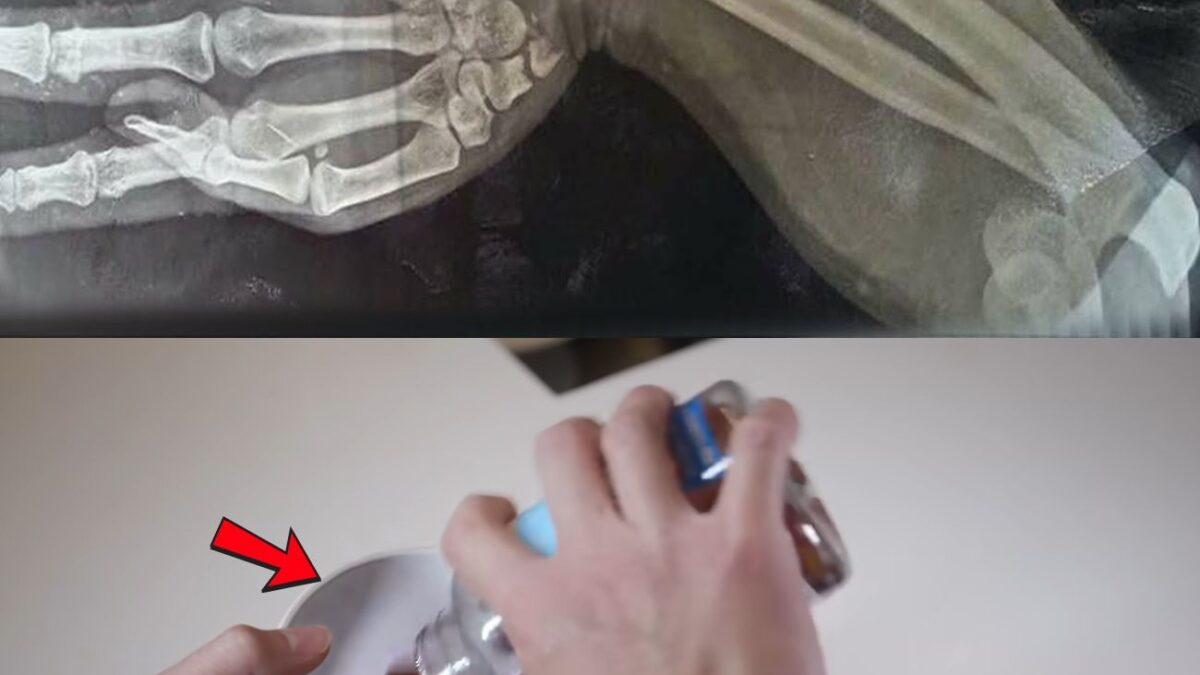
About an hour after eating the whole bottle of gummy vitamins, TJ can’t stop urinating. He begins to cry out in pain. He’s suffering a massive stomach ache and tells his mom that he feels like a giant rubber band is squeezing him. This epigastric pain begins to push into his throat. As his mother tries to lay him down, TJ trips, falls, and breaks his arm. The two call for help. Inside the ambulance, TJ feels nauseous and starts to experience shock from his accident as he’s brought to the emergency room where we are now. Upon arrival, the admitting nurse triaged TJ’s case, thinking it to be a mere bone fracture. But as he slipped into a coma, immediate attention was brought to him. The broken bones were merely a sign of underlying problems. And given the patient’s history of present illness, there are several clues as to what’s happening.
At physical examination, dry skin was found on his legs along with fractured nails and obvious ascites, or fluid buildup causing a swollen stomach. The latter means that TJ has liver damage. But a blood test indicates that his liver function is normal and that he’s really suffering from hypercalcemia. Hyper meaning high, calcy short for calcium, which is an essential electrolyte, and emia meaning presence in blood. High calcium presence in blood. Looking at the bottle of gummy vitamins that TJ ate, there’s no calcium to be found. His mother tells the attending physician that he hasn’t vomited or defecated since eating all 150 gummy vitamins for breakfast, meaning that there hasn’t been a net flow of food out of his body. Those vitamins should be floating around somewhere in his blood and thus should be detectable in large amounts.
Additional sampling of blood finds no significant elevations in vitamins A through E and no elevations in iodine, zinc, and selenium. Instead, it reveals that TJ is dehydrated, which is consistent with his profuse urination before falling into a coma. But it also leads us to the first clue. Absence of vitamins in blood after eating 150 gummy vitamins means that they could have exited the body in the urine. His profuse urination before presenting to the emergency room could be consistent with this. Vitamins B and C are classified as water-soluble, meaning that they dissolve in water, concentrate in the kidneys, and appear in the urine. But this doesn’t make sense for vitamins A and D, which are fat-soluble vitamins, meaning that they are oils. And because oils don’t mix with water, these vitamins can’t be urinated out. Humans don’t pee fat.
So, if they aren’t in TJ’s blood, can’t be urinated out, and he didn’t vomit or defecate in the ensuing time period, then it means that the excess vitamins A and D must be hiding somewhere in his organs. But which organ could it be? It couldn’t be the muscles, as they’re a tissue that holds on to water, which doesn’t mix well with fat. It couldn’t be the heart, as that’s almost entirely a muscle, too. It could be the brain and the nerves, as those are made out of 60% fat. But to get there would mean that the vitamins would have had to flow through the blood first, which they didn’t. And because TJ ate the vitamins, the gummies traveled from his stomach into his intestines and absorbed into his liver, which was shown to be damaged with the physical sign of ascites. This indicates that TJ is suffering from hypervitaminosis and it’s responsible for his liver damage, his hypercalcemia, and his broken bones.
Transjugular liver biopsy where a catheter is placed through the jugular vein in the neck guided through the heart and down into the liver where a sample is collected finds that TJ has an increased number of fat-laden stellate cells, meaning that vitamin A has been accumulating for some time in his liver, engorging the cells causing them to die and form scar tissue inside the liver. This means that TJ is experiencing vitamin A-induced hepatotoxicity and that the 30 to 40 gummy vitamins he ate like candy every day since arriving in America were slowly destroying his liver. This makes sense because in eating 150 gummy vitamins for breakfast, TJ had consumed 187,000 units of vitamin A in a single sitting. You would have to eat 720 eggs to have matched that vitamin A intake, and it’s equal to 63 times the recommended daily amount. And because he would typically eat 30 to 40 pieces per day, which is 20 times the recommended daily dose in addition to the other foods that he would eat, then we can conclude that his liver damage is because of hypervitaminosis A due to mistaken ingestion of gummy vitamins as candy.
Vitamin A, formerly retinol, has been shown to be an antagonist on vitamin D action. Meaning when there’s too much of A in the body, then the effect of D could be impaired. But let’s go back to the name of TJ’s condition, hypercalcemia, high calcium presence in blood. Vitamin D acts by increasing intestinal absorption of calcium, meaning it increases calcium levels in the blood through more uptake in food. TJ didn’t eat any extra calcium in his gummy vitamins, but he did eat 75,000 units of vitamin D, 188 times the recommended daily value. And if vitamin A blocks the effect of vitamin D and prevents calcium in the intestines from absorbing it, then the source of his hypercalcemia must be coming from something breaking down and dissolving inside of his body. And the largest stores of endogenous calcium are the bones.
Vitamin A is metabolized in the body to active retinoic acid which is known to stimulate osteoclast formation. Osteo meaning bone and clast from ancient Greek clastos meaning broken cells that soften then slowly break bone down and release the remaining calcium into the blood. This bone resorption had been accumulating in TJ since he started unknowingly eating gummy vitamins like candy until it reached a threshold where a simple fall that should have been no problem for a previously healthy 14-year-old boy fractured multiple bones in his arm.
The consumption of excess nutrients causing bodily injury is a recurring modern world phenomenon. Milk was fortified with vitamin D in order to prevent rickets or the softening of bone that can cause permanent deformation in children. Because that vitamin D increased intestinal calcium absorption and the fortification wasn’t standardized, the British Pediatric Association in 1956 found 204 cases of hypercalcemia in infants who suffered vitamin D intoxication by drinking milk. This led to a failure to thrive that could have permanently stunted their growth. Epidemiological surveys showed that in Sweden and Norway, vitamin A intake was on average six times higher than in southern Europe. In persons whose intake of vitamin A exceeded 5,000 units per day, bone mineral density was 10% less, and the risk of hip fracture was more than double that of someone who consumed less than 5,000 units per day.
In 1597, a Dutch explorer stopped on Nova Zembla in modern-day Canada while trying to reach Indonesia. His men ate polar bear liver and their skin started sloughing off in the dead of winter as they became gravely ill. It was identified in 1942 that vitamin A was the toxic component in seal and polar bear liver because in carnivores, 100 grams of liver contains anywhere from 1.3 to 1.8 million units of retinol compared to 50,000 units in an herbivore liver. In Kenya, a Homo erectus skeleton dated from about 1.5 million years ago was found to have large osteocytes with lacunae that produce osteolysis, the breaking down of bone with evidence of partial dissolution of the bone matrix. The weakening of structural integrity in bones is characteristic of vitamin A intoxication and the dating of the skeleton coincides with a hypothesized increase in meat consumption in early humans. They may not have understood which animal livers were okay to eat, meaning that the mechanism of liver damage, ascites, hypercalcemia, and bone deterioration is the same in this protohuman as it is in TJ.
We can mend the fractured bones. We can advise him on temporary behavioral changes to limit his risk of further fractures. We can drain his ascites with diuretics where spironolactone and furosemide through different mechanisms increase sodium resorption in the kidneys. And because water flows towards the concentration gradient, water flows towards the sodium. They help stimulate natriuresis. But there isn’t any way for us to directly remove the vitamin A from his liver. He will have to bear the pain of his acute and chronic hypervitaminosis A until his liver has sufficient time to clear the retinol esters. After all, there isn’t a better organ that removes toxins from the body than the liver.
Because TJ and his mother were only visiting the United States, we don’t know what became of them. At discharge, nail and skin dystrophy were beginning to resolve and the ascites was diminished, indicating some recovery of liver damage. Because he realized the gummies that he ate weren’t actually candy, but were really vitamins, immediate cessation of supplemental intake ensued. A follow-up date was scheduled, but never honored by the patient.
Though they vanished back into the vast and unfamiliar currents of a new life, the medical team could only hope that the harsh lesson learned in that emergency room served as a permanent shield against future misfortune. TJ’s body would take months, perhaps years, to truly balance the scales of internal chemistry, but the resilience of youth remained his quiet ally. So, while the ultimate final outcome of TJ isn’t explicitly known to the hospital walls he left behind, the last time that we saw him, he was on the right track to recovery, carrying with him a newfound respect for things that come in bottles.

