A 12-Year-Old Girl Was Taken for ‘Testing’ in 1954 — She’s 82 and Finally Reveals What Happened
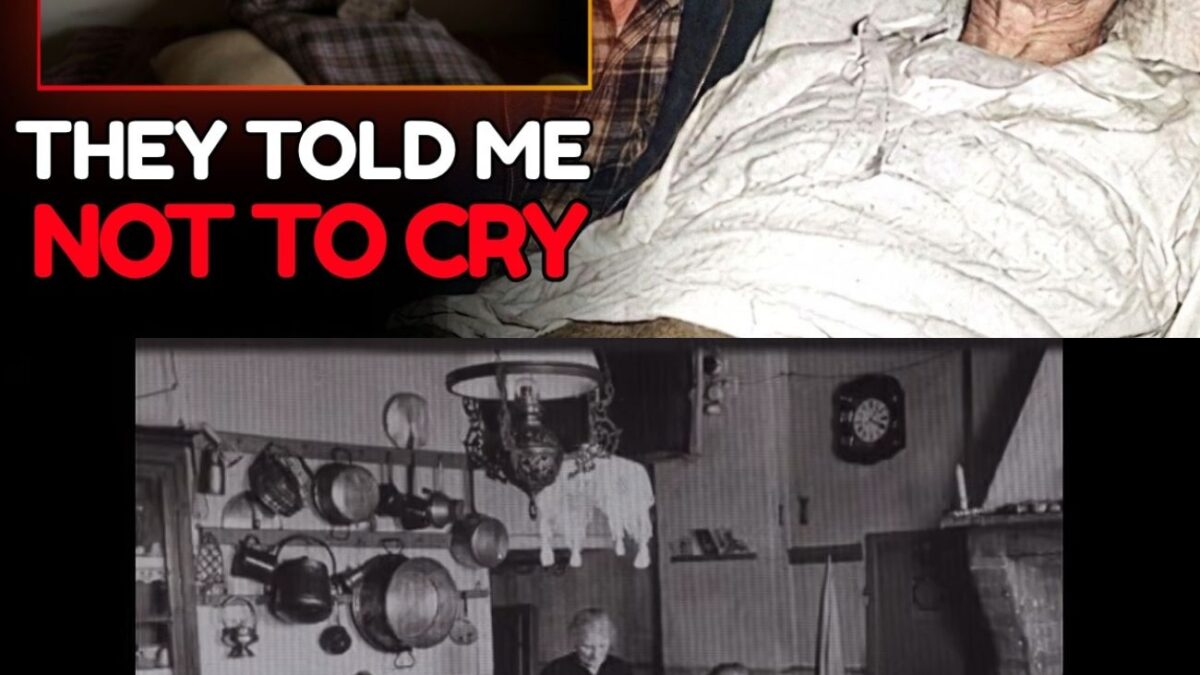
A 12-Year-Old Girl Was Taken for ‘Testing’ in 1954 — She’s 82 and Finally Reveals What Happened
In the winter of 2024, a woman named Eleanor Whitfield sat beside a window in an assisted living facility outside Enid, Oklahoma, with a quilt across her knees, and told her son that there was something from her childhood she had never once described to another living person. She was 82 years old, dealing with advanced kidney failure, and, by her doctor’s estimate, had only a few months left. She had nothing left to protect. What she said that afternoon has never been shared outside her family until now. The recording came to me through her son, a man named David Whitfield, a retired schoolteacher who had begun in the last year of his mother’s life recording their conversations simply to preserve her voice for his own grandchildren. He wasn’t looking for anything beyond an ordinary family archive, and he has said, more than once, that he expected stories about her childhood on the family farm, about her parents, and about the ordinary hardships of growing up poor in postwar Oklahoma. He did not expect what he got.
I have listened to that recording closely, more than once. Eleanor’s voice is steady for most of it, steadier than you might expect given what she describes, and there is only one point, near the middle, where she stops entirely for nearly a minute, and all you can hear is David asking, gently, if she wants to keep going. She does keep going. What she says, once she starts, is specific enough and consistent enough across multiple tellings that it is very hard to dismiss.
Eleanor was 12 years old in the spring of 1954, the third of five children in a family that worked a small tenant farm outside of town—a town she asked me not to name, though I believe, from the details she provides, that I know which one it was. She describes a family that was, by the standards of the time and place, genuinely poor, the kind of poor where a single unexpected expense could mean skipping meals for a week. This detail matters, she insists, because it explains everything that came after it.
In April of that year, a man in a gray suit came to the farm and spoke with her parents at the kitchen table for the better part of an afternoon, while Eleanor and her siblings were sent outside. She remembers watching through the window, unable to hear the words, only the tone, which she describes as pleasant and patient—the tone of a man selling something he was very confident you would want. When he left, her mother was holding a piece of paper Eleanor had never seen before and an envelope that, she would learn much later, contained more cash than her father typically earned in two months of farm labor. She was told only that she and several other children from the area had been selected for what her mother called a study conducted by a university meant to help doctors understand how children grow and learn. She was told this was an honor, told to be polite, to do as she was instructed, and to remember that the money from this study was going to help pay for new shoes for her younger brothers.
I want to spend a moment on how Eleanor describes her parents’ decision, because she is careful, even now, not to paint them as villains in this story. She says her mother cried the night before the first session, quietly in the kitchen, believing Eleanor was asleep. She says her father, a man of few words even in the best of times, told her only once, in the truck on the way to that first Saturday appointment, that if anything ever felt wrong, truly wrong, she should say so, and they would stop the whole arrangement immediately, money or no money. Eleanor says she believed him completely, and that this belief is precisely what she now finds hardest to reconcile with what happened next, because nothing that occurred in that building ever felt, to her 12-year-old understanding, like the kind of wrong her father had been picturing when he made that promise. It felt instead like a series of small, strange, uncomfortable instructions, each one just tolerable enough on its own that she never once considered it worth breaking her father’s trust in the arrangement to report. She says this is the part of her own story she has found hardest to forgive herself for, even at 82, even understanding intellectually that a 12-year-old could not reasonably have been expected to recognize the pattern forming around her one small, tolerable instruction at a time.
I want to describe the facility itself as Eleanor describes it, because the detail matters for what follows. It was not, she says, a hospital in any obvious sense. It was a low brick building on the edge of the state university’s campus, unmarked except for a small sign identifying it only by a building number, and she was driven there once a week, every Saturday, for a period she calculates at just under five months. On her first visit, she was placed in a room with seven other children, all close to her own age, all from families she would later come to understand were selected for similar reasons—rural, poor, and she says now, with a bitterness she doesn’t try to hide, unlikely to complain. They were told to sit quietly and not to speak to one another unless instructed. A woman in a white coat, whose name Eleanor never learned, moved among them taking notes on a clipboard, while an older man, whom the children were told to address only as doctor, oversaw the sessions from a chair near the door.
The tests themselves, in the early weeks, seemed almost ordinary to a 12-year-old, and this, Eleanor says, is precisely what made them easy to comply with. She was shown a series of photographs and asked to describe how they made her feel. She was played sounds through a speaker, some pleasant, some jarring, and asked to rate them on a scale she doesn’t remember the specifics of. She was given small tasks, puzzles, and memory games, timed with a stopwatch the doctor kept on a chain around his neck. She describes one specific early session that she says, in retrospect, she believes was a kind of screening, though she had no way of understanding this at the time. Each child was asked individually a series of questions about their home life: how often they cried, what made them cry, whether they had been taught it was acceptable for a boy or a girl their age to cry in front of others, and whether they had siblings who were more or less emotional than themselves. Eleanor remembers answering honestly, without suspicion, the way a well-behaved child answers any adult’s questions, and she has come to believe, decades later, that her answers that day were used to sort the children in the program into groups, though she has never been able to confirm what those groups were for or why she and Thomas ended up placed together in the sessions that followed.
It was the sixth or seventh week, by her recollection, when the tests changed in a way she has never been able to fully explain to her own satisfaction. She and one other child, a boy she believes was named Thomas, though she has never been entirely certain, were separated from the group and placed in a small room with no windows, told to sit in two chairs facing each other, and instructed not to speak, not to move, and above all not to cry for as long as the session lasted. She was told this was a test of patience; she was not told how long the session would last or what would happen if she failed to follow the instructions. She says the room was kept nearly dark, lit only by a thin strip of light beneath the door, and that the silence itself became, after the first 20 minutes or so, its own kind of pressure—a weight she had no framework at 12 years old to understand or resist. She remembers focusing on the sound of her own breathing. She remembers counting silently to numbers she can no longer recall the significance of. She remembers, most of all, watching Thomas across from her in the dim light, watching him fight the same battle she was fighting, and understanding, without either of them saying a word, that they were being tested against each other as much as they were being tested individually.
Now, I want to tell you what happened to Thomas, because it is the detail that has stayed with Eleanor for 70 years, and the reason, she says, she is finally speaking now. On what she believes was their third or fourth session in that dark room, Thomas began to cry—quietly at first, then unable to stop himself, the way an exhausted, frightened child eventually cannot stop himself. The door opened almost immediately, as though someone had been watching through some means Eleanor never located, and the woman in the white coat led Thomas out. Eleanor remembers being left alone in that room for what felt like a very long time afterward, in the dark, without instruction, before someone finally came to take her back to the main group. She never saw Thomas again. Not that day. Not the following Saturday. Not for the remainder of the study.
When she asked cautiously what had happened to him, she was told only that his family had decided the study wasn’t a good fit for him, and that this was not something she needed to concern herself with. She believed that explanation for years, but stopped believing it, she says, sometime in her 30s, when she began to notice how specific and rehearsed it had sounded even at the time—the way adults sometimes give children an answer built to end a conversation rather than to inform one.
David asked her, gently, on the recording, whether she had considered that Thomas’s removal might have had an innocent explanation after all: a family that genuinely had reservations, a scheduling conflict, something as simple as that. Eleanor’s answer to this is the part of the tape David says he has replayed the most. She said she had spent decades hoping exactly that was true, and that she had never quite been able to make herself believe it for one specific reason she has never told anyone before this recording. In the weeks after Thomas disappeared from the program, the sessions in the dark room continued for the remaining children, but the instruction changed slightly. They were no longer simply told not to cry; they were told specifically that children who cried would be moved to what the doctor called a different track. And Eleanor says the phrase was delivered with just enough weight, just enough of a pause beforehand, that every child in that room understood it was not meant as reassurance.
I asked, through David, whether Eleanor had ever attempted to find out what became of Thomas or to locate any record of the study itself. She did try, twice. The first attempt was in the late 1970s, when she wrote to the university named on the original consent form her mother had signed, asking for any records pertaining to a childhood development study conducted at the facility in 1954. She received a reply stating that the department in question had been restructured multiple times since that period, and that no records matching her description could be located. The second attempt came decades later, in 2009, after a relative mentioned news coverage of historical human subjects research abuses, and Eleanor, recognizing enough of the pattern described to feel a specific sick certainty about her own experience, filed a formal records request through the state archive. She was told, after several months, that any records from that facility for the relevant period had either been destroyed under a standard document retention schedule or had never been properly cataloged to begin with. She gave up after that, not because she stopped wanting an answer, but because she came to understand, gradually, that the absence of records was not an accident she was going to be able to argue her way around.
I want to mention one further piece of Eleanor’s search, something David only learned about recently while going through her papers after the second records request came back empty. In 2010, Eleanor placed a small classified notice in the alumni newsletter of the county’s consolidated school district, worded carefully, asking if anyone recalled a Saturday study program at the university in 1954, and specifically asking after a boy named Thomas. She received exactly one response: an unsigned letter, postmarked from a town nearly 200 miles away, containing only a single sentence: “Some of us remember, and some of us were told never to say his last name again.” Eleanor never received a follow-up, despite writing back twice to the return address, which turned out, when she eventually drove there herself in 2012, to be a vacant lot.
This is where I think Eleanor’s account becomes genuinely difficult, and where I want to be honest with you about something she says herself, unprompted, on the recording. She does not describe herself primarily as a victim of something dramatic or violent. She describes something quieter, and in some ways harder to hold on to: a 12-year-old who learned, over five months, that the fastest way out of an uncomfortable situation was total, silent compliance, and who carried that lesson forward into the rest of her life in ways she says she is only now, at 82, beginning to fully recognize. She describes herself as a woman who for 70 years was praised by nearly everyone who knew her for being remarkably calm under pressure and remarkably unemotional in crisis—the person everyone wanted in the room during a family emergency because she never seemed to fall apart. She says she used to take quiet pride in this reputation, but now understands it differently. She believes, and she says this slowly, testing each word before she commits to it, that she never actually stopped being the 12-year-old in that dark room watching Thomas get taken away for the crime of crying, and deciding in that moment that whatever else happened to her for the rest of her life, she would never again be the one who cried first.
David says this recognition, once his mother finally put it into words on the recording, reframed nearly every memory he has of her. He remembers, as a boy, watching her sit dry-eyed and steady through his grandfather’s funeral while every other adult in the room wept openly, and being quietly proud, at the time, of how strong his mother was. He remembers a car accident when he was 16, minor but frightening, and his mother arriving at the scene within minutes, calm, organized, and giving clear instructions to the responding officer while he himself shook uncontrollably in the passenger seat. He says he spent his whole life believing he had witnessed, in these moments, an admirable and slightly mysterious personal strength, but now believes he was witnessing a wound so old and so well managed that it had become indistinguishable from her actual personality—a form of armor worn so continuously that even she eventually forgot she was wearing it.
Here is the detail that widens this story past a single facility, past a single Saturday program. In the early 1980s, at a school reunion completely unrelated to the study, Elena fell into conversation with a woman she had known only distantly as a child, who mentioned, entirely without prompting, that she had spent a strange stretch of her own childhood being driven to a building on the university campus for what her family had always called the doctor’s study. The two women, comparing details carefully over the course of that evening, became reasonably certain they had been part of the same program, though the other woman’s sessions, she said, had focused less on isolation and more on what she described only as the loud room—details she was reluctant to elaborate on even decades later. Eleanor says the two women sat together for the rest of that evening and have exchanged a card at Christmas every year since, but have never once discussed the study again in any detail, both of them apparently understanding, without needing to say so, that some subjects are better acknowledged once than revisited.
How many children were there? How many Saturdays? How many dark rooms? How many quiet, compliant 12-year-olds sent home with a story about vitamins or patience tests, carrying forward, without knowing it, a lesson about silence that would shape every difficult moment of the rest of their lives? We don’t know. And the people who might tell us are, like Eleanor, running out of time to say what they remember.
I want to sit for a moment on the specific arithmetic of what Eleanor describes, because it has stayed with me since I first heard the recording. Eight children in her original group, drawn by her account, from at least four different rural communities in the same general area of the state, all selected within the same short window of time in the spring of 1954. If even a modest fraction of the Saturday programs of this general kind operating across the country during that decade followed a similar recruitment pattern—poor, rural, unlikely to complain, and offered enough money to make the arrangement feel less like an imposition and more like an opportunity—the number of children involved nationally, across programs that may never be fully cataloged, could run considerably higher than any single family’s memory could ever confirm on its own. This is not a claim Eleanor herself makes; she is careful throughout the recording to speak only to what she personally witnessed. It is a pattern I am noting cautiously here, based on what limited public documentation exists about human subjects research practices of that era, practices well documented to have disproportionately targeted exactly the kind of families Eleanor’s was.
Elena Whitfield passed away in early 2025, several weeks after the recording was made. David has shared it only within the family until recently, largely because, he says, he still isn’t certain what a story like this is supposed to do once it’s told. It doesn’t return Thomas Dean’s name to anyone. It doesn’t undo a single Saturday in 1954. It simply exists now where it didn’t exist before, carried by one more person than it used to be.
There is one final detail I want to leave you with, one David mentioned almost as an afterthought near the end of our exchange, because I think it says something true about what 70 years of silence actually does to a person. David says that throughout his entire childhood, whenever he or his siblings were upset, genuinely upset, his mother never once told them to stop crying, never once suggested that composure was something to strive for in the moment. She would simply sit with them without any urgency at all for as long as it took, and say only, every time, the same quiet sentence: “You can cry as long as you need to. Nobody is taking you anywhere.”
I don’t know what to do with that detail any more than David did when he first understood its full weight. I want to tell you it resolves the story, that it proves Eleanor spent 70 years quietly undoing in her own children the one lesson she was never able to unlearn in herself. But I don’t think it resolves anything. I think it simply tells us where she put the weight of that room, patiently, in a single repeated sentence for 70 years in a house where no child was ever taken anywhere for crying.
What happened to Thomas? Whether he was ever returned to a family that understood what had actually occurred, or whether the study wasn’t a good fit, meant then what it seems to mean in so many of these accounts. And what does it mean that a woman could spend 70 years being praised by everyone who ever knew her for a calm that was never really calm at all, built instead on the foundation of one dark room and the specific, terrible lesson that silence was the only safe response available to her?
David told me one last thing near the very end of our exchange that he says he has turned over more than anything else since his mother’s death. In her final week, largely non-verbal by that point, Eleanor reached for his hand and in a voice barely above a whisper said a name that was not his, not her husband’s, not any name he recognized from 70 years of family history. He has come to believe, though he cannot know for certain, that it was Thomas’s name spoken once quietly by a woman who had carried it in complete silence for seven decades and chose, in the end, with almost nothing left, to finally say it out loud to someone.
We don’t know how many Eleanors there are: children whose families needed the money badly enough to sign a form they didn’t fully understand and who learned, in return, the lessons about compliance they would carry silently for the rest of their lives. We know there was at least one. We know she carried it for 70 years and spent just as many years making certain, in her own quiet way, that no child in her own house would ever have to learn it the way she did. And though the files remain empty, the archives silent, and the brick building long since repurposed by the campus that birthed it, the echo of that quiet room lives on in the spaces left behind—a haunting testament to the resilience of human memory and the enduring power of a single spoken truth at the edge of the dark.

