4 Forgotten 19th Century True Crime Cases
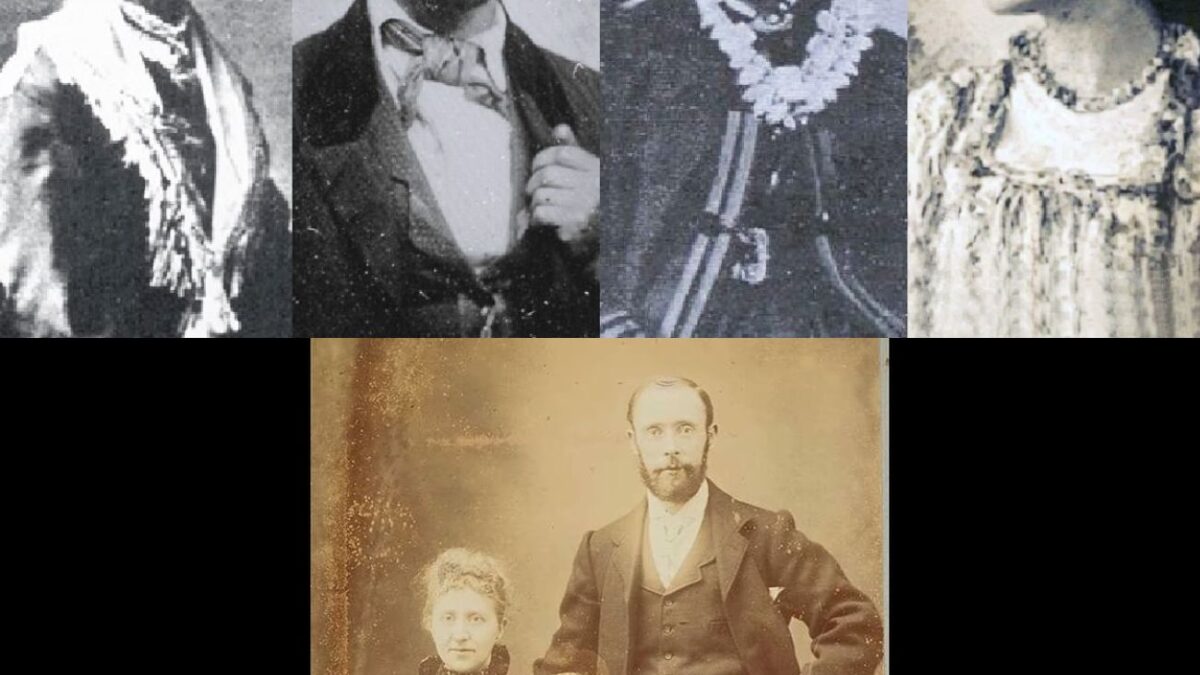
4 Forgotten 19th Century True Crime Cases
Today we will be looking at four 19th-century cases, and for the first case, we go to England. Harriet Richardson was born in 1841 in the county of Essex, where her father, a devoted clergyman, instilled in her the values of faith and obedience. But his untimely death when Harriet was just 12 years old left a void in her life that no sermon or scripture could ever fill.
With his passing, the family’s modest stability began to unravel, and Harriet, a girl of fragile intellect and innocent disposition, became increasingly dependent upon those around her. Though life had not granted her with wit or learning, fate had bestowed on her a modest fortune. When her great-aunt passed away, she inherited 5,000 pounds—a substantial sum in Victorian England that made her an attractive prospect for unscrupulous suitors.
It was around this time that Louis Staunton entered her life as a 23-year-old auctioneer’s clerk whose charm masked a calculating nature. He had already entangled himself with a 15-year-old girl named Alice Rhodes, a relationship that polite society would have found scandalous if publicly known. Alice had a stepfather named Thomas Hinksman who was distantly related to the Richardson family, and through this tenuous connection, Louis was unexpectedly introduced to Harriet in 1875.
Though the meeting was not planned, Louis quickly made an impression with his easy manner and wasted little time courting Harriet once he sensed her wealth and limited mental capacity. The romance was brief, and he soon proposed to her, a rapid courtship that deeply troubled many observers. Harriet’s mother, Mrs. Butterfield, was vehemently opposed to the engagement and saw Louis as an opportunist preying on her daughter’s vulnerability and inheritance.
Desperate to protect Harriet, Mrs. Butterfield sought to have her declared legally incompetent and placed under the protection of the Court of Chancery. This led to legal proceedings where her family argued that her condition was too severe for her to marry, but the Lord Chancellor ultimately ruled that the wedding could proceed after hearing medical testimony. On June 16, 1875, Harriet and Louis were married, yet the union brought anything but happiness.
The legal battle deepened the rift between Harriet’s husband and her family, and although she stayed in touch initially, communication soon ceased entirely. Her mother and stepfather made repeated efforts to check on her well-being, but their inquiries were met with cold silence. Eventually, a firm and forceful letter arrived, supposedly from Harriet, informing Mrs. Butterfield that she was not welcome at her marital home.
Mrs. Butterfield immediately believed the letter had been dictated by Louis because it was entirely out of character for her daughter. Almost immediately after marrying, Harriet became pregnant and gave birth to a son named Thomas Henry on March 23, 1876. The joy of the new arrival was short-lived, however, as Louis purchased a house called Little Grays near Cudham in Kent but chose to live there with Alice Rhodes instead of his wife and child.
Harriet and her infant son were sent to live a mile away in Firth Cottage under the watchful eye of Louis’s younger brother Patrick and his wife Elizabeth, who was Alice Rhodes’s older sister. Confined to a small upstairs room without curtains, washing facilities, or proper furniture, Harriet was intimidated into silent obedience. Meanwhile, Mrs. Butterfield’s instincts warned her that her daughter was in grave danger, prompting her to attempt a visit in March 1877.
When Mrs. Butterfield arrived at Firth Cottage via train and carriage, Louis and Elizabeth met her at the path and forcefully barred her from going any further. Refused even the chance to hear her daughter’s voice, she was turned away and told never to return. Things deteriorated rapidly for little Thomas, whose tiny body wasted away from lack of proper nourishment and showed sinister signs of physical abuse, including a deep bruise on his cheek.
On April 8, Patrick and Elizabeth finally took him to Guy’s Hospital in London, but it was far too late, and the child died that very day. Four days later, Harriet was removed from Firth Cottage and taken to a lodging house in Penge, where the landlady recoiled in horror at the skeletal, ghost-like woman standing before her. Less than 24 hours later, Harriet died, having succumbed to months of abuse, starvation, and unbearable cruelty.
Louis arranged for her burial at St. George’s Church in Beckenham, believing her natural-looking decline would raise no suspicions, but whispers soon began to spread through the community. A gentleman recalled Louis’s unsettling detachment while registering the death, which eventually caused the coroner to halt the funeral for a postmortem examination. When the coffin was opened, pathologists found Harriet’s hair infested with lice, her heart and liver drastically shrunken, and her weight down to just 34 kilos, completely debunking natural causes.
An inquest at the Park Tavern revealed a chilling picture of starvation and possible slow poisoning, leading the jury to conclude that Louis, Patrick, Elizabeth, and Alice were guilty of murder. The trial at the Old Bailey in September 1877 became a massive spectacle, with the prosecution highlighting the cruel isolation and the defense arguing a natural medical decline. Despite riveting testimonies from housemates and coal deliverers, the jury returned a unanimous verdict of guilty, sentencing all four to death by hanging.
The public celebrated outside, but the verdict sparked massive controversy, including a letter from 700 physicians in The Lancet decrying the dismissal of medical expert testimony and a campaign led by novelist Charles Reade. Ultimately, the Home Secretary intervened, pardoning Alice Rhodes and commuting the sentences of the remaining three to life imprisonment. Patrick died behind bars, Elizabeth was released in 1883 to fade into obscurity, and Louis was released in 1897, maintaining his innocence before emigrating to Australia.
Moving on to our second case, we travel to Australia in 1830, where John Herford arrived to seek a fresh start in a harsh, newly established penal colony. As European settlers carved out farms and claimed ancestral lands, the indigenous population faced the devastating loss of their way of life. John persevered through the hardships, eventually securing hundreds of acres of land in Augusta and Wonnerup through tireless effort.
By the age of 60, John had amassed a fortune of 2,000 pounds, and seeking companionship in his later years, he married a widow named Bridget Larkin in 1851. Bridget had six children from her previous marriage, and while the union promised stability, it quickly devolved into a nightmare of fierce arguments and physical abuse. John confided to friends that Bridget had once struck him so violently during a dispute that several of his teeth were knocked out.
Desperate to escape the abuse, John fled the matrimonial home in February 1855 and took refuge with a neighbor, sharing a room with a farmhand named George Jones for protection. Though he purchased another property to live independently, overcrowding forced him to return temporarily in late March 1855, insisting that George accompany him everywhere out of profound fear. On the evening of April 8, 1855, John complained of fatigue and a cold, and Bridget offered him a cup of mulled wine before strangely sending her daughter away and telling George that John wished to sleep alone.
The next morning, George discovered John dead in bed with his sheets pulled up, his eyes wide open and bulging, and two faint, symmetrical red marks visible on his neck. Although local community suspicions ran high due to Bridget’s notorious temper, the local coroner, Dr. Hannibal Bryan, concluded the death was from natural causes. Bridget inherited his estate and lived unbothered by local gossip for months until new information prompted authorities to exhume the body and investigate further.
Colonel Bruce and Dr. Galbraith led the renewed inquiry, focusing on two ticket-of-leave convicts named Enoch Dodds and Philip Dixon. Dixon confessed to forging John’s will to benefit Bridget and revealed that he had seen Bridget and Enoch Dodds together on the night of the murder, orchestrated by Bridget for financial gain. Both Bridget and Enoch were arrested, and during their October 1855 trial before Judge W. H. Macay, Dr. Bryan’s initial medical incompetence was fully exposed under cross-examination.
In a stunning turn of events on the second day of the trial, Bridget confessed her prior knowledge of the plot, implicating a man named Osborne and detailing how her tumultuous marriage and John’s plans to move away had driven her actions. Through this intricate web of deceit, shifting blame, and judicial scrutiny, justice ultimately caught up with the conspirators. Bridget Herford and her accomplices were found guilty of cold-blooded murder and received the ultimate penalty under the law, bringing a chilling close to a dark chapter in the early colony’s history.

