Why won’t I rise again if I am cremated? (What the Bible says) | J.J. Benítez
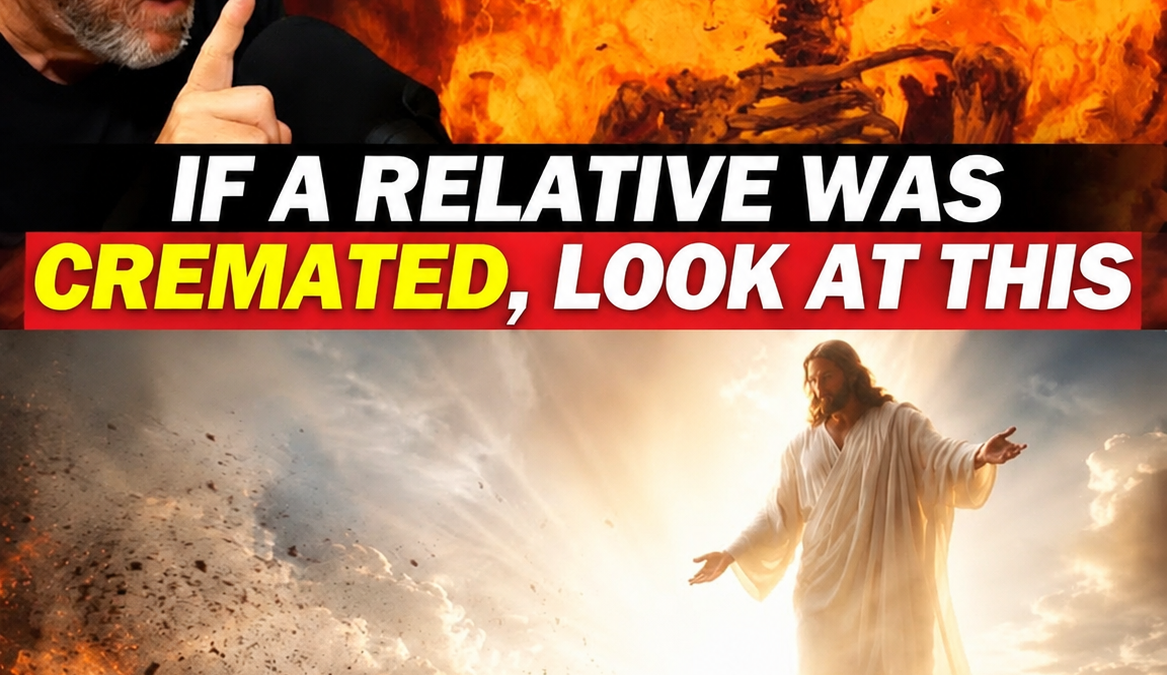
A few days ago, an unexpected call arrived that left me completely speechless, shattering the quiet routine of my study and opening a window into a profound human dilemma. On the other line, a woman whose voice was entirely fractured by deep, consuming tears asked me a question that has since echoed relentlessly in my mind. She whispered through her sobbing breath about the sudden, devastating loss of her beloved husband and her agonizing financial reality.
She explained that they simply could not afford the crushing expenses of a traditional funeral ceremony, leaving cremation as their only viable option for a final farewell. Yet, her voice trembled with a terror far worse than financial ruin because her elderly mother had warned her with absolute conviction that choosing fire would condemn her husband’s soul. Her mother insisted that burning his mortal remains would permanently destroy any possibility of his resurrection on Judgment Day.
As I listened intently to her overwhelming anguish, feeling the heavy weight of her spiritual dread, a sudden realization washed over me with startling clarity. All across the world, millions of sincere Christians find themselves grappling with this exact same agonizing question in their darkest hours of grief. Society itself has shifted beneath our feet in a remarkably short span of time, transforming the landscape of how we honor and process human mortality.
Where towering stone tombs and sprawling green cemeteries once dominated the landscape, we now find modern crematoriums and quiet columbariums filled with elegant urns. Cremation has surged in popularity, becoming far more widespread and socially accepted than at any other point in recorded human history. In nations like the United States, more than half of the population now chooses fire over earth when planning their final resting arrangements.
Yet beneath this modern convenience lies a profound, unspoken mystery—a haunting question that very few people dare to voice aloud in polite conversation. If the Almighty Creator explicitly promised to resurrect our physical bodies on the final day of reckoning, what happens when those bodies no longer physically exist? How can someone who has been reduced entirely to fine, powdery ashes ever hope to rise triumphantly from the dead?
Can the infinite power of the Almighty truly rebuild what roaring flames have completely consumed into microscopic mineral particles? My name is Juan José Benitez, and for decades I have dedicated my entire existence to investigating the deep mysteries that official religious institutions often prefer to leave untouched. I have traveled extensively across the globe, interviewing renowned theologians, brilliant scientists, and meticulous historians, while poring over ancient texts in dusty, forgotten libraries.
I have attended solemn funerals across five different continents, observing how diverse cultures approach the inevitable reality of human death and physical decay. What I have ultimately discovered about the delicate relationship between cremation and the divine promise of resurrection may permanently transform your understanding of mortality. The true answer is not where most people look, hidden away inside funeral home procedural manuals or rigid ecclesiastical laws.
The definitive answer is written clearly within the pages of a two-thousand-year-old book, revealing something so astonishingly unexpected that it changes everything. Once you fully grasp what that ancient text truly communicates, you will never look at the final chapter of human life in the same way again. But before we dive into those ancient revelations and uncover the true biblical perspective, we must examine something entirely fundamental.
We need to understand precisely what modern cremation entails as a physical process and why millions of everyday people are choosing it today. Let me describe a visceral reality for you, something that most individuals will never witness firsthand or care to imagine in detail. I have visited several professional crematoriums, observing the procedure closely, and I can assure you it is an experience that leaves an indelible mark on your soul.
The human body—that very same physical vessel that once walked through sunlit streets, spoke words of comfort, and loved deeply—is placed gently inside a specialized cremation chamber. This is not a simple household oven, but an industrial structure engineered specifically to achieve scorching temperatures between eight hundred and one thousand degrees Celsius. The ambient heat inside is so intense that the surrounding air visibly vibrates, distorting everything within view as the intense thermal energy takes hold.
Within a matter of minutes, the physical process begins its relentless work, causing human flesh to rapidly consume and soft tissue to evaporate into thin air. The complex internal organs—the very heart that once beat furiously with excitement and the lungs that breathed fresh spring air—all vanish into the roaring flames. In less than three hours, the only tangible elements that remain within the chamber are calcified bone fragments and brittle remnants of the skeletal structure.
Even those remaining bones are not left intact; they are carefully gathered and fed into a specialized mechanical pulverizer designed to grind them down completely. This machine transforms the remaining skeletal structure into a fine, uniform powder that we universally refer to as cremated ashes or cremains. That resulting dust, collected carefully into a receptacle roughly the size of a standard shoebox, represents the sole physical trace of an eighty or ninety-year human life.
These ashes bear no resemblance to ordinary soil or earth, possessing no recognizable anatomical shapes or familiar textures to remind us of the living person. Instead, they consist of sterile, grayish mineral particles that slip effortlessly between your trembling fingers like ultra-fine desert sand. Some families choose to place these remains inside decorative ceramic urns, while others prefer to scatter them across meaningful locations like the open sea, towering mountains, or quiet gardens.
Others still choose to keep the urn on a mantelpiece inside their homes, as if the physical presence of those ashes could somehow keep the memory alive. Everything about the modern process is remarkably fast, scrupulously clean, technologically advanced, and, for many people, profoundly unsettling to witness. For centuries, and indeed for millennia across Western civilization, humanity has treated our deceased loved ones through entirely different customs and solemn rituals.
Yet human culture changed dramatically, and that transformation swept across societies with breathtaking speed in the span of just two generations. When I was a young child growing up, cremation was virtually unheard of within Christian nations, viewed as an exotic practice restricted to distant cultures. In the West, people buried their dead because burying was simply what had always been done, representing tradition, respect, and the proper Christian path.
Today, however, in nearly every country with a Christian majority, cremation has surged past traditional burial to become the preferred option for families. In certain metropolitan regions, more than sixty percent of the population now chooses to be cremated rather than placed in the ground. What underlying forces drove this profound, rapid shift in human behavior and cultural norms across the modern world?
The primary driver behind this monumental shift is undeniable, resting heavily upon the harsh economic realities of modern life and escalating funeral expenses. My ongoing research into contemporary funeral costs reveals figures that are frankly staggering, placing an immense financial strain on grieving families. A decent casket alone can easily cost thousands of dollars, while a permanent cemetery plot demands an equally exorbitant financial sacrifice.
When you factor in professional embalming services, body preparation, memorial ceremony rentals, floral arrangements, and heavy stone gravestones, the total bill explodes. An average family can easily find themselves facing tens of thousands of dollars in expenses during a time of profound emotional vulnerability. In tough economic times, when job security is precarious and savings are stretched thin, traditional funeral expenses can feel utterly insurmountable and financially impossible.
Cremation offers a remarkably practical alternative that is significantly cheaper, faster, and far less logistically complicated than a traditional burial service. When you are already grappling with the paralyzing pain of loss and drowning in sadness, avoiding financial devastation brings immense relief. Yet money is not the only driving factor behind this massive cultural shift, as another critical element has gained prominence: environmental consciousness.
Consider the ecological footprint of a traditional burial, which requires substantial quantities of harvested wood or heavy metals to manufacture a proper casket. It demands large parcels of land for gravesites, which are becoming increasingly scarce and expensive in overcrowded modern urban centers. Traditional burials also require chemical embalming fluids—toxic compounds containing formaldehyde that slowly leach into the surrounding soil and groundwater tables.
Furthermore, cemeteries require deep concrete burial vaults to protect the caskets, ongoing grounds maintenance, motorized lawnmowers burning fossil fuels, and constant irrigation. The cumulative environmental impact of a traditional burial is substantial, and in a society increasingly aware of its ecological footprint, this matters deeply. While cremation is far from entirely carbon-neutral, it demands fewer natural resources, requires minimal physical land space, and consumes significantly less time.
For many environmentally conscious individuals, cremation is perceived as the most responsible and sustainable way to handle mortal remains at the end of life. Beyond economics and environmentalism, we must also consider the sweeping logistical changes brought about by the hyper-mobile nature of modern human society. Families no longer live clustered together in the same towns or villages where multiple generations were born and raised.
Children emigrate across oceans for career opportunities, parents relocate for retirement, and individuals frequently pass away thousands of miles from their childhood homes. A traditional cemetery with a fixed, permanent physical location no longer aligns smoothly with a world where geographic mobility has become the absolute norm. Ashes, by contrast, offer complete portability; they can be easily transported across borders, divided lovingly among relatives, or scattered across distant landscapes.
This unparalleled flexibility allows dispersed families to stay connected to their grief and honor their loved ones without being chained to a single geographic monument. Finally, we cannot ignore the profound cultural evolution surrounding how modern society views and processes the concept of public mourning. Death is no longer handled with the communal rituals and prolonged public vigils that once anchored small, interconnected communities in the past.
Memorial services have grown shorter, and physical gravesites are visited with far less frequency as the frantic pace of daily life accelerates. Public mourning has largely receded, replaced by private, internal grief managed quietly within the confines of immediate family circles. Amidst this massive social transformation, cremation has steadily normalized, shedding its historical stigma to become viewed as practical, efficient, and hassle-free.
Yet this brings us directly back to the most critical, uncomfortable question that few people dare to ask aloud: Is this what God truly wants? It is precisely at this juncture that historical and theological research becomes utterly fascinating, because opening the Bible yields a surprising initial silence. When you search the sacred scriptures specifically for explicit rules regarding cremation, the very first thing you encounter is a notable absence of text.
There is no direct verse commanding humanity, “You shall not cremate your dead,” nor is there any explicit commandment prohibiting the practice entirely. Moses did not descend from Mount Sinai carrying stone tablets inscribed with a warning that fire is reserved exclusively for divine judgment. Conversely, however, you will not find a single verse endorsing cremation either, nor any narrative passage celebrating it as an honorable choice.
There is no inspiring story of an ancient patriarch whose body was joyfully consigned to the flames as a profound sign of ultimate respect. This pervasive silence is deeply disturbing to biblical scholars because, in the study of ancient texts, what is left unsaid carries immense weight. What we observe consistently from the opening chapters of Genesis to the closing visions of Revelation is the unbroken practice of traditional burial.
From the earliest patriarchs like Abraham to the life and ministry of Jesus Christ, mortal bodies are unfailingly placed into caves, tombs, and the earth. In the ancient Near East, bodies were carefully wrapped in linens, anointed with fragrant spices, and treated with profound reverence and love. They were placed in permanent locations where human memory could safely return, where families could mourn collectively, and where enduring hope could quietly wait.
Yet there are specific, highly revealing moments recorded in scripture where human bodies were indeed subjected to fire and consumed by flames. Crucially, whenever fire appears in connection with human remains in the biblical narrative, it is never portrayed as a peaceful rest. Fire is invariably depicted as a potent symbol of divine judgment, societal shame, divine rejection, or desperate emergency measures.
Let us examine the dramatic story of Achan, recorded in the seventh chapter of the biblical book of Joshua, following the conquest of Jericho. God had issued a strict, unequivocal command that all spoils from the fallen city must be completely consecrated or destroyed. Achan, driven by greed, openly disobeyed this divine decree by stealing forbidden items of great value and hiding them secretly inside his tent.
When his hidden sin was eventually uncovered, the resulting judgment was swift and merciless for both Achan and everything he possessed. He was not merely executed by stoning; his accumulated possessions were piled high and burned, and his physical body was given over to fire. The biblical text notes that after all Israel stoned him with stones, they burned them with fire, marking total destruction.
In this stark narrative, fire was not an act of dignified farewell or peaceful transition, but an active component of punishment and shame. It served as a permanent mark of disgrace, a radical purification through violent judgment where fire acted as the ultimate executioner. Let us move forward to another pivotal historical account found in the thirty-first chapter of First Samuel, following a disastrous battle.
King Saul and his sons had suffered a crushing defeat and perished on the slopes of Mount Gilboa at the hands of the Philistines. The victorious enemy mutilated their fallen bodies and hung their remains publicly upon the walls of Beth-shan as supreme trophies of war. Upon hearing this horrific news, the brave men of Jabesh-gilead risked their lives by marching through the night to recover the desecrated bodies.
When they finally retrieved the mutilated remains of their fallen king and princes, they made the solemn decision to cremate them. In this exceptional historical instance, cremation was not chosen as a spiritual rite or an elevated philosophical preference, but as a pragmatic emergency measure. The bodies had been severely desecrated and mutilated beyond normal recognition, making standard burial perilous or unhygienic due to advanced decay.
Yet pay close attention to the most revealing detail of this entire account: after burning the remaining flesh, they carefully gathered the bones. They buried those remaining skeletal fragments respectfully under a tamarisk tree in Jabesh, fasting for seven days in deep mourning. Even in the midst of desperate, highly unusual measures, burial remained the ultimate desired outcome, restoring whatever dignity could be salvaged.
Another striking example occurs in the historical books concerning King Josiah, who led a massive religious reformation throughout the kingdom of Judah. In his zealous efforts to purge the land of widespread idolatry and pagan worship, Josiah ordered the systematic destruction of foreign altars. As part of this sweeping purification, he exhumed the bones of long-dead pagan priests from their graves and burned those skeletal remains upon their own altars.
Here, fire was explicitly utilized as a powerful symbol of ultimate condemnation, profound rejection, and utter defilement of the wicked. There was no honor attributed to those bodies, no tender reverence, and no lingering affection—only profound shame, divine judgment, and desolation. The fire transformed those once-revered locations into cursed ground, declaring emphatically that those corrupt remains deserved dishonor rather than peaceful rest.
Do you begin to see the consistent pattern woven throughout the historical and prophetic writings of the ancient scriptural text? Whenever human bodies are deliberately subjected to fire, it is never presented as an honorable, recommended, or spiritually elevated act. It is invariably a direct response to overwhelming shame, profound sin, catastrophic war, or emergency sanitary necessity—never a pious choice.
There is a profound theological reason embedded deep within ancient Hebrew thought regarding the symbolic meaning and spiritual weight of fire. Throughout biblical literature, fire possesses very specific, highly charged connotations, and those connotations are almost exclusively negative regarding ultimate fates. Fire serves primarily as the devastating instrument of active divine judgment against unrepentant wickedness and rebellion.
Think back to the cataclysmic destruction of Sodom and Gomorrah, where brilliant sulfur and fire rained down from the heavens, annihilating entire cities. Fire represents active punishment, consuming corruption and reducing human pride to fine, meaningless dust in a matter of hours. Furthermore, fire functions as a painful means of purification, akin to raw gold being tested and refined within a scorching crucible.
This metallurgical process burns away impurities, but it is an inherently agonizing, destructive ordeal designed to strip away dross through intense heat. In the apocalyptic imagery of the New Testament, fire represents the face of eternal punishment—the ultimate lake of fire. Those who deliberately and continuously reject divine grace face a final spiritual reckoning symbolized by unquenchable, consuming flames.
It is true that fire can also indicate the holy presence of God, such as Moses witnessing the miraculous burning bush that was not consumed. The prophet Elijah famously called down consuming fire from heaven to validate the true God upon Mount Carmel during a spiritual contest. Ancient sacrificial offerings placed upon the bronze altar were regularly consumed by fire to symbolize total dedication and pleasing aroma to God.
Yet there is a crucial, undeniable distinction to be made: when fire appears outside of authorized ritual sacrifice or divine manifestation, it carries a stern message. It communicates correction, violent separation, finality, and the irrevocable end of an earthly chapter without hope of restoration. This does not automatically mean that modern, sanitized cremation is inherently sinful or spiritually fatal for a believer today.
The Bible does not explicitly condemn the practice of cremation with a direct prohibition, leaving room for personal circumstance and conscience. However, the consistent scriptural imagery highlights something profoundly significant about how humanity conceptualizes the physical body’s ultimate destiny. In biblical theology, fire is never painted as the primary image of future hope, whereas burial is intimately tied to resurrection.
From Abraham to Jacob, from Moses to King David, the bodies of the faithful are consistently laid to rest in the earth with dignity. Even Jesus Christ himself, following his brutal crucifixion on Roman execution stakes, was carefully wrapped in clean linen and placed in a new tomb. The deliberate act of burial—entrusting a lifeless human body back to the quiet embrace of the soil—was far more than a cultural custom.
It stood as a silent, powerful confession of faith, declaring that physical death is not the absolute end of human existence. Burying a body represented a quiet trust that what was sown in corruption would one day be raised in incorruption and glory. From Genesis onward, the act of interment was treated as a tangible gesture of deep respect, active faith, and patient expectation.
The human body was viewed not merely as a temporary biological container or disposable shell, but as an intricately crafted temple. This brings us directly to the foundational theological truth regarding the sacred nature of the human body as designed by the Creator. The creation account in Genesis paints a vivid picture of divine craftsmanship and intimate personal involvement in human origins.
The text states clearly that the Lord God formed man from the dust of the ground and breathed into his nostrils the breath of life. Through this divine action, man became a living, breathing soul endowed with consciousness, moral agency, and eternal potential. The physical body was fashioned directly from mundane dust, yet it was instantly animated and elevated through the divine breath of the Almighty.
This unique union of physical matter and spiritual breath gave rise to humanity, bridging the gap between the material universe and the heavenly realm. Consequently, the biblical narrative never treats the human body with superficial indifference, whether during the vibrant years of life or after death. When God pronounced the solemn sentence upon Adam after the fall, declaring, “Dust you are, and to dust you shall return,” He outlined reality.
He was describing the natural biological destiny of the human body, establishing its eventual return to the very earth from which it was originally formed. These haunting, poetic words have been echoed by countless generations of grieving believers at gravesides worldwide, completing the natural cycle set by the Creator. Because the earth is designated as the natural receptacle for mortal remains, traditional burial remained the primary, normative expression of biblical faith.
We witness this profound principle clearly for the very first time in the twenty-third chapter of the book of Genesis, following Sarah’s death. Abraham was struck by devastating grief upon losing his lifelong companion, yet he refused to treat her passing with casual convenience. He did not seek a quick fix, nor did he accept offers of free burial land from local rulers without careful negotiation.
Instead, Abraham insisted upon purchasing a suitable, permanent burial site with his own hard-earned money, securing the Cave of Machpelah near Hebron. Why did the patriarch go through such elaborate legal and financial trouble just to secure a plot of land for a grave? Because for Abraham, burying his beloved wife was not an empty bureaucratic formality, but a profound act of enduring love and active faith.
He desired to honor her memory publicly, bearing visible witness to his conviction that her physical remains rested within the promised inheritance. The careful burial of Sarah also served a prophetic purpose, functioning as a tangible down payment on God’s promise regarding the land. Later, in the twenty-first chapter of Deuteronomy, divine law commands a surprisingly compassionate rule regarding executed criminals hanging from trees.
The law mandates that such bodies must not remain exposed overnight; they must be lowered and buried on that exact same day. Why such urgency? Because even in the grim context of criminal punishment and societal judgment, God demands a baseline of human dignity. Even a convicted guilty person retains a modicum of respect because their physical form remains an image of the Creator.
Burial, therefore, is not restricted solely to the exceptionally righteous; it serves as a universal mechanism to preserve human dignity beyond the grave. Then came the ultimate historical benchmark: the solemn burial of Jesus Christ, the holiest figure in human history and the cornerstone of the faith. Following his agonizing execution on the cross, the broken body of the Son of God was neither burned nor tossed carelessly into a common trench.
Instead, it was carefully lowered from the wood, wrapped in clean linen burial cloths, anointed with expensive spices, and placed inside a private rock-hewn tomb. Joseph of Arimathea, a wealthy and respected member of the Jewish council, offered his own prepared tomb as an act of profound devotion. Devoted women watched the event closely from a safe distance, and the grieving disciples observed in stunned silence.
They understood implicitly that even though that physical body was currently broken and lifeless, it remained fundamentally holy and precious. The historical fact that Jesus was buried quickly became a central, non-negotiable pillar of the early Christian apostolic proclamation of the Gospel. He died a real physical death, he was buried securely in the earth, and on the third day he rose triumphantly.
His burial was never viewed as a permanent defeat, but rather as an essential announcement—the quiet, dramatic prelude to ultimate glory. Throughout the vast tapestry of scripture, the deliberate act of burying the dead carries a rich, multi-layered symbolic meaning. Earth receives the lifeless form, initiates a slow process of natural decomposition, and through this quiet transition, believers symbolically await the promised resurrection.
Therefore, to bury someone is to plant a seed with profound hope, covering with earth what will one day bloom in incorruptibility. It is a humble recognition that physical death is not a full stop, but a comma preceding a glorious new sentence. When a body is lowered gently into the ground, a sacred promise is planted in the soil, awaiting the life-giving warmth of the dawn.
Just as a physical seed must fall into the earth and apparently die to produce new plant life, the believer’s body rests. Yet this brings us directly back to the burning question that torments millions of believers today, echoing the anxious plea of that grieving widow. Does the modern practice of cremation interfere with, diminish, or outright prevent the miraculous resurrection of the body on the final day?
This is unquestionably the single greatest hurdle modern Christians face when evaluating whether to choose cremation for themselves or their loved ones. If a human body is subjected to intense heat and reduced entirely to fine, powdery ashes, can God still resurrect it? The historic Christian faith not only proclaims with absolute certainty that Jesus Christ rose physically from the dead.
It equally affirms that all believers will follow his miraculous pattern, receiving new, glorified, immortal physical bodies on the last day. The resurrection is never taught in scripture as a mere spiritual metaphor or a comforting psychological coping mechanism for grieving minds. It is presented as a literal, corporeal, flesh-and-bone promise signed with the blood of Christ and guaranteed by divine power.
However, what happens to this magnificent theological framework when the physical body no longer exists in an intact, recognizable state? What occurs when centuries of natural decomposition have completely dissolved the skeleton, or when roaring industrial flames have reduced flesh to ashes? The sacred scriptures answer this pressing doubt with resounding clarity, declaring that nothing whatsoever can limit the creative power of God.
In the fifteenth chapter of his first letter to the Corinthians, the apostle Paul tackles the mechanics of resurrection reasoning. He explains the profound mystery by using the natural analogy of agriculture: “What is sown in corruption is raised in incorruption. What is sown in dishonor is raised in glory. What is sown in weakness is raised in power. What is sown a natural body is raised a spiritual body.”
Notice carefully that Paul does not describe a tedious chemical reassembly of our old, decayed physical body, but rather a glorious transformation. Just as a tiny seed planted in the soil dissolves completely to give rise to a magnificent plant, the human body is transformed. It does not matter whether that body was carefully embalmed and placed in a bronze casket or reduced to microscopic ash particles.
The future resurrection does not depend in the slightest upon the physical integrity of the corpse or the preservation of intact bones. It depends entirely upon the limitless, sovereign power of the Almighty, and that power is constrained by nothing in the universe. Is it not the very same God who originally formed Adam from inanimate dust and commanded lifeless clay to become living flesh?
If He possesses the infinite capability to speak the physical cosmos into existence out of absolute nothingness, why should we doubt His power over ashes? It makes no difference whatsoever to the Creator if human remains were swallowed up by the vast ocean, scattered across mountain winds, or burned. God does not require physical fragments, intact DNA strands, or undisturbed graves to perform His miraculous work of recreation.
His sovereign word alone is more than sufficient to call forth life from any state of physical dissolution or apparent annihilation. Furthermore, we often forget a sobering historical reality regarding the earliest generations of Christians who lived and died during violent Roman persecutions. Many of those faithful early believers were never granted the dignity of a peaceful traditional burial in a quiet cemetery.
Instead, they were burned alive as human torches in Nero’s gardens, thrown to wild beasts in crowded amphitheaters, or dumped anonymously into mass graves. The physical bodies of countless early Christian martyrs were scattered like dust across the vast expanse of the Roman Empire without tombs or memorials. Did that tragic lack of a proper funeral prevent their bodily resurrection on the last day?
Were their eternal prospects of glory compromised simply because they lacked expensive caskets, embalmed tissues, or undisturbed skeletal remains? Absolutely not, because the divine promise of resurrection does not depend upon what remains of us, but upon Him who never forgets. Though the hostile world viewed them as disposable victims, in the eyes of Christ they remain honored, eternal witnesses of faith.
He will raise them up not because their scattered atoms were meticulously reassembled from the soil, but because their names are written in heaven. Paul reinforces this comforting reality by stating that Christ will transform our lowly mortal bodies to conform them to his glorious body. This miraculous transformation is achieved through the same supreme power with which he is able to subject all things to himself.
Notice that the apostle did not state that God will merely repair our old, broken bodies; he declared that He will utterly transform them. That staggering transformation relies entirely upon divine spiritual authority, remaining entirely independent of any temporary physical condition or environmental fate. Therefore, does cremation truly compromise or prevent the future resurrection of the believer?
The resounding answer is an emphatic no, because the God who promised to resurrect our bodies is not restricted by their current condition. He does not require mahogany coffins, intact pelvic bones, or clearly marked headstones to locate His children across the dimensions of time. He is the absolute Lord over all matter, meaning today’s sterile funeral ashes can easily become tomorrow’s radiant heavenly glory.
While theological reflection on our final arrangements is valuable, we must ultimately rest our anxious hearts in divine power rather than human customs. If you genuinely believe that Jesus Christ conquered death through his resurrection, you must also believe that nothing can prevent His promise. Neither blazing industrial fire nor shifting desert dust can stop Him from fulfilling His word to the very last letter.
Our ultimate hope is never anchored in the chemical state of our mortal remains, but in the unwavering faithfulness of the Creator. But if the biblical text does not explicitly condemn cremation as a sin, what is the official stance of the Christian Church? For many centuries, the institutional Church firmly and openly opposed the practice of cremation across Western Christian societies.
This opposition did not stem from an initial belief that cremation was inherently sinful or spiritually corrupting in its chemical reality. Rather, the church resisted cremation because it had historically been promoted and weaponized by ideological groups explicitly denying the resurrection. Particularly between the tenth and eleventh centuries, cremation was frequently adopted by anti-clerical factions as an aggressive act of protest.
It was used deliberately to symbolize a total rejection of Christian doctrine, eternal life, and the literal resurrection of the body. Because of this hostile historical association, church leaders concluded that accepting cremation under those specific circumstances amounted to denying the Gospel. As centuries passed, however, human society evolved, and the underlying motivations driving families to choose cremation changed dramatically.
People began selecting cremation not out of anti-religious rebellion or ideological spite, but due to severe economic necessity, geographic relocation, or personal preference. Recognizing this cultural evolution, church authorities gradually reconsidered their rigid pastoral position in light of changing modern realities. In the year 1963, under the leadership of Pope Paul VI, the Vatican officially lifted the absolute ban on cremation for Catholics.
The Church permitted cremation as long as the choice was not made as an explicit denial of faith in the bodily resurrection. Since that pivotal policy shift, cremation has been fully permitted within the Catholic Church, though traditional burial remains strongly preferred. Furthermore, in its 2016 doctrinal instruction titled Ad resurgendum cum Christo, the Congregation for the Doctrine of the Faith clarified important guidelines.
The document reiterated that cremation is morally acceptable under clear conditions designed to maintain reverence for the human person. First, the cremated ashes must not be scattered indiscriminately across nature, divided among competing family members as keepsakes, or kept indefinitely at home. Second, the ashes must be deposited in a sacred, consecrated space—such as a Catholic cemetery, a designated church columbarium, or a proper memorial site.
This requirement preserves the visible link between the deceased individual and the broader Christian community, serving as a public testimony of faith. Third, the instruction re-emphasized that cremation does not affect a person’s salvation or bodily resurrection as long as proper Christian reverence is maintained. Other major Christian traditions, including various Protestant denominations, evangelical churches, and Orthodox communities, maintain somewhat varied positions on the matter.
Some Protestant bodies openly embrace cremation without restriction, while others gently encourage traditional burial based on historical customs. However, nearly all mainstream Christian denominations agree that cremation should not be classified as a sin or a barrier to eternal life. Instead, they emphasize that the decision should be approached thoughtfully, guided by wisdom, deep reverence, and clear spiritual intention.
Yet there is a fundamental biological truth that we must confront, one that is rarely discussed in polite conversations about burial versus cremation. All human bodies ultimately share an identical physical destiny regardless of how they are handled immediately following death: returning to dust. Cremation does not destroy who we are as unique individuals; it merely accelerates a natural chemical process already written into human biology.
The exact moment life leaves the physical body, biological decomposition begins its relentless, unstoppable work across every cellular level. Skin rapidly dries out, muscular structures collapse, and internal organs begin the messy process of enzymatic dissolution. Within a matter of weeks, soft tissues vanish entirely, leaving behind only the bare skeletal structure to slowly weather away.
Years or decades later, even those remaining bones succumb to environmental pressures, dissolving into the surrounding soil until no recognizable trace remains. Forensic science has a specific, highly detailed term for this entire biological progression: taphonomy. Taphonomy is the scientific study of how organic remains decompose, decay, and disappear from the physical environment over extended periods.
It encompasses processes like skeletonization, putrefaction, and total dissolution, explaining how even a body placed inside an expensive bronze casket becomes food for microorganisms. It may take decades inside a sealed concrete vault or merely months in moist soil, but the final outcome is always identical. As the ancient scriptural proverb reminds us with sobering accuracy: “Dust you are, and to dust you shall return.”
In this fundamental sense, modern cremation introduces no radical new principle into the universe; it simply compresses years of natural decay into hours. The final result is not spiritually different from a body that slowly returns to elemental dust through traditional underground burial. Both methods accomplish the exact same physical transition, returning our complex biological elements back to the broader earth.
In both scenarios, the eternal question remains floating in the quiet space between grief and faith: what truly remains of us? The answer to that profound question is both wonderfully simple and breathtakingly deep, transcending physical chemistry entirely. What truly remains is what the Creator never forgets—the eternal soul, our unique identity, and the divine purpose for which we were fashioned.
What remains is that essential aspect of human existence that cannot rust, cannot be consumed by fire, and cannot vanish inside a tomb. It matters very little whether your skeletal remains rest quietly beneath a stone marker bearing a cross or your ashes drift across the sea. The physical limitations that constrain human understanding do not limit God, nor are His eternal plans thwarted by fire or time.
It is this absolute certainty that fundamentally shifts our human perspective on mortality, because dust is never a dead end. Instead, dust represents preparation, fertile ground, and raw material awaiting the greatest miraculous manifestation yet to come in human history. If physical dust is not the ultimate end of the human story, the real question shifts away from logistics.
We no longer need to worry anxiously whether God possesses the technical capability to resurrect a body reduced to fine ashes. The pressing question becomes: How do we choose to honor the physical body while it is entrusted temporarily to our care? Even if the Almighty Creator does not strictly require intact bones to perform miracles of recreation, we desperately need to honor His creation.
The apostle Paul expresses this ethical and spiritual responsibility with language that leaves no room for casual indifference or carelessness. He asks pointedly: “Do you not know that your bodies are temples of the Holy Spirit who is in you, whom you have received from God?” He reminds believers that they are not their own, having been bought with a precious spiritual price.
Therefore, Paul urges believers to honor and glorify God within their physical bodies during life and treat their remains with respect. If the human body is genuinely a sacred temple of the divine presence, it cannot be treated as a mere disposable shell. It was intentionally created, consecrated, and utilized by God to accomplish His mysterious will upon the earth.
Every act of genuine human compassion, every quiet prayer whispered in the dark, and every sacrifice made out of love occurred there. The physical body was the tangible vessel through which the rich history of an individual’s faith and character was forged. Although the immortal soul ultimately transcends the physical body at the threshold of death, the empty vessel still deserves respect.
Consequently, how we handle mortal remains is never merely a sterile administrative procedure or a routine logistical chore. It serves as a public and private declaration of our deeply held beliefs regarding the sacredness of human life. Do we treat the deceased body as something precious touched by eternity, or do we view it as worthless trash?
Our final arrangements are inevitably guided either by profound reverence or detached convenience, by resilient faith or pragmatic calculation. Burying a body involves far more than simply shoveling dirt over a wooden box in a quiet, secluded field. It represents a deliberate, symbolic declaration that the life lived within that physical form was sacred and will rise again.
Cremation, when approached with deep reflection, sincere respect, and fervent prayer, can equally become an act of peaceful surrender. Yet it constantly forces us to confront our underlying motivations: Am I treating this mortal form as a temple, or as a burden? The true spiritual difference lies not merely in the technical method chosen, but in the posture of the human heart behind it.
Death does more than mark the abrupt termination of a biological life; it initiates an intense, complex mourning process for survivors. Grieving families require emotional support systems, structured rituals, and physical spaces where love can openly mourn, remember, and begin healing. This realization introduces an entirely new dimension to the complex modern dilemma surrounding funeral choices.
What happens to human memory and emotional processing when the physical body is no longer present in a localized grave? A traditional cemetery grave provides more than a sanitary disposal site; it establishes a permanent, physical anchor for human grief. A gravesite acts as a tangible point on the map of the human heart where children and grandchildren can return.
It provides a quiet, dedicated location where grieving friends can leave fresh flowers, where tears can fall without judgment, and where words find voice. For millions of people across generations, visiting a cemetery plot becomes a sacred continuation of their intimate bond with the departed. When a body is reduced instantly to ashes, that specific physical anchor often disappears or becomes decentralized.
There is no longer a patch of dedicated soil to contain the memory, no heavy headstone bearing a carved name to visit. The interpersonal bond is not necessarily destroyed, but it must transform and adapt to a different psychological landscape. While cremation offers profound flexibility, it must never become an excuse to bypass the essential emotional work of mourning.
For some families, scattering ashes across the ocean symbolizes liberating freedom; for others, keeping an urn close brings immense comfort. Memory lives on, but its expression shifts, becoming untethered from a specific geographic coordinate and carried instead by the wind. Burying ashes beneath a newly planted tree or within a memorial garden can successfully bridge the gap between nature and memory.
However, we must remain vigilant against the subtle risks introduced by our fast-paced, highly forgetful modern culture. In a relentless world that constantly demands our attention, physical absence can easily slide into emotional oblivion if we are not careful. This is precisely why every family must weigh their final arrangements with great care, ensuring that mourning receives the space it requires.
Death, while entirely natural, must always be processed with deliberate love, patience, and unhurried human dignity. Genuine memory transcends passive nostalgia; it represents active love sustained across time, serving as concrete proof that a unique life mattered. Whether manifested through a traditional stone grave, a columbarium niche, an urn on a mantel, or scattered ashes, sacred spaces emerge where love dwells.
Ultimately, what matters most is not the exact geographic location where we shed our tears, but our enduring commitment never to forget. If memory truly lives wherever love deliberately chooses to remember, then our final choice transcends mere logistics. It becomes a deeply spiritual act reflecting our personal theology, our view of eternity, and our love for those we leave behind.
There is no single formula, no rigid biblical verse providing step-by-step instructions, and no universal standard offering a one-size-fits-all solution. This complex reality naturally leads us back to the fundamental questions we must ask ourselves when planning for the end of life. While there are no mandatory rules enforced by divine decree, there are guiding introspective questions that illuminate our true intentions.
The first and most fundamental question is this: What course of action brings the greatest glory to God? Does our chosen arrangement bear clear witness, even in death, to our unwavering belief in the future resurrection? The second vital question is: What brings the greatest comfort and emotional stability to those who survive us?
We never navigate the pain of loss entirely in isolation; our surviving family members and friends must bear the immediate burden of grief. Others will weep, others will remember, and others will desperately need a designated physical space to process their sorrow. Have we carefully considered what our grieving loved ones might require to find healing and closure?
Have we provided a physical or symbolic location where they can say a proper goodbye, share memories, and honor our history? Sometimes the most profoundly spiritual choice we can make is not what feels easiest or cheapest for ourselves, but what shelters survivors. The third crucial question involves examining our deepest personal motivations: What is the underlying intention driving this specific choice?
Here we pierce straight to the core of our spiritual consciousness, asking whether we are acting from faith or fear. Are we motivated by genuine reverence or careless indifference, by deep theological conviction or mere administrative convenience? The Almighty looks far beyond our external actions, evaluating not only the technical methods we utilize, but the posture of our hearts.
If our final decision is born of mutual respect, sacrificial love, and a sincere desire to honor divine plans, it glorifies God. These introspective questions can feel heavy, but they are entirely necessary to elevate our decisions above mundane technicalities into sacred territory. They compel us to look deep within our souls and confront our hidden motives: Am I deciding from faith or haste?
Am I focusing on the eternal destiny of the soul, or merely managing an inconvenient logistical event? Am I leaving behind a rich legacy that speaks volumes of living hope, or am I simply rushing to close a painful chapter? Because death, despite its inevitable sorrow, presents a final, powerful opportunity to bear eloquent witness to our deepest convictions.
The way we handle our mortal remains can become a silent, enduring testimony of what we believed throughout our earthly journey. It declares not only who we were as individuals, but who we hope to become in the eternal realm—resurrected, transformed, and eternal. Amidst this complex journey of difficult decisions, lingering doubts, and tearful farewells, one brilliant truth shines above all others.
God possesses the infinite capacity to raise up what the world has long since forgotten or discarded into nothingness. He does not require pristine environmental conditions, expensive preservation techniques, or undisturbed tombs to accomplish His miraculous purposes. It is entirely sufficient for Him simply to be Himself—the sovereign Creator of the cosmos who spoke light into darkness.
If we were originally fashioned out of common dust at the dawn of creation, why should we fear returning to it? Whether our final physical state involves fine ashes, undisturbed earth, scattered bones, or complete oblivion, God remains utterly unrestricted. His sovereign power is never halted by physical barriers, chemical alterations, or the ravages of time.
The early Christian believers in Thessalonica grasped this comforting reality with bold conviction, anchoring their souls against the despair of grief. The apostle Paul encouraged them with words that echo down the centuries: “Brothers and sisters, we do not want you to be unaware about those who sleep.” He exhorted them not to grieve like those unfortunate people who possess no stabilizing anchor of hope.
“For if we believe that Jesus died and rose again, even so God will bring with him those who sleep in Jesus.” This magnificent divine promise never focuses anxiously upon the chemical condition of the physical corpse, but upon the living faith of the soul. It is that active faith, anchored in divine grace, that ignites the glorious resurrection breaking upon the horizon.
That coming resurrection is not a tedious restoration of our old, decaying physical bodies, but their breathtaking, glorious transformation into something entirely new. What was once subject to mortal decay will put on immortality, and what was once corruptible will become completely incorruptible. What was once ordinary, forgotten dust will blossom into radiant heavenly splendor beyond human comprehension.
Paul makes this miraculous mechanism crystal clear: “It is sown a natural body, it is raised a spiritual body.” This profound declaration means God does not merely dust off the past; He introduces a completely transformed mode of existence. The glorious resurrected body does not depend upon physical remains; it relies upon divine purpose, divine authority, and divine love.
On that appointed day, it will not only be sealed tombs that swing wide open, but scattered ashes will rise. Even the vast, fathomless oceans will give up their dead as the voice of the Creator echoes across the deep cosmos. When Jesus Christ speaks His final, triumphant word over human history, the physical location of your remains will be entirely irrelevant.
It will not matter whether your body was entombed beneath polished marble or your ashes were carried away by coastal winds. It will not matter if your funeral urn rests peacefully in a quiet columbarium or your bones lie beneath a forgotten tree. The Creator will know your exact location down to the atomic level, and He will know your unique identity by name.
Then, in a single transcendent microsecond that will shatter the boundaries of time and space, the dead will rise incorruptible. Tears will be wiped away permanently from every weeping eye, and the ancient enemy of death will be vanquished forever. Therefore, do not fear physical dust, roaring industrial fire, or the temporary oblivion of the grave.
Fear only the tragic possibility of living and dying completely devoid of hope, detached from the grace of the Creator. Whoever dies anchored in faith, trusting in the finished work of Christ, will most assuredly live again. And now, my thoughts return once more to that distressing phone call, to that weeping widow terrified for her husband’s soul.
I shared with her precisely what I have shared with you throughout these reflections, anchoring her frantic heart in scriptural truth. I assured her that God is never limited by cremated ashes, and that the future resurrection depends entirely on divine power. I reminded her of the ancient martyrs burned at the stake, the saints swallowed by the sea, and the faithful without graves.
I told her with absolute confidence that every single one of them will rise triumphant on the final day of reckoning. I reassured her that what matters eternally is not the physical method of disposition, but the condition of the heart and faith. As we spoke, I could feel the heavy atmosphere of her grief shifting from paralyzing despair to profound relief.
Her anxious sobbing gradually gave way to a quiet peace as the crushing weight of guilt lifted from her weary shoulders. “So my husband will truly be okay?” she whispered through her remaining tears, seeking final confirmation. “Will God never forget him?” I answered her firmly and tenderly: “God never forgets His own children, not for a single moment.
“One day, when Christ returns in glory, your husband will rise again—not as he was in his weakness, but glorified and eternal.” It is to this unshakeable, luminous truth that we must cling tightly when the cold winds of grief buffet our lives. Therefore, whether a believer chooses traditional burial or modern cremation, the decision must be made with prayerful reflection and sincere faith.
The Bible does not prohibit cremation, the institutional Church permits it, and the Creator can resurrect ashes as easily as dust. The ultimate decision remains deeply personal, profoundly spiritual, and must be weighed carefully in private communion with God. What brings the greatest glory to the Almighty?
What brings the deepest comfort to those we leave behind in sorrow? What is the pure, unvarnished intention of your heart? These are the essential questions you must ask yourself in the quiet chambers of your soul. Because in the final analysis, it matters very little whether our earthly journey concludes in a polished urn or an underground grave.
What matters infinitely is whom we trust implicitly to lift us back up out of the dust when history reaches its climax. If you place your absolute trust in Jesus Christ, believing that He conquered the grave, nothing can stop Him. Neither blazing fire, relentless time, deep oceans, nor total oblivion can prevent Him from keeping His magnificent promise to you.
He declared for all eternity: “I am the resurrection and the life; whoever believes in me, though he die, yet shall he live.” It is squarely upon this unshakeable promise and absolute certainty that our enduring hope securely rests. Our future is anchored not in the temporary chemical state of our mortal bodies, but in the unwavering faithfulness of the Creator.
This has been Juan José Benitez, sharing with you the fruit of my extensive investigations, scriptural research, and personal convictions. The final decision regarding your own journey rests entirely in your hands, guided by conscience, wisdom, and faith. May the Almighty bless you, keep you, and grant you peace in every season of life.
And when your own appointed time eventually arrives to cross the threshold, may you face death not with trembling fear, but with radiant hope. Know with absolute certainty that physical dust is never a dead end, but merely the quiet beginning of eternity.

