Why God CANNOT kill Satan or the fallen angels
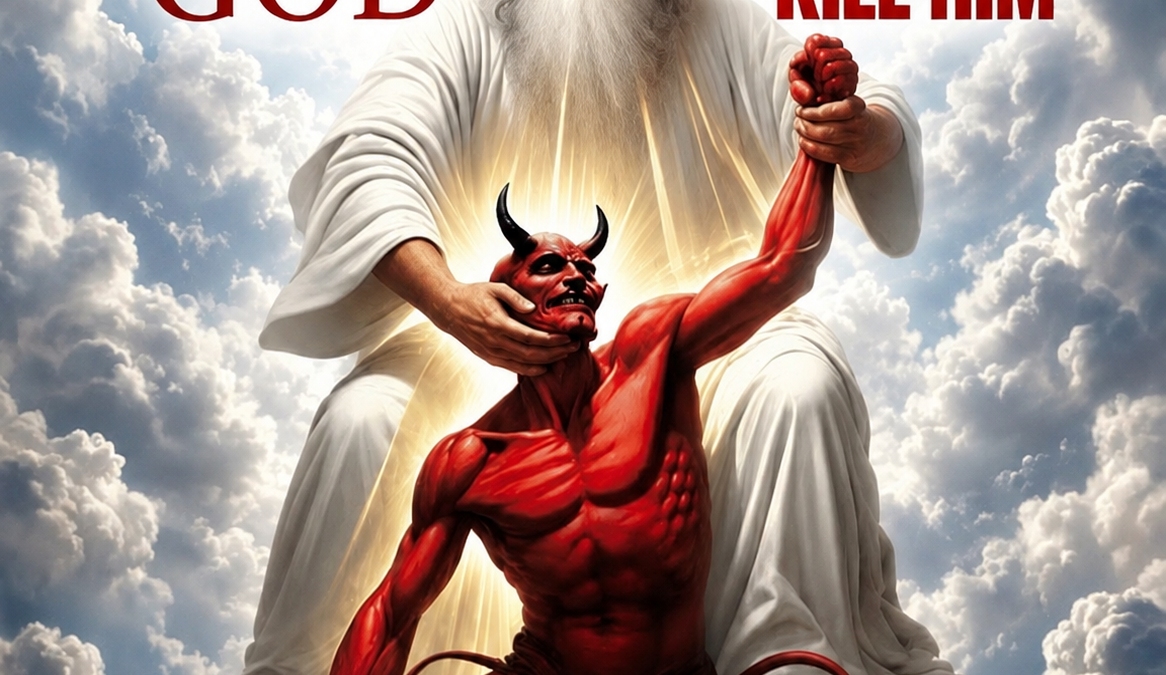
Why hasn’t God destroyed Satan? God is holy, righteous, and completely opposes all evil. Yet Satan remains active, walking across the earth.
Why does God allow his ancient enemy to persist? Why permit ongoing suffering, torment, and heartbreak in creation? The Almighty holds boundless power and could unmake darkness instantly.
A single word from his throne would end the adversary. Yet God chose to withhold that swift execution. He permitted him to live and continue his rebellion.
The answer to this sacred mystery runs deep. It cannot be reduced to human emotion or impatience. Scripture reveals the full architecture of God’s redemptive timeline.
Before becoming an adversary, Satan was an exalted being. God did not shape a monstrous creature of darkness. Out of infinite wisdom and majesty, God fashioned Lucifer.
Lucifer’s name declared his purpose as the morning star. He stood as a guardian cherub, bearing heavenly light. He dwelled in the nearest ring around God’s holiness.
Every precious gemstone adorned his dazzling celestial form. He was endowed with exceptional wisdom and radiating brilliance. All the heavenly hosts marveled at his unmatched splendor.
God created absolute perfection without a single flaw. Lucifer was designed to mirror the glory of his Creator. He was a steward appointed to lead worship throughout heaven.
Then an unseen corruption stirred quietly within his heart. Pride began to take root in the lightbearer’s soul. He gazed upon his own radiance instead of the Creator.
The splendor meant for adoration became his fatal snare. The reflection of majesty became mistaken for personal supreme glory. He forgot that every beam of his light was borrowed.
A dark ambition whispered softly within his thoughts. It was no longer satisfying to serve and magnify God. Lucifer craved the worship that belongs solely to the Father.
He declared five proud vows deep within his spirit: “I will ascend to heaven; I will raise my throne. I will set myself higher than the highest holy stars.”
“I will make myself like the Most High,” he proclaimed. He no longer wanted to reflect majesty; he sought possession. He wanted the throne of heaven for his own dominion.
In that singular moment, cosmic balance was entirely fractured. The revered lightbearer cast aside loyalty and embraced direct insurrection. He transformed into an adversary driven by consuming personal vanity.
Lucifer did not plot his defiant uprising in complete isolation. He subtly seduced one-third of the angels into mutiny. Beings crafted for endless holy adoration turned into bitter mutineers.
Thus ignited the ancient rebellion across the heavenly realm. This was no decorative allegory or symbolic spiritual tale. It was an authentic, historic rupture of cosmic proportions.
Yet humanity often makes a terrible mistake regarding this conflict. Many envision an eternal dualism between equal cosmic powers. They picture light and darkness locked in uncertain eternal equilibrium.
They imagine good and evil balancing on precarious scales. This philosophy belongs to pagan folklore, fantasy, and cinema. The sacred scriptures present an entirely different and uncompromising reality.
God has no equal, no rival, and no challenger. No created entity can compare to the uncreated Sovereign. The Almighty does not gamble on the outcome of history.
God does not fight frantically to see if he survives. The war’s ultimate triumph was decided before creation began. Satan is not the counterweight to an almighty holy God.
Satan is merely a creature whose breath is entirely granted. He possesses limited power, strictly bounded authority, and finite knowledge. A created being cannot ever overpower its living Creator.
When Lucifer rebelled, he did not emerge as God’s peer. He became a defeated rebel living on borrowed moments. His demise was determined the instant he turned from light.
The clash in the celestial realm is recorded in Revelation. A terrible war erupted across the expanse of heaven. Michael and his faithful legions fought against the great dragon.
The ancient serpent assembled his fallen, corrupted hosts in defiance. Standing immovably against them rose the defender of the throne. Michael the archangel stepped forth in absolute holy allegiance.
With heavenly authority, Michael summoned the loyal hosts of heaven. Ranks of faithful ministers assembled in brilliant holy armor. They met the arrogant legions in a decisive, righteous stand.
The usurpers were utterly overwhelmed by Michael’s faithful forces. The dragon and his rebellious followers could not withstand the light. Heaven found no remaining place for the mutinous, deceitful spirits.
The great dragon was hurled down from the heights. That ancient serpent, called the devil, was decisively expelled. He who deceived the nations was cast down to earth.
Every fallen spirit that rallied to his mutiny fell alongside. Lucifer never stood a chance against the sovereign will above. The accuser lost his garments of honor, rank, and presence.
Remarkably, God did not step onto the battlefield to fight. The Creator did not need to raise an arm in defense. He commanded his loyal servant Michael to execute the decree.
This shows the vast chasm between God and the adversary. God does not strain or struggle to overpower the rebel. A mere archangel sufficed to banish the former lightbearer.
The initial judgment of exile was enforced with supreme finality. The rebels were driven far from the paradise of heaven. They descended toward the earth, filled with desperate malice.
Those who once walked in pure glory now inhabited darkness. Strip of their heavenly post, they turned against humanity. Lucifer took on his new identity: Satan, the adversarial accuser.
People often confuse Satan, fallen angels, and wandering demons. Scripture reveals distinct realities and ranks among spiritual forces. Clear spiritual discernment requires understanding their different natures and operations.
Fallen angels are celestial beings who directly joined Lucifer’s rebellion. They once stood near the glorious throne of divine splendor. They fell from favor, yet preserved their spiritual angelic architecture.
They did not lose their intelligence, intellect, or celestial hierarchy. They simply lost their holiness, communion, and heavenly residence. These fallen watchers are not the disembodied wandering demons.
Demons operate as unclean, disembodied spirits wandering the shadows. They lack celestial bodies and desperately seek living hosts. Without a physical form, their capacity to operate feels crippled.
When Jesus encountered the tormented man at the Gadarenes, the demonic legion pleaded frantically not to enter the deep abyss. They begged to inhabit swine rather than remain completely naked.
Demons roam the earth seeking individuals to possess and oppress. Fallen angels, however, operate through higher principalities and structural systems. They maintain strategic ranks, coordinated governance, and systemic influence.
The apostle Paul explicitly described this ordered dark hierarchy: we do not wrestle against ordinary blood and earthly flesh, but against principalities, cosmic powers, and spiritual hosts of wickedness.
These dark rulers do not drift aimlessly through desolate wastelands. They establish strongholds within cultures, corrupt ideologies, and governing structures. Their aim is to blind entire nations to God’s truth.
Satan directs these organized strategies from his temporary domain. While demons harass individuals, principalities seek to corrupt civilizations. This clarifies why humanity faces coordinated deception on grand scales.
Still, the deep question returns to our restless minds. Why did God permit them to fall upon our world? Why didn’t holy wrath consume them into total nonexistence immediately?
First, spiritual beings do not perish like mortal flesh. God is pure spirit, and angels partake of spirit realm reality. They do not experience physical decay, decomposition, or bodily death.
Satan cannot simply cease to exist like a crushed stone. His existence was woven into the fabric of created eternity. The spiritual realm operates under unyielding, higher divine laws.
Second, God’s nature is rooted in pure, flawless justice. In God’s righteous court, no judgment occurs without due process. A criminal is not executed before the trial convenes.
The adversary has not escaped; his sentencing date is set. God has permitted him temporary existence until the final court. Every dark act is carefully recorded for that public reckoning.
Divine judgment is far more than an outburst of anger. It is a public demonstration of unassailable righteousness before creation. All created beings will observe the perfection of God’s verdict.
The book of Revelation describes that magnificent, sobering final assembly. The Great White Throne will emerge amidst the fading heavens. Every soul, spirit, and created creature will answer for deeds.
No voice will claim they were condemned without fair hearing. Every excuse will crumble, and every knee will bend down. God’s justice will stand verified before angels, humans, and devils.
So why did God allow Satan to live until then? Because God’s eternal wisdom does not follow human impatience. Humans demand hasty solutions and instant eradication of every annoyance.
God moves with immaculate intention through the corridors of history. Every single passing generation, decision, and battle is woven carefully. God’s patience is not sluggishness; it is profound, merciful wisdom.
The delay demonstrates God’s righteousness, giving mankind time to repent. Just as Satan was cast out, his final sentence approaches. The heavenly Judge will execute the verdict at the appointed hour.
In the meantime, believers walk forward with steady, enduring faith. God’s perceived delay is actually our protection, redemption, and sanctification. The Almighty has never relinquished absolute command over this universe.
God orchestrates history so that believers develop true spiritual endurance. Through struggles, we learn deep discernment and reliance on grace. God reveals his glory not by quick fixes, but by complete transformation.
Remember the ancient patriarch Job sitting quietly in deep ashes. Satan could not harm Job without seeking explicit divine permission. Even when the adversary attacked, God governed the boundaries strictly.
In the end, God restored Job double and confounded darkness. That was not an equal contest between opposing cosmic entities. It was an undeniable display of God’s supreme authority.
Satan, despite his foaming hatred, operates upon a very short leash. He cannot step an inch beyond what God explicitly permits. God remains completely sovereign over the lightest day and darkest night.
Yet seekers often ponder another deep, perplexing theological question: if God foresaw Lucifer’s mutiny, why create him at all? Why summon a being whose destiny would birth such agony?
God values something infinitely greater than mechanical, forced compliance. He placed a sacred gift within angels and human beings: the magnificent, weighty capacity known throughout creation as free will.
Free choice was never an accidental gateway to human sin. It is the ultimate hallmark of authentic divine love and honor. God chose not to construct an empire of soulless automatons.
He did not build a universe populated by programmed, mindless marionettes. The Almighty desired that each created being possess authentic agency. He granted the conscious dignity to love, obey, or rebel.
This profound freedom was given to angels, Satan, and mankind. The question burns in our hearts: why risk this catastrophic rebellion? The answer is magnificent: without freedom, true love cannot exist.
Love cannot be forced, scripted, coerced, or mechanically commanded. Love that is mandated by unyielding programming is empty performance. Genuine affection requires the actual capacity to refuse the relationship.
If God forced his creation to praise him under compulsion, he would not be a loving Father; he would be a tyrant. Therefore, God endowed his creations with genuine moral freedom.
He chose the vulnerable path of seeking genuine, heartfelt devotion. This path inevitably carried the severe risk of tragic, bitter rejection. Lucifer took that terrible option and turned away into mutiny.
Countless men and women throughout human history have followed him. Yet their disobedience does not invalidate the beauty of free choice. Free will remains the only soil where true adoration can blossom.
Consider the worth of faith if doubt were completely impossible. What virtue would obedience carry if rebellion could never happen? What depth could your love hold if no alternative existed?
God does not desire a congregation of chained, fearful captives. He longs for children who love him freely from the heart. He allows moral freedom, even when the consequences cost dearly.
Even after Satan’s rebellion, God did not rescind this gift. To revoke free choice would betray God’s holy, consistent nature. He remains a God who invites, inspires, and never coerces.
This explains why the final judgment has not abruptly fallen. God patiently grants creation the space to decide their allegiance. He waits because true, holy love endures and patiently seeks reconciliation.
Imagine God granting real free will to his beloved creatures, only to obliterate anyone who dared make an unauthorized decision. Would that demonstrate authentic liberty or just terrifying divine intimidation?
It would resemble a tyrant saying, “You are entirely free, yet if you disagree with me, you will be vaporized immediately.” That is manipulation disguised as the counterfeit illusion of freedom.
This is the exact threshold where human understanding often stumbles. Many expect the holy Creator to act like an impulsive judge. They expect instant retribution, immediate destruction, and hasty cosmic closure.
God’s justice is never frantic, reactive, or driven by wounded pride. His holiness operates through calm, immovable, and perfectly righteous wisdom. He does not swing axes of destruction upon sudden personal impulse.
He allowed the rebellious angels to exist to preserve true agency. Destroying them instantly would have destroyed the meaning of choice itself. Free will would have become an empty, hollow, and deceptive concept.
God honors the moral choices of his creatures, even when grievous. This does not imply that he condones their dark, malicious rebellion. It proves that he remains faithful to the principles he established.
This mystery stretches our minds to their very outer limits: freedom can yield horrific sorrow, yet God preserves its holy operation. His ultimate aim is not raw control, but inward heart transformation.
Real transformation only occurs when one chooses God from within. If God had executed Satan instantly in heaven’s majestic courtyard, the remaining angels would have cowered in pure, paralyzing terror.
Heaven would have experienced frightened silence, but no genuine devotion. Compliance would have reigned, yet authentic love would have died. The Father does not seek eternity populated by terrified, trembling slaves.
He desires a glorious eternal home filled with redeemed sons and daughters. He desires subjects drawn by the beauty of his unmerited grace. Could there also be a mysterious, deeper purpose within this delay?
Could the adversary himself serve a greater function in Providence? This thought feels paradoxical, yet it flows clearly through Scripture. Through spiritual eyes, an astonishing divine masterpiece comes into focus.
Even in rebellion, Satan inadvertently serves the purposes of God. Not because God authors wickedness or approves of devilish corruption, but because God’s sovereignty turns the enemy’s venom into glory.
The most magnificent proof of this truth was Christ’s incarnation. From the earliest days of Christ’s earthly journey among us, Satan stood not as a friend, but as an unwitting crucible.
The Holy Spirit led Jesus directly into the barren, arid wilderness. There, amidst the lonely rocks, Jesus fasted forty grueling days. Satan approached the Son of Man to tempt him face-to-face.
He tempted Jesus with bread, appealing to deep physical starvation. He offered glory, dominion, and kingship over every earthly empire. He whispered every temptation this broken, power-hungry world continually pursues.
Yet Jesus stood unshakable against every fiery spiritual dart thrown. The Savior countered every subtle assault with the living, written Word. He silenced the ancient tempter with unbending devotion to the Father.
Through that wilderness trial, Jesus proved his absolute, holy purity. Only the sinless, victorious Lamb could carry the world’s deep guilt. He had to face the crucible we fail, conquering temptation completely.
By triumphing over Satan, Jesus revealed his unblemished perfection for sacrifice. The adversary thought he was weakening the Son of the Living God. Instead, the tempter validated Christ’s perfect authority and unmatched righteousness.
Years later, as the earthly ministry of Jesus neared its end, the adversary returned to strike his final, most treacherous blow. Satan fixed his greedy gaze on the fragile heart of Judas.
Judas Iscariot, one of the chosen twelve, surrendered to greed. He agreed to hand over the Messiah for thirty pieces of silver. The scriptures record that Satan entered Judas before the dark betrayal.
The enemy whispered the plan that led straight toward dark Gethsemane. He orchestrated the arrest, the corrupt trials, and the Roman cross. Satan thought he was finally crushing the Seed of the woman.
Yet consider the breathtaking irony of God’s magnificent sovereign design: how could Christ die for human sin without an ultimate betrayal? How could there be Calvary without the scheming of dark hearts?
And how could humanity receive redemption without the cross of Calvary? God seized the enemy’s deepest malice and fashioned our salvation. Evil was outwitted by the boundless, unfathomable wisdom of God’s throne.
God permitted Satan’s existence because the devil unknowingly advanced redemption. This never transforms Satan into a righteous or willing divine servant. It shows that he is a defeated fool serving his own undoing.
Here lies a precious lesson for every burdened, struggling believer: nothing the enemy launches against your life escapes God’s sovereign hand. No temptation, no betrayal, and no heartbreak is beyond divine redemption.
God leaves no purposeless cracks in his eternal, sovereign plan. The bitter trials you endure are being forged into greater glory. Even in the dark valleys, God is weaving a glorious testimony.
In those seasons of weeping when you asked where God was, he was standing right beside you, sustaining your weary, bruised heart. He was turning your tears into endurance, strength, and quiet wisdom.
The enemy strikes to destroy your faith, your peace, and your joy. Yet God takes the enemy’s assault and produces unyielding spiritual gold. Satan wields pain, but the Almighty Father orchestrates deep, lasting transformation.
A single glorious word runs through scripture from Genesis to Revelation. This word defines God beyond his power, holiness, and majestic wonders. That word is love—relentless, sacrificial, and boundless holy divine love.
Jesus revealed this fatherly heart in the story of the prodigal. A rebellious son demanded his inheritance and abandoned his father’s house. He wasted everything in reckless living until he hit rock bottom.
When the broken son returned home in rags, shame, and filth, the loving father did not offer harsh rebuke or immediate judgment. He ran down the road with open arms, weeping tears of joy.
This parable displays the boundless, waiting heart of our heavenly Father. This reality raises another profound, delicate question across the centuries: did this enduring patience extend even toward the fallen angels?
Scripture does not indicate any opportunity for fallen angelic repentance. Their rebellion was carried out with full knowledge in God’s presence. Yet God withheld their immediate, complete annihilation when they initially fell.
If God were merely swift, cold retribution, they would have vanished instantly. Yet he allowed them to exist across the unfolding human ages. This delay reveals his profound nature of patience and ordered justice.
God’s heart is not hurried, panicked, or governed by human rage. Jesus taught us to love our enemies and bless those who curse. He pointed out that the Father causes rain on both just and unjust.
God does not instantly eliminate those who stumble, fall, or fail. His love seeks restoration, giving space for repentance to take root. Yet mercy must never be mistaken for divine apathy toward evil.
God is not indifferent toward the agony, wickedness, and oppression below. He does not turn a blind eye to darkness or leave accounts unsettled. An appointed hour approaches when all evil will be decisively judged.
The holy Scriptures confirm that rebellious spirits are reserved for judgment. God cast them into spiritual darkness, awaiting the great and terrible Day. They are not pardoned; they are held under custody for trial.
The supreme heavenly courtroom is prepared with absolute divine authority. Jesus Christ will sit upon the throne as the ultimate righteous Judge. His decree will be entirely without appeal, perfectly pure and final.
The apostle John glimpsed this breathtaking vision in the book of Revelation. He saw the Great White Throne blazing with radiant, unapproachable holiness. The books were opened wide, and the dead stood before the Lord.
Every hidden secret will be exposed under the light of truth. Every motive will be revealed, and every deed will be weighed. That day is not a symbolic figure of speech; it is a certainty.
Satan, his fallen angelic hosts, and all unrepentant rebels will face sentencing. Yet this conclusion is not merely an act of catastrophic cosmic destruction. The consummation of all things is the glorious restoration of creation.
God will cleanse this fallen, scarred cosmos of every lingering pollution. He will mend every broken thing and wipe every tear from our eyes. Righteousness will dwell securely in the new heavens and new earth.
Every twisted thing will be made completely straight and restored in beauty. Every knee will bow, and every tongue will declare Jesus is Lord. The adversary who sowed misery and death will be consigned to eternal defeat.
The dragon will be cast into the lake of fire forever and ever. His deceits, his whispers, and his torment will cease for all eternity. The universe will finally be at rest under the reign of righteousness.
One undeniable, unshakable truth must anchor your heart through every trial: the final victory of God has already been accomplished and sealed. We are not anxiously watching to see if our Lord overcomes the dark.
Christ disarmed the powers of darkness on the hill of Calvary. Through the cross and the empty tomb, he sealed Satan’s total defeat. The enemy is already broken, merely awaiting the execution of his sentence.
The world around us may seem covered in chaos and thick shadows. Evil may appear to boast great power, influence, and loud voices today. Yet all of this is fleeting vapor before the rising sun of righteousness.
Jesus reigns upon the eternal throne that can never be shaken down. His promises are pure, his words never fail, and his kingdom stands. If your life is hidden in Christ, you share in this triumph.
You do not stand as a frightened spectator watching the battle from afar. You are an heir of the living King, a beloved child of grace. You walk in victory while the ancient kingdom of darkness crumbles.
What began with a troubled question reveals God’s boundless, glorious wisdom. God did not destroy Satan instantly because he had a greater plan. A plan displaying unsearchable patience, unyielding justice, and redeeming holy love.
His sovereign plan is moving toward its glorious, spotless culmination. Every tear will be tenderly wiped away by the Father’s own hand. Death will be swallowed up, and pain will be completely remembered no more.
What the Almighty began in glory, he will finish in triumph. His truth will endure forever, and his name will be praised. The kingdom, the power, and the glory belong to him forevermore.

