Why Did Jesus NEVER Ask for the 10% TITHE?
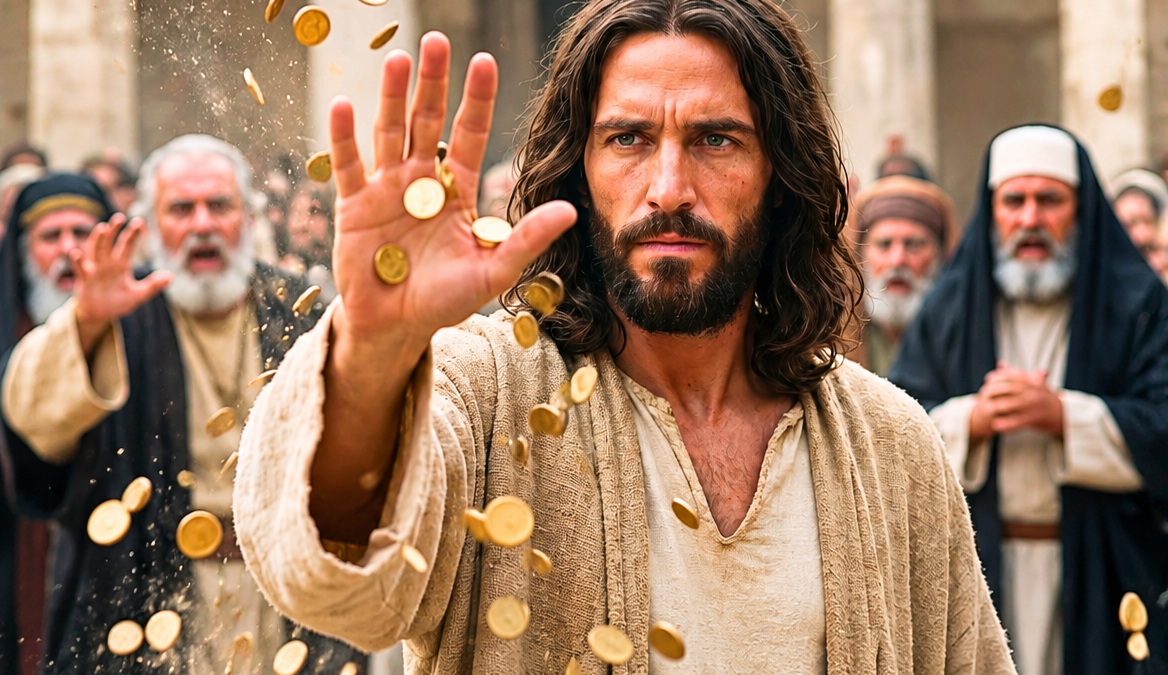
For generations, believers sitting in wooden pews and modern sanctuaries have listened to urgent appeals regarding their wallets. The message echoes from carpeted pulpits across denominations, delivered with total theological certainty. A person must faithfully surrender one-tenth of their earnings every single month or risk falling under divine judgment.
This ten percent figure has long been treated as an untouchable pillar of Christian obedience and church survival. It is presented as a direct mandate handed down by Christ Himself, binding believers across modern history. Yet the records preserved within the four Gospel accounts tell an entirely different, startling financial story.
Across the canonical writings of Matthew, Mark, Luke, and John, the topic of tithing is mentioned on only three occasions. In not one of those rare instances did Jesus command His disciples, followers, or future believers to pay it. The actual teachings of Jesus concerning material possessions run in direct contradiction to modern fundraising methods.
Most people assume this financial custom began with Christ and continued without interruption through the earliest churches. They are told that the ten percent calculation forms the bedrock of New Testament community life. However, the scriptures reveal that modern religious institutions have largely bypassed the economic framework Jesus actually introduced.
Preachers frequently turn to a confrontation recorded in the Gospel of Matthew to defend the mandatory tithe. In that heated passage, Jesus addresses the Pharisees regarding their obsessive religious hypocrisy within Jerusalem. These leaders painstakingly measured one-tenth of their garden herbs, counting out dried leaves of mint, anise, and cumin.
They wanted to guarantee that not even the smallest aromatic sprig bypassed their sacred temple accounting ledgers. Jesus famously remarked that they ought to have practiced those tithes without neglecting justice, mercy, and faith. At that exact sentence, many pastors conclude their sermon, waving Bibles high in triumphant vindication.
They proclaim that Jesus clearly stamped His absolute approval upon the perpetual practice of tithing. Yet this quick conclusion completely ignores the historical and theological environment of the conversation. Jesus was speaking directly to Jewish religious rulers who were actively living beneath the covenant of Moses.
He was not addressing a congregation of Christians living under the New Covenant established by His blood. His words were akin to an ancient rabbi directing another rabbi to meticulously observe local dietary traditions. He was reminding a Jewish leader of legal duties bound to an existing Old Testament covenantal framework.
The Pharisees possessed no personal choice regarding the agricultural tithes dictated by ancient Sinai legislation. The Mosaic Law had been codified fourteen centuries earlier amid the harsh wilderness of the desert sands. It carried strict civil and religious requirements that every biological Israelite was legally bound to obey.
A closer look at this ancient system reveals that it bore zero resemblance to modern church collections. First, the biblical tithe under Moses was never comprised of silver coins, gold bars, or minted currency. Even though coinage and money existed and circulated widely in ancient commerce, God never accepted monetary tithes.
The tithe was exclusively drawn from agricultural production cultivated directly from the holy soil of Israel. It consisted of harvested grains of barley and wheat, pressed olive oil, fresh grapes, and fermented wine. It included the newborn calves, lambs, and goats that passed beneath the shepherd’s counting rod each season.
A skilled carpenter like Joseph, Jesus’s earthly guardian, never tithed a single coin from building tables or doors. A commercial fisherman like Simon Peter never calculated ten percent of his daily catch along the Galilean shore. A diligent leatherworker and tentmaker like the Apostle Paul never set aside coins from his workshop sales.
Second, the Old Testament tithe was never intended to fund architectural mortgages, sound systems, or executive salaries. The provisions were designated by divine decree for four specific vulnerable groups within Israelite culture. They were given to the Levites, the fatherless orphans, the destitute widows, and the foreign travelers in need.
Third, and most devastating to modern calculations, the Mosaic Law did not demand a single ten percent contribution. The ancient Israelites were actually required by divine legislation to provide three distinct, separate tithes. There was the primary Levitical tithe collected each year to sustain the priestly tribe that owned no land.
There was a second festival tithe gathered annually so families could travel and feast together in Jerusalem. Finally, there was a third poor tithe gathered every three years specifically to feed the starving and helpless. When a faithful Israelite obeyed the Mosaic covenant completely, he was not surrendering merely ten percent of his income.
He was actually parting with approximately twenty-three point three percent of his agricultural yield every single year. No contemporary institutional ministry teaches this complex, multi-tiered agricultural system from the sanctuary platform on Sunday. If they disclosed the comprehensive reality of the Mosaic code, congregations would instantly realize the glaring theological deception.
The streamlined, ten percent monetary paycheck deduction preached today is a human invention absent from biblical scripture. Yet understanding the agricultural nature of the Old Testament tithe introduces an even deeper spiritual dilemma. Why did Jesus, during His three full years of public earthly ministry, never instruct His disciples to tithe?
Across one thousand and ninety-five days of constant itinerant teaching, Jesus possessed countless opportunities to make tithing mandatory. When the rich young ruler ran up, knelt in the dust, and asked how to inherit eternal life, Jesus responded. He did not say, “Ensure that you faithfully remit your ten percent to the local treasury each month.”
Instead, He issued a far more radical, agonizing demand that shattered the young man’s carefully protected life. He commanded him to sell all his possessions, distribute the proceeds among the poor, and follow Him. When Jesus spoke to the multitudes gathered on the sun-drenched Galilean hillside, He taught at length on money.
Yet rather than instituting regular tithing practices, He urged them not to store corruptible treasures upon the earth. He warned that rust and moths consume earthly wealth and that thieves break through walls to steal it. He declared with absolute clarity that no human heart can simultaneously serve God and the pursuit of money.
He instructed His listeners to practice their giving in total secrecy, refusing to blow trumpets for human praise. When He commissioned the twelve apostles for their inaugural evangelistic journey through Galilee, His instructions were precise. He did not instruct them to collect a ten percent religious tax from the cities that welcomed them.
Instead, He commanded them to freely give just as freely as they had received, without charging any fees. They were forbidden from carrying copper, silver, or gold coins within their travel belts along the road. A clear, undeniable pattern emerges across every chapter and paragraph of the four inspired Gospel narratives.
Jesus spoke relentlessly and passionately about money, radical sacrifice, and the eternal values of the coming Kingdom. Yet not once in all four Gospel books did He ever establish ten percent as the Christian standard. The foundational reason for this silence is something most contemporary religious leaders deliberately avoid discussing with their flocks.
Jesus could not establish the Mosaic tithing framework for the citizens of His upcoming New Covenant kingdom. The entire tithing system depended entirely upon an ancient religious infrastructure that was soon to be obliterated. The Old Testament tithe functioned strictly within a centralized theocratic system anchored to the stone temple of Jerusalem.
The descendants of Israel brought their produce and livestock to the Levites because that tribe possessed no ancestral territory. When Joshua divided the Promised Land, eleven tribes received sprawling territories to cultivate, settle, and develop for generations. The Levites alone were set apart exclusively for sanctuary maintenance, possessing no private farmland to generate agricultural wealth.
In turn, these Levites labored daily within the towering temple courts that King Herod had elaborately decorated with gold. They tended the smoking bronze altar, butchered the animal sacrifices, and burned fragrant incense before the heavy veil. They maintained the Holy of Holies, which the High Priest entered only once a year with sacrificial blood.
It was an entirely integrated, closed economic structure designed specifically for the temporary demands of the Mosaic era. Yet Jesus walked the dusty roads of Judea possessing prophetic knowledge that His own followers could scarcely comprehend. He knew that in the year seventy, exactly four decades after His crucifixion, an unthinkable catastrophe would strike Jerusalem.
The Roman legions commanded by General Titus would surround the fortified holy city, cutting off all supplies. After months of starvation and warfare, the soldiers would breach the walls and burn the majestic temple down. They would pry apart the foundation blocks until not one stone rested upon another, fulfilling Christ’s precise warning.
Over one million people perished during that catastrophic siege, bringing an end to the ancient Levitical order. The Levitical priesthood ceased to function, the sacred altar vanished, and the sacrificial system abruptly ended forever. The physical temple that justified, received, and distributed the agricultural tithes of the Mosaic Law was utterly erased.
Jesus understood this looming historical reality with absolute prophetic certainty throughout His entire earthly journey of ministry. How could He establish a permanent financial system for His universal Church upon an institution destined for destruction? It would be equivalent to anchoring a perpetual retirement program to a national currency destined to vanish tomorrow.
It made neither practical, theological, nor prophetic sense for Jesus to bind His New Covenant people to that system. Recognizing this reality brings honest Christians face-to-face with an uncomfortable doctrinal contradiction practiced in modern churches today. If tithing was an inseparable component of the Mosaic Law, and Christ came to fulfill and terminate that covenant, what follows?
The Apostle Paul confronted this exact legalistic dilemma when writing his passionate epistle to the churches of Galatia. He warned the believers that if they insisted on keeping one piece of Mosaic ceremonial legislation, they were condemned. They were under absolute divine obligation to observe all six hundred and thirteen statutes of the law perfectly.
A believer cannot pick and choose to preserve the lucrative ten percent tithe while discarding the remaining laws. Either you place yourself under the entire Mosaic code with its curse, or you walk freely in grace. There is no coherent middle ground between the Old Covenant of Sinai and the New Covenant of Christ.
If pastors insist that Christians are legally obligated to tithe because Moses commanded it, logic demands complete obedience. Churches must immediately begin observing the seventh-day Sabbath from sunset Friday until sunset Saturday without lifting a finger. They must ban pork, bacon, shrimp, oysters, and all other foods classified as ceremonial abominations in Leviticus.
They must erect a smoking altar in the church parking lot to slaughter innocent bulls for human sin. Christian men must attach blue fringes to the four corners of their garments as perpetual reminders of commandments. Yet modern congregations never see these obsolete ceremonial requirements enforced from the church platform on Sunday morning.
Denominations carefully extract the financial tithe from the Old Testament while declaring every other Mosaic command fulfilled in Christ. They retain the single ancient statute that secures predictable institutional revenue while discarding the rest as obsolete ceremonial shadow. It is an enormous theological inconsistency that few professional clergy are willing to confront before their tithing members.
To openly acknowledge this reality would jeopardize the automated income stream that supports multi-million-dollar religious corporations worldwide. If Jesus deliberately chose not to establish the ten percent tithe, what did He implement for His followers? The answer is found within the early chapters of the Book of Acts, displaying an astonishing financial model.
When the Holy Spirit fell upon the waiting disciples at Pentecost, thousands of converts embraced the faith immediately. These newborn believers did not construct an accounting board to track monthly ten percent income deductions from members. They unleashed an unprecedented wave of sacrificial generosity that stunned the surrounding citizens of the pagan Roman Empire.
The physician Luke records that the believers voluntarily sold their real estate, farmlands, houses, and private family assets. They brought the revenue and laid it at the apostles’ feet to distribute to anyone who had need. Not a single person claimed that any of their possessions belonged exclusively to themselves for private, comfortable accumulation.
This was not the safe, predictable ten percent calculation endorsed by modern church management consulting firms. This was not even the twenty-three percent agricultural distribution mandated by the ancient Mosaic civil code. This was total, unreserved economic surrender, where one hundred percent of a person’s assets stood available to God.
Imagine a modern pastor stepping behind a polished acrylic pulpit in a climate-controlled suburban megachurch this Sunday morning. Imagine him leaning into the microphone and announcing to the affluent crowd that the ten percent tithe is insufficient. Imagine him demanding that members liquidate their real estate, sports cars, and retirement portfolios to care for the poor.
The parking lot would clear in minutes as outraged families departed in fury, threatening immediate legal and administrative action. The board of trustees would gather within hours to remove the pastor on grounds of mental instability. Yet that radical, voluntary surrender is precisely what defined the vibrant early community of believers living in Jerusalem.
They did not act out of fear of a mandatory percentage enforced by legal threats from the platform. They gave because the Holy Spirit had opened their eyes to a profound understanding of stewardship and grace. They understood that the modern concept of tithing reduces Christian giving to a cold, calculated financial transaction.
Jesus never focused on a mathematical percentage because the numerical calculation was never the central spiritual issue. His focus was always the hidden posture of the human heart and complete surrender to His sovereign authority. While sitting in the temple courts, Jesus observed wealthy patrons tossing heavy bags of money into the treasury.
Their large donations clattered noisily against the bronze collection chests, drawing gasps of admiration from the watching crowds. Jesus offered no public praise to those wealthy contributors who were easily giving far beyond ten percent calculations. Instead, His eyes locked onto a destitute widow who slipped forward to deposit two tiny copper coins.
Those two coins were worth less than a common penny, representing zero purchasing power in the Roman marketplace. Yet Jesus gathered His disciples and declared that this impoverished woman had outgiven every wealthy contributor that day. The wealthy gave comfortable surplus that cost them nothing, while she surrendered everything she had to survive upon.
Her gift was not praised because it hit a theological percentage, but because it reflected absolute trust in God. It demonstrated a willingness to cast herself entirely upon the mercy of her Creator without an economic safety net. Her giving was costly, painful, sacrificial, and rooted in a heart that held no rival idols before God.
When Jesus dealt with the rich young ruler, He identified the precise golden calf that ruled his heart. He commanded him to sell all he possessed, not to institute a universal command for all future believers. He was exposing the idol of wealth that kept that specific man from embracing the Kingdom of Heaven.
Jesus demanded total surrender of the idol, refusing to allow him a comfortable percentage to retain moral control. This remains the uncomfortable truth that modern church leaders are hesitant to preach to their tithing congregations. The ten percent tithe is infinitely more comfortable to practice than the absolute surrender demanded by Jesus Christ.
Writing a check for ten percent allows a person to comfortably control and consume the remaining ninety percent. It functions like an insurance premium paid to God to purchase moral peace and protection against life’s hardships. It is predictable, manageable, easily budgeted, and demands no radical disruption to a self-indulgent, consumerist American lifestyle.
The total surrender that Jesus demands is terrifying, unpredictable, costly, and lays claim to every dollar a person earns. As the gospel spread into the pagan Greco-Roman world, the Apostles maintained this standard of voluntary sacrificial generosity. When massive economic and social problems surfaced in the church at Corinth, Paul stepped in to correct them.
The wealthy believers were arriving early to the love feasts, gorging themselves on wine and fine meats selfishly. Meanwhile, poor believers and converted slaves arrived late from hard labor, sitting hungry while watching the rich feast. Paul wrote a blistering rebuke, warning them that their self-centered behavior made a mockery of the Lord’s Supper.
Yet in addressing this economic disparity, Paul never once ordered the wealthy Corinthians to start paying their tithes. Across the thirteen epistles written by Paul, which establish doctrine for the Gentile churches, tithing is never mentioned. He never utilizes the word “tithe” as a command, guideline, suggestion, or implied duty for New Covenant believers.
If tithing were an essential commandment of the New Covenant, Paul missed dozens of opportunities to teach it clearly. Instead of appealing to Mosaic tithing laws, Paul consistently articulated a financial philosophy rooted entirely in grace. He instructed the Corinthians that on the first day of each week, believers should set aside funds individually.
They were told to give in direct proportion to how God had prospered them, without any fixed legal percentage. To the Roman church, Paul wrote that whoever gives should do so with pure liberality and genuine simplicity. To the Philippian believers, he expressed profound gratitude for their sacrificial gifts, promising that God would supply their needs.
Writing to his young protégé Timothy, Paul laid out exact pastoral instructions regarding the wealthy members within the church. He did not instruct Timothy to demand that affluent members show their tax returns and verify their tithing records. He commanded him to warn the rich not to place their fragile hope in the uncertainty of earthly wealth.
He urged them to be rich in good works, exceedingly generous, and constantly ready to share their material resources. The apostolic pattern remains remarkably consistent throughout every letter preserved in the inspired pages of the New Testament. Believers are called to radical generosity, cheerful sacrifice, and unreserved sharing, but never to a legal ten percent.
Paul understood what modern church administrators conveniently ignore when balancing their ambitious organizational budgets each fiscal quarter. Imposing a mandatory percentage on giving instantly degrades the beauty of cheerful generosity into cold religious legalism. The tithe quickly becomes a spiritual floor that people cross simply to feel righteous and satisfied with themselves.
A Christian easily thinks, “I surrendered my ten percent this month, so my obligation to God is finished.” The remaining ninety percent is then viewed as private property, free to spend without any accountability to heaven. It transforms a living, daily walk with the Creator into a shallow, transactional business agreement between two parties.
Scripture teaches that every single penny in a Christian’s possession belongs entirely to God as Maker and Redeemer. There is no separate ten percent that belongs to God while ninety percent belongs to the individual’s desires. Every financial decision, purchase, investment, and charitable gift is an act of either worship or material idolatry.
When church leaders reduce stewardship to an automated calculation, they rob believers of the radical adventure of faith. Some defenders of the modern system object by quoting Paul’s words that those who preach should live from ministry. They ask whether this scriptural reality does not inherently justify the collection of tithes for pastoral salaries.
Paul explicitly established that full-time laborers in the gospel are worthy of fair financial support from their communities. Yet how Paul defends this principle exposes the error of using his words to justify Old Testament tithing. Paul does not cite the Levitical tithing statutes found in Numbers or Deuteronomy to defend pastoral financial sustenance.
Instead, he appeals to universal common sense and the ethical treatment of domestic animals used in daily labor. He points out that an enlisted soldier never finances his own weapons, armor, and rations while fighting battles. A farmer who clears ground and plants a vineyard has the natural right to eat of its ripe grapes.
A shepherd who tends a flock of sheep enjoys the milk produced by the animals under his daily care. Paul quotes the ancient Mosaic proverb declaring that one must not muzzle the ox while it treads grain. He clarifies that God did not inspire that law out of concern for oxen, but to teach fair compensation.
Yet Paul deliberately laid down this legitimate pastoral right when ministering among the believers in Corinth and Thessalonica. He reminded the Corinthians that he worked long hours making tents with his hands to avoid burdening them financially. He labored night and day so that no critic could accuse him of preaching the gospel for monetary gain.
If Paul believed that tithing was a mandatory command of Jesus, why would he labor at manual trades? Why would he sew coarse goat-hair fabric until his hands were calloused rather than demanding the tithes owed him? His personal labor completely shatters the claim that the New Testament church operated upon a system of tithing.
If Jesus never commanded tithing, and the apostles never practiced it, how did it enter the Christian church? How did an obsolete Jewish agricultural system become the ultimate test of Christian financial obedience in modern sanctuaries? The historical transition took place centuries after the original apostles died, as the church became increasingly institutionalized.
In the year three hundred and eleven, Roman Emperor Constantine converted to Christianity, ending centuries of bloody imperial persecution. The faith shifted from a hunted underground movement meeting in private homes to the favored imperial state religion. Vast stone basilicas were constructed, professional clergy were hired, and massive financial apparatuses were required to maintain operations.
Church leaders faced the immense challenge of funding this sprawling imperial bureaucracy through predictable, centralized revenues. They searched backward into the Old Testament scriptures and revived the long-dead Mosaic concept of tithing for Christians. It provided a reliable, easily calculated, and culturally understood taxation system that guaranteed steady cash flow for bishops.
By the year five hundred and eighty-five, the Council of Mâcon made tithing a mandatory legal requirement for citizens. Christians who refused to pay their tithes were threatened with immediate excommunication from the sacraments and salvation. Throughout the Middle Ages, the institutional church partnered with the sword of the state to seize property forcibly.
Tithing transformed into a ruthless religious tax, collected by civil authorities using the terror of eternal torment. When the Protestant Reformation swept Europe in the sixteenth century, reformers challenged many corrupt Catholic doctrines and practices. Yet most Protestant reformers left the centuries-old tithing framework entirely untouched within their newly established national churches.
They preserved the system because their newly formed territorial denominations required stable income to maintain clergy and buildings. It was far easier to maintain the medieval taxation model than to trust God through voluntary New Testament generosity. Thus, generations of sincere Christians have grown up believing that the modern tithe is an authentic biblical doctrine.
Many contemporary pastors amplify this misunderstanding by brandishing the Old Testament prophet Malachi like a spiritual weapon. They quote the famous passage asking, “Will a man rob God? Yet you have robbed me in tithes.” They pronounce financial curses upon families who fail to hand over ten percent of their pre-tax paychecks.
Yet Malachi was writing specifically to corrupt Jewish priests in Jerusalem under the Old Covenant centuries before Christ. He was not addressing twenty-first-century Gentile believers who have been set free by the finished work of Calvary. Other prosperity preachers promise that tithing unlocks supernatural financial windfalls, promising health, wealth, and instant material prosperity.
They proclaim that God is obligated to open the floodgates of heaven and make tithers wealthy in business. Jesus never promised that giving money to a religious organization would make a person rich in earthly treasures. He promised that following Him faithfully would bring persecution, self-denial, and possibly the loss of all earthly things.
The reality remains that the ten percent tithe is an easy product for modern church institutions to market. Telling a congregation to give ten percent offers them an easy, legalistic checklist to feel secure before God. It is far harder to preach the piercing words of Christ: “Deny yourself, take up your cross, and follow.”
Acknowledging that Jesus never commanded the ten percent tithe is not an invitation to become greedy or tightfisted. The New Covenant standard established by Jesus is vastly higher, more demanding, and more sacrificial than ten percent. Christ calls His followers to total surrender of their lives, bank accounts, careers, families, and future plans.
It means holding every asset with an open hand, viewing oneself merely as a temporary manager of God’s possessions. It means using wealth to feed the hungry, clothe the naked, support genuine ministries, and advance justice daily. Paul summarized the New Testament giving philosophy beautifully in his second inspired letter to the church at Corinth.
He reminded the believers that though Christ was unimaginably rich in glory, He voluntarily became poor for their sakes. Through His sacrificial poverty, believers have been made eternally wealthy with the imperishable riches of salvation and grace. Paul then delivered the ultimate guiding principle for every financial gift made within the kingdom of God today.
He wrote that each person must give exactly as they have decided in their own heart before the Lord. Giving must never be done reluctantly out of inner sorrow, nor under the external pressure of legalistic manipulation. God desires a cheerful giver whose generosity flows naturally from a heart overwhelmed by the matchless grace of Calvary.
For some Christians walking through seasons of prosperity, cheerful generosity might mean giving away thirty, fifty, or eighty percent. For an impoverished single mother working two jobs to feed her children, giving five dollars may represent profound sacrifice. Her small offering carries far more spiritual weight in heaven than the massive checks written by comfortable millionaires.
The ultimate issue has never been the legalistic percentage calculated on a tax return or church envelope. The issue is the hidden posture of your heart before the living God who observes every thought and motive. Do you trust God as your sovereign Provider, or do you place your security in the balance of your savings?
Do you utilize your material wealth to bless those in desperate need, or do you hoard it for your pleasures? Do you willingly support laborers who pour out their lives preaching the uncompromised gospel of Jesus Christ? These are the penetrating questions that every true follower of Christ must bring before God in honest prayer.
Jesus never asked for a mere ten percent because He did not come to collect an easy tax from humanity. He came to demand our entire lives, our undivided affections, our total surrender, and our absolute, unreserved worship. His royal law is to love God with all your heart, soul, mind, and strength, and love your neighbor.
Within that framework of love, every dollar you earn, save, spend, and give away becomes an opportunity to honor Him. It is not about cold, dead legalism that measures out dried leaves of mint, anise, and cumin each month. It is about the glorious liberty of the sons of God, walking in radical, sacrificial generosity that transforms the world.

