Who created God? Spinoza gives the answer the Church doesn’t want to hear
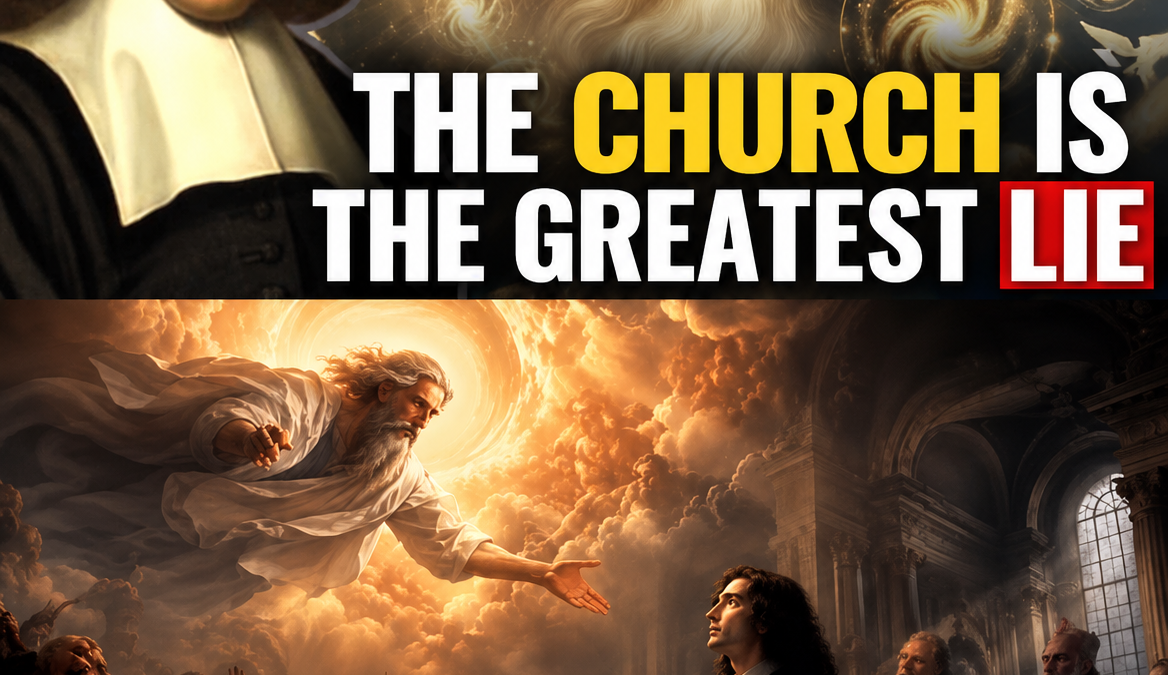
The question of who created God is not merely an innocent curiosity designed to pass an idle afternoon. It represents an intellectual detonator that theologians feared to ignite for centuries, dreading the collapse of their sacred dogmas. When Baruch Spinoza confronted this silent enigma, he answered with a piercing serenity that ecclesiastical institutions refused to tolerate.
Spinoza swept away the comforting, anthropomorphic myth of a bearded sovereign sitting upon clouds, judging mortals with a celestial pen. To him, that depiction was an infantile human invention born of psychological insecurity, anxiety, and a desperate craving for cosmic order. He discarded the traditional premise that God is an external ruler operating outside the boundaries of creation, watching human struggles from above.
Instead, Spinoza unveiled a profound and unsettling truth: God is not an isolated, separate entity, but existence in its absolute totality. God is the cosmos itself, encompassing everything visible and invisible, every physical particle, dynamic current, and immutable law of nature. Because God is everything that exists, the persistent inquiry regarding who created God immediately evaporates into complete logical insignificance.
For something to be manufactured or brought forth, there must exist an exterior reality, a craftsman, or a preceding moment in time. Yet outside of the infinite, encompassing substance that constitutes God, there is no exterior void, no antecedent origin, and no alternative reality. Spinoza completely dismantled the paradigm of an elevated Father, reminding us that we are directly embedded within this eternal substance.
Human beings remain perpetually entrapped within linear categories, endlessly fixated upon temporal beginnings, eventual endings, causes, and outcomes. We reflexively assume that every manifestation must trace back to a discrete initiating force, projecting our finite limitations onto ultimate reality. Spinoza destroyed this intellectual prison by demonstrating that calling for a maker of God erroneously treats God as an ordinary, contingent object.
If God is the singular, boundless reality, then God requires no external antecedent, standing as the self-caused foundation of everything. This philosophical revelation dealt a fatal blow to the structural authority of religious hierarchies, removing their divine monarch. No longer could priests promise an interventionist deity who listens to desperate supplications, alters physics, or meters out cosmic punishments.
Miracles ceased to be divine suspensions of universal order; they were exposed as confessions of human ignorance confronting natural processes. By stripping the divine of an emotional human persona, Spinoza placed mankind before a reality that was vastly grander yet deeply sobering. While this perspective strips away personal salvation and supernatural coddling, it embraces humanity within an enduring, self-sustaining totality.
This philosophical architecture directly challenges another foundational pillar of theological doctrine: the cherished illusion of free will. If every human life is an integral expression of an infinite divine substance, are our individual decisions genuinely autonomous and unconstrained? Spinoza answered unflinchingly: human free will is merely an illusion produced by our widespread unawareness of the causes driving us.
We mistakenly imagine our actions are uncaused solely because we perceive our conscious desires while remaining entirely blind to their hidden origins. Could we perceive the vast, interconnected tapestry of antecedent impulses, conditions, and universal determinants, our decisions would reveal their absolute necessity. Nothing occurs through whimsical arbitrariness; every phenomenon unfolds as an inescapable consequence of the immutable laws governing reality.
Under this gaze, demanding who created God becomes as fundamentally absurd as demanding who authored the physical principle of universal gravitation. The institutional church desperately resisted this philosophical deduction because it shattered the lucrative doctrines of inherited sin and personal salvation. If every human decision is determined by a vast nexus of causality, the conventional ideas of cosmic blame and supernatural reward crumble.
Nature dispenses neither wrathful retribution nor heavenly crowns; reality simply manifests in accordance with its own internal, unyielding necessity. Consider the psychological liberation of viewing everyday existence through this uncompromising lens, refusing the comfort of superstitious explanations. Fierce thunderstorms are not signs of heavenly displeasure, terrible illnesses are not tests of piety, and natural calamities are not holy warnings.
They are the necessary manifestations of the boundless, eternal fabric of nature, free from hidden agendas, secret codes, or celestial tantrums. Spinoza never denied the presence of God; he rescued the divine from trivialization by identifying it with the universe’s ultimate structure. By neutralizing the terrifying weapon of eternal damnation, he dismantled the psychological coercion long employed to domesticate human consciousness.
The true understanding of the divine is not confined to ornate church sanctuaries, pulpit sermons, or ancient dogmatic texts. It lives openly within the falling autumn leaves, the morning sunlight, the quiet rhythm of breathing, and the order of nature. God was never manufactured by an outside hand because God simply is, and this realization fundamentally refashions our place in the cosmos.
Spinoza’s philosophy does not offer a cold, nihilistic desert, but unlocks the only path toward authentic psychological freedom and inner peace. Real autonomy does not mean rebelling against universal laws, but comprehending necessity and aligning our thoughts and actions with it. When we cease struggling against the cosmic tide, we abandon fabricated fears, achieving reconciliation with existence itself without needing comforting fables.
To comprehend how this unified reality functions, Spinoza delved deeper, examining the attributes and modes through which substance unfolds. While the infinite substance possesses infinite attributes, human cognition is constructed to perceive only two distinct channels: extension and thought. Extension embodies the vast physical realm of matter, biological bodies, mountains, and celestial stars, while thought encompasses consciousness, ideas, and perceptions.
These two realms are not opposing realities locked in endless antagonism, as dualistic religious traditions have long asserted to control minds. Body and mind are merely two different expressions of the exact same unified reality, seen from two alternate cognitive perspectives. From the vantage point of extension, you are a physical organism consisting of blood, bone, and living cells navigating material space.
From the vantage point of thought, you are a continuous stream of ideas, conscious perceptions, emotional currents, and evolving reflections. Consequently, there is no remote supernatural heaven elevated above the earth, and no transcendent dimension isolated from the natural world. The divine mind is not an imperial consciousness watching the world from high above, but the thinking reality of nature itself.
This immanent perspective decisively dismantles centuries of ascetic dogma claiming the soul is an innocent prisoner trapped within sinful mortal flesh. Spinoza exposed this dualistic division as a tragic confusion, establishing that body and spirit constitute one indivisible, harmonious whole. Within this elegant system, individual entities—whether a stone, an animal, a human being, or a fleeting thought—are classified as modes.
Modes represent the particular, finite, and temporary expressions assumed by the infinite substance across its continuous physical and mental attributes. A granite boulder or an oak tree is a mode of extension, while a mathematical deduction or a surge of joy is a mode of thought. Herein lies a breathtaking revelation: while the individual modes are finite, fragile, and transient, the underlying substance remains completely eternal.
Particular objects inevitably take shape, undergo perpetual transformations, and dissolve back into the elements, yet the underlying substance never perishes. As a finite individual mode, your biological identity possesses an earthly beginning and an eventual physical end, yet your foundational substance never dies. Upon death, you do not depart from God, for you were never distinct, separated, or alienated from the boundless totality of being.
The particular mode that defined your mortal existence merely ceases its temporal configuration, dissolving into the everlasting canvas of nature. Traditional religion established an artificial chasm between Creator and creation, insisting humans must cower below, awaiting cosmic judgment and salvation. Spinoza obliterated that divide by declaring that no distance, wall, or threshold separates the sacred from the mundane realm of nature.
This fundamental realization renders institutional intermediaries, priestly hierarchies, sacramental rituals, and commercial dispensations entirely obsolete and meaningless. You require no ecclesiastical intercessor to commune with the divine because your very breath and contemplation unfold entirely within God. Every step you take, every insight you achieve, and every breath you draw represents a direct, unfiltered expression of absolute reality.
Religious hierarchies fiercely combated this illumination because an awakened population needing no temples or confessions slipped completely beyond their control. The claim of institutional gatekeepers holding the exclusive keys to heavenly redemption turned to dust before this rational, emancipating understanding. True blessedness and authentic peace are not attained through tremulous fear of punishment or childish hopes of posthumous cosmic rewards.
Real human joy blossoms solely through the rigorous intellectual comprehension of nature, cultivating clarity rather than blind submission to doctrine. When an individual realizes they are an indivisible mode of infinite being, the anxieties, superstitions, and manufactured guilt instantly lose their power. Spinoza offered this philosophical liberation knowing full well the ecclesiastical persecution and social excommunication his bold writings would certainly provoke.
He confronted dogma not through emotional polemics or screaming defiance, but through the calm, systematic precision of geometric philosophical reasoning. There is no longer any justification for seeking outside what has always been present within the marrow of our very being. The ancient query concerning who formed God loses its grip as soon as one realizes that God is reality itself.
Spinoza next directed this analytical clarity toward another pillar of human anxiety and clerical manipulation: the arbitrary concepts of good and evil. Religions have historically presented morality as a set of absolute, cosmic edicts dictated by a celestial king who rewards or damns. Obedience is branded as intrinsic righteousness, while dissent is condemned as wickedness, keeping worshippers submissive through calculated fear of torment.
Spinoza pierced this illusion, asserting that nature itself recognizes neither moral righteousness nor intrinsic wickedness in its ongoing operations. There is no moral code etched into the distant stars, and the indifferent physical cosmos remains wholly innocent of our moral categories. A lightning bolt splitting a tree is neither benevolent nor malicious; a predator hunting its prey commits no transgression against cosmic law.
Catastrophes, pestilences, seasonal blights, and physical deaths are natural, necessary developments unfolding within the boundless tapestry of divine substance. Spinoza did not deny human ethical frameworks, but he grounded them rationally within our immediate psychological needs as finite beings. What we label as good is simply that which aids, preserves, and expands our vital power and existential flourishing.
Conversely, what we categorize as evil is whatever diminishes our vitality, obstructs our potential, or threatens our physical and psychological survival. Good and evil are relative human perspectives anchored in our finite vulnerability, rather than cosmic decrees chiseled upon eternal heavenly tablets. This revelation stripped the church of its self-appointed moral monopoly, exposing its dogmas as artificial human inventions serving temporal control.
Spinoza explained that God possesses neither human-like desires, nor calculated intentions, nor emotional agendas, nor favoritism toward any chosen group. The boundless substance acts through internal metaphysical necessity rather than through deliberate, anthropomorphic choices or emotional whims of will. The philosopher was not advocating for social anarchy, moral indifference, or chaotic indulgence, but for an ethics grounded in authentic understanding.
Genuine virtue arises when we comprehend how nature operates, aligning our conduct with reason rather than succumbing to emotional panics. Central to this ethical philosophy is the concept of our striving power to exist, persist, and flourish within our shared environment. When we act from clear, adequate knowledge of reality, our inherent power increases, making us more resilient, serene, and genuinely self-governing.
When we are pushed by blind passions, superstitions, and manufactured terrors, our capacity for flourishing withers, leaving us easily manipulated. Religions capitalized upon this psychological weakness, governing populations by oscillating between the terrifying fires of hell and the golden promises of heaven. Spinoza broke this abusive cycle, declaring that humanity requires no supernatural threats or mythical promises to live upright, compassionate lives.
By cultivating rational comprehension, we achieve the freedom of the sage, untangling the internal fetters of ignorance, manipulation, and fear. Traditional moral schemes portray God as an imperial lawmaker who requires creation, but Spinoza demonstrated that nature needs no exterior master. God did not choose to exist to enforce statutes; God is the living fabric of existence, and human morality is our rational navigational guide.
When this insight takes root, individuals cease begging for supernatural intervention, abandoning the childish hope that the cosmos will bend to their desires. Instead, we focus our energy on understanding reality as it actually is, acting prudently to improve our lives and support our communities. This dynamic transformation trades passive religious subservience for an active, empowering stewardship over our individual and collective human destinies.
Spinoza pursued this systematic demolition of dogma into another cherished territory of institutional theology: the venerated belief in divine miracles. Miracles have long been celebrated as dramatic suspensions of natural order, supposedly proving God’s active, partisan intervention in human affairs. From parting oceans to instantaneous healings, these accounts have been curated to mesmerize the impressionable and validate priestly authority over society.
Spinoza confronted this grand theatrical tradition with a devastating question: would a perfect, infinite divine reality ever violate its own eternal principles? His response was decisive: the notion of an all-encompassing deity overturning natural law to perform magic is an outright logical contradiction. Because nature is identical with the divine substance, claiming nature can contradict its own established dynamics suggests the divine battles itself.
Every single occurrence within the universe happens by absolute necessity, unfolding without pause through an unbroken chain of cause and effect. The events humans label as miracles are merely phenomena whose proximate causes remain temporarily hidden from our limited, developing scientific knowledge. Ignorance of complex natural mechanisms does not prove the presence of supernatural intervention; it merely highlights the boundaries of our understanding.
Where credulous minds perceive supernatural signs to justify dogmatic belief, Spinoza recognized an urgent intellectual imperative to investigate and comprehend reality. The moment one accepts that miracles do not occur, the entire theological machinery of divine bribery and divine intimidation collapses completely. Pious supplications cannot rewrite physics, ornate ceremonies cannot suspend chemical reactions, and theatrical repentance cannot erase the necessary outcomes of past actions.
The elaborate clerical trade in dispensations, special blessings, and holy pilgrimages is revealed as completely useless before an unswerving universe. Spinoza liberated humanity from the tormenting anxiety of appeasing a moody deity whose unpredictable temperament might ruin their lives at any moment. We inhabit a reliable, coherent web of natural causality where every result flows from antecedents that can be studied and understood.
Consider a farming village whose crops are suddenly devoured by a massive swarm of insects or withered by persistent drought. Traditional dogmatists proclaim the catastrophe is a divine retribution for hidden communal sins, prescribing fasting, guilt, and frantic prayers for relief. Spinoza swept away such debilitating myths, demonstrating that the blight is the predictable outcome of atmospheric cycles and biological dynamics.
The remedy is not weeping at church altars, but carefully studying agricultural science, weather patterns, and ecology to adapt with intelligence. This shift restores human dignity and agency, lifting us from trembling subjects into perceptive students and conscious participants within the living universe. Spinoza took this critique further, demonstrating that the very concept of a miracle insults the perfection traditionally attributed to the divine nature.
If God had to periodically intervene to correct natural events, it would mean the original design was clumsy, flawed, and fundamentally defective. It would reduce the divine to a careless mechanic perpetually forced to mend a malfunctioning contraption that failed to operate smoothly. For Spinoza, the immutable consistency and unbroken harmony of physical laws represent the supreme, unassailable expression of divine perfection.
The true marvel of reality is not the magical suspension of physical order, but the magnificent coherence with which the universe functions continuously. This insight forever strips away the premise that God is an external craftsman who fashioned the cosmos and stepped back to tinker. God is the unbroken totality, nature needs no repairs, and the question of who made God collapses under its own logical irrelevance.
Spinoza then brought this revolutionary perspective to bear upon our intimate inner life: the daily experience of human freedom and personal agency. Theological traditions insisted that humans possess an absolute, unconditioned capacity to choose between moral obedience and sinful disobedience before God. Yet this supposed freedom was always paired with coercive psychological terror: choose correctly or suffer horrific agony for all eternity.
Spinoza dissected this contradictory construct, proving that the conventional doctrine of uncaused, absolute free will is a total psychological fiction. We declare ourselves free simply because we are conscious of our immediate appetites while remaining completely blind to the determinants causing them. Imagine a traveler choosing between two converging roads, convinced the final decision emerges from a completely spontaneous, unconditioned spark of free will.
Spinoza pointed out that unexamined preferences, memories, physiological fatigue, or subtle sensory stimuli inevitably drove that choice toward a specific outcome. If we could perceive every biological, environmental, psychological, and cosmic thread intersecting at that moment, the necessity of the choice would be undeniable. This deterministic truth does not reduce human beings to soulless, unfeeling automatons, nor does it destroy genuine social and personal responsibility.
Instead, Spinoza redefined authentic freedom not as absolute detachment from causality, but as the active comprehension of necessity itself. It is comparable to learning the craft of navigating a vast, powerful river whose currents you cannot halt or artificially reverse. You cannot command the water to cease its flow, but by understanding its depth and turbulence, you can steer your vessel with mastery.
The passive individual, blind to their underlying drives, is tossed about like a fallen leaf buffeted by chaotic, unpredictable seasonal winds. Conversely, the person who cultivates profound self-knowledge understands why they desire, suffer, and act, transforming raw impulse into conscious, rational flourishing. This interior clarity generates deep psychological joy, banishing the toxic burdens of unwarranted guilt, self-hatred, and chronic existential anxiety.
Religious institutions found this emancipating philosophy entirely unacceptable because it rendered their emotional machinery of guilt, penance, and control completely useless. A person who understands their intrinsic place within the necessary fabric of reality cannot be frightened by mythical threats or controlled by false promises. They recognize that their flourishing is grounded in understanding their authentic nature rather than in subservience to human dogmas or superstitious fears.
Spinoza next focused his analytical light upon the entrenched belief in divine providence: the comforting conviction that heaven directs a cosmic script. Millions cling desperately to the soothing cliché that everything happens for a reason, seeking solace from the raw randomness of tragedy and suffering. Bereavement, injustice, and pain become bearable when people tell themselves an unseen, benevolent monarch is orchestrating their private trials for an ultimate good.
Spinoza compassionately yet relentlessly dismantled this consoling fantasy, showing that nature does not labor toward humanly defined goals or historical destinations. The infinite divine substance does not draft scripts, construct theatrical tests, or guide human outcomes toward a tidy, triumphant third-act resolution. Events occur because the causes that produce them could not have developed in any other way within the boundless causal network.
A house destroyed by a sudden landslide is not an encoded sign from above; it is the natural consequence of gravity and soil mechanics. The meaning of life is not a secret cryptogram waiting to be decoded from misfortune; it is forged through our active engagement with reality. Spinoza rescues humanity from the quiet despair of passive fatalism, urging us to become conscious, energetic co-creators of our shared existence.
By abandoning the debilitating expectation of supernatural rescues, we assume mature responsibility for our lives, finding purpose through insight and cooperation. The question of who created God assumes relevance only when one imagines a human-like artisan sketching a cosmic blueprint with an agenda. When God is recognized as the eternal, self-subsisting weave of reality, the concept of a grand providential designer vanishes into the morning mist.
Finally, Spinoza addressed the ultimate frontier of human longing and metaphysical confusion: the nature of eternity and the destiny of our soul. Religions have historically framed eternity as an endless timeline, a perpetual succession of tomorrows where souls are rewarded or tortured forever. Spinoza unmasked this idea as a category error that confuses mere temporal duration with the timeless essence of eternal being.
Time, with its chronological progression of past, present, and future, is merely a human metric designed to measure change among finite modes. The infinite, self-caused substance that is God does not exist within the stream of time, nor does it age, evolve, or decay. God is eternal not because existence continues through endless centuries, but because the very category of chronological time does not apply to ultimate substance.
Demanding to know who brought God into being mistakenly thrusts the infinite reality of nature into the finite container of time. There is no mysterious era before God, because outside the infinite totality of being, there is neither time, nor space, nor void. Spinoza showed that we do not have to wait for physical death to experience eternity; we can touch it immediately in this present life.
Whenever we liberate our minds from petty desires and contemplate universal truths from the vantage point of eternity, we participate directly in the divine. This intellectual love of God is not a pious posture of trembling servitude, but the highest elevation of human philosophical consciousness. It offers a profound, unshakeable immortality rooted in the knowledge that our deepest essence belongs eternally to the boundless fabric of the cosmos.
Spinoza tore away the fragile crutches of superstition, offering in their place an unshakeable, luminous vision of our real unity with all being. Who created God? The inquiry dissolves completely because God was never an object, a finite creature, or a contingent being made within time. God is the eternal, necessary reality within which all things live, breathe, and unfold, leaving us free to understand, to flourish, and to live.

