What Rose Kennedy Did After Rosemary’s Lobotomy
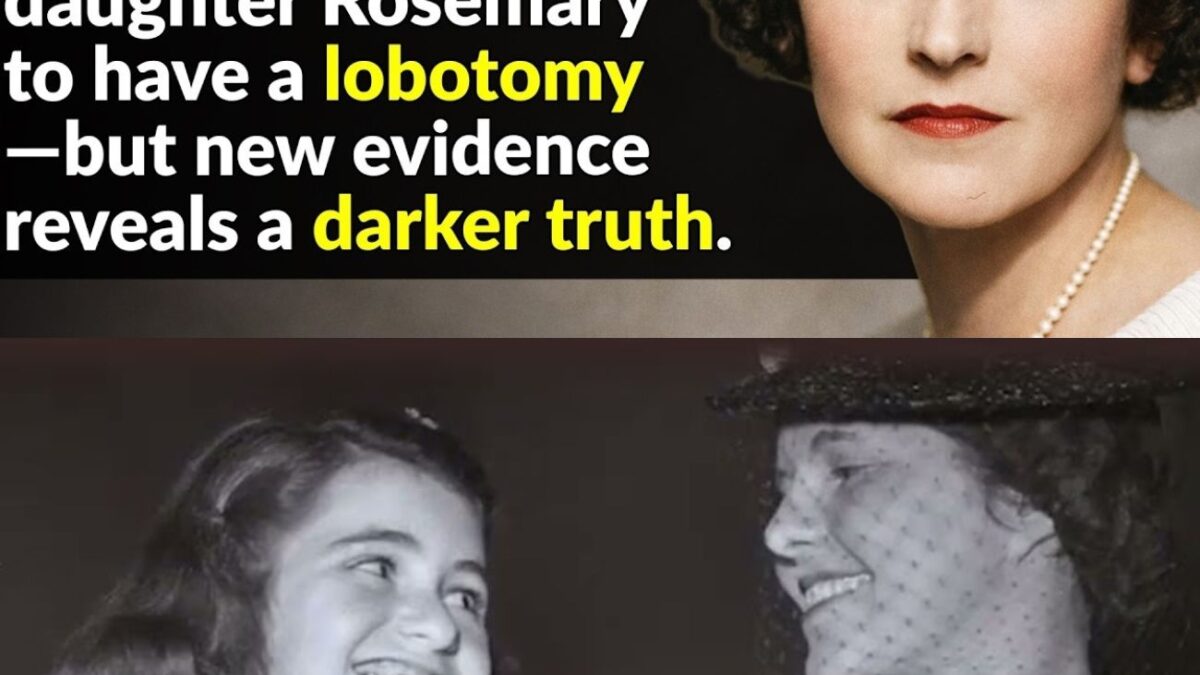
Rose Elizabeth Fitzgerald harbored a quiet, burning ambition to attend Wellesley College, longing to immerse herself in an intellectual atmosphere where her sharp mind could flourish. Her father, John Francis “Honey Fitz” Fitzgerald, the gregarious and domineering mayor of Boston, had an entirely different trajectory planned for his eldest daughter. He strictly forbade her from matriculating at a secular Protestant institution, insisting instead that she attend a strict convent school, the Convent of the Sacred Heart.
As Irish Catholics in a city rigidly ruled by the Protestant Boston Brahmins, the Fitzgeralds occupied an inherently precarious position on the social ladder. They wielded enormous municipal power, yet the gilded drawing rooms of Beacon Hill remained firmly closed to their kind. Honey Fitz was determined to shield his daughter from Protestant assimilation and anti-Catholic bias, prioritizing religious devotion and domestic duty over the academic prestige Rose desperately craved.
Even within the convent’s somber cloisters, Rose’s burgeoning elegance and radiant beauty could not be concealed from the public eye. Boston newspapers turned her into a local celebrity, running frequent society articles documenting the activities and wardrobe of the mayor’s charismatic daughter. By her late teens, she was widely recognized as the jewel of Boston’s Catholic aristocracy, moving effortlessly through social circles while privately learning to conceal any personal disappointment behind an unwavering, polished smile.
While vacationing along the coastal waters of Maine as a teenager, Rose unexpectedly crossed paths with Joseph Patrick Kennedy, whom she had known casually since childhood. He was two years her senior, tall, freckled, and fiercely ambitious, possessing an innate confidence that rivaled her own father’s formidable personality. Though their families had crossed paths for years in local social spheres, their interactions had previously been limited by unspoken social boundaries.
Their prior distance was not an accident; Joseph was the son of P.J. Kennedy, a quiet, strategic ward boss and the primary political rival of Honey Fitz. The two men operated in direct opposition within the cutthroat world of machine politics, making any romantic link between their households an immediate source of friction. When Rose and Joe began courting in earnest, Honey Fitz was deeply alarmed, viewing the romance not merely as an inconvenience, but as an act of familial betrayal.
For seven long years, her father exerted tremendous pressure to derail the romance, taking Rose on an extended tour of Europe in an unsuccessful attempt to broaden her horizons. Rose remained unyielding, matching her father’s stubbornness with quiet defiance as Joe rapidly built a formidable professional career. After graduating from Harvard, Joe became the youngest bank president in the United States, proving his immense commercial acumen and presenting himself as a self-made force too powerful to ignore.
In October 1914, having secured the institutional stature he craved, Joe formally proposed, and the couple married in a quiet ceremony inside the private chapel of Cardinal William O’Connell. Even at the altar, Honey Fitz could barely disguise his lingering disapproval, standing stiffly in the pews while his daughter bound her life to the son of his longtime competitor. The newlyweds soon settled into a comfortable colonial home in Brookline, a quiet Boston suburb, laying the physical foundation for what was to become an unprecedented American dynasty.
The early years of their marriage were marked by rapid domestic expansion, as Rose dutifully undertook the traditional maternal role prescribed by her upbringing and faith. By the dawn of the 1930s, she had given birth to nine children: Joseph Jr., John, Rosemary, Kathleen, Eunice, Patricia, Robert, Jean, and Edward. Within the bustling Brookline household, Rose established a lifestyle characterized by strict Catholic ritual, pristine organization, and relentless self-discipline.
As the children grew, so too did the boundless ambitions their parents harbored for them, framed by an unyielding expectation that a Kennedy must always finish first. Joe Sr. instilled a cutthroat competitive instinct in his sons, turning every family athletic contest and academic benchmark into a proving ground for future dominance. Second place was treated as an outright failure, an ethos that Rose reinforced through immaculate household management and moral instruction.
Joe Sr.’s financial fortune grew exponentially throughout the Roaring Twenties, fueled by astute market trading, liquor import operations, and opportunistic ventures. His most lucrative endeavor took him west to Southern California, where he plunged headfirst into the burgeoning motion picture industry. Utilizing his ruthless financial acumen, he consolidated several studios, orchestrated complex corporate mergers, and emerged from Hollywood with profits equivalent to over ninety million modern dollars.
While Rose reaped the material benefits of this newfound wealth, moving the family into sprawling estates in Bronxville and Hyannis Port, her husband’s time in California ushered in public humiliation. Joe Sr. harbored an insatiable appetite for women, and his absence on the West Coast removed the last vestiges of domestic restraint. In Hollywood, he began an affair with screen siren Gloria Swanson, an entanglement that soon became one of Tinseltown’s worst-kept secrets.
The affair lasted over three years, with Joe brazenly bankrolling Swanson’s cinematic productions while openly escorting the glamorous actress across social galas in both New York and Paris. The betrayal was made far more grotesque when Joe brought Swanson directly into the Kennedy household, expecting Rose to host his mistress for dinner under the watchful eyes of their young children. Rose greeted the star with ice-cold politeness, maintaining a dignified exterior while swallowing the profound humiliation of her husband’s infidelity.
Confronted by her husband’s brazen betrayal, Rose turned inward, throwing herself into child-rearing with the cold precision of an institutional administrator. To manage the immense household, she instituted a systematic card-catalog filing system, maintaining comprehensive cue cards for each of her nine children. Every index card meticulously tracked medical vaccinations, weight gains, childhood illnesses, and shoe sizes, transforming motherly affection into a series of clinical statistics.
Emotional vulnerability was entirely absent from her maternal toolkit, replaced by rigid expectations, religious orthodoxy, and behavioral corrections. Her children were taught early on that tears were a sign of unacceptable weakness, and displays of affection were replaced by rigorous table discussions on current events. John F. Kennedy later admitted to an intimate political aide that in all his life, he had never once heard his mother utter the words “I love you.”
Before long, the Kennedy marriage had decayed into a hollow social arrangement, maintained solely for the sake of public standing and political utility. Rose increasingly withdrew into emotional solitude, creating distinct boundaries within the sprawling seaside compound at Hyannis Port. Even during major holidays, she was known to take long, solitary walks along the wind-whipped shoreline, eating meals in her private quarters to avoid her husband and children.
To endure the mounting isolation and stress of her pristine, white-picket-fence facade, Rose began relying on physician-prescribed tranquilizers. The pharmaceutical numbing agent allowed her to endure the persistent social slights, unfaithful outbursts, and emotional coldness that defined her daily life. Through regular daily prayer and chemical sedation, she engineered a private emotional fortress, entirely detached from the domestic turbulence unfolding directly beneath her roof.
By the late 1930s, Joe Kennedy’s financial empire had converted into tremendous political clout, earning him an appointment by President Franklin D. Roosevelt as the United States Ambassador to the Court of St. James. Arriving in London in 1938, Rose stepped into a realm of aristocratic elegance that matched her grandest girlhood dreams. The English aristocracy embraced the large, photogenic family, and Rose found herself mingling with high society, completely enchanted by the historical rituals of British high tea and diplomatic receptions.
This international chapter was perhaps the happiest, most validating period of Rose’s life, fulfilling her deep desire for global prominence and refined social recognition. The family was invited to Windsor Castle as honored weekend guests of King George VI and Queen Elizabeth, a triumph that Rose savored as sweet vindication against the Boston elites who had once shunned her. In London, she carried herself with regal posture, finally inhabiting the aristocratic life she felt her birthright had always commanded.
Emboldened by their dazzling transatlantic success, Joe began quietly nurturing an audacious political dream: he would return home to become the first Catholic President of the United States. His vaulting ambitions seemed within reach as the American press showered praise upon the glamorous ambassador and his extraordinary brood. For a brief moment, it appeared that the Kennedys had overcome centuries of anti-Irish prejudice to seize the ultimate political crown in Washington.
Then, Joe made a catastrophic miscalculation that instantly obliterated his national political future. As Nazi Germany expanded across Europe, Joe became an ardent appeaser, loudly asserting in press interviews that European democracy was dead and that Adolf Hitler should be accommodated. Compounding his catastrophic political missteps, Joe expressed an overt lack of sympathy toward the persecution of European Jews, horrifying British leaders and infuriating President Roosevelt.
Roosevelt promptly recalled the disgraced ambassador to Washington, effectively expelling him from the halls of federal power and ending his personal presidential aspirations. The dream of reaching the White House was far from abandoned; it was merely transferred, with terrifying parental intensity, onto the shoulders of the eldest son, Joseph P. Kennedy Jr. Joe Sr. commanded his children to pick up the mantle of power he had dropped, demanding that the Kennedy name be redeemed at all costs.
It was during this period of intense political recalibration that the so-called “Kennedy curse” began to take shape, casting long, dark shadows over the family’s golden veneer. In August 1944, tragedy struck when the eldest son, Navy pilot Joe Jr., volunteered for an extraordinarily dangerous covert operation over occupied Europe. His explosive-laden bomber detonated mid-air over the English Channel in a blinding flash of fire, killing him instantly at the age of twenty-nine.
The news shattered Joe Sr., who retreated into a dark bedroom for weeks, while Rose forced herself to absorb the devastating loss with stoic prayer. Just four years later, in 1948, twenty-eight-year-old Kathleen Kennedy, affectionately known as “Kick,” was killed in a plane crash over the mountains of France alongside her married Protestant lover. Rose had adamantly opposed Kathleen’s romantic choices on strict religious grounds, and the sudden demise of her vibrant daughter left an enduring ache of grief and unresolved remorse.
Rose had now buried two of her children, but within the private walls of her home, her marriage continued to disintegrate into further indignity. She maintained her longstanding public silence regarding her husband’s shameless infidelities, but Joe Sr. pushed her patience beyond all reasonable human limits. Just months after Kathleen’s funeral, the sixty-year-old patriarch took his twenty-four-year-old personal secretary as his live-in mistress, parading her shamelessly through their shared family homes.
Rose endured the humiliating domestic arrangement with impenetrable silence, walking past the young mistress in the hallways with the serene indifference of an absolute monarch. Her private life had collapsed into an emotional wasteland, yet she refused to offer her husband the satisfaction of an angry scene. Her marriage was a business partnership dedicated to the elevation of the Kennedy brand, and no personal humiliation would allow her to surrender her position.
By the 1950s, the Kennedy political machine roared back to life, shifting its primary focus onto the frail, charismatic shoulders of her second son, John. Rose stepped onto the campaign trail as a consummate political strategist, using her legendary Boston lineage to open doors across the state. She was pivotal in helping John secure the Massachusetts 11th Congressional District seat, mobilizing working-class Catholic voters who still carried fond memories of her charismatic father.
In 1952, Rose revolutionized modern campaign practices by organizing the famous “Kennedy Teas,” high-society gatherings that drew tens of thousands of female voters across Massachusetts. Elegant, articulate, and dressed in Paris couture, Rose shook hands for hours, charming working-class women and turning John’s campaign for the U.S. Senate into an irresistible social movement. Her relentless campaigning helped defeat the Protestant incumbent Henry Cabot Lodge Jr., delivering the family a stunning triumph.
While John consolidated his power in the Senate, his younger brother Robert made national waves as chief counsel for the Senate Select Committee on Improper Activities. Bobby’s ferocious interrogations of corrupt Teamster boss Jimmy Hoffa positioned him as a fearless crusader against organized crime, capturing the country’s attention. Rose monitored her sons’ rising careers with fierce pride, orchestrating the public perception of an industrious, devout, and clean-cut American dynasty poised for ultimate power.
In 1960, the Kennedy ambition reached its zenith when John launched his historic campaign for the presidency of the United States. Rose crisscrossed the country by air and train, speaking to political clubs, civic associations, and women’s leagues from morning until late night. She carefully calibrated her public image, presenting herself as a glamorous cosmopolitan matriarch in wealthy suburbs and a humble Catholic mother in blue-collar manufacturing towns.
When John narrowly defeated Richard Nixon in November 1960 to become the thirty-fifth president, Rose witnessed the total vindication of her family’s relentless half-century ascent. Standing on the inaugural platform in the bitter January cold of 1961, wrapped in luxury furs, she watched her son take the oath of office on the Catholic Bible. Every sacrifice, every concealed tear, and every bitter domestic humiliation seemed to have paid off in the ultimate currency of historical greatness.
The supreme triumph proved devastatingly short-lived, as misfortune quickly returned to claim its dues. In December 1961, less than a year into John’s presidency, Joe Sr. suffered a massive stroke on a golf course in Palm Beach, Florida. The stroke left the seventy-three-year-old patriarch completely paralyzed on his right side and largely stripped of his ability to speak, reducing the ferocious kingmaker to an invalid.
The stroke upended the balance of power inside the household, suddenly thrusting Rose into the role of primary caregiver for the man who had long dominated her life. Joe Sr. became prone to explosive rages and weeping spells, frustrated by his physical helplessness and inability to communicate with his sons. Rose tended to his daily medical needs with dutiful, clinical care, attending daily mass and refusing to buckle beneath the oppressive burden of his nursing care.
On November 22, 1963, the family’s world shattered into irrecoverable pieces when John F. Kennedy was assassinated on the sunlit streets of Dallas, Texas. In Hyannis Port, Rose was resting in her bedroom when the initial bulletins flashed across the television screen, plunging the country into absolute chaos. Her initial reaction was outright denial; she ordered the household staff to turn off the televisions, convincing herself that the news was merely an exaggerated report.
The terrible reality was confirmed moments later when an inconsolable Robert Kennedy called his mother from Washington to deliver the final, devastating verdict. Rose felt the ground vanish beneath her feet, the profound weight of a third violent bereavement crashing down upon her aging shoulders. For a moment, the iron facade cracked, and she stood on the verge of complete emotional collapse in her seaside bedroom.
Years of emotional suppression took over, and Rose forced her posture erect, drying her tears before stepping out into the public view. As millions of citizens across the globe wept openly for the fallen young leader, the matriarch locked her immense sorrow behind an impenetrable, stony countenance. She declared coldly to a family friend, “No one will ever feel sorry for me,” refusing to grant the world the spectacle of a weeping Kennedy mother.
At the state funeral in Washington, dressed in solemn black veils, Rose walked with impeccable grace behind her son’s caisson down Pennsylvania Avenue. When she met the Emperor of Ethiopia, Haile Selassie, in a private reception, she whispered a quiet, sorrowful truth: “It is wrong for parents to bury their children. It should be the other way around.” Her stoicism became a national symbol of fortitude, though inside, the endless cycle of loss was beginning to extract a steep psychological toll.
Despite the profound sorrow that permeated the family, the Kennedys’ political ambitions marched onward, finding their new champion in the passionate figure of Robert. In 1968, Bobby entered the presidential race, running a fiery, transformative campaign that galvanized millions of working-class and minority Americans. Rose stepped forward to endorse her son, making appearances and using her moral authority to champion his quest to complete the work his fallen brother had started.
On June 5, 1968, the nightmare repeated itself with sickening familiarity inside the Ambassador Hotel in Los Angeles, California. Moments after declaring victory in the California primary, Bobby was shot at point-blank range in a hotel kitchen corridor, succumbing to his wounds twenty-six hours later. At the age of forty-two, Rose’s third son was taken by the bullet of an assassin, sending another child to a premature grave in Arlington National Cemetery.
Rose found herself performing the agonizingly familiar duties of bereavement for the fourth time, standing before a flag-draped casket in St. Patrick’s Cathedral in New York. The repetition of the horror defied reason, leading the American public to openly whisper about a supernatural curse hanging over the bloodline. Rose turned entirely to her Catholic rosary, spending hours on her knees in prayer, demanding of God the strength to endure an ordeal that would have broken any other woman.
Scandal struck the family’s sole surviving son almost exactly a year after Bobby’s devastating assassination. On the summer night of July 18, 1969, Ted Kennedy, then serving as a prominent United States Senator, attended a reunion party on the small island of Chappaquiddick. While driving twenty-eight-year-old campaign worker Mary Jo Kopechne back toward the ferry, Ted accidentally steered his Oldsmobile off the narrow, unlit Dike Bridge into Poucha Pond.
The vehicle flipped upside down, rapidly submerging in the dark water; Ted managed to escape through a window and swim to shore, but Kopechne remained trapped inside. Instead of immediately alerting nearby residents or emergency rescue teams, Ted returned to his hotel in an apparent state of panic and confusion, failing to contact the local police until the following morning. By that time, local divers had already recovered Mary Jo Kopechne’s body from the drowned automobile.
The Chappaquiddick disaster marked a catastrophic turning point, plunging the family from towering tragedy into deep moral disgrace and public contempt. Ted pled guilty to leaving the scene of an accident, receiving a suspended jail sentence, but the dark questions surrounding his behavior that night permanently stained his reputation. For Rose, the episode was excruciatingly humiliating, transforming the Kennedy name from an emblem of sacrifice into a symbol of reckless privilege and political cowardice.
The lingering stain of Chappaquiddick decimated Ted’s immediate national ambitions, barring him from mounting competitive presidential campaigns in 1972 and 1976. When he finally challenged incumbent Jimmy Carter for the Democratic nomination in 1980, the ghost of Mary Jo Kopechne resurfaced with vengeance, fatally undermining his bid. Rose watched her youngest son struggle under the weight of his guilt, knowing that the golden dream of reclaiming the White House had finally slipped out of reach.
At home, Rose was entirely on her own, navigating the wreckage of her family’s reputation without a partner to share her burden. Joe Sr.’s health had deteriorated into a state of profound physical frailty, his body wasting away in the months following Bobby’s death. The former titan of Wall Street made one final, tearful television appearance to deliver a brief holiday message to the country before quietly passing away in November 1969 at eighty-one.
Rose responded to the death of her husband of fifty-five years with the same quiet resolve that had carried her through every public trial. There were no dramatic outpourings of grief, no public retrospectives on their turbulent life together, and no admissions of the pain he had caused her. She adhered strictly to her lifetime motto, borrowed from the British royal family: “Never explain, never apologize,” keeping the secrets of her complicated marriage buried forever beneath an elegant, impassive smile.
As the turbulent decade of the 1960s drew to a close, Rose Kennedy stood as an extraordinary relic of a vanished era of American history. She outlived five of her nine children, watched her husband die an invalid, and saw her surviving family’s legacy battered by scandal. Yet she refused to surrender to despair, continuing to maintain her morning exercise regimens, dressing impeccably for dinner, and walking down the seaside roads of Cape Cod with head held high.
When Rose reached the centennial milestone of her one-hundredth birthday in July 1990, the event was celebrated nationwide as a tribute to ultimate human endurance. She remained completely devoted to her Catholic faith, attending Sunday Mass with unyielding regularity and receiving communion with hands that had held dying presidents and buried fallen soldiers. In a culture obsessed with youth and rapid reinvention, her survival seemed like a defiant triumph of personal will over an unforgiving fate.
Nature eventually exacted its toll upon the resilient matriarch, and her extraordinary physical stamina began to fail in her final decade. Rose suffered a series of debilitating strokes that eroded her independence, requiring around-the-clock professional medical care inside the Hyannis Port estate. Confined to a wheelchair, she drifted quietly between past memories and present shadows, surrounded by black-and-white portraits of the sons and daughters who had preceded her into the grave.
On January 22, 1995, Rose Elizabeth Fitzgerald Kennedy passed away from complications of pneumonia at the remarkable age of one hundred and four. Her peaceful death signaled the definitive conclusion of the golden era of the Kennedy dynasty, a political epoch that had dominated the American imagination for half a century. She left behind a sprawling network of grandchildren and great-grandchildren, yet at the very end, only three of her nine children—Ted, Eunice, and Jean—survived her.
For all the public assassinations, plane crashes, and political controversies she weathered, the most profound and secret tragedy of Rose’s life was that of her eldest daughter, Rosemary. Born in September 1918 during the height of the Spanish flu epidemic, Rosemary entered the world under tragic and deeply avoidable circumstances. While Rose was in labor, the attending physician was delayed, and the nurse instructed Rose to keep her legs clamped tightly together to prevent birth.
The unnatural delay kept the baby’s head trapped within the birth canal for two hours, depriving the newborn of oxygen during the most critical moments of delivery. The catastrophic consequence of this medical incompetence was not immediately apparent, but as Rosemary grew, her developmental delays became undeniable. By the time she was two, she struggled to walk; by school age, she could not keep pace with the intellectual accomplishments of her hyper-competitive brothers.
In a family obsessed with athletic dominance and social brilliance, Rosemary’s cognitive struggles were treated as a shameful secret that had to be hidden from the public. Rose and Joe Sr. went to extraordinary lengths to conceal her limitations, enrolling her in private boarding schools and paying specialized tutors to coach her quietly behind closed doors. Rose refused to speak of the condition to friends or relatives, burying the truth beneath a wall of domestic silence.
Despite her cognitive difficulties, Rosemary was desperate to belong and tried her best to participate in the dazzling social world of the Kennedy family. When the family was stationed in London in 1938, she was formally presented as a debutante to King George VI and Queen Elizabeth at Buckingham Palace. Rosemary practiced her delicate court curtsy for hours, yet during the ceremony itself, she stumbled awkwardly, an agonizing social slip that sent waves of panic through her status-obsessed parents.
By the early 1940s, as Rosemary reached her early twenties, her cognitive frustration began to manifest in violent mood swings, screaming fits, and unpredictable outbursts. Relegated to a convent school in Washington, she began sneaking out of her dormitories late at night, wandering the streets in search of companionship. Joe Sr. became obsessed with the thought that Rosemary’s erratic behavior would lead to an embarrassing scandal that would ruin the political aspirations of his sons.
In the autumn of 1941, without consulting or informing Rose, Joe Sr. arranged for their twenty-three-year-old daughter to undergo a radical, experimental prefrontal lobotomy. Guided by doctors who promised the procedure would soothe her volatile temper, surgeons drilled two holes into Rosemary’s skull, severing parts of her brain with a surgical instrument while she remained conscious. The barbaric procedure went horribly wrong, instantly obliterating her remaining cognitive abilities and leaving her permanently incapacitated.
Rosemary was reduced to the mental capacity of a toddler, unable to speak more than a few garbled words, incontinent, and robbed of the ability to walk without support. Joe Sr. orchestrated an immediate cover-up, exiling his ruined daughter to St. Coletta’s School for Exceptional Children in Wisconsin, where he never once visited her for the rest of his life. Rose was informed only after the fact, accepting her husband’s monstrous decision in silence while maintaining the fiction that Rosemary had chosen a life of quiet seclusion.
Before the catastrophic lobotomy destroyed her mind, Rosemary had kept intimate diaries that revealed a gentle young woman who loved life, dresses, and high-society parties. Her journals were filled with sweet recollections of dances, tea outings, and deep affections for her family, including a letter to Joe written shortly before the surgery: “Darling Daddy, I am so fond of you and I love you so much.” Her only true flaw had been her inability to conform to the relentless standards of a ruthless dynasty.
Rose Kennedy spent her later decades carrying an unbearable burden of guilt, knowing that she had failed to shield her defenseless daughter from the hubris of the family patriarch. After Joe Sr. died in 1969, Rose finally broke the silence, traveling to Wisconsin to visit Rosemary and gradually bringing her back home to Hyannis Port for summer holidays. Toward the twilight of her life, a weeping Rose confided to an intimate neighbor that of all the blows fate had dealt her family, Rosemary’s cruel and calculated destruction was the darkest tragedy of all.

