What Really Happened to Women Traded Between Native Tribes
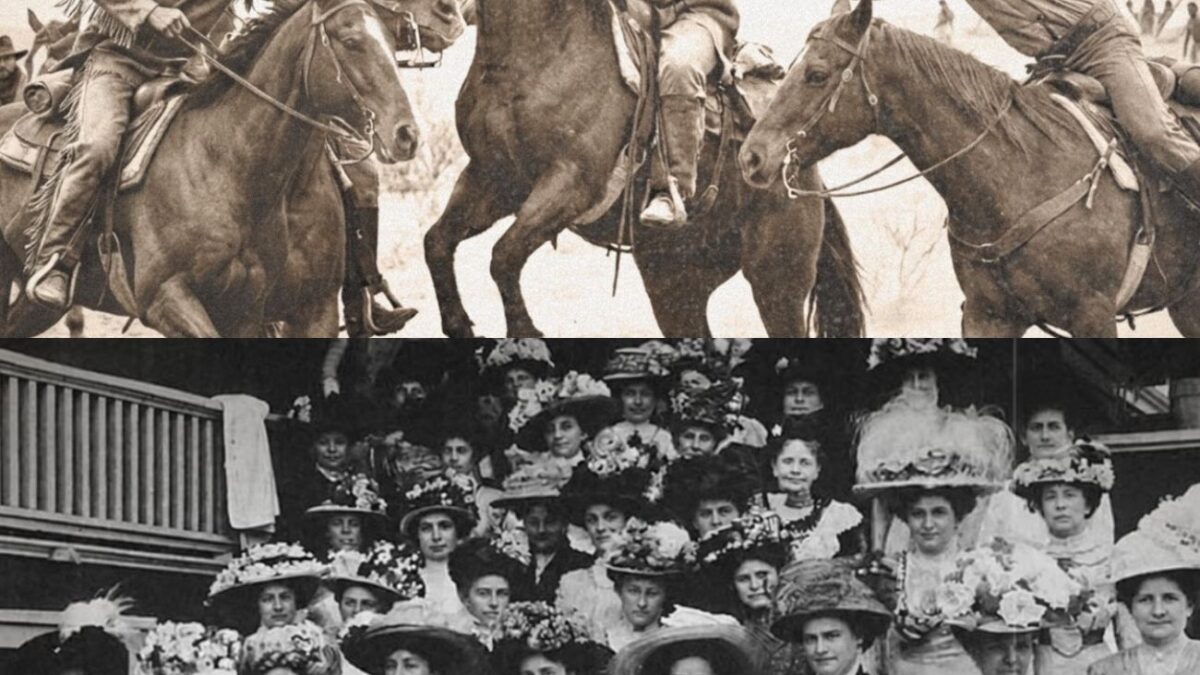
The icy waters of the Pease River churned under a gray December sky in 1860 as iron horse shoes clattered over stone and frozen gravel. Texas Rangers, their long winter coats stiffened with dried mud and saddle grime, galloped through the riparian brush with heavy revolvers drawn, howling like wolves at their fleeing prey. Ahead of them dashed a lone Comanche woman mounted bareback, clutching an infant tightly against her ribcage, leaning low across the wind while the animal’s hooves tore through the red dirt.
She did not cry out for mercy, nor did she speak a single syllable of English as the galloping mounts closed around her in a suffocating ring. Instead, she screamed fierce guttural curses in the high, clipped cadence of the Comanche language, snapping her teeth and swinging wildly at the reaching hands of the horsemen. When Captain Sul Ross and his company finally dragged her down into the brush, pinioned her arms, and scrubbed the soot and grease from her sweating forehead, they froze in disbelief.
Staring back at them through the tangled hair and trail dirt were two sharp eyes of bright, undeniable blue, wide with terror and blistering with hatred. This was Cynthia Ann Parker, torn from her kinfolk twenty-four years earlier at the edge of the frontier, a lost child who had long vanished from the white world. Yet as the riders cheered and hoisted the shivering infant into the saddle, she tore at her own skin with broken fingernails, violently fighting against the men who claimed they had arrived to save her.
Popular frontier lore always severed the story cleanly at the miraculous moment of redemption, fading to black as the trumpets sounded and the captive stepped across the threshold of home. The official records, buried under decades of quartermaster ledgers and territorial dispatches, tell a truth far darker and infinitely more protracted. For the women carried into the vast ocean of grass that swept southward from the Arkansas River to the Rio Grande, recovery was never the ending of a tragedy.
It was merely the prologue to an entirely new and far colder form of violence, disguised as moral salvation and etched into the ledger books of three competing nations. Throughout the early nineteenth century, this sprawling territory did not belong to the fledgling Republic of Texas, the republic of Mexico, or the distant federal offices in Washington. It belonged exclusively to the Comanche, whose mounted warfare shattered empires, arrested westward expansion for four decades, and forged a sovereign domain larger than most European nations.
They ruled the staked plains not with paper treaties or legal deeds, but from the wooden saddles of mustang ponies that could run forty miles without breaking stride. The Comanche did not operate as a single unified government, but as a dynamic, autonomous confederation of distinct bands sweeping across diverse ecologies. To the south ranged the Penateka, riding through the rugged limestone canyons and cedar breaks of the Texas Hill Country and the broken rises of the Edwards Plateau.
In the far west, across the waterless tablelands of the Llano Estacado where military expeditions lost their sanity and died of thirst, dwelt the fierce Quahadi. Northward along the sandstone corridors of the Canadian River ranged the Yamparika, moving with the migratory buffalo herds and raiding deep into Mexican and American settlements. Every band governed its own seasonal cycles, declared war upon its own councils, negotiated independently with frontier traders, and gathered captives with absolute systematic purpose.
Within this mobile society, the taking of prisoners was neither an act of random frontier madness nor the mindless fury portrayed by dime-novel scribblers. It was an organized, enduring institution that functioned as an essential demographic and economic engine across the entire southern prairie. A woman torn screaming from a smoldering farmstead in Central Texas entered an intricate network that rivaled any mercantile supply chain on the North American continent.
Once absorbed into the plains, a captive could be held by a war party, traded to an allied band for horses, sold to a Comanchero intermediary, or ransomed to a frontier outpost. Alternatively, she might be adopted directly into a grieving Comanche lodge to replace a deceased relative, vanishing forever beneath the wide horizons of the western grasslands. The governing authorities of Texas, the territorial officers of Chihuahua, and the high command of the United States Army were fully aware of this thriving market.
Rather than extinguishing the practice, every one of these political bodies actively subsidized it, ensuring its smooth operation through seasonal ransoms and covert bounties. Frontier agents regularly drafted treaties containing strict captive-return stipulations that no general had the cavalry strength or the political will to enforce. The transaction remained unbroken across successive generations because every faction involved derived strategic advantage, material wealth, or diplomatic leverage from the commerce in human lives.
To uncover what truly occurred on the Southern Plains, one must refuse the romanticized threshold where popular frontier mythology invariably leaves the captive. That initial ambush, loud with musket smoke and the splintering of pioneer timber, was merely the first mile of a journey that spanned thousands of leagues. The authentic history stretches through the arid basins of New Mexico, the back rooms of Santa Fe merchants, the tents of federal agents, and the dirt floors of remote lodges.
It forces an unsettling inquiry upon the historical record, one that frontier societies deliberately buried beneath patriotic hymns and heroic memoirs: Was the most destructive trial of these women’s lives the day they were ripped from their settlements, or was it the day civilization came to drag them back? The surviving documents that reveal this reality were not written by novelists, army propagandists, or politicians looking for campaign speeches.
They belong instead to the broken voices of the women themselves, preserved in crumbling broadsheets, faded notebooks, and family journals that few modern hands disturb. Rachel Plummer dictated her raw, unsparing narrative to her father while the lingering infections and physical trauma of her captivity were actively consuming her body. She was only twenty years old when she began speaking the terrible truth into the stillness of a pioneer cabin, and she was in a shallow grave within twelve months.
Sarah Ann Horn, abandoned to absolute poverty after being liberated from the high plains, printed her story as a flimsy pamphlet to buy bread for her surviving child. She peddled the account for pennies along rural roadways, speaking to a public that quickly turned its back on the unspeakable realities of her survival. The story of Olive Oatman was ripped from her hands by a traveling Methodist preacher who smoothed her complicated memories into a sermon of Christian deliverance.
Cynthia Ann Parker left no written account whatsoever, for the simple and devastating reason that no one in her white family understood the Comanche words that spilled from her lips. She mourned in a cadence they could neither translate nor tolerate, marking her flesh with ceremonies they mistook for the incurable raving of a lunatic. Where their authentic, unaltered sentences survive in old ink, we must follow them directly, and where their words were stolen or revised for profit, we must expose the theft.
The extensive supply chain of this prairie commerce was sustained by a class of men largely forgotten by modern history: the New Mexican traders known as Comancheros. Operating out of remote adobe settlements nestled along the winding courses of the Pecos and Canadian Rivers, these frontiersmen built trade networks out of the bare earth. Their villages, like San Miguel del Vado and the weathered plazas east of Santa Fe, were isolated outposts where a few dozen families lived surrounded by open desert.
These resilient traders possessed an intimate knowledge of the dreaded Llano Estacado, a colossal tableland whose sheer cliffs and featureless horizons terrified all outsiders. It was an oceanic wilderness devoid of natural landmarks, where winter blizzards could freeze a horse solid and summer heat turned the earth into an anvil of thirst. The Comancheros knew every hidden spring, every muddy buffalo wallow that held drinkable seepage, and every ancient cart track pressed into the short buffalo grass.
Across these desolate flats they hauled heavy, two-wheeled carretas loaded with the exact manufactured commodities that transformed Comanche hunting bands into dominant cavalry. They brought short-barreled carbines, kegs of black powder, cast-lead bullets, iron lance heads, heavy knives, and New England cotton fabrics carried thousands of miles overland. In exchange for these goods, the Comanche offered what the plains produced in abundance: thousands of branded Texas cattle, prime saddle stock, tanned buffalo robes, and human prisoners.
This commerce was neither clandestine nor shamefaced; it followed well-traveled seasonal routes and paused at designated regional rendezvous known to all sides. The Valley of Tears, a deep canyon etched into the high plains of the Texas Panhandle, earned its haunting name precisely because family members were systematically separated there. Great trade fairs near Taos and Santa Fe operated in broad daylight, fully observed by regional authorities who collected tariffs and looked away from the tethered captives.
Federal dispatches from Fort Bascom and the trail reports of Colonel Ranald Mackenzie contain frequent references to prominent Comancheros such as the legendary trader José Piedad Tafoya. Tafoya moved effortlessly between military installations and nomadic warrior encampments, recognized not as an outlaw or a renegade, but as an indispensable regional businessman. He knew every chief across the high plains, understood the exact value of every horse and rifle, and served as the premier middleman for human ransoms.
A young woman captured during a summer raid in the settlements of the Guadalupe River could pass through multiple intermediaries before a single clerk penned her name. She might be transferred from a raiding party to an elder band, sold at a desert waterhole to a Comanchero cart train, and taken to an adobe hacienda. From there, she might be marched toward the markets of Chihuahua or ransomed back through an Indian agent at Fort Union after months of agonizing silence.
Between the farmstead she watched burn and the military office where she was officially signed over, a thousand miles of barren country had erased her presence. The word “captive” completely fails to capture the intricate reality that awaited these women once the initial dust of the raid had settled behind them. Cheap sensational novels depicted delicate Anglo women held in chains inside leather tipis, weeping continuously as they waited for the cavalry to appear on the horizon.
That melodrama was an absolute fabrication designed to soothe eastern sensibilities and justify the systematic slaughter of Indigenous nations across the frontier. Many of the women carried onto the plains were not kept as prisoners in any fashion that an Anglo-American court or military officer would comprehend. Instead, they were absorbed directly into the extended family structures of the band, handed hide scrapers, and taught how to dress meat and gather wood along the creek beds.
They learned the complex work of dismantling and erecting towering lodgepoles within minutes, packing the camp parflêches, and following the migratory herds across changing seasons. They were expected to master the spoken dialects of their captors, endure the physical labor of nomadic survival, and bear children within the kinship lineages of the band. Some were adopted as cherished daughters to heal the grief of a bereaved mother, while others were treated as menial laborers whose survival depended upon obedience.
The line between a daughter and an enslaved laborer was fluid, shifting according to the temperament of the head of the household and the captive’s resilience. A captive seized to replace a fallen warrior was dressed in soft buckskin, offered the best roasted meats, and defended with ferocious familial loyalty. A captive taken merely as booty on a horse raid might face continuous physical punishment until she demonstrated the endurance required to sustain the camp.
Comanche lineage was traced strictly through the paternal line; therefore, any child fathered by a warrior belonged entirely to the band, regardless of the mother’s ancestry. A captive woman who learned the language, worked without outward resistance, and raised sons could achieve social standing and economic independence unheard of in the settlements. In the townships of Texas, a married woman could not legally own land or execute contracts; in a Comanche encampment, an industrious woman could possess her own horses.
This dynamic was not born of humanitarian benevolence, but of a rigorous, self-contained cultural framework completely indifferent to the prior identity of the newcomer. The popular portrait of a woman in irons was a convenient fiction, engineered to sell newspapers and maintain the righteous fury of the frontier borderlands. The reality contained no simple villains, no immaculate heroes, and none of the moral clarity demanded by Victorian readers seated in the safety of eastern parlors.
Sarah Ann Horn collided with this reality in the spring of 1836, an era when war fires were consuming the young settlements of Texas. A raiding party struck her small community near the town of Gonzales, not long after the catastrophic military engagements of the Texas Revolution had ended. She was forced to watch as her husband was butchered in the yard, before she and her young sons were hauled away into the unsettled country.
Over the next two years, Horn was traded across multiple encampments, dragged over stony plateaus and arid basins whose geography was entirely foreign to her. One of her little boys was separated from her in the middle of the staked plains, leaving her with no idea whether he lived or starved. She marched on foot behind the horses until the soles of her shoes dissolved, leaving her bare feet to split open against the gravel and ice.
During the hard winter freezes, she slept with nothing between her shivering flesh and the frozen earth but a stiff buffalo hide stiffened by mountain frost. She survived on the meager strips of dried meat and marrow bones that sustained the camp through winters when the herds moved beyond reach. Eventually, she was ransomed through a network of New Mexican traders and territorial emissaries who transferred her through Santa Fe before sending her back to Texas.
When Sarah Ann Horn finally stood once more on the streets of the Anglo settlements, she found neither wealth, comfort, nor open arms awaiting her arrival. Her husband was dead, her homestead reduced to wild weeds, one child lost forever to the plains, and her own body ruined by constant exposure. To feed the one son who had been returned to her arms, she sat down with a quill and set her agonizing memories onto paper.
Her narrative, published in 1839, stands as one of the rawest and least embellished accounts of cross-cultural captivity ever produced on the American frontier. Horn was not attempting to construct heroic literature, nor was she crafting a religious sermon about the protective hand of divine providence over wilderness pioneers. She was writing for immediate survival, trying to earn enough coins to buy flour, salt, and shelter before the Texas winter descended upon her again.
Her sentences are flat, sparse, and heavy with an exhaustion that leaps from the yellowed pages nearly two centuries after they were set down in lead. She records the precise meals she ate, the miles of cactus she traversed, and the frostbite that opened the flesh of her hands to the bone. She remembers the Comanche women who brought her warm bone broth when she could not rise, and the blows that fell when she lagged behind the horses.
There is no theatrical suspense in her prose, no triumphant crescendo of liberation; there is only the brutal, daily reality of staying alive through the seasons. Contemporary critics and commercial booksellers dismissed her small pamphlet, complaining that it lacked moral uplift, sentimental tears, and patriotic expressions of gratitude toward her rescuers. It sold poorly, fell into obscurity, and left Sarah Ann Horn to spend her final years peddling copies of her own suffering from door to door.
Rachel Plummer’s narrative makes Horn’s sparse accounting seem almost merciful by comparison, capturing the terror of a raid that became frontier legend. That assault occurred on May 19, 1836, when a combined force of several hundred warriors materialized out of the timber along the Navasota River. Their target was Fort Parker, a rustic timber stockade built on open ground by a devout, tight-knit family that had migrated out of Illinois.
The enclosure was structurally inadequate, consisting of crude split-cedar pickets barely taller than a tall man’s hat, built more for housing cattle than withstanding a siege. On that morning, the heavy wooden gate swung open to the river bottoms, allowing the mounted war party to charge directly into the compound. In the frantic melee that followed, several elder defenders were killed and mutilated on the dirt while terrified women and children scattered into the fields.
Silas Parker was shot down outside the timber stockade as he tried to cover his family’s flight, his screams swallowed by the gunfire and dust. Within twenty minutes the compound was a smoldering ruin, its cabins ransacked and five captives carried away into the dry scrub of the high country. Among the prisoners were nine-year-old Cynthia Ann Parker and her seventeen-year-old cousin, Rachel Plummer, who was heavily pregnant with her second child at the time.
Rachel gave birth in the buffalo grass months later, surrounded by women who showed her neither sentimentality nor the familiar care of a frontier doctor. Shortly afterward, the newborn infant was ripped from her arms by members of the band who deemed the crying child an impediment to travel. In her narrative, Rachel describes that horrific departure without poetic embellishment, stating simply that she heard her baby cry once before silence returned to the grass.
She lived as a captive for eighteen months, enduring physical beatings, near-starvation during winter shortages, and endless marches beneath a sky that offered no shade. She watched the seasonal changes transform the grasslands from parched brown summer stubble to snowbound desolation, her identity ground down by constant displacement across the plains. Then, deep in the interior of the territory, she committed an act that shattered every established convention of the traditional white captivity narrative.
Pushed beyond endurance by another woman within the camp, Rachel fought back with bare hands, stones, and fingernails in a furious wrestling match in the dirt. She battered her opponent until the surrounding warriors pulled them apart, laughing at the unexpected ferocity of the battered white girl who had refused to yield. That spontaneous eruption of physical courage fundamentally transformed her status within the band; the Comanche respected martial resolve above all other human virtues, and they honored it.
In the autumn of 1837, Rachel was bought out of captivity through Santa Fe by Mexican traders operating with funds provided by American commercial agents. Her father, who had spent months scouring the frontier borderlands for trace of his kin, arranged the immediate printing of her testimony in 1838. It remains one of the most uncompromising, physically direct accounts of captivity in American letters, completely free of the sentimental prose common to that era.
Rachel did not soften her words to protect the delicate feelings of urban readers, nor did she attempt to convert her experiences into an allegory. She recorded what had been done to her flesh, her mind, and her heart with an icy clarity that stunned those who read her book. Rachel Plummer died in 1839, barely twenty-one years old, her internal organs permanently ruined by the physical trauma she had sustained during her months on the trail.
Her small volume survived only because her family preserved the original text, though later editors constantly polished its rough corners to fit standard publishing formulas. Her unvarnished words remain the closest thing to historical truth we possess from that violent, sun-bleached era on the edge of the Southern Plains. While the traumatic memoirs of adult white women were occasionally recorded in print, the stories of the children born during captivity vanished into complete obscurity.
Dozens of captive women bore children fathered by Comanche and Kiowa warriors, and these boys and girls were raised as fully legitimate members of the tribe. Indigenous society made no distinctions based on maternal blood; a child born within the camp belonged to the father’s line and shared in the band’s destiny. The true crisis occurred when a mother was ransomed back into white society, because her mixed-blood children were dragged between two worlds that refused them shelter.
Some of these children were brought into the towns of Texas, where they were branded with the cruel epithet of “half-breed” throughout their lives. That single word carried immense legal, social, and religious prejudice, barring them from local church assemblies, common schoolrooms, and legal protection under territorial courts. Other children were severed from their mothers on the plains, left behind with their fathers while the mother was loaded onto an army wagon.
For those left behind, the separation was total and unyielding; no letters crossed the frontier, no visits were permitted, and no communication bridged the cultural chasm. A child simply evaporated from the recorded history of one world, condemned to live as an unacknowledged ghost in the memories of the white settlements. Cynthia Ann Parker’s youngest child, a little girl named Topsana—or Prairie Flower—was carried back into white Texas along with her mother in 1860.
She was an energetic toddler who spoke only Comanche, clutched at the fringe of her mother’s buckskin gown, and shrank in terror from the strange settlements. Prairie Flower survived only four years in the wood-framed houses of East Texas before succumbing to influenza and the quiet despair that consumed her home. She died at the age of four, an innocent victim of a cultural dislocation she was far too young to comprehend or survive.
Her older brother, Quanah Parker, escaped the slaughter at the Pease River camp and remained behind on the high plains with his father’s people. He grew into one of the most brilliant and uncompromising war chiefs of the Quahadi Comanche, leading mounted warriors against the United States Fourth Cavalry for years. Long after the buffalo were exterminated and his people were confined to reservation lands near Fort Sill, Quanah fought an entirely different battle through federal bureaucracy.
For decades he petitioned government offices to locate his mother’s unmarked grave in Texas and bring her remains back to rest within Comanche soil. In 1910, forty years after her lonely death, he finally succeeded, carrying her bones across the Red River to lie among the people she loved. These mixed-blood children were the unseen human casualty of the frontier wars, forgotten by historians and excluded from the triumphal monuments of the American West.
They left behind no self-serving memoirs, no theological tracts, and no broadsheet pamphlets sold along the turnpikes of Missouri and Ohio to earn emergency cash. Their names appear only as fleeting scribbles on agency rationing lists or cemetery markers, lost in the cultural void between two civilizations that destroyed each other. Behind every woman traded across the plains stood an explicit monetary transaction that was negotiated in hard silver coin, horses, or crates of manufactured goods.
During the 1830s and 1840s, a healthy white captive could command a ransom payment ranging anywhere from one hundred and fifty to three hundred dollars. In that period, a common laborer earned roughly one dollar for a twelve-hour day, while a dependable saddle horse cost between forty and sixty dollars. A captive woman represented a major financial asset, the equivalent of a substantial herd of working cattle or a team of prime draft oxen.
That valuation shifted constantly depending upon the woman’s age, her usefulness to the lodge, the desperation of her kin, and regional political tensions along the border. The government of the Republic of Texas maintained funds specifically to purchase citizens, while federal army quartermasters paid ransoms directly from regional military accounts. Mexican officials in Chihuahua and Sonora routinely funded private intermediaries to recover captives held in the dry canyons along the international border.
These negotiations occurred across dusty council tables, through the clandestine agency of Comanchero go-betweens, or via neutral tribal delegations like the Delaware and Wichita. The Fort Atkinson Treaty of 1853 contained explicit promises regarding the universal return of all captives, but the clause was an empty piece of paper. No frontier garrison had the logistical capacity to police the vastness of the Llano Estacado or force compliance from warriors who held military dominance.
This continuous cash flow generated a perverse economic cycle that perpetuated the very violence the frontier governments claimed they were trying to eradicate. The higher the ransom payments offered by desperate families and wealthy territorial treasuries, the more profitable it became for young warriors to launch border raids. Prominent frontier historians have documented that government-sponsored ransoms directly sustained the plains captive trade for over four decades, transforming human misery into an organized industry.
The political leaders who wept in public over the plight of captive women were the very men whose disbursements guaranteed that more would be taken. You will search in vain through classic western cinema for a depiction of an army quartermaster weighing silver dollars against a returned pioneer captive. Yet the historical ledgers still sit inside archival vaults at Fort Sill, Fort Bascom, and the National Archives, their entries faded but utterly unambiguous.
Line after line of nineteenth-century bookkeeping records goods dispersed, horses traded, and captive individuals received, with human lives entered alongside crates of pilot bread. The raw arithmetic of those accounting ledgers reveals a cold reality that contradicts every romanticized portrait of the American westward expansion ever filmed. Here the core inquiry cuts deepest: for when these women were finally dragged back into white settlements, the expected storybook reunion almost never took place.
Popular expectation demanded that the recovered captive throw herself into the arms of her rescuers, weeping tears of pure gratitude for her miraculous deliverance. In the unvarnished historical record, that sentimental scene dissolves into accounts of desperate resistance, bitter defiance, and deep, lifelong psychological estrangement from white society. Many women had married warriors within the tribe, forging bonds as profound as any sanctified by church vows, and refused to abandon their families.
Others had lived on the plains so long that their native tongue had evaporated from their thoughts, leaving them mute within their communities of origin. Furthermore, they understood with terrifying insight the exact reception that awaited a woman who had lived intimately among the nomadic horse tribes of the plains. In the rigid, puritanical frontier societies of the mid-nineteenth century, a returned captive was regarded not as an innocent victim, but as a ruined creature.
She was viewed as sexually contaminated, morally compromised, and forever unfit for respectable marriage, household leadership, or quiet integration into frontier society. Local congregations held heated debates over whether a former captive was spiritually clean enough to sit among proper parishioners during Sunday morning worship. Her presence was a source of public shame, her name whispered behind lace curtains, her past treated as an unspeakable family disgrace to be hidden.
The historical archives contain multiple accounts of women who found the cold judgment of white civilization so unbearable that they attempted to escape back to the plains. Dispatches from Fort Sill after the military subjugation of the Southern Plains in 1875 describe former captives repeatedly attempting to walk back to the reservation camps. Army sentries regularly arrested these women along boundary lines, turning them back toward white settlements where they sat in total silence for months on end.
These women refused to eat, cursed the soldiers who had broken up their lodges, and fought violently against relatives they no longer recognized or trusted. The official military documents called these actions “rescues,” but to the women involved, they were forced separations executed at the point of a cavalry bayonet. Following the conclusion of the Red River War in 1875, the federal government initiated what it officially designated as its prairie “reclamation campaigns.”
The term itself betrayed the cold administrative logic of an empire that viewed human beings as misplaced property to be gathered, categorized, and filed. Under the direction of Colonel Ranald Mackenzie, units of the Fourth Cavalry systematically swept across Indian Territory to purge white and Mexican captives from tribal rolls. Framed as a benevolent crusade to save stolen innocents, these operations were military evictions that tore mothers from their children and wives from their husbands.
Women who had spent twenty years inside the Comanche nation were seized by armed troopers and hauled into photo studios at nearby military posts. Some of those haunting tintypes survive in the collections of the National Archives, showing gaunt women in ill-fitting dresses staring straight through the camera lens. Their faces are set with an expression of hollow alienation that no army clerk ever bothered to record or interpret in the margin notes.
Many were placed with distant relatives who resented their presence, while others were sent directly to county asylums or forced into hard domestic labor. The federal government kept virtually no follow-up documentation on their fates; once an individual was marked as recovered, the administrative paper trail abruptly terminated. They were officially recorded as rescued, then abandoned to a society that had no place for who they had actually become upon the open plains.
No single face embodies this cultural conflict more completely than that of Olive Oatman, whose photographed portrait remains iconic across the history of the West. That striking countenance, marked by five vertical blue lines tattooed into the skin of her chin, looks out from nineteenth-century history like an enduring riddle. Yet the complex reality of the woman who bore that indelible mark was silenced before the ink on her portrait had even dried on paper.
In February 1851, the Oatman family was traveling along the Gila River trail in present-day Arizona when they were attacked by a band of Western Yavapai. Olive’s parents and four siblings were clubbed to death in the sand, while Olive, then thirteen, and her younger sister Mary Ann were taken captive. Within a year, the girls were traded north to a Mohave village along the Colorado River, where they were integrated into an agrarian river community.
Little Mary Ann starved to death during a devastating regional famine, but Olive survived, adopted into the household of a village leader who provided her protection. The blue cactus-ink tattoo pressed into her chin was a sacred Mohave tradition, applied to tribal women to ensure their safe passage into the afterlife. It was not a slave mark of ownership, but a public declaration that the young woman wearing it was a fully recognized member of the Mohave people.
Olive lived five years among the Mohave, planting corn along the floodplains, speaking their language fluently, and adopting their traditional dress without outward complaint or resistance. In 1856, after intense pressure from authorities at Fort Yuma, the Mohave were coerced into trading Olive back across the river into military custody. When her surviving brother Lorenzo embraced her, she was trembling, unable to speak English, and desperate to conceal the blue tattoo that marked her lower jaw.
Within months, an ambitious Methodist preacher named Royal B. Stratton took control of her story and turned her personal history into a sensational piece of merchandise. His book, titled Life Among the Indians: Being an Interesting Narrative of the Captivity of the Oatman Girls, became a nationwide bestseller in 1857. Stratton scrubbed away the complicated nuances of her experience, substituting his own religious polemics about heathen savages, wilderness suffering, and miraculous Christian redemption.
Modern historical research has built a compelling case that Olive had married into the tribe and may have given birth to children while living along the river. If true, Stratton deliberately buried that truth beneath hundreds of pages of moralizing text, because a woman who loved an Indigenous husband was culturally unacceptable. A woman who had borne children to a Mohave warrior could never serve as the pristine heroine of a Sunday school tract or a touring lecture.
Olive never publicly contradicted Stratton’s version of her life, but she lived out her remaining years in quiet seclusion, covering her chin with thick black veils. She reportedly wept whenever the Mohave were mentioned in her presence, guarding a silence that spoke far louder than any words her biographer had manufactured. Royal Stratton made a fortune off her pain, while the authentic voice of the woman with the blue chin was extinguished forever beneath his self-righteous prose.
This brings the history back to that frozen winter afternoon along the Pease River, where Cynthia Ann Parker fought the men dragging her down into the brush. That moment on the river was not the miraculous resolution of an old frontier tragedy; it was the final destruction of a fully realized Comanche life. She had been taken from Fort Parker when she was only nine years old, a terrified child who had watched her family butchered in the yard.
Over the twenty-four years that followed, the memory of that stockade had faded from her mind like smoke drifting across the open plains of Texas. She became the wife of Peta Nocona, an esteemed war chief of the Quahadi, and bore him three children, including the son who would lead their nation. She dressed in cured skins, rode with the mastery of a born horsewoman, and moved across the Llano Estacado according to the ancient migration of the buffalo.
She was Comanche in language, in spirit, and in her understanding of the sacred world; she had no memory of any other home and wished for none. Captain Sul Ross capitalized on her capture to fuel his political career, eventually riding his celebrated frontier heroism all the way into the governor’s mansion. The Texas legislature granted her a league of wild land and an annual pension, congratulating itself on its chivalrous treatment of a long-lost daughter.
Yet the white relatives to whom she was delivered were complete strangers whose speech sounded like gibberish to her ears, and whose houses felt like wooden cages. She made desperate attempts to escape back to the plains, slipping into the timber on foot until horsemen tracked her down and brought her back. In her agonizing grief, she slashed her own breasts and cut her hair short according to Comanche mourning rites, an expression of profound loss that her family dismissed as lunacy.
Prairie Flower died in 1864, and with the loss of that child, the last fragile thread tethering Cynthia Ann Parker to the living world snapped entirely. She lingered seven more years in East Texas, refusing to eat during long stretches of silence, until her body finally surrendered to illness in 1871. The wild land granted by the state went unclaimed, the pension money remained unspent, and the white family that had claimed her could never reach her heart.
The celebrated rescue that Texas toasted for over a century killed Cynthia Ann Parker just as surely as a bullet through the breast. The traditional captivity narratives published throughout the nineteenth century were engineered to follow an immutable dramatic arc that satisfied the prejudices of the American public. First came the savage attack, followed by the physical degradation of the wilderness, the heroic deliverance by armed men, and the final tearful return to civilization.
That template was replicated hundreds of times by dime novelists who coined the phrase “a fate worse than death” to describe the lives of these women. Rachel Plummer’s unvarnished account was written before that rigid mold was cast, leaving behind an honest, brutal testimony that modern readers can still study. By the time Olive Oatman’s story was printed, every authentic, human element had been stripped away by an editor who understood precisely what kind of merchandise would sell.
The myth erased the reality of the women it pretended to celebrate because their actual memories were too complicated to serve the political needs of westward expansion. A woman who loved her Comanche husband, who cherished her children, and who fought to stay on the plains could not be used to justify military budgets. Her real voice could not be read aloud in Victorian parlors, printed in church periodicals, or turned into the foundation of heroic state history.
The architects of that myth were men like Royal Stratton, the pulp writers of the eastern presses, and later Hollywood filmmakers like John Ford. Ford took the tragic core of Cynthia Ann Parker’s life and turned it into The Searchers, ending his film with a triumphant rescue while the credits rolled. The real Cynthia Ann Parker, starving herself in a locked room in Anderson County while weeping for her dead child, was never permitted on the screen.
The ultimate tragedy endured by these women was not the raid that carried them away into the boundless freedom of the high plains. It was the world that called itself civilized, waiting for them on the other side of the frontier with ledgers, cameras, judgment, and open cages. The American frontier traded these women twice: first into the vastness of the plains, and then back out again into a cold, unforgiving world.
Their authentic voices still survive, buried within forgotten family letters, crumbling court documents, and yellowed broadsheets resting in undisturbed regional archives. Those fragile papers tell the true story of the women of the Southern Plains, waiting for anyone who has the courage to listen to them.

