What Happened to Claus von Stauffenberg’s Family After WW2?
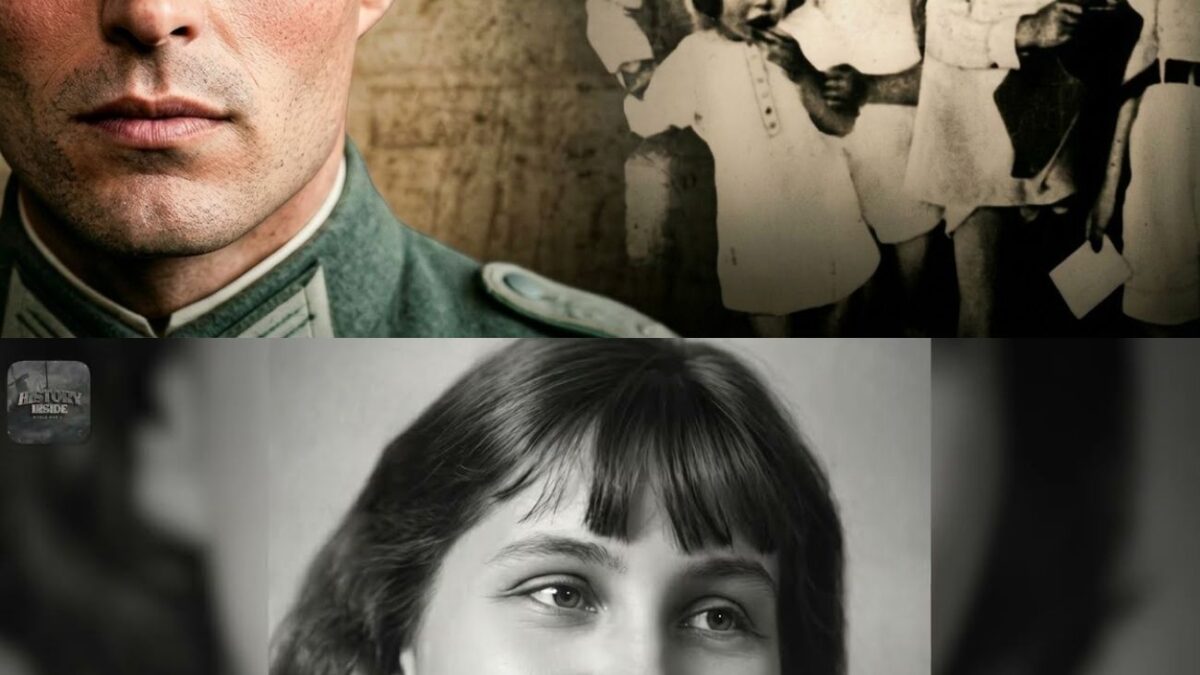
On a freezing morning in late January 1945, inside the sterile confines of an isolated maternity ward in Frankfurt an der Oder, a woman gave birth to a daughter. The mother was Nina von Stauffenberg, held under the tightest surveillance of the Nazi state as an enemy of the Reich. Her husband, Colonel Claus von Stauffenberg, had been dead for six months, shot in a Berlin courtyard by a firing squad after his plot to assassinate Adolf Hitler failed.
The child entered the world not into the comforting embrace of family heritage, but beneath the long shadow of impending totalitarian retribution. Nina held the newborn close against the winter draft, knowing that her infant daughter was already marked as an existential threat to an empire in collapse. She chose the name Konstanze for the girl, an affirmation of steadfastness and unbroken resolve amid the violent storm consuming Europe.
Only six months earlier, on July 20, 1944, Claus von Stauffenberg had carried a briefcase packed with plastic explosives into the Wolf’s Lair briefing hut in East Prussia. The blast tore through the timber building, killing four men and wounding over twenty others, yet the wooden table deflected the fatal shockwave from the dictator. Hitler survived with shredded trousers and ruptured eardrums, emerging from the smoky wreckage with an unyielding determination to annihilate every root of the resistance.
Before the dust had fully settled over the Prussian pine forest, Stauffenberg boarded a Heinkel bomber bound for Berlin, convinced the tyrant was dead. He landed at Rangsdorf airfield and rushed to the War Office on the Bendlerstrasse to direct the precarious machinery of Operation Valkyrie. Within hours, contradictory orders paralyzed the conspirators, loyalist troops surrounded the compound, and the desperate bid to reclaim Germany slipped into disaster.
By midnight, General Friedrich Fromm had arrested his co-conspirators in a frantic attempt to bury his own complicity beneath a display of summary justice. Claus von Stauffenberg, his adjutant Werner von Haeften, Albrecht Mertz von Quirnheim, and Friedrich Olbricht were led down into the gravel courtyard. In the glare of military truck headlights, the firing squad volley echoed across the capital, silencing the man who had dared to strike at the heart of darkness.
Yet for Heinrich Himmler and the SS apparatus, the execution of the officers on the Bendlerstrasse was only the beginning of a wider reckoning. Speaking to regional Nazi leaders in Posen shortly after the coup, Himmler revived the medieval Germanic doctrine of Sippenhaft, or collective family liability. He proclaimed publicly that the treason was carried in the blood, declaring that the Stauffenberg lineage would be extinguished to the absolute last living member.
The retribution fell like a sudden, suffocating net over a noble family whose roots ran deep into the soil of southern Germany. Claus’s elder brother, Berthold von Stauffenberg, a distinguished jurist who helped draft the proclamation of the post-coup government, was arrested within hours. He was subjected to brutal interrogations and paraded before the notorious People’s Court, where Roland Freisler screamed insults at the accused before sentencing him to death.
Berthold was hanged by thin wire at Plötzensee Prison in August 1944, his agonizing final moments filmed for Hitler’s private viewing. The third brother, Alexander von Stauffenberg, was an officer and classical scholar stationed with the military administration in Greece, entirely uninvolved in the plot. The regime showed no mercy for ignorance or distance; Alexander was dragged back to Germany in chains and thrown into an isolation cell.
The terror branched outward with systematic, cold efficiency, sweeping up elderly grandmothers, distant cousins, in-laws, and uncles who had never seen the conspirators. Anyone who shared the bloodline or the aristocratic name was pulled from their quiet country estates into Gestapo prisons. Dozens of family members found themselves trapped in a penal labyrinth, their estates seized and bank accounts frozen by order of the Reich.
At the family manor in Lautlingen, tucked into the hills of Swabia, Nina von Stauffenberg had awaited news of her husband with four young children. The eldest was Berthold Maria, who had just turned ten years old, followed by Heimera, eight, Franz Ludwig, six, and three-year-old Valerie. Nina was already pregnant with their fifth child when the black Gestapo sedans ground to a halt outside the house on July 23.
The secret police gave her no time to console her weeping children or gather more than a few personal garments. They interrogated her relentlessly about Claus’s travels, his clandestine visitors, and the quiet meetings held in their home during the preceding months. Throughout the questioning, Nina maintained an impenetrable calm, insisting that she was merely a soldier’s wife who knew nothing of high politics or military intrigue.
Her stoicism baffled the investigators, who expected a panicked breakdown from a woman whose husband had been executed as the ultimate traitor. Refusing to break character, she gave them no names, no dates, and no threads that could unravel what remained of the civilian underground. Finding her obstinate and refusing to play the penitent widow, the authorities transferred the heavily pregnant noblewoman to the Ravensbrück concentration camp.
There, north of Berlin, Nina was stripped of her aristocratic identity and locked in the punishment block, separated from the general prisoner population. The camp was an industrial center of degradation, where thousands of women starved and perished under the truncheons of female guards. Nina endured her confinement in a bare cell, feeling the movements of her unborn child while listening to the distant shouting and barking guard dogs outside.
The regime viewed her not as a human being, but as a biological vessel carrying the seed of their most hated enemy. Though they intended to erase the lineage, Nazi administrative protocol hesitated to execute an expectant mother carrying an infant of pure German heritage. Instead, they kept her isolated as winter approached, monitoring the pregnancy while the Eastern Front cracked under the hammer blows of the Red Army.
Meanwhile, a separate and equally sinister fate had been devised for the four children left behind in Lautlingen. Within days of their mother’s arrest, the Gestapo arrived at the estate to physically sever the children from their ancestral home and memory. The young brothers and their little sister were loaded onto transport vehicles, watched over by tight-lipped officials who answered none of their confused questions.
They were transported north into the dense, forested hills of the Harz Mountains, arriving at a children’s home called Bad Sachsa. The facility, known locally as the Borntal home, was requisitioned by the SS Race and Settlement Main Office to carry out an ideological experiment. Here, children of the executed July 20 conspirators were gathered like contraband goods, isolated from the rest of the world behind perimeter fences.
Upon arrival, the process of erasure became literal, designed to strip away every layer of personal memory from the young minds. The matrons and guards confiscated their luggage, taking family photographs, pocket knives, heirloom trinkets, and letters sent by grandparents. The children were strictly forbidden to mention their parents, speak of their past, or talk to anyone beyond the facility’s guarded boundary.
Then came the final indignity of the bureaucratic eraser: their names were systematically stripped away and replaced with false identities. The Stauffenberg children were told that their surname was no longer permitted to exist in the Reich, and they were assigned the alias Meister. To ten-year-old Berthold, old enough to grasp the gravity of the shift, the new name felt like an iron collar fastened around his neck.
For little Valerie, barely past toddlerhood, and six-year-old Franz Ludwig, the renaming was an incomprehensible game played by cold and humorless adults. They were told to forget their father’s house, forget the grand library at Lautlingen, and accept that they were wards of the National Socialist state. The older boys instinctively guarded their younger siblings, whispering the truth in bed at night so the memory of their true names would not fade.
The plan devised in Berlin did not conclude with psychological erasure inside the walls of the Borntal institution. The younger children, including Valerie, were earmarked for immediate adoption by vetted, ideologically pure SS families who would raise them under their false identities. The older boys were slated for transfer to the Nationalpolitische Erziehungsanstalten, the brutal political boarding schools designed to churn out fanatical officers.
Had the war dragged on, the children of Claus von Stauffenberg would have been scattered across the ruined landscape of the Reich, their origins lost forever. They would have been trained to revere the very swastika their father had died trying to tear down from the ministries of Berlin. Yet the vast bureaucratic machinery of totalitarianism was beginning to seize up as military disasters mounted along every border.
By the early weeks of 1945, the Allied armies were crossing the Rhine in the west, while Soviet armor rolled relentlessly across the Oder in the east. At Bad Sachsa, the administrative routines grew chaotic as food supplies dwindled and air-raid sirens sounded with terrifying regularity. The children spent hours huddled in cold cellars, their captors increasingly preoccupied with burning paperwork and packing personal belongings for flight.
Further east, in Frankfurt an der Oder, Nina’s condition had forced another relocation just as the artillery rumble grew audible on the horizon. The SS could not risk the birth occurring in Ravensbrück amid an impending evacuation, so they moved her to a municipal maternity clinic under guard. There, on January 27, 1945, Konstanze took her first breath into a room where cold air leaked through taped-up window glass.
Nina spent only brief moments admiring the infant before the collapsing war front forced her back into the hands of her wardens. The Red Army had broken through the Vistula defenses, and the Oder line was crumbling under an onslaught of Soviet mechanized divisions. The SS began clearing high-value prisoners southward, treating them as human capital to be preserved for desperate, eleventh-hour bargaining.
Nina and her newborn baby were swept into a chaotic convoy of political hostages, traveling by drafty freight trains and military trucks. The Stauffenberg relatives who had survived Buchenwald, including Claus’s brother Alexander, were marched under armed guard toward the southern redoubt. Across central Germany, lines of prisoners moved through firebombed rail junctions, strafed by low-flying Allied fighters and shivering in unheated wagons.
Holding little Konstanze wrapped in whatever scraps of flannel she could scavenge, Nina maintained her sanity through sheer force of maternal will. She watched other prisoners succumb to exposure and typhus, keeping her infant shielded against the biting frost with her own body heat. The convoy pushed steadily south toward the rugged peaks of the Austrian Alps, where the SS hoped to establish a mountain stronghold.
By late April 1945, the bedraggled group of prominent hostages was brought into the high valleys of South Tyrol, near Lake Braies. SS commanders argued among themselves about whether to execute the entire group or use them to negotiate safe passage from the advancing Americans. Regular German Wehrmacht officers, horrified by the prospect of mass murder on their retreat, intervened to protect the prisoners from the SS guards.
On May 4, 1945, units of the United States Fifth Army rolled up the alpine roads, disarming the remaining guards and securing the hotel. Nina stood in the brilliant alpine sunlight, gaunt and exhausted, holding a three-month-old daughter who had known nothing but captivity. She had survived the concentration camp, the prison hospital, and the mountain death march, yet her heart remained fractured with uncertainty.
She was free, but she had no idea whether her other four children were alive, let alone where they had been taken. In Bad Sachsa, the children had watched their guards slip away into the forests as American units approached the Harz Mountains in April. The town fell without major fighting, leaving the children stranded in the home, free from their captors but entirely without guidance.
A local woman and remaining staff members kept the children fed with leftover rations until military authorities began processing the displaced. Word slowly traveled through the nascent civilian administrations that the conspirators’ children were sheltering in the Borntal home. A cousin, Countess Nina Schenk von Stauffenberg’s sister, finally tracked them down, arriving at the facility to reclaim them from bureaucratic limbo.
The reunion of the family took place in July 1945, precisely one year after Claus had carried his bomb into the Wolf’s Lair. Nina traveled back to Lautlingen with the baby Konstanze, arriving at the ancestral home to wait for the return of her four eldest. When the carriage pulled up to the estate, the children rushed out into the overgrown courtyard to embrace the mother they feared was dead.
Berthold, Heimera, Franz Ludwig, and Valerie stood gathered around their mother, weeping and touching her face to make sure she was real. Then Nina showed them the infant nestled in her arms, introducing them to the sister born behind the wire of the police clinic. At six months old, Konstanze met the family who had spent the year answering to the name Meister under the watchful eyes of the Gestapo.
The family was reunited, but the world they had once occupied was completely obliterated, replaced by an impoverished, divided nation. Claus was buried in an unmarked site, his ashes scattered by the SS to prevent any grave from becoming a shrine for dissenters. Nina’s mother, Anna von Üxküll-Gyllenband, had perished in a Soviet internment camp at Strausberg shortly after the war concluded.
The family estates were requisitioned or damaged, private bank accounts remained frozen by occupation authorities, and resources were painfully scarce. Moreover, the name Stauffenberg carried a heavy, complicated stigma in a shattered nation struggling through the physical and moral ruins. Many ordinary Germans, still stunned by total defeat, viewed the July 20 plotters not as courageous liberators, but as traitors who stabbed Germany in the back.
Nina faced this hostile, impoverished landscape with the same quiet, unbending dignity she had demonstrated to the Gestapo interrogators. She refused to portray herself as a tragic martyr or demand special privileges from the Allied occupational authorities running the zone. Instead, she focused entirely on survival, mending clothes by lamplight and foraging for food to keep her five children healthy through the bitter post-war winters.
It took eight long years of grinding hardship and legal petitions before Nina could relocate the family back to her hometown of Bamberg. The move in 1953 was made possible only after the new West German government finally granted her a widow’s pension based on Claus’s military rank. With those funds, she restored the family’s modest town residence, determined that her children would receive a thorough, grounded education.
Throughout the decades that followed, Nina made a deliberate choice that separated her from many other public figures of the post-war era. She loved Claus deeply, but she refused to allow him to be transformed into a marble monument or an unblemished cinematic saint. She discouraged the creation of a hero cult around July 20, knowing that the men who acted were flawed, desperate human beings who wrestled with their oaths.
Whenever the events of that fateful summer were raised around the dinner table, Nina spoke with measured clarity and utter lack of melodrama. She answered her children’s questions truthfully, but insisted that each of them must study history and arrive at their own moral verdict. She declined endless interview requests from international journalists, choosing privacy over celebrity while the debate over German resistance raged in the press.
She never wrote an autobiography, believing that her personal survival was merely a duty owed to her children rather than material for public consumption. The true, intimate account of her survival would only be written decades later, penned by the baby girl she had carried through the camps. As the years progressed, the paths of the five children diverged, reflecting the diverse currents of a West Germany rebuilding itself from ruins.
Valerie, the youngest daughter who had been just three years old during the internment at Bad Sachsa, lived a tragically brief adult life. She married in 1964, seeking a quiet domestic happiness far removed from the weight of her family’s historically burdened surname. Only two years later, in 1966, she succumbed to leukemia at the age of twenty-five, leaving her family to mourn another sudden departure.
The second son, Heimera, chose an existence of profound discretion, intentionally turning his back on public appearances and political commentary. He pursued his studies, never married, and spent his professional life working quietly in commerce away from the flashing cameras of Berlin. He moved to Switzerland in his later years, residing peacefully in Zurich until his death in 2020, having kept his private memories entirely to himself.
Konstanze, the daughter born in captivity while the cannons rumbled on the Oder, grew up fascinated by medicine and the preservation of life. She trained as a maternity nurse, dedicating her early career to caring for newborns, mirroring the care she had received in the Frankfurt clinic. In 1967, she married a Swiss count and moved to Sweden, establishing a warm family home across the Baltic Sea.
Decades later, Konstanze felt a duty to break the silence her mother had maintained for more than half a century. In 2008, she published a comprehensive biography of Nina, utilizing private letters, diary entries, and childhood memories to tell the matriarch’s story. Through her daughter’s meticulous prose, the world finally learned of Nina’s quiet courage during her months in the custody of the SS.
While Heimera and Konstanze pursued private lives abroad, the two eldest sons took paths that led directly into the heart of the new German republic. In the Third Reich, they had been stripped of their name and marked for psychological re-education as the children of an arch-traitor. In the Federal Republic of Germany that rose from the ashes, they witnessed that same name transform into a symbol of civic duty.
Berthold Maria, the ten-year-old boy who had stubbornly clung to his identity while named Meister, felt an undeniable pull toward the profession of arms. In 1956, when West Germany established the Bundeswehr as a democratic military force under parliamentary oversight, Berthold volunteered to serve. He entered the officer training corps, conscious that every superior and subordinate would evaluate him through the lens of his father’s actions.
Berthold did not seek an easy assignment, choosing the armored cavalry and rising steadily through merit, technical skill, and leadership. By the early 1970s, he had achieved the rank of colonel, commanding an armored battalion stationed at Munster, the army’s premier training grounds. Colleagues noted that he possessed his father’s piercing gaze and upright posture, but commanded with a modern, calm, and thoughtful demeanor.
He climbed the senior ranks of the army, eventually taking command of the Military District V in Stuttgart, overseeing defenses across southern Germany. When Major General Berthold Maria von Stauffenberg finally retired in 1994, he had completed thirty-eight years of continuous service in uniform. At the time of his retirement, he was the longest-serving soldier in the Bundeswehr, having dedicated four decades to defending a democratic nation.
The historical symmetry was breathtaking: the son of the man executed for treason against a tyranny had become the longest-serving general of the republic. He had proved that true military honor lay not in blind obedience to an authoritarian leader, but in fidelity to law, human rights, and freedom. Berthold remained a measured voice in public discussions, defending the memory of the resistance while reminding citizens that democracy requires constant vigilance.
His younger brother, Franz Ludwig, chose a different public arena, turning toward the law and the parliamentary chambers of the new state. He had been only six years old at Bad Sachsa, old enough to recall the fear of separation, but young enough to be bewildered by it. As he grew to adulthood, he pursued legal studies, convinced that constitutional law was the strongest defense against the rise of future tyrants.
Franz Ludwig joined the Christian Social Union in Bavaria, entering regional politics before earning a seat in the West German Bundestag in 1976. For over a decade, he served as a member of parliament in Bonn, drafting legislation and debating policies during the tense years of the Cold War. He later served as a Member of the European Parliament, working toward the continental integration that his father’s generation could scarcely imagine.
Franz Ludwig also became a fierce guardian of the historical legacy surrounding the July 20 plot and the broader anti-Hitler resistance. He was acutely sensitive to historical distortion, refusing to allow opportunistic politicians to instrumentalize his father’s sacrifice for modern partisan agendas. In 1994, during the fiftieth anniversary of the assassination attempt, he made headlines across Europe by refusing to participate in certain official commemorations.
He objected publicly to honoring communist underground figures alongside the July 20 conspirators in a unified, uncritical national ceremony. Franz Ludwig argued with searing legal precision that the Bendlerstrasse officers died to establish a state founded on human dignity and natural law. He insisted that those who fought simply to replace Hitler’s brown dictatorship with a Soviet-backed red dictatorship did not share that noble purpose.
The name that Heinrich Himmler had vowed to wipe from the memory of the earth was now spoken with authority in the halls of parliament. Franz Ludwig used that name not as an ornament of inherited privilege, but as an instrument to defend historical truth and constitutional liberty. Through his speeches and legal work, he ensured that the memory of the July 20 conspirators remained clear, principled, and uncorrupted by revisionism.
Nina von Stauffenberg lived long enough to witness the full flowering of her children’s lives and the transformation of her husband’s legacy. She survived to see the Cold War end, the Berlin Wall crumble, and a unified, democratic Germany take its place at the heart of Europe. The streets where Claus had walked were renamed in his honor, and military barracks across the country bore the Stauffenberg crest upon their gates.
The courtyard at the Bendlerstrasse, once stained with her husband’s blood in the midnight glare of truck headlights, was consecrated as a national memorial. Every July 20, recruits of the German armed forces gathered in that stone courtyard to take their solemn oath of service to the democratic constitution. They swore to uphold the law and defend human rights, standing precisely where Claus had shouted his final defiant words into the darkness.
Nina passed away peacefully on April 2, 2006, near Bamberg, surrounded by her family at the remarkable age of ninety-two. She had outlived her executed husband by sixty-two years—decades the Nazi regime had planned to deny her and her children in the camps. She was laid to rest with quiet ceremony, celebrated not for political rhetoric, but for the fierce, unbroken maternal love that preserved her family.
Two years after her death, Hollywood released the historical drama Valkyrie, introducing the story of the anti-Hitler conspiracy to millions of worldwide viewers. In a casting decision rich with poetic justice, a small role in the production was awarded to a professional actor named Philipp von Schulthess. Schulthess was the son of Konstanze—the grandson of the baby girl born in the prison clinic while her father’s ashes blew across Berlin.
The camera captured the grandson standing upon the historical stage, playing an officer in the very narrative that was meant to erase his existence. The regime that had weaponized Sippenhaft to extinguish a family to the last drop of blood was dead and relegated to the ash heap of history. Yet the family they tried to destroy stood three generations deep, flourishing in public service, telling their own story in their own enduring voice.
The Stauffenbergs did not just survive the terror; they returned to rebuild the judicial, civic, and military pillars of a free and united Germany. Their journey from the cells of Ravensbrück and the dormitory of Bad Sachsa stands as an eternal testament to the triumph of life over destruction. Against the absolute cruelty of totalitarian power, the steadfast courage of a quiet mother proved stronger than the entire apparatus of the Third Reich.

