They Mocked His “Scrap Metal” Bomber — Until It Flattened 3 Airfields Alone
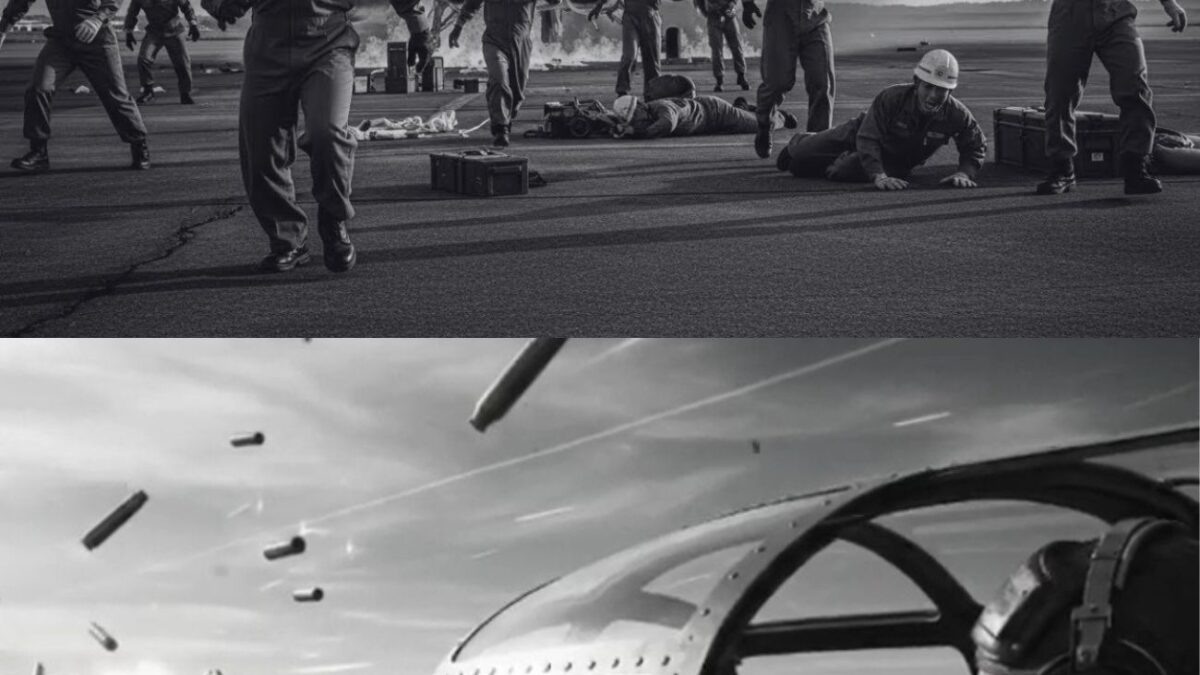
Dawn breaks over New Guinea on the seventeenth of August, 1943, washing the dense, jagged canopy in pale amber light.
Across the coastal plains near Wewak, four Japanese airfields sit bathed in the deceptive calm of early morning.
At Boram airfield, ground crews busily warm up engines, their breath condensing in the humid equatorial air.
Neat rows of Nakajima Ki-43 Hayabusa fighters stand parked wingtip to wingtip along the perimeter of the dirt strip.
Mechanics wipe down fuselages while seasoned imperial aviators sip hot green tea, discussing weather and patrol rotations.
None of them possess the slightest inkling of the catastrophic storm hurtling toward them through the lingering mist.
Far out to sea, low clouds part to reveal forty-seven heavy bombers roaring straight toward the northern shoreline.
Consolidated B-24 Liberators and Boeing B-17 Flying Fortresses press forward with their cavernous bomb bay doors yawning wide open.
At 4:42 a.m., the tranquil morning shatters completely as the first stick of high explosives strikes the revetments.
Geysers of shredded metal, shattered palm logs, and burning aviation fuel erupt hundreds of feet into the sky.
Japanese pilots drop their tea cups and sprint frantically toward their dispersed fighters, desperate to scramble into the air.
They never make it across the burning tarmac, cut down by detonating fragmentation bombs and rolling fireballs.
The relentless high-altitude assault hammers Boram, Dagua, But, and Wewak, tearing hangars and fuel depots apart.
By 9:00 a.m., the American heavy bombers turn south, vanishing like distant thunder beyond the Owen Stanley Range.
The surviving Japanese soldiers and airmen emerge from trenches to survey the carnage, coughing against thick black smoke.
They breathe a collective, exhausted sigh of relief, convinced that the worst of the day’s ordeal has finally ended.
Standard military doctrine suggests the Allied forces will not strike the same fortified installations twice in a single morning.
They assume they have hours to organize rescue efforts, extinguish blazes, and salvage remaining aircraft, but they are catastrophically wrong.
At 9:15 a.m., a terrifying new sound rumbles across the southern horizon, far lower and infinitely angrier than the heavies.
More than thirty twin-engine B-25 Mitchell bombers streak across the jungle canopy, skimming the treetops at lethal speed.
Flanked by swift Lockheed P-38 Lightnings, the incoming formation hugs the contours of the earth to evade radar.
Yet these are unlike any standard North American B-25 Mitchells ever produced by the assembly lines back home.
Their distinctive glazed bombardier noses have been torn away, replaced by solid metal fairings bristling with heavy machine gun barrels.
Eight, ten, sometimes fourteen forward-firing .50-caliber guns jut aggressively from every available inch of the forward fuselage.
They look like airborne porcupines, ferocious mechanical monsters cobbled together from salvage yards and sheer mechanical audacity.
Terrified Japanese ground gunners scramble to man their weapons, staring in horror at the snarling apparitions roaring toward them.
They call these terrifying low-altitude predators Bakemono-hikoki—ghost planes that appear without warning from the tree line.
American aircrews refer to these heavily customized combat machines by a much simpler, deadlier name: Pappy’s strafers.
What the imperial defenders do not know is that, according to official aeronautical regulations, these aircraft should not exist.
They violate virtually every structural specification, weight limitation, and safety parameter found in standard technical manuals.
They are severely overweight, dangerously nose-heavy, and balance precariously close to the threshold of catastrophic airframe failure.
When blueprints of the field modifications reached headquarters, North American Aviation’s chief engineers declared them impossible to fly.
In fact, the United States Army Air Forces had nearly court-martialed the stubborn civilian turned officer who built them.
His name was Paul Irvin Gunn, a fifty-year-old operational tinkerer known affectionately across the theater simply as Pappy.
He possessed no degree in aeronautical engineering, no formal scientific credentials, and no patience for institutional bureaucracy.
He was a seasoned aviator who had been drafted back into uniform when imperial forces invaded the Philippine archipelago.
Yet on this bright August morning in 1943, as his homemade warplanes unleash blistering torrents of fire, theory becomes meaningless.
The combined firepower of his modified Mitchells strips bark from trees, obliterates defensive revetments, and tears parked aircraft to ribbons.
Over the next six hours of relentless strikes, the Imperial Japanese Army’s Fourth Air Army will suffer complete annihilation.
One hundred and seventy-four Japanese aircraft are reduced to blackened skeletons along the shredded runways of northern New Guinea.
The operational fighter strength of the Fourth Air Army collapses overnight from over two hundred ready planes to barely thirty.
In a single coordinated masterstroke of tactical violence, the balance of air superiority across the Pacific tilts decisively toward the Allies.
What Pappy Gunn could not foresee was that his improvised workshop experiments would revolutionize the doctrine of close air support.
His audacious concept of transforming standard transport and medium bomber platforms into dedicated, heavy-gun strike aircraft would endure.
The lethal heritage of his scrap-iron modifications flows directly into every subsequent American gunship, including the formidable AC-130 Spectre.
This is the untold story of how an uncredentialed mechanic defied military convention and reshaped modern aerial warfare through sheer grit.
To understand the emergence of the strafer, one must journey back to mid-1942, when the Allied situation was utterly desperate.
Imperial Japanese forces occupied key positions across New Guinea, establishing forward bastions directly threatening northern Australia.
Operating from secure airfields carved into the jungle, Japanese bombers attacked Allied naval movements and forward infantry positions at will.
General Douglas MacArthur’s desperate forces found themselves trapped in a grueling war of attrition amid malaria-infested swamps.
Every attempt by American airmen to stem the flow of enemy reinforcements collided with rigid, obsolete tactical doctrine.
Pre-war United States Army Air Forces strategy remained dogmatically wedded to the concept of high-altitude daylight precision bombing.
Doctrinal purists believed formations of B-17s and B-24s flying at twenty thousand feet could systematically dismantle any tactical target.
Air corps manuals proudly boasted that a bombardier using the sophisticated Norden bombsight could place a weapon into a pickle barrel.
High above the vast Pacific Ocean, however, high-altitude precision bombing proved to be an expensive and frustrating illusion.
Bombing crews faced shifting equatorial jet streams, dense tropical cloud cover, and elusive, maneuvering maritime targets that defied calculation.
Against moving convoys and camouflaged jungle installations, thousands of high-explosive bombs plunged harmlessly into the churning sea.
The operational statistics recorded during the desperate opening months of 1942 revealed an alarming operational failure.
Fifth Air Force bombers flew nearly six hundred high-altitude sorties against Japanese reinforcement convoys attempting to resupply New Guinea.
Out of all those grueling, fuel-draining missions, Allied bombardiers managed to sink a meager total of seven vessels.
That abysmal 1.3 percent success rate meant the imperial military continued to reinforce its island garrisons virtually unimpeded.
Fresh battalions of Japanese infantry, accompanied by heavy artillery, ammunition, and aviation fuel, poured steadily into the theater.
Allied commanders knew they had to strike lower to achieve accuracy, but low-altitude bombing runs bordered on outright suicide.
When a multi-engine bomber descended to five hundred feet, it transformed into a lumbering target for light anti-aircraft batteries.
Japanese gunners tracking the large planes filled the sky with heavy flak, shredding vulnerable control surfaces before payloads dropped.
Bombers that managed to press their attacks often perished in the blasts of their own delayed-fuse ordnance bouncing off ships.
The official engineering consensus among aviation brass in Washington was unanimous, inflexible, and thoroughly disheartening for frontline crews.
Medium bombers like the twin-engine B-25 Mitchell and Douglas A-20 Havoc were deemed utterly unsuitable for direct ground assault.
The experts argued they lacked defensive armor, were too sluggish to evade ground fire, and carried insufficient forward armament.
Major General George Churchill Kenney arrived in Brisbane in August 1942 to assume command of the beleaguered Fifth Air Force.
He inherited an operational command starved of spare parts, plagued by tropical diseases, and flying aircraft ill-suited to the environment.
Fighter aircraft like the twin-boom P-38 Lightning could strafe enemy lines, but their limited payloads could not destroy concrete revetments.
Heavy four-engine bombers carried immense explosive tonnage, yet they could not hit small tactical targets hidden beneath thick jungle canopies.
Kenney realized his men needed an entirely new class of attack aircraft: an airborne gun platform possessing overwhelming frontal firepower.
He envisioned a plane capable of roaring in at deck level, suppressing enemy gunners before they fired, and delivering lethal ordnance.
North American Aviation’s B-25 Mitchell possessed the raw structural endurance and twin-engine horsepower required for such aggressive low-level operations.
Yet in its factory-delivered configuration, its forward-firing armament was laughably inadequate for suppressing heavily defended Pacific bases.
It carried just two .50-caliber machine guns in the nose, operated manually by a vulnerable bombardier peering through plexiglass.
Desperate frontline crews across northern Australia and southern New Guinea attempted numerous half-baked engineering experiments to solve the problem.
Maintenance units bolted commercial gun pods beneath wings, but the crude mountings created excessive aerodynamic drag and jammed repeatedly.
Flight leaders experimented with rudimentary skip-bombing tactics, skipping ordnance across the ocean surface directly into the steel hulls of ships.
While skip-bombing held promise, approaching a Japanese warship at mast height without suppressive forward firepower invited instant catastrophe.
The defensive guns of Japanese destroyers would vaporize incoming bombers long before pilots could reach their designated release points.
The geopolitical stakes riding on this technical dilemma could not have been higher as the bloody campaign dragged on.
Imperial strategists planned a massive convoy operation to land thousands of fresh shock troops at the critical outpost of Lae.
If those seasoned reinforcements successfully disembarked, Allied ground forces faced another grueling year of bloody jungle warfare.
An imperial victory at Lae would secure New Guinea as an unassailable bastion and place Australia within range of invasion.
General Kenney desperately needed an unorthodox tactical miracle to save his command and alter the strategic trajectory of the war.
He needed a visionary mechanic who understood the reality of frontline combat and possessed the audacity to break every rule.
What Kenney needed was already sweating inside a sweltering maintenance hangar in Townsville, Australia, covered in oil and cursing loudly.
Captain Paul Irvin Gunn stood fifty-four years old in the summer of 1942, an absolute patriarch among fresh-faced combat pilots.
He had enlisted in the United States Navy during the First World War, serving years as an ordinary naval aviation mechanic.
Working on fragile fabric biplanes, he spent every spare hour mastering flight controls until earning his coveted military wings.
After twenty years of naval service, Gunn retired to civilian life, eventually relocating his young family to the tropical paradise of Manila.
He utilized his extensive mechanical knowledge and piloting expertise to help establish Philippine Airlines, flying twin-engine Beechcraft transports across island chains.
Alongside his beloved wife, Clara Louise, and their four children, Gunn built an idyllic life steeped in equatorial sunshine.
When Japanese bombs struck Pearl Harbor and Clark Field in December 1941, Gunn immediately volunteered his services to the Army.
He flew hazardous evacuation sorties under continuous enemy fire, ferrying high-ranking personnel, essential medical cargo, and refugees southward.
During the final, chaotic collapse of Allied resistance on the Bataan peninsula, tragedy struck the Gunn family with devastating force.
Tasked with flying an urgent evacuation mission to Australia, Gunn was separated from his wife and four young children.
Imperial Japanese forces quickly overran Manila, capturing Clara and the children before they could secure passage out of the country.
They were marched into the grim confines of the Santo Tomas Internment Camp, where thousands of Western civilians faced brutal starvation.
Pappy Gunn arrived in Australia carrying a heavy psychological burden: his family was imprisoned behind barbed wire, and he felt powerless.
He channeled his immense personal grief and volcanic rage into the only weapon he truly understood—unmatched, relentless mechanical ingenuity.
Assigned to the 3rd Bombardment Group as a maintenance officer, the aging captain was expected to manage routine aircraft overhauls.
Headquarters viewed the post as an administrative assignment designed to keep an eccentric, aging flyer away from dangerous frontline combat.
Gunn despised the assignment from the very first afternoon he stepped into the boiling corrugated-iron repair sheds outside Townsville.
He possessed no engineering sheepskin from MIT, no official design blueprints, and zero patience for peacetime army administrative protocol.
What he did have was decades of practical flying experience and an instinct for keeping worn-out machines functioning with baling wire.
Before him stood a twin-engine Douglas A-20 Havoc light bomber, its factory armament looking pitifully inadequate for modern combat.
The light bomber carried just two forward-firing .50-caliber machine guns in its nose and four small .30-caliber guns in the fuselage.
Gunn had just spoken with surviving crews who watched their comrades get shot down attempting to bomb Japanese airfields at Buna.
Approaching enemy installations at low altitude, the under-armed Havocs were shredded by imperial flak batteries before reaching release points.
“This layout is damn well useless,” Gunn growled, grabbing a heavy wrench and moving aggressively toward the A-20’s nose section.
He hauled his wrench against the metal fasteners, violently unbolting the glazed plexiglass nose where the bombardier traditionally sat.
His enlisted mechanics, grease-stained soldiers who had spent weeks watching this strange captain work, stared in genuine terror.
“Captain, that’s the primary bomb-aiming station,” Sergeant First Class Harold Moore cautioned, stepping forward to intervene.
“The bombardier needs that transparent nose and the bombsight to calculate drops,” the sergeant pleaded, gesturing at the delicate instrument.
“The bombardier is nothing but a sitting duck in that glass bubble,” Gunn barked back, dumping the frame onto the concrete floor.
“He sits out front waiting to take a 20-millimeter cannon shell to the chest while peering through a useless piece of glass.”
“We aren’t dropping bombs from twenty thousand feet anymore,” Gunn declared, wiping engine grease across his sweat-streaked forehead.
“We are going in right off the deck, skimming the treetops, and hitting them so fast their gunners can’t even blink.”
“At two hundred feet, you don’t need a bombsight; you need overwhelming, bone-crushing firepower to silence everything in front of you.”
Gunn grabbed a grease pencil and began furiously sketching rough modifications across the painted metal surface of an empty oil drum.
The tactical concept crystallized with absolute clarity: strip away the dead weight and convert the medium bomber into a flying gun platform.
“Strip everything out of the nose compartment,” Gunn ordered his mechanics, pointing his wrench directly at the empty forward cavity.
“I want the bombardier station, the drift meters, and the navigational gear thrown onto the scrap pile immediately,” he commanded.
“Mount four heavy .50-caliber Browning machine guns right in that empty nose, locked in a rigid, forward-firing position.”
“Then find a way to fabricate external blisters along the fuselage cheeks to hold four more heavy Brownings pointing forward.”
Sergeant Moore blinked in utter disbelief, his eyes darting between the radical sketches and the hollowed-out fuselage of the A-20.
“Captain, the aircraft wasn’t engineered for that kind of concentrated forward load,” Moore protested, shaking his head with worry.
“The center of gravity will be ruined, and the airframe will shake itself apart the moment you squeeze that firing trigger.”
“I know it’s not according to the book, Harold,” Gunn interrupted, his gravelly voice dropping to a harsh, determined whisper.
“The book is why we are losing this war, and the book is why our young boys are burning in the jungle.”
“Scrounge four heavy Brownings from that wrecked B-17 parked behind the runway and find me some reliable ammunition feed chutes.”
Working entirely outside official supply channels, Gunn and his dedicated mechanics began their covert engineering crusade under the cover of night.
They raided salvage heaps, stripped crashed airframes, and traded bottles of Australian whiskey with naval supply depots for ammunition belts.
Gunn calculated weight distribution, center-of-gravity shifts, and recoil forces not with slide rules, but through trial, error, and intuition.
The installation of four heavy machine guns in the nose added more than seven hundred pounds of dense steel to the aircraft.
To prevent the plane from pitching violently forward into the dirt upon landing, Gunn improvised counterweights throughout the rear fuselage.
He repositioned heavy lead-acid batteries, shifted primary radio gear, and extended the armored ammunition boxes into the rear bomb bay.
Alongside the four nose-mounted guns, Gunn fabricated streamlined steel blister packs and bolted two additional .50-caliber guns to each fuselage flank.
When fully assembled, the modified A-20 Havoc packed eight forward-firing heavy machine guns synchronized to a single pilot trigger.
The combined battery could fire eight hundred rounds per minute of armor-piercing and incendiary ammunition directly into a target.
On the third of September, 1942, Pappy Gunn climbed into the cockpit of his modified monstrosity to conduct the maiden test flight.
Anxious mechanics gathered along the dirt runway outside Townsville, several placing quiet bets on whether the airframe would survive takeoff.
The twin Wright radial engines roared to full combat power, throwing plumes of red dust across the dry Australian bush.
Gunn released the wheel brakes, accelerated down the strip, and hauled back on the yoke as the heavy nose fought him.
The modified Havoc staggered into the air, its handling stiff and noticeably nose-heavy, yet responding predictably to aggressive trim adjustments.
Reaching two thousand feet over the blue waters of the Coral Sea, Gunn banked sharply toward an abandoned wooden target barge.
Nosing down into a steep, high-speed dive, the airspeed needle surged past two hundred and fifty miles per hour toward the waves.
At five hundred feet, Gunn aligned the crude iron gunsight welded to his cockpit frame and squeezed the heavy control wheel trigger.
The aircraft shuddered violently as eight heavy barrels unleashed a devastating torrent of high-velocity lead into the morning air.
A blinding river of red tracer fire leaped across the water, converging with surgical precision directly upon the derelict wooden target.
The explosive force of dozens of .50-caliber rounds striking simultaneously shattered the barge, turning timber into kindling within seconds.
The airframe held firm against the violent recoil forces, the ammunition fed smoothly without jamming, and the engine temperatures remained steady.
Gunn hauled the aircraft out of its dive, banking low over the smoking debris before setting course back toward the airfield.
When the A-20 touched down, Gunn taxied to the hangar with a broad, triumphant grin spread across his sun-hardened face.
“Start tearing down the rest of the squadron,” Gunn shouted to Moore as he jumped down from the wing root.
Word of Gunn’s unauthorized, heavily armed modification spread quickly through maintenance channels, eventually reaching Fifth Air Force headquarters in Port Moresby.
The reaction from traditionalist staff officers was not professional celebration, but explosive institutional fury over flagrant safety and protocol violations.
On September 8th, Captain Gunn received an urgent, icy summons to report immediately to General Kenney’s command headquarters in New Guinea.
Gunn stepped into the humid briefing room to find twenty senior staff officers, aeronautical engineers, and tactical inspectors seated in silence.
At the center of the table sat Major General Kenney, his sharp eyes studying the disheveled captain with cold, inscrutable intensity.
Kenney’s chief engineering officer, Major Robert Walsh, stood up immediately, waving a thick stack of standard Air Corps technical regulations.
“General, what Captain Gunn has done in Townsville is an outrage,” Major Walsh declared, his face reddening with professional indignation.
“He has permanently altered operational combat aircraft without engineering reviews, stress tests, or authorization from North American Aviation or Wright Field.”
“He has concentrated seven hundred pounds of unapproved ordnance in the nose, radically altering the center of gravity and flight dynamics.”
“Under prolonged combat stress, the recoil forces will fracture the forward bulkheads and tear the nose completely off the airframe,” Walsh warned.
“Captain Gunn’s reckless modifications represent a lethal hazard to our own aircrews, and he should face immediate court-martial for sabotage.”
The briefing room erupted into a cacophony of overlapping arguments as staff officers debated structural integrity, regulations, and military discipline.
General Kenney raised his right hand, and the room instantly fell silent, leaving only the sound of distant aircraft taxiing outside.
“Captain Gunn,” Kenney said evenly, leaning forward in his chair. “What do you have to say regarding Major Walsh’s engineering assessment?”
Gunn met the commanding general’s gaze without blinking, standing tall despite his rumpled khaki uniform and grease-stained fingernails.
“I say I test-flew the airplane myself, General, and I fired all eight guns in a maximum-speed dive,” Gunn answered firmly.
“The airframe didn’t crack, the controls responded, and I pulverized a target that would have required half a dozen conventional bombers.”
“That is purely anecdotal,” Walsh countered sharply. “One reckless test flight over open water proves nothing about structural longevity in combat.”
“Then let me take the modified aircraft into combat and prove it against the Japanese,” Gunn shot back, turning toward Kenney.
“We’ve got an enemy airfield at Buna that has been pounding our positions and sinking our coastal supply vessels for three months.”
“Give me sixteen modified strafers and three days, and I’ll knock Buna out of the war for good,” Gunn promised fiercely.
“And if your improvised modifications fail in combat, Captain?” Kenney asked quietly, his eyes boring into the seasoned maintenance officer.
“If those guns jam or the nose breaks off under flak, how do you answer for the lives of those crews?”
“I’ll lead the attack from the front seat of the lead ship myself, General,” Gunn said without a second of hesitation.
“If the wings fold or the nose falls off, I’ll be the very first man to hit the dirt,” he added.
“I would rather die testing a weapon that can win this war than watch more young boys get butchered in under-armed airplanes.”
A heavy, suffocating silence descended upon the sweltering command tent as Kenney stared down the defiant, graying captain standing before him.
Kenney was an experienced airman who had flown combat missions during World War I and understood the brutal realities of aerial warfare.
He knew the Allied position across New Guinea was deteriorating daily, and conventional tactics were producing nothing but body bags and defeat.
The Japanese were reinforcing their island garrisons far faster than Allied naval and high-altitude air power could intercept them.
“Major Walsh,” Kenney said slowly, breaking the tense silence. “How long would it take to approve these modifications through official channels?”
“Working through Wright Field and North American Aviation?” Walsh paused, calculating mentally. “Six months minimum, General, assuming top procurement priority.”
“We don’t have six months, Major,” Kenney replied with cold finality. “We might not even have six weeks before the next offensive.”
Kenney stood up, resting his hands heavily upon the briefing table, his decision clear to every officer in the room.
“You get your sixteen strafers, Captain,” Kenney announced, fixing his gaze upon Gunn’s weathered, exhausted face with absolute authority.
“Furthermore, I’m promoting you to the rank of major effective this hour, because you’ll need the rank to push these mechanics.”
“If a single airframe breaks apart due to structural failure, Major Gunn, I will hold you personally accountable before a military tribunal.”
“Understood, General,” Gunn replied, coming to a sharp, textbook salute that surprised the regular officers seated along the table.
“One more thing, Gunn,” Kenney added, a faint, dangerous smile finally breaking across the general’s hardened face.
“If this concept works at Buna, I want you to apply the exact same conversion to our twin-engine B-25 Mitchells.”
“Can you pack that same devastating punch into a Mitchell airframe, Major?” Kenney challenged, raising an eyebrow at the innovator.
“I can turn the B-25 into the most terrifying gunship the world has ever seen, sir,” Gunn replied without an ounce of hesitation.
“Then get back to Townsville and start cutting metal before Major Walsh suffers a stroke,” Kenney ordered, dismissing the assembly.
As Gunn walked out of the tent into the tropical sun, Walsh leaned toward the general, his voice laced with dread.
“General, this is a reckless gamble,” Walsh murmured. “You are staking the future of our tactical air wing on scrap metal.”
“If Gunn fails, we are no worse off than we are right now, fighting a losing war of attrition,” Kenney replied softly.
“But if that crazy old airline pilot is right, we will have a weapon the Japanese military cannot possibly stop.”
“Sometimes, Major, you have to let the mavericks run, because they see answers the rest of us are too terrified to imagine.”
Returning to Townsville with full command authority, Major Gunn worked his maintenance crews around the clock through brutal tropical heat.
They stripped factory-fresh A-20s, welded custom gun cradles, reinforced nose gear assemblies, and scavenged ammunition feed chutes from wrecked fighters.
By early September, sixteen fully converted A-20 strafers stood parked on the flight line, armed with heavy machine guns and fragmentation ordnance.
Inside their bomb bays rested clusters of innovative twenty-three-pound parachute fragmentation bombs, weapons Gunn had modified with delayed fuses.
Small canvas parachutes slowed the descent of the bomblets, allowing the strafers to roar past at deck level without getting caught in the blast.
On September 12th, 1942, dawn broke red over the Coral Sea as Gunn climbed into his personal aircraft, nicknamed Out of Stock.
The name was a bitter inside joke honoring his endless raids on supply depots to acquire unauthorized weaponry and spare parts.
Behind him, fifteen twin-engine strafers revved their engines, forming up in tight formation as they crossed the mountain peaks toward Buna.
Intelligence reported thirty Japanese fighters and dive bombers dispersed across the coastal strip, shielded by heavy anti-aircraft emplacements.
“All aircraft, this is Black Leader,” Gunn’s gravelly voice crackled over the radio network as they approached the target coastline.
“Drop down to deck level, stay on the deck, and do not pull up for anything; shoot at anything that wears a uniform.”
The sixteen strafers dropped through the coastal haze, leveling off just fifty feet above the coconut palms at blistering combat speed.
Japanese airfield sentries heard the low rumble of radial engines, but mistook the sound for returning friendly patrol aircraft until it was too late.
Gunn’s aircraft crossed the perimeter fence first, its eight nose and cheek guns opening fire in a simultaneous, deafening roar.
Streams of heavy armor-piercing incendiary rounds tore through parked Zeros, ruptured fuel trucks, and detonated open ammunition revetments instantly.
Behind Gunn, fifteen more converted strafers swept across the airfield in wide abreast formation, laying down a wall of high-velocity lead.
Japanese anti-aircraft gunners sprinted toward their dual-mount weapons, only to be cut down before they could traverse their gun barrels.
The American planes were flying too low for the heavy anti-aircraft guns to depress, passing over positions in a terrifying blur.
Behind the strafing firestorm, hundreds of parachute fragmentation bombs floated downward, detonating seconds later in continuous rolling waves of shrapnel.
The entire strike took less than eight minutes from the initial engine roar to the final strafer banking away over the sea.
Behind them, Buna airfield was transformed into an apocalyptic wasteland of burning wreckage, collapsing hangars, and secondary fuel explosions.
When reconnaissance aircraft photographed the smoldering airfield hours later, the intelligence analysts in Port Moresby were left utterly speechless.
Twenty-two Japanese aircraft lay demolished on the ground, three interceptors had been blown out of the sky, and fuel depots were destroyed.
The operational capacity of Buna airfield was paralyzed for over a week, all achieved without the loss of a single American aircraft.
Previous high-altitude bombing missions against Buna had managed an abysmal twelve percent target destruction rate across multiple costly raids.
Pappy Gunn’s improvised strafers had achieved an astonishing seventy-three percent destruction rate in a single eight-minute low-level pass.
Any remaining bureaucratic resistance to Gunn’s mechanical vision vanished overnight as General Kenney ordered the immediate mass conversion of the B-25 Mitchell.
Gunn moved his primary workshops to bigger facilities, assembling an army of skilled Australian civilian mechanics and American enlisted technicians.
The larger, twin-tailed B-25 Mitchell offered a much sturdier airframe, allowing Gunn to realize his ultimate, terrifying tactical vision.
He hollowed out the Mitchell’s bombardier nose completely, replacing it with a solid steel cap packing four heavy .50-caliber machine guns.
He added two blister packs containing four additional guns to the fuselage sides, plus four more mounted in armored cheek blisters.
With the top turret locked forward to fire in tandem, a modified B-25 strafer could bring fourteen heavy machine guns to bear.
Squeezing the pilot’s control wheel trigger unleashed an avalanche of lead capable of tearing a destroyer’s superstructure completely apart.
The ultimate operational test of Gunn’s converted B-25 gunships arrived during the historic Battle of the Bismarck Sea in March 1943.
A formidable Japanese convoy consisting of eight troop transports escorted by eight modern destroyers steamed boldly through the Vitiaz Strait.
Carrying nearly seven thousand veteran troops from Rabaul to reinforce Lae, the convoy represented an existential threat to the Allied campaign.
The convoy commander, Rear Admiral Masatomi Kimura, sailed with supreme tactical confidence, believing Allied air power incapable of stopping moving warships.
Decades of naval doctrine dictated that high-altitude bombing could not hit maneuvering vessels, while low-level torpedo attacks could be repelled by flak.
On the morning of March 3rd, 1943, Kimura’s fleet sailed directly into Pappy Gunn’s revolutionary tactical nightmare.
High-altitude B-17 Flying Fortresses struck first, dropping bombs from twenty thousand feet to disrupt the convoy’s tight defensive formation.
As the Japanese destroyers maneuvered violently to avoid falling ordnance, twelve of Gunn’s modified B-25 strafers dropped out of the overcast.
Led by Captain Edward “Jock” Henebry flying Naughty Nan, the heavily armed Mitchells descended until their propellers kicked up sea spray.
Approaching the massive troop transport Kyokusei Maru at two hundred and fifty miles per hour, Henebry aligned his nose and opened fire.
Fourteen heavy machine guns fired simultaneously, producing a deafening, mechanical roar that vibrated through the pilot’s boots and control column.
A dense stream of .50-caliber fire tore into the transport’s bridge, annihilating the command crew and sweeping the wooden decks clean.
Japanese anti-aircraft gunners were obliterated before they could even bring their dual-purpose naval guns to bear on the skimming bombers.
Close behind the devastating strafing run, the Mitchell dropped two five-hundred-pound demolition bombs using skip-bombing techniques perfected by the 3rd Group.
The heavy bombs skipped across the rolling ocean waves like flat stones, slamming directly into the transport’s unarmored hull below the waterline.
Seconds later, Kyokusei Maru exploded from within, tearing her steel hull apart in a colossal eruption of steam and fire.
Mitchell after Mitchell roared across the scattered convoy, their heavy guns suppressing warship defenses while skip-bombs shattered hulls with terrifying ease.
Over three relentless days of coordinated strikes, Allied aircrews transformed the Bismarck Sea into a graveyard for the imperial fleet.
All eight Japanese troop transports and four escorting destroyers were sent to the bottom of the sea in the devastating engagement.
Out of nearly seven thousand veteran imperial soldiers sent to reinforce the New Guinea garrison, fewer than a thousand survived the slaughter.
The Fifth Air Force achieved this decisive, campaign-altering naval victory while losing just a handful of strike aircraft to defensive fire.
Recovered Japanese naval records revealed the sheer psychological shock inflicted upon imperial forces by Gunn’s revolutionary low-altitude gunships.
“The enemy bombers approach at sea level with multiple machine guns firing simultaneously,” recorded Captain Shigemi Kami of the Imperial Japanese Navy.
“Their concentrated fire sweeps our decks clean of all defensive personnel before our guns can even be brought to bear.”
“Our naval anti-aircraft weapons cannot depress low enough to engage aircraft approaching at mast-top height,” the captain lamented in his report.
“We have encountered an entirely new form of tactical warfare against which our naval forces currently possess no effective tactical countermeasure.”
By August 1943, the devastating raids on Wewak permanently shattered Japanese air power across the entire Southwest Pacific theater of operations.
In less than a week of relentless strikes, Gunn’s strafers destroyed one hundred and seventy-four aircraft, crippling the Fourth Air Army forever.
Imperial ground commanders in New Guinea were left stranded without air cover, isolated from supply lines, and vulnerable to Allied counteroffensives.
Australian and American infantry advanced rapidly across the island, bypassing fortified strongpoints that had once seemed completely impregnable to assault.
By the end of World War II, strafer-configured B-25 Mitchells were credited with sinking over one hundred and fifty Japanese vessels.
They destroyed more than five hundred enemy aircraft in revetments, permanently altering the historical trajectory of Allied tactical aviation doctrine.
Military historians estimate that Gunn’s improvised strafers shortened the grueling New Guinea campaign by at least six months of brutal warfare.
That strategic compression saved an estimated thirty thousand Allied lives and spared countless thousands of Japanese soldiers from slow starvation.
“Pappy Gunn’s strafers gave every one of us a fighting chance,” wrote Lieutenant William Benn, an experienced Fifth Air Force combat pilot.
“Before Pappy took a wrench to those airplanes, we were nothing but clay pigeons flying straight into Japanese anti-aircraft traps.”
“After Pappy finished with them, we became the apex predators; every man who flew a Mitchell owes his life to him.”
When the global conflict finally concluded in August 1945, the Army Air Forces had converted over fourteen hundred Mitchells to strafers.
North American Aviation eventually adopted Gunn’s ideas, manufacturing factory-built B-25H and B-25J models carrying up to eighteen heavy machine guns.
The civilian aviation world moved rapidly into the jet age, yet Pappy Gunn never sought fame, fortune, or high-ranking military accolades.
Decorated with the Silver Star, the Distinguished Flying Cross, and nine Purple Hearts, Gunn quietly resigned his commission after the war.
He returned home to his beloved Manila, reunited with his wife Clara and their four children, who miraculously survived Santo Tomas.
The three brutal years his family spent interned behind barbed wire left emotional and physical scars that never fully healed with time.
Gunn rarely spoke of their wartime imprisonment, dedicating his remaining energy to rebuilding Philippine Airlines from the ashes of the war.
He flew island routes, managed repair hangars, trained young Filipino aviators, and politely refused interview requests from prominent military historians.
“I didn’t do anything special; I just made the machines work better,” Gunn told a persistent Manila reporter who tracked him down.
“The real heroes were the young kids who strapped themselves into those cockpits every morning; I just gave them better tools.”
On October 11th, 1957, Paul Irvin Gunn took off in a twin-engine Beechcraft transport to fly a routine commercial charter route.
Encountering a sudden, violent tropical squall over the central Philippines, severe downdrafts slammed the light aircraft into a dense jungle mountainside.
The crash instantly killed everyone on board, ending the remarkable life of the greatest uncredentialed innovator in American military aviation history.
He was fifty-seven years old, dying as he had lived: behind the control yoke of an airplane flying low over Pacific waters.
Today, Pappy Gunn’s profound technological legacy endures across every modern battlefield where close air support decides the fate of soldiers.
The iconic Lockheed AC-130 Spectre gunship traces its lineage directly to the crude machine gun blisters Gunn bolted onto Havocs.
Its philosophy remains unchanged: take an ordinary multi-engine airframe, pack it with overwhelming firepower, and protect the infantry fighting down below.
At the Air Force Armament Museum at Eglin Air Force Base in Florida, an original B-25 strafer stands preserved under bright lights.
Its solid metal nose bristles with heavy machine guns, looking just as ferocious as it did over the jungles of New Guinea.
A modest brass plaque mounted near the landing gear quietly credits Major Paul I. Gunn with the aircraft’s revolutionary tactical design.
Most museum visitors glance at the restored bomber and keep walking, unaware of the incredible human drama behind those blackened gun barrels.
They do not see the frantic midnight shifts in Townsville, the grease-stained sketches on oil drums, or the desperate love of a father.
Pappy Gunn did not wait for institutional permission, formal engineering credentials, or the glacial blessing of military bureaucracy to change history.
He saw young men dying in under-armed machines, saw an enemy threatening everything he held dear, and dared to build the impossible.
The Japanese called his lethal creations ghost planes, but the true phantom of this historic saga was Pappy Gunn himself.
He was an ordinary mechanic who single-handedly altered the course of aerial warfare, then faded peacefully into history, content to be forgotten.

