The Tragic Life of the “Infected” Princess
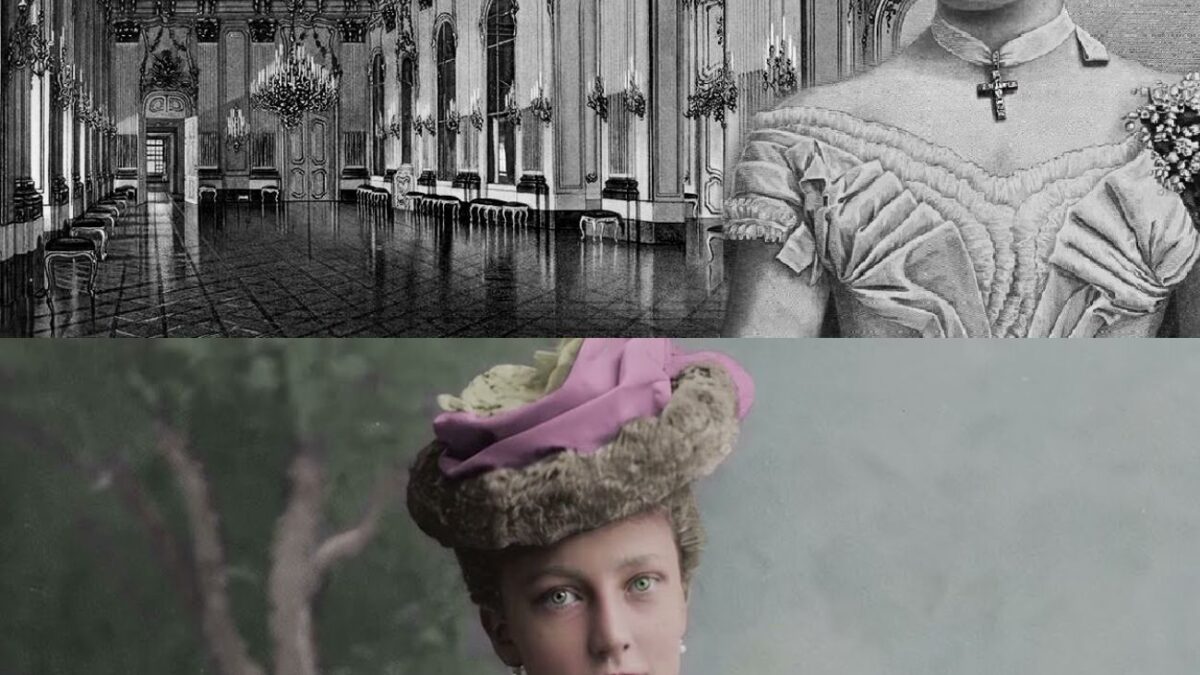
Princess Stéphanie Clotilde of Belgium entered the world beneath the gilded ceilings of the Palace of Laeken on May 21, 1864. Her birth took place in the manicured northern suburbs of Brussels, a tranquil setting that seemed far removed from the volatile currents of nineteenth-century European politics. She was the second daughter of Prince Leopold, the heir apparent to the young Belgian monarchy, and Archduchess Marie Henriette of Austria.
The kingdom Stephanie was born into had only gained its independence in 1831, having emerged from the dissolution of the United Kingdom of the Netherlands. Her grandfather, King Leopold I of the House of Saxe-Coburg and Gotha, was an astute sovereign who had carefully navigated Belgium through regional storms. When he passed away in December 1865, Stephanie was barely a year and a half old, yet her world immediately underwent an enormous transformation.
Her father ascended the throne as King Leopold II, presenting himself to the world as an energetic, forward-thinking monarch committed to national grandeur. To the public eye, Brussels soon turned into an imperial capital of wide boulevards, grandiose monuments, neoclassical arcades, and sprawling urban parks. The new king was praised by dignitaries and diplomats as a brilliant builder and a dedicated reformer who made a small country matter internationally.
Yet beneath that glittering, polished facade, a terrifying darkness lurked at the core of Leopold’s personal ambitions and public enterprise. He was driven by an insatiable hunger for prestige, wealth, and territory, looking beyond European borders to establish an overseas empire of his own. In the decades that followed, Leopold II turned the Congo Free State into his personal fiefdom, completely unchecked by the Belgian parliament.
His ruthless administration subjected millions of Congolese men, women, and children to horrific labor regimes to extract lucrative ivory and rubber. Enslavement, mutilation, widespread famine, and brutal punitive expeditions devastated the population, claiming an astronomical number of innocent lives. The colossal fortune that financed the luxurious lifestyle and grand architectural works of the Belgian royal family was soaked in blood money.
Inside the royal residence at Laeken, domestic life was marked by an oppressive chill that mirrored the calculated coldness of Leopold himself. His marriage to Queen Marie Henriette, a proud member of the illustrious Austrian House of Habsburg-Lorraine, had never been founded on love or companionship. Arranged entirely for dynastic balance, their union united two wholly incompatible figures who found little mutual understanding or genuine common ground.
Marie Henriette was an avid horsewoman who loved music, animals, and the outdoors, whereas Leopold was calculating, aloof, and obsessed with balance sheets. They had four children in total: Princess Louise was born in 1858, followed by their only son and dynastic heir, Prince Leopold, Duke of Brabant, in 1859. Stephanie arrived nearly five years later, and their youngest daughter, Princess Clémentine, was born eight years after her in 1872.
Despite the nursery filling with children, the marriage between Leopold II and Marie Henriette decayed steadily until all warmth disappeared entirely. Tensions grew unbearable, and by the 1870s the Queen spent long periods away from the capital, seeking respite at her private estate in Spa. The children grew up in cavernous, echoing palaces where physical affection was scarce, replaced instead by strict royal etiquette and rigid formality.
Stephanie’s childhood was permanently altered by an unbearable tragedy in January 1869, when she was not quite five years old. Her older brother, young Prince Leopold, who carried all the dynastic hopes of the Belgian crown, fell into a pond and developed pneumonia. The boy died shortly afterward at nine years old, throwing the entire kingdom into mourning and completely shattering the fragile family structure.
Leopold II wept bitterly at his son’s funeral, dropping to his knees before the casket, but his grief quickly hardened into an icy, bitter resentment. Because Belgian succession laws adhered strictly to Salic law, female children could not inherit the crown, rendering his daughters dynastically disappointing in his eyes. Stephanie never forgot the pall of gloom that descended over the palace, as her mother sank into despair and her father became increasingly estranged.
In 1871, the specter of disease reached into the royal nursery once again when an outbreak swept across Brussels and infected the young princess. Europe was still wrestling with lethal waves of cholera, smallpox, and typhus, and Stephanie, not yet seven years old, contracted a severe bout of typhus. For weeks she drifted between consciousness and feverish delirium, her body wracked with agony as doctors feared that the crown would lose another child.
Against every medical expectation, the young princess pulled through, though the grueling illness left her physically frail and emotionally subdued. Her recovery was met not with maternal pampering, but with an immediate return to the rigorous, unyielding daily schedule of a royal child. Three years later, her structured aristocratic education commenced under the watchful eyes of severe governesses and uncompromising tutors.
Stephanie was taught several languages, mastering French, German, and English, alongside rigorous instruction in history, religion, literature, and deportment. She and her sisters were subjected to spartan discipline, waking early, eating simple food, and spending hours practicing needlework and piano. They were never praised, lest they become vain, and any display of childish defiance or emotional vulnerability was swiftly reprimanded.
By 1875, the dynamics within the household shifted, placing greater social pressure upon Stephanie than any child of her age should have borne. Her elder sister Louise had married Prince Philipp of Saxe-Coburg and Gotha and departed for Vienna, leaving Stephanie behind as the eldest girl. With their mother frequently absent from Brussels, young Stephanie often found herself acting as the highest-ranking female figure at royal court receptions.
She had to stand for hours in stiff ceremonial dresses, greeting visiting dignitaries, smiling serenely, and suppressing whatever fatigue or loneliness she felt. Then, in the icy winter of 1878, her destiny was irrevocably fixed during an imperial overture that promised glory but held immense misery. Stephanie, barely a teenager of fourteen, was formally introduced to Crown Prince Rudolf of Austria, the heir to the Austro-Hungarian Empire.
Rudolf was twenty years old, handsome, charismatic, and the sole son of Emperor Franz Joseph I and the famous Empress Elisabeth, known as Sisi. Their meeting in Brussels was no romantic serendipity, but rather the culmination of prolonged diplomatic negotiations between the Habsburgs and the Belgian crown. The imperial court in Vienna was searching urgently for a suitable, devout Catholic princess capable of securing the succession by producing male heirs.
Stephanie’s impeccable pedigree, Habsburg blood through her mother, and the vast wealth of Belgium made her an exceptionally attractive candidate on paper. To Rudolf, she appeared young, malleable, and modest enough to mold into an imperial consort who would not challenge his way of life. To King Leopold II, having his daughter crowned future Empress of Austria and Queen of Hungary was a diplomatic victory of monumental proportions.
The immense pressure from both courts crushed any room for personal hesitation or youthful desire, and the dynastic engagement was promptly announced. Stephanie was thrust into preparation for an imperial life whose vast scale, rigid protocols, and suffocating etiquette she could scarcely comprehend. On May 10, 1881, just eleven days before her seventeenth birthday, Stephanie and Rudolf were wed in Vienna at the Augustinian Church.
The imperial capital staged a magnificent spectacle, adorning the Ringstrasse with banners, triumphal arches, floral garlands, and cheering crowds. Royalty, high nobility, and foreign ambassadors gathered inside the historic church, watching the young Belgian princess walk down the aisle in lace and pearls. Yet beneath the glittering surface of the royal wedding, thick shadows were already gathering over a marriage destined for profound dysfunction.
Stephanie quickly discovered that married life in Vienna had nothing in common with the romantic fairy tales that circulated among European society. There was no genuine love, nor even deep emotional affection between the two; they were bound only by duty and the cold expectations of statecraft. While Rudolf was initially polite and showed brief moments of tenderness, the vast differences in their temperaments and intellectual interests became immediately obvious.
Rudolf was a complex, hyperactive man who harbored radical liberal sympathies, wrote progressive political tracts, and read philosophy long into the night. Stephanie, by contrast, had received a traditional, highly conservative Catholic upbringing and found his intellectual circle confusing, provocative, and alarming. Isolated inside the massive Hofburg Palace, she found herself surrounded by suspicious courtiers, strict Hofdamen, and an unyielding, rigid system of etiquette.
Her mother-in-law, Empress Elisabeth, openly disdained Stephanie, privately mocking her as heavy-footed, naive, and lacking grace or refined beauty. Courtiers whispered behind the young crown princess’s back, watching every step she took and analyzing her wardrobe, her gestures, and her words. Rudolf spent less and less time in his wife’s presence, retreating into his own apartments, his hunting trips, and his political obsessions.
Despite the silent strain that marked their household, the couple fulfilled their dynastic obligation when Stephanie became pregnant in early 1883. On September 2, 1883, she gave birth at Laxenburg Castle to their first child, a daughter whom they christened Archduchess Elisabeth Marie. The girl was affectionately nicknamed Erzi within the family, but the celebratory cannon fire across Vienna could not disguise a bitter imperial disappointment.
The empire had desperately awaited an archduke to guarantee the direct Habsburg succession, and Rudolf received the birth with thinly veiled frustration. Elisabeth Marie would remain their only child together, and she would also prove to be the only child Stephanie would ever bear in her lifetime. Within just three years of her daughter’s birth, Stephanie’s reproductive health was destroyed, not by misfortune, but by the reckless actions of her husband.
Rudolf had long led an untamed double life that was well known to the police, his military friends, and the upper-class demi-monde of Vienna. He was a heavy drinker, dependent on morphine to manage nervous exhaustion, and an inveterate womanizer who frequented brothels and maintained numerous mistresses. His erratic behavior and promiscuity exposed him to severe sexually transmitted infections, which were rampant throughout aristocratic society at the time.
In the mid-1880s, Rudolf contracted gonorrhea and syphilis, diseases that carried terrifying social stigma and caused agonizing, degenerative bodily damage. Rather than abstaining from marital relations, Rudolf concealed the diagnosis from his young wife and continued to demand access to her bed. Inevitably, he infected Stephanie, who suddenly found herself struck down by excruciating pelvic pain, acute fevers, and profound physical weakness.
Court physicians, desperate to preserve imperial dignity, attempted to shield the crown prince from scandal by diagnosing her condition as severe peritonitis. Stephanie endured weeks of bed rest, scalding poultices, and debilitating treatments without understanding the true, shameful source of her agony. By the time the full truth became inescapable, the infection had wrought irreversible devastation upon her internal reproductive organs.
At just twenty-two years old, Princess Stephanie of Belgium was completely sterile, robbed forever of the ability to carry another child. The realization of what Rudolf had done to her shattered whatever vestige of affection, goodwill, or dynastic loyalty she still possessed. She was consumed by bitter humiliation and profound resentment, knowing she was now considered a failure at court for failing to produce a male heir.
She resolved that their intimate life was definitively over, refusing ever again to share a marital bed with the heir to the imperial throne. Rudolf would stumble home at dawn, reeking of alcohol, heavy cigar smoke, and the perfume of other women, only to find Stephanie’s door locked. Their encounters degenerated into furious shouting matches or weeks of icy silence, played out beneath the polite gazes of imperial servants.
As the years passed, Rudolf’s physical and psychological state deteriorated rapidly under the weight of advancing disease and heavy narcotic usage. He suffered from severe depression, violent mood swings, hallucinations, and an all-consuming obsession with mortality, death, and suicide. He carried loaded revolvers, kept a human skull on his writing desk, and frequently begged various acquaintances and mistresses to die with him.
By late 1888, the prince’s downward spiral reached its final, fateful chapter when he became entangled with a teenage noblewoman named Baroness Mary Vetsera. Mary was only seventeen, naive, deeply romantic, and utterly captivated by the melancholic, world-weary persona of the thirty-year-old crown prince. Unlike the more mature women of Vienna who dismissed his macabre talk of suicide, Vetsera embraced Rudolf’s dark fantasies with fatal devotion.
Rudolf began spending significant amounts of time at Mayerling, a private hunting lodge he had purchased in the dense Vienna Woods. The lodge was nestled in a quiet, secluded valley near Alland, offering an isolated sanctuary away from his father’s scrutiny and court protocol. There, behind drawn curtains and snow-covered trees, the crown prince devised the grim final act of his chaotic, tormented existence.
On the morning of January 30, 1889, the world collapsed around the Austro-Hungarian Empire when servants at Mayerling made a horrific discovery. Rudolf and Mary Vetsera were both lying dead in the royal bedchamber, their bodies soaked in blood from fatal gunshot wounds to the head. Stephanie was sitting at her desk in Vienna when imperial officials arrived to break the unimaginable news to the twenty-four-year-old crown princess.
The Mayerling Incident instantly sent shockwaves through every royal house across Europe, igniting countless rumors, conspiracy theories, and frantic cover-ups. The imperial court initially claimed Rudolf had suffered a fatal heart attack, before the undeniable reality of a murder-suicide forced an official admission. Rudolf had shot Mary Vetsera in the head while she lay in bed, and hours later, had turned his gun on his own temple.
In the final letter Rudolf left for Stephanie, he expressed a strange, lingering affection, thanking her for her patience and asking for her forgiveness. Yet his words offered cold comfort to a woman whose life had been wrecked by his infidelities, his disease, and his sensational suicide. At twenty-four, Stephanie found herself a widow, carrying the immense stigma of Mayerling while remaining entirely unable to remarry easily or bear more children.
Following the tragedy, Stephanie desperately wished to escape the toxic atmosphere of Vienna and return home to her native Belgium. However, her plans were immediately halted by Emperor Franz Joseph, who exercised absolute patriarchal control over the members of the imperial family. Her five-year-old daughter, Elisabeth Marie, was an archduchess of Austria and a ward of the crown, and the court flatly refused to let her leave.
Stephanie, now reduced to the awkward title of Dowager Crown Princess, remained trapped in a grand city where she felt intensely despised. Her in-laws, particularly Empress Elisabeth, treated her as an irritating scapegoat, viewing her very presence as an unwelcome reminder of Rudolf’s demise. She was shut out from major imperial decisions, monitored by court officials, and largely abandoned to live in empty apartments with her sorrow.
During this desolate period of her life, Stephanie found genuine comfort and tenderness in the companionship of Count Artur Potocki. Potocki was an elegant, wealthy Polish aristocrat who treated her with deep respect and offered the quiet affection she had never received from Rudolf. For several months, it seemed that Stephanie might find solace and private happiness away from the suffocating glare of European dynastic expectations.
Yet fate delivered another cruel blow when Potocki fell grievously ill with laryngeal cancer, a devastating ailment that eroded his health rapidly. A surgical procedure intended to save his life failed, leaving the young count unable to speak and plunging him into swift decline. By March 1890, Artur Potocki had passed away, leaving Stephanie plunged once again into mourning and grappling with the cruelty of her destiny.
To escape the crushing depression that threatened to engulf her, Stephanie embarked on years of restless, solitary travel across southern Europe and the Mediterranean. She visited Malta, Tunisia, Sicily, and Corfu, spending months at sea aboard steam yachts to evade courtiers, family disputes, and imperial gossip. She wandered through quiet coastal towns, visited ancient ruins, painted landscapes, and searched desperately for some semblance of personal autonomy and inner peace.
Back in Brussels, however, her father Leopold II continued to view her not as a wounded daughter, but as a dynastic pawn on a chessboard. Still ambitious for imperial influence, Leopold sought to orchestrate a marriage between Stephanie and the new heir apparent to Austria-Hungary, Archduke Franz Ferdinand. The King of the Belgians pushed the idea with characteristic ruthlessness, completely unconcerned about the emotional trauma his daughter had endured in Vienna.
Stephanie categorically rejected the scheme, refusing to become the sacrificial lamb for her father’s political ambitions a second time. Her stubborn resistance infuriated Leopold, whose relations with his daughters had already deteriorated into hostility, litigation, and endless mutual resentment. By the late 1890s, Stephanie had reached a point in her life where she was willing to sacrifice everything for personal liberty and happiness.
Her salvation arrived in the form of Count Elemér Lónyay de Nagy-Lónya et Vásáros-Namény, a handsome and noble Hungarian aristocrat. Lónyay was a cultured, kind-hearted nobleman whose calm demeanor stood in stark, soothing contrast to the violent volatility of Crown Prince Rudolf. Their meeting blossomed into a genuine, passionate love affair that had nothing to do with dynastic advantage, imperial status, or diplomatic bargaining.
Elemér loved Stephanie for who she was, even converting from Protestantism to Roman Catholicism in an effort to placate her deeply conservative royal relatives. Yet King Leopold II remained totally unmoved, sending furious letters stating that under no circumstances would he sanction a marriage to a mere count. To Leopold, any union beneath the rank of a reigning royal house was an unforgivable insult to his lineage and royal vanity.
Stephanie had lived through loveless marriages, deadly infections, public suicides, and bereavement, and she refused to let her father dictate her happiness. On March 22, 1900, she defied the Belgian sovereign and married Count Elemér Lónyay in a quiet ceremony at Miramare Castle near Trieste. By doing so, Stephanie knowingly surrendered her imperial titles, her Habsburg rank, and her grand position at the imperial court in Vienna.
She ceased to be the Dowager Crown Princess of Austria-Hungary, becoming simply Countess Lónyay, an ordinary member of the Hungarian aristocracy. Emperor Franz Joseph severed her official royal allowances, though he remained far more courteous to her than her own father in Belgium ever was. King Leopold II reacted with vindictive fury, completely disowning Stephanie and ordering that her name never be spoken in his presence again.
The rift within the Belgian royal family deepened into an unbridgeable chasm during the opening years of the twentieth century. When Queen Marie Henriette passed away alone and heartbroken at Spa in 1902, Stephanie traveled to Belgium to pay her respects to her mother. Leopold II forbade her from attending the funeral procession, turning his own daughter away from the cathedral doors in an astonishing display of cruelty.
He similarly disowned his eldest daughter Louise, who had left her husband to live with a cavalry officer, placing her under psychiatric confinement. With no legitimate sons surviving, Leopold was forced to accept that the Belgian crown would pass to his nephew, Prince Albert. Leopold lived out his remaining years surrounded by immense wealth, universally condemned for his horrors in the Congo and despised by his family.
When Leopold II died in December 1909, Stephanie and her sisters expected to inherit their rightful share of his colossal private estate. Instead, they discovered that the king had gone to extraordinary lengths to ensure his daughters would receive as little money as legally possible. He had transferred millions into shadowy foundations and left the bulk of his private fortune to Caroline Lacroix, a former French prostitute.
Leopold had met Caroline when she was sixteen and had secretly married her in a religious ceremony just five days before his death. Outraged by this ultimate betrayal, Stephanie, Louise, and Clémentine joined forces with Belgian jurists to launch a monumental legal war against the estate. The bitter lawsuit dragged through European courts for five years, exposing the sordid domestic and financial secrets of the late monarch to the world.
Eventually, in 1914, the sisters secured a multi-million-franc settlement, with Stephanie receiving roughly five million francs as her hard-won share. Yet even as her financial independence was secured, a far greater storm was gathering that would tear the continent of Europe to pieces. On June 28, 1914, Archduke Franz Ferdinand, the very man Leopold had once wanted Stephanie to marry, was assassinated in the streets of Sarajevo.
Gavrilo Princip’s fatal shots ignited the July Crisis, setting the alliance systems of Europe ablaze and plunging the continent into the First World War. Within weeks, imperial German armies violated Belgian neutrality, marching across the border and putting Stephanie’s native land under brutal military occupation. Stephanie found herself trapped in an excruciating emotional position, living in Hungary, a key component of the empire allied with Germany.
She had to watch from afar as her homeland was bombarded, looted, and starved by the very military coalition her adopted empire supported. To complicate matters further, Stephanie became privately convinced that reactionary circles in Vienna had intentionally facilitated Franz Ferdinand’s assassination. She believed the imperial military establishment was eager to remove the reform-minded archduke and seize an excuse to declare war on Serbia.
Fortunately for Stephanie and Elemér, they were able to retreat from the toxic political atmosphere of Vienna and Budapest to their country estate. In 1906, they had purchased Oroszvár Mansion, known in Slovak as Rusovce and in German as Karlburg, situated near the banks of the Danube. Located close to what is today Bratislava, the grand neoclassical manor was surrounded by sprawling parks, gardens, and quiet farming villages.
At Rusovce, Stephanie transformed herself from a displaced royal outcast into a devoted benefactress, patron of the arts, and skilled landscape gardener. As the bloody battles of World War I ground on, she used her personal wealth to establish a fully equipped military hospital on her estate. She personally assisted in nursing wounded soldiers, distributing supplies, and financing surgical equipment for the injured returning from the Eastern Front.
In November 1916, Emperor Franz Joseph died after an incredible sixty-eight-year reign, marking the symbolic sunset of old Habsburg Europe. Stephanie and Elemér returned to Vienna to attend the grand imperial funeral and the coronation of the young, tragic new monarch, Emperor Karl I. To honor their loyalty and philanthropic contributions, Emperor Karl elevated Count Elemér Lónyay to the rank of Prince in the Hungarian nobility in 1917.
Stephanie was now Princess Lónyay, possessing a title earned through respect and love rather than an empty dynastic transaction arranged by statesmen. However, their renewed status mattered little in a world coming apart at the seams under the weight of total industrial war. In October 1918, the Austro-Hungarian Empire collapsed entirely, its polyglot lands fracturing into Austria, Hungary, Czechoslovakia, Poland, and Yugoslavia.
The Habsburg dynasty was deposed and banished, with Emperor Karl and Empress Zita forced into impoverished exile on the island of Madeira. Stephanie and Prince Elemér, having renounced imperial titles years earlier and holding no claims to governance, were spared the indignity of exile. Their beloved Rusovce estate now fell within the borders of newly formed Czechoslovakia, where the local authorities permitted them to remain in peace.
The interwar years brought a period of quiet tranquility to Stephanie’s life, filled with gardening, literature, and quiet strolls through the Danube lowlands. Her marriage to Elemér remained remarkably harmonious, enduring through political revolutions, territorial shifts, and economic crises with steadfast mutual loyalty. Yet even in this era of domestic peace, the shadow of her former royal life returned to cause her profound emotional grief.
Her daughter, Archduchess Elisabeth Marie, had grown into a fiercely independent woman whose life had taken an extraordinary, unpredictable trajectory. Erzi had married Prince Otto zu Windisch-Graetz in 1902, bearing four children and making Stephanie a grandmother while she was still relatively young. However, Erzi’s marriage had disintegrated amid explosive scandals, fierce custody battles, and mutual infidelities that filled European newspapers for a decade.
Following the collapse of the Habsburg Empire, Elisabeth Marie embraced radical politics, joining the Austrian Social Democratic Party and shocking aristocratic society. She began living with Leopold Petznek, a prominent socialist politician and teacher, earning herself the enduring historical moniker of the “Red Archduchess.” Erzi sold her imperial jewelry, marched alongside factory workers in Vienna, and passionately renounced the dynastic legacy of the Habsburgs and Coburgs.
To Stephanie, who maintained an aristocratic worldview and remembered the horrors of political revolution, her daughter’s transformation was intolerable. Their discussions degenerated into furious ideological arguments over the past, royal duty, family honor, and the scandalous publicity of Erzi’s divorce. The final rupture came in 1924, when a bitter argument severed the fragile thread of communication connecting mother and daughter completely.
Stephanie and Elisabeth Marie parted ways in absolute fury, entering an estrangement that would last for the rest of their lives. They never met again, exchanged no letters, and refused to acknowledge each other’s existence in social circles or through mutual acquaintances. Stephanie found herself alienated from her only child and grandchildren, living out her elderly years with only Elemér by her side.
During the quiet evenings at Rusovce in the early 1930s, Stephanie decided to put her extraordinary, turbulent life into written words. She penned her memoirs, which were published in German in 1935 and translated into English in 1937 under the title I Was to Be Empress. The book caused an immediate sensation across Europe, offering a rare, unvarnished glimpse behind the heavily guarded doors of the late imperial court.
Yet the memoir was not a comprehensive autobiography of her entire eighty-year existence, focusing almost entirely on her youth and first marriage. Stephanie divided the text into four distinct chronological sections, culminating in an agonizing, detailed chapter titled simply “Tragedy at Mayerling.” Her narrative stopped dead in the year 1889, refusing to discuss the fifty years of life, love, travel, and war that followed Rudolf’s death.
Perhaps her publishers realized that the reading public cared only for the sensational imperial scandal of the dead crown prince and Mayerling. Or perhaps Stephanie regarded the half-century she spent with Elemér as something sacred, pure, and far too private to share with the public. The memoirs allowed her to have the final word regarding Rudolf, vindicating her conduct while laying bare the cruelty of royal marriages of convenience.
As the 1930s drew to a close, the gathering storm of totalitarianism once again threatened to destroy the fragile peace of Central Europe. In September 1939, Nazi Germany invaded Poland, unleashing the devastating horrors of the Second World War upon a continent that had barely healed. Stephanie and Prince Elemér were now elderly, frail, and largely isolated at Rusovce, hoping their quiet estate would escape the worst of the carnage.
For the first four years of the war, the border regions around Rusovce were spared direct ground combat, though the political climate grew dark. The Nazi regime regarded the former Belgian princess and Hungarian prince with suspicion, monitoring their correspondence and limiting their financial movements. Towards the final stages of the conflict, the German high command drew up plans to confiscate Rusovce and convert the manor into a field hospital.
By late 1944, the massive Soviet Red Army launched its relentless counter-offensive through Hungary and Czechoslovakia, driving the German army westward in blood. The sound of heavy artillery shells and tank fire echoed across the Danube, signaling that Rusovce would soon become an active war zone. In the spring of 1945, with Soviet forces advancing rapidly, the eighty-year-old Stephanie and her husband were forced to flee their beloved home forever.
They sought desperate sanctuary at Pannonhalma Archabbey, a historic, heavily fortified Benedictine monastery located in northwestern Hungary near Győr. The compassionate monks took the elderly prince and princess in, sheltering them within ancient stone walls amid hundreds of displaced refugees. The Red Army occupied the monastery grounds shortly afterward, stripping Rusovce of its treasures, furniture, and family archives in the chaotic aftermath.
At Pannonhalma, stripped of worldly possessions and exhausted by decades of historical upheavals, Stephanie’s health rapidly declined in late summer. On August 23, 1945, Princess Stephanie of Belgium passed away quietly at the age of eighty-one, far away from the palace where she was born. Her life had spanned the height of nineteenth-century European royal splendor, the horrors of two world wars, and the death of empires.
A year before her passing, Stephanie had legally updated her will, entirely disinheriting her socialist daughter, Archduchess Elisabeth Marie. True to their decades of silence, Elisabeth Marie did not attend her mother’s modest funeral, nor did she send condolences to the monastery. Stephanie was laid to rest within the historic crypt of Pannonhalma Archabbey, surrounded by the quiet chanting of Benedictine monks.
Prince Elemér Lónyay was utterly broken by the loss of the woman who had defied an emperor and a king to share his life. He survived her by less than ten months, passing away in Budapest in July 1946 at the age of eighty-two. He was brought to Pannonhalma and buried directly beside Stephanie in the abbey crypt, uniting them in death beneath the quiet Hungarian soil.

