The Tragic Life Of America’s Greatest Trick Shooter
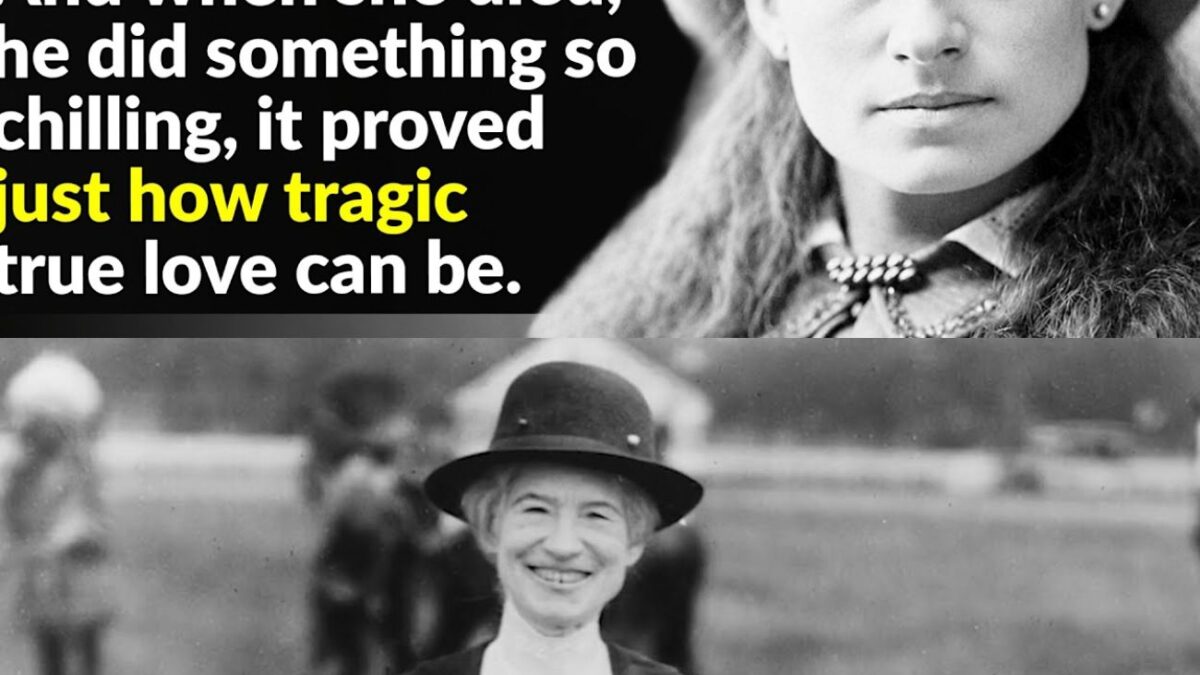
The sun rose over the untamed plains of the American frontier, casting long, sharp shadows across a land defined by lawlessness and grit. While countless gunslingers carved their names into history through blood and violence, one young girl would take the iron barrel of a rifle and turn it into high art. In an era when women were expected to walk softly and remain unseen, she dared to stand tall, steady her breath, and outshoot every man who dared cross her path.
Her story is not simply a chronicle of bullets and brass targets, but an epic saga of raw survival, indomitable spirit, and an enduring romance that defied the odds of the dusty show rings. Phoebe Ann Mosey entered the world on August 13, 1860, nestled in a humble, hand-hewn log cabin in Darke County, Ohio. She was the sixth of nine children born to Jacob and Susan Mosey, devout Quakers who lived by the austere tenets of peace, quiet toil, and profound pacifism.
To her deeply religious parents, weapons were instruments of discord, objects that had no place within the quiet rhythm of their modest farmhouse. Yet the soil of western Ohio was unforgiving, and the bitter winters of the northern border tested even the most pious souls. In the heart of her childhood, fate struck its first brutal blow when a furious winter blizzard swept across the woods, blinding traveler and beast alike with howling sheets of ice.
Her father, Jacob, was caught far from shelter in the teeth of that terrible tempest, fighting his way through drifts of freezing snow until his lungs surrendered to frostbite and hypothermia. Though he finally dragged himself across the cabin threshold, the chill had seeped straight into his bones, rapidly blooming into a fatal case of pneumonia. Within days, the patriarch was gone, leaving behind a bewildered widow, seven surviving children, and an empty pantry.
Young Phoebe was only five years old when the earth took her father, far too small to grasp why the strong hands that lifted her would never return. The loss tore through the family like wildfire, stripping away what little security they had possessed and plunging them into desperate, suffocating poverty. There was no money for schooling, no coin for books, and no room for the gentle luxuries that other children took for granted in the quiet towns of the East.
In that cabin, traditional gender roles evaporated beneath the immediate, gnawing threat of starvation, forcing every surviving sibling to contribute whatever sweat they could muster. Phoebe’s young hands, unsuited for the heavy timber axes, were drawn instinctively toward the tools of the hunt, seeking a way to bring sustenance to her grieving mother. She watched the woods with eyes like a hawk, noting the delicate twitch of ears among the briars and the silent pathways worn by wild game.
Years later, when world leaders and cheering crowds asked about the origin of her unnatural gift, she would smile and recount the crisp morning that set her destiny in motion. She was only eight years old, peering through the frosted windowpane, when she noticed an agile squirrel dart across the family’s front clearing. The creature paused for a fleeting breath upon the top rail of a wooden fence, perfectly silhouetted against the morning sky, oblivious to the child watching from the shadows.
Reaching for her late father’s heavy, front-loading rifle—a weapon almost as tall as she was—she dragged it to the porch, rested the barrel upon the rail, and steadied her trembling arms. The iron hammer fell with a deafening crack, releasing a cloud of sulfurous white smoke that rolled across the dew-covered grass. When her mother rushed out in terror, she found the squirrel lying perfectly still, the lead ball having passed cleanly through its head from temple to temple, leaving the edible meat entirely unmarred.
It was an impossible shot for an untrained child, yet for Phoebe, pointing the barrel felt as natural as drawing breath into her small chest. Before long, she was setting crude box traps and roaming the thickets, bringing down quail, pheasants, and rabbits with astonishing, unblemished accuracy. But even with her hunting supplementing their table, the mounting debts proved far too heavy for Susan Mosey, whose weathered hands could no longer stave off the creditors.
Desperate to keep her children from succumbing to outright destitution, Susan made the agonizing decision to place Phoebe and her sister Sarah Ellen into the care of the Darke County Infirmary. The poor farm was a cold, institutional brick monolith, where orphans, the destitute, and the elderly were gathered under the strict supervision of the local authorities. There, the young girl learned practical chores, mastering the sewing needle with the same delicate precision that she had once applied to cleaning wild fowl.
Though the infirmary provided warmth and food, Phoebe longed for the freedom of the tall timber, feeling like a caged songbird among the white-washed dormitory walls. Relief appeared to arrive when a local farming family visited the facility seeking an energetic young girl to assist with household chores and nurse their newborn infant. In exchange for her domestic labor, they promised her formal schooling, a warm bed, decent food, and a weekly wage of fifty hard-earned cents.
To a destitute girl of ten years old, the proposal sounded like an answered prayer, an open door toward education, independence, and eventual reunion with her kin. But the reality that awaited her behind the whitewashed fence of that rural farmhouse was a nightmare of unrelenting cruelty, deceit, and malice. The couple—whom she would refuse to name in later years, referring to them only as “the wolves”—had no intention of providing schooling or paying wages.
Instead, they transformed her into an unpaid drudge, heaping cruel labor upon her shoulders from the first gray light of dawn until the dead of night. Whenever she faltered from pure exhaustion or failed to soothe the crying infant, their punishment was vicious, inventive, and completely devoid of human mercy. On one bitter winter morning, after she inadvertently dozed off over the mending, the mistress locked her outside in the snowdrifts, barefoot and trembling, until she nearly froze solid.
For two unending years, Phoebe endured the lash of their tongues and the cold stones of their cellar, swallowing her tears while plotting her survival. She knew within her bones that she was made for something greater than the cruel whim of tyrants, holding tightly to the quiet pride her father had instilled. Finally, summoning every ounce of courage she possessed, she gathered her threadbare rags, slipped out of the farmhouse under the cover of darkness, and ran into the night.
She fled along the muddy lanes until she reached the welcoming doorstep of a kind-hearted farming couple known as the Edingtons, who took in the shivering runaway without hesitation. With them, she found the warmth of a real hearth, clean clothes, and gentle words that began to mend the psychological bruises inflicted by her former captors. Yet, as peaceful as life with the Edingtons was, she never forgot the mother and siblings who were still toiling to keep the family farm from foreclosure.
At the age of fifteen, with her chin held high and her resolve tempered like spring steel, Phoebe returned to her mother’s home in Darke County. She was no longer a frightened child, but a capable, fiercely self-reliant young woman with an extraordinary mastery over any firearm she touched. Taking up her rifle once more, she ventured into the dense Ohio woods, determined to turn her marksmanship into a legitimate enterprise that would save her family.
She walked the timberland daily, harvesting partridge, quail, and woodcock with headshots so clean that local buyers clamored for her premium, unblemished game. She arranged to sell the meat to Charles Katzenberger, a grocer in Greenville, who in turn shipped the pristine game to prestigious hotels and restaurants across Cincinnati. Her earnings accumulated rapidly, coin by coin, until the miraculous day arrived when she handed her mother enough cash to burn the mortgage papers to ashes.
With the homestead secure, the fifteen-year-old found herself with the rare freedom to look beyond the edge of the woods and into the wide world. In the autumn of 1875, word traveled through the sporting houses and hotel parlors that a traveling marksman had arrived in the bustling city of Cincinnati. Frank E. Butler, a dashing, thirty-two-year-old Irish-born sharpshooter who toured the country with a successful stage act, was offering a grand wager.
Butler had laid down a hundred-dollar bet—a small fortune in those days—proclaiming that he could defeat any fancy shooter the Ohio countryside could muster. Jack Frost, a local hotel proprietor who regularly purchased Phoebe’s game, smiled when he heard the boast and immediately arranged a private match on the outskirts of town. Butler arrived at the shooting grounds expecting to face a seasoned frontiersman, a hardened hunter, or a grizzled veteran of the recent Civil War.
Instead, he stood in utter disbelief as the carriage door opened to reveal a petite, dark-haired girl in a homemade dress, standing just under five feet tall. Butler was amused, believing the locals were playing a humorous prank, but he politely tipped his hat and prepared to dispatch his diminutive opponent. The terms of the match were rigorous: each contestant would take twenty-five shots at live, fast-flying pigeons released unexpectedly from spring traps set along the turf.
The crowd gathered around the field, whispers turning to stunned silence as the young girl raised her heavy shotgun with fluid, practiced elegance. Butler stepped up first, his movements polished and effortless as he pulverized bird after bird, showing the formidable skill that had earned him fame. But every time Frank scored a hit, Phoebe stepped to the line and matched him shot for shot, her trigger pull instantaneous and deadly accurate.
By the twenty-fourth round, tension hung over the field like a thunderhead, both competitors having hit every single target with mechanical, unwavering precision. Stepping forward for his twenty-fifth shot, Butler felt the subtle sting of pressure, flinched just a fraction of an inch, and watched his target escape into the horizon. Phoebe stepped up, calmly called for her trap, brought the stock to her shoulder, and shattered the final target before it had flown ten yards.
The crowd erupted in cheers as the hundred-dollar prize was awarded to the teenage girl, but Frank Butler did not harbor an ounce of resentment. Instead of nursing a wounded male ego, he was utterly captivated by the grace, modesty, and sheer technical brilliance displayed by his youthful opponent. He asked her out for an evening walk, visited her family, and wrote her letters filled with genuine admiration, courting her with respectful and gentle patience.
Within a year, despite their thirteen-year age difference, the seasoned showman and the backwoods prodigy were married, beginning a partnership of rare devotion. For the first few years of their union, Phoebe remained behind the scenes, managing their domestic affairs while Frank continued touring with his shooting partner. But the stage was calling to her, and the siren song of adventure whispered that a quiet life in Cincinnati would never satisfy her blazing potential.
When Butler’s stage partner fell ill prior to a performance in a smoky theater, Frank asked his young wife to step onto the boards and assist him. Dressed in modest buckskins, she handled the weapons with such effortless charm and magnetic poise that the audience forgot all about Frank’s shooting entirely. Seeing the raw star quality in his wife, Frank made a decision virtually unheard of for men in the Victorian era: he retired his own solo act.
He happily stepped into the shadows, becoming her manager, rifle loader, publicist, and fiercest champion, dedicating his life to making her the brightest star in the sky. To mark her transformation from an impoverished Ohio farm girl into a professional entertainer, she needed a stage name that rang with dignity, beauty, and strength. She discarded Phoebe Ann Mosey and chose the name Annie Oakley, a moniker that would soon echo through arenas from New York to London.
Some believed she took the surname from the Oakley neighborhood of Cincinnati where the young couple had established their first shared home together. Others whispered that she adopted it in honor of a compassionate gentleman named Oakley, who had paid her train fare when she was a destitute runaway. Whatever its true origins, the name suited her completely, radiating an aura of simple elegance and undeniable, sharpshooting brilliance that immediately drew the public eye.
She was five feet tall, weighing less than a hundred pounds, yet the moment she raised a firearm, she commanded the room with absolute, fearless authority. In 1884, during a tour through the Midwest, her performance caught the eye of a legendary figure who was touring with a rival theatrical exhibition. Sitting Bull, the great Hunkpapa Lakota leader who had triumphed over Custer at the Little Bighorn, was seated in the front row of a crowded auditorium.
He had expected the white woman’s act to be an empty farce, but as he watched her shoot coins from midair, his stoic expression gave way to awe. Convinced that the tiny woman had been touched by the Great Spirit and gifted with supernatural sight, he sent sixty-five dollars backstage, requesting a single photograph with her. Annie, touched by the legendary warrior’s reverence, returned his money and visited his quarters, where the two formed an instantaneous, deeply affectionate bond.
Sitting Bull formally adopted her as his daughter according to Lakota traditions, giving her the sacred name Watanya Cicilla, meaning “Little Sure Shot.” That name would become her indelible trademark, a title that captured both her delicate stature and her peerless, almost magical accuracy with a rifle. By 1885, Annie and Frank were ready to step onto the grandest stage the world had to offer, joining Buffalo Bill Cody’s Wild West Show.
Cody’s traveling extravaganza was not a mere circus; it was a thunderous, living epic of the American frontier, featuring hundreds of horses, Native Americans, and scouts. Annie Oakley brought something unique to the dusty arena: a feminine grace that elevated target shooting from a saloon parlor trick to high art. She entered the arena skipping and smiling, blowing kisses to the adoring crowds before executing feats of marksmanship that defied the laws of human vision.
Standing thirty paces back, she would shoot the glowing ash off a lit cigar clenched firmly between her husband Frank’s unwavering lips. She could split a playing card held edge-on toward her, pierce playing cards tossed into the air multiple times, and shatter glass balls thrown in rapid succession. Spectators were spellbound not only by the bullets she fired, but by her radiant charisma, her infectious delight, and the theatrical jumps she made after a clean hit.
Yet her meteoric rise within Cody’s company was not without bitter friction, especially when another gifted female shooter joined the troupe in 1886. Lillian Smith was a brash, fifteen-year-old Californian prodigy whose flashy style, boastful temperament, and coarse language grated severely against Annie’s polite Quaker sensibilities. Lillian was younger, wore flamboyant costumes, and openly flirted with the male riders, quickly attracting sensational headlines in the rough-and-tumble press of the era.
Annie, who was deeply protective of her hard-won professional standing, felt an uncharacteristic spike of insecurity at the sudden arrival of this teenage rival. Sensing that journalists were drawn to the novelty of Lillian’s extreme youth, the twenty-six-year-old Annie began lying about her age, claiming she was barely twenty. The backstage atmosphere soured into a cold war of icy glares and bitter rivalries, turning rehearsals into tense battlegrounds between the two sharpshooting queens.
Frank remained steadfast by Annie’s side, urging her to focus on her superior discipline and reminding her that true greatness outlasts cheap, passing sensationalism. Still, the mounting tension and Cody’s apparent favoritism toward Lillian pushed Annie past her breaking point during their grand 1887 tour of Great Britain. Refusing to share top billing with a rival she viewed as vulgar, Annie made the bold and painful decision to tender her resignation to Cody.
Leaving the Wild West Show, she and Frank toured Europe independently, relying entirely on their own talent, resources, and reputation to pack theaters across the Continent. The decision proved to be an unexpected blessing, giving Annie the autonomy to establish her name as a global phenomenon unattached to Cody’s massive traveling circus. Audiences in Europe were utterly captivated by this tiny American woman who handled weapons with the ease of an angel and the precision of a surgeon.
She performed before crowned heads of state, thrilling King Umberto I of Italy and receiving a personal audience with Britain’s Queen Victoria. The aged British monarch was so enchanted by Annie’s gentle demeanor and extraordinary skills that she reportedly told her, “You are a very, very clever girl.” Meanwhile, back in the Wild West camp, Lillian Smith’s popularity was waning, her abrasive personality alienating both the public and Cody’s crew.
By the time the great 1889 Paris Exposition rolled around, Smith had parted ways with Cody, leaving the master showman desperate to reclaim his primary attraction. Buffalo Bill sent Frank Butler an apologetic telegram, offering Annie an unprecedented contract that placed her at the very top of the promotional posters. She returned to the company in triumph, her stature unquestioned, emerging as the highest-earning performer in the entire troupe, second only to Cody himself.
During their glittering German residency, Annie found herself at the center of an incident that would later echo with tragic, historic irony. The newly crowned Kaiser Wilhelm II, fascinated by American marksmanship, attended her performance and expressed a desire to witness her most perilous stunt firsthand. Striding into the arena, the arrogant young ruler produced a cigarette, placed it between his lips, and commanded the American woman to shoot off the tip.
Frank Butler’s heart nearly stopped in his chest, knowing that a single twitch, a sudden gust of wind, or a defective shell could spark a continental war. Annie, however, remained serene, raised her rifle, sighted the smoldering ash thirty paces away, and pulled the trigger with cold, mechanical perfection. The bullet clipped the ash cleanly from the paper tube without grazing the Kaiser’s lip, prompting a roar of approval from the astonished Prussian nobility.
Decades later, as the catastrophic bloodletting of World War I tore through Europe, Annie would look back on that afternoon with a sharp, mordant wit. She joked with reporters that if she had been cursed with bad aim on that fateful day in Berlin, she might have averted the entire global conflict. Frank Butler, ever the showman, even penned a cheeky letter to the Kaiser during the height of the war, inviting him to attempt the cigarette trick once again.
Beyond the smoke of the arenas and the applause of royal dignitaries, Annie Oakley carried a profound sense of social mission that shaped her entire adulthood. She was fiercely passionate about the empowerment of women, firmly rejecting the Victorian notion that her sex was inherently delicate, helpless, or fragile. In an era when women were denied the right to vote, she argued passionately that they had every natural right and ability to master firearms for self-protection.
She spent thousands of hours offering free, comprehensive shooting instruction to women across America, patiently teaching them firearm safety, cleaning, and tactical accuracy. By the end of her life, she had personally trained more than fifteen thousand women, urging them to walk the streets with confidence and heads held high. “I would like to see every woman handle guns as naturally as they handle babies,” she declared, viewing the rifle as the ultimate equalizer against violence.
Her patriotism was as fierce as her belief in feminine capability, leading her to make a historic offer to the American government in the spring of 1898. With the Spanish-American War looming on the horizon, she picked up her pen and addressed a direct, impassioned letter to President William McKinley. She formally offered to raise, equip, and lead a company of fifty elite female sharpshooters to fight on the front lines in the jungles of Cuba.
She assured the Commander-in-Chief that her women would provide their own arms and ammunition, ready to fight with the same lethal courage as any infantryman. Though the conservative War Department quietly ignored the radical proposal, the public imagination was captured by the spirit of the Wild West performers who volunteered. President Theodore Roosevelt would later adopt the name of Cody’s touring troupe for his legendary volunteer cavalry unit, forever christening them the “Rough Riders.”
As the nineteenth century gave way to the twentieth, Annie stood at the very cutting edge of culture, embracing every modern development that emerged. When Thomas Edison invented the kinetoscope, ushering in the birth of modern cinema, he invited Annie Oakley to his famous Black Maria studio in New Jersey. In 1894, she became the subject of one of the world’s very first commercial motion pictures, forever immortalizing her lightning-fast hands on celluloid.
Yet, despite her immense wealth, international fame, and cultural influence, she never forgot the crushing poverty of her childhood or the cruelty of the wolves. She gave away vast portions of her income, quietly paying off debts for struggling farmers, financing orphanages, and putting young girls through college out of her pocket. Frank managed their finances with meticulous care, but Annie’s compassionate heart ensured that their substantial earnings flowed continuously to those who had nowhere else to turn.
For nearly two decades, Annie’s life had been spent on the rails, crossing the American continent and European nations in private wooden parlor cars. Her physical safety seemed charmed, surviving hundreds of dangerous trick shots without a scratch, until a freezing autumn morning in the mountains of North Carolina. On October 29, 1901, the Wild West Show’s private train collided head-on with a freight train near Lexington, splintering the passenger cars into kindling.
Annie was thrown violently across her compartment as the heavy wooden framing buckled and collapsed under the crushing weight of the derailed locomotives. When rescuers finally pulled her limp, battered body from the wreckage, her spine was severely damaged, and her legs were completely paralyzed. Doctors gravely informed Frank Butler that his wife would likely spend the rest of her days confined to a wheelchair, her shooting career permanently finished.
They did not understand the steel that ran through the veins of the little girl who had survived the frozen snowdrifts of Darke County. Refusing to accept a life of immobility, Annie underwent five excruciating surgeries, followed by months of agonizing physical therapy in a quiet sanitarium. Frank sat by her bedside day and night, rubbing her cold limbs, reading her letters, and whispering words of encouragement into her ear until feeling returned.
Within two years, through pure, stubborn willpower, she shocked the medical establishment by standing up, walking without assistance, and reclaiming her heavy rifles. But the trauma had taken an undeniable toll on her body, leaving her with chronic back pain that made the daily rigors of the arena impossible. Recognizing her physical limitations, she made the agonizing decision to bid a permanent farewell to Buffalo Bill’s Wild West Show in the winter of 1902.
Yet the stage remained in her blood, leading her to seek alternative creative outlets that would allow her to perform without shattering her spine. She turned her sights toward dramatic acting, starring in a smash-hit touring theatrical production titled “The Western Girl,” written specifically for her. Audiences flocked to theaters across the country to see their beloved Annie play a heroic frontier heroine who saves the day with a trusty Winchester rifle.
Just as she was establishing herself as a respected stage actress, a new and insidious threat emerged from the dark corridors of yellow journalism. On August 11, 1904, William Randolph Hearst’s sensationalist newspapers printed a scandalous, front-page headline that shocked readers across the nation. The article falsely claimed that Annie Oakley had been arrested in a Chicago police precinct, describing her as a destitute, cocaine-addled thief who had stolen pants.
The fabricated story claimed the famous shooter had fallen into degradation, her beauty ruined by narcotics, reduced to begging officers for a quick hit of powder. In reality, the woman arrested in Chicago was a burlesque dancer named Maude Fontanella, who had given Annie’s name to the police to attract sympathy. Hearst’s sensationalist editors rushed the scandalous wire copy into print without spending a single minute verifying the whereabouts of the real, wholesome American icon.
The toxic lie spread like wildfire across the country, picked up by hundreds of regional newspapers that accepted Hearst’s syndication as unvarnished truth. To a woman whose entire career was built upon impeccable moral integrity, Victorian modesty, and pristine public conduct, the slander was devastating. While many smaller newspapers immediately printed retractions and issued humble apologies upon realizing their horrific mistake, Hearst refused to back down or offer compensation.
Instead, the arrogant press baron dispatched private detectives to Darke County, instructing them to dig up any childhood dirt to justify his smear campaign. The detectives returned empty-handed, finding only neighbors who praised the generous girl who had hunted game to pay off her widowed mother’s debt. Enraged by Hearst’s utter lack of remorse, Annie decided to unleash her legendary accuracy within the wood-paneled halls of the American legal system.
“Someone has got to stop this,” she declared, stepping into courtrooms across the nation to defend the reputation she had spent a lifetime building. Over the next six years, she filed fifty-five separate libel lawsuits against newspapers across the country, traveling thousands of miles by coach and rail. She faced teams of ruthless, high-priced corporate defense attorneys who tried to break her spirit through grueling, invasive cross-examinations.
Annie sat upon the witness stand with the same ice-cold composure she had shown before the Kaiser, answering every intrusive question with razor-sharp truth. When the dust settled on the historic legal battle, she had won fifty-four of the fifty-five lawsuits, securing judgments and settlements from coast to coast. Though her legal expenses consumed nearly all the money she was awarded, she had achieved something far greater: she had completely vindicated her good name.
By the time the roaring twenties arrived, Annie and Frank had retired to a quiet, peaceful life, dividing their time between North Carolina and Ohio. Yet she could never truly lay down her firearms, continuing to visit local gun clubs and delighting onlookers with her enduring, uncanny skill. Even in her sixties, her eyesight remained miraculously sharp, allowing her to break records that had stood unbroken by younger, stronger men for decades.
In 1922, at sixty-two years of age, she stepped up to the line at a registered trap shooting contest in Pinehurst, North Carolina. Showing that her supernatural gift had not faded with age, she shattered one hundred clay targets in a row from sixteen yards away. Inspired by her enduring vitality, she began planning a grand public comeback, agreeing to star in a new motion picture about the disappearing frontier.
Cruel fate, however, was not finished testing the resilience of the legendary woman who had overcome so many catastrophic trials throughout her life. In the winter of 1922, while traveling with Frank to a sporting event, their automobile was involved in a horrific rollover crash near Daytona, Florida. Annie suffered severe injuries to her right hip and leg, leaving her bedridden for months and requiring a heavy steel brace to walk.
Once again, she defied every grim medical prediction, spending an entire year pushing through agonizing physical therapy until she was back on her feet. By 1924, she was walking without a cane, visiting shooting ranges, and demonstrating her signature trick shots for wounded veterans and admiring local school children. But the cumulative physical trauma of two train wrecks, a devastating car crash, and decades of relentless toil had finally drained her vitality.
In 1925, her health began a rapid, irreversible decline as she developed pernicious anemia, an incurable, blood-wasting condition in the era before modern therapies. Her strength withered, the color drained from her cheeks, and the heavy rifles that had once felt weightless in her hands became too burdensome. Frank, who was also declining in health, moved his beloved wife back to Greenville, Ohio, desperate to surround her with the peace of home.
On November 3, 1926, surrounded by the quiet fields of her beloved Darke County, Phoebe Ann Mosey peacefully drew her final, shallow breath. She was sixty-six years old, leaving behind a world that mourned the loss of the greatest female icon the American frontier had ever produced. But the tragedy of her passing did not end when her eyes closed, for the man who had loved her for fifty years remained.
Frank Butler was utterly shattered by the death of the woman who had been his partner, his professional compass, and the center of his universe. Ever since that fateful shooting match in 1875, his life had been entirely defined by his unwavering devotion to protecting and serving her genius. Without Annie’s bright laughter and warm hand to hold, the world became a bleak, hollow, and intolerable place for the grieving eighty-four-year-old widower.
Frank simply refused to go on living in a world that no longer contained the bright light of his beloved Little Sure Shot. He took to his bed, stopped taking nourishment, refused water, and turned his face to the wall, deliberately allowing his broken heart to stop. Exactly eighteen days after Annie’s passing, on November 21, 1926, Frank Butler closed his eyes and followed his wife into the quiet dark.
Their enduring romance had begun over the barrel of a shotgun, weathered half a century of global storms, and ended in a display of tragic devotion. Following their final wishes, Annie was cremated, her ashes placed into a silver presentation urn she had won at a shooting competition in Europe. When Frank was laid to rest, the silver urn containing Annie’s ashes was placed gently into his coffin, forever uniting their dust in the Ohio earth.
When executors opened Annie’s will and reviewed her private bank ledgers, they discovered the final, astonishing truth about the woman known to millions. Despite having earned vast fortunes throughout her storied career, she died with almost no personal savings or liquid capital to her name. Her private autobiography and receipts revealed that she had given every single surplus penny to widows, struggling families, orphanages, and progressive women’s charities.
Today, her legacy lives on at the Garst Museum and the National Annie Oakley Center in Greenville, Ohio, just miles from her birthplace. Visitors from across the globe stand in reverent silence before her ivory-inlaid firearms, her embroidered buckskin costumes, and the countless medals bestowed by monarchs. They do not merely see the relics of a legendary performer, but the enduring spirit of a girl who refused to be broken by cruelty.
Phoebe Ann Mosey rose from the cold, frozen snowdrifts of Darke County to conquer the stages of the world through skill, dignity, and absolute courage. She proved to a skeptical, male-dominated world that a woman could hold a weapon with authority without sacrificing an ounce of her compassion and grace. Her life remains a shining testament to the power of self-reliance, the enduring strength of the human spirit, and the eternal beauty of true love.

