The Heartbreaking Aftermath Of Princess Diana’s Death
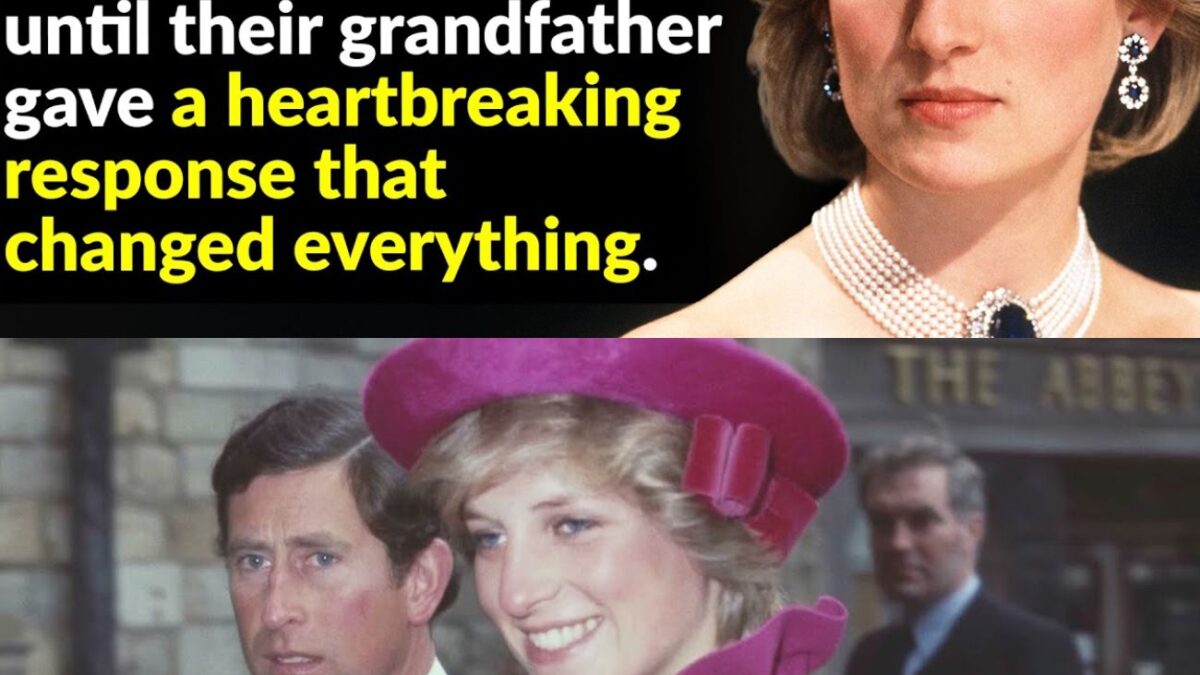
The world watched in stunned, breathless silence on a gray September morning in 1997 as two young boys prepared to face an impossible ordeal. Prince William, aged fifteen, and Prince Harry, barely twelve years old, stood paralyzed by grief and fear outside the walls of the palace, dreading the unbearable prospect of walking behind their mother’s coffin. The raw agony of their sudden loss was compounded by the terrifying gaze of millions of strangers lining the streets and hundreds of millions watching across televisions worldwide.
Seeing the boys hesitate, their grandfather stepped quietly out of the shadows of royal formality to offer a gesture of pure human empathy. Prince Philip gently looked at the trembling eldest son, William, and offered a poignant proposal that dissolved the boy’s crippling hesitation: “If you don’t walk, I think you’ll regret it later. If I walk, will you walk with me?” That simple promise of enduring solidarity gave the young princes the strength to endure an agonizing walk that came to symbolize the ultimate, tragic cost of Diana’s royal journey.
Diana, Princess of Wales, had captivated the entire globe from the very moment her wide blue eyes first peered from beneath a veil at St. Paul’s Cathedral. Yet beneath the glittering crowns, the designer dresses, and the adoration of countless millions lay an existence defined by bitter solitude, cold emotional cruelty, and systemic betrayal. The world worshipped an untouchable fairy-tale figure, but behind palace gates, the woman named Diana Frances Spencer fought an unrelenting battle for love and survival that began long before she ever met Charles.
The seeds of Diana’s profound sorrow were planted long before her birth in the icy, aristocratic nursery of Park House on the Queen’s Sandringham estate in Norfolk. Her parents, John Spencer, Viscount Althorp, and Frances Roche, were high-ranking nobles burdened by the crushing social duty to produce an unbroken line of male heirs. In 1960, their third child, a son named John, died merely hours after taking his first breath, leaving both parents deeply traumatized, bitterly resentful, and emotionally devastated.
When Diana was born a year and a half later on July 1, 1961, her arrival was met not with unbridled joy, but with an awkward, disappointed silence because she was yet another girl. She entered a household deeply wounded by bereavement, carrying the impossible psychological weight of being an inadequate substitute for a lost heir who could never be replaced. Although Frances eventually gave birth to a healthy son, Charles, three years later, the arrival of the long-desired heir did nothing to heal the deep, bitter fractures within the Spencer marriage.
The great Spencer house echoed with constant, savage arguments, slamming doors, and a pervasive chill that terrified the young children who lived in perpetual anxiety. Diana’s older sisters, Sarah and Jane, escaped the toxic domestic battleground by being sent away to boarding school, leaving young Diana isolated in an enormous home that felt increasingly hostile. Feeling an instinctual duty to nurture, Diana threw her small arms around her little brother Charles, striving with every fiber of her being to shield him from the violent domestic storms.
Behind the majestic facade of aristocratic refinement, Diana later revealed that her childhood was stained by terrifying moments of domestic fury, screaming matches, and even physical violence between her parents. She remembered hiding behind a door while her father struck her mother, an indelible memory of terror that permanently shattered her youthful sense of physical and emotional safety. Publicly, the Spencer family maintained an immaculate facade of titled privilege, but the reality was a decaying foundation of mutual contempt, loneliness, and impending emotional disaster.
When the marriage finally shattered in 1967, it triggered a public scandal of shocking proportions that permanently rearranged the landscape of seven-year-old Diana’s fragile childhood. Her mother packed suitcases and left Park House for another man, a wealthy wallpaper heir named Peter Shand Kydd, leaving behind children who could not grasp where she had gone. What followed was a brutal, protracted legal war for the custody of the children that ripped away whatever remaining scraps of stability the young Spencer siblings still possessed.
In a dramatic court maneuver that stunned English high society, Diana’s maternal grandmother, Ruth Roche, Lady Fermoy, took the witness stand to testify against her own daughter Frances. Lady Fermoy, a devoted confidante and lady-in-waiting to the Queen Mother, prioritized aristocratic propriety and dynastic loyalty over maternal instinct, successfully helping John Spencer win primary custody. Frances was cast out as an unfit society matron, permitted to see her beloved children only on court-approved weekend visitations that ended in absolute heartbreak.
Every Saturday night, little Diana would sit on the stairs of her mother’s rented London flat, watching through tear-blurred eyes as Frances sobbed uncontrollably into her hands. The heartbreak of watching her mother weep, knowing that a chauffeur-driven car was coming to drag her back to Norfolk, broke Diana’s spirit and bred an intense dread of abandonment. She absorbed the terrible lesson that adults who were meant to protect you inevitably vanished, leaving you alone to endure the cold, echoing spaces of giant, loveless homes.
This relentless emotional trauma severely disrupted Diana’s development, stalling her academic progress precisely when children usually gain intellectual confidence and self-esteem. While Sarah and Jane navigated their studies with ease, Diana found the academic pressure at West Heath Girls’ School in Kent completely suffocating and impossible to manage. Her mind was perpetually adrift, searching for comfort, validation, and a sense of belonging that textbooks and examinations could never provide to an emotionally wounded child.
Though she excelled at ballet, possessed a natural musicality at the piano, and moved through society with spontaneous warmth, Diana considered herself academically inadequate. She failed all her O-level examinations twice, lacking the disciplined focus required to pass because her mind was preoccupied with romantic fantasies of being rescued by a loving partner. To make matters worse, she shared an awkward habit with her sisters: developing intense, secret crushes on the glamorous, older boyfriends her sisters brought home from university.
In 1976, Diana’s domestic agony deepened when her father secretly married Raine McCorquodale, Countess of Dartmouth, the formidable, impeccably coiffed daughter of romance novelist Barbara Cartland. The Spencer children despised this sudden intrusion, violently rejecting the woman who dared to redecorate their historic family home, Althorp, and manage their ailing father. They spitefully christened their stepmother “Acid Raine,” openly mocking her theatrical grandiosity, high hair, and strict rules, waging a protracted war of petty domestic mutinies.
The rift turned into bitter hatred when John Spencer suffered a devastating, near-fatal massive brain hemorrhage, collapsing on the historic grounds of Althorp Estate. Raine promptly seized total control over the household, barricading the hospital room and strictly barring Diana and her siblings from visiting their comatose father’s bedside. Diana spent agonizing weeks pacing outside, convinced her father would perish without her saying goodbye, an experience that deepened her mistrust of authority and authority figures.
Having completely failed her examinations and exhausted any appetite for formal education, Diana dropped out of school at sixteen, eager to build a life on her own terms. By the time she turned eighteen, she had inherited a modest trust fund from her American great-grandmother and purchased an unpretentious, comfortable flat at 60 Coleherne Court in Kensington. She filled the apartment with three spirited female roommates, who decorated the walls with posters and shared cooking duties, clothes, and late-night adolescent secrets.
For the first time in her turbulent life, Diana discovered a gentle, blissful sense of peace, independence, and normal, everyday joy. She worked humble, unglamorous jobs: scrubbing floors as a cleaning lady, dusting furniture, babysitting neighborhood children, and working mornings as an assistant at the Young England Kindergarten in Pimlico. She loved children with an instinctive, unguarded tenderness, finding their simple innocence a miraculous, soothing antidote to the duplicity and cruelty of aristocratic adulthood.
Yet this era of simple, sunny anonymity was cut short when destiny, dressed in hunting tweeds, quietly entered Diana’s quiet life. Around late 1977, Diana’s older sister Sarah had briefly dated Charles, Prince of Wales, the world’s most eligible, sought-after royal bachelor. When the prince visited Althorp for a pheasant shoot, sixteen-year-old Diana caught his eye as a tall, awkward, yet undeniably radiant girl bustling through a plowed Norfolk field.
Diana later candidly admitted that while she considered Charles a lonely, melancholic figure who looked thoroughly beaten down by his royal obligations, she sensed his immediate curiosity. However, because she was merely a schoolgirl in bobby socks, nothing materialized between them for several years, though Sarah’s brief romance with the prince sputtered out after careless press interviews. Diana tucked the memory of the sad prince away, completely unaware that a dynastic net was already tightening around her youthful existence.
The fateful spark occurred in July 1980, right around Diana’s nineteenth birthday, during a quiet country weekend spent at the Sussex home of mutual friends, the de Pass family. Diana found herself seated next to the thirty-one-year-old heir to the throne on a bale of hay during a casual outdoor barbecue. With intuitive sympathy, she gently brought up the recent assassination of his beloved great-uncle and mentor, Lord Mountbatten, who had been killed by an IRA bomb in 1979.
“You looked so sad and broken at the funeral,” Diana softly told him, her eyes shining with genuine, maternal sympathy. “You looked so lonely, Charles; you need someone to look after you.” Her tender, unguarded observation struck a profound, vulnerable chord inside the emotionally isolated prince, who was desperate for solace, comfort, and affirmation. Overcome with sudden emotion, Charles leaned in, embraced her, and insisted with uncharacteristic urgency that she cut her weekend short and return with him to London.
Although startled by his sudden romantic enthusiasm, the naive nineteen-year-old was undeniably flattered, intoxicatingly swept up by the grand, dizzying attention of the future King of England. Invitations quickly followed: an invitation to Cowes aboard the royal yacht Britannia, followed by an agonizingly formal, intimidating weekend at Balmoral Castle in the Scottish Highlands. Navigating Balmoral was a treacherous social minefield for any outsider, requiring guests to withstand freezing winds, grueling outdoor sports, and the critical eyes of the Queen.
Diana excelled during that Scottish trial, effortlessly winning the approval of the royal family with her country background, deference, and outwardly obedient, sweet demeanor. Yet, during those early encounters, Diana had no real romantic experience and possessed zero understanding of healthy romantic relationships, having never had an actual boyfriend. She naively leaned for guidance on Charles’s close confidante, Camilla Parker Bowles, an older society woman who offered helpful advice on managing Charles’s peculiarities.
Diana genuinely believed Camilla was simply a kind, experienced friend wishing Charles well, failing to grasp the dark, devastating reality that Camilla was the prince’s former mistress. In truth, Camilla was the enduring, passionate love of Charles’s life, an emotional partner deemed unmarriageable by royal courtiers due to her colorful romantic past. To solve this dynastic dilemma, the royal establishment searched for an aristocratic virgin with no past who could safely bear heirs while looking the other part.
In February 1981, after meeting Diana on barely thirteen brief, formal occasions, Prince Charles invited her to Windsor Castle and asked for her hand in marriage. The proposal was completely devoid of spontaneous passion, romantic intimacy, or private tenderness; it felt like a cold, calculated transaction disguised as an imperial duty. Looking into his distant eyes, Diana felt a profound shiver of disbelief, realizing that she was staring at a man who wanted a consort, not an equal partner.
Overwhelmed by the enormous spectacle, terrified of disappointing the nation, and seduced by the romantic fairy tale, Diana said yes, sealing her destiny to the crown. Yet even in that dizzying moment of young triumph, a dark, prophetic whisper echoed through her subconscious, telling her with terrifying clarity that she would never become queen. The formal engagement announcement followed, culminating in that infamous, cringing television interview where an interviewer asked the young, smiling couple if they were truly in love.
Diana responded immediately with unhesitating sincerity, “Of course,” but Charles cast a chilling shadow over the moment by famously and coldly adding, “Whatever ‘in love’ means.” The cynical quip struck Diana like a physical blow, leaving her deeply bewildered and quietly humiliated on international television, an early warning of the coming emotional winter. Shortly after the announcement, she traveled to Australia for a quiet holiday, waiting for Charles to call with words of comfort, but the telephone never rang.
When she returned to London, the ferocious, predatory reality of modern tabloid media descended upon her like a pack of starved, relentless wolves. Her quiet apartment on Coleherne Court was besieged by hundreds of photographers, blocking the entrance, shoving camera lenses into her face, and chasing her small Mini Metro down roads. Her flatmates could no longer receive calls from their families because reporters flooded the phone lines twenty-four hours a day, offering bribes for personal secrets and private diary entries.
Diana pleaded with the palace for protection, hoping the institution would shield a nineteen-year-old girl who was suddenly facing a terrifying global circus entirely alone. The royal household’s chilling response was that she was still a private citizen, essentially abandoning her to navigate the vicious media gauntlet without security or guidance. She devised dangerous, desperate tactics to survive, deliberately speeding through amber lights at the last second, hoping red lights would trap the screaming motorcycle paparazzi trailing behind her car.
Once the engagement was formalized, Diana surrendered her modest apartment, quit her cherished job at the nursery school, and moved into the gilded, echoing fortress of Buckingham Palace. Instead of finding sanctuary, she found herself plunged into a terrifyingly cold, bureaucratic world of protocol, liveried servants, and deafening silence where nobody smiled. She was left entirely to her own devices in vast, shadowy rooms, surrounded by ancient oil paintings of ancestors whose stern eyes judged her inadequacy.
Proximity to Charles only deepened her growing sense of horror as the invisible presence of Camilla Parker Bowles began materializing everywhere around her daily life. One afternoon, Diana walked into a private study and overheard Charles speaking on the telephone in low, intensely intimate tones, saying, “Whatever happens, I will always love you.” Soon after, she discovered a small package sitting on a royal desk, ripping it open to find a gold bracelet engraved with the initials “G” and “F.”
Those letters stood for “Gladys” and “Fred,” the secret, affectionate pet names Charles and Camilla had used for each other throughout their hidden, ongoing romantic history. When Diana confronted Charles, he dismissed her concerns with cold, exasperated disdain, treating her legitimate suspicions as childish, hysterical tantrums that bordered on embarrassing, unseemly madness. A month before the wedding, Diana stood on an airport tarmac watching Charles fly abroad on a royal tour, tears streaming down her face.
The press photographed her weeping, celebrating her display of loyalty, but Diana knew the truth: she was not crying for Charles, but for herself. She realized with crushing finality that Charles’s heart belonged entirely to another woman, and that she was powerless to dismantle an emotional bond forged years before. Desperate and terrified, Diana went to her older sisters, Sarah and Jane, confessing her dread and pleading for a way to break off the approaching royal wedding.
Her sisters listened to her terrified confessions, but their response was pragmatic, dismissive, and utterly devoid of comfort: “Bad luck, Duch, your face is on the tea towels.” They warned her that it was far too late to run, that millions of souvenir mugs had already been manufactured, and that she simply had to get on with it. Defeated, suffocated by duty, and possessing nowhere else to run, Diana resigned herself to her gilded fate, quietly surrendering her fragile soul to the altar.
On July 29, 1981, at St. Paul’s Cathedral, Lady Diana Spencer became the Princess of Wales before 3,500 congregation members and an estimated global audience of 750 million people. Her gown, a voluminous creation of ivory silk taffeta and antique lace adorned with ten thousand hand-sewn pearls, billowed out like an opulent cloud from the glass coach. To the ecstatic spectators lining the flag-draped streets of London, it was the crowning realization of an enchanting, real-life fairy tale made flesh.
Yet behind the veil, Diana walked down the aisle scanning the crowded pews, her eyes locking with icy dread directly onto the pale face of Camilla Parker Bowles. As the vows were spoken, human nervousness chipped away at the imperial perfection; Diana accidentally transposed Charles’s first two names, calling him Philip Charles Arthur George. Defiantly, they omitted the centuries-old promise of the bride to “obey” her husband, a modern gesture that signaled Diana’s refusal to be completely erased by ancient royal tradition.
For a brief, fleeting moment, surrounded by the glorious harmonies of the cathedral choir, Diana allowed herself to hope that genuine devotion might still be forged. That fragile illusion vanished completely the moment the couple embarked on their royal honeymoon aboard the royal yacht Britannia in the Mediterranean Sea. Instead of romance, Diana found an emotionally detached husband who brought stacks of heavy philosophical books by Carl Jung and spent his evenings reading in cold, silent solitude.
During that trip, two gold cufflinks bearing two interlaced “C”s slipped from Charles’s pocket, confirming to Diana that Camilla accompanied them in spirit, mind, and dynastic reality. The immense, crushing pressure of her public life, coupled with the profound emotional starvation within her marriage, triggered a violent resurgence of her mental illness. Bulimia nervosa, an agonizing cycle of binge eating followed by self-induced vomiting, tore through her frail, nineteen-year-old body like an uncontrollable internal fire.
Diana felt utterly unseen, an ornamental piece of royal porcelain purchased to produce heirs while her husband continued his intellectual, emotional life without her input. She later admitted that her obsession with Camilla consumed her waking thoughts and haunted her dreams; for three straight months, she dreamed of her rival every night. When she found out she was pregnant in October 1981, the joy was instantly swallowed by horrific morning sickness, constant vomiting, and severe, unchecked depression.
In January 1982, three months pregnant with her first child, Diana reached an absolute emotional breaking point during a volatile argument with an unresponsive Charles at Sandringham. Desperate to evoke a sliver of genuine human concern from her husband, Diana threw herself down a massive wooden staircase, landing in a battered heap. Queen Elizabeth rushed to the foot of the stairs in horror, trembling with panic, while Charles dismissed the desperate act and went out for a ride.
Miraculously, both mother and unborn child survived the impact uninjured, but the terrifying event revealed the dark depths of Diana’s emotional crisis. In June 1982, Prince William was born at St. Mary’s Hospital, bringing an explosion of pure, unconditional maternal love into Diana’s fractured, lonely existence. Holding her son in her arms, Diana finally found a source of genuine devotion that the royal palace, with all its treasures, could never bestow or take away.
Yet the arrival of William did nothing to heal the profound estrangement separating Diana from Charles, who was ill-equipped to handle her postpartum depression. A brief window of domestic warmth briefly opened in 1984 when Diana became pregnant again, a period when Charles seemed more attentive, tender, and hopeful. When Prince Harry arrived in September 1984, the fragile bridge of reconciliation collapsed instantly when Charles glanced at the newborn and carelessly remarked, “Oh God, it’s a boy, and he’s even got red hair.”
Charles had desperately desired a baby girl to complete his aristocratic picture, and his immediate emotional withdrawal after Harry’s birth was total, final, and devastatingly absolute. With their physical and emotional intimacy permanently severed, Charles retreated without shame back into the welcoming, familiar arms of Camilla, resuming their full-blown, passionate affair. Abandoned in a cold Kensington Palace, surrounded by guards and courtiers who monitored her movements, Diana felt entirely unmoored, unloved, and desperately trapped.
Starving for human connection, Diana eventually turned outside her broken marriage, embarking in 1986 on a long-term, passionate romance with Major James Hewitt. Hewitt, a dashing member of the Household Cavalry who served as her riding instructor, provided the attentive adoration, warmth, and validation she had been systematically denied. Their affair became an open secret among the royal protection officers, but even Hewitt’s devotion was a temporary bandage over the deep wounds of Diana’s life.
By 1989, Diana had grown tired of whispers, furtive glances, and living as the silent, obedient victim of a cruel, open royal humiliation. That year, an unexpected opportunity for confrontation presented itself when Diana received an invitation to the fortieth birthday party of Camilla’s sister, Annabel Elliot. Defying the advice of friends and the royal family who urged her to stay away, Diana boldly put on a striking dress and attended the party unannounced.
Finding Camilla and Charles chatting with another guest in a downstairs salon, Diana calmly walked in and requested a private moment with the woman who held her husband. Sitting face to face with Camilla, Diana looked her rival in the eyes and said with chilling, quiet dignity, “I know what’s going on between you and Charles.” Camilla looked back and defensively remarked that Diana had everything she could ever want, the adoration of the entire world, and two gorgeous, healthy sons.
Diana’s response was razor-sharp, striking at the very heart of the emotional betrayal: “I want my husband. Don’t treat me like an idiot.” Diana walked out of that room transformed; the crippling fear that had dominated her youth dissolved, replaced by a fierce, indomitable independence and inner strength. She resolved that if she was destined to be discarded within the royal family, she would build an untouchable empire of love within the hearts of ordinary people.
Diana threw herself into charitable work, transforming from an ornamental, silent royal patron into a passionate, hands-on humanitarian crusader who shattered societal taboos. When the world recoiled in hysterical terror from HIV and AIDS, Diana walked into London’s Middlesex Hospital in 1987 without gloves and shook a patient’s hand. She sat on the beds of dying young men, caressed their trembling faces, and held their hands, single-handedly eradicating the ignorant stigma surrounding the dreadful disease.
She visited leprosy colonies in India, walked through active minefields in Angola, and embraced terminal patients in hospices, giving comfort to the destitute and forgotten. Diana intuitively realized that the public loved her not because she was a royal icon, but because she possessed genuine empathy that made them feel seen. By 1992, the gulf between Diana’s immense, global popularity and the royal family’s cold, bureaucratic machinery had grown into an unsustainable, explosive domestic battleground.
Convinced that the royal household was running a covert campaign to paint her as unstable, Diana took the unprecedented, daring step of going public with her story. She secretly collaborated with journalist Andrew Morton, recording tapes that revealed her bulimia, her suicide attempts, Charles’s emotional neglect, and the suffocating presence of Camilla. When “Diana: Her True Story” was published in the Sunday Times, the seismic shockwave brought the ancient house of Windsor to its knees.
The carefully manufactured facade of royal perfection lay in smoldering ruins, exposing the palace as an emotional prison that had broken an innocent girl’s heart. Shortly after the book’s publication, Prime Minister John Major stood in the House of Commons and formally announced the legal separation of the Prince and Princess of Wales. Rather than restoring calm, the announcement triggered a brutal, tit-for-tat tabloid war between the rival camps, each using media connections to smear the other.
The scandal worsened with the release of the “Squidgygate” tapes, recording an intimate telephone conversation between Diana and her childhood friend, James Gilbey, who called her affectionate pet names. But the royal establishment received a far deadlier blow when the “Camillagate” tapes leaked, revealing an explicit, embarrassingly candid telephone exchange between Charles and Camilla. In that tape, Charles lamented being separated from his mistress, wishing he could live inside her trousers, a revelation that permanently shattered his dignity.
In November 1995, Diana delivered her ultimate, devastating blow by giving an unannounced, explosive interview to BBC journalist Martin Bashir on Panorama. Appearing with heavily shadowed, luminous eyes, Diana bypassed the palace apparatus entirely to speak directly to over twenty million viewers watching in Great Britain. With measured, chilling precision, Diana looked into the camera and uttered the immortal words that redefined modern monarchy: “Well, there were three of us in this marriage, so it was a bit crowded.”
She laid bare her battle with bulimia, questioned Charles’s suitability to be king, and famously declared that she did not wish to be queen of England. Instead, she announced her desire to be “a queen of people’s hearts,” an assertion of moral authority that infuriated Buckingham Palace and sealed her departure. Within weeks of the broadcast, Queen Elizabeth sent formal letters to Charles and Diana, commanding them to bring an end to the destructive public spectacle through divorce.
The divorce proceedings were a bitter fight not over financial assets or custody of the princes, but over Diana’s hard-won royal title and sovereign identity. Queen Elizabeth was open to letting Diana keep the style of Her Royal Highness, recognizing her status as mother to an heir to the throne. But Charles insisted that the HRH style be stripped, a move that reduced her status and forced her to curtsy to her own children.
When Prince Philip supported Charles, Diana fiercely reminded him of her superior ancestral lineage: “My title is a lot older than yours, Philip.” She remained the daughter of an ancient Spencer earl, a family whose deep roots in English history far predated the foreign ancestry of the Windsors. Though stripped of the HRH style, Diana retained the title of Princess of Wales and walked out of the palace as an independent woman.
Yet freedom did not bring immediate peace; Diana remained deeply vulnerable, paranoid that her rooms were bugged, and haunted by fear that someone would arrange an accident. She threw herself into a romance with Hasnat Khan, a brilliant, private British-Pakistani heart surgeon whom she deeply loved and considered marrying. For nearly two years, Diana wore disguises, visited him in hospital staff rooms, and dreamed of building a quiet, normal life away from the blinding royal spotlight.
However, Dr. Khan realized that the media circus following Diana would destroy his medical career and rob him of any privacy, ultimately breaking her heart. Struggling with rejection, Diana accepted an invitation in the summer of 1997 from Egyptian billionaire Mohamed Al-Fayed to holiday in the South of France. She brought William and Harry aboard Al-Fayed’s luxurious yacht, the Jonikal, seeking refuge under the Mediterranean sun while enjoying the hospitality of the prominent family.
There, she grew close to Mohamed’s film-producer son, Dodi Fayed, finding solace in his lavish attention, gentleness, and protective presence after years of emotional deprivation. When photographers using high-powered telephoto lenses captured the couple kissing on the yacht’s deck, the tabloid industry exploded into an unprecedented, predatory frenzy. The couple returned to France later that summer, constantly pursued by a swarm of paparazzi on high-powered motorbikes who tracked their movements through the streets of Paris.
On the evening of August 30, 1997, Diana and Dodi dined at the Ritz Hotel in Paris, hoping to escape the cameras awaiting outside. Seeking to evade the mob of photographers gathered in the Place Vendôme, they devised a diversion, using decoy cars while sneaking out the hotel’s rear exit. They climbed into the back of a black Mercedes S280 driven by Henri Paul, the Ritz’s acting head of security, alongside bodyguard Trevor Rees-Jones.
Just after midnight on August 31, the car entered the Pont de l’Alma underpass, traveling at speeds exceeding sixty miles per hour to outrun pursuing photographers. In the narrow, dim concrete tunnel, Henri Paul lost control of the vehicle, slamming head-on into the thirteenth concrete pillar at terrifying, catastrophic speed. The impact demolished the car, crushing the front end, killing Dodi Fayed and Henri Paul instantly, and leaving Trevor Rees-Jones critically injured in the wreckage.
Emergency medical teams arrived within fifteen minutes to find Princess Diana crumpled on the floor of the wreckage, conscious, disoriented, and repeatedly murmuring, “Oh my God.” Though an on-scene physician initially suspected she was in shock, the violent collision had torn the pulmonary vein near her heart, causing massive internal hemorrhaging. She went into cardiac arrest, and despite hours of open-chest surgery at the Pitié-Salpêtrière Hospital, doctors were unable to restart her heart, pronouncing her dead at dawn.
The news broke across the planet like an emotional earthquake, shattering the collective psyche of the world and plunging Britain into grief never witnessed before. Prince Charles and Diana’s sisters flew to Paris to escort her body home, stepping into a London that seemed to have forgotten its traditional reserve. Outside Kensington Palace and Buckingham Palace, an ocean of flowers accumulated, growing five feet high as millions of sobbing citizens came to pay their respects.
The subsequent investigation revealed a deadly mix of high speed, relentless pursuit, and the discovery that Henri Paul had significant levels of alcohol and prescription drugs in his system. Yet Mohamed Al-Fayed spent years arguing that the crash was a coordinated assassination by British intelligence, reflecting Diana’s own expressed fears of being removed. For her young sons, William and Harry, awakened before dawn at Balmoral by their grieving father, the sudden, violent loss of their mother was shattering.
On the day of the funeral, Prince Philip’s compassionate intervention gave William and Harry the courage to walk the final, historic mile behind their mother’s cortege. Alongside their uncle, Earl Spencer, their father, and their grandfather, the two princes marched in solemn rhythm behind the gun carriage carrying their mother’s coffin. As Diana was carried to her final resting place on an island in the lake at Althorp, the world realized that her tragic journey had permanently transformed the monarchy.

