The Daily Horror of Being a Female Slave in Rome | Dark History
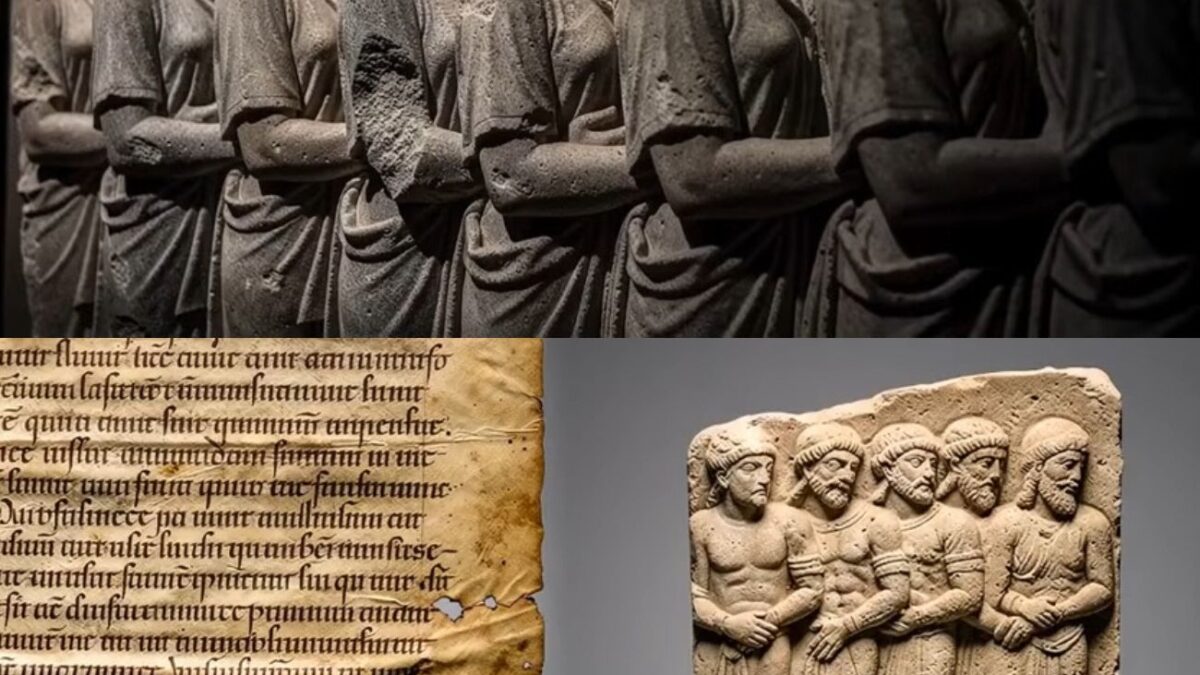
You did not choose this path, and you never committed any crime to justify it. You did not lose a desperate military clash upon a muddy, bloodied foreign battlefield. You did not gamble your liberty away beneath the weight of an insurmountable and ruinous debt.
You were simply born into existence, breathing air that you were never permitted to own. Perhaps you were merely standing inside the wrong stone village when the legionaries marched through. Or perhaps your father owed copper coins he could not repay to an unforgiving local patrician.
You might have been seized along a dusty provincial trading route while running a mundane errand. Sold off into wooden holding pens before anyone who loved you could ever learn your fate. And now, through the stroke of a stylus upon wax, you are rendered mere mobile property.
You are no longer a person possessing sovereign will, dreams, or even a basic family claim. You are not recognized as a woman in any meaningful fashion beneath the iron letters of Roman law. You are designated an instrumentum vocale, a speaking tool cataloged strictly for productivity.
An asset painstakingly entered into domestic inventories between walnut tables and heavy livestock. Your weary body does not belong to you, neither in labor, rest, nor private contemplation. The children you bear through agonizing birth will never belong to you, torn away upon imperial command.
Rome engineered the most magnificent, glittering civilization the ancient Mediterranean had ever witnessed. Its arched aqueducts marched across valleys, its stone roads carved through untamed mountainous frontiers. Its codified civil jurisprudence laid down structural concepts that modern parliaments still replicate today.
Its majestic public amphitheaters, marble temples, and soaring monuments rose high toward the clouds. Yet the nameless women who washed the marble steps, boiled the vats, and bled for it remain forgotten. They carried the crushing weight of that empire upon their bare backs while their identities were deliberately erased.
To survive inside this sprawling ancient apparatus, one must grasp how easily it caught human prey. The road leading into Roman female bondage was never a singular path through misfortune. It was a labyrinth of systemic entrapments waiting to snare any girl regardless of birth.
Conquest was the swiftest and most terrifying pipeline feeding the massive urban slave markets. The Roman war machine did not simply conquer territory; it industrially liquidated entire sovereign populations. When city gates collapsed under iron rams, the surviving inhabitants instantly became war plunder.
Fathers and adolescent sons were routinely slaughtered outright or sent to die inside toxic sulfur pits. The surviving young women, nursing mothers, and weeping children were chained together in endless lines. They were driven across provincial highways under the cracking whips of hard-faced auxiliary cavalrymen.
The total destruction of Carthage in 146 BC yielded over fifty thousand human beings in a week. Centuries later, during the harrowing Jewish wars, Flavius Josephus recorded ninety-seven thousand captives sold. When Emperor Trajan hammered the Dacian kingdoms, his celebratory triumphal column depicted captured mothers bound in stone.
Rome never felt compelled to hide this grotesque mass commodification beneath diplomatic or gentle euphemisms. The imperial elite carved the subjugation of foreign mothers openly upon public marble friezes. They celebrated the terror of displaced women as the ultimate proof of Jupiter’s divine martial favor.
Beyond the smoke of imperial conquest lay the quiet, lingering violence of economic entrapment. Early republican law allowed the outright enslavement of debt-ridden citizens under the practice of nexum. Though statutory reforms ostensibly abolished debt bondage, economic starvation maintained the exact same dynamic.
Destitute families across Campania or Apulia faced starvation when harvests withered under brutal droughts. Fathers facing insurmountable taxes often had no alternative except surrendering daughters into wealthy villas. Formally free, these girls were bound by private contracts that mimicked total, lifelong subjugation.
Yet as the borders settled and grand foreign military expansions began to slow, natural reproduction dominated. The domestic engine of bondage pivoted toward the cold legal mechanism known as partus ancillae. Under this doctrine, the child of an enslaved mother inherited her status at the instant of birth.
It mattered nothing who fathered the infant, whether a fellow laborer or the slaveholder himself. The infant drew its very first breath not as an infant human, but as an immediate household accrual. You were claimed, registered, and owned before the birth water could even dry upon your skin.
Then came the cold gutters and trash heaps where the unwanted were routinely discarded. Roman law permitted the ancient paterfamilias to reject newborn infants through deliberate exposure. Girls were abandoned far more frequently than boys, placed beside public columns or municipal dumps.
Vigilant slave traders patrolled these cold alleys before dawn, scooping up shivering newborns from gutters. Raised cheaply on sour milk and scrap porridge, these girls never knew a free horizon. They grew up understanding only the chain, the whip, and the unquestionable orders of their masters.
By the early principate, nearly forty percent of the Italian peninsula lived in absolute bondage. Slaves were neither an unfortunate social anomaly nor an uncommon underclass dwelling on the fringes. They formed the foundational physical infrastructure upon which the entire Roman Mediterranean rested.
Yet the lived experience of this vast population was never uniform across the empire. A complex social hierarchy governed the quarters, determining whether a woman survived or perished. Where you stood upon this cruel ladder dictated the exact nature of your daily torment.
At the perceived summit stood the privileged personal attendants serving elite aristocratic matrons. Among them, the ornatrix held a position of intimate vanity, styling elaborate braided hair. She applied cosmetics compounded from vinegar, lead, and imported oils, while arranging silk stolas.
This attendant enjoyed roofed shelter, cleaner tunics, and regular portions of fine domestic bread. She remained protected from the torrential winter rains and the blistering summer heat waves. She moved within grand rooms, occasionally receiving small favors or expressions of hollow regard.
Yet this domestic proximity was an unbearable hazard, offering no genuine safety from violence. The slightest slip of a curling iron could trigger an explosion of psychotic household cruelty. The satirist Juvenal documented mistresses who had attendants stripped and whipped for misplaced pins.
The terrified ornatrix possessed no legal appeal, no protective magistrate, and nowhere to run. Her skin remained perpetually marked by bronze hairpins plunged into bare shoulders during fits of anger. Her survival depended entirely upon the unstable psychological whims of a bored, cruel owner.
Occupying the broad, grinding middle tier were the general domestic laborers running urban insulae. These women hauled countless heavy amphorae of water up narrow, filthy four-story apartment stairs. They scrubbed stone floors, stoked suffocating hearth fires, and ground coarse rye by hand.
They soaked household laundry for hours in foul, caustic vats of fermented human urine. Their hands were permanently raw, cracked, and split open from corrosive alkaline cleaning mixtures. Their grueling daily labor sustained the domestic rhythm; if they stopped, patrician life halted instantly.
At the very base of the hierarchy lay the ultimate slow execution: agricultural latifundia. On these vast rural estates, women labored under blazing skies beside chained male chain gangs. They hoed hard, cracked soil until their muscles buckled beneath the unrelenting Tuscan midday heat.
Their food consisted of spoiled grain porridge, sour wine dregs, and decayed, salted olives. They were locked at night inside damp, windowless underground barracks known as dark ergastula. In these subterranean holes, life spans were systematically consumed within a few brief seasons.
Yet agricultural exhaustion was matched in horror by the ubiquitous industry of forced prostitution. Slaves who displeased their masters were frequently sold directly to cutthroat lupanar brothel keepers. Confined inside damp stone cubicles beneath flickering tallow lamps, their commodification was total.
Here, the law stripped away the final remnants of human dignity without a second thought. The legal status of the ancilla explicitly dictated that a slave possessed no bodily integrity. Roman law recognized no concept of sexual assault when committed against an enslaved human being.
A slave woman could not legally withhold consent from her owner or his chosen associates. This was not an accidental administrative loophole overlooked by magistrates and imperial jurists. It was codified, socially accepted, and openly calculated into the commercial valuation of female merchandise.
The Latin texts matter-of-factly discuss the physical exploitation of young female slaves alongside livestock. Cato the Elder advised farm owners to regulate intimate access to female slaves like cattle breeding. The resulting offspring simply represented additional free labor to enhance the total capital value.
If an enslaved woman bore children to her master, she held no claim upon him whatsoever. The newborn was not his acknowledged heir, but merely another physical asset on the ledger. He could sell the child down the river without informing the mother or permitting farewell.
She was expected to nurse her master’s legitimate heirs while her own child was bartered away. The emotional devastation of this recurring trauma left women hollowed, living in continuous, silent terror. Yet imperial literature never paused to consider the silent weeping echoing within the slave quarters.
Every single dawn, millions of enslaved women opened their eyes beneath this suffocating, inescapable reality. They rose knowing their minds, their time, and their bodies were entirely at someone’s disposal. There is no modern equivalent to the scale of this total, state-sanctioned psychological annihilation.
To maintain power over this immense multitude, Rome constructed a brilliant system of psychological control. Raw violence was common, but violence alone could never prevent three million slaves from rising. The empire devised invisible psychological shackles that systematically stripped a human being of their heritage.
The very first instrument of this psychological architecture was the immediate destruction of names. Upon being purchased, your birth name was stripped away, treated as uncivilized, meaningless foreign gibberish. You were rebranded with an artificial name, frequently Greek, which elite owners found appropriately fashionable.
You were called Chloe, Thratta, or simply Prima, reducing your entire ancestral lineage to zero. This was a calculated psychological act designed to obliterate any lingering memory of personal sovereignty. You were no longer a chieftain’s daughter from Thrace; you were an entry in a ledger.
Next came the deliberate, disorienting isolation wrought by the systematic suppression of native language. If you arrived from the mist-shrouded forests of Britannia, you spoke not a word of Latin. You found yourself thrust into a bustling, shouting urban household entirely unable to communicate.
You could not articulate your agony, explain your skills, or forge quiet friendships of survival. You depended completely on the self-serving translations of older, broken slaves who preceded you. This linguistic isolation bred a profound, disorienting helplessness that crushed any initial rebellious spirit.
Furthermore, slaveholders operated under an unwritten imperial policy of deliberate cultural and tribal separation. Slaves sharing the same dialect, gods, or village origins were purposely scattered across different provinces. The girl captured beside you in Numidia was sold off toward the cold Spanish silver mines.
This deliberate fracturing was an institutional lesson learned the hard way through terrifying historical rebellions. Rome never forgot the sheer panic sparked across the peninsula by the legendary Spartacus uprising. They recognized that when enslaved people find mutual understanding, imperial authority begins to shake violently.
To complement terror, Rome introduced the most ingenious psychological control mechanism ever conceived: hope. The formal practice of manumission dangled the theoretical possibility of eventual legal liberation before them. An enslaved woman was led to believe that absolute obedience might one day earn freedom.
If she worked without complaining, endured abuse patiently, and betrayed her peers, she might escape. This calculated promise of manumission transformed the enslaved population into their own watchful wardens. They policed themselves, clinging desperately to a statistical mirage that most would never actually see.
Yet despite this comprehensive, terrifying machinery of subjugation, enslaved women resisted with breathtaking courage. Their rebellion was rarely celebrated on epic battlefields; it unfolded quietly inside the dark domestic margins. They weaponized the only instruments left in their blistered, trembling hands: silence, delay, and sabotage.
Agricultural treatises written by Roman patricians constantly complain about mysterious, sudden drops in estate productivity. Masters grumbled endlessly about clumsy maidservants who broke expensive glass, ruined dyes, or spoiled grain. These were not accidents caused by native stupidity; they were deliberate acts of economic guerrilla warfare.
By feigning ignorance, women subtly destroyed patrician wealth from the inside out, hour by hour. They dropped bronze cooking vessels into deep cisterns and scorched delicate imported Egyptian linens. They chipped away at the profits of their captors, accepting brutal beatings as the price.
Others chose the terrifying, high-stakes gamble of physical flight, slipping into the dark provincial nights. Rome responded to fugitives with terrifying legal brutality, employing ruthless professional slave catchers called fugitivarii. Recaptured women were brought back in chains, their foreheads branded with the hot iron letter F.
Many had thick iron collars riveted permanently around their slender necks to prevent further escape. These heavy bronze and iron rings bore inscriptions offering financial bounties to whoever captured them. Archaeologists still dig up these disturbing metal bands today, their stamped letters proclaiming cold ownership.
When daily abuse crossed into murderous cruelty, enslaved women sometimes turned to silent domestic assassination. Roman aristocratic society lived in perpetual, paranoid terror of poison slipped into wine or broth. The domestic slave controlled the preparation of daily stews, the compounding of balms, the hearth fires.
A handful of dried nightshade leaves crushed quietly into the evening mulsum could settle scores. The late Republic saw magistrates pass frantic legislation dictating the automatic torture of entire domestic retinues. If an owner was murdered at home, every slave under that roof was condemned to crucifixion.
Even on the grand stage of armed insurrection, enslaved women played fierce and unyielding roles. During the Third Servile War, thousands of escaped women marched alongside the gladiators of Spartacus. They tended the wounded, forged crude weapons in campfires, and fought beside the men when cornered.
When the final battle lines crumbled, women stood with daggers against the advancing imperial cohorts. Roman historians recorded that barbarian women chose death over capture, killing their infants before themselves. Not a single one of their names was deemed worthy of preservation in the senatorial annals.
The retribution Rome visited upon the vanquished was calculated to traumatize generations of surviving slaves. After the final defeat of the rebellious army, six thousand human beings were hoisted on wood. Crucifixes stretched along the Appian Way from Capua straight into the gates of the capital.
The imperial highway spoke a horrifying language of broken limbs, rotting flesh, and circling black vultures. It sent an unmistakable visual decree: Rome will tear your flesh before it grants your liberty. That macabre corridor of hanging corpses stood as an imperial reminder for many long, terrifying years.
What haunts modern conscience most deeply is the meticulous, obsessive nature of the Roman administrative machine. Rome preserved everything it considered meaningful: speeches, tax receipts, gladiatorial costs, and imperial lineage scrolls. They recorded the price of grain during shortages, architectural dimensions, and scandalous poems of the court.
Yet the authentic inner emotional lives of millions of enslaved women were systematically blotted out. Not because these women did not think, dream, love, mourn, and endure unbelievable sorrow every day. Rome simply executed an administrative decision: those who wear chains do not possess a human voice.
We are left with nothing but cold, indirect fragments scattered across a deeply biased historical record. We have satirical verses mocking an attendant’s tears while her back is torn open with leather. We have cold farming manuals instructing overseers on the maintenance costs of female breeding stock.
We have rusted iron slave collars displayed under museum glass, chilling in their administrative detachment. We have the laws detailing how much torture was necessary before a slave’s testimony became admissible. We have what their arrogant captors chose to write down; we do not have their words.
Yet the physical evidence demands an unavoidable truth: these forgotten women built the classical Mediterranean world. They were present in the dawn shadows of every villa, every crowded street, every sprawling imperial bathhouse. They fed the empire, laundered its clothes, raised its children, and sustained its majestic, uncaring architecture.
Elite Roman matrons were celebrated as dignified republican models only because enslaved women bore their labor. Rome’s magnificent glory was literally constructed upon the broken bodies and stifled screams of captive women. The empire drained their vitality, confiscated their newborn babies, and then systematically erased their historical memory.
That total, calculated erasure is the real tragedy we must confront when we look back across time. Every column, every arch, every paved road carries the silent imprint of women who could not speak. They deserve to be remembered not as property or statistics, but as human beings who endured.
Their silence is not empty; it is an echoing accusation hurled across two thousand years of history. They existed, they survived the unthinkable, and their untold suffering remains the true cost of imperial greatness. Let their memory stand at last, stepping out from the shadows of Rome’s dark, forgotten corners.

