Stalin’s Daughter Lived An Utterly Tragic Life
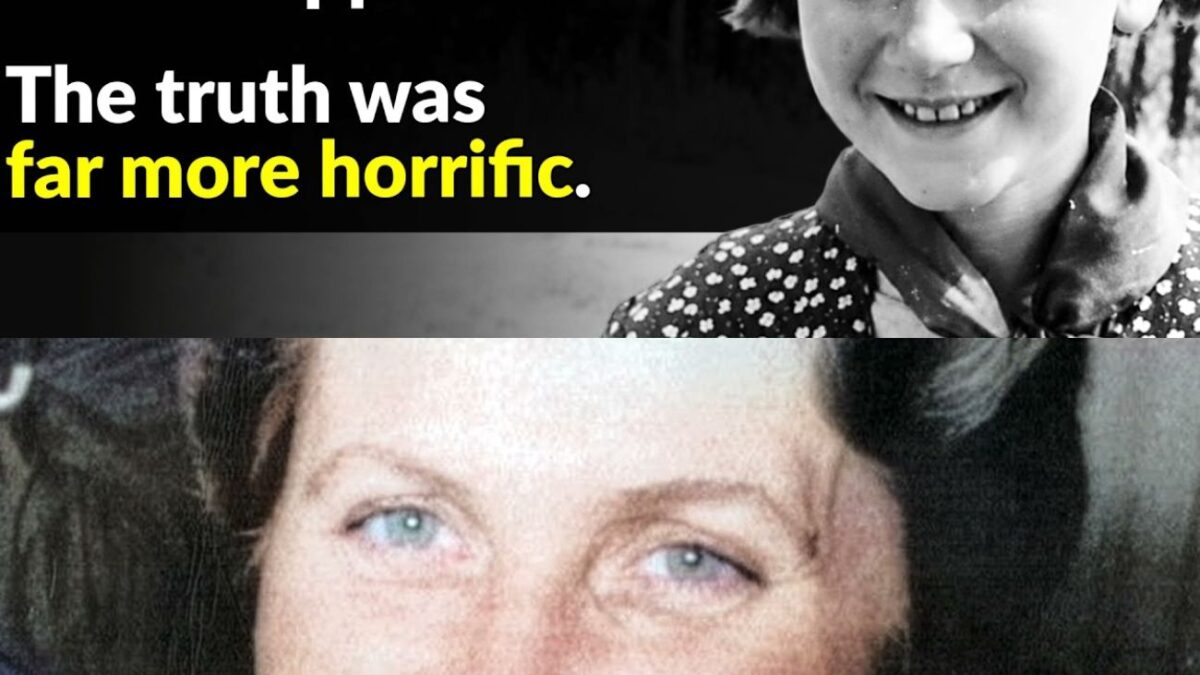
When Svetlana Alliluyeva was just six years old, her mother died of acute appendicitis, or at least that was the polished fiction whispering through the Kremlin corridors. That sanitized lie had been meticulously constructed by the state apparatus to cover up an unfathomable domestic reality, concealing a violent trauma far more horrific than a sudden illness. Born at the absolute peak of the Soviet era to the supreme dictator Joseph Stalin and his young wife Nadezhda Alliluyeva, Svetlana entered the world as living red royalty.
Post-revolutionary Russia possessed no formal nobility, yet this fiery-haired child occupied the absolute epicenter of absolute continental authority and terrifying political power. Her gilded existence, however, was never anything more than an ornate and shattered fairy tale where velvet tapestries merely masked cold concrete and bloodied execution orders. Svetlana lived through endless cascades of personal devastation, finding that the harder she ran from her family name, the more inevitably she stumbled into agonizing tragedy.
The foundations of the Alliluyeva-Stalin household had been profoundly fractured from the very beginning, long before Svetlana ever drew her first breath. Her mother Nadezhda had married the brooding, decades-older revolutionary Joseph Stalin when she was barely an idealistic teenager and he was already a hardened Bolshevik widower. Stalin brought with him an aloof and mistreated young son named Yakov, whose quiet presence served as an unending reminder of previous losses and profound emotional coldness.
Although Nadezhda’s aristocratic, Bolshevik-aligned relatives vehemently disapproved of the union, the turbulent young couple swiftly produced two children in rapid, turbulent succession. A son named Vasily arrived into the chaotic aftermath of the civil war in 1921, followed five years later by Svetlana in the winter of 1926. All of this unfolded while Stalin steadily and ruthlessly climbed through the newly solidified tiers of the post-Lenin Soviet bureaucracy, eliminating every rival in sight.
Yet beneath the soaring political ascent, their private domestic life was suffocating, violent, and devoid of genuine warmth or domestic serenity. Her parents engaged in fierce, explosive arguments that echoed down the echoing hallways of their Kremlin apartment, shocking servants and sentries alike with their bitterness. Stalin went so far as to orchestrate Nadezhda’s humiliating expulsion from the Communist Party simply because she insisted on pursuing her own studies rather than playing a submissive housewife.
Remarkably, against every predictable instinct of his cruel nature, the iron dictator carved out a tender, almost unrecognizable facade exclusively for his youngest child. While Stalin largely ignored and belittled his sons Yakov and Vasily, Svetlana’s vibrant red hair reminded him hauntingly of his own Georgian mother, Ketevan. His mother was one of the singular human figures he had ever genuinely revered, and that sacred memory shielded Svetlana from the tyrant’s standard volcanic malice.
He lavished her with affectionate pet names, famously calling her his tiny sparrow and pretending to yield to her toddler whims by addressing her as little mistress. Childhood for Svetlana quickly became an unconscious exercise in molding her developing personality into whatever delicate vessel her fearsome father desired to see before him. She penned playful little letters formatted purposefully like imperial military orders, commanding the master of Russia to take her for walks, signing them your obedient mistress.
The doting games created a precarious sense of safety, but outside her playrooms, the walls of the fortress were steadily closing inward upon her fragile family. Her mother grew increasingly withdrawn, visibly worn down by Joseph’s coarse cruelty, his vulgar party banquets, and the horrific reports of widespread countryside famine. The breaking point was careening toward them, cloaked beneath the solemn pomp and circumstance of the fifteenth anniversary celebrations of the Great October Socialist Revolution.
One evening, after a public banquet where Stalin drunkenly insulted Nadezhda in front of the assembled Politburo, she walked away from the table without a word. Svetlana would forever carry the phantom memory of her mother quietly sitting beside her bed, murmuring instructions and making her promise never to touch harsh wine. Only hours later, alone inside her private bedroom within the quiet Kremlin walls, Nadezhda raised a small Walther pistol to her chest and pulled the trigger.
The morning brought whispers, hurried footsteps, and the heavy curtain of a massive state cover-up falling across the entire weeping household. The children were strictly told their mother had succumbed to an unexpected and catastrophic inflammation of the appendix during the deep dark of night. Stalin appeared publicly devastated, weeping rare and dramatic tears over the open casket at Novodevichy Cemetery, though privately he viewed her suicide as personal betrayal.
For both Svetlana and the vast territory of the Soviet Union, that gun blast in 1932 shattered whatever delicate equilibrium had previously kept the darkness at bay. With Nadezhda gone, the dictator shed his remaining human inhibitions, unleashing the Great Purge and initiating a ruthless, systematic slaughter of real and imagined political enemies. Across Ukraine and Kazakhstan, millions starved in engineered famines, yet inside the Kremlin compound, Stalin fanatically shielded his precious red-haired daughter from the horrors he commanded.
He showered her isolated nurseries with wooden crates of sweet pomegranates, ripe peaches, and imported chocolates while millions outside survived on boiled nettles and frozen sawdust. She took English lessons, practiced the piano, and studied the French language, wrapped inside an artificial bubble of privilege, security, and deliberate sensory deprivation. Yet no wall constructed of Kremlin brick and secret police battalions could completely stop the surrounding terror from seeping into Svetlana’s cloistered life.
As the years advanced toward the late 1930s, the purges accelerated into madness, devouring the very Bolsheviks who had founded the revolutionary state alongside her father. Prominent marshals, loyal commissars, domestic servants, and even Svetlana’s own aunts and uncles began vanishing overnight into the execution cellars of the Lubyanka. Her beloved relatives on the Alliluyev side were arrested, executed, or driven to sudden insanity, their faces literally clipped out of family photo albums with shears.
Soon enough, the terrifying shadow of the apparatus reached directly into her premier Moscow classroom, where children of the elite studied in silent dread. One day, a terrified classmate approached Svetlana with shaking hands, discreetly passing her an agonized letter written by his mother begging Stalin to spare his father’s life. Believing naively that her father was the benevolent, omnipotent protector he pretended to be, the little girl earnestly carried the desperate plea straight to his private desk.
Stalin’s reaction was an explosion of raw, terrifying fury that instantly cured Svetlana of any illusions about her power over the dictator’s heart. He tore the paper in front of her face, screamed that she was his daughter and not a postal courier, and violently banished her from the study. Though the boy’s father was miraculously released in an arbitrary fit of whimsy, Svetlana learned an indelible lesson: never bring the screams of Russia to her father.
As she entered adolescence, the delicate fiction that she was a cherished sovereign over her father’s heart began to disintegrate under his suffocating surveillance. Nikita Khrushchev, watching the family dynamic closely from within the inner circle, later observed that Stalin’s affection for Svetlana resembled the cruel, watchful tenderness of a cat playing with a mouse. The dictator monitored her schoolbooks, ordered secret service agents to tail her steps, and dictated precisely what modest dresses she was permitted to wear.
The tension detonated when Svetlana reached sixteen and made the fateful mistake of experiencing romantic passion for the first time in her sheltered life. At a wartime gathering in Moscow, she met Alexei Kapler, an intelligent, charming, and significantly older Jewish filmmaker who treated the lonely girl with genuine intellectual respect. Kapler introduced her to foreign cinema, classical literature, and private conversations where her thoughts were valued entirely on their own merits rather than her infamous surname.
Their clandestine romance quickly blossomed through secret notes, quiet strolls through snowy parks, and cautious visits to Kapler’s apartment while government watchers observed every move. When Stalin discovered the romance, he reacted with an animalistic fury fueled by anti-Semitism, possessiveness, and the absolute outrage that his creature had sought emotional sanctuary elsewhere. The dictator stormed into his daughter’s private quarters, struck her twice across the face, and demanded that she surrender every single letter Kapler had ever sent.
Standing over her as she wept on the floor, Stalin coldly shredded the intimate papers into ribbons, spitting contemptuous questions about who could ever genuinely desire her. Yet while Svetlana remained confined to her luxurious prison quarters, Alexei Kapler paid the true, horrifying price for daring to touch the daughter of the red tsar. Kapler was swiftly arrested by state security, labeled a suspected British spy, and sentenced to five grueling years of harsh internal exile in the far north.
When those five agonizing years concluded in 1948, Stalin’s lingering vengeance ensured that Kapler was immediately rearrested and condemned to another five years within the brutal Inta labor camps. Decades later, Svetlana would trace the final fracturing of her soul back to those terrible days when her father systematically crushed her capacity to experience pure love. She realized that any spark of genuine affection entering her orbit would instantly be extinguished and annihilated by the monstrous gravity of her father’s paranoia.
Desperate to escape the stifling Kremlin walls and the terrifying surveillance of her father’s guards, Svetlana made an impulsive, headlong rush into matrimony at eighteen. She married Grigory Morozov, an ordinary fellow student whose primary qualification was that he offered a sudden exit from her father’s immediate physical household. Stalin despised the match from the outset, primarily because Morozov was Jewish, a fact that triggered the aging dictator’s increasingly vicious and open prejudices.
The tyrant categorically refused to ever set eyes upon the groom, declining to attend the modest wedding or acknowledge the existence of the young man entirely. Even when Svetlana gave birth to her first child in 1945, a baby boy she pointedly named Joseph, the dictator coldly maintained his spiteful distance from the household. The marriage, born out of panic and a desperate need for sanctuary, quickly collapsed under the unbearable political pressures and the incessant, intrusive monitoring of state agents.
By 1947, after only three turbulent years, the union with Morozov dissolved into divorce, leaving Svetlana adrift, lonely, and vulnerable to her father’s relentless domestic engineering. Hoping against hope to finally earn the love and approval that had been denied her for years, she allowed herself to be maneuvered into a second marriage. Her new husband was Yuri Zhdanov, the dry, ambitious son of Andrei Zhdanov, who served as Stalin’s ideological enforcer and most favored political lieutenant.
This arranged union proved to be its own unique kind of emotional torment, characterized by cold ideological lectures rather than genuine passion or mutual understanding. In 1950, Svetlana brought her second child into the world, a daughter named Yekaterina, affectionately known as Katya, within the confines of an emotionally barren home. She soon realized that securing her father’s blessing meant absolutely nothing; it could never overwrite the ghost of Kapler or the memory of her father’s violent slaps.
The loveless marriage to Zhdanov quickly dissolved into estrangement, leaving Svetlana increasingly isolated in Moscow as the Soviet Union entered the dark twilight of Stalin’s reign. Her father had grown increasingly erratic, deeply paranoid, and isolated inside his heavily fortified dacha at Kuntsevo, surrounded only by terrified guards and sycophantic ministers. Then, in the freezing dawn of March 1953, shortly after Svetlana celebrated her twenty-seventh birthday, the summons that would alter global history arrived without warning.
Party officials frantically informed her that her father had suffered a catastrophic stroke, having been discovered lying semi-conscious upon the floor of his private chambers. Svetlana rushed to the dacha to witness the terrible, agonizing spectacle of the most feared man on earth slowly choking to death over several agonizing days. She watched the rhythmic struggle for each breath, seeing his skin turn gray and his lips darken until, in his final moments, he opened his eyes.
Stalin suddenly cast a terrifying, furious glance across the room at the doctors and Politburo members, raised his left hand threateningly, and abruptly expired into silence. While the men surrounding the bed, including Lavrentiy Beria and Nikita Khrushchev, scrambled frantically for political survival and absolute power, Svetlana felt a complex wash of emotions. She felt pity for the pathetic, hollow loneliness of his agonizing end, but rising above the sadness was an unmistakable, overwhelming wave of profound internal liberation.
Her father was finally dead, the prison gates were nominally unlocked, and yet Svetlana soon discovered that true freedom remained entirely elusive within the Soviet orbit. For the subsequent decade, she drifted through Moscow society like a walking ghost, bearing a physical resemblance to a tyrant whose legacy was now systematically denounced. Khrushchev’s secret speech in 1956 shattered her father’s public godhead, casting an uncomfortable spotlight on Svetlana, who now found herself trapped between opposing social worlds.
She naturally gravitated toward the courageous dissidents, brilliant poets, and unorthodox thinkers of the artistic underground, hoping to find genuine intellectual fellowship among them. Yet the dissidents viewed her with cautious suspicion, unable to separate her gentle face from the monstrous butcher who had slaughtered their parents and friends. Conversely, the die-hard party loyalists and lingering Stalinists viewed her reluctance to defend her father’s legacy as an act of intolerable familial and ideological treason.
The resulting loneliness drove her toward brief, unsatisfying romances that frequently concluded in profound humiliation and a deeper retreat into personal isolation. One evening, after attending an artistic dinner party, she found herself swept into a brief, passionate liaison with the renowned Soviet poet David Samoylov. Svetlana believed for a fleeting moment that she had connected with a kindred artistic spirit, but the harsh dawn brought an excruciatingly vulgar awakening to light.
Samoylov immediately sought out his literary acquaintances the following morning, callously boasting to his friends that he had managed to symbolically conquer Stalin through his daughter. Later, when reflecting upon the encounter, Samoylov coldly wrote that he had felt an overpowering need to sprint away from the suffocating circle of her tragedy. She was never allowed to simply exist as a woman; she was perpetually treated as an effigy, a trophy, or an agonizing symbol of historic suffering.
The first genuine ray of uncompromised happiness arrived unexpectedly in the autumn of 1963 within the sterilized walls of the elite Kremlin hospital ward. Svetlana, then thirty-seven years old, was quietly recovering from a standard tonsillectomy when she crossed paths with an elderly, gentle foreign visitor named Brajesh Singh. Singh was an Indian communist intellectual who had journeyed to the Soviet capital to receive medical treatment for chronic nasal polyps and serious respiratory difficulties.
Intrigued by his calm, aristocratic demeanor and gentle eyes, Svetlana mustered whatever conversational English she remembered from her school days to introduce herself quietly. She experienced the shock of her life when their conversation blossomed naturally: the kind-hearted Indian scholar had absolutely no concept of who she actually was. He did not recognize her face, he knew nothing of her father’s iron shadow, and he spoke to her purely as an intriguing, thoughtful Russian woman.
When she eventually gathered the courage to confess that her father was Joseph Stalin, Singh merely blinked serenely, uttered a soft acknowledgment, and moved on. His distinguished family in India had worked alongside great leaders like Mahatma Gandhi and Prime Minister Nehru, meaning mere political stature failed to intimidate his spirit. To Brajesh Singh, Svetlana was simply a beautiful, wounded human being worthy of unreserved respect, delicate companionship, and deep, unconditional intellectual devotion.
They fell deeply in love, finding in one another an oasis of serene peace that shielded them both from the grim realities of the Cold War. They desperately wished to formalize their bond through marriage, but the Soviet state, now governed by Alexei Kosygin and Leonid Brezhnev, intervened with typical cruelty. Upon learning that Stalin’s daughter wished to marry a foreign national, high-ranking officials summoned her directly into the very Kremlin office her father once occupied.
The bureaucrats bluntly informed Svetlana that while she and Singh could cohabitate privately, the state would categorically forbid the registration of their legal union. The Soviet government was already reeling from embarrassing waves of high-profile international defections, and officials were terrified that marriage would permit Singh to legally escort her away. Forced to accept this demeaning compromise, Svetlana dedicated herself entirely to caring for the ailing Singh as his precarious physical health rapidly deteriorated.
The bitter Moscow winters proved merciless on Singh’s fragile lungs, turning his chronic breathing ailments into an agonizing, fatal decline across several difficult years. By October of 1966, sensing that his life was slipping away, Singh desperately pleaded with Soviet authorities for permission to return home to India to die. The state pitilessly rejected the dying man’s final request, decreeing that while he could depart, Svetlana was absolutely forbidden from boarding any foreign plane alongside him.
Singh refused to abandon her, remaining steadfastly at her side in Moscow until his worn body finally surrendered to the cold on Halloween night, 1966. He passed away peacefully inside Svetlana’s own bed, a quiet and dignified departure that contrasted sharply with her father’s violent, thrashing death years earlier. Yet the profound tranquility of his final moments could not soften the crushing agony of losing the only man who had ever loved her purely.
With Singh gone, Svetlana summoned an iron reserve of courage and marched directly to the Kremlin authorities to deliver a single, unyielding demand. Brajesh Singh’s final spiritual wish was that his body be cremated and his ashes carried to the sacred waters of the River Ganges in India. She argued with such unwavering moral force that the Soviet leadership finally relented, granting her a strictly monitored, temporary visa to accompany the remains.
On December 20, 1966, forty-year-old Svetlana Alliluyeva stepped onto an international airliner, leaving the borders of the Soviet motherland for the very first time. The Soviet authorities warned her to avoid international journalists, maintain total discretion, and return directly to Moscow the instant her travel visa expired. Little did the men in the Kremlin realize that the frightened, obedient sparrow had reached her absolute limit and was actively preparing to break her cage.
Arriving in Kalakankar, the ancestral village of Singh’s family, Svetlana felt an immediate and overwhelming spiritual connection to the ancient rhythm of the Indian landscape. She carried Singh’s urn into the flowing waters of the Ganges, performed the solemn Hindu rites, and found a profound, tranquil peace she had never known. As the weeks passed in the warm sun, the horrific thought of returning to the gray, suffocating surveillance of Moscow became entirely unbearable to her soul.
She pleaded with local Indian officials and Prime Minister Indira Gandhi to grant her political asylum, hoping to live quietly within the peaceful subcontinent forever. Yet India, precariously balancing its delicate geopolitical alliance with Moscow during the height of the Cold War, gently but firmly refused her desperate appeals. By early March 1967, Svetlana was ordered to report immediately to the Soviet Embassy in New Delhi to prepare for her mandated flight back.
Trapped inside the embassy compound under the watchful eyes of KGB minders, she realized that this was her singular, terrifying crossroads in life. If she boarded that flight back to the Soviet Union, the iron gates would slam shut forever, consigning her to a lifelong prison of silence. On the evening of March 6, 1967, she calmly told the embassy staff that she was venturing out for a final dinner with Singh’s relatives.
Instead, stepping into the balmy Delhi evening, she hailed a standard local taxi and ordered the driver to speed toward the American Embassy. It was an astonishingly dangerous gamble; if intercepted by Soviet agents along the road, she would be forcibly drugged, kidnapped, and silenced permanently. Arriving at the American gates without an appointment, the small Russian woman walked up to the surprised marine guards and declared her impossible identity.
The American diplomats were utterly stunned; Joseph Stalin’s only daughter was standing in their lobby, clutching a worn suitcase and demanding political defection. Recognizing the colossal geopolitical implications, the CIA moved with extraordinary speed, slipping Svetlana onto a night flight to Rome before Moscow realized she had vanished. From Italy, she was whisked away to a secure safe house in Switzerland while the White House nervously deliberated on how to handle the situation.
President Lyndon Johnson worried that accepting her directly would torpedo delicate diplomatic efforts to ease tensions with the Soviet Union during the Vietnam War. The legendary diplomat George Kennan was pulled out of retirement to quietly manage her transition and prepare the American public for her arrival. In April 1967, Svetlana touched down in New York, stepping before a massive forest of flashing television cameras and aggressive international news reporters.
She spoke with radiant poise, renouncing her father’s murderous regime, denouncing the communist apparatus, and expressing an eager yearning to embrace American liberty. Her defection was an incredible public relations victory for the West, but for Svetlana personally, the move instantly detonated another catastrophic emotional tempest. The Soviet media unleashed a venomous campaign against her, labeling her a selfish traitor who had abandoned her two teenage children in Moscow.
Her son Joseph and daughter Katya, facing immense pressure and terror from the Soviet state, publicly denounced their runaway mother in painful, bitter terms. Joseph publicly described his mother as emotionally erratic and psychologically unstable, while state-sponsored journalists published vicious diatribes attacking her character worldwide. Even her first love, Alexei Kapler, who had suffered a decade in Siberian labor camps, was quoted dismissing her defection as the product of mental illness.
Meanwhile, her arrival in the United States brought an entirely different set of suffocating pressures and intense, relentless commercial exploitation. Publishers paid astronomical sums for her tell-all memoir, Twenty Letters to a Friend, instantly transforming the cloistered Russian exile into an overnight multimillionaire. Yet with wealth came malicious hostility; thousands of furious citizens sent hate mail, telling the communist dictator’s daughter to go back to Russia.
Desperate for genuine human connection and exhausted by the ravenous American media circus, Svetlana clung desperately to any voice offering gentle kindness and domestic stability. That fragile need made her an easy mark when she received a warm letter from Olgivanna Wright, the formidable widow of architect Frank Lloyd Wright. Olgivanna invited Svetlana to visit Taliesin West, the famed architectural fellowship and self-sustaining creative commune situated in the arid desert outside Scottsdale, Arizona.
Svetlana was instantly fascinated by the invitation, seeing what appeared to be astonishing, mystical coincidences weaving through Olgivanna’s fascinating life story. Olgivanna was a charismatic woman of Montenegrin heritage who had spent significant years living within the rugged region of Stalin’s native Georgia. Even more chillingly, Olgivanna had once possessed an eldest daughter named Svetlana, who had tragically perished in a horrific car accident years earlier.
Believing naively that fate had steered her toward an enlightened, surrogate family, Svetlana eagerly accepted the invitation and arrived in the Arizona desert. Within days of her arrival, Olgivanna skillfully steered her toward William Wesley Peters, Wright’s chief architectural disciple and the widower of her deceased daughter. Wes Peters was a tall, dashing, and seemingly romantic figure who immediately showered the lonely Soviet heiress with grand gestures, chivalry, and intense courtship.
Blinded by the illusion of finding a genuine sanctuary, Svetlana succumbed to the whirlwind romance and married Wes Peters a mere three weeks after meeting. She legally changed her name to Svetlana Peters, or simply Lana, desperately believing that she had finally buried the specter of Alliluyeva forever. For several shining weeks, she felt incandescently happy, wandering through the desert sunsets and believing that her long, painful nightmare had reached its conclusion.
Yet beneath the modernist architecture and the romantic desert facade, the Taliesin commune hid an unyielding, totalitarian dynamic that felt eerily familiar. Svetlana soon realized with growing horror that she had not married an independent man; she had married straight into a tightly controlled cult. Olgivanna ruled Taliesin with an absolute, iron fist that mimicked the psychological manipulation and terrifying control Svetlana had fled in the Kremlin.
The members were forced to eat their meals together under Olgivanna’s watchful eye, report their private thoughts, and submit to her constant emotional surveillance. Wes Peters, far from being a protective husband, was entirely subservient to Olgivanna’s whims and an active participant in exploiting Svetlana’s vast wealth. Peters had accumulated staggering personal debts, and within months of the wedding, Svetlana’s publishing fortunes were being drained to sustain the commune’s expensive operations.
Svetlana watched in helpless disbelief as two-thirds of her entire fortune vanished into commune projects, failing farms, and Wes’s extravagant personal spending. When she attempted to assert legal boundaries, Peters skillfully maneuvered the finances so she remained completely excluded from any ownership rights to their properties. Then, just as the financial exploitation became undeniably clear, forty-five-year-old Svetlana received news that stunned both her and the entire commune: she was pregnant.
The response from Olgivanna and Wes was instantaneous, cold, and thoroughly sickening in its calculating, image-conscious cruelty. Olgivanna decreed that an older woman bearing a child was undignified, instructing Wes to demand that Svetlana quietly terminate the unexpected pregnancy immediately. Svetlana, who had spent a lifetime watching tyrants destroy human life, flatly refused, determined to protect the tiny miracle growing within her womb.
In May 1971, she gave birth to a healthy, vibrant baby girl whom she named Olga, feeling a fierce, protective rush of maternal devotion. Yet her husband’s reaction proved that the marriage was entirely dead; Peters brought an opportunistic television news crew right into her hospital recovery room. He used the intimate birth of his newborn daughter as a cheap publicity stunt to elevate the sagging profile of the struggling Wright Foundation.
That brazen betrayal was the absolute final straw that broke Svetlana’s willingness to submit to the Taliesin commune’s suffocating authority. Though she lived with the constant, burning guilt of abandoning her children in Russia, little Olga represented a sacred second chance at unconditional love. She refused to allow her infant to grow up inside the toxic, manipulative confines of Olgivanna’s desert empire, packing her bags and walking away forever.
The departure triggered an ugly, vindictive divorce wherein Wes Peters abandoned them, while Olgivanna launched venomous smears against Svetlana in the press. Financially depleted and carrying the heavy burden of raising a toddler entirely alone, Svetlana began an exhausting, decades-long drift across the Western world. She purchased modest homes in New Jersey and California, but the relentless paparazzi, curious onlookers, and inner demons gave her no peace.
Her later years were marred by escalating paranoia, chronic depression, and increasing reliance on alcohol to numb the echoing pains of her past. She became convinced that the KGB was secretly tracking her every move through the walls, using invisible surveillance methods to destroy her sanity. Hoping to find sanctuary for Olga’s education, she moved to England in the early 1980s, living in modest flats in Cambridge and Bristol.
Yet her financial resources continued to evaporate under bad investments, high living expenses, and an inability to navigate the realities of Western commerce. By 1984, isolated, deeply depressed, and almost entirely destitute, Svetlana found herself standing at the absolute precipice of complete emotional breakdown. In an act of sheer, desperate surrender, she boarded a train to London, walked into the Soviet Embassy, and formally requested repatriation.
Holding a pen that must have felt impossibly heavy, she signed a formal petition asking the Soviet leadership to restore her citizenship and allow her return. The Soviet government gleefully welcomed her back as a massive propaganda trophy, parading her before international cameras to denounce the hollow horrors of the West. Yet the emotional reality waiting for her in Moscow was colder and more devastating than any poverty she had endured abroad.
Her eldest son Joseph, now a practicing physician, received her with chilly, distant politeness, keeping his own family at a deliberate arm’s length. Her daughter Katya, working as a scientist in the remote wilderness of Kamchatka, refused to ever see her face, sending a scorching letter calling her a traitor. Svetlana was denied access to her grandchildren, while the state apparatus watched her every move with the same suffocating scrutiny she had fled decades before.
Within months, the bitter reality set in: the Soviet Union she had returned to was just as hollow, gray, and cruel as the one she left. Olga, who spoke almost no Russian, suffered terribly within the rigid, militaristic Soviet school system, pleading with her mother to take them back home. In less than two years, having realized the catastrophic mistake she had made, Svetlana once again pleaded for permission to depart the country.
Miraculously, thanks to the thawing political landscape ushered in by Mikhail Gorbachev, the Soviet authorities allowed her to quietly leave the motherland forever in 1986. Returning to America as an aging, impoverished ghost of history, Svetlana settled in the quiet, snowy landscapes of rural Wisconsin. She lived out her remaining years under the name Lana Peters in modest subsidized housing, knitting, reading, and occasionally hiding from inquisitive biographers.
The tragedy that haunted her existence had begun with that singular, founding lie told to a six-year-old child in the dark corridors of the Kremlin. Nadezhda had not died of a ruptured appendix; she had chosen a bullet to escape the terror of the man who ruled an empire. Svetlana had only discovered the horrific truth as an older teenager, casually reading an old foreign magazine she had translated in secret.
Her entire life had been an exhausting, doomed struggle to outrun the bloody shadow cast across her soul by the name Joseph Stalin. She survived long enough to witness the total collapse of the Soviet empire her father built, passing away quietly in Wisconsin in 2011 at eighty-five. Her nephew captured her tragedy perfectly, noting that her life was a desperate, unfulfilled search for a spiritual shelter she was destined never to find.

