Orcas Shouldn’t Have This Human Trait
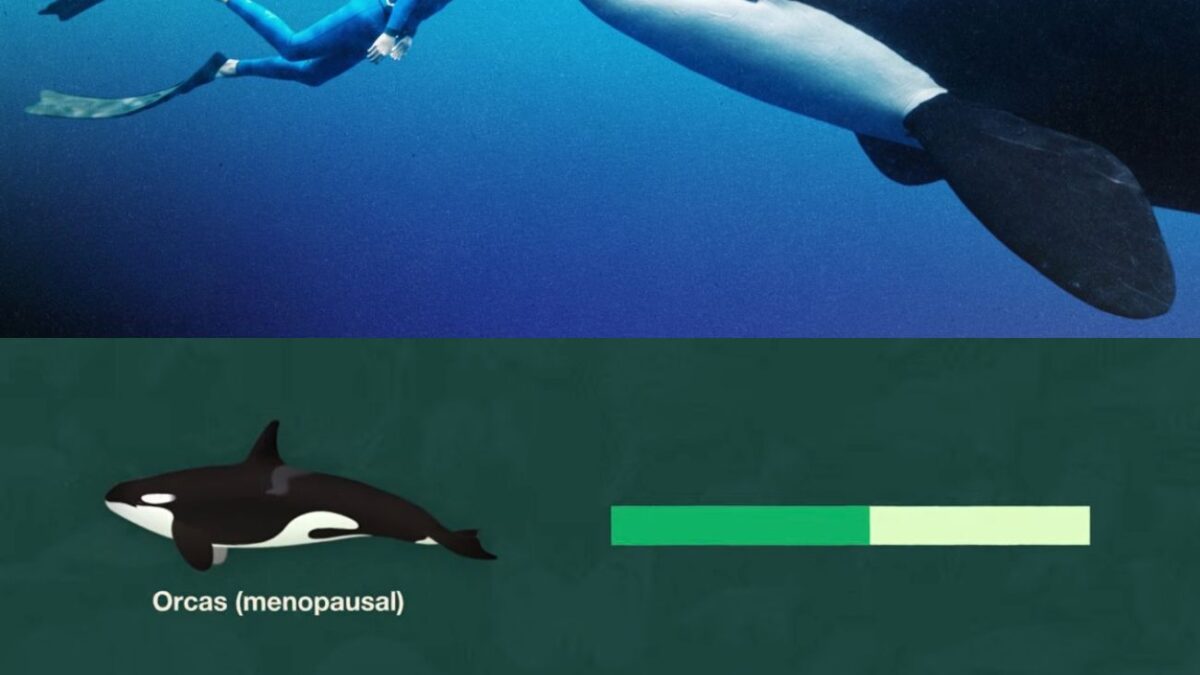
Almost all animals on Earth share a remarkably similar and predictable biological journey across their entire lifespans. They enter the world through birth or hatching, grow steadily into reproductive maturity, pass on their genetic material, and perish soon after. This rhythmic progression from youth to procreation forms the bedrock of natural selection across virtually every continent and ocean basin.
For our own species, however, the grand story of existence takes an abrupt, puzzling, and truly unprecedented departure from the standard script. Human beings are born into vulnerability, develop over decades, reproduce, and then, for every woman who survives into middle age, fertility ceases entirely. Yet life does not terminate when our ovaries stop functioning, nor does our physical vigor instantaneously crumble into immediate and fatal decrepitude.
Instead, post-reproductive human females frequently live on for multiple decades, remaining physically robust, mentally acute, and intensely socially engaged. To our modern cultural sensibilities, this biological transition is familiar and universally expected under the common name of menopause. In the sweeping theater of evolutionary biology, however, walking around for decades after your reproductive engine halts is deeply perplexing.
For generations of evolutionary thinkers, natural selection was viewed as an uncompromising arithmetic optimization machine prioritizing sheer gene replication. Under this traditional paradigm, every single physiological resource, behavioral instinct, and metabolic calorie should logically serve the spread of DNA. An organism that voluntarily shuts down its cellular machinery for reproduction while remaining physically healthy seems to defy fundamental Darwinian principles.
Why would any creature on our competitive planet ever surrender its direct reproductive potential while remaining capable of foraging and surviving? If evolutionary fitness is measured by how many offspring you leave behind, turning off fertility prematurely appears to be evolutionary madness. For a considerable period, many biologists casually assumed that human menopause was merely a strange, modern, and completely artificial artifact.
It was convenient to think that we only experience extended post-reproductive lifespans because sanitary infrastructure, antibiotics, and clean water artificially prolonged our days. Under this assumption, our internal organs simply outlived their ancient evolutionary warranty because our protective environments shielded us from timely, natural mortality. Humans, in other words, were just evolutionary oddities whose cultural developments outran the prehistoric programming of their ancestral reproductive anatomy.
I held that simple perspective myself, writing off menopause as another eccentric quirk of our technological mastery and hyper-social culture. We wear clothes, cook our meals over controlled fire, construct cities, and harbor thousands of unique traits found nowhere else. Dismissing our unique reproductive trajectory as just another side effect of human civilization was an easy way to move past the question.
Then, research revealed a astonishing biological reality that entirely dismantled the convenient theory of an accidental cultural artifact. Humans are not the only creatures on our planet to experience true, genetically programmed menopause and prolonged post-reproductive longevity. We are merely the only land-dwelling mammalian species to exhibit this profound shift away from lifelong, uninterrupted physical reproduction.
Hidden out in the cold, rolling swells of our world’s oceans, five distinct species of toothed cetaceans undergo this exact transition. Killer whales, short-finned pilot whales, false killer whales, narwhals, and beluga whales all share this rare biological reality with humanity. These five species do not belong to a single, tightly clustered lineage within the oceanic branch of the mammalian evolutionary tree.
Their widespread phylogenetic distribution indicates that menopause evolved separately and convergently multiple times within the depths of the open sea. When nature invents the same complex, counterintuitive biological solution in separate lineages, it is never an accidental evolutionary hiccup. Convergent evolution demonstrates that powerful, shared ecological pressures were driving distinct organisms toward an identical, highly specialized survival adaptation.
What could upright, bipedal hominins foraging across ancient African savannas possibly share with apex marine predators hunting across frigid waters? Is it an emergent consequence of our exceptionally large brains, our high intelligence, and our complex linguistic communication systems? Or does it reflect something far deeper about the social structures, energetic allocations, and generational strategies that bind our families together?
To unpack this evolutionary riddle, I sat down with Dr. Darren Croft, an internationally recognized professor of behavioral ecology. As the executive director at the Center for Whale Research, he has spent decades decoding the intricate lives of these majestic cetaceans. From an evolutionary standpoint, Dr. Croft emphasizes that reproductive success across the vast animal kingdom is overwhelmingly driven by relentless output.
In over five thousand species of terrestrial and marine mammals, the overwhelming evolutionary mandate for females is to reproduce until death. If you look into the oceans at large fish like cod, reproductive capacity actually increases exponentially as the individual grows larger. A massive, mature female fish can produce millions more eggs than a small, young adult just starting her reproductive trajectory.
Even long-lived giants like African elephants, bowhead whales, and Galapagos tortoises continue to conceive and birth young well into their twilight. A magnificent bowhead whale cruising beneath arctic sea ice can live beyond two centuries while still nursing fresh calves in her final years. Menopause is an extraordinarily rare exception to the standard rule of animal life across our dynamic biosphere.
For decades, primatologists assumed that if any creatures shared this unique reproductive trajectory, it would be our closest genetic cousins. In the 1960s, pioneering researchers like Jane Goodall initiated rigorous, multi-decade observational field studies of wild chimpanzees in Gombe. Scientists meticulously chronicled every single birth, observed social conflicts, cataloged physical ailments, and recorded the precise moment of each chimpanzee’s demise.
When the massive demographic datasets were compiled and matched against human populations, the resulting curves looked fundamentally different in character. Chimpanzees certainly undergo reproductive senescence, meaning that their physical fertility wanes gradually as their bodies age and their cells decline. Yet wild female chimpanzees generally lose their fertility only at the very end of their lives, dying shortly after reproductive cessation.
On average, a wild female chimpanzee spends a negligible fraction—perhaps just two percent—of her total adult lifespan in a post-reproductive state. Human women, in stark contrast, consistently spend an astounding forty percent or more of their total biological lifespans entirely post-reproductive. Even in remote, traditional hunter-gatherer populations without access to modern pharmaceuticals, women routinely live well into their seventies and eighties.
This indisputable anthropological evidence proves that human menopause is not an artificial construct of contemporary medical clinics or industrialized sanitation. It is an ancient, deeply conserved adaptation written permanently into our species’ foundational physiology across thousands of generations of human evolution. So for decades, the broader scientific establishment considered prolonged post-reproductive survival to be an absolute, unbridgeable evolutionary divide between humans and beasts.
While Goodall was observing chimps, a quiet, monumental revolution in marine ecology was unfolding off the foggy shores of the Pacific Northwest. In the early 1970s, a visionary marine scientist named Ken Balcom founded the Center for Whale Research in Friday Harbor, Washington. Balcom ventured into the cold waters of Puget Sound to study the resident killer whales, animals about which science knew virtually nothing.
At that historical juncture, mainstream science could not determine how many whales existed, how they navigated, or if they had social organizations. Balcom realized that every individual killer whale possessed a unique anatomical fingerprint through subtle differences in their charcoal saddles and dorsal fins. Through systematic photo-identification, researchers began compiling a photographic census that tracked every birth, relationship, and death across generations of whales.
Over five decades of daily field observations, the Center for Whale Research constructed an unprecedented window into wild cetacean life histories. Female killer whales consistently ceased having calves around their late thirties or early forties, entering an abrupt, permanent reproductive retirement. Yet these non-reproducing matriarchs did not simply weaken, deteriorate, and sink silently into the deep waters of the Salish Sea.
Instead, these post-reproductive female killer whales continued to cruise vigorously through the Pacific currents into their seventies, eighties, and nineties. Males of the species, by comparison, rarely survived past their late forties, dying while the older females remained thriving pod leaders. When scientists drafted the comparative demographic curves for killer whale survivorship and fertility, the results sent shockwaves through the scientific world.
The plotted mathematical lines did not resemble the reproductive cliff of chimpanzees, bears, or any other well-studied terrestrial mammal. The survivorship curves of killer whales mapped almost identically onto the demographic graphs of human hunter-gatherers and modern populations alike. Cetacean biology had undeniably cracked the code of menopause, completely independent of the anatomical and cultural evolution of humanity.
Dr. Darren Croft recognized that this unexpected marine discovery offered the ultimate proving ground to test evolutionary theories of menopause. Why would natural selection aggressively favor a life history strategy that abruptly silences an animal’s primary engine of reproductive propagation? To unlock the biological engine of this phenomenon, Dr. Croft and his international research team formulated clear, mathematically rigorous hypotheses.
They began by evaluating the foundational mother hypothesis, asking whether a mother’s continued survival actively improves the survival of her offspring. Using five decades of observational census data, they calculated mortality risks for offspring whose mothers passed away versus those whose mothers lived. The empirical statistical data revealed a striking, visceral divergence in offspring survival outcomes based entirely on their sex and maturity.
When a mother orca died, her young juvenile calves obviously faced increased mortality due to the loss of basic parental protection and milk. The genuinely baffling finding emerged when researchers analyzed the long-term demographic survival rates of fully grown, sexually mature adult offspring. If an adult daughter lost her aging mother, her baseline probability of dying remained essentially unaffected over subsequent observational seasons.
If an adult son lost his mother, his personal mortality hazard increased dramatically, spiking to ten to thirteen times normal within twelve months. These were not fragile, nursing infant calves that perished from sudden starvation without their mother’s immediate, dedicated physical nourishment. These were massive, thirty-year-old bull orcas—the largest physical predators on the planet, equipped with enormous, formidable jaws and muscular flukes.
These towering male animals were completely dependent on their post-reproductive mothers for their ongoing day-to-day survival in the wild. Why would natural selection forge such a deep, permanent dependency between an aging female and her fully mature, adult male offspring? What specific actions were these elderly matriarchs performing that kept thirty-year-old adult sons alive in the open ocean?
To comprehend this bond, one must discard the common assumption that cetaceans navigate the world driven purely by raw, hard-wired instinct. Unlike a newborn wildebeest calf that can sprint across the African plains minutes after birth, an orca is born remarkably helpless. An orca is not born knowing how to be an orca; its long life is entirely defined by social learning and cultural traditions.
Every critical survival strategy must be painstakingly taught and passed down from generation to generation through close-knit matrilineal pods. Off the storm-battered coast of Patagonia, young killer whales spend years practicing an extraordinarily hazardous, highly coordinated beaching maneuver. They intentionally launch their multi-ton bodies directly onto shallow pebble shoals to snatch sea lions right from the crashing surf.
Mothers guide their young through repeated, gradual practice runs, gently bumping them back into deep water when they get dangerously stranded. In other oceans, pods specialize exclusively in flipping sharks upside down to induce tonic immobility, or systematically hunting massive baleen whales. Killer whale pods communicate using distinct acoustic dialects consisting of specific, culturally transmitted repertoires of whistles, clicks, and pulsed group calls.
A newborn calf produces chaotic, unformed vocalizations, requiring months of immersive listening to master the specific vocal signature of its pod. Resident killer whales have even been observed exhibiting arbitrary cultural fads that spread through the local population and then vanish. In the summer of 1987, southern resident killer whales suddenly began killing salmon and balancing them on their foreheads like comical hats.
This bizarre headwear craze rippled rapidly through multiple pods, persisted across that single season, disappeared, and mysteriously reappeared decades later. These varied behavioral eccentricities highlight a central ecological reality: orca societies run on social knowledge, learned tradition, and collective memory. Older females possess something vastly more valuable to the overall survival of the family group than physical brawn or sharp teeth.
They carry massive internal libraries of accumulated ecological experience, chronicling where to navigate and how to survive through changing ocean conditions. In the Pacific Northwest, the lives of southern resident killer whales revolve almost exclusively around the abundance of fatty Chinook salmon. Chinook salmon constitute up to ninety percent of their summer diet, but these prized fish populations fluctuate wildly from season to season.
Ocean heatwaves, shifting marine currents, drought conditions in natal rivers, and intense human overfishing constantly redistribute or diminish salmon runs. During years of abundance, finding fish is straightforward, and the pod can forage easily without extensive navigational leadership or stress. During severe salmon shortages, however, the inability to locate scattered, fast-moving salmon schools spells swift malnutrition and eventual death.
Dr. Croft and his team analyzed spatial movement data collected from boats following pods navigating through regional foraging grounds over years. The movement telemetry revealed that the oldest, post-reproductive females consistently swam at the very front of the foraging pod formations. This directional leadership was especially pronounced during severe salmon depressions, when finding food was a matter of life or death.
These elderly matriarchs steered their extended families across hundreds of miles of ocean straight to historical, deep-water salmon refuges. They carried memories of ocean currents, seasonal runs, and hidden topographic feeding zones that had proven reliable decades earlier. The older a female is, the more environmental crises she has successfully navigated, transforming her memory into an essential communal lifeline.
Yet directional leadership alone does not explain why sons in particular show such an extreme survival drop when their mother dies. If maternal leadership benefited the entire pod equally, daughters and sons should experience comparable spikes in mortality upon their mother’s passing. The behavioral puzzle deepened when field biologists carefully examined how resident orcas handle the prey they catch at the surface.
Drones, suction-cup digital tags, and boat-based cameras revealed that older females actively share the vast majority of the salmon they catch. An elderly mother will dive deep into murky currents, capture a massive, thirty-pound Chinook salmon, and bring it up toward the daylight. At the surface, she will systematically tear the fish in half and feed the lion’s share directly to her adult son.
These thirty-year-old male orcas, despite their towering size and physical strength, depend heavily on regular maternal food provisioning. Without this continuous energetic subsidy from their mothers, large adult males struggle to meet their immense daily caloric requirements during harsh winters. This direct nutritional assistance clarifies what older females are doing, but it leaves the core evolutionary question entirely unresolved.
Why would natural selection design a female to prioritize feeding her adult sons over her adult daughters, and why undergo menopause? The answer to both intertwined questions requires a deep dive into the unique social architecture that defines killer whale populations. Resident killer whales live in strict matrilineal families where neither sons nor daughters permanently disperse away from their natal pod.
Both sexes remain swimming alongside their biological mother for their entire lives, a social phenomenon found in very few animal species. While both sexes spend their entire lives with their mother, resident orcas almost never mate with members of their own matrilineal pod. During brief social aggregations with other pods, adult sons temporarily swim off to mate with unrelated females, returning home immediately afterward.
This simple behavioral dynamic has staggering, decisive evolutionary implications for the distribution of genetic fitness and local group competition. If an adult daughter reproduces, her newborn calf stays within the mother’s pod, adding an energetic mouth to feed for years. A lactating mother orca requires approximately forty percent more salmon each day to sustain herself and produce rich milk.
Every single calf born to a daughter represents a direct, ongoing drain on the mother’s immediate local territory and food resources. When an adult son reproduces, he deposits his genetic material with a female from an entirely different matriline across the sea. That outside matriline bears the massive energetic burden of gestating the calf for eighteen months and nursing it for several years.
A son can mate with multiple outside females in a season, fathering calves that place zero resource strain on his mother’s home pod. Working with theoretical mathematicians, Dr. Croft modeled these kinship dynamics, revealing that mothers achieve vastly superior genetic returns by prioritizing sons. Investing heavily in an adult son’s health and survival allows a mother to maximize her genetic legacy across the broader ocean landscape.
Yet supporting sons explains only why older females live long lives; it does not explain why they must stop reproducing entirely. Why not live into your nineties, lead the pod to salmon, feed your sons, and continue dropping your own calves periodically? The missing piece of the puzzle involves the dark underbelly of life in close-knit families: intense, destructive reproductive competition between generations.
In long-term demographic records, researchers identified rare historical instances where a mother and her adult daughter gave birth at the same time. When this generational co-breeding occurred, the survival rates of the offspring diverged dramatically depending entirely on the mother’s age. Calves born to the older generation of mothers experienced a mortality rate 1.7 times higher than calves born to their daughters.
In direct generational competition within the pod, the older females lost out, suffering devastating rates of calf death and wasted investment. This occurs because older females are genetically related to every individual swimming in the pod, sharing DNA with children, grandchildren, and nieces. The younger female, having just matured, is related primarily to her own direct offspring and feels intense pressure to prioritize her calf.
The older female is driven by inclusive fitness to share her food broadly, diffusing her precious metabolic energy across the entire group. The younger female hoards resources for her own baby, placing the older female’s newest calf at an enormous energetic disadvantage. When reproducing later in life leads to catastrophic infant mortality, continuing to conceive becomes an evolutionary dead end that wastes precious maternal resources.
Halting direct reproduction entirely allows an older female to convert a looming biological liability into an extraordinary evolutionary advantage. By turning off her own ovaries, she eliminates all reproductive friction with her maturing daughters, nieces, and future grandchildren. She redirects her metabolic energy into becoming an altruistic grandmother, safeguarding the calves that already carry her genes into the future.
Long-term survival data confirmed that killer whale calves with a living, post-reproductive grandmother had significantly higher survival rates than calves without one. When Dr. Croft separated grandmothers into two groups—those still reproducing and those fully post-reproductive—the post-reproductive grandmothers provided the greatest survival benefit. Free from the grueling nutritional demands of pregnancy and lactation, a non-breeding grandmother can fully devote her energy to family survival.
This evolutionary process is captured by the grandmother hypothesis, which suggests menopause evolved to shift females from direct reproduction to generational childcare. A parallel dynamic unfolded along the evolutionary trajectory that shaped modern human beings across our deep prehistoric past. In many traditional human ancestral societies, young females dispersed away from their home bands to join their romantic partner’s kin network.
When a young woman first entered her partner’s group, she had no genetic ties to the people around her, making direct reproduction paramount. As she aged and gave birth to children who in turn had grandchildren, the local band gradually became densely populated by her kin. With advancing age, her genetic stake in the collective survival of the entire community grew steadily higher with each passing generation.
If she continued to have babies into her fifties, her infants would compete for scarce meat and roots with her daughters’ babies. Grandmothers who stopped bearing children could forage for roots, care for vulnerable toddlers, and pass down complex cultural traditions without maternal conflict. In human evolution and toothed whale evolution, identical social ingredients converged to cultivate the emergence of menopause across millennia.
Long lifespans, enduring family bonds, and rising genetic relatedness within the social group over time provide the essential evolutionary bedrock. In African elephants, females live in tight matriarchies, but their adult sons disperse completely, removing the genetic asymmetry that favors male investment. Because the prerequisites must align with mathematical precision, menopause remains one of the rarest evolutionary adaptations in our world.
Recognizing that menopause is confined to humans and five toothed whales allowed researchers to investigate the final evolutionary question. Did these rare species evolve menopause by shortening their reproductive windows, or did they evolve by dramatically extending their overall lifespans? Biologists know that an organism can theoretically achieve a post-reproductive lifespan through two completely divergent physiological evolutionary pathways.
One pathway is to compress the reproductive window, forcing the ovaries to shut down earlier while overall lifespan remains totally unchanged. The second pathway is to leave the ancient ancestral reproductive schedule intact while natural selection aggressively extends the organism’s total longevity. To test which evolutionary mechanism was responsible, Dr. Croft’s team launched a massive comparative study across thirty-two toothed whale species.
They amassed decades of historical stranding records, long-term field study data, and physiological analyses of reproductive organs from museum specimens. By counting growth layers in teeth and examining ovarian tissues for ovulation scars, they calculated lifespans and reproductive durations for each species. If menopause evolved by shutting off fertility earlier, menopausal species should display shorter reproductive windows than non-menopausal relatives of comparable body sizes.
The comparative anatomical data produced a crystal-clear result that settled the long-standing biological debate across evolutionary sciences. The five menopausal whale species do not shut down their reproductive machinery any earlier than non-menopausal whales of similar size. Instead, they evolved to live approximately forty years longer than non-menopausal toothed whales sharing comparable body sizes and metabolisms.
Menopause did not evolve as a premature shutting of the biological clock; it evolved through an extraordinary expansion of lifespan itself. Natural selection pushed the boundaries of longevity forward, granting post-reproductive females extra decades of life to deploy their invaluable wisdom. The exact same evolutionary pattern governs human physiology when our bodies are compared to those of our great ape cousins.
A human woman ceases ovulation at roughly the same age as a female chimpanzee facing natural reproductive senescence in the wild. The profound difference is that the chimpanzee’s body shuts down and dies shortly thereafter, while the human woman’s body endures. We evolved an extended, vibrant post-reproductive phase of life because our grandmothers were utterly indispensable to the survival of our young.
Despite these breakthroughs, researchers recognize that many deep puzzles regarding the evolution of longevity and menopause remain completely unsolved. In menopausal toothed whales, this massive evolutionary extension of lifespan is strictly confined to the females, leaving males to die much younger. In human beings, the evolutionary trajectory of longevity extended the lifespans of both sexes, allowing grandfathers to survive alongside grandmothers.
Why our hominin ancestors evolved symmetrical longevity between the sexes while whales maintained extreme sexual asymmetry remains an open, compelling scientific question. Furthermore, marine biologists still understand shockingly little about the oceanic lives of offshore killer whales, short-finned pilot whales, or narwhals. Tracking marine populations that spend their lives thousands of miles away from coastal archipelagos requires decades of continuous, difficult fieldwork.
Dr. Croft readily acknowledges that fully unraveling the global diversities of toothed whale societies will require another half-century of patient research. Science builds incrementally across generations, passing gathered knowledge down the line just like the grandmothers of the species we study. For Dr. Croft, dedicating his career to these cetaceans has permanently reshaped how he perceives human society, aging, and generational connection.
It fosters deep gratitude for the profound wisdom carried by human elders, who were once the primary repositories of community survival. Modern industrialized societies often paint menopause through a negative, medicalized lens, framing it as physical decline, decay, or loss of purpose. Evolutionary biology proves that menopause is not a breakdown of our biology, but one of nature’s greatest, most hard-won evolutionary gifts.
It is an active, exquisitely tuned adaptation designed to liberate older females from the dangers of childbearing so they can lead society. It elevates women into the vital role of generational protectors, memory keepers, teachers, and compassionate architects of our species’ future. When we observe killer whale matriarchs slicing through waves to guide their families toward sustenance, we gaze into a biological mirror.
Beyond the aquatic mammalian realm, nature occasionally deploys related life-history strategies in the most shocking, unexpected corners of the animal kingdom. Certain species of social gall-forming aphids possess sterile older castes that terminate reproduction to defend their colonial family gall from predators. These post-reproductive aphids fill their body cavities with viscous, sticky wax, rupturing their bodies to glue invaders and protect their young.
While extreme and bizarre, it reminds us that sacrificing individual reproduction to ensure the collective survival of kin is deeply woven into life. Exploring the natural world reveals the profound, invisible ecological threads that weave all living beings together across space and time. From the smallest garden insects to apex predators roaming beneath ocean waves, life constantly reinvents strategies to safeguard the next generation.
Studying these grand biological riddles demands immense dedication, long-term funding, and the continuous support of passionate scientific communities worldwide. Field programs like the Center for Whale Research rely heavily on citizen engagement, passionate naturalists, and collaborative public support to survive. Behind every demographic chart, behavioral insight, and evolutionary curve lie decades of cold, grueling hours logged on choppy, windswept seas.
Every observation of a grandmother sharing salmon or an aging human mentoring youth expands our collective appreciation for life on Earth. The story of menopause is not a narrative of biological absence, but a story of presence, wisdom, family, and boundless generational love. It reminds us that our greatest biological strength has always resided in our capacity to support, protect, and guide one another.

