My Mom Abused Me Until I Passed Out And Dumped Me Naked On The Street—Then I Made Them Beg For Mercy
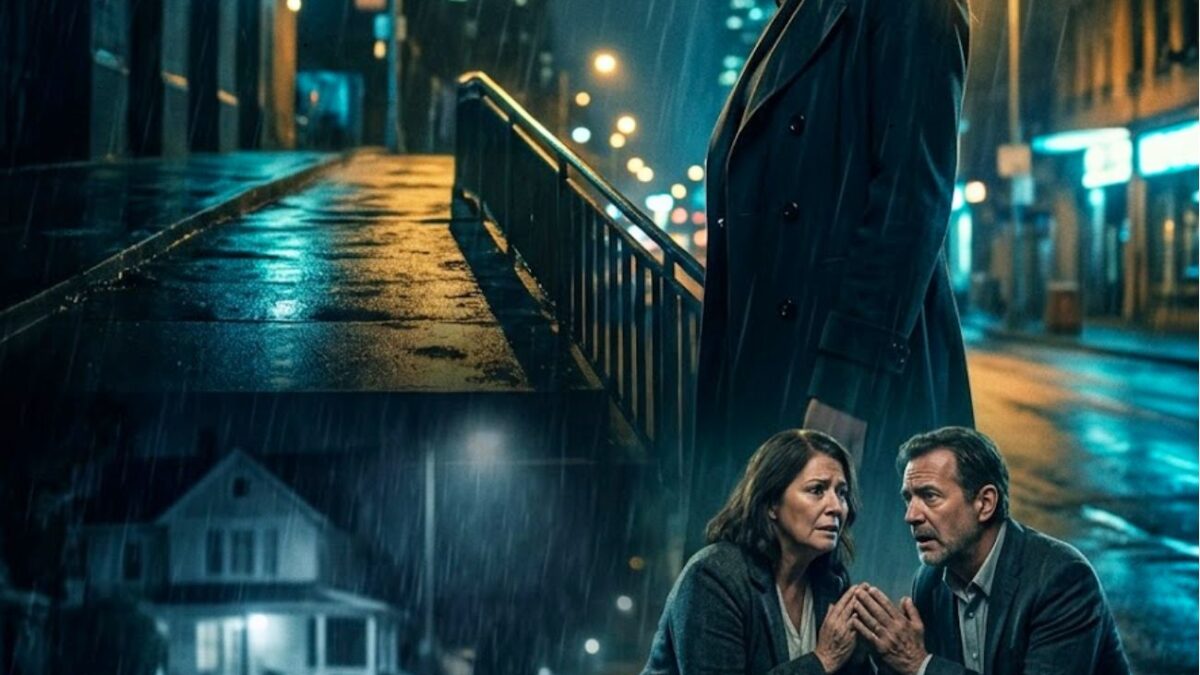
My name is Tessa Harlan, and I was thirty-one years old on the night cold pavement pressed against my skin. That biting surface was the very first physical sensation that reached through the haze of my fractured consciousness. It was not fear at first, nor was it even pain, but rather a deep, brutal chill that seeped into my core.
The asphalt seemed to pull every remaining ember of warmth straight out of my bones, locking my muscles in place. I forced my eyelids open to find myself staring at the crumbling curb of a dark, unfamiliar alleyway. To my left, a long row of shuttered commercial storefronts stretched silently into the damp, heavy darkness.
I had no earthly idea where I was, how many miles lay between me and safety, or how I had arrived there. The simple effort of trying to prop myself up on one elbow triggered an explosion of blinding agony across my ribs. A thick, warm fluid trickled down the side of my temple, matting into my tangled hair before dripping to the ground.
I looked down at myself through blurred vision, and my stomach plummeted into a sickening, endless freefall. My feet were completely bare, crusted with dark grime and scraped raw against the unforgiving gravel. I was nearly stripped bare, left shivering in torn scraps of cloth that barely offered even minimal decency.
My leather handbag was gone, vanished along with every piece of identification that proved who I was. My mobile phone was gone, completely severing any lifeline or desperate call for emergency assistance. My wallet and house keys were gone, leaving me completely destitute and cast out in the dead of night.
For one fleeting, naive second, my mind scrambled to believe a violent stranger had ambushed me in the shadows. I tried to convince myself that a random mugger had cornered me in an alley, taking everything and running off. Yet the fragile illusion shattered almost instantly as the fractured pieces of memory came crashing violently back.
I remembered the ferocious shouting echoing off vaulted ceilings, vibrating the polished wood of the living room. I remembered the sudden, sickening violence of my own mother grabbing me, beating me without an ounce of hesitation. Her hands had struck repeatedly, brutal and deliberate, until the room tilted sideways and my limbs went totally limp.
Standing just a few feet away, bathed in the sharp blue luminescence of her screen, was my sister Paige. She had not flinched, she had not covered her eyes in terror, and she had not cried out for someone to stop. Instead, she had tilted her device steadily, capturing every agonizing blow with an expression of pure, unadulterated delight.
Her laughter had cut through the heavy air, a high, musical sound that rang with genuine, spiteful amusement. “Look at you,” Paige had purred, stepping closer so the lens could capture the blood smearing across my cheek. “Your absolute misery makes me so happy; you are nothing but a pathetic joke, and I will let the world laugh at you.”
Those vicious words echoed through my pounding head, burning far deeper than any physical injury across my flesh. The mother who had tucked me into bed and sworn that no one would ever harm me had beaten me senseless. My younger sister, who once held my hand during thunderstorms, had filmed my destruction like a spectator sport.
Together with my father, they had dragged my limp form out of the house, stripping me of every possession. They loaded me into the vehicle like an unwanted bag of refuse, drove far into the night, and tossed me onto asphalt. I could never have walked that distance barefoot and broken; they had intentionally carried me out to die.
They truly believed I would never wake up, or that the cold and the dark would finish whatever they started. Lying there in the dirt, I wondered how deep hatred had to run for a family to discard their own flesh and blood. I was broken, bleeding, and entirely abandoned, but the rhythm of my heart stubbornly refused to slow down.
Just as the numbing cold began pulling me under once more, two sweeping arcs of white light cut through the dark. Twin headlights bathed the shuttered storefronts in a stark glow before coming to an abrupt halt beside me. The engine idled with a steady, mechanical rumble that vibrated through the cracked asphalt beneath my temple.
A driver’s side door creaked open, and rapid footsteps crunched hurriedly against the scattered roadside gravel. A man bent down beside me, his face etched with deep lines, silver framing his temples beneath a faded cap. He wore a heavy, frayed canvas work jacket that smelled of mild industrial soap, floor wax, and clean evening air.
“Oh my God,” the stranger whispered, his voice trembling with an authentic horror my parents had never possessed. “What in heaven’s name happened to you?” he asked, dropping instantly to his knees without caring about the grime. I parted my swollen lips to answer, but nothing emerged except a weak, rasping breath that shuddered in my throat.
How could anyone formulate the words to explain to a stranger that her own parents had dumped her in the dirt? Without hesitation, the man shed his heavy jacket and draped the thick, warm lining carefully over my trembling shoulders. “Stay right here with me, don’t close your eyes,” he commanded gently, already dialing emergency numbers on his phone.
He identified himself clearly to the dispatcher as Harvey Lindell, sixty-four years old, working the commercial strip. He was a night custodian who had just finished locking up the back entrances of the retail shops behind us. If he had finished his shift five minutes earlier, or turned down a different avenue, I would have died on that curb.
The high-pitched wail of approaching sirens sliced through the night before I could decide what was safe to say. The horizon tilted sharply, the streetlights spun into blurred ribbons of white, and unconsciousness pulled me under again. The freezing dark reclaimed my thoughts, blanking out the sound of Harvey’s steady, reassuring voice in the distance.
The next sensation was the sharp smell of antiseptic and the harsh, clinical glare of fluorescent hospital tubes overhead. A triage nurse noticed my eyelids fluttering and moved with practiced urgency, checking the monitors beside the bed. An attending physician stepped through the curtain moments later, keeping his tone measured, professional, and quiet.
He explained that I had suffered multiple hairline rib fractures, severe contusions, and a moderately severe concussion. The prolonged exposure to the freezing asphalt had nearly driven my body into irreversible hypothermic shock. According to the admittance records, I had been lying completely unresponsive on that gurney for almost fourteen hours.
Fourteen entire hours had slipped away while medical teams pumped warm saline and painkillers into my veins. If Harvey had taken his usual shortcut home, my body would have been discovered on the pavement by morning delivery trucks. The physician continued outlining treatment schedules and CT scan results, but his words drifted away like dry leaves.
A single, suffocating realization sat heavy on my chest, pressing down far harder than the cracked bone beneath. Why would they carry cruelty that far inside the walls of our own living room, behind drawn family blinds? Why raise a smartphone to document my suffering, smiling as if watching a private piece of triumphant theatre?
Why load a thirty-one-year-old daughter into the back of an SUV and discard her on a dark commercial roadway? The ensuing three days dissolved into a disorienting haze of intravenous drips, physical therapy, and repeated scans. Every breath felt like broken glass scraping my lungs, yet the silence from the outside world cut infinitely deeper.
Not a single person who carried the Harlan family surname called the hospital switchboard or stepped through the doors. On the morning of the fourth day, the heavy wooden door clicked open, admitting two plainclothes detectives. The older investigator stepped forward, placing his gold badge flat against the rolling tray table where I could see it.
“I’m Detective Cole Voss,” he introduced himself, pulling a wooden visitor chair close to the edge of my mattress. He asked gently how I was feeling before transitioning to the methodical, careful inquiries detectives reserve for violence. It was the tone investigators use when they already suspect the truth lurking beneath the surface is thoroughly grotesque.
I took a slow breath, anchored myself against the dull ache in my side, and gave him the unvarnished facts. I explained that my mother, Marlene, had attacked me inside our home, striking me repeatedly until I lost consciousness. I told him Paige had stood inches away, filming the entire beating with a smile while offering cruel commentary.
I recounted opening my eyes hours later on freezing pavement miles away, devoid of shoes, phone, or identification. I did not embellish a single syllable, nor did I allow my voice to crack as I laid out the brutal timeline. Detective Voss took meticulous notes in a spiral ledger, his pen moving steadily across the lines without interruption.
When I concluded, he capped his ballpoint pen, closed the cover, and looked directly into my eyes with a grave gaze. “Your parents and your sister came into the precinct two days ago,” Voss stated bluntly, watching my reaction carefully. “They walked in together and gave our department an entirely contradictory version of events,” he added quietly.
Hearing him refer to them formally stripped away the remaining illusion of domestic kinship, laying bare the battlefield. My mother, Marlene Harlan—the woman who had packed lunches and braided my hair—had delivered an elaborate performance. She claimed to the officers that I had suffered a violent psychological breakdown following my grandmother Irene’s funeral.
Marlene told investigators that I had violently lunged across the kitchen counter, slapping her and shattering furniture. She claimed she had cowered in terror while I threw dining chairs against the cupboards in an uncontrollable rage. My father, Dwight Harlan—the respected local businessman—had backed her story up with solemn, practiced grief.
Dwight told the officers that his elder daughter was suffering from rapid mental deterioration and paranoid instability. He stated that what I needed was involuntary psychiatric commitment, not an official municipal police report. He claimed I had bolted into the darkness on my own two feet, and that the family had searched desperately for hours.
Then came the statement from Paige, my younger sister who used to crawl into my childhood bed during severe thunderstorms. Paige told the police that I had attempted to violently wrest her phone from her grasp before sprinting down the driveway. She claimed I had been acting erratically for several weeks, and insisted she never left the safety of the gravel drive.
Three distinct family members, sitting together in a police station, delivering a single, polished, and airtight narrative. Detective Voss did not offer empty platitudes or pretend that resolving the contradiction would be simple or painless. He stated plainly that both stories could not occupy the same reality, which was precisely why he had come to my bedside.
He left his business card resting against the plastic water pitcher and advised me to retain legal representation immediately. After he walked out, the attending nurse who entered to administer my evening antibiotics refused to meet my gaze. The manufactured story fabricated by Dwight and Marlene had clearly begun filtering through the hospital staff.
To the ward, I was rapidly becoming a troubled, aggressive daughter who had spun out of control during a family tragedy. Yet when I held their polished story up against the reality of the freezing alleyway, the narrative immediately fell apart. A frantic woman who strikes her mother and flees on foot does not wake up barefoot in a different commercial sector.
She does not arrive miles away with her phone stripped from her hand and her purse conveniently erased from existence. More importantly, a family genuinely consumed by terror for a missing daughter does not wait days to notify authorities. They do not allow four days to pass in silence while meticulously coordinating an elaborate story for the detective division.
Panicking families flood the emergency rooms, call the morgues, and pace the hospital waiting rooms in absolute agony. Dwight, Marlene, and Paige had not displayed panic; panic is notoriously sloppy, unpredictable, and vulnerable to error. My family had operated with cold, calculated precision, arriving at the precinct solely to construct a preemptive legal shield.
Before Voss left the floor that evening, he stopped by my doorway once more to confirm the active protective directives. He instructed me firmly to avoid making any attempt to contact Marlene, Dwight, or Paige under any circumstances. He pronounced each full name with clinical detachment, formally transitioning them from family members into criminal targets.
“People who live in beautiful, manicured homes still commit terrible crimes,” Voss murmured quietly from the threshold. “The only real difference is that they practice their alibis a whole lot more before speaking to an officer.” Once he was gone, I requested an outside line from the nursing station and dialed the only number I trusted.
I called Bridget Colton, a brilliant corporate attorney and longtime friend who knew the internal machinery of my family. When she answered, I told her I was in a hospital bed, that detectives were involved, and that I needed counsel immediately. Bridget did not demand an emotional performance over the line; she simply told me she was clearing her docket and driving over.
The coordinated statement at the precinct was not a misunderstanding born of grief over Grandmother Irene’s passing. They were actively manufacturing a legal reality where I was the dangerous aggressor and they were the traumatized victims. Grief is inherently chaotic, but their story arrived with symmetrical details, identical timelines, and unified defenses.
Two distinct accounts now sat on the county records, and only one of them possessed the structural integrity to survive. I knew precisely which reality I had inhabited on that frozen pavement, and I knew they expected their status to prevail. Every time the hallway door swung open, I braced myself for a familiar voice, but none ever came down that corridor.
By sunrise, I completely stopped listening for footsteps, finally accepting that the people who raised me were gone. They had chosen their lie, and they had no intention of visiting a hospital room to walk it back. Three days later, Bridget Colton entered my room carrying a weathered cardboard storage box instead of flowers or clothes.
Inside was a labeled accordion folder alongside a secure USB drive I had hidden beneath a shelf at Harlan Storage Group. I had secured that drive the very afternoon before I made the fateful decision to drive over to the Fairhaven residence. Bridget cleared the plastic medicine cups from my tray table and spread the dense financial printouts between us.
The entire nightmare had begun a week after we buried Irene Harlan, the matriarch who had built the storage company. My father had asked me to stay late at the headquarters, tasking me with digitizing legacy accounts and storage files. As the operations coordinator, I assumed I was simply sparing my sister and our cousin Miles a long, tedious weekend.
Yet as the flatbed scanner illuminated page after page, the hard numbers on the screen violently diverged from reality. Monthly rental receipts flowing across the raw banking feeds sat significantly higher than the internal reports Dwight signed. Entire rows of paying tenants, corporate lease agreements, and cash locker deposits were omitted from the official books.
My suspicions aroused, I accessed the foundational documents for the Harlan Family Limited Partnership late that evening. Grandmother Irene had intentionally established the entity so that ongoing net profits would be split evenly among three grandchildren. The distributions were legally mandated to be divided equally between myself, my sister Paige, and our cousin Miles.
Miles lived two hours away in the rural part of the county, trusting entirely in the quarterly statements my father mailed. When I examined the official distribution authorization forms bearing Irene’s signature, my blood ran instantly cold. I had seen my grandmother’s distinctive script on decades of birthday cards, family letters, and company property deeds.
The ink marks on the recent corporate filings were close, but the fluid pressure of the pen was visibly unnatural. The telltale loop on the letter ‘H’ hesitated awkwardly, betraying someone who had practiced tracing the stroke repeatedly. I kept digging through the digital archives because closing the folder would have required me to accept active complicity.
Capital that legally belonged within the partnership accounts had been siphoned off through complex corporate transfers. More than three million two hundred thousand dollars had been quietly diverted away from the three named beneficiaries. The embezzled wealth had funded a brand-new storage facility, an expansive pool renovation, and an account under Marlene’s name.
Armed with physical printouts, I drove to the Fairhaven house after closing hours, seeking a reasonable explanation. I did not enter the front door to wage war; I genuinely believed there had to be some administrative misunderstanding. The kitchen was warmly lit, my mother standing by the granite island with a glass of white wine in her hand.
My father sat at the far dining counter checking market updates, while Paige scrolled through social media from a stool. I set the thick folder directly onto the counter, stating calmly that the partnership draws failed to reflect actual rents. I pointed out that the authorizations bearing Grandmother Irene’s name were forged, demanding to know what had occurred.
Dwight glanced down at the forensic breakdown, his jaw tightening as he reached immediately for his preferred defense. “You don’t understand how corporate restructuring works, Tessa,” he said dismissively, refusing to look directly at the math. “I understand the difference between my grandmother’s handwriting and a criminal forgery,” I answered without flinching.
My mother did not bother attempting an accounting excuse; she set her wine down, rounded the counter, and lunged. Her hands locked into my collar, ripping the fabric as she slammed me violently against the edge of the hardwood cabinets. When my knees buckled and I struck the floor, she did not pull back; she kicked and struck with vicious ferocity.
I pleaded with her to stop, but the violence escalated until the ceiling lights spun and my arms went completely limp. Paige never reached for a house phone or moved to restrain our mother; she simply lifted her mobile device smoothly. The camera lens hovered inches above my face as Paige chuckled, recording every agonizing blow like a spectator.
My father observed the beating just long enough to confirm I was no longer capable of standing on my feet. Then, with chilling composure, he plucked the keys to the company utility vehicle from the hook beside the door. Looking at the bank printouts on my hospital bed, the entire horrific sequence crystallized into undeniable clarity.
The assault in that kitchen had never been about a sudden emotional explosion or grief over Grandmother Irene’s death. It had been an instantaneous, coordinated corporate cleanup designed to permanently neutralize an unexpected whistleblower. I had become an active, dangerous witness to grand larceny, and a witness is only safe if her credibility is destroyed.
Dwight could never have executed millions in fraudulent transfers without Marlene managing the corresponding domestic accounts. My mother was not a bystander swept along by circumstance; she was an active co-conspirator protecting her illicit wealth. And Paige had enthusiastically embraced the role of documentarian, capturing manufactured humiliation to ensure my silence.
Bridget pointed her pen at the corporate beneficiary schedules, noting that cousin Miles remained completely in the dark. “He still believes the quarterly dividend payments are delayed due to probate bureaucracy,” Bridget observed somberly. She methodically affixed colored tabs to the fraudulent draw sheets, highlighting the bogus signatures and shell companies.
I recounted how I had waited for the administrative staff to leave before securing the digital copies on my private drive. “They anticipated standard tax questions from external auditors,” Bridget murmured, packing the documents into her briefcase. “What they never anticipated was their own daughter walking out of the building with the unedited financial ledger.”
I stared at Marlene’s name on the shell account statements, realizing the true magnitude of their moral bankruptcy. If I had remained silent, the luxurious pool expansion would have been celebrated as a testament to family enterprise. The multimillion-dollar facility in the adjacent county would have been praised as visionary commercial expansion.
Bridget secured the thumb drive in her satchel, leaving duplicate paper exhibits neatly stacked beside my hospital bed. “We keep Miles separated from this information for now,” she instructed firmly, “at least until subpoenas are served.” I concurred quietly; Miles was a decent, hardworking man who still believed the family enterprise operated with integrity.
A floor nurse interrupted our conversation, carrying a modest bouquet of cellophane-wrapped grocery store flowers. “A courier left these at the administrative desk downstairs,” the nurse said pleasantly, setting the vase on the tray. Tucked deep between the stems was a plain white envelope containing a single sheet of paper with one typed sentence:
Stop asking questions if you want to stay safe.
I laid the cold paper down; whoever arranged that delivery truly believed intimidation could still manage the situation. That afternoon, Detective Voss returned to the room carrying a folder that contained no domestic crime scene imagery. Instead, it was filled with forwarded group messages, cousin email threads, and screenshots from our extended family network.
Voss laid the initial printout across my blanket so I could witness the ongoing character assassination firsthand. According to the narrative circulating among relatives, I had embezzled corporate funds from Harlan Storage Group for years. The messages claimed I had suffered an emotional collapse after the funeral, fabricating a personal assault to obscure my crimes.
One message sent by my uncle at dawn stated I had bolted into the night, injured myself, and was now framing my parents. None of it held a grain of truth, yet distant relatives accepted the fiction because the most prominent voices endorsed it. Paige was orchestrating the campaign with surgical precision, utilizing tearful telephone calls rather than formal announcements.
She contacted an aunt in Dayton, a former Sunday school teacher, and several unit managers with practiced sorrow. She painted a portrait of poor, unstable Tessa who cracked under corporate pressure and lashed out at those who loved her. Paige never had to utter the word ‘thief’; she merely sighed heavily, claiming she was exhausted from covering for me.
Distant cousins who had sat beside me at Thanksgiving dinners immediately typed messages validating the family’s lies. One relative commented that Dwight had shown too much mercy, while another questioned if I should face criminal charges. The reputational poison quickly seeped into my professional livelihood beyond the confines of the storage company.
The operations consulting agreement that funded my apartment rent was placed on immediate administrative suspension. A regional logistics board where I held an active professional certification delayed my pending credential renewal. An acquaintance of fifteen years abruptly disconnected her mobile number, severing ties without offering a single word.
Discharge arrived on a damp, overcast morning, the hospital wheelchair rolling me out to the taxi pickup lane. I stepped into a rideshare clutching a clear plastic bag containing medical discharge instructions and prescription bottles. As the driver navigated morning commuter traffic, I scrolled through my phone, observing how many contacts had gone completely dark.
Walking inside my apartment was like stepping into an abandoned museum dedicated to a life that had vanished overnight. A coffee mug sat unwashed in the kitchen sink, right beside the Harlan corporate keycard I was barred from using. By midday, a distant cousin left a voicemail demanding the ‘unvarnished truth’ before the upcoming church fellowship.
Paige posted an image of our empty company conference room accompanied by an ambiguous quote about familial loyalty. An hour later, a commercial tenant I had assisted for years emailed to announce all correspondence must now route through Paige. The physical bruises across my ribs gradually faded from deep purple to sickly yellow, easing the labor of drawing breath.
Yet while my broken bones steadily mended, the Harlan surname continued to poison every professional channel I possessed. Detective Voss checked in periodically, documenting the defamatory communications and logging the anonymous floral threat. On the back of my hospital discharge papers, I drafted three columns: those who attacked, those who posted, and those who went silent.
The profound silence of lifelong family friends cut deeper than the outright fabrications broadcast by my immediate relatives. Their calculated neutrality provided the fertile soil in which Dwight and Marlene’s grand deception took firm root. If I screamed in protest, they would label me hysterical; if I remained quiet, they would cite my silence as guilt.
Three weeks following my release, an unlisted telephone number flashed across my screen with persistent regularity. When I finally swiped the screen, a gravelly, cautious voice asked quietly, “Is this Tessa Harlan speaking?” “Yes, it is,” I answered hesitantly, bracing myself for another lecture from an estranged family partisan.
“I’m Harvey Lindell,” the man said simply, “the custodian who called the paramedics for you that freezing night.” My breath caught in my throat as I leaned heavily against the kitchen counter, listening intently to his words. Harvey explained that he had read a brief local police blotter item mentioning the commercial street where he found me.
He revealed that he had intentionally withheld a crucial observation from his initial emergency dispatch phone call. He had not merely stumbled upon my unconscious body lying abandoned on the curb after the perpetrators had departed. He had witnessed the entire drop-off occur from the shadowed loading dock of the commercial hardware store.
Harvey watched a large, dark SUV pull behind the closed storefronts, parking quietly with the headlights extinguished. A tall, heavy-set man remained idling behind the wheel while an older woman dragged an unresponsive form out. A younger woman stood mere paces away, aiming a lit mobile device at the scene without displaying the slightest fear.
“The girl holding the phone looked happy,” Harvey stated, his voice tight with lingering disgust across the line. “That’s the one detail I can’t scrub from my mind; she was actually smiling while they dumped you in the dirt.” I asked Harvey if he would be willing to review photographic lineups with Detective Voss, and he agreed without pause.
The following afternoon, Harvey arrived at the eastern precinct wearing the familiar, faded canvas work jacket. Voss presented several printed photographic arrays on the metal table, using company picnic photos and historical portraits. Harvey placed his index finger firmly upon the portrait of Marlene Harlan, followed instantly by the image of Paige.
“I don’t know these high-society people,” Harvey told the detective, “and I don’t attend their country club functions.” “That older woman did the dragging, and that younger girl held the glowing phone and laughed like it was entertainment.” When Voss pressed him regarding the driver, Harvey refused to speculate, citing the dim light on the driver’s side.
His disciplined refusal to invent details only lent immense credibility to his absolute identification of the two women. That very week, two former warehouse employees independently contacted Detective Voss requesting formal interviews. They did not coordinate their arrivals, but they described an identical pattern of coercive intimidation under Dwight Harlan.
Both men recalled how Dwight routinely inspected facility units after hours, demanding silence regarding unrecorded cash receipts. One attendant who questioned missing rental payments found his weekend shifts permanently eliminated the following morning. The second employee recounted Dwight explicitly warning him that employees who enjoyed regular paychecks never examined ledgers.
Armed with independent corroboration, Voss summoned me downtown to outline the unraveling alibis of my family. Marlene now claimed she had retired to her master bedroom by ten o’clock on the evening of the incident. Dwight claimed he had driven to the corporate office alone to reset an electrical breaker before returning home.
Paige now asserted she had remained stationed on the front porch looking for my car before retreating inside. Their initial synchronized timeline had begun fracturing, sprouting contradictory revisions as investigators pressed harder. Paige’s emphatic claim that she never left the driveway was rapidly collapsing under the weight of municipal scrutiny.
Voss did not raise his voice; he simply arranged the contradictory written statements side by side on his desk. He deliberately withheld Harvey’s identification from the family’s defense attorneys, allowing them to dig deeper holes. For nearly a month, the county possessed two opposing stories, but now independent physical evidence entered the frame.
A cousin who still fancied herself an intermediary leaked that Paige was offering third and fourth versions of that night. First Paige claimed she was asleep, then on the porch, then walking the perimeter—a dizzying dance of desperation. Detective Voss recognized these frantic adjustments as the classic maneuvers of suspects realizing their foundation is rotting.
On a crisp Friday morning, Voss contacted Bridget and requested our immediate presence in the precinct conference room. We passed through security without exchanging pleasantries, mounting the stairs toward an audiovisual presentation suite. Three senior state investigators were seated around a long conference table, illuminating a large monitor on a rolling stand.
Voss dimmed the ceiling lights and pressed play on a console without offering any preparatory remarks or warnings. A stark digital timestamp glowed in the corner of the frame, recording the precise night I was discarded. A commercial surveillance feed captured our family’s black company SUV navigating the access corridor toward the retail strip.
The vehicle moved with deliberate precision, taking the service alley behind the dark storefronts where Harvey worked. Voss advanced the file, transitioning seamlessly to an automated teller machine camera mounted outside a neighboring pawnshop. The high-definition lens, positioned lower to the street level, caught the vehicle idling at a red intersection light.
The investigators digitally magnified the windshield until the facial contours of the front occupants resolved with pristine clarity. Dwight Harlan sat rigidly behind the steering wheel, his knuckles white against the leather, staring fixedly ahead. Marlene Harlan occupied the passenger seat, while a slumped, unresponsive silhouette lay contorted across the rear bench.
The heavy silence in the conference room was absolute as the digital timer ticked forward on the high-resolution display. I felt the hard plastic of my chair beneath me, realizing an impartial machine had finally validated my survival. Detective Voss paused the footage and slid a secondary forensic packet across the wooden laminate table toward Bridget.
The dossier contained extensive cloud data extractions recovered from a shared family account registered under Paige’s name. “People routinely purge files from their local mobile devices,” Voss remarked dryly, tapping the forensic data tables. “They completely forget that modern automated cloud backups preserve exact duplicates across external servers.”
Buried beneath ordinary snapshots of pets and birthday dinners was a deleted archive folder created that exact night. The lead investigator launched the primary video file, the screen illuminating with shaky, handheld mobile footage. The frame revealed polished kitchen tile, the chrome leg of the stove, and my own battered body crumpled helplessly below.
My mother loomed over me, striking with calculated fury, while Paige’s ragged, excited breathing filled the audio track. The camera tilted down with macabre enthusiasm, capturing my feeble attempts to shield my head from the assault. Then came Paige’s recorded voice, echoing the exact cruelties she had spat before leaving me on the freezing asphalt.
Toward the end of the recording, Dwight entered the frame, stooping down to drag my limp arms across the floor. Paige never flinched; she tracked the movement through the lens like a director capturing an essential cinematic scene. Voss slammed the laptop closed, terminating the sickening playback before the digital timecode reached its final second.
The toxic lie that I had suffered a self-inflicted mental breakdown was permanently extinguished within that room. An investigator provided a printout of an encrypted text Dwight had transmitted to Marlene while I lay unconscious:
She copied the partnership files. If she talks, we lose the company.
That single transmission provided devastating, incontrovertible proof of criminal motive directly linked to corporate fraud. Bridget immediately motioned to have the digital extraction certified as primary evidence for upcoming legal proceedings. Voss confirmed the state financial crimes division had joined the inquiry, running parallel investigations into grand larceny.
Eight months following that horrific night, the county superior courtroom was packed to capacity before the docket call. I entered alongside Bridget Colton and Detective Voss, taking our positions at the prosecution’s primary table. Across the center aisle sat Dwight, Marlene, and Paige, flanking their high-priced private defense attorneys in silence.
None of them possessed the courage to glance in my direction; Paige sat rigidly, staring fixedly at her manicured nails. The proceedings did not commence with the dramatic assault footage, catching the defense team entirely off guard. Bridget stood before the bench, systematically walking the court through eight years of complex limited partnership ledgers.
She projected line items demonstrating how commercial revenues intended for the grandchildren were siphoned into shell entities. Millions of dollars had been funneled directly into private residential renovations and the acquisition of unrecorded properties. The rhythmic recitation of raw numbers initially sounded dry, yet the courtroom slowly grew deathly quiet as patterns emerged.
A forensic document examiner took the witness stand, projecting Grandmother Irene’s authentic signature beside the forged draw authorizations. The expert demonstrated how the forged loops on the corporate documents revealed unnatural hesitation and artificial tracing. “These signatures were unequivocally executed by an unauthorized third party,” the examiner testified with absolute professional finality.
A collective murmur rippled across the benches where extended family members, former friends, and commercial partners sat. Cousin Miles sat in the second row, clutching a copy of the partnership agreement that allocated him a third of the assets. He stared at the financial schedules with a pale, hollow expression, finally recognizing how thoroughly he had been swindled.
An uncle who had publicly denounced me in the family chat stood up quietly and exited the courtroom without looking back. Bridget continued her methodical presentation, entering evidence of covert banking accounts and unrecorded corporate revenues. The total sum illegally diverted away from the legitimate partnership beneficiaries exceeded three million two hundred thousand dollars.
Then the courtroom monitors illuminated, displaying the retrieved surveillance footage alongside Paige’s deleted cloud recording. The sickening audio of my mother’s assault and my sister’s triumphant laughter reverberated through the vaulted chamber. Spectators who had arrived to support a respected local pillar dropped their pens, averting their eyes in profound shame.
Then the damning text message flashed upon the monitors: She copied the partnership files. If she talks, we lose the company. Financial fraud and premeditated violent assault locked together in a single, devastating demonstration of criminal enterprise. The presiding judge ordered an immediate recess, visibly shaken by the overwhelming weight of the documented atrocities.
When proceedings resumed, a state revenue auditor detailed years of systematic tax evasion executed by Dwight Harlan. The commercial empire my father had built upon a facade of civic respectability collapsed into ashes before the bench. Before the gavel fell, the presiding judge ordered all corporate assets frozen, placing the firm under emergency receivership.
Formal felony indictments were handed down for battery, unlawful restraint, grand larceny, forgery, and criminal conspiracy. Paige sat through the concluding hour with her mobile device turned face down, stripped of her manufactured online persona. Marlene stared blankly at the mahogany desk, while Dwight signed bond documents with trembling, uncoordinated hands.
Outside the courthouse, Miles stood near a stone pillar, holding the forensic audit sheets in his weathered hands. He spoke my name softly as I approached, his voice carrying a profound sorrow devoid of easy excuses. I offered a simple, understanding nod before walking past; we both had arduous legal journeys ahead of us.
Within weeks, Harlan Storage Group collapsed into Chapter 7 liquidation, its assets seized to satisfy mounting liabilities. The Fairhaven residence went into active foreclosure, its luxurious renovations unable to prevent the bank’s auction gavel. Marlene was sentenced to state confinement for aggravated battery, while Dwight received a lengthy term for financial fraud.
Paige suffered criminal conspiracy convictions alongside a devastating civil defamation judgment that attached to all future earnings. Two years after the trial, while working as a senior forensic auditor for a logistics firm, Bridget contacted me again. “Your family’s defense counsel has formally requested an extraordinary mediation session,” Bridget stated with flat professional reserve.
They were seeking an emergency conference in a secure administrative building, and I agreed solely to write the final chapter. When I stepped into the neutral conference room, the people seated across the table bore no resemblance to the predators I remembered. Dwight appeared twenty years older, his once-imposing frame withered, his hair reduced to sparse, unkempt white strands.
Marlene looked frail, the arrogant posture that defined her vanished beneath the weight of state-mandated restitution orders. Paige kept her trembling hands folded in her lap, unable to maintain eye contact as the silence stretched thin. Dwight cleared his throat, leaning forward over a typed draft agreement promising emotional reconciliation and requested sentence reductions.
“We made terrible mistakes, Tessa,” he rasped, utilizing the minimize-and-divert language habitual to unrepentant white-collar criminals. “Mistakes are clerical errors on a balance sheet,” I responded evenly, resting my palms flat upon the wooden table. “Beating your daughter unconscious, filming her humiliation, and discarding her on frozen asphalt constitutes premeditated cruelty.”
My mother wept quietly, claiming they had lost their home, their social standing, and every dollar they possessed. “We were desperate, Tessa,” Dwight pleaded, pushing a proposed joint clemency petition across the polished surface. “Desperate people sell assets or confess to an auditor,” I answered, leaning forward so my voice carried absolute weight.
“Desperate people do not attempt to murder their daughter to preserve a commercial lie, then beg her to fix their record.” Paige whispered that she had been young, but I held her gaze until her weak, self-serving justification evaporated. She had been a grown corporate officer who consciously prioritized viral online spite over basic human decency.
“Can you ever find it in your heart to forgive us?” Dwight whispered, his eyes searching mine for an unearned reprieve. “Forgiveness and rescue are entirely different concepts,” I answered calmly, rising to my feet and buttoning my coat. “I will not sign your petition, I will not endorse your clemency, and I will never erase what the law has justly recorded.”
I turned toward the exit without pausing, leaving them alone with the consequences they had meticulously engineered. The legal records of this county do not grant exemptions for biological ties or prestigious neighborhood addresses. A criminal statute is an impartial instrument, and an unvarnished public record never forgets the truth.

