Maybe God isn’t giving you what you ask for—for a reason | Christian reflection
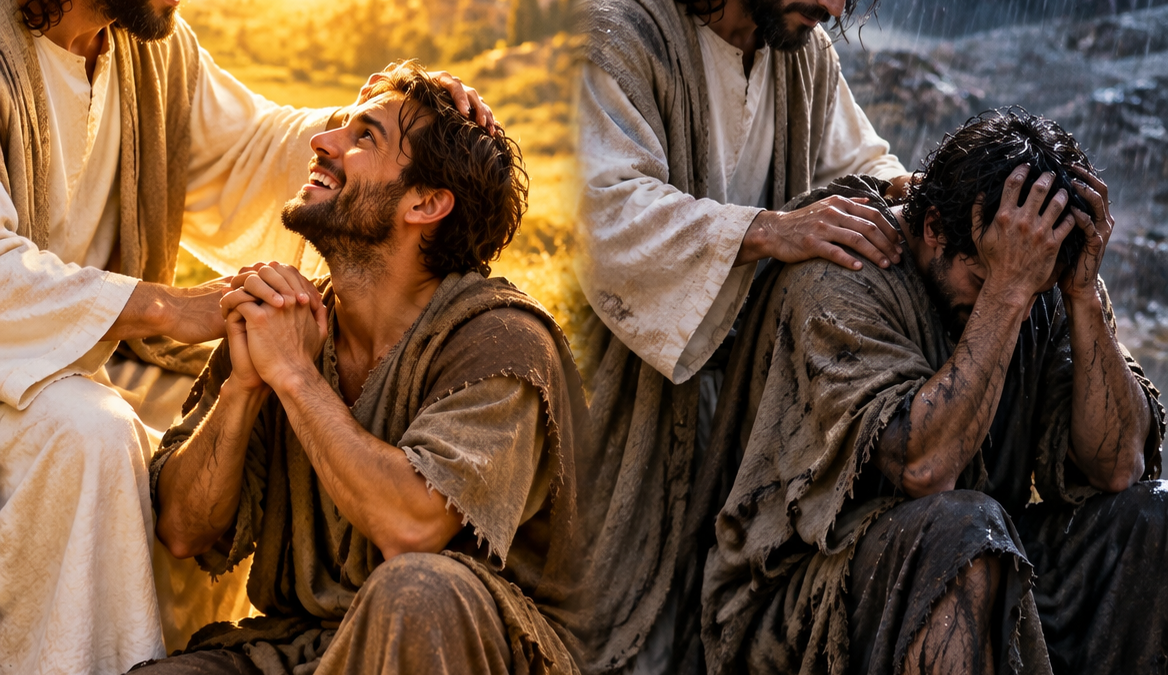
There’s a prayer you’ve said so many times that you may have started saying it without even realizing it. You ask, you wait, you ask again, you cry, you try to understand, and even after so much time, the answer seems not to come. Perhaps you are asking: “God, why don’t you give me what I’m asking for?”
Perhaps this is an answer you’ve been waiting for for months, perhaps for years. It could be a relationship, an opportunity, a cure, a change in the family, a professional door, a financial answer, a dream that seems further and further away. And perhaps you’ve already reached the point of thinking: “Is God not listening to me?”
But today I want to present a possibility that can completely change the way you see this waiting. And if God is listening perfectly, but is refusing to give you what you ask for because He knows something you can’t yet see, think about this. A child can ask their Father for something with complete sincerity.
They can cry, they can insist, they can say: “I want it, I need it, please.” But the father knows what the child does not know. She sees the desire. The father sees the consequences. She focuses on the present, while her father thinks about the future.
And sometimes the answer to love is no. The child may interpret as rejection, but it is not. It’s protection. Perhaps that’s exactly how you’re interpreting God’s silence. You think: “He doesn’t love me.” When God might be saying, “I love you too much to give this up now.”
There is a huge difference between God not hearing your prayer and God answering in a way you can’t yet comprehend. Because we tend to imagine that a response from God needs to be yes, but biblically God also responds with no. Wait, not like that, not now. And that can be extremely difficult.
Because when we deeply want something, we start to believe that it’s exactly what we need. But there’s a question we rarely ask: “Lord, what if what I want isn’t what I really need?” This question requires humility because it means admitting something. Perhaps I’m only seeing part of the story.
Now imagine a person looking at a map. She sees a road that appears perfect: straight, fast, and beautiful. So think about it, it’s this way. But there is something she cannot see. A destroyed bridge a few kilometers ahead. The map she has is incomplete, but someone who knows the whole region knows this, so they can close that road.
For those who are driving, it looks like a delay. For those who know the way, it is protection. Perhaps God is doing this with you. You see the road you want, he sees the broken bridge, you see the opportunity. He sees the consequences. You see the person, he sees what that relationship would do to his future.
You see the salary, he sees the price your soul could pay; you see the dream, he sees if you are prepared to carry it. God sees beyond what is asked. Now think about Moses. When he arrived at the sea, it seemed there was no way out. Ahead, water; behind, the Egyptian army.
The situation seemed impossible. But God didn’t explain everything beforehand. He simply led Moses to that place and only then opened the way. This teaches us something powerful. Sometimes God allows you to reach a place where you can’t solve things on your own to teach you to trust in Him.
Perhaps you are exactly in that place. You tried to solve it, you tried to control it, you tried to find alternatives. He tried to make it happen, but nothing worked. Perhaps you’re calling this failure, but perhaps God is teaching dependence. Now think about Abraham. God promised a son, but the promise was delayed and delayed and delayed.
Humanly speaking, it seemed impossible. Abraham grew old, Sarah grew old, and for a long time nothing happened. Imagine how many times he could have thought about it. Perhaps God has forgotten. But God had not forgotten. Time was simply working in a way that Abraham couldn’t understand.
And when the promise finally arrived, it became clear that it wouldn’t be possible to attribute it to human ability. It would be necessary to acknowledge that it was God. Perhaps your waiting is producing exactly that, a dependency you would never have developed if the answer had come quickly. Because some immediate answers satisfy our desire, but some waiting transforms our character.
And God is more interested in what He is forming in you than simply in what He is placing in your hands. Now, imagine someone receiving a large sum of money before learning how to manage it. What could be a blessing can turn into destruction. Imagine someone being given authority before developing character. Authority can fuel pride.
Imagine someone receiving recognition before learning humility. Success can destroy what it should strengthen. Therefore, God does not only prepare the blessing. He prepares the person who will receive the blessing. Perhaps you are saying, “Lord, when is God working? First let me prepare you.” Perhaps you’re asking, “Why not yet?”
And God may be saying, “Why can’t you see what I can see?” Now, think about Joseph. He received dreams about his future, but after that, his life seemed to go in the completely opposite direction. He was rejected by his brothers, sold, taken to a foreign land, and became a slave. Then he was unjustly imprisoned.
If Joseph had only looked at his circumstances, he might have concluded: “God has failed me.” But God had not failed. Each step was connected to the purpose. The well seemed like the end, slavery seemed like the end, prison seemed like the end, but none of them were the end. And perhaps this is a message for you today.
The fact that you don’t understand what God is doing doesn’t mean he’s not doing anything. There is work happening in the invisible realm. Preparations are happening while you wait. Connections are being formed. There are doors that still cannot be opened. There are people who haven’t arrived yet.
There are circumstances that still need to change. And there’s a version of you that’s still being built. Perhaps the answer isn’t too late. Perhaps you are being prepared to receive it. Now I want you to think about something you are asking God for. No need to say it out loud. Just think of the thing that immediately came to your mind.
Now ask a second question. If God gave me this today, would I truly be prepared to carry it? Perhaps your answer is yes, perhaps is no. But there is a third, even more profound question. If God decides not to give me this, will I continue to trust in him? This is the question that reveals where our faith lies.
Why is it possible to desire a blessing so much that we begin to love the blessing more than God himself? And when that happens, what should be a blessing begins to take the place of the blesser. Perhaps that is why some prayers remain unanswered. Not because God is indifferent, but because he is working on a much deeper level.
He doesn’t just want to change what’s around him. He wants to change what’s inside you. And there is a very specific biblical reason why God sometimes allows a prayer to remain unanswered. One reason that can completely change the way you see silence. And that’s exactly what we’re going to find out in the next part.
There is a reason why God sometimes allows a prayer to remain unanswered. And that reason may be difficult to accept. God is more interested in shaping you than in immediately fulfilling your desires. This doesn’t mean God doesn’t want to bless you. It doesn’t mean he doesn’t care about your needs. And it certainly doesn’t mean you should stop praying.
This means that for God, the transformation of the heart is as important as the change of circumstances. Perhaps even more so, because a circumstance can change in an instant, but a transformed heart can change an entire life. Imagine someone trapped inside a burning house. This person shouts: “Sir, take away the fire!” And someone replies: “I’ll take you out first.”
Notice the difference. The person is thinking about the problem. Whoever is trying to save her is thinking about her life. Sometimes we do this to God. We say, “Lord, take this problem away.” And God is saying, “First, let me transform you through this problem.” Now think about Paul. There is something extraordinary in this man’s life.
He prayed that God would remove what he called his thorn in the flesh. Three times he asked, three times he cried out. He wanted it removed, but God didn’t answer exactly as Paul expected. The thorn remained, and instead of immediately removing the difficulty, God taught Paul about grace and dependence.
This passage reveals a truth that can change your prayer. Sometimes God answers prayer by changing you within the situation, not by removing the situation. This is profound. Because maybe you’re asking God to take away the anxiety and He’s teaching you to trust. Maybe you’re asking God to change this person and He’s teaching you to forgive.
Maybe you’re asking: God open this door and He’s teaching you to wait. Maybe you’re asking: God change circumstances. And He’s saying, “First I’m going to change the way you go through these circumstances.” Now imagine two people going through exactly the same thing. A storm rages. One falls into despair, the other remains steadfast.
The storm is the same, the wind is the same, the rain is the same. But there is a difference. One has learned to trust, the other still depends on control. Perhaps God is not just trying to change your storm. Perhaps He is teaching you to remain steadfast within it, because there will be storms that cannot be avoided.
There will be moments you cannot control. There will be losses you cannot prevent. There will be doors that remain closed. And if your peace depends on everything happening exactly as you wish, your peace will always be vulnerable. But if your peace is grounded in God, you can overcome situations you never imagined you could endure.
Now think of the disciples in the boat. Jesus was with them. Even so, the storm came. This is important because being in the center of God’s will does not mean the absence of difficulties. The disciples were exactly where Jesus had commanded them to be. And yet the boat began to be overtaken by the waves. They were afraid.
Perhaps they wondered how this could be happening if Jesus is with us? But Jesus was there, and when the right moment came, He calmed the sea. Perhaps you’re thinking the same thing. If God is with me, why am I going through this? But perhaps the answer is: Because God’s presence doesn’t mean you’ll never face storms, it means you’ll never face any of them alone.
Now imagine a child learning to walk. The father stays close, the child takes a few steps, falls, cries, tries again. The father doesn’t eliminate all possibility of falling. He allows the child to develop balance, strength, coordination, confidence. Sometimes God does something similar. He doesn’t immediately remove all difficulty, because there are spiritual muscles that are only developed through perseverance, faith, patience, resilience, obedience, discernment, dependence.
These things don’t grow only when everything goes right. They grow when we continue to trust, even when we don’t understand. Now think of David. Before facing Goliath, he went through anonymity. While his brothers were being considered for important positions, David was tending sheep. He seemed insignificant. No one was watching, applauding.
But that’s where he was being prepared. Imagine if David had received the throne immediately. He would have the title, but perhaps not the maturity. God wasn’t just preparing a king, He was preparing the character of a king. And that explains something many people don’t understand. The waiting time can be part of the answer.
You think, “My prayer hasn’t been answered yet.” But maybe God is answering through the process. Maybe the process is necessary so that when the answer comes, you can stand. Because there are people who ask for great things, but aren’t prepared to carry them. They ask for influence, but don’t have the character to handle it.
They ask for wealth, but haven’t yet learned contentment. They ask for relationships, but haven’t yet learned to love in a healthy way. They ask for leadership, but haven’t yet learned submission. They ask for recognition, but haven’t yet learned humility. And God knows this. That’s why a delayed answer can be merciful.
Now, think of a tree. If you place an enormous weight on a young branch, it might break. But if you allow the tree to grow, strengthen its trunk, develop roots, it will be able to withstand what was previously impossible. Perhaps God is strengthening your roots. While you are worried about the fruit, you ask, “When will I harvest?”
God is working. First, let your roots grow, because fruit without roots doesn’t last. And perhaps you are looking too much at what you haven’t yet received, without noticing what is already being built in you. Now stop for a second. Think about who you were 5 years ago. Perhaps you had less maturity, less patience, less discernment.
Perhaps certain things that you understand today you wouldn’t have understood back then. This means that God has already worked in you before. And if He worked before, He can continue working now. Perhaps you are not seeing progress because you are only looking at the door that hasn’t yet opened. But God may be showing progress in your heart.
You are learning to say no. You are learning to wait. You are learning to forgive. You are learning not to react impulsively, you are learning to depend on God. That is also a miracle. In fact, it may be one of the greatest miracles, because receiving what you desire can change your situation, but being transformed by God can change who you are forever.
Now there is an even deeper question and perhaps it is the question God is asking you at this moment. If I don’t give you what you are asking for, will you continue to trust me? Don’t answer quickly, think, because this question reveals whether your faith is based on God’s presence or only on the answers He offers.
It is possible to love the answer more than the one who answers. It is possible to seek the blessing and forget the blesser. It is possible to say: “God, I want your will.” When deep down we are saying: “God, I want my will, but I would like you to approve it.” This difference may seem small, but it changes everything.
Now imagine someone holding a map and saying, “I want to get to this place.” The guide replies: “I know a better way.” The person says, “No, I want this path.” The guide tries to explain, but she insists. Finally, she decides to go on alone. Maybe he’ll arrive, maybe he won’t, but he’s stopped trusting the one who knew the way.
This happens spiritually. Sometimes God is trying to redirect our desires, not just our circumstances. He wants our prayer to stop being: Lord, make this happen and become Lord, if this is good for me and in accordance with your will, allow it. If it’s not there, take away even the desire from me. Therefore, this is a prayer of surrender.
And surrender doesn’t mean giving up, it means trust. You keep praying, you keep believing, you keep working, you keep obeying, but you stop demanding that God follow your script, because perhaps His script is infinitely better. And there is a biblical story that shows exactly what happens when someone deeply desires something. Waits for a long time and finally discovers that God was preparing something much greater than she could have imagined.
This story will lead us to one of the greatest lessons about waiting, promises, and trusting in God. Perhaps you’ve been waiting for an answer from God for so long that you’ve begun to believe the promise is dead. But there is a story in the Bible that shows exactly the opposite, the story of Hannah. Hannah deeply desired to have a child, and for a long time nothing happened.
She saw other women with their children while she continued to wait. Imagine the pain. Imagine entering a place of worship, carrying a prayer that seemed never to be answered. Imagine looking at your own life and thinking, “Why hasn’t God done this for me yet?” But Hannah continued to go into the presence of God.
She cried, she prayed, she poured out her soul, and then something interesting happened. Ana didn’t just leave that moment with an answer, she left with a message. She placed her wish in God’s hands, and then Samuel was born. But there’s something even deeper to this story. Ana didn’t just get what she wanted.
His waiting produced a different woman. The woman who entered the temple crying was not the same that came out. The circumstances may not have changed yet, but something inside her had. And that teaches us something. Sometimes God begins by answering the prayer within us before answering it in the world around us.
Perhaps you are waiting for an external change. While God is doing an inner work. Do you want the door to open? He wants to strengthen his faith. You want someone to come back. He wants to heal your heart. You want an answer. He wants to teach you how to trust. You want the situation to change. Does he want to change the way you cross?
And maybe that’s why you’re still waiting. Now think of a buried seed. If someone were to look at that piece of land, they would say, “Nothing is happening; the seed is hidden. There are no leaves, no fruit, no visible sign of growth, but that doesn’t mean it’s dead. Beneath the earth, the transformation has begun.
Roots are sprouting, the structure is forming. What cannot yet be seen has already begun. Perhaps God is working exactly like that in your life. You look and say, “Nothing has changed.” But perhaps heaven is saying, “You can’t see it yet.” There is a dimension of God’s work that happens in the invisible, and one of the greatest tests of faith is to continue believing when the eyes cannot confirm.
That’s why the Bible speaks so often about walking by faith. Because if everything were visible, we wouldn’t need to trust. Now think of Noah. God said a flood was coming. Noah received an instruction that seemed absurd to his generation: build an ark. He obeyed day after day, while probably many they looked and didn’t understand.
Imagine working for years on something that no one around believed in. Imagine being ridiculed. Imagine continuing when there were no visible signs. But Noah continued. Why? Because God’s word was sufficient. And here’s an important question for you. Can you continue obeying when there are still no signs? Because anyone can believe when the result appears.
True faith appears first, when the seed is still buried, when the door is still closed, when the promise still seems distant, when the prayer has not yet received the expected answer. It is in this place that trust is built. Now think about something you might be doing wrong. Maybe you’re using circumstances as your main source of confirmation.
If it happens, God is with me. If it doesn’t happen, God has abandoned me. But this puts your faith on a rollercoaster, because circumstances change every day. Today the door opens, tomorrow it closes. Today someone praises, tomorrow criticizes. Today you have money, tomorrow you face difficulties. Today everything seems to go right. Tomorrow something unexpected happens.
If your trust depends on these things, your faith will be constantly shaken. But God remains. He does not change according to your circumstances. Now imagine a lighthouse. The storm may come. The sea may become violent, the waves may rise, but the lighthouse remains in the same place. Its function depends on the calmness of the ocean. It continues to emit light.
Perhaps God is saying: “Don’t use the storm to determine if I am present. Look at me.” Now think of Jesus in Gethsemane. Perhaps this is one of the most profound examples of prayer in the Bible. Jesus knew what was before him and prayed, “Father, if it is possible, may this cup be taken from me.” Notice, Jesus expressed his desire, didn’t hide the pain, didn’t pretend everything was alright, but ended with a surrender.
However, not as I will, but as you will. This phrase reveals the essence of true prayer. You can ask, you can cry, you can express your desires, you can say exactly how you feel, but in the end delivers. Not my will, but yours be done. Perhaps this is the prayer that God is waiting for you to pray for.
Not because he doesn’t know what you want—he does— but because surrendering to him changes the position of your heart. You stop trying to be the author of the story and allow God to be. Now consider what happens when a person completely relinquishes control. She doesn’t stop desiring, but she stops being a slave to desire.
She can say, “I want to.” But even if it’s not God’s will, I accept it. That is freedom. Because as long as you believe you need that specific thing to be happy, you remain stuck. But when you understand that God is enough, you can desire without despairing, you can hope without falling apart, you can lose without losing your identity.
Now, there might be something you need to deliver today. Perhaps you have turned a prayer into a demand. Perhaps he said: God, I need this; perhaps God is showing him, you need me. This difference changes everything. You can lose a job, but you don’t have to lose God. You may miss an opportunity, but you don’t have to lose hope.
You may lose a relationship, but you don’t have to lose your identity. You may face a wait, but you don’t need to lose your faith, because what you desire may be important, but it will never be greater than what you seek. Now imagine a child holding a gift. She thinks: “If I lose this, I’ve lost everything.” But the Father is by her side.
The gift may disappear, but the Father remains. Perhaps God is teaching you to distinguish between the gift and the giver. Because when the giver becomes more important than the gift, you can finally receive without being dominated. Now, there’s another important detail. Sometimes God doesn’t answer immediately because He wants to protect you from an answer you don’t yet know how to handle.
Imagine someone asking: “God, give me influence.” But that person doesn’t yet know how to deal with criticism. God, give me wealth. But they haven’t yet learned contentment. God gave me a relationship, but they don’t yet know how to love without controlling. God gave me a position, but they don’t yet know how to serve.
The answer may be good, but the timing may be wrong. And the God who knows the future knows this. Therefore, don’t interpret the delay as an absence of love. Perhaps it’s exactly the opposite. The delay may be a form of care. Now think of a child asking to run in the street. The father says, “No.” The child thinks, “My father doesn’t want me to be happy, but my father knows the danger.”
The child doesn’t understand, but the father does. That’s the difference between maturity and immaturity. The child needs the father to explain. Adults learn to trust even when they don’t receive all the explanations. Perhaps God is leading you to this level of spiritual maturity. To trust without controlling, to hope without despairing, to pray without demanding, to desire without idolizing, to walk without needing to know the end.
And there’s one last thing we need to understand. Perhaps you are waiting for God to change a situation, but God is waiting for you to make a decision, because there are prayers that require action. You ask: “Lord, restore my relationship, but maybe I need to ask for forgiveness.” You ask: “Lord, changes my financial life, but maybe I need to give up irresponsible habits.”
You ask: “Lord, use my life.” But perhaps you need to start by serving where you already are. You ask: “Lord, shows the way,” but perhaps there is already a clear direction in the word that you have not yet obeyed. Sometimes we don’t need a new revelation. We need to obey what God has already revealed. And this may be one of the greatest discoveries of this message.
Perhaps the answer you’re waiting for is connected to a form of obedience you haven’t yet practiced. But there’s still a question: “And when you’ve already obeyed, already prayed? Already waited? Already surrendered? Already done everything you know how to do? And yet nothing has changed? What to do when the silence continues?”
That’s exactly where we get to the most difficult and perhaps most powerful part of true faith. And when you’ve already obeyed, already prayed, already waited, already surrendered, already done everything you know how to do and yet nothing has changed, what to do when the silence continues? That’s exactly where we discover if we truly trust God or if we only trust when we understand what He is doing.
Because there is a faith that depends on answers and there is a faith that depends on relationship. The first says: “I trust because God did what I asked.” The second says: “I trust because I know who God is, even when He didn’t do what I asked.” This difference seems small, but it’s gigantic.
Think of Habakkuk. He looked at his reality and didn’t understand what God was doing. There was injustice, violence, confusion. And Habakkuk asked: “How long?” He didn’t pretend he wasn’t suffering. He took his doubt to God. And that’s important, because faith doesn’t mean pretending you don’t have questions. Faith means taking your questions to the right place.
You can say, “Lord, I don’t understand.” Lord, I am tired. Sir, I don’t know why this is happening. Lord, I can’t see a way out and yet I keep saying: “I trust in you.” That is faith. It’s not the absence of doubt, it’s the decision to remain even when doubts exist. Habakkuk started out questioning, but ended up worshipping.
The circumstances hadn’t changed yet, the problem still existed, but something had changed within him. He declared, in essence: “Even if nothing flourishes, I will still rejoice in the Lord.” This is extraordinary. Because he wasn’t saying, “I’m going to rejoice because everything turned out well.” He was saying, “I will rejoice because God continues to be God.”
Perhaps this is the answer you need today. Not an answer about your future, but an answer about where to place your trust. Now think about Daniel. He was placed in a situation where his loyalty could cost him his life. He could have negotiated, he could have hidden his faith, he could have thought, God surely understands, but he chose to keep praying and ended up being thrown into the lions’ den.
Now imagine what happened. Daniel prayed, and yet he went to the den. Understand this. Prayer did not immediately prevent the grave from falling, but God was with him inside it. It’s a fundamental difference. Sometimes we pray: “Lord, don’t let me go into that pit.” And God answers: “I will be with you inside it.”
Perhaps you are asking God to prevent a situation, but He may be teaching you to experience His presence within it. You want to go out. He wants to show that his presence can support you as you go through it. You want the storm to stop. He wants to show that you can remain standing while she continues. Do you want an answer? He wants to build trust.
Now imagine three men standing before a furnace. Shadrach, Meshach, and Abednego knew that God could deliver them. But there is a powerful message in their attitude. They essentially said, “Our God can deliver us, but if He doesn’t, we will remain faithful.” This is one of the greatest demonstrations of trust that we find in the Scriptures.
They did not make the answer the foundation of faith. God’s faithfulness was the foundation. And perhaps that is what God is teaching you now. You will stay with me even if the answer is not what you want. Because anyone can say: “God is good when he receives exactly what he asked for.” But there is a different depth when someone is able to say, “God is good.”
While she is still waiting, while she is still crying, while she still doesn’t understand, while the door remains closed, while the prayer seems silent. It is in this place that faith ceases to be theory. It becomes experience. Now think of an anchor. When the sea is calm, you hardly think about it, but when the storm arrives, you discover its importance.
An anchor won’t stop the storm. It prevents the boat from being carried in any direction. Perhaps your faith is that anchor. The storm may continue, but you don’t have to be swept away by it. The situation may remain uncertain, but you can remain steadfast, because your life is not anchored in the outcome, is anchored in God.
Now, you might be wondering, but then should I stop asking? No. Keep praying, keep seeking, keep presenting your desires to God. Jesus taught about perseverance in prayer. The problem isn’t asking, the problem is believing that God is only good if He answers exactly as we want. You can ask intensely and deliver with humility.
You can say: “Lord, I desire this and then, but I trust more in your will than in my own desire.” This is a powerful prayer, because it contains desire, but it also contains submission, it contains hope, but it also contains trust. Now think of Jesus in Gethsemane. Once again he asked, he expressed his pain, but he gave in.
And perhaps that is the structure of prayer that we need to learn. Request, persistence, delivery. You ask, you keep searching, and then you deliver the result. Not because he gave up, but because he trusted. Now there is something else that may be happening. Perhaps you are asking for something that God never promised. This is very important.
Not every desire is a biblical promise. Not every personal desire is the word of God. Sometimes we build an expectation and then attribute that expectation to the Lord. We say: “God promised me”. When in fact God never said that, we want it, we imagine it, we interpret it, and then we get frustrated because God didn’t fulfill something he never promised.
Therefore, we need to return to the Word, because the Bible doesn’t exist solely to comfort us. It also exists to correct us, to align our desires, to teach us what God has truly promised. And when our desires conflict with God’s will, spiritual maturity means choosing His will. Now, imagine as a child who wants to play in the middle of a road.
She can insist, she can cry, she can say: “I want to.” But the father knows that that wish should not be granted. Love doesn’t mean giving someone everything they ask for. Love knows how to say no. And maybe you need to hear this. God can say no and still love you perfectly. A “no” from God does not diminish His love.
Waiting doesn’t mean abandonment. A closed door doesn’t mean rejection. A prayer that received a different answer than expected does not mean that God stopped listening. Perhaps the problem is that we’ve learned to measure God’s love by the things we receive, but God’s love is far greater than our circumstances.
Now, think about the cross. If the disciples had only seen on Friday, they might have thought that everything was over. Jesus was dead. Hope seemed shattered, the promise seemed lost. But they didn’t know what Sunday was. They were looking at a part of history. God was watching everything.
And maybe you’re having a spiritual Friday. You’re looking at something that seems dead—an opportunity, a dream, a situation, a hope—and you think, “It’s over.” But you don’t know what God can still do. Therefore, do not draw permanent conclusions from a temporary season. Friday wasn’t the end. The silence of Saturday was not the end. Sunday was approaching.
And that doesn’t mean the whole situation will end exactly as you wish, but it means something even bigger. God never loses control of history. Now I want you to think about what you’re waiting for. Perhaps it’s something very specific. And I want you to say a different prayer today. Don’t just say, “God, give me that.”
Tell me, Lord, if this is good for me, prepare me to receive it. If it’s not the right time yet, prepare me to wait. And if it’s not your will, prepare my heart to let go. This prayer requires courage, because you are giving God permission to thwart your plans. But there is freedom in that.
You don’t have to carry the burden of making your life happen alone. You can trust, you can rest, you can continue doing your part without trying to take God’s place. And perhaps that is the great lesson. You don’t need to control what you’ve already delivered. If you’ve already handed it in, stop picking it up every day.
Delivered yesterday, delivered today, delivered tomorrow. And keep walking, because some things can only rest in our hands when we learn to place them completely in God’s hands. Now, there’s still one last question, because maybe you’re thinking: “What if God never gives me what I asked for?” That’s a difficult question, but there is an answer that can bring a peace that no circumstance can offer.
And that’s exactly the answer we’re going to find out in the last part. Because perhaps the greatest miracle that God wants to perform is not placing what you asked for in your hands. Perhaps it’s about making you discover that even without that thing, you can still live fully within it. What if God never gives you what you asked for?
This is perhaps one of the most difficult questions anyone can ask. Because while we believe the answer is coming, it’s relatively easy to keep waiting. But what if time passes? What if the situation never changes? What if that door really won’t open? What if that person doesn’t come back? What if that dream needs to be abandoned?
What if God’s answer is definitely different from what you imagined? What’s happening to your faith? It is precisely here that we discover something profound. Your life cannot depend on a specific answer from God, because answers change, circumstances change, people change, doors open and close, but God remains.
Perhaps you’ve spent so much time asking for something that you’ve forgotten to ask: “Lord, what do you want to do in me while I wait?” This question could change everything, because perhaps the greatest miracle isn’t receiving what you asked for. Perhaps it’s discovering that God remains sufficient even when you don’t receive.
Think of Paul. He asked for his thorn to be removed. It wasn’t. But he received something different. He received a revelation of God’s grace. The difficulty remained, but Paul changed. He learned that God’s strength could manifest itself precisely in his weakness. This means that some prayers don’t end with “God took the problem away.”
Some end with God sustained me through the trouble. And perhaps you’re expecting the first type of response. When God is offering the second. Perhaps you are saying: “Lord, change this.” And he might be saying, “I’ll support you until things change.” That’s also an answer. Perhaps you’ll say, “Lord, take away this pain.”
And he says, “I will walk with you while this pain heals.” That’s also an answer. Perhaps you’ll say, “Sir, open this door.” And he says: “I’m going to teach you to trust while she remains closed.” That’s also an answer. Perhaps you say, “Lord, give me what I desire.” And he says: “I want to teach you to desire that which is aligned with my will.”
That’s an even deeper answer. Now consider what happens when a child holds tightly to their father’s hand while crossing a busy street. Children don’t need to know all the dangers. She doesn’t need to understand every car, she doesn’t need to calculate every movement. She just needs to hold her hand.
Perhaps this is what God is asking of you. Stop trying to understand every detail. Hold my hand. Keep walking. Trust me. Because there is one thing you need to learn. Faith is not about knowing what God will do. Faith is trusting in God before knowing. You don’t need to know the ending. You need to trust the author; you don’t need to see the whole path.
You need to take the next step. You don’t need to understand why a door closed. You need to keep following the one who knows the way. Now, maybe you’re in a season where everything seems behind schedule, but I want you to realize one thing. Delay is not necessarily absence. Sometimes you’re looking at the clock while God is looking at the process.
You say, “It should have happened already.” God knows? Not yet. And there is a huge difference between those two phrases. You know the desire. God knows the right time. You know what you want to receive. God knows what will be needed to sustain that. You know today, God knows tomorrow.
Therefore, do not make your watch a greater authority than the will of God. Perhaps you are comparing your life to other people’s. She succeeded, he received it, and I’m still waiting. But listen, God’s timing for someone else isn’t a sentence about your timing. You don’t need to run because someone got here first.
You don’t have to accept every opportunity just because you’re afraid of being left behind. You don’t need to get into a relationship just because everyone around you is getting into one. You don’t have to choose a path just because it seems faster. Because speed doesn’t mean purpose, and swiftness doesn’t mean blessing.
Some things that come quickly go away quickly. Some things built slowly take root deeply. Now think again about Joseph. If he had been placed in the palace immediately, he would have skipped steps that prepared his character. The well seemed like a setback, the prison seemed like a setback, but God was connecting dots that Joseph couldn’t see.
Perhaps there are connecting dots in your life. Now you look at a loss, God looks at a connection; you look at a closed door, God looks at a redirection; you look at waiting, God looks at preparation. You look at an unanswered prayer. God looks upon a heart being transformed. You are seeing a scene.
God is watching the whole story. And that’s why you can trust us. Now I want you to do something. Think about that prayer that weighs most heavily on your heart, the one you almost gave up on presenting. Perhaps you are tired of repeating today, don’t abandon prayer, but change the way you pray.
Instead of just saying, “God, give me this,” say, “God, do in me what needs to be done, even if I don’t yet understand.” Instead of “Lord,” open this door. Say: “Lord, if this door is yours, open it at the right time. If not, give me the courage to leave it closed.”
Instead of trying to change this situation immediately, say: “Lord, sustain me while I wait and show me what I need to learn.” This prayer changes the focus. You stop trying to control God and begin to allow God to transform you. Now there is a truth that you may need to hear very carefully.
God doesn’t need to prove that He loves you by giving you everything you ask for. God’s love has already been demonstrated. You don’t need a new proof every day. The cross has already revealed the magnitude of that love. Therefore, when a prayer doesn’t receive the expected answer, don’t automatically conclude God doesn’t love me.
This conclusion is not supported by the reality of the gospel. Sometimes love says yes. Sometimes love says wait. Sometimes love says no. But love remains love. Now think of a doctor. A patient may ask for a certain treatment, but the doctor may refuse. Because he knows that treatment would be harmful.
The patient may not understand, may become frustrated, may think, why isn’t he giving me what I asked for? Because the doctor knows what the patient doesn’t know, God also knows. The difference is infinitely greater. He knows not only your body, but your heart, your past, your motivations, your weaknesses, your future, the people you will still meet, the consequences you cannot yet imagine, and everything you cannot yet see.
Therefore, when God says no, you can cry, you can be sad, you may need time, but you don’t need to abandon your trust. You can say: “I don’t understand, Lord, but I know that you know.” This is perhaps one of the most mature prayers anyone can make. Now think about Jesus again.
The disciples expected a Messiah who would establish a kingdom according to their expectations. But Jesus came in a completely different way. They expected one thing. God was doing something infinitely greater. Imagine if the disciples had tried forcing Jesus to follow the script they had imagined would have meant losing sight of the purpose.
This happens to us. We have a script. We want a certain relationship, a certain job, a certain moment, a certain result. And then we ask: God bless my plan. But perhaps the most powerful prayer is: God, replace my plan with yours, if yours is better. This prayer requires trust, but it also produces peace, because you stop carrying the responsibility of controlling the future and start living one day at a time.
Now, maybe you’ve been waiting a long time. I want to say something to you. Don’t let a long wait turn your heart into a bitter heart. Don’t let the delay steal your ability to be grateful. Don’t let comparison steal your joy. Don’t let a closed door make you believe that all doors are closed.
Don’t turn an unanswered prayer into a sentence about your entire life. God is still working, perhaps in a way you didn’t expect, perhaps through a path you wouldn’t choose, perhaps through people who you haven’t even met yet. Maybe through an opportunity that hasn’t yet appeared. Maybe through a transformation within you.
But keep going, because some of God’s greatest works begin precisely when our own plans stop working. And now I want to end this message with a prayer. If you can, close your eyes for a few seconds, breathe, and place before God what you are trying to control. That person, that door, that dream, that answer, that worry, that waiting, and pray with me.
Lord, you know what I desire. Do you know the prayers I’ve repeated so many times? Do you know the tears that no one saw? Do you know the questions I haven’t yet been able to answer? Today I surrender all of this into your hands. If what I am asking for is good for me and is in accordance with your will, prepare me to receive it in due time.
If it is not yet the time, give me patience to wait. If it is not what you have for me, give me the courage to let go. Don’t let me love the answer more than I love you. Don’t let a closed door destroy my faith. Don’t let a long wait turn my heart to bitterness. Teach me to trust even when I don’t understand.
Teach me to obey even when I don’t see. Teach me to keep going even when I’m tired. And above all, teach me to remember that your presence is worth more than any answer I could receive. I surrender my future, I surrender my desires, I surrender my plans, I surrender my worries, and I choose to trust in you, because even when I don’t know what you’re doing, I know who you are. Amen.
If this prayer represents what is happening inside you, write in the comments: God, I trust in you, even without understanding. Don’t just write for the sake of writing. Make it a decision, a declaration, a surrender. And if you know someone who is waiting for an answer from God, share this message.
Maybe that person is about to give up. Maybe they are interpreting the silence like abandonment. Perhaps you need to remember that God continues to work even when our eyes cannot see. And if you are not yet part of the voice in silence, subscribe to the channel. Here we will continue to delve into the scriptures to find what we often cannot hear in the noise of life, because perhaps God is not absent.
Perhaps you just need to learn to listen in the silence. And before you leave, remember this last sentence. You asked for an answer. Perhaps God is offering something greater, a transformation. You asked for an open door. Perhaps He is preparing you to walk through the right door. You asked for the situation to change.
Perhaps He is strengthening you to get through it. You asked God to take away the storm. Perhaps He is teaching you to trust while it passes. And perhaps one day when you look back, you will realize that that prayer that seemed unanswered was one of the greatest answers God has ever given to your life. Because during that period you learned to wait, you learned to trust, you learned to obey, you learned he surrendered and, above all, learned that God is enough.
No matter how long it takes, no matter how many doors close, no matter how many times you need to start over, no matter if you still don’t understand today. Keep going, pray, trust, obey, surrender, because silence doesn’t mean God has stopped. Sometimes, silence is where God is doing the deepest work.
And when you finally see it, maybe you won’t say, “Why did God take so long?” Maybe you’ll say, “Now I understand why God didn’t give me what I asked for.” And then you will realize. He wasn’t ignoring your prayer.

