Marie Antoinette Stole Her Sister’s Fate: Maria Elisabeth of Austria
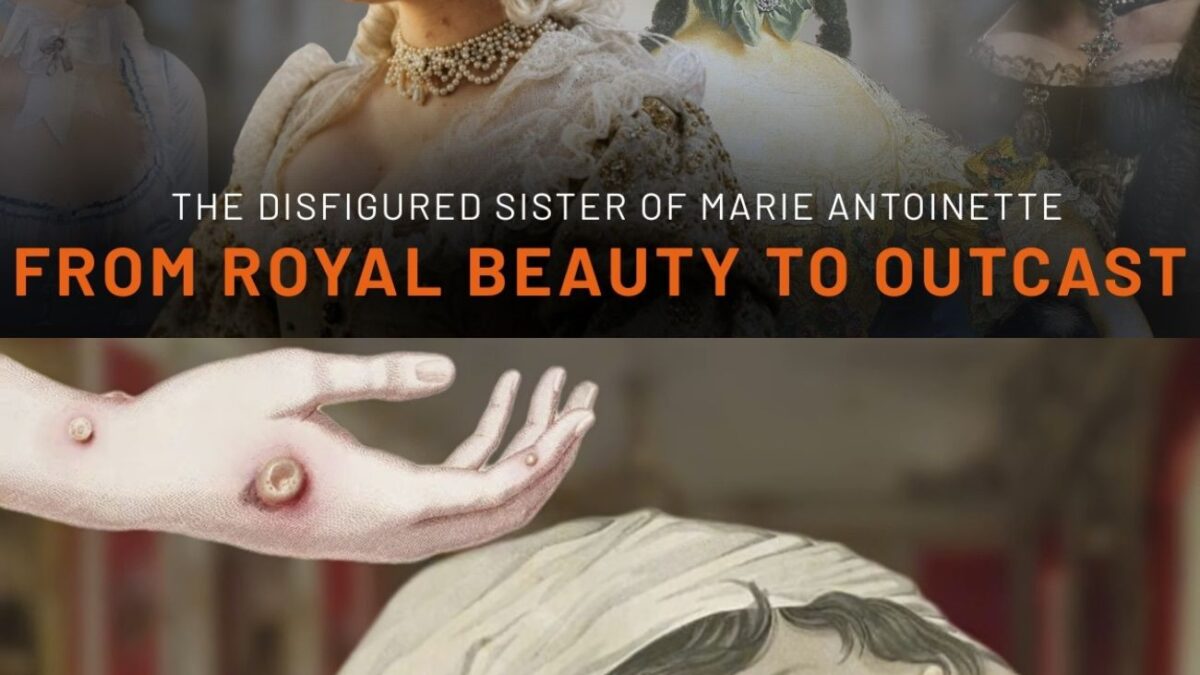
Of all the daughters born to Empress Maria Theresa, none seemed blessed with a brighter radiance than Archduchess Maria Elizabeth of Austria. Her delicate features and arresting grace commanded the whispered admiration of the imperial court from the earliest days of her youth. To those who walked the gilded corridors of the Hofburg, her destiny was already written upon her porcelain brow: she was born to be the Queen of France.
Yet beneath the splendid tapestry of royal ambition lay a cruel truth that governed the lives of every princess born under the double-headed eagle. A woman’s worth was measured almost entirely by her diplomatic weight, her pedigree, and the flawless allure she brought to the matrimonial bargaining table. When an unforeseen catastrophe dismantled that precious currency, Europe’s most coveted bride discovered how swiftly courtly worship could dissolve into callous disregard.
The child who would one day hold the gaze of European ambassadors entered a chaotic and opulent world on August 13, 1743. Empress Maria Theresa and her husband, Francis I, Holy Roman Emperor, were in the midst of solidifying their dynasty amid endless wars. Maria Elizabeth was the sixth child in a sprawling brood that would eventually encompass sixteen siblings born over two unrelenting decades.
To modern observers, the sheer physical toll of bearing sixteen children under the care of eighteenth-century medicine borders on the unimaginable. Physicians operated with crude instruments, balancing the medieval doctrine of humors with speculative potions that did little to stem rampant childhood mortality. Yet Maria Theresa possessed an iron constitution, viewing her maternal duty as both a sacred calling and a vital instrument of dynastic survival.
Even the christening of this newborn daughter revealed the rigid pragmatism that governed the Habsburg family and its formidable matriarch. She was named Maria Elizabeth in memory of an elder sister, the imperial couple’s firstborn child, who had perished in infancy. While modern parents might recoil at bestowing a dead child’s name upon a newborn, the Empress operated under far more functional principles.
Every imperial daughter bore Maria as her first name, establishing a collective, consecrated identity that honored the Blessed Virgin. When selecting their secondary names, Maria Theresa saw no reason to discard an honorable family moniker simply because its previous owner was dead. The living infant inherited the mantle of the fallen, absorbing her late sister’s memory while facing a fragile struggle of her own.
Affectionately nicknamed Liesl by her doting nurses and immediate kin, the little archduchess barely managed to survive the first fragile months of life. She was frail, prone to wasting spells, and unable to gain the weight necessary to assure the imperial physicians of her survival. In an act that sounds remarkably startling to modern ears, the court doctors prescribed a daily diet enriched with melted chocolate.
During that era, sweetened chocolate was regarded by European apothecaries not as an indulgent confection, but as a rich, life-giving tonic. It was believed to soothe inflamed digestive tracts, bolster inner heat, and nourish delicate children whom ordinary porridge could not sustain. Against the odds, the strange remedy accomplished what the physicians had hoped, transforming the dying infant into a vibrant, laughing toddler.
As Liesl blossomed into childhood, her delicate frailty gave way to an extraordinary reservoir of stubborn, mischievous energy. She tormented her long-suffering governesses with relentless pranks, slipping away from her lessons to run wild through the imperial chambers. Her brothers and sisters found her a spirited, often exasperating companion whose willful nature was tolerated only because of her disarming charm.
Even as a small child, Maria Elizabeth possessed a magnetic loveliness that separated her from her numerous brothers and sisters. While other princesses had the heavy jaw or somber countenance typical of the Habsburg bloodline, Liesl grew into an exquisite, luminous girl. Her eyes sparkled with playful intelligence, her complexion was flawless, and every court portrait captured a face destined to conquer palaces.
Liesl was remarkably perceptive, and she realized at a very tender age the immense power her physical appearance afforded her over others. She observed how guards straightened, how tutors softened their reprimands, and how courtiers smiled whenever she turned her gaze upon them. This early realization gradually hardened into vanity, shaping a character that flourished exclusively under the warm light of constant, effortless adulation.
As she entered adolescence, Maria Elizabeth seemed to dedicate the bulk of her waking hours to the meticulous art of self-presentation. She studied her postures, perfected her languid smiles, and spent endless hours consulting the tall gilded mirrors of the imperial apartments. Her siblings quickly took note of her shameless thirst for praise, christening her with a pointed new sobriquet: the beautiful coquette.
Her tutors bemoaned her distinct lack of interest in the serious disciplines of statecraft, geography, music, and the natural sciences. While her sister Maria Christina applied herself to governance, Liesl treated any intellectual pursuit as a tedious distraction from her toilette. Her true classroom was the ballroom, and her true curriculum was the measurement of the desire she stirred in the hearts of men.
Empress Maria Theresa watched this display with an increasingly critical eye, unimpressed by superficial charm that yielded no political discipline. The Empress, who worked eighteen hours a day managing empires and armies, possessed little patience for daughters consumed by frivolous self-worship. She recognized that vanity was a dangerous liability in a princess who was expected to sacrifice herself entirely for the Austrian state.
In her private correspondence, the Empress penned a scathing assessment of Liesl’s character that captured the essence of her daughter’s flaw. She noted that it mattered not at all whether a look of admiration came from a sovereign prince or an ordinary Swiss guard. So long as someone offered unconditional homage to her remarkable face, Elizabeth was thoroughly satisfied, indifferent to the true worth of the admirer.
Yet even as Maria Theresa criticized her daughter’s self-absorption, she was fully prepared to exploit the girl’s extraordinary physical beauty. Long before the crowned heads of the nineteenth century forged their dynastic networks, Maria Theresa had fashioned herself into Europe’s chief matchmaker. Her sprawling family represented a formidable deck of political cards, and each marriage was calculated to safeguard Habsburg territories against rival crowns.
For the Archduchess Maria Elizabeth, only the grandest match on the continent would suffice to justify the investment of her rearing. She was a premier pawn on her mother’s grand diplomatic chessboard, an asset whose value was enhanced by her renowned physical allure. Dispatches from Vienna regularly praised her grace, ensuring that foreign ambassadors returned home with glowing reports of her matrimonial eligibility.
The Austrian chancery soon entertained overtures from several of the most powerful and storied royal courts across the European continent. King Charles III of Spain was briefly considered as a potential spouse, as was the newly elected Polish monarch, King Stanisław Poniatowski. Yet for various political and personal reasons, the Habsburg court continually balked, convinced that none of these suitors was truly worthy.
Before any formal alliance could be finalized, the continent was plunged into the catastrophic fires of the Seven Years’ War. Empires clashed from the forests of North America to the blood-soaked fields of Bohemia, straining Austria’s resources to the breaking point. Diplomats abandoned delicate marriage contracts to negotiate frantic military pacts, shifting royal courtships entirely into the background of state affairs.
By the time the smoke of war finally cleared, precious years had slipped away from the radiant princess without a husband. Maria Elizabeth found herself twenty-four years of age—a number that carried ominous undertones for an unmarried princess of the eighteenth century. In royal circles, a woman unmarried at twenty-four was perilously close to being written off as an unmarketable, fading spinster.
Then, in the year 1768, an extraordinary opportunity presented itself that promised to fulfill Elizabeth’s grandest and most ambitious dreams. King Louis XV of France, recently widowed following the death of his queen, Maria Leszczyńska, had begun searching for a second consort. The French court was the undisputed cultural and political center of Europe, and the title of Queen of France was the greatest prize available.
There was, however, a massive disparity in their ages, as the reigning French monarch was thirty-three years older than his prospective Austrian bride. Louis XV was already a grandfather, weary from decades of political intrigue and infamous throughout Christendom for his endless succession of royal mistresses. Yet in the cold calculus of royal marriages, a bridegroom’s advanced age and moral failings were mere trivialities beside his imperial crown.
To complicate the family tree further, this proposed union was part of an audacious, double-dynastic maneuver orchestrated between Versailles and Vienna. The French King’s grandson and heir, the Dauphin Louis-Auguste, was concurrently slated to marry Elizabeth’s younger sister, the lovely Maria Antonia. Had the negotiations succeeded, Maria Elizabeth would have reigned as queen while her little sister served as the Dauphine awaiting her throne.
To modern sensibilities, the spectacle of two sisters marrying a grandfather and his grandson simultaneously borders on the grotesque and absurd. Yet within the geopolitical realm of eighteenth-century balance-of-power politics, such bizarre unions were treated as masterstrokes of diplomatic strategy. Neither Elizabeth nor twelve-year-old Maria Antonia was expected or invited to voice a personal opinion regarding their impending sacrifice for the alliance.
The marriage contract was meticulously drawn up by Austrian Chancellor Kaunitz and his counterpart, the powerful French minister, the Duke of Choiseul. Portrait miniatures were carried back and forth between the two courts, and courtiers in Paris toasted the incoming, beautiful Austrian queen. Maria Elizabeth walked through the Hofburg with triumphant satisfaction, relishing the glorious destiny that would soon see Versailles bowing before her beauty.
Then, precisely as the final signatures were being drafted to cement the royal union, an invisible terror invaded the imperial residence. Smallpox, the merciless scourge that had claimed countless Habsburg lives across generations, struck Maria Elizabeth with sudden, ferocious violence. Within hours, the vibrant archduchess collapsed into high fevers, her porcelain skin burning beneath the onset of a terrifying, deadly eruption.
Her condition deteriorated with horrifying speed, plunging the entire court of Vienna into profound sorrow and frantic, desperate prayer. The pustules spread mercilessly across her body, their necrotic poison overwhelming her fragile system until her breathing became a shallow gasp. Every physician within the Habsburg dominions was summoned to her bedside, but their bleedings and purges did little to lower her fever.
Empress Maria Theresa, who had herself survived the brutal disease years earlier, refused to leave her daughter’s infectious, stifling sickroom. She sat through the agonizing nights, watching the girl who had once spent hours before the mirror descend toward the grave. Believing her daughter’s end was imminent, the Empress summoned the priests to administer the Last Rites and prepare the princess for eternity.
Yet underneath the soft, pampered exterior of the beautiful coquette lay the same stubborn resilience that had kept her alive in infancy. Against all clinical predictions, her fever broke, her laboring lungs found purchase, and the virulent smallpox toxin gradually receded from her body. Maria Elizabeth opened her swollen eyes, defeated the grim specter of death, and began the long, agonizing journey toward physical survival.
Though she had fought fiercely to preserve her life, the young archduchess harbored a terror far greater than the prospect of the grave. She feared the looking glass, sensing that the disease had exacted a terrible, irreversible toll upon the face she prized above all else. Her attendants covered the tall mirrors throughout her chambers, trembling at the thought of their mistress discovering the devastation beneath her bandages.
When the scabs finally dried and fell away, the cruel reality could no longer be concealed from the horrified, weeping young woman. Her once-smooth, porcelain skin was transformed into a landscape of deep, pitted craters, heavily scarred and robbed of all youthful bloom. The dazzling beauty that had bewitched foreign ministers and driven painters to distraction was permanently, brutally obliterated by the pestilence.
News of the catastrophe traveled swiftly across the continent to Versailles, where Louis XV received the detailed medical reports from Vienna. The French king, a notorious connoisseur of feminine beauty who had shared his bed with Madame de Pompadour, made his decision without hesitation. He immediately rescinded the marriage proposal, declaring that he had no desire to take a horribly disfigured invalid as his royal consort.
In a bitter, poetic irony that bordered on cosmic retribution, King Louis XV would die of smallpox himself just six years later. His court would abandon his decomposing, contagion-ridden body in terrified haste, fleeing the very disease he had reviled in his intended bride. Yet that future poetic justice offered no comfort to the shattered young woman weeping in the shadowed rooms of the Hofburg palace.
The twin humiliations of losing her matchless beauty and seeing her French crown evaporate plunged Elizabeth into a bottomless, despairing depression. She barricaded herself inside her private apartments, refusing visitors and weeping bitterly in the dark, away from mocking or pitying eyes. She could not endure the gaze of the courtiers who had once sung her praises, now turning their faces away in quiet repulsion.
Although Elizabeth left behind few personal diaries documenting this agonizing season, her mother recorded the tragic collapse of her spirit with clinical sorrow. The Empress noted that Liesl wept uncontrollably, crying that all her sisters were well-established while she alone was cast aside and forgotten. She raged against the humiliating prospect of being left behind, condemned to spend her remaining years living under her brother Joseph’s critical eye.
For months, the imperial family struggled to silence her mournful lamentations, which echoed through the marble corridors of the Hofburg with unbearable frequency. Gradually, the sheer passage of time forced Maria Elizabeth out of her self-imposed exile and back into the rigid rituals of court. She stepped out into the daylight once more, forcing herself to sit at the long banquet tables beside her younger, unblemished siblings.
Yet the disease that had destroyed her delicate skin had carved an even deeper, more permanent transformation into her innermost character. The vain, coquettish girl who had once smiled sweetly to earn a courtier’s passing compliment vanished beneath a thick shell of bitterness. Deprived of the physical power that had defined her existence, she seized upon a new, devastating weapon to ensure she was never ignored.
Her natural wit, which had once been playful and lighthearted, curdled into a sharp, venomous cynicism that spared absolutely no one. Her comments became cutting, her observations merciless, and she seemed to take a perverse delight in exposing the weaknesses of others. The courtiers who had once sought her company for her beauty now backed away in sheer terror of her notoriously caustic tongue.
As the years marched forward, the imperial household in Vienna began to empty as one daughter after another was dispatched to foreign courts. Her sister Maria Carolina departed to reign over Naples, while little Maria Antonia was sent to France to fulfill the broken dream. Antonia became Marie Antoinette, capturing the very throne, the very palaces, and the very destiny that had so nearly belonged to Elizabeth.
While Marie Antoinette shone brilliantly beneath the gilded chandeliers of Versailles, Elizabeth remained trapped in the suffocating shadows of the Austrian court. Her sole companion in maidenhood was her older sister, Maria Anna, who had also been discarded from the marriage market due to a spinal deformity. Together, the two unmarried archduchesses formed an awkward, permanent fixture in their mother’s retinue—two brilliant, damaged princesses condemned to domestic obscurity.
Contemporary observers who visited the Viennese court during this era penned dismal descriptions of the daily existence endured by the forgotten imperial daughters. Foreign travelers noted that the princesses lived a gloomy, extraordinarily tedious life, immured behind the gray stone walls of the imperial palace. They were almost entirely destitute of lively society, obliged to attend the mourning Empress wherever she walked, prayed, or took her carriage.
Day after day, they were compelled to assist in endless religious devotions, fasting and reciting litanies as if they were cloistered nuns. Elizabeth hated the suffocating piety, yet she possessed neither the fortune nor the independent authority to break free from her mother’s dominion. Her life was reduced to a dreary calendar of Catholic holy days, imperial funerals, and silent dinners spent watching others live the history she craved.
Yet beneath her bitter exterior, there remained a desperate, subterranean longing for human connection and maternal affection that could never be officially acknowledged. A rare, fleeting glimpse of this buried tenderness appears in the private letters of her brother Leopold, who visited Vienna during this desolate period. He noted with quiet surprise that Maria Elizabeth had secretly taken in an abandoned foundling girl, sheltering the child within her private household.
Knowing full well that she would never hold a child of her own or bear an heir to a throne, Elizabeth cared for the foundling. For a brief moment, the sharp-tongued, disfigured archduchess poured her frustrated, unused maternal instincts into protecting an obscure child of the streets. Tragically, the little girl soon disappears entirely from the historical record, leaving behind only that brief, melancholy footnote to an otherwise childless life.
The delicate, agonizing equilibrium that kept Elizabeth tied to the Austrian court was shattered on November 29, 1780, when Empress Maria Theresa died. The passing of the grand matriarch removed the sole shield that had protected the unmarried sisters from the harsh ambitions of their brother. Joseph II, now reigning as the absolute master of the Habsburg territories, possessed little affection for the family he was destined to lead.
Joseph had long grown weary of what he viewed as the excessive, meddlesome influence that royal women had exercised over imperial governance. His relationship with Elizabeth had deteriorated into mutual contempt, exacerbated by her ceaseless sarcasm and his cold, calculating intellectual arrogance. He moved quickly to sweep the old court clean, making it immediately clear to his maiden sisters that their presence in Vienna was unwelcome.
Whether her subsequent removal from the capital was a polite liberation or an outright political exile remains a matter of historical debate. Joseph informed Elizabeth that she was to take up permanent residence in the distant Alpine city of Innsbruck, far from the Hofburg. There, she was to assume the position of Abbess of the Noble Ladies’ Convent, an office she had formally held since her broken engagement.
The title of abbess conjured images of gloomy cloisters, damp flagstones, and cold stone cells where repentant sinners wept in the dark. Yet the Imperial Chapter of Noble Ladies in Innsbruck was anything but an austere, soul-crushing house of religious penance and deprivation. In reality, it functioned as an exceptionally exclusive, highly luxurious residential enclave designed specifically for the unmarryable women of the high nobility.
To secure admittance to this aristocratic sanctuary, a candidate was required to present indisputable proof of at least sixteen quarterings of noble ancestry. Each noblewoman brought her own private silver, paid a handsome entrance fee, and purchased a wardrobe of magnificent, highly tailored black gowns. They were not required to take permanent religious vows, keeping their private wealth, personal servants, and freedom to entertain guests at will.
Maria Elizabeth adapted to her new role as sovereign abbess with remarkable speed, seizing the small kingdom granted to her Alpine exile. She transformed her sprawling private apartments in the Innsbruck palace into a miniature court, hosting glittering dinners, musical concerts, and intellectual salons. No longer under the suffocating thumb of her mother or the dismissive glare of her brother, she ruled her small mountain world completely.
Eminences of the Holy Roman Empire, foreign monarchs, and traveling dignitaries made it a point to pay their respects at her Innsbruck residence. Even the illustrious literary titan Johann Wolfgang von Goethe stopped during his travels through the Tyrol to dine at the abbess’s opulent table. She proved herself an exceptional, formidable hostess whose sharp mind and biting humor could bewitch visitors even without the aid of physical beauty.
Yet even in the quiet sanctuary of the Alps, her long-suffering body was not entirely finished with its cruel, agonizing trials. As the years marched forward, Elizabeth contracted a severe, chronic facial infection that ate through the scarred flesh of her visage. The necrotic rot eventually created an actual, visible hole in her cheek, leaving her jaw partially exposed to the horrified gaze of onlookers.
By that point in her extraordinary life, however, Elizabeth had moved far beyond the fragile vanity that had once dominated her youth. She had also gained an immense amount of weight and developed a massive, protruding thyroid goiter that swelled beneath her scarred chin. The local Tyrolean peasantry, with their blunt mountain honesty, discarded her former titles and began referring to her simply as Goitrous Liesl.
Rather than cowering in shame or covering her grotesque wound behind heavy veils, the aging archduchess met her infirmity with ruthless mockery. When the British ambassador traveled through Innsbruck and secured an audience, Elizabeth casually drew his attention directly to the hole in her cheek. She watched the diplomat squirm with aristocratic discomfort before breaking into a hearty, dry laugh that echoed across her velvet-draped salon.
She remarked with theatrical cynicism that for an unmarried, forty-year-old archduchess, a gaping hole in the cheek was practically a divine entertainment. She explained that in a life smothered by endless monotony and suffocating boredom, any shocking novelty was preferable to the slow poison of ennui. By mocking her own decay before others could whisper about it, she stripped the court of its power to pity or humiliate her.
While Elizabeth held her mountain court in Innsbruck, the world beyond the Alpine peaks began to crumble beneath the fury of revolution. In Paris, the kingdom that had once promised to crown Elizabeth tore itself to pieces, overthrowing the monarchy and hunting the nobility. In 1793, the dreadful news arrived across the mountains that Marie Antoinette, the sister who had taken Elizabeth’s place, had been guillotined.
Historians possess no written records revealing how the cynical abbess reacted when she learned of her younger sister’s grisly, blood-soaked demise. The two women had never been close, separated by twelve years of age and the bitter jealousy that inevitably lingered between their radically different lives. Yet Elizabeth, sitting alone with her grotesque scars in the quiet of Innsbruck, could hardly have avoided the haunting, inescapable weight of destiny.
Had a few smallpox pustules not erupted upon her cheeks twenty-five years earlier, it would have been Elizabeth who rode in that death cart. It would have been her neck resting upon the bloody wooden block beneath the cold steel blade of the Parisian crowd’s guillotine. Or perhaps, some wondered, had Elizabeth brought her fierce intelligence and cynical realism to Versailles, could she have changed the fate of France?
Years later, the tragedy of the French Revolution cast one of its few survivors directly into the aging Abbess’s private Tyrolean rooms. Marie Thérèse of France, the sole surviving daughter of Marie Antoinette who had endured years of brutal imprisonment, came to visit her aunt. The traumatized young orphan found no warm maternal comfort or tender consolation waiting for her in the apartments of the Innsbruck convent.
Instead, the young princess found herself face to face with a massive, disfigured crone with an exposed cheek and a brutally sharp tongue. Marie Thérèse later recorded her profound distaste for her imperial aunt, describing Elizabeth in her private journals as exceptionally difficult, abrasive, and repulsive. The scarred woman who had survived smallpox and exile had no patience for fragile sentiments, meeting the girl’s tragedy with hard, mountain cynicism.
For more than a quarter of a century, Maria Elizabeth maintained her eccentric, comfortable existence within the peaceful mountain valleys of the Tyrol. She watched the Holy Roman Empire shatter under the hammer of the new French conqueror, yet her Alpine redoubt remained untouched and secure. She believed she would finish her days peacefully within her luxurious convent, surrounded by her silver service, her dogs, and her noblewomen.
Yet the shadow of France, which had haunted and defined her entire existence, was destined to disrupt her life one final, humiliating time. In January 1806, the armed forces of Bavaria, serving as enthusiastic allies to Emperor Napoleon Bonaparte, invaded and occupied the Tyrolean lands. The French-backed forces secularized the religious houses, seized the imperial properties, and unceremoniously ordered the Habsburg abbess to evacuate her home.
At sixty-two years of age, crippled by weight and plagued by respiratory failure, the former beauty was forced to flee through the snows. She climbed into a carriage and turned her back on the mountains that had sheltered her through twenty-five years of quiet, steady reign. She sought refuge first in the capital of Vienna, but found her nephew’s wartime court too noisy, crowded, and dismissive of her needs.
She packed her remaining trunks once more and journeyed along the Danube to the quiet, unpretentious provincial city of Linz. There, in rented rooms far removed from the dazzling ballrooms of Versailles and the Hofburg, she lived out the final months of life. She moved slowly, leaning on the arms of her attendants, her sharp eyes still scanning visitors for the slightest hint of patronizing pity.
On September 22, 1808, the woman who had once been hailed as the most beautiful princess in all of Europe breathed her last. She died at the age of sixty-five, her body bearing the scars of the pestilence that had derailed her history nearly four decades before. She was laid to rest without the roaring cannons or massive state funeral that would have accompanied the death of a French queen.
The life of Maria Elizabeth of Austria represents far more than an unfortunate medical tragedy buried within the dense pages of European history. It stands as an indictment of a dynastic system that reduced royal women entirely to decorative, reproductive vessels for the expansion of royal power. A princess was loved, honored, and cultivated only so long as her face was fair and her body was fit for diplomatic bartering.
The very moment the disease scarred her skin, the imperial court discarded her as ruined merchandise, useless to the state that had bred her. Yet Elizabeth’s ultimate sorrow was not found in the loss of her French crown, nor in the physical ruins reflected in her mirror. Her true tragedy was that she had been taught to value nothing in herself except the fragile, transient beauty of her youthful face.
Deprived of that single foundation, she never managed to discover an enduring, authentic meaning to sustain her through the long, quiet years. She retreated instead behind the barricade of a vicious tongue, guarding her wounded soul with biting remarks, cynical laughter, and calculated cruelty. She died an exile from the grand life she had expected, a bitter queen without a kingdom, remembered only as the beauty who was.

