Mafia Boss Was Stopped by a Blind Girl — His One Word Left Everyone Frozen
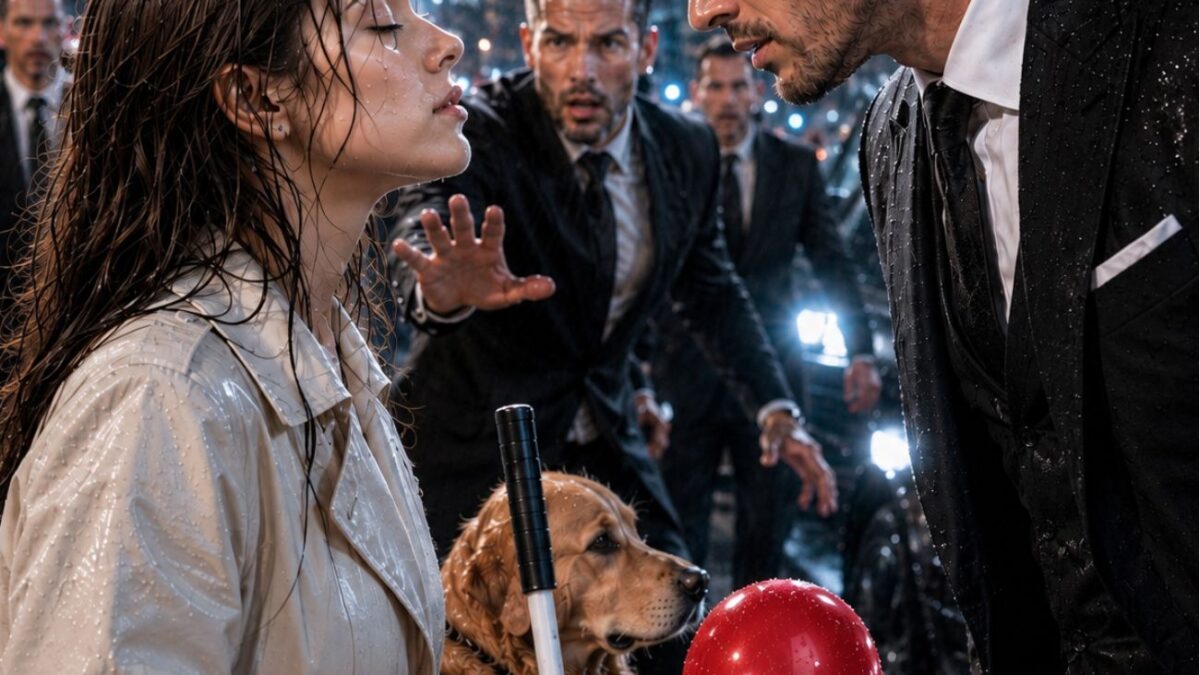
The rain fell so hard it blurred the skyline into silver ghosts beyond the tinted windows of my black Escalade. Water drummed against the roof with a steady rhythm while the windshield wipers fought a losing battle against the storm. We had just left a charity banquet downtown, one of those polished events where expensive smiles hid expensive secrets.
My driver kept both hands locked on the wheel as we rolled through the empty streets of Manhattan, our headlights cutting across the wet pavement. Four SUVs traveled with us, their engines humming in perfect formation. Every movement rehearsed, every turn anticipated.
Silence filled the cabin except for the quiet jazz playing through the speakers and the occasional update coming through my security earpiece. I preferred silence because it let me think and reminded everyone around me that I never needed to raise my voice to be heard.
We approached a narrow intersection where construction barriers forced traffic into a single lane, and my driver eased off the accelerator. That is when everything changed completely. A white cane appeared first, tapping carefully across the slick pavement before she stepped directly into the headlights.
A young woman wearing a navy raincoat moved slowly, feeling every inch of the street with patient confidence. She never looked toward us because she could not see. Rain soaked her light brown hair as it escaped from beneath her hood, and beside her walked a golden retriever wearing a bright red service harness.
The dog suddenly stopped and let out a low whine, causing the woman to kneel immediately and run gentle fingers over the animal’s front paw. She whispered something too soft for me to hear, staying exactly where she was and blocking the road without realizing the commotion she caused.
My lead security vehicle braked so abruptly that water sprayed across the sidewalk, and doors opened almost instantly. I watched several of my men step into the rain with the familiar urgency of people who believed every delay might be a threat, simply doing what years of training had taught them.
One of them started toward her, but before he could speak, I opened my own door and stepped onto the pavement. The city seemed to pause as my polished shoes splashed through shallow puddles while every eye settled directly on me.
The woman never reacted because she was still comforting her dog, completely unaware that more than 40 people had frozen in place because of one unexpected moment. For the first time in years, nobody was watching me, and they were watching her instead.
Somehow, without fear, without power, and without even knowing my name, she had accomplished something no rival or politician had ever managed to do by stopping Vincent Moretti. The rain soaked through my suit within seconds, but I barely noticed as every pair of eyes followed me instead of the kneeling woman.
My security team spread out by instinct, forming the invisible wall they had built around me for years while waiting for a single signal. One gesture from my hand could have cleared the intersection in moments, but I found myself standing perfectly still and watching her.
Her golden retriever lifted one paw, and she gently brushed rainwater from the thick fur before speaking in the calmest voice. You are all right, Cooper, because we are not in a hurry. There was something strangely powerful about those words because nobody ever spoke like that around me.
Everyone in my life lived in a hurry because of me, starting every meeting early and racing toward whatever answer they believed I wanted. This woman, however, spoke as if time belonged to her instead of the city, showing a profound peace that completely unsettled my structured universe.
One of my senior guards stepped closer and lowered his voice to ask for permission to restore order, but I looked at him for a long second before speaking a single word. Enough. The rain seemed louder after that, and 40 trained professionals suddenly became statues beneath the streetlights.
The woman tilted her head slightly, finally realizing she was not alone, and smiled politely toward the sound of my voice without focusing on me. I am sorry, she said, explaining that her dog stepped on broken glass and needed reassurance more than anything else.
I answered before anyone else could, telling her that she still had time, and she nodded with quiet relief. A laugh almost escaped me because I could not remember the last time anyone had spoken to me without caution, expectation, or calculation.
She carefully reached into her canvas shoulder bag and removed a small bottle of water along with a clean cloth, demonstrating remarkable patience. I glanced toward the scattered pieces of broken pavement and realized the dog had protected her from stepping directly into them.
Loyalty without conditions was a language I understood better than most people, yet seeing it expressed so quietly felt entirely different. You were very brave, she whispered to the dog before standing up and facing my direction once more with a warm smile.
Before I could answer, the traffic signal chimed softly and she crossed the street with steady confidence, disappearing into the curtain of rain. None of my men spoke as we returned to the vehicle, and the city suddenly felt quieter after she walked away.
Long after we reached my townhouse overlooking the East River, I found myself standing beside the floor-to-ceiling windows instead of going upstairs to rest. The city glittered beneath the clouds, restless as always, but my thoughts remained fixed on a quiet voice asking whether the traffic light was still red.
Just after midnight, I pressed a single button on my desk, and Daniel Brooks entered less than 30 seconds later to handle my request. The woman from the intersection, I said, find her. He gave one respectful nod and said yes, sir, without asking why.
By sunrise, a slim folder rested beside my morning espresso, revealing the life of Grace Sullivan, a 26 years old piano teacher who lost her eyesight at age six. No criminal record, no wealthy relatives, and a quiet existence dedicated to teaching visually impaired children and volunteering at an animal rescue.
I turned another page to see medical expenses and rent receipts, along with notes about anonymous donations she always declined. A photograph showed her smiling outside the community music center, looking genuinely happy because of the children surrounding her rather than any external validation.
Daniel mentioned that commercial developers wanted the entire block for a luxury project, threatening the very building where she spent most of her week. I closed the folder and looked toward the skyline as morning sunlight slowly replaced the storm, realizing I needed to see her again.
Three days passed before I allowed myself to visit Queens, hiding beneath a charcoal coat and a baseball cap to blend into the morning crowd. The neighborhood smelled of fresh coffee and bakeries, feeling strangely ordinary and unfamiliar compared to downtown Manhattan.
I stood across the street from the community music center just before 9:00, watching Grace arrive on time with Cooper leading confidently along the sidewalk. She greeted nearly everyone by name, showing genuine warmth that earned immediate smiles from everyone she passed.
Inside the music center, I remained near an open hallway where the sound of an old upright piano floated through the building. The instrument had not been tuned properly in years, yet Grace somehow made every note feel intentional and encouraged children to focus on honesty rather than perfection.
Later that afternoon, I listened as the director argued that Grace should keep more of her paycheck, but she insisted she had everything she needed. Once Grace left the office, I entered and asked about making a substantial donation to help repair the building and replace the old instruments.
The director stared at the check in disbelief and asked if she could tell Miss Sullivan who made this possible, but I shook my head. No, I answered softly, telling her to simply say someone believes her work matters, and she smiled warmly at the thought.
The following Monday began with a phone call from Daniel regarding the commercial developers who formed a partnership to purchase every building on the block. Ethan Caldwell was leading the project, using polished speeches to erase the only affordable center serving hundreds of visually impaired children.
That afternoon, I parked several blocks away and watched a crowd gather outside the entrance to protest the impending demolition. Grace stood at the front of the gathering with Cooper lying quietly beside her feet, delivering a speech about hope that commanded attention through pure honesty.
As the crowd dispersed, Daniel approached to warn me that Caldwell had already convinced several members of the property board, meaning the center would likely lose. This was no longer about an old building in Queens, because Grace Sullivan had given me a reason to care about something beyond my own world.
That evening I called no meetings and signed no contracts while studying the city lights beyond my office windows, knowing I could not stand quietly. Daniel reported that Caldwell was visiting board members personally, so I scheduled breakfast with the remaining members to shift the balance.
Conversations that had been impossible a week earlier suddenly became surprisingly productive as a retired architect and accessibility foundations offered support. Two afternoons later, delivery trucks unloaded three beautifully restored upright pianos, and Grace ran her fingertips across the wood in wonder.
Life, however, rarely allows peace to last for long, and Daniel soon informed me that a representative from Caldwell’s development company had attempted to persuade Grace to stop speaking. She had declined every offer of financial assistance and relocation support, remaining entirely firm in her convictions.
The board meeting was scheduled for Friday morning, and the entire neighborhood held its breath as volunteers arrived before sunrise to hang handmade banners. Four board members favored preserving the building while three supported Caldwell, leaving one vote uncertain as the hearing began.
A reporter rushed toward the crowd holding a tablet to announce breaking news that anonymous donations connected to the music center were routed through foundations tied to me. Conversation stopped instantly as cameras turned and whispers spread through the crowd like wind across dry leaves.
Grace asked if the gentleman who waited while Cooper hurt his paw was Vincent Moretti, and when nobody answered, she realized the truth. I stepped out of the car and crossed the street, watching as she turned toward my footsteps with profound disappointment in her expression.
Why did you never tell me, she asked quietly, and I replied that I wanted one place in this city where people smiled before they knew my name. I never needed your money, Vincent, she whispered, explaining that she only needed to believe the kind man she met in the rain was real.
Grace walked away before I found the courage to say anything else, and the board postponed the vote until Monday to review additional preservation documents. Two days passed without seeing her, and the heavy silence weighed on me far more than any business defeat I had ever experienced.
On Sunday afternoon, Daniel reported that Grace had stayed inside her apartment, and worse yet, Cooper had been found alone outside the music center. Within minutes, every available contact was searching for her, and an anonymous envelope soon arrived with a warning to convince Grace to withdraw her campaign.
I told Daniel to find her immediately, and hours later an elderly woman who managed a church pantry called to let us know Grace was safe inside. Monday morning arrived beneath a clear blue sky, and I stood outside the community music center alone to wait for her arrival.
Grace arrived with Cooper walking proudly beside her, stopping when she recognized my footsteps and offering a gentle smile that restored my breath. We entered the meeting separately, and when my turn came, I spoke directly to the board about the true value of kindness in our city.
When the final vote was announced, the music center was granted permanent historical and community protection, filling the room with overwhelming applause and joy. Grace stepped outside into the warm afternoon, and I followed her to the small garden where spring flowers had just begun to bloom.
Cooper wagged his tail as I approached, and Grace reached one hand toward the sound of my footsteps, gently tracing the line of my jaw with remarkable tenderness. I still do not know what you look like, she whispered, but I know your heart now, and I closed my eyes as the truth washed over me.
Months later, the music center echoed with new pianos and children’s songs while I visited often as someone simply learning to listen to the world around me. People ask what changed my life, expecting a dramatic legend, but the truth remains wonderfully simple and grounded in human connection.
One rainy night, a woman who could not see my face reminded me that the strongest people are those who make the world stop long enough to remember what truly matters. And every time I hear children laughing inside that old brick building, I remember that power built my reputation, but kindness gave me back my name.

