His B-17 Was Cut in Half — He Rode the Tail Section Down From 24,000 Feet
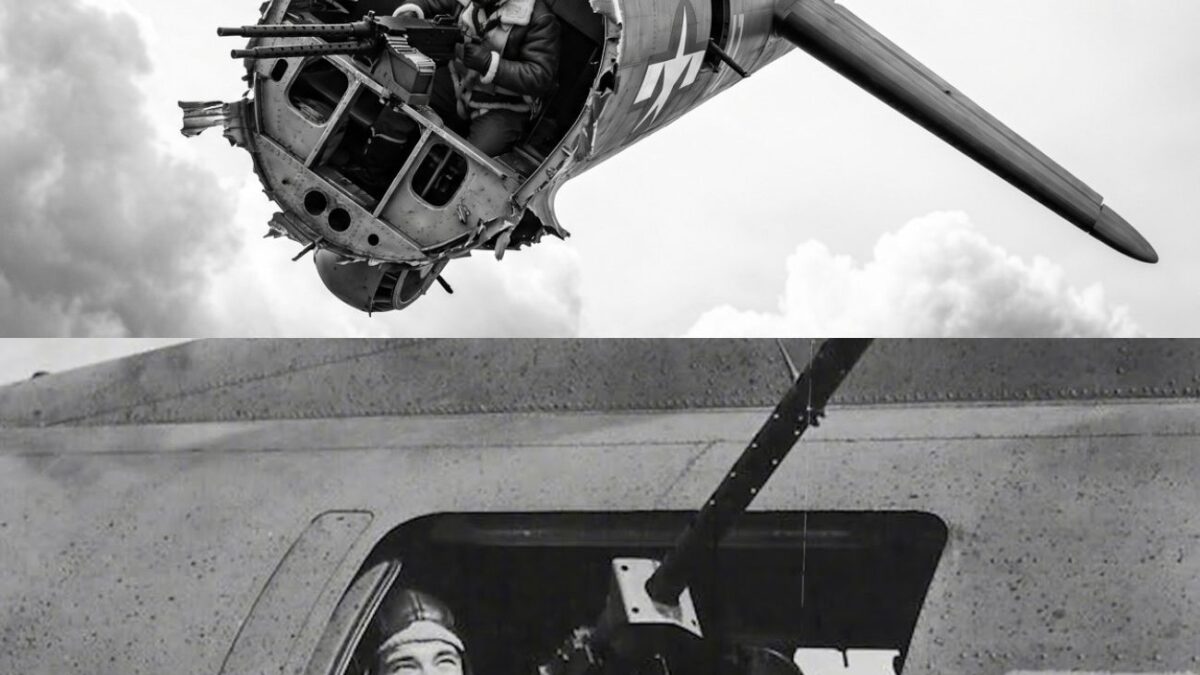
On the bitter, grey morning of November 29, 1943, Staff Sergeant Eugene Paul Morand hoisted his nineteen-year-old frame into the cramped tail cone of a Boeing B-17F Flying Fortress. The aircraft, bearing the painted likeness and moniker of Rudyard Kipling’s heroic mongoose, Rikki-Tikki-Tavi, shook as its four Wright Cyclone radial engines roared to life at RAF Snetterton Heath. It was Eugene’s fifth combat mission over the hostile skies of the Third Reich, a flight that would rapidly become a descent into absolute terror.
Before that overcast day had turned to noon, an onslaught of German cannon fire would cleanly sever the massive bomber in two at an altitude of twenty-eight thousand feet. Morand would find himself tumbling through the subzero stratosphere, trapped completely inside the severed tail section with no working parachute, no emergency egress, and no logical earthly reason to expect survival. Yet survive he did, beginning an epic saga of sheer endurance that would ultimately make falling four miles from the sky seem like only the opening chapter of his trial.
The boy who plummeted from the heavens had been born into a world of quiet simplicity on July 17, 1924, in a weathered farmhouse south of Soldiers Grove, Wisconsin. The rolling hills and deep coulees of the state’s Driftless Area shaped his childhood, teaching him the daily, unrelenting demands of rural agricultural life. Eugene grew up rising well before dawn, milking dairy cows in drafty barns, harvesting crops under scorching summer suns, and learning how to keep cantankerous farm machinery running with baling wire and patience.
When radio broadcasts crackled on December 7, 1941, announcing that Imperial Japanese naval aircraft had struck Pearl Harbor, Eugene knew instantly that his tranquil farm life was over. He was seventeen years old, burning with a restless desire to defend his nation, but military regulations strictly required parental permission for anyone under the age of eighteen. Eugene went directly to his father with the enlistment papers, but the elder Morand flatly refused to sign, insisting that his son was needed on the family land.
Eugene obeyed, biding his time as he watched older boys from the county put on crisp uniforms and head toward distant combat theaters across two vast oceans. He marked the slow days with chores until his eighteenth birthday passed in midsummer, giving him the legal autonomy to chart his own course. On October 21, 1942, three months after turning eighteen, Eugene walked into the nearest United States Army recruiting station and enthusiastically volunteered for service in the Army Air Forces.
He possessed a deep aversion to the idea of marching through rain and deep mud as an infantry foot soldier, dreaming instead of the speed, technical glamour, and freedom of the skies. Eugene harbored hopes of becoming a combat pilot, imagining himself commanding one of the magnificent multi-engine bombers that filled the newsreels and posters of the era. However, the military quickly assessed the flood of raw recruits and determined that his mechanical aptitudes and keen visual reflexes were destined for aerial gunnery.
He was sent south for rigorous training, cycling through gunnery schools in the heat of Texas and the humid swamps of Florida, where the curriculum was relentless. He stood on moving truck beds firing shotguns at clay pigeons, then advanced to firing twin .50-caliber M2 Browning machine guns mounted on swirling rings against drone targets. Instructors quickly noticed that Midwestern farm boys possessed an innate, deadly knack for deflection shooting, understanding intuitively how to lead moving objects across three-dimensional space.
Morand proved to be an exceptional shot, demonstrating steady hands, absolute calm under pressure, and a natural mechanical fluency when it came to clearing weapon stoppages. By the late autumn of 1943, having earned his silver gunner’s wings and the stripes of a staff sergeant, he was shipped across the North Atlantic to wartime England. He was assigned to the 339th Bombardment Squadron of the 96th Bomb Group, a frontline unit operating out of the bustling, muddy airfield at Snetterton Heath in Norfolk.
Upon arriving in East Anglia, Morand was immediately confronted with the staggering, grim mathematics governing the daylight strategic bombing campaign of the Eighth Air Force. In the bloody month of October 1943 alone, American bomber groups had suffered the loss of 153 heavy bombers and more than fifteen hundred highly trained airmen over Germany. The aircrews stoically called the sky above the Fatherland the meat grinder, knowing that the statistical life expectancy of an operational B-17 crewman was a mere fifteen combat missions.
If an airman beat the staggering odds and managed to fly twenty-five completed missions, he was relieved of operational duties and sent home to safety. In late 1943, very few reached that mythical twenty-five mark, with empty chairs appearing in the mess halls after nearly every single mission. Eugene was assigned as the regular tail gunner on B-17F serial number 42-30359, a rugged ship that the crew had baptized Rikki-Tikki-Tavi in honor of the serpent-slaying mongoose.
The crew believed the mongoose was an omen of good fortune, a creature quick and lethal enough to kill the deadly cobras that lurked in wait for them. The Flying Fortress required an integrated team of ten men to function effectively as a flying weapon system amidst dense flak and predatory interceptors. First Lieutenant Linwood sat in the left seat as pilot, assisted by his co-pilot, while Second Lieutenant Jesse Orison navigated the complex paths through hostile territory.
They were joined by Second Lieutenant Donald Curtis as bombardier, an alert flight engineer who doubled as top turret gunner, a radio operator, two waist gunners, and Wilbert Provost. Provost, affectionately nicknamed Pee Wee due to his diminutive stature, curled into the claustrophobic Sperry ball turret slung directly beneath the belly of the bomber. Eugene Morand held the tail gunner position, universally acknowledged by bomber crews as the coldest, loneliest, and most exposed post on the entire aircraft.
The tail gunner sat hunched on a small bicycle-style seat or knelt on thin padding at the very end of the fuselage, isolated by fifty feet of structure. He watched the shrinking horizon slip away behind the aircraft through a pane of heavy Plexiglas, scanning the immense empty sky for enemy interceptors. His armament consisted of a pair of heavy Browning .50-caliber machine guns fed by long chutes carrying belts of armor-piercing, incendiary, and tracer ammunition.
When the Luftwaffe initiated an attack from the rear quadrant, the tail gunner was the solitary line of defense, looking straight down the barrels of the enemy. Morand flew his maiden operational sortie on November 5, 1943, against industrial facilities in Gelsenkirchen, enduring hours of tense scanning without ever firing a round. The German fighters failed to intercept their squadron that morning, giving Eugene a deceptively quiet introduction to the violent art of daylight aerial combat.
A second mission followed on November 11, then a third on November 16, and a fourth arduous flight on November 26, each testing his endurance against bitter cold. Across those first four operational flights, Morand had not yet faced a direct, point-blank head-on or tail-chase attack by the seasoned fighter wings of the Luftwaffe. That remarkable streak of uneventful missions came to an abrupt, violent conclusion on the freezing dawn of Monday, November 29, 1943.
The target designated for the day’s combined strike was the northern seaport of Bremen, renowned as one of the most fiercely defended urban areas in Europe. Bremen harbored massive submarine pens, vital shipyards, aircraft manufacturing plants, and oil refineries, all ringed by dense belts of radar-directed anti-aircraft artillery. The Eighth Air Force had raided Bremen before, and on every single occasion, American bomber formations had paid a terrible, bloody toll to flak and interceptors.
The base bugle and duty sergeants jarred Eugene from a fitful sleep at 0400 hours in the drafty, corrugated Nissen huts of Snetterton Heath. He dressed in heavy woolens, washed in icy water, and swallowed a hurried breakfast consisting of rehydrated powdered eggs, toast, and scalding, bitter military coffee. By 0530 hours, the flight crews gathered inside the heavily guarded briefing room, their murmurs silenced when the briefing officer drew back the cloth covering the target map.
A collective groan rippled through the assembled flyers as the red yarn traced a direct path across the North Sea straight into the hornet’s nest of Bremen. Lieutenant Linwood gathered the crew of Rikki-Tikki-Tavi for a final equipment check, reminding every man to monitor his oxygen supply and electrically heated flight gear. The ground crews had already labored for hours in the dark, loading five thousand pounds of high explosives into the bomb bay and topping off fuel tanks.
At 0730 hours, Rikki-Tikki-Tavi roared down the concrete runway, lumbered into the misty morning sky, and slowly climbed into the gathering strike formation. The bomber joined dozens of other B-17s, circling into their defensive combat boxes before leveling off at a cruise altitude of twenty-eight thousand feet. Outside the unpressurized aircraft, the ambient temperature plummeted to fifty degrees below zero, freezing moisture on metal surfaces and turning exhaled breath into frost.
At that altitude, human blood would boil and unconsciousness claimed an unprotected man in mere seconds; heated flight suits and secure rubber oxygen masks meant life itself. Eugene knelt in his solitary rear compartment, constantly flexing his gloved fingers and moving his heavy boots to prevent the insidious creeping numbness of severe frostbite. He methodically racked the charging handles of his twin machine guns, clearing the frost from the moving parts and peering into the blinding glare behind the bomber.
The vast formation crossed over the low German coastline, and almost immediately, the dark, deadly blossoms of heavy 88-millimeter anti-aircraft artillery surrounded them. Black flak bursts erupted with sickening violence across the sky, leaving greasy clouds of acrid smoke that rattled against the thin aluminum skin of the aircraft. Shrapnel whistled through the formation, tearing holes in fabric control surfaces and ripping through wings, but the bombers had no choice except to hold steady.
Evasive maneuvering was impossible within the tight tactical combat box, where holding position was the only way to provide mutual defensive fire against interceptors. The flak gunners on the ground below tracked the altitude and airspeed of the American stream, filling the air corridor with a lethal curtain of jagged steel. Through the relentless barrage, the 96th Bomb Group pressed forward, closing in on the primary industrial targets nestled along the banks of the Weser River.
Rikki-Tikki-Tavi reached the initial point of the bomb run over Bremen at roughly 1030 hours, finding the target area partially obscured by a thick, white undercast. Second Lieutenant Donald Curtis bent intently over his optical instruments, utilizing tactical radar navigation to identify the coordinates of the sprawling naval dockyards below. He smoothly took over heading control of the bomber through the autopilot, holding the ship straight and level through bursting shells until the crosshairs merged.
The bomb bay doors swung open into the frigid slipstream, Curtis shouted his release call over the intercom, and five thousand pounds of ordnance dropped away. The Fortress lurched upward, suddenly freed of its lethal burden, and Lieutenant Linwood swung the heavy bomber into a banking turn toward the safety of the coast. The primary mission was accomplished, but two hundred miles of heavily defended enemy territory still lay between the American airmen and the open North Sea.
German radar stations had plotted the bomber stream from the moment it crossed the coast, scrambling dozens of fighter squadrons to prepare an organized interception. The Luftwaffe pilots had learned to wait patiently until the bombers completed their runs, knowing they would be turning home with fuel reserves diminishing by the minute. The German airmen called this phase of the engagement the harvest, a systematic culling of damaged ships and formation stragglers that lacked adequate fighter protection.
The first wave of attackers appeared out of the high clouds, consisting of twin-engine Messerschmitt Bf 110s and Junkers Ju 88s armed with heavy standoff weapons. These twin-engine destroyers leveled off outside the effective range of the bombers’ fifty-caliber guns, unleashing volleys of twenty-one-centimeter aerial rockets into the tight American formation. The heavy rockets detonated with massive flashes, spraying shrapnel across entire squadrons and tearing catastrophic holes through the defensive integrity of the bomber stream.
Before Eugene could track the rocket-firing craft, single-engine Messerschmitt Bf 109s and Focke-Wulf Fw 190s swept down out of the blinding sun in disciplined hunting pairs. The fighters dove through the formation with twenty-millimeter cannons blazing, their wing roots flashing like strobe lights as they pumped high-explosive shells into the bombers. The sky erupted into complete chaos, crisscrossed by thousands of glowing tracer rounds and choked with burning engines, tumbling debris, and billowing trails of black smoke.
Eugene spotted an Fw 190 slashing across the tail at the five o’clock position, rapidly closing distance while firing short bursts from its heavy wing cannon. He hauled the twin grips of his Brownings around, matched the fighter’s screaming deflection angle, and leaned his weight hard against the dual butterfly triggers. The twin fifties hammered in his hands, filling the small tail compartment with a deafening percussive roar, pungent cordite fumes, and a shower of hot brass.
His tracer rounds struck the fighter’s engine cowling, tearing away metal panels and forcing the German pilot to bank sharply away into the cloud deck below. Before Eugene could exhale, a devastating burst of twenty-millimeter cannon fire slammed directly into the midsection of Rikki-Tikki-Tavi with bone-jarring violence. The bomber shuddered violently from nose to tail, and Eugene heard multiple secondary detonations reverberating through the fuselage as primary structural members tore apart.
Instantly, the internal communications headset went completely silent, severed by exploding shrapnel that cut through the electrical wiring harness running forward to the cockpit. Eugene was suddenly utterly alone, cut off from any voice, unable to ask Lieutenant Linwood for status or learn the condition of his fellow crewmates. Outside his small observation window, he noticed that Rikki-Tikki-Tavi had begun to lose airspeed and drop out of the safety of the combat formation.
She had become the dreaded straggler, a crippled heavy bomber falling behind the protective fire of the group, presenting an irresistible target to the enemy. German interceptors recognized the wounded ship immediately, swooping down in coordinated, predatory attacks from both flanks to finish off the lagging Flying Fortress. Bf 109s tore in from the left while Fw 190s attacked from the right, raking the fuselage with intense bursts of machine gun and cannon fire.
Morand worked his weapons without pause, swinging from target to target, firing in sustained bursts as the barrels grew blistering hot and the deck filled with casings. Tracers zipped inches past his observation glass, and the sharp sound of bullets puncturing the thin aluminum skin sounded like gravel hurled against a metal shed. Suddenly, a high-velocity projectile pierced the structure and slammed directly into his left forearm, tearing through flesh and muscle with an agonizing impact.
Seconds later, another bullet shattered the flesh of his right arm, sending waves of blinding shock and searing heat throughout his upper body and torso. Warm blood soaked rapidly through the insulated fabric of his flight suit, pooling around his wrists, yet through pure adrenaline, his fingers continued to grip the spade handles. He attempted to bring his guns to bear on an incoming fighter, but the left gun bolt jammed solid, followed instantly by a twisted feed belt on the right.
Eugene dropped his trembling hands to the weapon receivers, his fingers slick with his own blood, trying desperately to clear the jammed mechanisms in the subzero cold. His wounded limbs lacked the leverage to pull the heavy charging handles back, leaving him utterly defenseless as enemy fighters circled his position for the kill. A Messerschmitt Bf 109 pulled smoothly alongside the tail of Rikki-Tikki-Tavi, slowing its airspeed to match the lumbering pace of the mortally wounded American bomber.
The German fighter was so close that Eugene could clearly see the pilot’s leather helmet, his tinted goggles, and the focused, solemn expression on his face. The German pilot stared directly through the glass at the bloody, helpless American gunner, raised his gloved left hand, and pointed his thumb insistently downward. It was an unmistakable gesture of wartime chivalry, an explicit command for the American tail gunner to abandon the doomed aircraft while he still had time.
Before Eugene could unbuckle from his position, an American gunner in one of the forward turrets opened fire, sending a stream of tracers toward the Messerschmitt. The German pilot reacted instantly, banking hard on his wing and diving away into the clouds, ending that brief moment of mercy in an instant. Seconds later, another fighter roared across the tail from an unseen angle, pouring a concentrated salvo of high-explosive cannon shells directly into the aft fuselage.
The structure groaned, and Eugene heard an apocalyptic tearing sound that seemed to drown out the roar of the slipstream and the thunder of the engines. The entire rear fuselage of Rikki-Tikki-Tavi snapped cleanly in half just forward of the horizontal stabilizers at an altitude of approximately twenty-eight thousand feet. The severed tail cone, with Eugene Paul Morand trapped helplessly inside, detached completely from the rest of the Flying Fortress and began tumbling into the void.
The initial separation felt like an elevator cable snapping, throwing Eugene into a state of sudden weightlessness before an avalanche of violent rotational forces struck him. The tail section tumbled end over end through the freezing sky, spinning along multiple axes while the earth and the heavens blurred into a sickening kaleidoscope. Enormous centrifugal forces slammed Eugene against the interior skin of the compartment, pinning him against the aluminum before hurling him across the confined space.
The sound inside the falling metal cone was deafening, a shrieking cacophony of wind rushing through torn bulkheads and jagged metal edges groaning under impossible atmospheric strains. Desperate to save himself, Eugene fought against the crushing G-forces, dragging his wounded arms across the vibrating floor toward his chest-pack emergency parachute. Standard operating procedure required tail gunners to store their parachutes behind the bulkhead because the tail compartment was too narrow to wear them while firing.
His bleeding, half-frozen fingers finally caught the heavy canvas harness of the parachute pack, and he pulled it desperately toward his chest to inspect the release pins. His heart stopped as his eyes registered the state of the pack; the canvas had been shredded by shrapnel, the canopy was torn, and the suspension lines were severed. The parachute was totally destroyed, leaving the nineteen-year-old Wisconsin farm boy falling four miles toward the earth with absolutely nothing to arrest his fatal descent.
Calculations of free-falling debris suggested an uncontrolled descent from that altitude would take approximately three minutes before terminal impact extinguished his life completely. For three agonizing minutes, Eugene Morand was forced to wait for his own death, trapped inside a mangled piece of military aircraft tumbling through the clouds. Yet the physics of flight intervened in an extraordinary, unforeseen manner that defied all expectations of aircraft wreckage falling through the upper atmosphere.
The large vertical tail fin and the two horizontal stabilizers, though scarred by combat, remained structurally intact and firmly attached to the tail section’s frame. As the falling mass entered the denser air of the lower troposphere, these aerodynamic surfaces began to catch the rushing wind, creating significant drag and unexpected lift. Instead of hurtling straight down like a stone, the tail section gradually ceased its wild, violent end-over-end tumbling and assumed a gentle, flat, autorotating glide.
The spin slowed to a stable spiral, descending like a maple seed helicoptering through autumn air, dramatically reducing its downward velocity through the overcast. Eugene was entirely unaware of the aerodynamic forces preserving his life; he knew only that the compartment had ceased tumbling and was now floating through gray fog. He reached for the small emergency escape hatch on the side of the fuselage, shoving against the metal release handle with all his remaining strength.
The structural frame was hopelessly warped by the explosion that had severed the aircraft, binding the hatch tightly within its tracks so that it refused to budge. He was sealed inside an aluminum coffin, listening to the rushing air, knowing that whatever happened when the wreckage reached the ground was beyond his control. In those final seconds of suspended animation, his mind drifted across the ocean to the green pastures and peaceful timberlands of his home in Wisconsin.
He remembered his father, who had stood steadfastly against his enlistment, and his mother, whose tear-stained face had watched him board the train for basic training. He thought of his brothers and sisters working the family farm, wondering with profound sadness if the War Department would ever find his broken body. The dense blanket of clouds suddenly parted beneath the spinning tail cone, revealing a vast canopy of dark pine trees rushing upward to meet him.
The impact occurred in a dense forest near the small German town of Syke, situated roughly twenty miles south of the smoking ruins of Bremen. The severed tail slammed into the crowns of tall pine trees, their thick branches snapping one after another like gigantic natural wooden shock absorbers. Each successive limb crushed against the tail structure, absorbing thousands of foot-pounds of kinetic energy and shedding the aircraft’s speed before it touched the earth.
The wreckage ripped through the timber, carving a path through the forest until it plowed into the soft, needle-strewn ground and came to a halt. The violent deceleration hurled Eugene forward with catastrophic force, slamming his forehead directly into the rigid steel receiver of his own machine guns. The impact fractured his skull, shattered his ribs, and drove him into instant, merciful darkness, cloaking his battered body in total unconsciousness.
Silence fell over the winter forest of Syke, broken only by the crackle of fractured branches and the hiss of cooling aluminum resting upon the snow. Eugene lay motionless inside the ruins of his gun position, his blood dripping onto the tangled ammunition belts that had failed him in combat. Minutes lengthened into hours while his unconscious mind hovered precariously between survival and death, kept alive by youth and the cold that slowed his bleeding.
When consciousness finally returned to Eugene Morand, it did so not with a sudden rush, but as a slow, agonizing dawn of unbearable physical torment. He felt the biting chill of the winter air on his exposed skin, followed by a throbbing agony in his head, his arms, and his chest. He tried to move his limbs, but his body refused to respond, trapped beneath twisted girders, shattered Plexiglas, and the heavy metal of his guns.
Above the ringing in his ears, he detected the sound of heavy boots crunching through the frozen underbrush and guttural voices speaking urgent German. German soldiers, dispatched to search the crash sector, had discovered the severed tail and approached the wreckage expecting to find only pulverized remains. As they peered through the shattered observation windows, they were astonished to see a pair of open eyes staring back at them from the blood-soaked cockpit.
Working quickly with pry bars and entrenching tools, the German soldiers tore away the crumpled skin of the fuselage and dragged the young airman into the cold air. They stood looking at him in utter disbelief, unable to comprehend how any human being could survive the catastrophic destruction of a high-altitude bomber. Eugene was covered in blood from deep lacerations on his head, his face, his chest, and the gunshot wounds that had torn open both his forearms.
Of the ten courageous airmen who had manned the Rikki-Tikki-Tavi that morning, eight had perished when the forward section plummeted out of control into the earth. Only Second Lieutenant Jesse Orison, the navigator, had managed to bail out through the forward escape hatch with a working parachute before the bomber disintegrated. Eugene Morand was the sole survivor among the crew to reach the earth without a silk canopy, a miraculous anomaly in the history of aerial warfare.
The soldiers placed Eugene on an improvised stretcher, loaded him onto the back of an open military truck, and transported him to a nearby field hospital. The military medical facility near Bremen was overwhelmed with wounded German troops and civilian casualties, offering few resources for a captured enemy airman. Fortunately for Eugene, the surgical staff included a captured Serbian military doctor who was himself being held by the Third Reich as a prisoner of war.
The Serbian surgeon recognized that the young American would die within hours from brain trauma unless the shattered pieces of his fractured skull were elevated immediately. Working under primitive conditions with dull scalpels, crude forceps, and minimal antiseptic, the surgeon delicately operated on Eugene’s head to relieve the crushing intracranial pressure. He meticulously removed bone fragments, stitched together the torn dura, cleansed the open bullet wounds in both arms, and bound his cracked ribs with coarse gauze.
The operation was performed with almost no anesthesia, but it succeeded in stabilizing the young sergeant and pulling him back from the threshold of death. When Eugene regained full consciousness days later in a crowded ward, he found his head shaved completely smooth and swathed in thick layers of white bandages. When he had climbed into the tail of Rikki-Tikki-Tavi, he was a robust, muscular farm boy of one hundred and sixty pounds; that weight was rapidly diminishing.
He would never know the name of the Serbian physician who had preserved his life, but he carried the jagged silver scars of that surgery forever. After two weeks of rudimentary recovery in the hospital ward, German authorities determined that Eugene was stable enough to be interrogated and transferred into the prison system. He was sent to a Luftwaffe interrogation and transit facility, where intelligence officers attempted to extract tactical information regarding Eighth Air Force operations and base locations.
Eugene steadfastly adhered to the military code of conduct, revealing nothing beyond his name, his rank, and his military serial number despite threats and intimidation. While waiting in the transit barracks for assignment to a permanent Stalag, Eugene crossed paths with another downed American airman who would alter his wartime experience. The airman was an experienced tail gunner from Wisconsin whom everyone in the barracks called Shorty, a man whose cynical humor shielded a fierce inner strength.
Shorty took one look at Eugene’s bandaged, hairless cranium, laughed softly, and christened him Baldy, a moniker that brought levity to their bleak circumstances. A profound bond formed instantly between the two Wisconsin natives, forged by shared origins, identical combat roles, and the desperate necessity of mutual survival. For the remainder of the war, through every trial, disease, and starvation period that lay ahead, Eugene and Shorty remained completely inseparable companions.
In the dead of winter, Eugene and Shorty were packed into unheated wooden boxcars and transported eastward across Germany toward the frozen expanses of East Prussia. Their destination was Stalag Luft VI, a sprawling prisoner of war camp situated near the town of Heydekrug, close to the windswept Lithuanian frontier. Stalag Luft VI housed thousands of non-commissioned Allied airmen, organized into barbed-wire compounds overseen by machine-gun guard towers and patrolled by German guard dogs.
Life inside Heydekrug was an agonizing study in cold, monotony, and systematic deprivation, designed to wear down the morale and physical strength of the prisoners. The wooden barracks were poorly constructed, letting in the Baltic winds, and possessed only small brick stoves that received almost no coal throughout the freezing winter. The prisoners slept on stacked three-tier wooden bunks with thin straw-filled mattresses, huddling together beneath single threadbare blankets to pool their meager body heat.
The camp routine was dominated by the daily Appell, the mandatory roll call that took place at dawn and dusk regardless of the prevailing weather conditions. Thousands of sick, shivering men were forced to stand at rigid attention in deep snow for hours while nervous guards counted and recounted the ranks. If the count failed to balance, or if an overzealous German officer demanded verification, the men remained in the freezing cold until the discrepancy was resolved.
Daily food rations were meager, designed to keep prisoners alive while ensuring they remained too weak to attempt escape or organize resistance against their captors. Breakfast was a mug of hot mint water or ersatz tea made from roasted acorns; midday brought a bowl of watery turnip soup; dinner was black bread. The bread was heavy, sawdust-filled, and often moldy, divided meticulously among the men with handmade wooden scales to ensure nobody received an ounce less than his share.
The days stretched into weeks, blending into a gray continuum where conversation focused entirely on imaginary feasts, past meals, and the farms they had left behind. Eugene Morand spent seventeen grueling months as a prisoner of war, his journey mirroring the chaotic retreat of the German military machine across Europe. As the Red Army launched massive offensives on the Eastern Front, the German High Command resolved to evacuate camps threatened by the Soviet advance.
In the summer of 1944, the guards evacuated Stalag Luft VI, herding thousands of prisoners toward the Baltic coast for transport westward away from the Russians. Eugene, Shorty, and hundreds of other emaciated airmen were marched down to the docks of Memel and forced into the cargo holds of merchant vessels. The Allied prisoners grimly christened these transport ships the hell ships, a moniker earned through conditions of cruelty and extreme physical suffering.
More than a thousand men were shoved down iron ladders into pitch-black holds designed to carry dry bulk cargo, with no ventilation, light, or sanitation. The hatches were slammed shut and battened down, plunging the prisoners into absolute darkness while the summer heat turned the iron hold into a suffocating furnace. For three agonizing days and two sleepless nights, the men stood wedged shoulder-to-shoulder, unable to sit down or lie on the foul iron floor.
Men screamed in the dark, overcome by claustrophobia, dehydration, and dysentery, while others collapsed and were trampled beneath the feet of their desperate comrades. Eugene survived the nightmare by clawing his way through the press of bodies until his face found a small rivet hole in the ship’s iron hull. For hours on end, he pressed his mouth and nostrils to that tiny gap, inhaling the thin stream of cool sea air that entered from outside.
When the ship finally docked at Swinemünde, the prisoners were driven from the holds like cattle, blinking painfully against the unaccustomed glare of the blinding daylight. Many men had died during the crossing, their bodies tossed into the sea, while those who remained were covered in grime, sores, and lice. The survivors were chained in pairs and forced to run through the streets under the blows of bayonets and snarling dogs to Stalag Luft IV.
Stalag Luft IV, located near Gross Tychow in Pomerania, proved to be an even harsher prison than Heydekrug, plagued by overcrowding, brutality, and inadequate provisions. Red Cross parcels, which had provided life-saving supplements of tinned meat, cheese, powdered milk, and cigarettes, arrived with increasing rarity as German rail lines collapsed under Allied bombing. When a parcel did reach the camp, Eugene guarded his portions carefully, adopting a strict personal philosophy of consumption to ensure his physical survival.
While some prisoners traded their chocolate or meat tins for cigarettes, soap, or camp favors, Eugene consumed every calorie of food he could acquire. He had witnessed too many young men trade away their food rations for tobacco, only to succumb to pneumonia or irreversible systemic starvation weeks later. Eugene understood that pride, comfort, and tobacco were worthless to a dead man; his solitary task was to keep his damaged body functioning until liberation.
His bullet wounds continued to ache with a dull, throbbing pain, and the metal plate beneath his scarred scalp brought constant headaches in cold weather. Yet he refused to surrender to despair, leaning on his friendship with Shorty to maintain his emotional equilibrium within the crowded, squalid barracks of Pomerania. By the end of 1944, the sounds of distant artillery could be heard rumbling from the east, signaling that the Soviet armies were closing in.
In early February 1945, the German command made the desperate decision to march the Allied prisoners westward through the freezing winter to prevent their liberation. What followed became infamous in the annals of military history as the Black March, an eighty-six-day ordeal of sheer, unmitigated human suffering across northern Germany. Nearly eighty thousand Allied prisoners of war were driven into the roads on foot, moving through the coldest, most severe European winter in half a century.
Eugene, Shorty, and thousands of their comrades stepped into the howling blizzards with only their threadbare uniforms, worn-out boots, and single blankets wrapped about their shoulders. They had no tents, no medical supplies, no transport for the sick, and no advance knowledge of their destination as the columns snaked through the snow. The guards simply shouted their orders, marching the prisoners along back roads and farm lanes to avoid Allied fighter-bombers that strafed everything moving on highways.
The death march covered more than six hundred brutal miles across frozen mud and deep snow, testing the human will against starvation, exposure, and exhaustion. Each morning began before sunrise, as guards drove the men out of drafty barns, abandoned brickworks, or snow-covered open fields where they had shivered overnight. The men marched until dusk, their wooden clogs and disintegrating leather boots rubbing their blistered feet raw until bloody footprints marked the snowy roads behind them.
Food was almost nonexistent; the guards provided only meager rations of bread every few days, occasionally offering a bucket of thin, watery broth made from potato peelings. The airmen survived entirely by scavenging whatever frozen scraps they could dig from the snow-covered fields as they passed through abandoned agricultural districts. Eugene scoured the furrows for forgotten turnip roots, rotten sugar beets, and frozen potatoes, scraping off the mud and eating them raw to sustain his steps.
Men who could walk no farther simply sat down in the snowdrifts beside the road, their bodies shaking uncontrollably until hypothermia slowly extinguished their lives. Those who attempted to break away into the forest to search for food or shelter were shot without warning by the rear guards. Eugene kept his eyes locked on the back of Shorty’s coat, putting one foot in front of the other, refusing to allow his mind to surrender.
Whenever despair threatened to consume him, he reminded himself that he had already fallen four miles from the sky and walked away from a shattered airplane. He had survived the cannon fire, the plunge through the clouds, the primitive brain surgery, and the suffocation of the Baltic transport ship. He vowed with fierce stubbornness that he would not permit himself to die on a muddy, frozen roadside in the heart of Germany.
By mid-April 1945, the collapsing German front turned the central regions of the country into a chaotic pocket shrinking between advancing Allied armies. The column of skeletal prisoners stumbled into the vicinity of Halle and Bitterfeld, their German guards growing increasingly nervous, disorganized, and prone to desertion. Distant American artillery fire could be heard rumbling from the west, while flights of P-47 Thunderbolts roared low overhead, hunting for retreating German armor.
On the bright morning of April 26, 1945, an armored scout car belonging to the United States Army’s 104th Infantry Division appeared on the horizon. The remaining German guards dropped their weapons and raised their hands in surrender, leaving the road open as the American infantrymen secured the area. American soldiers stepped from their vehicles, looking with tears of shock and horror at the emaciated, hollow-eyed wraiths who stood weeping silently before them.
Eugene Paul Morand was free, having endured eighty-six days on the roads of Germany and seventeen months of captivity behind barbed wire. When medical personnel placed him on a field scale, the young sergeant weighed just one hundred and twenty-eight pounds, having lost over thirty pounds of muscle. His body was scarred from bullets, his skull bore a deep indentation from his crash, and his feet were blackened from frostbite, but he was twenty.
The military medical corps processed him through evacuation hospitals in France, feeding him controlled diets to restore his ruined digestive tract before authorizing his journey home. In May 1945, Eugene boarded a military transport ship bound for the United States, watching the European coastline vanish behind the wake of the vessel. He traveled across the American continent by rail, stepping onto the wooden platform of the depot near Soldiers Grove in late spring.
When he walked up the gravel path of the family farm, his mother looked directly at him through the screen door without recognizing her own flesh. The boy who had left for the war was gone; in his place stood a weathered, gaunt man with a shaven head and a haunted gaze. Eugene returned his mother’s embrace in silence, finally home from the war that had consumed his youth and scarred him in body and spirit.
On December 1, 1945, Staff Sergeant Eugene Paul Morand received his honorable discharge from the United States Army Air Forces, concluding his military service. For his valor and suffering, he was awarded two Purple Hearts, the Air Medal with Oak Leaf Cluster, the Good Conduct Medal, and the European Theater Ribbon. Like countless members of his generation, Eugene packed his medals, his uniform, and his memories into a wooden footlocker and shut the lid on the war.
He married a kind, resilient woman named Margaret, whom everyone called Peg, and together they built a life grounded in hard work, faith, and family. The couple had nine children, filling a noisy, loving home with the laughter and vitality that Eugene had missed during his years in the camps. He worked a succession of jobs around Soldiers Grove, laboring as a carpenter, a mechanic, and a laborer, never straying far from the familiar coulees.
The boy who had once burned to leave his rural community now clung to it, finding peace in the quiet routines of small-town Wisconsin life. For more than five decades, Eugene never spoke of his military service, refusing to discuss the combat, the fall, or the horrors of the march. When his children or curious neighbors asked about the deep scars across his skull and arms, he dismissed their questions with gentle, deflective humor.
The memories of his lost crewmates aboard Rikki-Tikki-Tavi and the young men who had died in the snowdrifts of Germany remained too heavy to revisit. Then, in the autumn of 1994, a local high school history teacher and writer named John Armbruster heard an extraordinary rumor about a town resident. Armbruster was told that an elderly man living quietly down the road had fallen four miles without a parachute and survived to tell the tale.
Intrigued by the legend, Armbruster reached out to Eugene, gently asking if the incredible story of the midair separation and survival was historically accurate. Eugene paused, looked at the young teacher, and quietly admitted that the story was true, agreeing to sit down for an initial recorded conversation. That first meeting unlocked fifty years of carefully guarded silence, unleashing a flood of vivid memories, raw emotions, and details that had remained unspoken.
Over the course of many years, Armbruster visited Eugene’s home, recording hundreds of hours of interviews and gathering military records, squadron logs, and crash reports. He reached out to international archives, verified tail markings, and cross-referenced Luftwaffe records to assemble the complete, unvarnished history of Rikki-Tikki-Tavi and its tail gunner. What emerged was not merely a survival story, but an epic testament to the resilience of the human spirit under the most extreme conditions imaginable.
In 2007, the State of Wisconsin honored Eugene Paul Morand by naming him the very first recipient of the Wisconsin Veterans Lifetime Achievement Award. The formal ceremony took place in the state capitol at Madison, where Eugene stood ramrod straight in his suit, his eighty-three-year-old frame dignified and humble. When invited to the podium to deliver an address, he spoke only a few heartfelt words of gratitude, preferring silence to self-congratulatory praise.
On October 18, 2008, the village of Soldiers Grove gathered to bestow its highest local honor upon the veteran who had lived quietly in its midst. The municipal leaders officially designated a main thoroughfare as Eugene P. Moran Drive, permanently etching his name into the geography of the community he cherished. The boy who had been so desperate to escape the farm now saw his name honored on the street signs of the town that welcomed him back.
In 2018, to mark the seventy-fifth anniversary of the shoot-down of Rikki-Tikki-Tavi, a stone memorial was dedicated in the forest near Syke, Germany. The dedication was attended by local German dignitaries, representatives from the United States military, and members of Eugene Morand’s extended family who had crossed the Atlantic. A bronze plaque mounted upon the stone tells the story of the crash in both German and English, ensuring that future generations remember what transpired there.
John Armbruster compiled the complete narrative into his celebrated historical biography, Tailspin, published in 2022 to introduce Eugene’s harrowing story to the wider world. The book stands as a lasting monument to an ordinary American farm boy who was thrust into extraordinary circumstances and refused to yield to death. It preserves the memory of the ten crewmen who flew aboard Rikki-Tikki-Tavi, honoring those who died in the air and those who suffered below.
On March 23, 2014, Eugene Paul Morand passed away peacefully in his bed in Soldiers Grove, Wisconsin, surrounded by the family he had loved and nurtured. He was eighty-nine years old, having lived a long, fruitful life that had seemed destined to end in violence over Bremen seven decades earlier. At his memorial service, friends, family, and veterans gathered to pay their respects as his favorite hymn, The Old Rugged Cross, echoed through the chapel.
A military honor guard fired three crisp rifle volleys into the Wisconsin sky, their sharp reports echoing across the hills of the Driftless Area. An active-duty bugler played the mournful notes of Taps, and a neatly folded American flag was presented to his widow with the nation’s gratitude. Military historians estimate that out of the tens of thousands of airmen who flew in the Second World War, only three survived high-altitude falls without parachutes.
Eugene Paul Morand was one of those three, yet the miraculous four-mile plunge through the sky was merely the opening chapter of his profound ordeal. His true triumph lay in surviving the seventeen months of starvation, the hell ship of the Baltic, and the brutal miles of the Black March. The shattered tail cone of Rikki-Tikki-Tavi has long since returned to the earth, but the memory of the Wisconsin farm boy will endure for generations.

