Her Sons Threw Her Out, 8 Years Later They Entered Her Billion Dollar Hospital
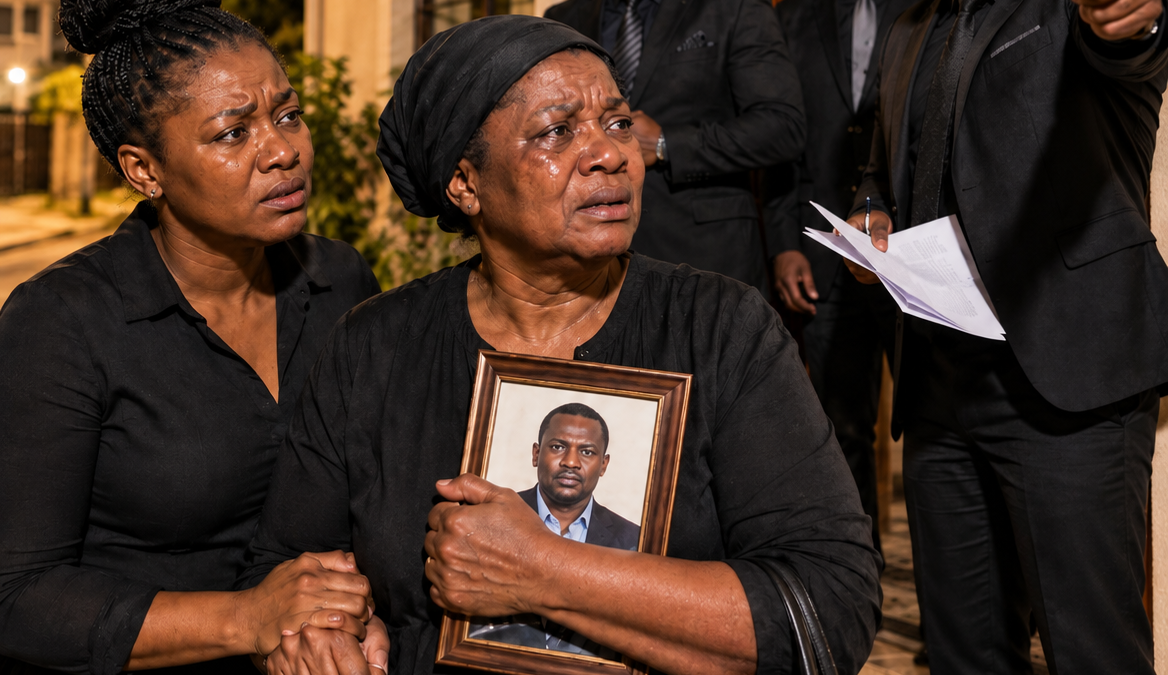
At fifty-eight years old, Miriam Ndlovu was cast out of the Johannesburg house she had helped build brick by brick with her late husband. Her three adult sons demanded her signature, her total silence, and the family property they believed was utterly wasted on an aging widow. When she refused to surrender her dignity, they shoved her out into the cold night with only her devoted youngest daughter walking beside her.
Eight years later, those same three men walked through the doors of a premier private medical center fortified and guarded like a palace. Uniformed nurses and attending physicians spoke of Miriam with hushed reverence, calling her Madam Founder at every turn. The gleaming letters engraved upon the towering granite wall bore her name, marking the empire she had built from dust and determination.
Before her sons could stammer out rehearsed apologies, their mother looked up from her bed and dismantled every lie they had ever carried. Miriam was fifty-eight when the cream-colored family home in a bustling Johannesburg suburb stopped feeling like a sanctuary. The small front garden, lovingly landscaped by her late husband Joseph, still bloomed, but inside, an unbearable chill had taken root.
Joseph Ndlovu had passed away two years earlier, leaving behind a legacy of uncompromising integrity, honor, and unshakeable discipline. During his lifetime, every room was filled with mutual respect, and his sons naturally lowered their voices whenever their mother spoke. Their wives smiled politely and offered assistance, knowing that Joseph considered family unity and dignity the foundation of human survival.
After Joseph’s funeral, however, the warmth faded gradually, lingering like twilight before vanishing completely into cold opportunism. Miriam’s three grown sons—Daniel, Simon, and Marcus—still lived nearby, treating the family home like a revolving door whenever money ran thin. From the outside, their careers sparkled with modern ambition, but behind tightly drawn curtains, mounting financial pressures were consuming them whole.
Daniel, the oldest brother, owned a regional transport firm choked by predatory high-interest vehicle loans and dwindling logistics contracts. Simon had poured their capital into an upscale restaurant that looked breathtaking on social media but struggled each month to pay waitstaff. Marcus, the youngest son, wore designer suits and expensive timepieces, driving foreign sports cars that belonged to leasing firms or associates.
Their wives felt the tightening noose of impending ruin and directed their private frustrations toward the quiet matriarch who lived simply. Anita, Daniel’s ambitious wife, bitterly believed Miriam’s conservative values were holding the extended family back from modern wealth creation. Rose, Simon’s wife, openly resented that the house still celebrated Joseph’s humble memory instead of reflecting their own contemporary tastes.
Clara, Marcus’s fashionable wife, smiled in church but complained behind closed doors that an old widow wielded far too much control. Only Miriam’s youngest child, twenty-seven-year-old Lena, saw the encroaching storm with absolute clarity and quiet heartbreak. Lena had chosen to stay with her mother after Joseph passed, cooking meals, organizing medications, and keeping meticulous records of household affairs.
She watched every ordinary Sunday gathering mutate into an aggressive interrogation regarding title deeds, municipal rates, and property values. At first, the disrespect came as subtle cuts designed to wear down Miriam’s resolve through persistent emotional exhaustion. Anita sighed loudly whenever Miriam entered the kitchen, making passive-aggressive remarks about outdated ways of keeping a home.
Rose eventually removed Joseph’s framed portrait from the sitting room, claiming the space looked far cleaner without somber relics of the past. Clara casually told visiting guests that Miriam was struggling to adjust to modern life, treating a grieving widow like an inconvenience. Miriam heard far more than they presumed, recognizing the tense whispers traded in hallways over mounting debts and bank repossessions.
She heard Daniel argue that selling the prime suburban land would clear their collective obligations if their mother would stop being emotional. She heard Marcus laugh callously, remarking that elderly parents foolishly acted as though brick walls had human blood pumping through them. Lena frequently urged her mother to confront the brothers directly, but Miriam consistently placed a gentle hand over her daughter’s arm.
A home remembers every angry word spoken within its walls, Miriam whispered softly, choosing patience over escalating domestic warfare. Let us not fill your father’s house with bitterness when he spent thirty patient years filling it with peace, love, and prayer. Yet every time Miriam chose gracious restraint, her sons and their wives foolishly mistook her deliberate silence for pathetic weakness.
The simmering conflict finally erupted on a Tuesday afternoon when Daniel arrived unannounced, carrying an expensive leather portfolio under his arm. His tailored suit was immaculate, but the dark circles beneath his bloodshot eyes revealed a man cornered by impending financial ruin. He kissed Miriam on the forehead with rehearsed affection, took a seat at the dining table, and firmly instructed Lena to leave the room.
Lena crossed her arms and remained firmly rooted beside her mother, refusing to abandon her to Daniel’s manipulative schemes. Daniel forced a tight smile, cleared his dry throat, and began a lengthy speech about shifting market conditions and family unity. Miriam listened with steady composure as he slid refinancing contracts across the table, promising that signing would give everyone breathing room.
This home is not a commercial collateral account, Miriam replied evenly, keeping her hands resting flat upon the wooden surface. Your father labored thirty years to secure this ground so that his children and grandchildren would always possess an unshakable roof. Daniel’s charming facade cracked, though he attempted one last emotional appeal, reminding her of past favors and family responsibilities he claimed to shoulder.
A mother’s duty is to ensure her sons survive, Daniel pleaded, his voice tightening as the ticking clock pressed against his mind. Survival built upon mortgaging a dead man’s hard work in a moment of reckless panic is not survival, Miriam countered firmly. It is cowardice, and I will not permit Joseph’s legacy to be liquidated to cover debts accrued through pride and vanity.
Daniel’s fingers dug into the mahogany tabletop, his voice shedding its artificial sweetness and turning cold with unveiled hostility. Do you genuinely prefer clinging to inanimate concrete while your living sons face total financial ruin and public humiliation, he snarled. Tears welled in Miriam’s eyes at his venomous tone, yet her resolve remained unbreakable as she pushed the unsigned documents away.
By twilight, Simon and Marcus arrived alongside their wives, summoned by Daniel to stage an overwhelming family intervention. The three brothers stood side by side in the sitting room where Joseph’s portrait had once hung, their postures rigid and accusatory. Simon declared that an aging woman and an unmarried daughter had no practical need for a four-bedroom house on a half-acre lot.
Marcus stepped forward, insisting their father would have wanted his hard-earned assets leveraged aggressively to expand the family’s social standing. Wisdom and reckless desperation are entirely different spirits, Miriam replied, looking each of her sons directly in their eyes. That single observation shattered whatever theatrical patience the brothers possessed, unleashing years of suppressed resentment into the open air.
Daniel shouted that she was an ungrateful woman who valued cold cement far more than the blood coursing through her sons’ veins. Simon pointed an accusing finger at Lena, screaming that she had poisoned their mother’s mind to secure the property for herself. Marcus gestured toward the open front door, stating that if Miriam chose to block their financial survival, she had forfeited her shelter.
A terrible, suffocating silence descended upon the living room, leaving the air heavy with an unforgivable domestic betrayal. Miriam looked at Marcus in sheer disbelief, stunned that the youngest child she had nursed through illness could speak with such cruelty. Lena stepped between her mother and her brothers, demanding they show basic decency, but Simon shoved his way forward with contempt.
You have never built anything of your own, Lena, Simon snapped, so pack your things and follow her if you love her softness so much. Miriam rose from her chair with deliberate slowness, her posture erect despite the trembling coursing through her aging frame. Your father would weep with bitter shame to see his sons conduct themselves like predatory wolves within his family home, she whispered.
Then leave, Mama, Daniel said, delivering the sentence with cold finality. Keep your precious pride and leave this house tonight. Anita averted her eyes, Rose crossed her arms in silent triumph, and Clara examined her manicure, none offering a single word of protest. Marcus walked to the front door and pulled it wide open, letting the biting evening wind sweep through the warm interior.
A home built on thirty years of shared sacrifice was dismantled in minutes, reduced to an auction house where cruelty reigned supreme. Miriam retreated to her bedroom, packing a single worn canvas bag with essential garments while Lena hastily gathered their personal records. With trembling hands, Miriam took Joseph’s framed photograph from the hallway stand, pressing the glass against her beating chest like a shield.
Tears traced the deep lines of her face, yet she refused to scream, beg, or allow her dignity to be compromised before them. At the threshold, she turned back one final time to face the three men she had carried, birthed, fed, and unconditionally loved. They stood breathing heavily, desperately attempting to look powerful, but the profound sorrow in her eyes pierced their manufactured armor.
Without uttering another syllable, Miriam took Lena’s hand, stepped across the doorway, and walked out into the cold Johannesburg night. Automobiles sped along the brightly lit avenue, their drivers entirely oblivious to the quiet tragedy unfolding upon the concrete sidewalk. Lena wept openly against her mother’s shoulder, but Miriam kept her gaze fixed forward, knowing that collapsing now would be fatal.
They walked until they reached a modest guest room behind an old parish where Joseph had once organized weekend food distribution drives. Miriam sat upright upon the edge of the small mattress until dawn, holding Joseph’s portrait and staring quietly into the dark. When Lena tearfully begged her to hire an attorney to contest the eviction, Miriam simply shook her head and wiped her daughter’s tears.
Not tonight, my child, Miriam said softly, her voice steadying as the first rays of morning light touched the cracked windowpane. Tonight we mourn the sons we lost, but tomorrow morning we must begin building the life they cannot touch or destroy. By sunrise, Miriam had resolved that she would never crawl back to beg for mercy from men who mistook ruthlessness for strength.
She recalled a forgotten five-acre parcel of land left to her decades ago by her late father, situated far beyond the city limits. The property bordered a rough, unpaved road near an industrial rail spur, surrounded by thorny scrub and neglected agricultural plots. Her sons had always mocked the rural plot as worthless dirt, an embarrassing piece of dead ground that produced no immediate cash.
Empty ground is never worthless if the person standing upon it still possesses courage and an unyielding will to labor, Miriam declared. They boarded a crowded public minibus, transferred to a rattling local taxi, and walked the final mile along an unforgiving dirt track. Before them stood a dilapidated brick cottage with broken windowpanes, rusted roofing sheets, and wild grass growing through the cracked porch.
To ordinary eyes, it looked like a desolate ruin of absolute abandonment, but Miriam looked past the weeds and saw sovereign freedom. She noticed the widening highway corridor half a mile away, where heavy transport trucks rumbled continuously toward northern distribution hubs. The cottage smelled of dry earth, old timber, and abandonment, yet by evening, the two women had swept the rooms completely clean.
With water boiling over an old gas burner and Joseph’s portrait set upon a rough wooden table, Miriam bowed her head in prayer. The initial months tested every ounce of their physical, mental, and emotional endurance as winter settled across the Highveld plateau. Miriam quietly pawned small pieces of gold jewelry Joseph had gifted her across decades of marriage to secure immediate operating funds.
She refused to view the sale as an erasure of memory, knowing that honoring his legacy meant fighting to secure their independent future. Lena secured part-time bookkeeping work for an auto repair shop in town, walking miles each morning to bring home precious income. By candlelight each night, mother and daughter studied property maps, zoning regulations, and outstanding municipal balances tied to the area.
Miriam discovered that while the land appeared forgotten, regional planners had quietly slated the neighboring road corridor for major industrial rezoning. Bureaucrats and speculative developers had stalled the project for years, but Miriam recognized that logistics companies would soon require satellite land. She began arriving at municipal planning offices before dawn, clutching neatly organized folders and patiently waiting hours for indifferent clerks.
Officials frequently dismissed her as a confused widow, attempting to brush her aside with bureaucratic runarounds and endless delays. Miriam returned week after week, always impeccably dressed, always soft-spoken, and always armed with verified copies of original land charters. Lena watched her mother transform from a grieving widow into a formidable negotiator who simply could not be deterred or manipulated.
After six months of relentless persistence, Miriam secured clear, unencumbered freehold title deeds to her father’s five-acre commercial parcel. That legal foundation marked the turning point, transforming a neglected plot into an untouchable base of independent operations and growth. Using Lena’s modest savings, a cooperative loan, and proceeds from selling Joseph’s vintage workshop tools, Miriam purchased an adjoining two-acre strip.
The neighboring farmer was desperate for immediate liquidity, selling the road-facing parcel at a fraction of its future development value. Their life remained Spartan, repairing the cottage roof one corrugated sheet at a time and tracking every single cent in a ledger. Lena once joked that her mother treated pennies like disciplined soldiers, to which Miriam replied that capital only respects purpose and vigilance.
While her sons in Johannesburg juggled refinancing schemes and dodged creditors, Miriam leased open yard space to an earthmoving contractor. The contractor required secure overnight parking for bulldozers and flatbeds, paying a modest monthly cash fee for fenced ground. When the first wire transfer cleared into Miriam’s newly opened business account, she wept quietly at the kitchen table in relief.
The money was modest, but it proved beyond question that their exile had become an incubator for legitimate, lasting independence. Word of Miriam’s quiet activities eventually reached the city when a distant cousin mentioned that she was restoring the old property. Daniel scoffed over dinner, telling his brothers that foolish pride drove desperate old women to waste their time on worthless dirt.
Simon laughed, predicting that six months of rural isolation and poverty would bring their mother crawling back to their doorstep. Marcus remarked dismissively that Lena would soon abandon the fantasy once she realized there were no wealthy husbands in the scrubland. None of them bothered to visit, verify the rumors, or check if their mother had warm blankets during the bitter winter months.
Yet reality did not humble Miriam Ndlovu in the manner her arrogant sons anticipated; instead, it forged her into iron. When regional road contractors finally arrived to widen the arterial highway, Miriam met the project managers at her front gate. She possessed clear title deeds, approved commercial entrance permits, and surveyed land ready to accommodate heavy machinery staging yards.
While other landowners argued over borders, Miriam negotiated long-term lease agreements with multinational construction firms building the transit corridor. Within two years, regional freight carriers required secure transshipment points outside Johannesburg’s congested and crime-ridden urban centers. Importers needed dry storage facilities, and agricultural cooperatives required distribution warehouses with direct access to regional arterial highways.
Miriam reinvested every single rand earned from yard leases into constructing her first commercial warehouse with reinforced concrete foundations. The building was utilitarian, framed with structural steel and clad in industrial iron, but to Miriam and Lena, it was magnificent. Lena formally assumed the mantle of chief operating officer, scrutinizing every vendor contract, auditing balance sheets, and managing client relations.
Whenever condescending corporate executives attempted to dismiss the young woman, Miriam would raise her hand and silence the room instantly. My daughter audits every contract and reviews every figure before my signature touches paper, Miriam would state with absolute authority. By the third year of their venture, the forgotten parcel had expanded into a sprawling logistics complex known as Ndlovu Industrial Park.
Commercial banks that had once ignored Miriam’s modest loan applications now sent senior vice presidents to solicit her commercial deposits. Contractors who had previously delayed repairs now arrived ahead of schedule, eager to win tenders for her expanding warehouse projects. Her sons began hearing her name mentioned in professional circles with increasing frequency, though their stubborn pride kept them distant.
Daniel spotted her corporate entity listed in a freight logistics gazette while sitting in his heavily mortgaged transport office. Simon overheard an international wine distributor praise the immaculate security and cold-storage facilities at the Ndlovu Logistics Hub. Marcus discovered a regional business feature detailing the extraordinary rise of an independent, female-owned industrial real estate development firm.
The brothers mocked the news in front of their wives, yet an uncomfortable dread began gnawing at their hollow confidence. Anita urged Daniel to reach out under the guise of family reconciliation before their own mounting debts forced bankruptcy proceedings. Daniel refused, terrified of facing the mother he had evicted, while Simon insisted Lena was likely orchestrating an elaborate front.
Marcus declared bitterly that he would never beg for favors at the gate of a woman he had thrown out. Miriam, however, paid no attention to the whispers of the past, focusing her expanding resources on solving practical human problems. When warehouse workers lamented the total absence of nearby medical care for work injuries, Miriam remembered Joseph’s final days vividly.
Joseph had succumbed to complications following agonizing delays in overcrowded municipal emergency rooms hours away from their neighborhood. That searing memory drove Miriam to construct a small, fully staffed primary healthcare clinic on land adjacent to the industrial park. What began as an urgent service for logistics laborers quickly opened its doors to local farmworkers, grandmothers, and impoverished children.
The medical facility transformed Miriam’s standing in the province far more profoundly than the commercial warehouses had ever accomplished. Patients arrived weary and broken, finding not only professional treatment but deep, compassionate human dignity that cost them nothing. Elderly women who had been cast aside by their families were received with warmth, provided nourishment, and treated with profound respect.
Miriam knew precisely what it felt like to be discarded when one’s perceived usefulness had expired under another’s selfish ambitions. She adamantly refused to build commercial wealth that severed itself from the moral obligation to alleviate human suffering and indignity. By the fifth year, that single clinic had expanded into two comprehensive regional healthcare centers serving thousands of vulnerable residents.
A major international healthcare consortium approached Miriam with an aggressive buyout offer, seeking to acquire her medical infrastructure. Miriam rejected the first proposal outright because the corporate entity demanded total operational authority and profit-maximization protocols. She firmly declined their revised offer when they refused to guarantee free medical treatment quotas for indigent community members.
The consortium ultimately capitulated to her non-negotiable ethical guidelines, giving birth to the renowned NdlovuCare Health Services Group. Lena built sophisticated corporate governance frameworks, recruiting world-class medical directors, ethical auditors, and dedicated operational managers who shared their vision. Together, mother and daughter directed logistics profits into modern hospital wings, medical training scholarships, and community outreach foundations.
By 2025, Miriam Ndlovu stood as one of the most respected, quietly formidable female entrepreneurs across the African continent. Her commercial real estate holdings spanned key logistics corridors, while her hospital network set national benchmarks for accessible excellence. The NdlovuCare Foundation quietly paid medical debts for thousands of destitute families and funded safe shelters for abandoned mothers.
Her personal net worth ascended into billionaire status, yet she continued to wake before sunrise to pray before Joseph’s photograph. She never removed her modest wedding band, and she never permitted the bitter memory of her eviction to corrupt her heart. She had conquered the agony of betrayal not by seeking retaliatory destruction, but by building an enduring sanctuary of restoration.
Meanwhile, her three sons drifted along divergent paths of steady, grinding decline, caught in webs of their own making. Daniel’s transport company barely survived, drowning under maintenance overhead, canceled contracts, and relentless commercial litigation from regional banks. Simon’s restaurant suffered catastrophic losses during consecutive economic downturns, closing permanently amidst acrimonious disputes with suppliers and underpaid staff.
Marcus jumped between speculative ventures and flashy partnerships, perpetually on the verge of breakthrough success before collapsing into bitter recriminations. None of them reached out to Miriam, paralyzed by a toxic mixture of bruised masculine ego, guilt, and lingering embarrassment. Their children, however, began piecing together the fragmented truths of the great family fracture that had occurred years prior.
Daniel’s eldest daughter, Naomi, carried fond childhood memories of her grandmother’s warm embrace, sweet rooibos tea, and gentle wisdom. As Naomi matured into a perceptive university student, she questioned why her grandmother and Aunt Lena had vanished completely from family gatherings. The evasive answers, uneasy glances, and hostile silences from the adults confirmed that a shameful secret was being desperately concealed.
Naomi ultimately uncovered the unfiltered truth from an elderly former neighbor who spoke frankly during a community funeral reception. The revelation that her father and uncles had thrown their mother onto the pavement over property papers sickened Naomi deeply. She realized that the men who demanded her respect had prioritized fleeting commercial appearances over the woman who had sacrificed everything.
Determined to bridge the divide, Naomi quietly boarded a cross-country bus during her semester break to seek out her grandmother. Approaching the expansive, tree-lined entrance of the flagship NdlovuCare Hospital, the young woman braced herself for justified coldness. Instead, the moment Miriam laid eyes on her granddaughter, tears of profound love spilled down her cheeks as she embraced Naomi.
Naomi wept bitterly, offering desperate apologies on behalf of a generation of children who had inherited an unearned family shame. Miriam gently wiped the tears from the young girl’s cheeks, telling her that love must never carry the burden of inherited guilt. Through Naomi’s periodic secret visits, Miriam quietly learned of the mounting struggles, broken spirits, and fractured marriages plaguing her sons.
She learned that Daniel drank heavily in isolation, that Simon avoided public gatherings, and that Marcus was drowning under lawsuits. Yet Miriam steadfastly refused to funnel anonymous financial relief through back channels to rescue them from their compounding difficulties. Unearned rescue without genuine moral transformation only deepens the wound of arrogance, Miriam explained to a somber Lena.
Then, in late 2025, the relentless pace of Miriam’s extraordinary life caught up with her aging, heavily burdened body. What began as persistent fatigue escalated into sudden vertigo, culminating in a sudden collapse during an annual foundation gala. Attending physicians immediately transferred the matriarch to the private intensive care wing of the very Johannesburg hospital she had built.
The official press release described her hospitalization as a routine precautionary rest, but Lena recognized the profound fragility in her mother. Miriam’s private suite overlooked the sweeping skyline of Johannesburg, the gentle hum of medical monitors measuring her quiet breathing. Floral arrangements arrived continuously from government leaders, corporate titans, labor unions, and former patients whose treatment she had funded.
Yet the space beside her bed remained hollow, lacking the presence of the three sons she had once cradled against her chest. Naomi arrived at dusk, finding Aunt Lena standing outside the glass partition, fighting with every ounce of strength to maintain composure. Lena explained that Miriam’s heart was stable but exhausted, worn down by decades of carrying grief beneath an armor of discipline.
Naomi stared through the glass at her grandmother, looking so delicate against white sheets, yet radiating an undeniable, regal dignity. Without asking permission, Naomi pulled out her mobile phone, walked to the far end of the quiet corridor, and called her father. Daniel answered with typical irritation, but Naomi cut through his defenses with raw, uncompromising urgency that demanded immediate surrender.
Grandmother is lying in an intensive care bed, Naomi stated, her voice shaking with an anger born of deep protective love. Daniel fell completely silent, his breathing heavy over the line before he managed to ask which facility was holding his mother. She is resting in the hospital that carries her own name, Naomi answered bitterly, the facility you were too arrogant to acknowledge.
She hung up before Daniel could respond, immediately dialing Simon and Marcus to deliver the exact same uncompromising ultimatum. The mother you discarded into the street still breathes, but time is short, Naomi told each uncle with searing clarity. If there is a shred of human conscience left inside your chests, come and face the woman who gave you life.
Early the following morning, Daniel arrived at the hospital gates, wearing an outdated dark suit and carrying a face etched with torment. Simon arrived twenty minutes later, clutching an awkward bouquet of flowers bought from a street vendor along the transit route. Marcus walked up last, his shoulders tense, arguing briefly with security personnel when requested to produce identification for high-security clearance.
Standing together in the grand marble lobby, the three estranged brothers were completely overwhelmed by the breathtaking scale of their mother’s reality. Doctors and nurses moved with calm, purposeful precision across gleaming corridors designed with modern, state-of-the-art medical technology. Grateful families gathered in peaceful waiting lounges beneath an imposing brass plaque bearing the official NdlovuCare Foundation seal.
A passing head nurse glanced at their anxious faces and remarked politely that Madam Founder was resting under close medical supervision. Madam Founder—the title struck each brother like a physical blow, stripping away the lingering delusions of their collective superiority. She was not the defenseless widow they had bullied; she was the architect of an institutional empire that dwarfed their tiny ambitions.
Lena stepped out of the private elevator, dressed in an immaculate navy business suit, radiating absolute professional composure and calm authority. For several agonizing seconds, her brothers stood frozen, remembering the younger sister they had commanded to leave into the darkness. Now, senior medical administrators bowed respectfully as she passed, awaiting her administrative approvals with quiet deference and speed.
Lena, Daniel whispered, his voice cracking beneath the weight of eight years of unacknowledged shame, regret, and brokenness. Lena did not offer a smile, looking at her brothers not with explosive rage, but with the cool detachment of an uncompromising executive. Mother has granted you permission to enter her room, Lena stated evenly, her words cutting through the tense corridor air.
You will not enter as failed businessmen seeking financial bailouts, nor as opportunistic heirs looking to calculate an inheritance, she warned. You will enter solely as sons who broke their family, and if your pride cannot endure that truth, leave this building immediately. Marcus flinched defensively, but Daniel grabbed his younger brother’s arm, forcing him into silence as Simon kept his eyes lowered.
Lena turned and led them through private access doors into the executive medical wing where silence hung like sacred cloth. They passed panoramic gallery walls displaying photographs of regional clinics, logistics parks, university scholarship ceremonies, and community nutrition hubs. In every image, Miriam stood surrounded by grateful laborers, nursing students, and restored families who looked upon her with genuine devotion.
Outside the suite door, Naomi stood waiting, looking upon her father and uncles with a disappointment far sharper than shouting. Do not dare enter that room expecting her to comfort your fragile egos, Naomi whispered fiercely to the three shaken men. She has spent a lifetime carrying the weight of this family; do not demand that she carry your guilt today.
Naomi turned and entered first, walking to the bedside to gently kiss the frail, weathered hand of the matriarch. Miriam rested against pristine white pillows, her hair wrapped neatly in a simple cloth, her face lined with age and weariness. Though her physical frame appeared diminished by illness, the quiet, formidable authority radiating from her eyes filled every corner of the room.
The three brothers entered slowly, their heads bowed, looking precisely like terrified boys returning home after smashing a priceless family heirloom. For a long, agonizing moment, the only sound in the room was the rhythmic, rhythmic beep of the cardiac monitor beside her. Daniel took a hesitant step toward the bed, falling to his knees as a ragged sob escaped from deep within his chest.
Mama, he whispered, burying his face against the edge of the mattress while Simon and Marcus stood frozen behind him. Miriam looked down at Daniel, then shifted her gaze to Simon clutching his cheap flowers, and finally to Marcus standing motionless. Her dark eyes held no venom, but they were entirely stripped of the soft indulgence they had once exploited so ruthlessly.
Did you come here today to see your mother, Miriam asked softly, or did you come to measure the value of my wealth? The question hung in the sterilized air like a falling blade, severing the last remnants of their rehearsed, hollow explanations. Simon’s hands trembled so violently that petals dropped from his bouquet onto the polished floor as Marcus looked down in shame.
Daniel attempted to speak, to offer context regarding the impossible pressures of loans, debts, and collapsing businesses eight years ago. Miriam raised a single hand, silencing his frantic justifications without raising her voice above a measured, quiet whisper. When I stood on the pavement with a single bag and your sister’s hand in mine, I was your mother, she said.
When I slept upon a cracked mattress in a ruined cottage with rain dripping through the roof, I was your mother. When corporate boards and international ministers bowed their heads and addressed me as Madam Founder, I remained your mother. Daniel wept openly, his shoulders shaking uncontrollably as he stammered that panic and fear had blinded him to his own cruelty.
Desperation explains why a man feels intense pressure, Miriam responded evenly, but it never excuses throwing your mother into the street. Simon stepped forward, tears streaming down his face as he confessed they genuinely believed they would lose everything they owned back then. So you chose to throw me away first so that your fragile pride might survive another month, Miriam observed without blinking.
Marcus stepped forward, his voice cracking as he whispered that none of them had truly intended for things to turn out so terribly. Lena stepped forward, ready to unleash eight years of justified anger, but Miriam placed a calming hand upon her daughter’s wrist. A front door does not swing open on its own hinges, Marcus, Miriam said, looking into the eyes of her youngest child.
A mother does not find herself walking into the cold midnight air through some unfortunate, accidental misunderstanding of intent. You opened that door with your own hands, you pointed into the darkness, and you told your sister to follow me into exile. The three men stood utterly stripped of their defenses, their manufactured excuses crumbling beneath the weight of undeniable moral truth.
Tell me, Miriam asked, what became of that glorious future you were so desperate to protect at the cost of my dignity? None of the brothers answered, their profound silence providing the complete, tragic balance sheet of their wasted, prideful years. The family home had been foreclosed upon by creditors years ago, sold off at an auction that yielded them almost nothing.
Their marriages had fractured under financial strain, their commercial ventures had dissolved into lawsuits, and their internal peace was utterly obliterated. Cruelty had bought them nothing but a temporary reprieve, proving that wealth built upon betrayal rot from the inside out. Miriam signaled to Lena, who walked to a side table and picked up a thick, bound legal portfolio prepared weeks earlier.
Daniel watched the documents with dread, terrified that their final disinheritance was about to be formalized before their very eyes. Miriam explained that she had settled her estate with corporate attorneys while her mind remained sharp, lucid, and entirely uncompromised. I have witnessed families tear themselves to pieces over soil and brick, Miriam said, and I will not permit that curse to continue.
Fifty percent of my entire estate, including logistics hubs and corporate shares, is bequeathed solely to your sister, Lena Ndlovu. She did not receive this as a favored child, but as an equal partner who labored beside me through poverty, exile, and restoration. Lena lowered her head, silent tears of vindication and profound gratitude falling onto the crisp lapels of her navy suit.
Twenty percent of the estate is deeded irrevocably to the NdlovuCare Foundation to fund medical clinics and shelters for abandoned parents. Pain must never be hoarded as a bitter souvenir, Miriam declared, it must be refined into a shield that protects the defenseless. The final thirty percent of my assets will be allocated among the three of you, Miriam stated, pausing as the brothers gasped.
Marcus looked up in utter disbelief, Simon covered his weeping face with his hands, and Daniel looked at her with wild incomprehension. Do not celebrate, Miriam commanded, her voice dropping into a register of unyielding steel that demanded their total attention. Those shares will remain locked within a secure legal trust, inaccessible until each of you fulfills strict, mandatory conditions of restoration.
You will each complete three full years of salaried service within our foundation’s community outreach programs, working under supervisors you once mocked. You will complete rigorous financial management certifications, publicly settle every legitimate debt owed to former employees, and confront your past. Finally, you will stand before your families and formally apologize to your sister Lena for the slander you heaped upon her name.
Daniel wept openly, whispering that after all their treachery, she was still offering them an honorable path back from ruin. I am your mother, Miriam answered, her voice softening with a love that possessed an unbreakable, righteous spine. I will not leave you to starve in the ditch you dug, but I will never hand you keys to rooms you have not learned to respect.
Daniel fell forward, resting his forehead against her frail fingers, confessing every detail of that terrible night without offering a single excuse. Simon dropped to his knees beside him, sobbing into the bedsheets, while Marcus finally broke, weeping for the dignity he had traded away. Miriam placed her open palm upon Daniel’s head, feeling the trembling of a son who had finally returned to reality through repentance.
She did not tell them that everything was fine, because wounds of the soul require years of dedicated labor to truly heal. She simply looked down at the three broken men and whispered three final words of instruction: Begin again correctly. Those words served as both an absolute boundary and the only blessing her sons required to salvage their remaining years on earth.
In the months following that fateful hospital encounter, the three brothers did not transform into saintly figures overnight through mere sentimentality. Daniel struggled mightily with his wounded ego when assigned to coordinate patient transit schedules under young clinic managers half his age. Simon labored in community nutrition programs, learning for the first time the quiet desperation of mothers trying to feed their children.
Marcus found the rigorous accounting and ethical governance courses humiliating, yet the bitter medicine of accountability slowly dissolved his vanity. Daniel liquidated his remaining personal assets to pay off long-suffering creditors rather than concealing funds behind corporate veils. Simon sought out the former restaurant waitstaff he had shortchanged years earlier, delivering their unpaid wages with sincere, face-to-face apologies.
At an annual NdlovuCare Foundation gathering, Marcus stood before hundreds of attendees and publicly confessed his past cruelty toward his mother and sister. Lena observed their halting, difficult progress from her executive office, offering neither hasty praise nor unnecessary obstacles to their redemption. True healing is not an emotional performance executed in a single afternoon; it is a steep, rocky road that must be walked daily.
Miriam recovered her physical strength and returned home, not to the bustling city, but to a quiet stone residence beside her first rural clinic. Joseph’s framed portrait sat upon an antique mahogany sideboard in her sunlit parlor, surrounded daily by fresh, fragrant white lilies. She often stood before it in the quiet twilight, whispering that their daughter had become a pillar of righteousness and their sons were finally learning.
The original family home in Johannesburg was eventually reacquired by the foundation, but Miriam chose never to reside within its walls again. She transformed the residence into a permanent sanctuary for elderly women who had been cast out by greedy and ungrateful relatives. The very rooms that had once echoed with the cold betrayal of three selfish sons now offered clean beds, warm food, and safety.
On the day the sanctuary officially opened its doors, Miriam stood upon the front porch beside Lena, Naomi, and the home’s first residents. Daniel, Simon, and Marcus stood quietly behind them, dressed in simple volunteer uniforms, carrying luggage and arranging furniture without complaint. For the first time in their adult lives, the brothers did not demand the spotlight; they were content to serve quietly behind their mother.
Miriam gazed out across the blooming front garden Joseph had planted decades ago, feeling the phantom pain of that cold eviction night surface once more. She had not erased the memory of that betrayal, for erasing the past would render the hard-won wisdom of the journey entirely meaningless. Instead, she had taken the shattered fragments of her family’s cruelty and forged them into an enduring sanctuary of mercy, justice, and truth.

