Henry VIII’s Scandalous Daughter-In-Law
When Mary Howard was born in 1519, England was already turning on the volatile axis of King Henry VIII’s desires and insecurities.
Her father, Thomas Howard, was the Earl of Surrey and would soon become the third Duke of Norfolk, commanding vast estates and martial power.
Her mother, Lady Elizabeth Stafford, brought the proud and royal lineage of the Duke of Buckingham into their East Anglian cradle.
Together, they occupied the absolute apex of the realm’s ancient nobility, looking down upon lesser peers with generational pride.
Yet this towering pride came accompanied by ruthless calculation, where every child was viewed as a strategic counter on a dangerous board.
Mary was the third of five children, raised in magnificent manor houses where stone fireplaces carried sculpted heraldry of lions and crosses.
Servants moved in hushed cadence across broad timber floorboards, stoking fires and presenting feasts that displayed the family’s boundless wealth.
The Norfolk estates across Norfolk and Suffolk were kingdoms unto themselves, shielded from common woes but ripe with courtly tension.
Her father was a soldier and statesman whose victory over the Scots at Flodden Field had permanently earned him military renown.
As Earl Marshal and Treasurer of the royal household, he managed ceremonies, state finances, and the perilous temperament of the monarch.
He held England’s high offices in iron hands, fully aware that the higher a peer rose, the sharper the executioner’s axe waited.
Beneath the velvet gowns and gold chains of the household lay an atmosphere poisoned by domestic misery and uncompromising patriarchal authority.
Thomas Howard was a man of cold calculation who demanded absolute obedience from his wife and children under all circumstances.
Her mother, a fiercely proud Stafford, refused to bow quietly to humiliation, creating a fractured home filled with bitter shouting matches.
The crisis within the walls of Kenninghall and Tendring Hall exploded into open warfare when her father brought a mistress into the house.
Elizabeth Holland, a woman of common birth, was brazenly installed as the master’s favorite, commanding the domestic staff with ease.
Lady Elizabeth Stafford refused to dine at the same table with her rival, resulting in violent confrontations that scarred Mary’s youth.
Her mother was eventually beaten, locked in her chambers, and cast out into cold exile, stripped of her jewels and dignity.
Mary and her brothers watched this cruelty unfold, learning very early what happened to women who dared to defy the patriarch’s command.
Rather than standing beside their broken mother, Mary and her brother Henry were taught that family advancement superseded all moral sentiment.
This harsh education formed the crucible in which Mary developed her sharp intellect, her quiet cunning, and her guarded independence.
She received an education equal to the finest Renaissance ladies of her era, mastering French, Latin, needlework, rhetoric, and music.
She possessed a striking physical presence, characterized by delicate porcelain features, sharp eyes, and an elegance that drew silent admiration.
Beyond the walls of the Howard estates, the politics of the realm were violently shifting into unprecedented and treacherous new territories.
King Henry VIII was growing desperate for a legitimate male heir to guarantee the succession and preserve the fledgling Tudor dynasty.
His first wife, Catherine of Aragon, had failed to bear a surviving son, driving the king into deep obsession and religious rebellion.
Mary’s maternal grandfather, the third Duke of Buckingham, had already fallen victim to this paranoid atmosphere of royal insecurity.
Suspected of harboring royal ambitions through his Plantagenet lineage, Buckingham was arrested, dragged to the Tower, and summarily beheaded.
Rather than mourning his father-in-law, Mary’s father shrewdly stepped into the political vacuum, elevating his branch of the family even higher.
The fall of Buckingham left only two dukedoms in England, giving the Howards near-unrivaled supremacy among the hereditary aristocracy.
When Mary’s grandfather died in 1524, her father inherited the vast title, becoming the third Duke of Norfolk and England’s premier peer.
The family was a coiled serpent at court, ever ready to strike at rivals, elevate their lineage, and exploit any royal weakness.
A spectacular opportunity arose through Mary’s first cousin, Anne Boleyn, a daughter of Norfolk’s sister, Lady Elizabeth Howard.
Anne had captured the king’s relentless heart, refusing to become a mere royal concubine and demanding the throne itself as her price.
The Howard faction threw their considerable weight behind Anne, accelerating the king’s break with the Papacy and the Roman Catholic Church.
Henry VIII overturned centuries of religious dogma to declare himself Supreme Head of the Church of England and secure his coveted divorce.
Mary watched her family navigate these seismic theological upheavals, torn between their traditional Catholic convictions and their lust for raw power.
While her father and brother remained deeply conservative at heart, Mary quietly absorbed the bold ideas of the burgeoning Protestant Reformation.
She walked in the Queen’s chambers as a trusted maid of honor, absorbing the delicate poetry, theology, and perilous intrigues of Whitehall.
Surrounded by reformers, scholars, and ambitious courtiers, she discovered that survival required an agile mind and a completely hidden heart.
She saw how swiftly favors were distributed and how arbitrarily the executioner’s block could be prepared on the whim of a sovereign.
While Anne Boleyn sat upon the throne, Henry VIII remained plagued by the uncertainty of having no legitimate male heir of his blood.
He had, however, an acknowledged illegitimate son born to his mistress Elizabeth Blount in 1519, a boy named Henry FitzRoy.
To the shock of the kingdom, the king showered this illegitimate youth with titles, elevating him to the Duke of Richmond and Somerset.
FitzRoy was endowed with immense royal revenues, granted his own royal council, and installed in supreme governance over the northern marches.
Whispers circulated through the foreign embassies that Henry VIII intended to legitimize the boy and name him heir apparent to the crown.
Whoever held custody over this young prince would hold the future of the English monarchy within their hands and their household.
The young duke had originally been entrusted to Cardinal Thomas Wolsey, the King’s brilliant and all-powerful chief minister and cleric.
When Wolsey failed to secure the king’s annulment from Rome, he was stripped of his titles, ruined in fortune, and brought down completely.
Norfolk immediately moved in for the kill, offering to take the young Henry FitzRoy into his own custody and noble tutelage.
The King accepted Norfolk’s proposal, and Mary’s father instantly recognized the ultimate weapon sitting directly within his ancestral home.
If FitzRoy was destined for the throne, the bloodline of the Howards must be permanently woven into his flesh and his sovereign destiny.
The duke offered his own daughter, Mary Howard, as the bride who would bind the royal bastard to their proud and scheming house.
Queen Anne Boleyn championed the match, eager to bind her uncle’s powerful family to the faction protecting her fragile new reign.
Neither Mary, barely thirteen years of age, nor Henry FitzRoy, then fourteen, had any say in the negotiations settled by their elders.
They were prized human currency, pushed across the gaming table of international diplomacy to satisfy the grand designs of two great houses.
In November 1533, the marriage ceremony took place, uniting Mary Howard with the only acknowledged son of King Henry VIII.
Mary became the Duchess of Richmond and Somerset, elevating her status far above any other young noblewoman in the entire realm.
She entered a royal estate of great palaces, magnificent liveries, and courtiers who bowed to her as an imminent queen-in-waiting.
The newly married couple, however, were not permitted to share a bed or consummate their sacred vows before God and witness.
Remembering the premature death of his elder brother Arthur after wedding Catherine of Aragon, the king forbade immediate conjugal relations.
Henry VIII decreed that the young teenagers must live largely apart until they reached full physical maturity and adult strength.
Mary accepted this peculiar arrangement with quiet compliance, maintaining her place at court while her husband continued his royal schooling.
Her brother, Henry Howard, Earl of Surrey, became FitzRoy’s closest companion, sharing his days in study, hunting, jousting, and revelry.
The two boys formed an unbreakable bond, forging a romantic friendship that Surrey would immortalize in his brilliant Renaissance verses.
For nearly three years, Mary enjoyed the pinnacle of Tudor society, expecting at any moment to be declared the future queen of England.
She was surrounded by flatterers who anticipated that upon King Henry’s death, the crown would pass directly to her handsome young husband.
She watched the rise and terrible fall of her cousin Anne Boleyn with growing dread, realizing that royal favor was utterly ephemeral.
In May 1536, Anne Boleyn was accused of treason, adultery, and incest, sentenced to death, and beheaded upon the greens of the Tower.
The Howards weathered the storm with cynical adaptability, her father having presided over his own niece’s trial without shedding a tear.
They still possessed the King’s only living son, confident that FitzRoy’s claim to the throne was now stronger than it had ever been.
Fate, however, delivered an unexpected and catastrophic blow to the Howard ambitions during the scorching summer heat of that same year.
Henry FitzRoy contracted a wasting lung affliction, likely pulmonary tuberculosis, which rapidly deteriorated his once vibrant and athletic physique.
On July 23, 1536, just weeks after his seventeenth birthday, the young Duke of Richmond died at St. James’s Palace.
The world collapsed beneath Mary’s feet as she was abruptly transformed from an aspiring queen into a vulnerable, seventeen-year-old widow.
Her husband was buried secretly and unceremoniously in Thetford Priory on the king’s orders, leaving Mary completely abandoned at court.
More horrifying still, the king and his council moved immediately to cut off her financial support and seize the Richmond properties.
Henry VIII, ever tight-fisted when sentiment cooled, declared that because the marriage was never consummated, it was legally incomplete and void.
He callously refused to grant Mary her legal widow’s dower, which normally entitled an aristocratic widow to a third of her husband’s vast estates.
For years, the young duchess had to beg and petition the crown simply to receive a modest pension to maintain her household and dress.
Her father showed little interest in championing her economic survival, having already begun to write her off as a spent diplomatic investment.
Left to navigate court without money or marital protection, Mary demonstrated remarkable resilience and refused to wither away in obscurity.
She aligned herself with literary circles at court, finding solace and intellectual companionship in poetry, philosophy, and reformed religion.
She formed a deep, lifelong friendship with Lady Margaret Douglas, the king’s brilliant and headstrong niece who resided in the royal household.
Together, Mary and Margaret gathered verses, ballads, and lyrics, creating one of the most remarkable literary records of the English Renaissance.
This collection, known to history as the Devonshire Manuscript, contained passionate love poetry by Sir Thomas Wyatt, Surrey, and Mary herself.
Mary was not merely a passive reader; she annotated poems, copied stanzas, and engaged in subtle dialogues about love, agency, and betrayal.
Her brother Henry was revolutionizing English poetry, introducing blank verse and the sonnet form into the vernacular language of the realm.
Mary stood at the very center of this creative whirlwind, using art and literature to carve out an identity distinct from her family’s designs.
By 1540, another Howard girl was elevated to the royal bed: Mary’s youthful and reckless first cousin, Catherine Howard, became the fifth wife.
The Howard faction once again found itself bathed in the glorious light of royal indulgence, showering Mary with long-overdue pensions and lands.
Her brother Surrey indulged in wild behavior in London, drinking, breaking shop windows, and behaving like an untouchable prince of the city.
The hubris of the Howards was boundless, but their triumph proved to be catastrophically short-lived and doomed to a gruesome conclusion.
Catherine Howard’s past indiscretions were uncovered by reformist enemies, and the young queen was charged with treasonous infidelity and adultery.
The wrath of Henry VIII was swift, terrible, and completely indiscriminate, engulfing the entire Howard family in a wave of terror.
In late 1541, Queen Catherine was condemned to death, and Mary FitzRoy found herself imprisoned in the Tower of London alongside her relatives.
Her grandmother, aunts, and uncles were locked in dark stone cells, their estates confiscated and their titles placed under imminent bill of attainder.
Mary spent cold, terrifying weeks inside the fortress, listening to the footsteps of guards and dreading the summons to the scaffold.
Miraculously, Mary avoided execution; the king recognized her innocence regarding Catherine’s secret liaisons and released her from the fortress.
Her father scrambled desperately to appease the king, publicly reviling his dead niece and offering his profound gratitude for the king’s mercy.
Yet the Norfolk family’s prestige was fatally damaged, and the aging monarch looked upon them with growing coldness and suspicion.
Seeking to climb back into the king’s good graces, Norfolk devised a new plan that once again placed Mary at the center of his bargaining.
He arranged a marriage between the widowed Duchess of Richmond and Sir Thomas Seymour, the handsome brother of the late Queen Jane Seymour.
The Seymours were rising stars at court, fiercely Protestant, ambitious, and the maternal uncles of young Prince Edward, the heir apparent.
The Duke believed that linking the Howards to the Seymours would secure their place in the Regency council when the ailing king died.
King Henry VIII gave his full royal consent to the match, seeing it as an effective way to balance the warring court factions.
The Howards rejoiced, believing they had finally found the golden ladder that would lift them out of their desperate disgrace.
Mary, however, flatly refused to obey her father’s command, delivering a shocking blow to the patriarchal expectations of her household.
She despised the idea of being married off for convenience to a man whose vanity, recklessness, and self-serving ambition she thoroughly mistrusted.
Having tasted autonomy as a wealthy widow, she had no desire to surrender her legal personhood and fortune to another courtier’s control.
Her brother Henry, Earl of Surrey, supported her refusal of Thomas Seymour, but not out of any concern for his sister’s happiness.
Surrey was an arrogant patrician who detested the Seymours as upstart new men, devoid of ancient pedigree or true aristocratic blood.
He viewed Mary’s proposed marriage to Seymour as an unforgivable degradation of the noble Howard name, railing bitterly against the match.
Yet Surrey had conceived an alternative strategy of his own, one that was monstrous in its cynicism and completely devoid of decency.
He summoned Mary into private conference, urging her to abandon the idea of marriage altogether and look directly at King Henry VIII.
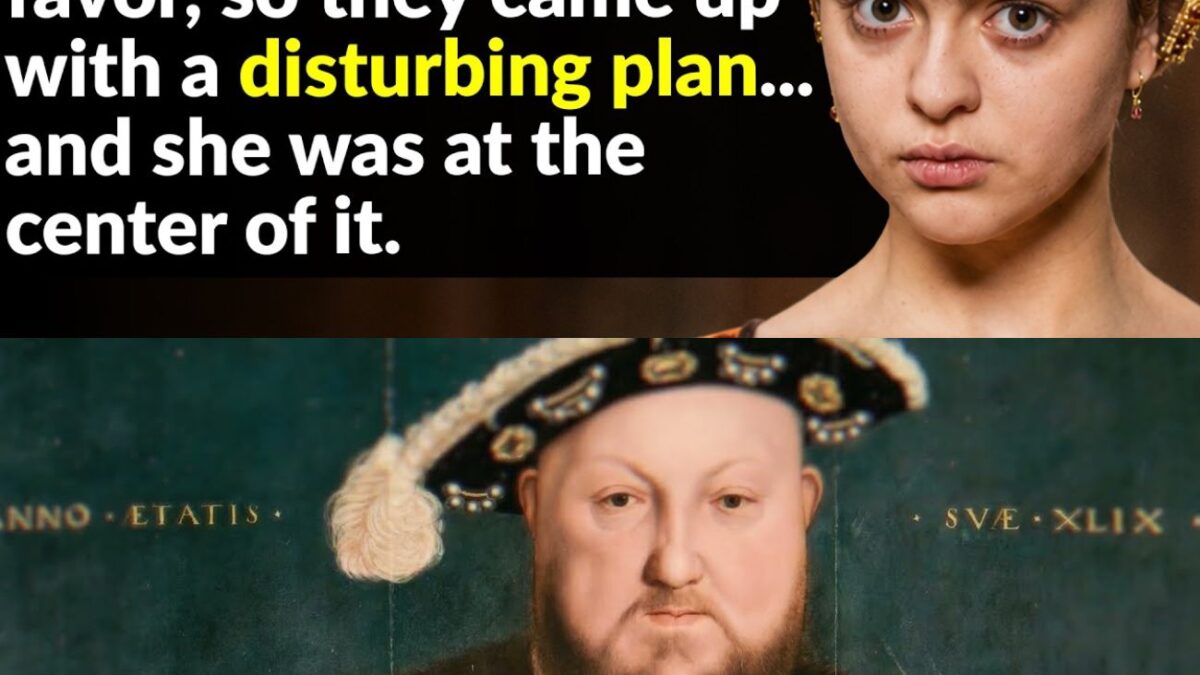
Surrey suggested that Mary should deploy her wit, beauty, and charms to seduce the aging, diseased, and unpredictable sovereign himself.
His plan was as horrifying as it was politically audacious: Mary would become the King’s official mistress, dominating his final days.
Surrey envisioned that his sister could exert the same influence over the realm that Madame d’Étampes wielded over King Francis I in France.
Through her intimate pillow-talk, she would direct the king’s favor, control royal appointments, and place her brother in supreme power.
Mary recoiled from this grotesque proposal with pure disgust and venomous rage, confronting her brother with unflinching moral indignation.
She looked at her brilliant, arrogant brother and saw only a soulless opportunist willing to sell his own sister into sexual degradation.
She spat back that she would rather cut her own throat than surrender her body to a rotting, tyrannical monster for their advancement.
The furious sibling quarrel permanently shattered whatever familial bonds remained between Mary Howard and the Earl of Surrey.
Mary refused to speak to him again, withdrawing from his circle and observing his increasingly reckless political descent from afar.
Surrey, blinded by his own sense of untouchable royalty, began to take steps that bordered upon treason against the dying king.
As King Henry VIII lay slowly dying in 1546, his massive legs swollen with ulcers and his temper hair-trigger, paranoia gripped the court.
The king knew his son Edward was merely nine years old, meaning a council of regency would rule the kingdom in his name.
The two factions at court—the conservative Howards and the reformist Seymours—began a vicious battle for control over the future regency.
Surrey made a fatal, arrogant blunder that handed his enemies the ultimate weapon they needed to destroy his ancient house.
He began openly incorporating the royal arms of Edward the Confessor into his own heraldic shield, an honor reserved solely for the royal family.
To the paranoid Henry VIII and the watchful Seymour faction, this heraldic display was an unambiguous declaration of royal ambition.
Rumors spread through London that Surrey intended to seize the protectorate by force upon the king’s death and perhaps claim the crown itself.
Norfolk and Surrey were abruptly arrested on charges of high treason and escorted through the water gate into the Tower of London.
The Howard family faced complete annihilation, and the royal prosecutors began searching urgently for witnesses to condemn the arrogant earl.
They turned to Mary FitzRoy, Duchess of Richmond, expecting the young widow to remain silent or weep helplessly for her kin.
Instead, Mary agreed to take the witness stand, preparing to unleash an unforgettably brutal betrayal upon the men of her own blood.
She remembered her cast-out mother, the forced child-marriage, her stolen dower, and Surrey’s vile proposal to make her the king’s concubine.
When brought before the privy council and commissioners, Mary gave testimony that was devastatingly precise, composed, and absolutely fatal.
She confirmed that Surrey had quartered the royal arms on his shield, testifying that he spoke with open contempt of the king’s new men.
Her most catastrophic revelation, however, concerned her brother’s disturbing plan for her to seduce the dying monarch.
Mary recounted Surrey’s exact words to the horrified council, explaining how he had urged her to become the sovereign’s concubine for power.
She detailed his obsessive hatred for the council, his dangerous pride, and his repeated assertions that the Howards alone should govern.
Her testimony confirmed the crown’s worst suspicions: Surrey was an untamable, megalomaniacal rebel who posed an existential threat to Prince Edward.
The Duke of Norfolk’s common mistress, Elizabeth Holland, also turned against him, testifying that the duke had secretly disparaged the king’s religious changes.
The Howards found themselves utterly betrayed from within by the very women they had abused, ignored, and treated as silent chattel.
Mary’s betrayal was not an act of blind panic; it was a cold, calculated strike delivered by a woman reclaiming her absolute agency.
Surrey was tried for high treason at Guildhall in January 1547, defending himself with brilliant rhetoric and fiery defiance for eight hours.
His eloquence, however, could not undo the mountain of evidence, particularly the damning deposition provided by his own sister.
The jury found him guilty, and on January 19, 1547, the Earl of Surrey was led out onto Tower Hill and beheaded.
The brilliant Renaissance poet who had reshaped English literature fell into the sawdust at the young age of twenty-nine, his ambition extinguished.
Norfolk was sentenced to death next, his execution scheduled to take place at dawn on January 28 by royal attainder.
Only a cosmic twist of historical fate saved the old duke’s head from joining his son’s in the bloody basket on the hill.
In the dead of night, mere hours before the scheduled execution, King Henry VIII finally breathed his last breath at Whitehall Palace.
Because the king died before signing the final execution warrant, the council dared not begin the reign of the young Edward VI with blood.
Norfolk’s life was spared, but he was condemned to languish in the dark dampness of the Tower of London for years.
Mary emerged from the smoking ruins of her family not as a broken victim, but as a wealthy, independent, and triumphant survivor.
She had severed the suffocating patriarchal chains that bound her, proving that she was a political player far sharper than her brother.
The new regency government under Edward Seymour looked upon Mary with immense favor, recognizing her essential role in breaking Norfolk’s faction.
Rather than abandoning Surrey’s orphaned children to the harsh whims of court politics, Mary stepped forward to claim their legal guardianship.
She took her brother’s five children into her household, determined to raise them far away from their father’s toxic aristocratic hubris.
She chose as their primary tutor John Foxe, the brilliant Protestant scholar who would later write the monumental Acts and Monuments.
Foxe was a committed religious reformer, imbuing Surrey’s young children with deep Protestant theology, classical learning, and intellectual humility.
Through Mary’s guidance, the future fourth Duke of Norfolk and his siblings received one of the finest reformist educations in the kingdom.
Mary preserved the future of the Howard dynasty while simultaneously purging it of the fanatical reactionary pride that had destroyed her brother.
Throughout the remaining years of Edward VI’s reign, Mary maintained an honorable, admired, and secure position in court society.
She possessed her own wealth, her own households, and the absolute freedom to determine the course of her private intellectual pursuits.
Despite numerous lucrative offers from high-ranking courtiers and suitors, Mary steadfastly refused ever to marry again.
She understood that under English common law, marriage meant coverture—the complete surrender of her property, autonomy, and legal existence to a man.
Having escaped the control of her father, her husband, and her brother, she chose to remain the mistress of her own destiny.
Her quiet defiance made her an extraordinary figure in sixteenth-century England: a woman who successfully rejected the patriarchal mandate of marriage.
When King Edward VI died young in 1553, the realm was plunged once again into religious turmoil and rapid dynastic change.
Princess Mary Tudor claimed the throne as Queen Mary I, determined to restore the Roman Catholic faith and reconcile England with Rome.
The aging Duke of Norfolk was released from the Tower of London, his titles restored and his ancient conservative influence briefly revived.
Mary FitzRoy did not panic at the Catholic restoration, despite having harbored Protestant scholars and embraced evangelical reform for years.
Her unique position as the widow of Queen Mary’s beloved half-brother, Henry FitzRoy, granted her personal immunity and profound royal protection.
Queen Mary looked upon the Duchess of Richmond with affection, remembering the shared bonds of grief that tied them to FitzRoy’s memory.
Mary navigated this perilous Catholic era with typical prudence, avoiding vocal religious dissent while quietly protecting her Protestant wards.
She watched her aging father die peacefully in his bed in 1554, having survived executions, falls from grace, and generational betrayals.
The title of Duke of Norfolk passed directly to Mary’s nephew, Thomas, whom she had raised and protected with unyielding devotion.
Mary FitzRoy’s final years were spent surrounded by the peace, literary culture, and independent domestic tranquility she had fought to secure.
She retired largely from active court intrigue, living between her grand country residences and enjoying the quiet company of trusted companions.
Her life had spanned the most turbulent decades of English history, bearing witness to three queens, multiple executions, and total religious upheaval.
In the late autumn of 1557, a severe epidemic of influenza swept across England, claiming thousands of lives in manor houses and cottages alike.
Mary contracted the illness, her health failing rapidly as the cold winter winds settled across her beloved East Anglian landscapes.
On December 7, 1557, Mary FitzRoy, Duchess of Richmond and Somerset, died quietly at the age of thirty-eight.
She was laid to rest with quiet dignity, having outlived the ruthless men who once sought to barter her body and mind for power.
Her legacy was not recorded in royal crowns or military conquests, but in the pages of Renaissance poetry and the survival of her family.
She proved that behind the velvet masks and stone walls of the Tudor court, survival was the ultimate and most brutal victory.

