Are Killer Whales Vengeful?
Since the spring of 2020, killer whales navigating the narrow, choppy waters off the Iberian Peninsula have engaged in more than seven hundred and fifty documented encounters with marine vessels. Over two hundred and fifty of those boats sustained significant physical damage, and at least six were broken so completely that they sank down to the seabed. Yet across those turbulent five years, the total number of human injuries recorded in all official logs remains at exactly zero.
Not a single broken bone has been registered, not a single predatory bite has been taken, and not one human being has been dragged from a deck into the dark brine. That solitary figure carries the vast majority of the evidentiary weight in this entire maritime controversy, yet it remains the precise detail that headlines systematically ignore. An apex marine predator capable of taking down great white sharks has enjoyed hundreds of distinct opportunities to slaughter vulnerable human beings, and it has deliberately refused to do so.
The short answer to the sensational question of whether these killer whales are seeking bloody revenge against humanity is a flat and absolute no. The longer answer, however, proves infinitely more fascinating, because a simple denial only carries intellectual weight once you comprehend the precise nature of what is being asked. The actual reality underlying these strange nautical encounters is far more bizarre, subtle, and psychologically complex than any Hollywood narrative of animal vengeance could ever convey.
To evaluate this phenomenon with proper scientific rigor, we must first dissect the moral architecture of the English word revenge rather than settling for unexamined speculation. Revenge is fundamentally not a primal, incandescent emotion that sweeps suddenly over an agitated creature; it is a cold, calculated cognitive sequence demanding three non-negotiable structural criteria. The very first requirement of authentic revenge is precise identification, meaning the wronged creature must possess the cognitive capacity to single out the distinct agent that harmed it.
A generic category like wooden sailing boats cannot serve as an identifiable wrongdoer, and an abstract species like humanity cannot legitimately function as the culprit of a grudge. A broad classification can easily become the tragic object of an unthinking animal fear or a territorial prejudice, but it cannot logically support the razor-thin architecture of true vengeance. If an organism fails to separate the individual perpetrator from every other creature sharing that perpetrator’s basic outline, the claim of retribution falls apart at its very foundation.
The second mandatory requirement for true revenge is duration, which demands a sustained temporal hiatus between the original physical wound and the subsequent retaliatory strike. An animal that whirls around and bites the immediate object currently pinching its tail or tearing its flesh is not exacting revenge; it is displaying immediate biological self-defense. Vengeance demands holding that grievance pristine and burning over hours, months, or entire seasons, nursing the memory across empty calendar blocks until a calculated moment arrives.
The third and most demanding structural element of revenge is meticulous targeting, meaning the physical retribution must fall squarely upon the original tormentor or an explicit, recognized proxy. Physical violence blindly distributed across the general vicinity or visited upon unrelated members of an offending taxonomic family fundamentally fails this rigorous standard. If any one of these three distinct benchmarks is missing from an observed interaction, science is obliged to classify that behavior as something else entirely.
What emerges in the absence of genuine vengeance may be animal frustration, raw acoustic panic, physical play, or merely an eccentric habit learned from an older relative. When we measure the unfolding nautical events off the coasts of Spain and Portugal against these criteria, the dramatic revenge narrative collapses beneath its own conceptual weight. Every single incident documented in Iberian waters fails the test of duration and targeting, leaving human observers with a biological mystery that demands a far quieter, sharper analysis.
The earliest verified reports began filtering into port authorities during May 2020 from the turbulent, current-swept waters directly surrounding the historic Strait of Gibraltar. Over the ensuing sailing seasons, these bizarre maritime confrontations rippled steadily northward along the Atlantic shoreline of Portugal, with scattered encounters reported off Morocco and northern France. The eyewitness accounts submitted by astonished captains proved so remarkably uniform from one vessel to the next that they bordered on bureaucratic and narrative monotony.
A standard mid-sized recreational sailing boat would be cruising along when a small pod of killer whales would suddenly surface alongside without any acoustic warning. What inevitably followed was not a blind, thrashing assault against the vessel’s fiberglass hull, but a highly targeted, intensely sustained physical dismantling of the boat’s underwater rudder. They completely ignored the spinning metal propellers, they showed no interest in the heavy anchor chains, and they never once snapped at the panicked sailors looking over the stern.
Half a decade after the initial incident, this mechanical specificity has remained extraordinarily rigid across every recorded encounter along the continental shelf. The vessels singled out for these strange visitations are almost always sailing yachts measuring under fifteen meters, constructed with exposed, cantilevered spade rudders beneath their hulls. The heavy physical work is executed almost exclusively by inquisitive juveniles and energetic young adults who swim beneath the vessel with total hydrodynamic grace.
These adolescent whales circle the stern in coordinated groups, taking turns ramming the synthetic blade of the rudder with their heavy melons and broad, muscular backs. They grip the composite edges between their conical teeth, shaking their massive heads until fiberglass splinters and internal steering linkages shear completely apart beneath the strain. The moment the structural integrity of the rudder fails and the mechanical resistance ceases, the animals almost invariably lose interest, drifting away into the deeper oceanic troughs.
The vast majority of these encounters conclude within twenty to thirty minutes, though a handful of stubborn pods have remained engaged for over two grueling hours. Roughly one in every five interactions results in structural damage severe enough to compromise the vessel, requiring emergency sea tows back to Spanish or Portuguese harbors. In the crowded shipping lanes of the Strait of Gibraltar, where immense commercial container ships maneuver continuously, being left without steering gear represents an immediate, perilous maritime emergency.
From the vulnerable deck of a lightweight yacht, the physical reality of these encounters is deafening, terrifying, and profoundly disorienting for even the most experienced sailing crews. The composite rudder serves as the sole mechanical instrument keeping the boat oriented against the heavy swells, and invisible titans are methodically hammering it from the darkness below. The vessel shuddering beneath their boots, while the heavy steering wheel spins violently and kicks backward against the helmsman’s hands, produces an acoustic nightmare inside the hollow hull.
The deep, resonating groans of stressed fiberglass and grinding metal reverberate through the living quarters like the sounds of an imminent, violent structural implosion. Then, with the suddenness of an extinguished flame, the rhythmic hammering ceases, the ocean falls completely still, and the damaged boat drifts silently in the rolling swells. Curiously, a significant percentage of the disabled boats were operating their inboard auxiliary engines at the moment of engagement, creating distinct acoustic vibrations underwater.
Whether that low-frequency mechanical pulse acts as an irresistible acoustic beacon or represents a statistical coincidence among boats negotiating calms remains an unresolved scientific question. It is one of dozens of circumstantial details that look tantalizingly like definitive behavioral clues while resisting every attempt at rigid empirical confirmation. Field biologists have definitively identified roughly fifteen distinct individuals actively participating in this peculiar subaquatic routine over the past five consecutive sailing seasons.
These animals all belong to the critically endangered Iberian killer whale subpopulation, a small, genetically isolated community numbering between thirty-five and forty individuals in total. In a population so precarious that every birth and death dictates the trajectory of the species, individual identity is never anonymous to the scientists who track them. The field researchers monitor these particular whales so closely that every participant is recognized instantly by the subtle nicks, scars, and pigmentation patterns on their fins.
When the phenomenon began in 2020, the active roster was restricted to nine individuals divided into two distinct, highly familiar social units within the broader pod. One cluster consisted of a trio of playful juveniles who roamed together, while the other was a tightly knit matrilineal family led by an experienced adult female. These were normal family units bound together by deep matrilineal traditions and shared foraging routes, not a vengeful oceanic militia recruited across unrelated geographical pods.
Alfredo López of the Atlantic Orca Working Group has consistently highlighted a glaring geographic reality that sensationalist media reporting tends systematically to sweep aside. This persistent rudder manipulation is an exceptionally rare, localized cultural quirk confined entirely to this narrow stretch of Atlantic shelf and nowhere else on Earth. Killer whales thrive along the fjords of Norway, the coastlines of Argentina, the waters of British Columbia, and the bays of New Zealand in constant proximity to vessels.
Yet in none of those high-density maritime corridors have killer whales ever demonstrated the slightest inclination to systematically dismantle the rudders of moving sailing yachts. Any biological hypothesis hoping to explain the Iberian phenomenon must account for its absolute geographic isolation rather than invoking universal, species-wide animal motivations. Language matters immensely here, and the distinction insisted upon by the marine mammalogists studying this phenomenon is not merely an exercise in scientific pedantry.
The scientists who spend their lives studying cetacean cognition deliberately describe these events as interactions rather than attacks to preserve an objective scientific standard. The word attack is cognitively loaded, smuggling in an assumption of hostile, aggressive intent that the underlying empirical data does not support in the slightest. Once the sensationalist label of attack enters the public lexicon, every slap of a flipper and every curious nudge against a hull is immediately misinterpreted as murderous malice.
In the late spring of 2023, the narrative took a dramatically darker turn when the press discovered a convenient villain to anchor their vengeful storyline. Alfredo López Fernandez published an early hypothesis suggesting the entire behavior might have been sparked by an adult female whale cataloged in the research registry as White Gladis. The tentative theory proposed that this mature female had suffered an agonizing maritime accident, perhaps an agonizing entanglement in commercial longline fishing gear or a violent hull strike.
López suggested that the acute trauma of that critical event might have triggered a defensive behavioral shift toward rudders that subsequently spread through juvenile imitation. The global media seized upon this single speculative paragraph with unrestrained enthusiasm, transmuting a cautious scientific conjecture into a full-blown anthropomorphic thriller overnight. Within forty-eight hours, White Gladis was celebrated across social media platforms as the tactical commander of a revolutionary orca uprising waging asymmetric warfare against human vessels.
That cinematic version of the story traveled across the globe with wildfire velocity precisely because it was emotionally satisfying, neat, and structurally complete. It offered a captivating protagonist, a clear origin wound, an understandable emotional motive, and a poetic sense of natural justice visited upon human maritime arrogance. It arrived fully formed on internet screens at a moment when cautious marine biologists could offer little more than an honest, inconclusive shrug of their shoulders.
A sweeping story that promises to explain every contradictory variable will always outpace a nuanced scientific paper that candidly confesses human ignorance. Yet the original trauma hypothesis deserved far more respect than the grotesque cartoon version concocted by international tabloids, because the initial premise was reasonably grounded. Gladis happened to be the sole mature female present during several of the earliest recorded interactions with vessels in the Strait of Gibraltar in 2020.
Furthermore, several individual killer whales in this precarious Iberian population bear unmistakable, deeply scarred physical evidence of violent collisions with boats and industrial fishing lines. A young female known to researchers as Gladis Negra was photographed in early 2020 bearing a severe cranial laceration consistent with a high-speed encounter with a vessel. Human activity exerts immense, continuous, and often lethal pressure upon these coastal animals, making the concept of an acute stress response entirely plausible on its face.
The fatal intellectual flaw in the trauma model emerged only when researchers tracked the long-term sociological spread of the behavior across the remaining members of the pod. As the seasons progressed, the rudder-breaking habit expanded steadily to healthy young animals with completely spotless bodies and no history of adverse encounters with boats. If unresolved physical trauma had been the psychological engine driving this phenomenon, participation would have correlated strictly with individual scarring, leaving uninjured animals indifferent.
Instead, the behavior rippled outward purely along established lines of friendship and kinship, governed by who spent their afternoons playing alongside whom. By late summer of 2023, more than thirty leading marine mammal scientists published an open letter directly confronting the dangerous media myth of the vengeful killer whale. Their public statement was unsparing in its scientific clarity, affirming that empirical evidence simply does not support the hypothesis of predatory aggression or calculated maritime retribution.
Renowned marine ecologist Robert Pitman cut straight to the core of the biological misunderstanding, observing with dry economy that revenge is strictly a human pastime. Andrew Trites of the Marine Mammal Research Unit at the University of British Columbia added an observation that reveals the true tragedy of the situation. He emphasized that these young animals are almost certainly socializing and playing with total cognitive oblivion regarding the sheer terror they inspire within human crews.
That profound cognitive disconnect is worth sitting with, because absolute emotional detachment is not the same thing as active biological hostility or predatory malice. From the perspective of a two-ton adolescent marine mammal beneath the waves, there may be zero comprehension that living, breathing beings reside above the waterline. To them, a yacht may simply be a massive, floating aquatic toy with a movable rudder that offers delightful mechanical resistance when pushed with a snout.
The warning issued by marine scientists regarding the danger of the revenge myth was not merely an academic exercise in defending animal dignity against sensational journalism. When the dominant public narrative insists that wild marine predators are actively hunting human beings, the public inevitably demands harsh physical intervention to neutralize the threat. In political circles, the solutions whispered behind closed doors quickly escalate from underwater acoustic blasters to lethal maritime culls of an already dying subpopulation.
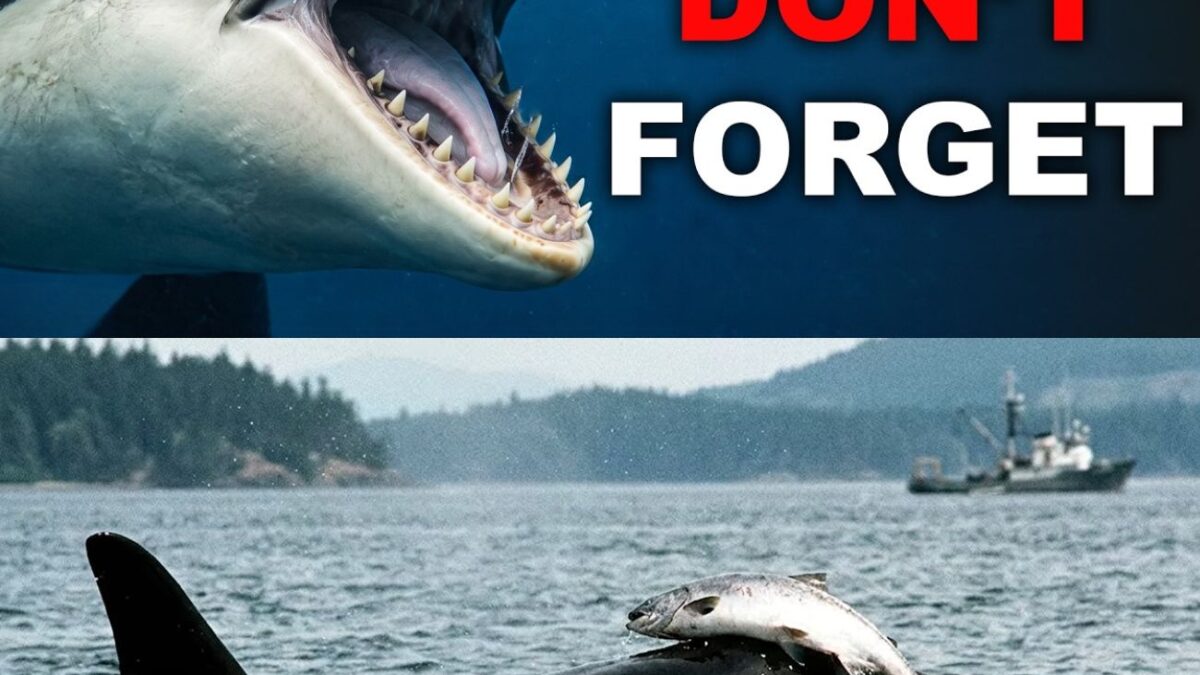
With fewer than forty Iberian killer whales left on this planet, demonizing their playful social interactions carries an immediate, existential threat to their survival as a species. To genuinely understand the bizarre mechanics of what these Iberian whales are doing, one must leave the Atlantic entirely and journey back to the Pacific Northwest in 1987. During that singular, sunlit summer in Puget Sound, a single female killer whale belonging to K-Pod was observed swimming with a dead salmon balanced on her head.
She was not attempting to manipulate the carcass for ingestion, nor was she offering the prize to a nursing calf trailing alongside her flank. She was casually, deliberately balancing the dead fish across her cranial melon like a wet, silvery piece of headwear as she swam through the sound. Within six short weeks, this utterly pointless behavioral novelty had spread through her immediate family and jumped across matrilineal lines into two entirely separate social pods.
Killer whales that had navigated the cold waters of Washington State for decades without dead fish upon their brows observed her, paused, and adopted the fashion. Dozens of wild apex predators were suddenly cruising through the coastal waters carrying decaying salmon like ornate aquatic millinery, completely indifferent to practical evolutionary utility. Then, with the sudden, inexplicable finality that defines all arbitrary cultural fads, the entire phenomenon dissolved into the oceanic mist and vanished without an explanation.
By the following summer, only a couple of stubborn stragglers were ever documented wearing fish, and then the practice disappeared entirely for thirty-seven consecutive years. Consider the astonishing cognitive machinery required for such an absurd sequence of events to unfold within a wild non-human population across such a vast territory. An individual animal invented a completely useless physical routine, and her peers observed the behavior, grasped its aesthetic mechanics, and replicated it with flawless precision.
The social transmission jumped across deep dialect boundaries and distinct familial groups that otherwise maintained completely independent hunting territories throughout the sound. The dead fish itself was never the interesting element of the story; the marvel was the lightning-fast velocity of the arbitrary cultural contagion driving it forward. Then, on an overcast morning in late October of 2024, the ghost of that ancient Pacific fashion suddenly returned from the biological deep.
Marine photographer Jim Pasola was scanning the choppy gray surface off Point No Point when an adult male cataloged as J-27 cruised silently past his lens. There, draped neatly across the prominent forehead of the thirty-two-year-old male known affectionately as Blackberry, rested the unmistakable silhouette of a freshly caught salmon. Blackberry had not even been born when the original dead-fish craze had swept across Puget Sound and died out in the late nineteen-eighties.
Whether his sudden sartorial choice represented an ancestral cultural memory preserved by elderly pod matriarchs or an entirely independent reinvention remains an unanswerable biological riddle. To their immense professional credit, the scientists studying the Southern Resident killer whales made no sweeping claims of divine knowledge regarding the purpose of the hat. The prevailing ecological theory is anchored in seasonal food abundance, noting that South Puget Sound was teeming with massive runs of chum salmon that specific autumn.
Killer whales that hunt marine mammals have been observed tucking surplus meat under their pectoral fins to keep a precious meal close for later consumption. A single salmon is far too small and slippery to be held securely beneath a massive flipper, leaving the flat surface of the head as the only shelf. Yet even that pragmatic functional hypothesis remains an unproven guess, entirely incapable of explaining why the behavior vanishes for decades only to reappear without warning.
The salmon hat is far from the only whimsical cultural fad recorded by marine biologists monitoring killer whale populations in the Pacific Northwest over the decades. Monica Wieland Shields of the Orca Behavior Institute has painstakingly cataloged a diverse historical archive of completely transient, non-functional cetacean crazes. At various times, wild pods have developed brief, obsessive passions for spy-hopping with sea vegetation draped over their fins or violently snapping floating kelp stalks underwater.
A single whale would invent the game of pulling heavy bull kelp down into the depths and releasing it so it rocketed back toward the surface. A few dozen relatives would enthusiastically adopt the recreational pastime for a summer, play it continuously until the thrill faded, and abandon it forever. This is precisely why the bizarre Puget Sound salmon hat belongs at the very center of any serious investigation into the broken rudders of the Iberian Peninsula.
The marine mammalogists analyzing the broken sailboats off Spain have explicitly argued that the dead-fish craze provides the most compelling behavioral parallel in the scientific literature. The Iberian rudder interactions fit the established scientific template of an ephemeral mammalian tradition with uncomfortable, uncanny accuracy across almost every measurable metric. The behavior originated within a remarkably tight social cluster of genetically related animals before rippling steadily outward through everyday social contact rather than shared physical injuries.
It is carried out almost exclusively by inquisitive adolescents and young adults, which is the precise developmental demographic responsible for inventing new play across all intelligent social species. It remains obsessively directed at one specific mechanical object, executed in one consistent physical style, and ceases the instant that mechanical object breaks apart. Most tellingly of all, the behavior yields zero tangible evolutionary dividends in terms of caloric intake, reproductive territory, or the mitigation of actual human threats.
If this cultural-fad framework represents the correct biological model for the Iberian crisis, it carries an inevitable scientific prediction regarding the ultimate trajectory of these maritime incidents. Just like the salmon hats of 1987 and the underwater kelp slingshots of Puget Sound, the Iberian rudder obsession will eventually run its course and vanish. The original Pacific fad burned brightly for six weeks before burning out, while the Iberian game has persisted longer because moving boats represent an endlessly renewable stimulus.
Fads within this highly intelligent, culturally complex species possess a documented historical habit of evaporating into thin air just as quickly and mysteriously as they arrive. That reality, rather than any cinematic narrative of marine retribution or interspecies warfare, remains the safest scientific forecast we can offer to the global maritime community. In the intervening five years, a proud international fleet of experienced sailors has found itself completely baffled and physically defeated by a dozen overgrown ocean teenagers having fun.
To fully grasp the absurdity of framing these wild maritime interactions as violent human retribution, one must examine the dark historical arenas where killer whales have killed. Throughout the entire span of recorded human history, there has never been a single verified instance of a wild killer whale killing a human being in the ocean. There have been rare, isolated exploratory nips and mistaken-identity grabs in wild surf, but never a single fatal predatory assault upon a swimming or drowning human.
In stark, horrifying contrast, the concrete holding tanks of the international commercial marine park industry have witnessed more than seventy severe physical incidents and four human fatalities. That staggering behavioral chasm between the open ocean and the concrete pool reveals the entire moral and psychological truth of this magnificent apex species. We are looking at the exact same taxonomic species, the identical brain architecture, and the same extraordinary capacity for social learning and emotional depth.
The singular, decisive variable that turns an animal incapable of wild homicide into a creature that crushes human bone is the structural reality of the tank. This tragic historical chapter must be approached with the utmost dignity and moral seriousness, because real, dedicated human beings lost their lives in those chlorinated waters. The most famous animal at the center of this grim captivity archive was a magnificent male named Tilikum, ripped from his family pod off Iceland in 1983.
Captured when he was barely two years old, he was sold into the marine entertainment industry and shipped to the decaying facilities of Sealand of the Pacific. There, the young Icelandic whale was confined inside a dark, cramped holding pool measuring barely eight meters across alongside two dominant, socially frustrated resident females. The females repeatedly raked his young skin with their teeth in the dark, driving the terrified juvenile into deep psychological distress and chronic gastric ulcers.
On the twentieth of February in 1991, an energetic twenty-year-old marine biology student and part-time trainer named Kelty Byrne slipped and fell into that tiny pool. The three confined, deeply disturbed whales systematically prevented her from surfacing to reach the safety of the perimeter wall until her strength failed and she drowned. Eight years later, in July of 1999, an unauthorized visitor named Daniel Dukes hid inside SeaWorld Orlando after park hours and somehow entered Tilikum’s solitary holding basin.
The following morning, Dukes’s battered, hypothermic body was discovered draped across the back of the massive bull whale floating quietly in the center of the stadium pool. The most notorious incident occurred on a bright afternoon in February 2010, when Tilikum suddenly dragged forty-year-old senior trainer Dawn Brancheau beneath the surface after a routine performance. Her violent death sent shockwaves through the global theme park industry, terminating water-work routines between trainers and whales and inspiring the searing 2013 investigative documentary Blackfish.
Tilikum was never an isolated, aberrant sociopath within the captive entertainment landscape; he was merely the most visible casualty of a systematically broken, psychologically catastrophic housing model. Months before Brancheau lost her life in Florida, another captive male named Keto brutally killed his skilled trainer Alexis Martínez during a rehearsal session at Loro Parque. Six years prior to that, a massive captive male named Kyuquot repeatedly pinned veteran trainer Steve Aibel to the bottom of a performance pool at SeaWorld San Antonio.
Crucially, not a single marine mammalogist, veterinarian, or ethical trainer who spent years working closely alongside these captive cetaceans ever attributed these fatal events to calculated vengeance. The clinical explanations offered by the professionals who understood these animals best were grounded in severe chronic stress, unendurable boredom, sensory deprivation, and catastrophic psychological deterioration. Graeme Ellis, an esteemed biologist who worked at the Vancouver Aquarium before dedicating his life to wild field research, illuminated this captive tragedy with profound scientific clarity.
Ellis explained that the central daily struggle of maintaining killer whales inside concrete enclosures is not teaching them theatrical tricks, but desperately attempting to preserve their basic sanity. He noted with quiet professional sadness that after a few short years confined inside a sterile concrete box, every captive killer whale inevitably begins to break down. There exists an unmistakable physical testament to this institutionalized decay: the iconic collapsed dorsal fin, ubiquitous among mature captive males while appearing in less than one percent of wild populations.
Now, take those tragic captive deaths and measure them honestly against the three mandatory structural criteria of vengeance that we established at the beginning of this inquiry. Kelty Byrne was an innocent, gentle university student who had never inflicted the slightest physical or emotional pain upon the captive whales that held her beneath the water. Dawn Brancheau had spent years championing and caring for Tilikum, treating the massive, lonely bull with profound affection, professional respect, and consistent daily gentleness throughout her career.
There was no identified wrongdoer in those concrete pools; the violent outbursts were not targeted strikes against the specific whalers who had severed their families decades prior. There was no calculated temporal gap between a specific historic grievance and an act of retribution, because there was no rational proximate crime to avenge in the first place. What took place in those chlorinated show tanks was not the cold execution of an ancient blood debt; it was the sudden, tragic splintering of a magnificent mind.
When an immensely powerful, wide-ranging social predator designed to navigate seventy miles of open ocean each day is confined to a bathtub, severe behavioral pathology is inevitable. What happens to intelligent mammals subjected to sensory deprivation and perpetual confinement is heavily documented across hundreds of species, and it is never revenge—it is simply structural trauma. Tilikum’s long, heartbreaking life finally came to an exhausted end on the sixth of January in 2017, when he succumbed to a drug-resistant bacterial pneumonia at age thirty-six.
Rejecting the sensational myth of revenge does not mean we must reduce these majestic marine predators to simplistic biological machines responding purely to automated biological wiring. That intellectual overcorrection represents an equally lazy analytical trap, stripping killer whales of their profound cognitive subtlety and rich emotional architecture to preserve an artificial scientific cynicism. Every distinct ecotype and geographic population of killer whales on this planet possesses its own authentic culture in the precise, rigorous sense that evolutionary anthropologists employ the term.
Wild pods maintain distinct vocal dialects of whistles and clicks, specialized dietary preferences, sophisticated collaborative hunting techniques, and generational migratory traditions that are carefully transmitted through the matrilines. The critically endangered Southern Resident population of the Pacific Northwest feeds almost exclusively upon Chinook salmon, resolutely ignoring harbor seals swimming directly past their pods. Other populations living in nearby waters specialize exclusively in coordinating high-speed beach assaults to capture sea lions, or working in unison to wash resting seals off floating ice floes.
These are not genetically differentiated subspecies; they are entirely distinct oceanic cultures possessing separate languages, separate culinary preferences, and separate social etiquettes that never intermingle. An orca calf raised within a salmon-eating matriline will live its entire eighty-year life alongside marine-mammal eaters without ever adopting the hunting traditions of its neighbors. Their capacity for social learning is so remarkably swift that an entirely new game can sweep across multiple independent pods in a matter of a few short weeks.
They are one of only a tiny handful of mammalian species on planet Earth whose females undergo biological menopause, living for decades after their reproductive years have ceased. These wise, post-reproductive grandmothers navigate their pods through catastrophic seasonal famines, relying on decades of stored ecological memory to guide their families toward hidden hunting grounds. They possess documented grief rituals, carrying deceased, stillborn calves across hundreds of miles of open ocean for weeks on end, refusing to abandon their mournful vigil.
Every single neurological building block and cognitive prerequisite required to cultivate and execute a deep, burning grudge is fully present within that immense, folded mammalian brain. The intellectual equipment is undeniably there; what remains entirely absent from the scientific record is any shred of credible empirical evidence that they ever deploy it for revenge. There is a careless, dismissive version of this analysis that might attempt to argue killer whales are simply too primitive or stupid to harbor retaliatory desires toward humanity.
That dismissive conclusion would be scientifically bankrupt and intellectually dishonest, ignoring fifty years of groundbreaking field research into the stunning depth of cetacean emotional intelligence. The definitive answer to the question of whether killer whales are vengeful remains an absolute no, not because the animals lack the mental capability, but because vengeance is our obsession. The specific act of cold, calculated, cross-species retribution has simply never been witnessed in the wild, and every sensational case advanced by the tabloid press evaporates under rigorous scrutiny.
Furthermore, there is a fascinating, counterintuitive ecological discovery that points toward a joyous, rather than hostile, interpretation of the ongoing events in the Strait of Gibraltar. When wild salmon or tuna stocks collapse, killer whales are forced to spend almost every waking hour of their migratory journeys desperately searching for sustenance, abandoning all social play. Complex recreational pastimes and arbitrary cultural fads only emerge within a wild cetacean society when the hunting grounds are abundant and survival is temporarily secured.
Social play is the glorious biological luxury that high-intelligence animals can only afford when their stomachs are comfortably full and the waters are rich with life. This ecological reality transforms the frustrating, expensive sailboat interactions off the Iberian Peninsula into an astonishing piece of positive biological news for an otherwise endangered population. It suggests that this fragile community of forty surviving whales is finding enough Atlantic bluefin tuna to enjoy hours of free recreational slack in their daily schedules.
They have enough nutritional security and cultural vitality left within their small community to invent, propagate, and enthusiastically sustain an utterly useless, highly demanding nautical hobby. Seven hundred and fifty documented encounters; more than two hundred and fifty damaged wooden and fiberglass boats; six vessels resting silently upon the dark ocean floor. Yet across all those chaotic hours of splintering rudders and screaming helmsmen, not a single drop of human blood has been spilled by an apex ocean predator.
A six-ton animal capable of tearing a great white shark apart with surgical precision has spent five continuous years playing with lightweight fiberglass pleasure craft in open waters. They have had thousands of opportunities to drag helpless sailors down into the crushing depths, and they have deliberately, consistently turned away the moment the game was concluded. We desperately labeled these events an organized campaign of revenge because vengeance is an ancient, dramatic, anthropomorphic story that human beings understand deep in our bones.
The revenge narrative conveniently hands the animal a human motive we recognize instantly, clothing a terrifying maritime encounter in a moral framework that makes us feel profoundly important. It takes a genuinely alien, utterly magnificent non-human intelligence and forces it into a simplistic four-second Hollywood narrative of grievance, retribution, and ecological guilt. The actual biological truth is infinitely stranger, far more majestic, and distinctly less flattering to our species’s overwhelming, self-centered desire to be the main character of every drama.
A tiny, tight-knit family of brilliant, critically endangered oceanic wanderers simply discovered something delightfully interesting to do with their idle afternoons beneath the rolling Atlantic waves. And one day, just like the forgotten salmon hats of Puget Sound and the submerged kelp slingshots of decades past, the whales will grow bored, and they will simply stop.

