A Wife Put Drain Cleaner In Husband’s Coffee. This Is What Happened To His Stomach.
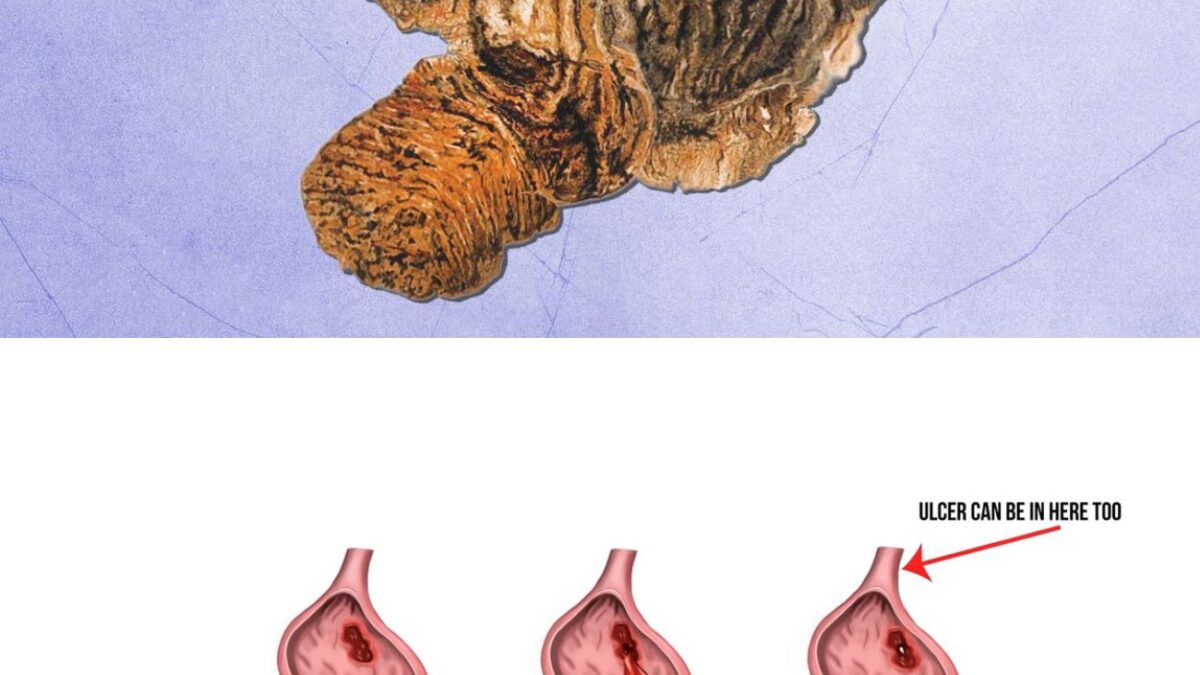
A forty-one-year-old man known as PB arrived at the emergency department clutching his midsection in agony. His face was pale, his breathing was shallow, and his voice trembled when he tried to speak. He reported a violent episode of hematemesis, the forceful vomiting of bright red and dark clotted blood.
The triage nurse gently helped him sit upright and began recording his vitals and detailed medical history. PB admitted that the alarming symptoms had not begun entirely suddenly on that particular morning. The day before, after using the restroom, he had looked down into the toilet bowl before flushing the basin.
Instead of ordinary stool, the bowl held a thick, tarry substance resembling freshly poured highway asphalt. This dark appearance, medically referred to as melena, is an ominous and undeniable sign of an internal crisis. It meant a significant amount of blood had been pooling, digesting, and traveling through his intestinal tract.
To understand how a young and seemingly stable man reached this breaking point, one must look backward. PB was an educated man who had once possessed enormous ambition and promising opportunities in his career. He and his wife, Katie, had met early in their adult lives when their future seemed boundless and bright.
In the early seasons of their marriage, affection was easy, and their household was filled with optimism. They shared dreams of building a prosperous life together and establishing a large, happy family of their own. However, their domestic tranquility shattered the moment PB was abruptly and unexpectedly laid off from work.
The sudden dismissal was a brutal blow to his pride, plunging him into deep confusion and persistent disbelief. He spent months sending out resumes, attending interviews, and desperately attempting to re-enter his field. Yet, company after company turned him away without a second thought, leaving his professional morale broken.
Refusing to accept entry-level roles, PB attempted to launch his own entrepreneurial enterprise instead. He incorporated an independent venture, pitching blockchain solutions for agricultural logistics and pharmaceuticals. He spent endless days building decks and cold-calling executives, but investors dismissed his complex proposals.
When that tech venture collapsed under unpaid debts, PB shifted his restless energy toward fine woodworking. He bought expensive tools, rented shop space, and promised that handcrafted bespoke furniture would make them wealthy. Inevitably, the cost of high-grade timber and machinery far outstripped any actual sales he managed to generate.
Each time a new venture failed, PB turned to Katie with sheepish apologies and requests for bailouts. He would promise that just another five thousand dollars would settle the creditors and buy fresh equipment. He vowed he would work double shifts to pay her back with interest once his next breakthrough arrived.
Over time, an unhealthy psychological shift began to take root quietly within PB’s daily mindset. He realized that as long as he gave the appearance of working, his wife’s corporate earnings sustained them. Katie paid the mortgage, bought the groceries, covered the debts, and bore the entire weight of their survival.
At the same time, a painful void hung over their marriage because they could not conceive a child. Years of negative pregnancy tests, clinical visits, and silent disappointments gradually eroded whatever fondness remained. Katie began to look across the dining table at her husband with an icy, simmering contempt she rarely voiced.
She watched him loaf about the house, drifting between failed artistic projects, podcasts, and casual daytime hobbies. If he fails so completely at every simple ambition in life, she thought, it is no wonder he fails at fatherhood. Her inner thoughts became colder with every passing month as her resentment hardened into a toxic emotional wall.
While PB drifted aimlessly through his days, Katie’s career in corporate management advanced with remarkable speed. She earned promotions, gained international responsibilities, and became a respected authority within her executive circle. The glaring imbalance between her industrious discipline and his chronic stagnation made every domestic interaction unbearable.
One afternoon, Katie was conducting a high-stakes videoconference with senior corporate directors from her home office. In the adjacent room, PB decided to begin recording an episode for his brand-new, unmonetized personal podcast. His loud, boisterous voice bled straight through the thin plasterboard walls, entirely disrupting her professional meeting.
Flushed with embarrassment, Katie unmuted her microphone and offered a bitterly sarcastic apology to her colleagues. She explained that her husband was terribly busy being an internationally famous podcaster with zero active listeners. The humiliating comment pierced PB’s ego deeply, igniting a fierce, vengeful fury behind his quiet exterior.
Convinced that his masculine authority had been trampled, PB began constructing hostile, paranoid theories about his wife. He convinced himself that their inability to conceive was not biological misfortune, but deliberate sabotage on her part. He suspected she took contraceptive pills behind his back so that motherhood would not hinder her career trajectory.
He stewed over the company trips she took, imagining deceit, infidelity, and betrayal during her time away. To punish her, he took an unflattering photograph of her, edited it cruelly, and left it upon the table. When Katie discovered the grotesque depiction sitting beside her breakfast, an irreversible switch flipped inside her mind.
She realized she had spent years subsidizing an ungrateful, parasitic companion who offered neither love nor respect. In the brutal mathematics of nature, a creature that feeds relentlessly upon a host is an invasive pest. A parasite that destroys its benefactor cannot be reasoned with; it must simply and decisively be eliminated.
As Katie quietly plotted her retribution, she was acutely aware of her husband’s lifelong medical vulnerability. For many years, PB had suffered from chronic gastrointestinal disorders, including recurrent, painful peptic ulcer disease. Deep mucosal sores would periodically flare up inside his stomach lining, triggering agonizing bouts of mid-epigastric pain.
Though he tried to watch his diet, PB had habits that frequently irritated his fragile gastrointestinal tract. He insisted on drinking strong, piping-hot black coffee every morning, completely free of any cream or sugar. He also indulged in acidic, vinegar-heavy sauces and spicy foods that routinely aggravated his tender stomach lining.
One quiet Tuesday morning, Katie stood alone in the kitchen preparing PB’s customary morning beverage. Tucked behind the cleaning supplies underneath the kitchen sink was a heavy plastic jug of commercial drain cleaner. As the dark coffee finished brewing, she unscrewed the childproof cap and poured a measured dose into the mug.
She stirred the dark liquid carefully, watched the steam rise, and carried the warm mug to her husband. PB took a deep swallow from the ceramic cup, paused in confusion, and wrinkled his nose in sharp disgust. He looked up and asked why the brew tasted so extraordinarily bitter and had such a strange chemical bite.
Katie offered a cold, indifferent shrug, suggesting that strong black coffee was inherently bitter by its very nature. She tartly suggested that if he disliked her morning efforts, he was welcome to prepare breakfast himself. She gathered her purse, wished him a polite day with chilling calmness, and walked out to her car.
Within an hour of finishing the poisoned coffee, PB began experiencing strange and alarming sensations in his throat. His tongue felt dry, swollen, and unusually rough, as though coarse animal hairs were coating the back of his mouth. A localized chemical burn was beginning to blister the delicate mucosal tissues lining his oral cavity and pharynx.
By midday, an intense, fiery burning sensation blossomed directly beneath his sternum and radiated through his torso. Assuming his chronic peptic ulcers were suffering another sudden seasonal flare-up, he reached for common over-the-counter antacids. Yet, the chalky calcium tablets provided no relief whatsoever against the corrosive destruction unfolding within his gut.
After suffering through days of relentless agony, PB finally drove himself to an urgent care clinic for evaluation. The examining physicians noted his long and well-documented history of severe peptic ulcerations in his chart. Assuming this was an ordinary exacerbation driven by poor diet and stress, they prescribed heavy proton-pump inhibitors.
They reminded him sternly to avoid black coffee, hot spices, citrus fruits, and irregular meal schedules entirely. PB followed their instructions, cutting out acidic meals, but the persistent, gnawing burn refused to fade away. What neither PB nor the outpatient clinicians could possibly know was that the danger was residing inside his home.
Katie did not pour drain cleaner into his mug every single day, which kept the poisoning remarkably disguised. Instead, she spaced out the doses, gradually increasing both the volume and frequency whenever her resentment peaked. PB grew increasingly baffled, occasionally complaining out loud that his coffee smelled more like industrial bleach than beans.
One morning, after a particularly harsh argument the previous evening, Katie laced his morning cup far more heavily. PB took a hearty gulp of the warm fluid, only to instantly experience a searing agony across his tongue. The pain was so profound, electrical, and violent that he dropped the mug, gasping and retching into the sink.
Within hours, nausea overwhelmed him, and he began vomiting dark coffee-ground material intermingled with fresh crimson blood. Terror finally gripped him, forcing him to call for transport directly to the regional hospital’s emergency department. Now sitting upon the hospital gurney, his voice was reduced to a raspy, strained, and painful whisper.
He attempted to recount the strange events leading up to his admission to the attentive medical team. He explained that the morning coffee had not even been steaming hot when he lifted it to his lips. Yet, the moment it contacted his mouth, it felt like an open flame had scorched his tongue and throat.
He remembered an odd, sterile odor rising from the mug, reminiscent of concentrated household laundry bleach or soap. He described the relentless weeks of indigestion, the blackened stool in the toilet, and his history of ulcers. Yet, the more he talked, the more he began to doubt his own memory, wondering if stress caused it.
Upon initial triage, PB appeared superficially stable, presenting in moderate distress without overt signs of sudden respiratory collapse. His blood pressure hovered near low-normal limits, while his resting heart rate was moderately elevated above one hundred. However, the physical evidence of his bodily fluids painted a far more ominous and deteriorating physiological reality.
Active hematemesis, or the vomiting of blood, is an absolute medical emergency requiring immediate diagnostic and therapeutic intervention. Blood is intensely irritating to the gastric lining, triggering rapid, forceful contractions to expel the foreign fluid upward. Simultaneously, the presence of black, tarry melena confirmed that massive bleeding had been progressing uninterrupted for multiple days.
When red blood cells enter the stomach, hydrochloric acid immediately oxidizes the iron atoms inside hemoglobin molecules. This oxidation turns the bright red pigment into a dark, degraded compound known clinically as acid hematin. As hematin journeys through meters of small and large intestines, bacterial enzymes further break it into tar-like waste.
The medical team was faced with a complex puzzle: what could cause such catastrophic, widespread mucosal destruction? The answer lay within the dark, toxic chemistry of common commercial drain cleaners found beneath kitchen sinks. These industrial formulations typically combine sodium hypochlorite, concentrated sodium chloride, and extremely potent sodium hydroxide, commonly called lye.
Unlike acidic compounds, which tend to produce coagulative necrosis that forms a protective, leathery protein clot on contact, concentrated alkaline substances possess a much higher pH, typically exceeding thirteen or fourteen on the chemical scale. Strong bases do not burn via thermal heat; rather, they inflict severe, deep-penetrating chemical damage on living tissue.
Every single cell in the human body is enveloped and safeguarded by a delicate, highly organized lipid bilayer. Lipids are essentially long chains of fatty acids bonded together, forming the structural boundary that keeps cellular contents intact. When a powerful alkaline hydroxide contacts these biological fatty membranes, an immediate saponification reaction occurs without delay.
Saponification is the exact chemical process historically used to manufacture household soap from animal fats and lye. When PB swallowed the tainted coffee, the sodium hydroxide molecules rapidly reacted with the cellular fats of his esophagus. His esophageal lining was literally being dissolved into liquid soap, stripping the mucosal layer from the underlying muscle.
Because Katie had poured the thick, viscous cleaner carelessly into the mug, the liquid had not dissolved evenly. PB had inadvertently swallowed dense, concentrated clumps of caustic lye suspended throughout the darker coffee mixture. These heavy droplets clung to specific points along his esophageal walls, liquefying membranes and burrowing into deeper tissues.
The longer an alkaline agent remains in direct contact with biological tissue, the deeper the chemical burns penetrate. Unlike acids that sear and stop, alkalis continue to destroy cellular architecture until neutralized by surrounding bodily fluids. PB had essentially sustained repeated third-degree chemical burns throughout his entire upper gastrointestinal tract over several weeks.
Because PB had suffered from chronic peptic ulcers for years, differentiating between old and new damage was difficult. A deep, untreated peptic ulcer can erode directly into a gastric blood vessel, producing severe, life-threatening hemorrhage. Without knowing that drain cleaner was present in his kitchen mug, clinicians initially suspected a massive ulcer flare-up.
To determine the true source of the hemorrhage, gastroenterologists prepared PB for an urgent upper endoscopy procedure. They carefully guided a flexible fiber-optic camera down his posterior pharynx, past his vocal cords, and into his esophagus. The images transmitted to the operating room monitor left the entire surgical team stunned in collective professional shock.
The mucosal lining of PB’s esophagus was not merely reddened; it was catastrophically swollen, ulcerated, and necrotic. Vast sheets of cellular tissue had sloughed away, leaving weeping, denuded muscle layers covered in yellowish-white liquefactive exudate. This widespread, destructive devastation was classic, unmistakable evidence of severe, acute-on-chronic caustic ingestion injury.
As the endoscope proceeded cautiously downward toward the stomach, doctors encountered another significant and concerning anatomical abnormality. The lumen of his lower esophagus had contracted dramatically, creating a dangerous, narrow channel known as a stricture. A stricture is the direct consequence of repeated, deep tissue injury followed by an aggressive, dysregulated healing response.
When severe caustic burns destroy the full thickness of the esophageal lining, the body initiates emergency wound repair. Fibroblasts proliferate rapidly across the injured zone, laying down dense, disorganized deposits of structural collagen proteins. While collagen is essential for closing deep wounds, it lacks the elasticity and compliance of native, healthy muscular tissue.
Over days and weeks, this newly formed scar tissue contracts tightly, gradually strangling and constricting the functional esophageal passage. The presence of such dense, mature scar tissue proved conclusively that PB’s injuries were not caused by that morning alone. He had been ingesting corrosive chemical agents for weeks, confirming that previous hospitalizations were early poisoning episodes.
While the medical team debated whether to attempt gentle balloon dilation of the esophageal stricture, PB’s condition deteriorated. His blood pressure began to plummet steadily, falling below eighty systolic, while his heart raced at tachycardic speeds. A sudden, excruciating agony seized his abdomen, turning his abdominal wall as rigid and unyielding as a wooden plank.
PB spiked a high fever of over one hundred and three degrees, his skin turning mottled, clammy, and gray. Urgent arterial blood gas tests and metabolic panels revealed that his kidneys and liver were entering acute multi-organ failure. His serum lactate levels climbed precipitously, signaling that peripheral tissues were suffocating from a severe lack of oxygen.
Emergency portable computed tomography scans were immediately ordered and executed to examine his entire abdominal vault. When the radiology images populated the screens, doctors observed massive pockets of free air and fluid within the peritoneum. In a healthy human body, the peritoneal cavity surrounding the internal organs is an entirely sterile, sealed, airless space.
Air can enter the thoracic cavity through the respiratory tree during inhalation, but it cannot cross the intact diaphragm into the belly. The only possible source for free gas inside PB’s lower abdomen was the internal gastrointestinal tract itself. The digestive canal contains abundant gases generated by resident bacterial colonies, along with digestive enzymes, acids, and food.
The scan proved that somewhere along his severely damaged digestive tract, a catastrophic structural perforation had torn wide open. The caustic lye had burned completely through the full thickness of his stomach wall, blowing a hole into his abdomen. Highly acidic gastric juices, partially digested blood, and millions of living enteric bacteria were pouring into his sterile peritoneal cavity.
As trillions of bacterial organisms spilled across the delicate, highly vascularized peritoneal membrane, an immune wildfire erupted instantly. Under normal circumstances, a localized injury triggers a controlled, beneficial inflammatory response to recruit protective white blood cells. Capillaries dilate gently, allowing neutrophils and macrophages to migrate toward the site of damage to neutralize invading microbes.
However, when an overwhelming deluge of digestive bacteria floods the entire abdominal cavity, the immune system panics entirely. Massive quantities of pro-inflammatory cytokines, including tumor necrosis factor and interleukins, flood directly into the patient’s bloodstream. This uncontrollable cytokine storm instructs every blood vessel throughout the entire human body to dilate simultaneously and uncontrollably.
As billions of systemic vascular beds dilate at once, effective circulating blood volume and systemic vascular resistance drop precipitously. Capillary walls become exceedingly permeable, leaking vital fluid out of the circulatory system and into interstitial tissue spaces. Despite the heart pumping furiously to compensate, arterial blood pressure crashes into profound, refractory distributive septic shock.
Without adequate blood pressure driving perfusion, oxygen cannot be delivered to vital organ capillary networks throughout the body. The renal tubules begin to die, causing the kidneys to completely cease filtering metabolic waste and producing urine. The liver cells undergo acute ischemic injury, leaving the body unable to clear toxins or synthesize essential clotting proteins.
Soon, the brain begins to suffer from severe cerebral hypoxia, starving the cerebral cortex of vital glucose and oxygen. PB’s eyes rolled back, his speech devolved into incoherent mumbles, and he lapsed rapidly into profound unconsciousness. He was in immediate danger of cardiovascular collapse, requiring intubation, mechanical ventilation, and multiple high-dose vasopressor infusions.
Because PB had a documented history of peptic ulcers, the surgical team had to determine the precise perforation mechanism. A severe peptic ulcer can indeed erode through the stomach wall if left untreated over many agonizing months. Yet, the acute presence of extensive esophageal saponification strongly pointed toward a catastrophic, chemically induced transmural perforation.
With his life hanging by a thread, surgeons rushed PB directly into an emergency exploratory laparotomy operating room. The surgical team rapidly made a midline abdominal incision, immediately venting foul, pressurized gas and liters of contaminated fluid. They systematically irrigated the entire peritoneal cavity with gallons of warm sterile saline to dilute the bacterial load.
Upon inspecting the anterior and posterior walls of his stomach, the lead surgeon located the site of the rupture. Surrounding the jagged, open hole was not the classic, localized induration of a chronic, slowly eroding peptic ulcer. Instead, the entire gastric margin exhibited extensive, blackened, liquefied tissue destruction consistent with acute chemical burn necrosis.
The lye within the drain cleaner had completely digested through the mucosal, submucosal, and muscularis layers of his stomach. Working with extreme precision, the surgical team carefully debrided the necrotic, liquefied borders of the destroyed gastric tissue. They carefully sutured the healthy margins closed, placed surgical drainage tubes into the abdomen, and secured the surgical site.
PB was transferred directly to the intensive care unit, remaining in a medically induced coma supported by life-sustaining machines. Potent broad-spectrum intravenous antibiotics, aggressive crystalloid fluid resuscitation, and continuous hemodynamic monitoring fought back the overwhelming systemic infection. For several days, his survival remained entirely uncertain as his failing organ systems slowly fought to regain functional equilibrium.
Miraculously, his resilient renal function slowly began to recover, producing dilute urine that gradually cleared of dangerous toxins. His liver enzymes stabilized, his core body temperature returned to normal, and vasopressor medications were steadily weaned away. After two agonizing weeks in critical care, PB was successfully extubated and opened his eyes to the sterile hospital ceiling.
The road to recovery was grueling, demanding intense physical rehabilitation, nutritional support, and extensive physical therapy sessions. Because of the extensive scar tissue in his lower esophagus, he required repeated endoscopic dilations to swallow pureed food. He had to relearn how to stand, balance, and take tentative, painful steps along the linoleum corridors of the ward.
Throughout his entire month-long hospitalization, Katie visited his bedside only once, offering a chilly, distant facade of concern. Her employer’s comprehensive corporate health insurance covered the astronomical bills generated by his extensive trauma surgery and recovery. It was a bitter, surreal irony that the very financial stability he had relied upon ended up paying for his survival.
Following his discharge, an official investigation into the suspicious household poisoning unraveled the dark truth behind the domestic crime. Katie was subsequently arrested, stripped of her corporate prestige, and indicted for attempted murder using a toxic substance. Her carefully constructed professional life collapsed into ruin, trading her executive office for the bleak interior of a cell.
PB survived the chemical assault, forever carrying the internal scars of the caustic poison that nearly stole his life. He had to adhere to strict dietary regimens and undergo periodic medical checkups to monitor his scarred digestive tract. Yet, he walked away with a profound realization of his fragile mortality, leaving his toxic marriage and complacency behind forever.

