25 Brutal Truths About How Mountain Women Survived the Frontier
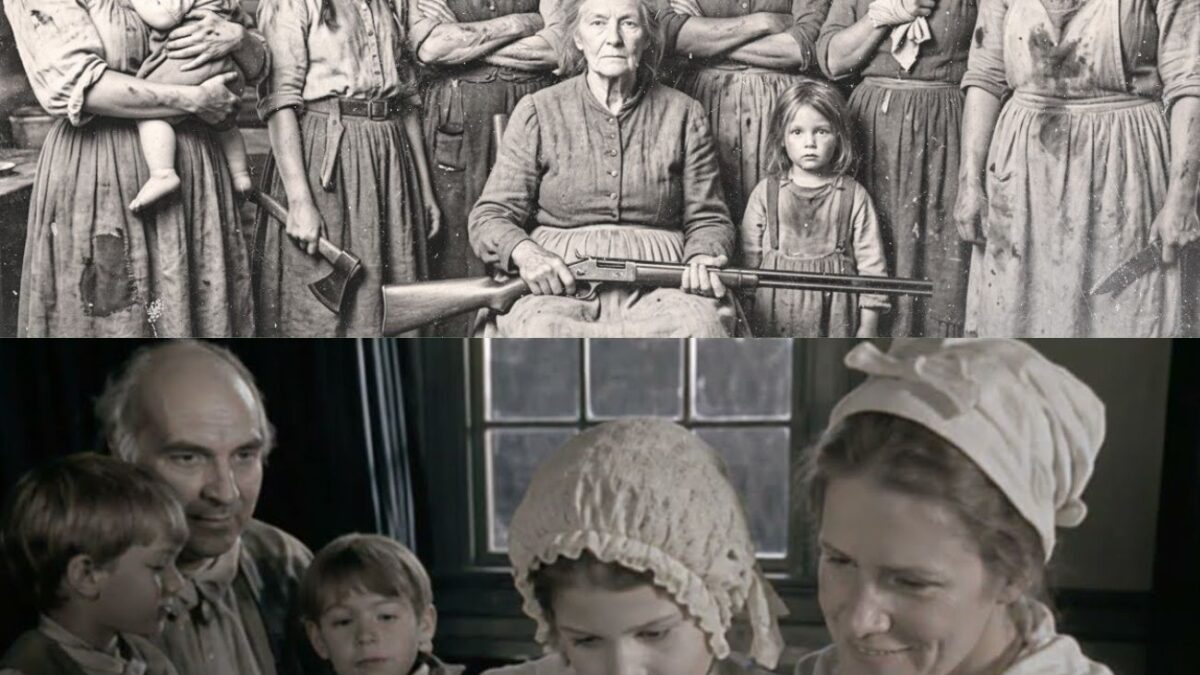
Somewhere in the high, wind-scoured mountains of southwestern Virginia, nestled quietly within a forgotten graveyard that possesses neither a wooden fence nor an access road, seven small fieldstones stand upright in an unbroken row. They bear no family name, recording only faint first names and stark calendar dates, with not one of those brief lives spaced more than three years apart from the next. The woman who dug those small graves with her own blistered hands never abandoned the homestead, never appeared in a single county ledger, and remained entirely invisible while the men rode off into legend.
For more than forty unrelenting years, she held that rugged mountain ground against starvation, bitter cold, and profound isolation, yet the official paper trail erased her very existence from the historical memory of the nation. To uncover the stark reality of how women like her truly survived, one cannot look toward the romanticized fables churned out by twentieth-century Hollywood or the embellished pages of cheap nineteenth-century dime novels. Instead, the unvarnished truth lives buried deep inside faded county court order books, yellowed census rolls, circuit-rider diaries, and fragile midwife ledgers preserved in attic trunks for over two centuries.
These historical records reveal the lived reality captured by WPA field interviewers during the Great Depression, who spoke directly with the very last generation of elderly women who remembered the pioneer days firsthand. Along the wild Appalachian ridgelines stretching westward to the Rockies across more than a century of expansion, mountain women formed the physical infrastructure that sustained the perilous frontier while men pursued adventure. There was no legal authority stationed closer than a week’s hard ride on horseback, no practicing physician within a full day’s journey, and one child out of every four died before reaching the age of five.
A pioneer woman faced an average life expectancy that hovered grimly around forty years, an early end brought on by endless hard labor, exposure, malnutrition, and the relentless perils of childbirth. These individuals were never passive bystanders or frail supporting characters waiting patiently in cabin doorways while their husbands conquered the wilderness; they were the absolute bedrock upon which life survived. Beginning with the foundational everyday chores that modern history habitually overlooks, twenty-five essential truths emerge to reconstruct their lives, culminating in the profound reality that alters everything we thought we knew.
The twenty-fifth truth begins with the clothes on their backs, where every single garment required a mountain woman to manufacture the fabric from absolute scratch across half a year of continuous physical labor. A settler living in eastern Kentucky in the 1790s did not merely sew precut cloth; she sowed the flax seed herself, tended the crop, and hand-pulled the tough stalks straight from the rocky earth at harvest. She submerged the harvested stems in pools of stagnant water for weeks until the tough outer coatings rotted through retting, broke the brittle woody cores apart, and dragged the fibers through iron-toothed hackles.
Working a foot-treadle wheel for days on end, she spun the cleaned flax fibers into spools of coarse linen thread, finally sitting before a heavy loom crafted by her husband from rough green timber. Alternatively, she waded into freezing spring mud to shear dirty sheep, combed the greasy raw wool using hand-held carding paddles until her shoulders burned with exhaustion, and boiled the spun yarn in iron kettles. Using crushed pokeberries, boiled walnut hulls, or tree bark, she dyed the fibers before weaving them into coarse linsey-woolsey fabric, spending up to six months of intermittent labor to produce a single dress.
The twenty-fourth truth was etched into their flesh, because a mountain woman’s hands told the complete story of her survival long before she ever had the opportunity to speak a single word aloud. Caustic lye soap, brewed over open flames from rendered animal tallow and wood-ash water, scorched the skin raw and peeled away layers of tissue with every washboard scrub. Carding wool tore open the pads of the fingertips week after week, while heavy cast-iron skillets shifted over blistering wood coals inflicted deep, painful burns that left thick, permanent scars across the palms.
Endless hours spent twisting coarse flax into thread wore thick calluses deep into the skin, causing palms and knuckles to crack open and bleed uncontrollably in the biting mountain winds of midwinter. By the time a frontier woman reached her thirtieth year, her hands were grotesquely thickened, deeply fissured, and twisted by the agonizing swelling of early, untreated osteoarthritis. The earliest surviving daguerreotypes from the 1850s, preserved in repositories like the Berea College Appalachian Archive, display women barely forty years old whose hands resemble those of ancient laborers worn down by decades of relentless toil.
The twenty-third truth concerns the sparse nutrition that kept them alive, characterized by a daily diet so monotonous and punishing that it would instantly silence any modern kitchen. A good week meant coarse cornmeal mush, grease-laden salt pork, and whatever bitter wild weeds or spring ramps could be pulled from the steep, untamed hillsides before the frost settled. During the lean, desperate winter of the 1780s on the Kentucky frontier, entire settlements survived solely on bark bread made from the inner cambium layer of slippery elm, stripped and pounded into gritty meal.
From this sheer physical desperation arose the common frontier idiom to root hog or die, meaning that every soul had to forage relentlessly for sustenance or perish before the arrival of spring. Depression-era oral histories preserve accounts of families in the southern Ozarks and Appalachian hollows who subsisted for months on nothing but thin hominy boiled in murky creek water served twice a day. No scrap of nourishment was ever discarded, establishing an ancestral memory of famine that compelled later generations to clean every plate, boil every marrow bone, and preserve every drop of grease.
The twenty-second truth reveals that many young girls were married off at twelve or thirteen years old, and absolutely no law or social convention on the frontier spoke against the practice. Eighteenth-century court ledgers from Washington County, Virginia, and Lincoln County, Kentucky, preserve official marriage bonds filed for young girls who had barely crossed out of their early childhood. With a father’s brisk signature on the document and a clerk’s seal, a child who had been skipping stones across a creek that spring was suddenly thrust into a cabin as a legal wife.
This practice was never viewed as a scandal, nor was it considered unusual in an isolated wilderness where survival dictated an urgent, pragmatic arithmetic of labor and domestic support. A thirteen-year-old girl instantly became an indispensable working partner, required to clear brush, tend the garden, preserve wild meat, spin yarn, and bear children before her own skeleton had fully matured. She took up the heavy hoe and the cast-iron pot, bound entirely to a grueling adult timetable dictated not by emotional readiness, but by the relentless seasonal demands of the mountainous landscape.
The twenty-first truth lies in the brutal biological reality of constant, unyielding pregnancy, governed by mathematics that offered no mercy whatsoever to the women who endured them. A woman wed in her early teens who survived until the age of forty frequently underwent ten to fifteen grueling pregnancies over the course of her exhausting adult life. Yet in the most remote hollows and high gaps, infant and child mortality rates ran as high as forty percent, transforming motherhood into an unending cycle of gestation and grief.
A walk through any abandoned ridge cemetery reveals clusters of miniature fieldstones marking the deaths of several siblings within mere weeks of each other from rampant seasonal sicknesses. A mother carried a child through nine months of heavy farm labor, gave birth upon a rough dirt floor, nursed the infant through a freezing winter, and buried it before spring arrived. Without time to recover physically or emotionally, she conceived again, repeating the cycle while the miniature graves in the family plot steadily outnumbered the resting places of the adults.
The twentieth truth confirms that childbirth was the single most dangerous event in a mountain woman’s life, returning with terrifying regularity year after grueling year without fail. There were no trained doctors within a day’s ride across the rugged mountains, and often not even an experienced neighbor woman could be reached in time to assist with a difficult delivery. A mother frequently gave birth entirely alone on a corn-husk mattress, with only the dim embers of the stone fireplace illuminating the room while snow drifted through the logs.
Frontier midwife journals, such as the famous records kept by Martha Ballard in the late eighteenth century, document the catastrophic complications that arose when labor went fatally wrong in isolation. Uncontrollable uterine hemorrhages, breached presentations, and puerperal childbed fever regularly took the lives of young mothers over the course of several days of agonizing, unmedicated labor. The enduring Appalachian tradition of the granny midwife persisted well into the twentieth century because the remote mountain terrain offered absolutely no other medical alternative for delivering women.
The nineteenth truth shows that frontier women managed agonizing dental disease by pulling their own teeth with crude workshop tools, possessing no anesthetics to dull the excruciating pain. Dental hygiene was nonexistent, leaving mountain women at the mercy of traveling blacksmiths, husbands wielding bullet-mold pliers, or their own calloused hands pulling on a length of leather cord. When a decayed tooth throbbed violently in the dead of winter, the only remedies were drops of oil of cloves, raw corn whiskey, or a red-hot iron nail pressed directly to the nerve.
By the time a woman reached forty years of age, she had typically lost most of her teeth to decay, malnutrition, and the mineral depletion caused by continuous cycles of nursing. The few surviving portrait daguerreotypes of older frontier women reveal sunken cheeks, collapsed jawlines, and tight, guarded lips carefully positioned to hide the missing teeth behind them. Journals penned by Methodist circuit riders describe Appalachian settlers suffering through chronic, debilitating mouth abscesses that disfigured their faces and made the simple act of chewing solid food an ordeal.
The eighteenth truth reveals that mountain women served as the primary healers, setting compound fractures, treating rattlesnake bites, and treating illness using only what grew in the adjacent forest. They bound shattered limb bones using wooden splints whittled from green hickory, closed deep axe wounds with standard sewing needles and linen thread, and packed open sores with plantain leaves. To draw out infection, they applied warm poultices of crushed comfrey root, boiling teas from the bitter bark of willow trees to break dangerous fevers in their sick children.
Centuries before commercial pharmaceutical laboratories synthesized acetylsalicylic acid into modern aspirin, these self-taught mountain healers were relying on the natural salicin compounds found inside raw willow bark. They understood with remarkable precision which wild roots would stimulate uterine contractions during a stalled birth, which wild plants would stem bleeding, and which forest mushrooms were lethal. The vast compendiums of traditional Appalachian mountain remedies collected in modern times confirmed that these women were not guessing; they were preserving an empirical pharmacopeia passed down through spoken lore.
The seventeenth truth demonstrates that the domestic hearth fire was a matter of life and death, meaning that if the embers died, the family balanced upon a razor’s edge. Before the general availability of friction matches in the mid-nineteenth century, coaxing a flame from flint, carbon steel, and dry charred cloth in damp mountain air was difficult. Women guarded the hearth coals day and night without interruption, banking the burning ash carefully before sleeping so the fire could be stirred back to life at dawn.
If the hearth fire went out during a brutal January blizzard, a mother faced an immediate, life-threatening crisis that required instant action before the interior cabin temperatures dropped below freezing. She had to hike miles through deep snowdrifts to the nearest cabin, beg for a glowing hardwood coal, and transport it home inside a covered iron kettle clutched to her chest. Without fire, there was no warm food, no melted snow for drinking water, and no barrier against the creeping mountain frost that could kill a sleeping child by morning.
The sixteenth truth exposes the crushing mental weight of geographic isolation, a psychological burden that broke the spirits of countless frontier women trapped on high, lonely ridges. A homestead perched on an Appalachian gap could remain cut off by deep snow and impassable mud slides from early November through the middle of the following April. A mother alone with small children while her husband hunted or traded could easily pass months without ever seeing another adult face or hearing a voice other than her own.
Surviving pioneer journals and letters vividly describe the creeping despair, paralyzing terror, and claustrophobia that settled over women when the heavy winter silence closed around the cabin. Without nearby neighbors or emotional support, some women experienced complete psychological collapses, drifting into catatonic withdrawal or screaming fits that echoed against the empty timber of the surrounding ridges. Lacking medical terminology to describe postpartum depression or severe cabin fever, frontier society quietly labeled these shattered survivors as touched, strange, or peculiar, offering no comfort or relief.
The fifteenth truth proves that when husbands died, abandoned the family, or became permanently disabled, pioneer women took up the heavy felling axe and built what was needed themselves. They notched logs, dragged heavy green timbers into position, and chinked the drafty gaps between the walls using wild moss, mud, and horsehair packed tight with their fingers. Using a frow and a wooden mallet, they split cedar shingles stroke by stroke until the roof was covered, then dug cool root cellars into the mountainside with iron shovels.
Old county land ledgers preserve records of widows filing formal homestead claims under early preemption laws, swearing under oath before clerks that they had personally cultivated the land with their hands. These women stood before public officials and testified that they had personally felled ancient timber, cleared fields, planted corn, and erected permanent cabins through their own intense physical toil. They did not wait helplessly for a male savior to secure their livelihood; they staked their survival on raw muscle, split rails, calloused hands, and stubborn, unyielding determination.
The fourteenth truth dismantles the popular myth of frontier warfare, proving with historical documentation that women routinely took up firearms to defend their homesteads from lethal violence. In 1791, Anne Bailey rode alone across the treacherous wilderness of modern West Virginia, ferrying vital gunpowder to the besieged garrison at Fort Lee along the Kanawha River. During the border warfare of the late eighteenth century, frontier women loaded hot rifles, cast lead balls over open hearths, and fired through log loopholes when men fell beside them.
Court depositions and territorial newspapers describe women shooting wolves that attacked livestock, killing venomous copperheads inside cabins, and firing upon violent intruders who attempted to force doors at night. Popular modern media invariably places the defensive rifle squarely into the hands of the frontiersman, ignoring the women who remained behind to stand sentry over the children and animals. The survival of the mountain settlement depended every single day upon women who were as familiar with black powder and flintlocks as they were with spinning wheels and cooking pots.
The thirteenth truth reveals that domestic violence existed within an absolute legal vacuum on the frontier, offering an abused woman no sanctuary, no protection, and no escape. In a cabin situated miles from the nearest human settlement, there were no lawmen to intervene, no neighbors to hear screams, and no safe roads to traverse on foot. A battered wife had nowhere to flee, as her original family remained hundreds of miles away across mountain ranges that she could never hope to cross without supplies.
Securing a legal divorce in the late eighteenth century required an act passed by a state legislature, an impossibility for an isolated woman who possessed no independent financial resources. The few surviving handwritten petitions preserved in legislative archives present heartbreaking accounts of relentless domestic brutality, chronicling broken bones and endless beatings suffered without any avenue of institutional relief. These women wrote in careful, desperate handwriting to assemblies of wealthy male politicians, begging for legal releases that the pioneer justice system was never structured to provide them.
The twelfth truth demonstrates that widowhood was an exceedingly common reality on the frontier, shaping community structures and forcing women into rapid, difficult decisions to ensure their survival. Logging accidents, rolling wagons, infected cuts, venomous bites, drowning, and seasonal fevers killed mountain men at rates that left a vast number of young women widowed before forty. Historical studies of early Appalachian graveyards reveal that more than one-third of the buried pioneer women had outlived at least one husband, with many burying two or three.
A widow left with young children and an unfinished homestead had to choose between undertaking backbreaking manual labor alone or accepting a proposal from another settler within weeks of the funeral. Courthouse ledgers across southwestern Virginia and eastern Kentucky document an astonishing pattern where the interval between a husband’s death and a widow’s remarriage was measured in days. This rapid transition was not a product of emotional callousness, but an urgent matter of survival in a harsh climate that gave no quarter to an unsupported family.
The eleventh truth shows that these hurried second marriages were functional survival contracts, stripped entirely of romantic pretension and entered into as pragmatic, mutual business transactions between settlers. A widow selected a new partner based on his physical capacity to clear timber, plow rocky hillside fields, and provide physical security for her surviving children before the winter set in. In turn, the incoming husband desperately required a woman’s ability to cook, preserve food, sew clothing, nurse the sick, and manage the poultry, garden, and livestock operations.
County clerks regularly scribbled primitive prenuptial agreements into official records, specifically protecting a widow’s legal dower rights and the inheritance of her first children from the new husband’s debts. These clear-headed agreements prove that frontier widows were calculating, practical negotiators who understood their property rights and refused to surrender the homesteads they had built with their own sweat. Romance was a rare indulgence, whereas functional utility was the true currency that allowed blended mountain families to maintain their fragile foothold upon the steep, unforgiving Appalachian slopes.
The tenth truth details the process of tanning raw animal hides by hand, an arduous and foul-smelling task that women routinely performed to supply their homes with durable leather. Brain-tanning required a woman to work a paste of boiled animal brains and warm water deep into the scraped deer hide, working the stiff pelt over a wooden beam until pliable. Other methods involved soaking heavy cowhides in wooden vats filled with fermented oak-bark tannins and stale human urine, stirring the noxious mixtures by hand through sweltering summer afternoons.
The overwhelming stench of curing hides drifted for miles across the hollows, settling into the hair, skin, and rough garments of the women who performed this grueling domestic duty. Yet without this labor, the household had no durable material for crafting moccasins, warm winter coats, work aprons, heavy harness straps, and storage pouches to hold cornmeal and ammunition. The very same hands that gently bathed an infant at dawn spent the afternoon scraping putrid flesh, fat, and hair from rotting animal carcasses under a hot sun.
The ninth truth measures the extraordinary physical stamina required of mountain women, who walked miles every day over treacherous terrain while carrying backbreaking loads that would exhaust modern athletes. They climbed steep hillside paths carrying two wooden buckets brimming with spring water, balancing the weight with wooden neck yokes while navigating loose rocks and slick mud after rainstorms. They hiked to distant creeks balancing heavy wicker baskets of damp wash on their hips, scrubbed the clothing against rough river stones, and hauled the soaked textiles back uphill to dry.
A routine day demanded between five and ten miles of walking across broken ground, often while balancing a heavy sack of shelled corn on the back to reach a gristmill. Through the summer months, women walked these rocky mountain trails entirely barefoot, preserving their precious, hand-sewn leather shoes from the wear and tear of daily chores around the farmstead. Nineteenth-century travelers like landscape architect Frederick Law Olmsted wrote of their utter disbelief at witnessing slender mountain women walking up mountains carrying loads that grown men struggled to lift.
The eighth truth exposes the reality that pioneer women functioned as the primary economic drivers of the frontier, though official government records universally ignored their financial contributions. Before sunrise, women churned butter, collected fresh eggs from the chicken coop, sorted dried herbs, and folded heavy bolts of handwoven linsey-woolsey fabric to trade at nearby settlements. While men disappeared into the high timber for weeks to hunt game or trap beaver, the steady production of the women kept the homestead solvent through continuous local barter.
When these goods were brought down to county crossroads stores, the merchant ledgers recorded women trading butter, poultry, and textiles in exchange for essential supplies like iron, salt, and black powder. Yet when federal census enumerators rode through every decade, they listed the husband as a prosperous farmer while leaving the wife’s occupation blank or labeling her as merely keeping house. The critical supply chains that sustained frontier outposts ran directly through the unceasing labor of women, whose immense economic output was systematically erased from public ledgers and official histories.
The seventh truth confronts the violent physical reality of daily farm life, proving that the constant slaughter of livestock was carried out predominantly by the women left behind. When a heavy hog had to be butchered in the freezing cold of November, a chicken needed its neck wrung for dinner, or a copperhead crept across the threshold, women handled it. While men were away chasing game over distant ridges, trading furs, or serving with county militias, the bloody domestic butcher work fell entirely upon the shoulders of the homestead women.
They slit the throats of squealing hogs, caught the warm blood in wooden pans for pudding, scraped the scalded bristles from hides, and gutted steaming carcasses with sharp skinning knives. They cut away the lard, salted the hams for the smokehouse, stuffed seasoned meat into cleaned intestines, and rendered fat over open cauldrons through late-night hours without any male assistance. Popular culture and historical art consistently assigned all frontier violence to male hunters carrying flintlocks, burying the reality that women performed the routine killing that kept families nourished.
The sixth truth uncovers the unseen biological poisoning that slowly degraded the physical and mental health of pioneer women, who were frequently labeled as insane by their communities. In damp mountain cellars and crude log storage cribs, toxic ergot fungus grew upon moist rye and corn, which women subsequently ground into meal and consumed inside their bread. The ingestion of ergot alkaloids caused violent physical convulsions, vivid waking hallucinations, agonizing stomach cramps, and severe gangrene that destroyed the circulation in the toes and fingers.
At the same time, toxic lead steadily leached into their hot stews and teas from inexpensive pewter plates, crude spoons, and the poor lead glazes of frontier earthenware pottery. Compounded by chronic sleep deprivation from nursing infants, the physical trauma of continuous childbearing, and crushing isolation, many women suffered debilitating physical collapses that nineteenth-century medicine could neither diagnose nor treat. Sufferers were shunned as lunatic or bewitched, whispered about by neighbors who possessed no scientific understanding of the toxic metals and poisonous molds poisoning these women from within.
The fifth truth rests in the legal doctrine of coverture, under which a married woman possessed absolutely no independent legal existence in the eyes of American territorial and state law. Upon marriage, a woman’s legal identity was subsumed into that of her husband, depriving her of the right to own land, enter contracts, or retain her own wages. She could not sign a legal deed, sell livestock, or offer sworn testimony in a court of law to defend her own home against creditors seeking payment for her husband’s debts.
A frontier wife could clear acres of wilderness with a grub hoe, raise log cabins with her own labor, and manage a homestead for decades, only to lose everything if her husband died. If the deceased man left debts or died without a valid will, county probate judges regularly stripped widows of their cabins, awarding the improved land to brothers, fathers-in-law, or outside creditors. Courthouse archives across the Appalachian frontier preserve hundreds of petitions where desperate widows pleaded with unsympathetic male judges for permission to keep the very homesteads they had built from raw earth.
The fourth truth returns to the high ridges, where pioneer mothers were forced by circumstance to bury their own dead children in frozen soil with their own hands. When winter fevers or respiratory croup claimed a child during the depth of January, there were no gravediggers, no funeral directors, and often no husbands present to dig the ground. A grieving mother picked up an iron spade, cleared the snowdrifts, and chopped through layers of rock and frozen topsoil with her fingers numb and her muscles aching from exhaustion.
She wrapped the small body in a scrap of treasured homespun linen, carried it up the steep ridge, and lowered it into the shallow grave while reciting scripture from memory. There was no minister present to offer a eulogy, as traveling circuit riders passed through the hollows only once or twice a year during the mild summer months. When the grave was filled and covered with heavy fieldstones to keep wolves away, the mother wiped her eyes, returned to the cabin, and tended to the other children who were sick.
The third truth exposes how the actual survival experiences of pioneer women captured during the brutal frontier wars were distorted and rewritten by contemporary male publishers to suit political narratives. In 1755, Mary Draper Ingles was taken captive by Shawnee warriors from Draper’s Meadow, Virginia, subsequently escaping to trek hundreds of miles through untamed wilderness back to safety. Surviving on wild walnuts, forest roots, and creek water along the New River, she navigated cliffs and swollen waterways through sheer physical endurance and wilderness navigation skills.
Similarly, Mary Jemison, captured in 1758, chose to remain among the Seneca people for the remainder of her life, mastering their language and successfully managing large tracts of productive tribal land. Yet when their stories were published in eastern cities, male editors scrubbed away their grit, strategic calculations, and autonomy, transforming them into helpless, pious maidens who longed for male rescue. The real women were skilled survivors who negotiated terms, made ruthless decisions, and navigated complex frontier politics, yet popular literature reduced their triumphs to sentimental morality tales designed for urban readers.
The second truth explains how pioneer women were systematically erased from the documentary record of American history through structural institutional bias rather than simple clerical negligence. Federal census takers recorded the male patriarch as the sole head of household, listing his wife beneath him as an unnamed dependent devoid of property, income, or occupational identity. Official military rosters, territorial tax rolls, voter registries, and land patent books recorded the names of men, creating an administrative archive that treated women as completely nonexistent entities.
When local historians traveled through the Appalachian hollows during the late nineteenth century to record pioneer memoirs, they sought out the recollections of elderly men who had fought in militias. They rarely sat down to interview the elderly grandmothers who had actually cleared the land, managed the farms, doctored the sick, preserved the food, and raised the succeeding generations. As a consequence, the foundational narratives of the American frontier were built upon documents that intentionally omitted the testimony, perspectives, and labor of the women who sustained the settlements.
The first and ultimate truth, which anchors the entire history of the American frontier, is the profound reality that when the men left, the women stayed. Men rode off constantly into the wilderness to hunt big game, trap beaver, prospect for gold, fight in border militias, or search for fertile land over the next horizon. The women remained rooted to the homesteads, holding the clearing against encroaching forest, freezing blizzards, predatory beasts, crop failures, and the devastating fevers that emptied their cradles into the soil.
Daniel Boone famously disappeared into the untamed Kentucky wilderness for years at a stretch, leaving his wife Rebecca alone to protect the children and cultivate the fields in isolation. Davy Crockett repeatedly walked away from his family responsibilities to chase military glory, hunting exploits, and political office, leaving his wives to manage the desperate realities of poverty. The men who were celebrated as legendary pioneers achieved their fame through departure and movement, while the civilization they claimed to build survived only because the women stood firm and never left.
Now that the twenty-five truths have been laid bare, the manufactured nature of the frontier myth becomes impossible to ignore for anyone who examines the surviving historical record. For generations, American culture has celebrated the solitary frontiersman holding a long rifle on a windswept ridge, creating thousands of films and novels that pushed the frontier woman into the background. She was portrayed as a weeping, fragile figure clutching a bonnet in a doorway, functioning merely as decorative scenery to highlight the bravery of the horseman riding toward the horizon.
Yet every log cabin raised, every child raised to adulthood, and every settlement that took root was paid for with the torn hands, shattered teeth, and silent endurance of women. They endured the agony of unassisted childbirth on dirt floors, breathed the foul stench of curing hides, chopped frozen graves for their infants, and butchered the livestock that fed the valleys. They bore the physical weight of building a nation while the legal system denied their existence and historians discarded their names from the permanent memory of the land.
The grand bronze monuments scattered across state capitals celebrate the explorers, the militia captains, and the wandering hunters who followed the wilderness trails into folklore and public memory. Meanwhile, the women who held the ground together through blood, sweat, and unrelenting resolve lie buried under nameless fieldstones along the high, silent ridges of the Appalachian mountain range. They earned every single word of honor, remembrance, and reverence that the nation’s historical narrative chose to deny them for more than two hundred years.

