20 Disturbing Truths About Puberty Ceremonies Hollywood Never Showed
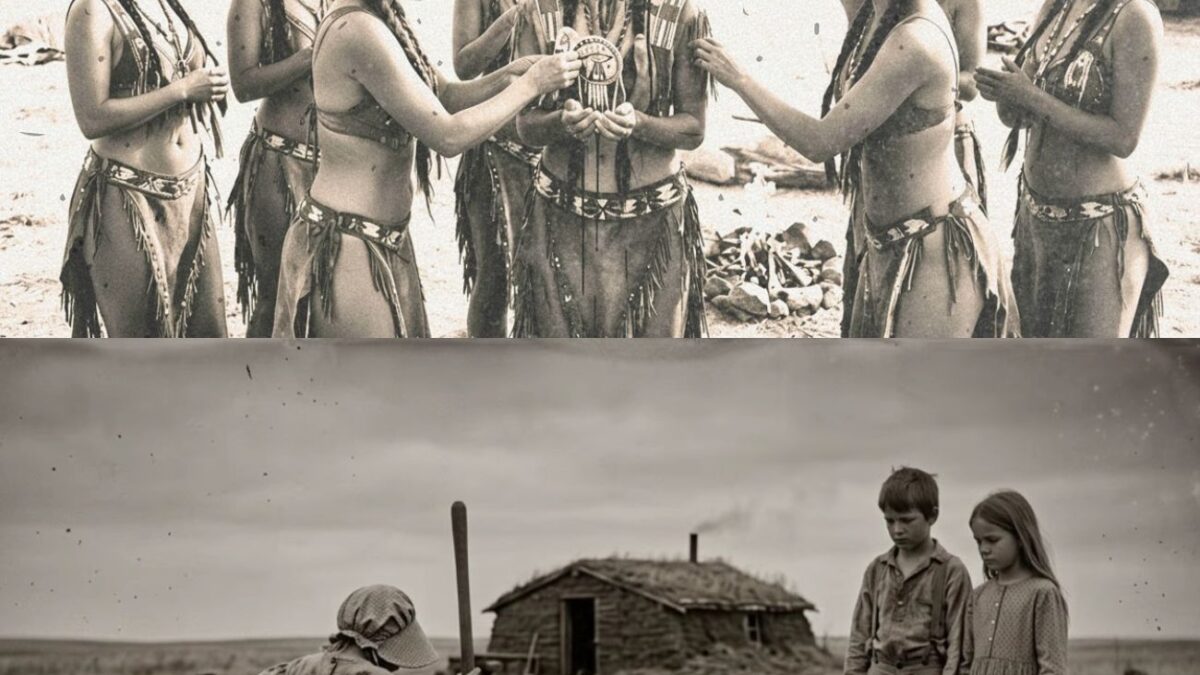
A twelve-year-old Apache girl runs directly east toward the rising sun on the fourth morning of her trial. Her feet are badly cracked, bleeding openly through the thin rawhide soles of her buckskin moccasins. She has not tasted real sleep in more than seventy-two hours, yet every woman in the camp stands singing her forward.
She is not merely a child enduring exhaustion; in this sacred threshold, she is actively transforming into Changing Woman. No cinematic western ever dared to place this profound reality on the silver screen. They omitted it entirely because the authentic coming-of-age rites on the frontier were far too sacred and raw for Hollywood scripts.
Every culture that inhabited this vast landscape possessed an absolute crossing point where a child’s changing body demanded profound communal recognition. The moving pictures offered global audiences little more than synthetic war paint, rhythmic chanting, and fabricated savagery. The genuine history was an unforgiving crucible of physical endurance, spiritual devotion, and living human blood.
Which unvarnished truth about coming of age on this contested borderland did commercial cinema work hardest to bury beneath mythology? The truth does not reside in celluloid reels manufactured on soundstages, but in the verified words of those who actually walked the earth. It survives in the meticulous field notes of pioneering ethnographers who lived within the encampments.
We turn to Morris Opler sitting quietly among the Chiricahua Apache during the nineteen thirties, recording memories of a fading world. We turn to George Catlin sketching the Mandan along the upper Missouri River in eighteen thirty-two, capturing sacred flesh offerings. We listen to Alice Fletcher among the Omaha and Frances Densmore transcribing holy Lakota melodies under wide Dakota skies.
We also turn toward the yellowed, brittle correspondence penned by exhausted settler women who traversed thousands of miles on the Overland Trail. These uncensored letters rested in darkened attic trunks for over a century before modern historians bothered to read them. They tell of pioneer daughters thrust into womanhood behind sun-bleached wagon canvas without preparation, mercy, or gentle guidance.
Finally, the undeniable record resides within federal ledgers, penal mandates, territorial court filings, and cold boarding school rosters. These bureaucratic documents record the methodical campaign waged by the United States government when it decreed these ancient ceremonies must be permanently eradicated. Much of this documented history is deeply painful to confront, but every syllable happened to real children on hard soil.
On the historic frontier, there was never any gentle buffer of adolescence as modern society understands the concept today. Childhood did not slowly unravel through years of self-discovery; it terminated abruptly whenever the severe environment or the community declared it finished. Every culture on every side of the frontier border negotiated that monumental threshold in its own distinct, unyielding manner.
Consider the reality that settler boys on the American frontier received absolutely no ceremony to mark their transition. A young boy growing up on an eighteen fifties homestead in Kansas or Nebraska was expected to handle loaded firearms by ten. He managed large livestock by twelve and performed a grown man’s heavy fieldwork long before his speaking voice broke.
There was no formal communal ritual to consecrate his entry into manhood, no public blessing, and no spiritual crossing. In countless cases, the crossing was simply a pair of dead father’s boots handed down on a desolate Tuesday morning. Cholera, farm accidents, or sudden prairie fevers took the patriarch, leaving warm footwear that the eldest boy had to fill immediately.
Mothers traveling the treacherous Overland Trail repeatedly wrote about handing their prepubescent sons full adult responsibilities within hours of a burial. Lodisa Frizell recorded such staggering transitions in eighteen fifty-two, watching young boys take the reins of heavy ox teams. Amelia Stewart Knight documented the exact same harsh phenomenon just one year later along the rutted tracks of the trail.
The transition from boyhood to manhood among white pioneers was never formally celebrated because survival demanded functional labor over ceremony. The grieving boy was merely expected to step directly into the deceased provider’s shoes while the grave dirt remained soft. Modern society marks coming of age with high school diplomas, framed certificates, family gatherings, and decorative cakes.
On that unsparing nineteenth-century frontier, a fatherless boy received only a rusted iron shovel and an endless list of dead man’s chores. Popular westerns depicted freckled, barefoot youths holding willow fishing rods beneath golden sunsets, waiting leisurely for adulthood to arrive. The actual historical truth was a shallow prairie mound, an empty chair, and an iron plow that would never pull itself.
A settler girl’s initial encounter with puberty on the westward trail was met with profound, suffocating domestic silence. Young pioneer daughters arrived at menarche crammed inside the swaying interior of a covered wagon without medical explanation or emotional comfort. The natural physiological transition was managed covertly with ragged strips torn from old, worn dresses and treated with acute humiliation.
There was no spare clean water on the arid trail to wash bloodied petticoats, nor was there privacy behind thin wagon walls. The lightweight canvas let in every dry dust gust, every heavy wagon creak, and every passing glance from teamsters walking alongside. Hundreds of pioneer diaries from the eighteen forties and fifties preserve this heavy secret through an overwhelming, unbroken collective absence.
Social historian Lillian Schlissel devoted decades to analyzing the diaries of overland women, identifying the deafening void where bodily development belonged. A twelve-year-old girl’s physical maturation was handled as an embarrassing biological failure to be concealed rather than an honorable milestone. It was an unspoken burden carried across alkali flats, obscured beneath layers of woolen skirts and rigid Victorian modesty.
Today, a young girl typically learns the mechanics of human biology inside a climate-controlled classroom equipped with diagrams and professional counsel. On the historical Oregon Trail, she deciphered the mysterious arrival of womanhood solely from crimson stains and her mother’s anxious grimace. Mainstream cinematic westerns systematically ignored this reality because the awkward vulnerability of pioneer girlhood possessed no box-office romance.
Before any elaborate coming-of-age ritual could take place on that harsh frontier, physical death had to be outrun and survived first. Infant and child mortality across the contested plains consistently hovered between twenty and thirty percent before the age of five. Children who had barely reached six years old routinely helped dig deep graves for younger siblings in unforgiving prairie sod.
They wielded heavy cast-iron spades taller than their own frames, digging into clay under the searing midday heat or freezing drizzle. County probate archives from Kansas, Iowa, and Nebraska during the eighteen sixties reveal numerous isolated homesteads where every surviving resident was under fourteen. These orphaned children operated entire operational farms completely alone because sickness had cleared the table of every single adult relative.
Distinguished historian Elliott West extensively illuminated these harrowing conditions in his definitive historical studies of frontier childhood and labor. The western landscape never paused to ask if a grieving youth felt spiritually or emotionally prepared to assume mature responsibilities. It simply extinguished the parents, leaving whichever small child was still breathing to milk the restive cows and keep hearth fires burning.
Hollywood screenwriters routinely skipped past the horrifying visual reality of young children managing desolate homesteads amid fresh family mounds. A traumatized child burying an infant sister before daybreak and immediately feeding the remaining farmhands was not an entertaining scene to film. Yet that precise quiet tragedy occurred across the western plains every single week as an ordinary price of survival.
Moving southward along the Texas and New Mexico borderlands, a young woman’s fifteenth year was never merely an innocent celebration. The traditional quinceañera across the nineteenth-century border was fundamentally a high-stakes public proclamation that a young daughter was legally and physically marriageable. Extended families utilized the formal event to consolidate valuable cattle holdings and secure fragile land grants along the lower Rio Grande.
Catholic parish registers from mission settlements throughout southern New Mexico demonstrate that these spiritual festivities directly coincided with complex property negotiations. Long before the heavy oak doors of the sanctuary opened for holy mass, patrilineal alliances were thoroughly drafted in back rooms. A young girl turned fifteen and instantly became a vital living instrument in her extended family’s collective economic survival strategy.
The sacred liturgical prayers recited before the altar were profoundly earnest, but so was the financial math dictating the elaborate guest roster. Respected scholar Arnoldo De León thoroughly documented these borderland social dynamics throughout his seminal research on Tejano society and frontier customs. The lavish coming-of-age gala recognized by modern culture arose much later during an infinitely gentler, wealthier, and far more secure century.
Further north among the sovereign Omaha nation, the passage out of early childhood was solemnized through a holy ritual named Turning the Child. When an infant reached the designated stage of active physical mobility, the band gathered reverently to perform the ancient Uhe-gash-ke rite. The child’s worn baby moccasins were removed from tiny feet, and freshly stitched adult-pattern footwear was reverently tied in their place.
This profound ceremonial exchange signaled that the fragile spirit who had previously belonged solely to the unseen world now firmly belonged to humanity. The child was officially placed upon the earth to walk the physical path alongside the living people of the tribe. Renowned anthropologist Alice Fletcher, who earned deep tribal trust during the eighteen eighties, documented this touching rite directly from living elder practitioners.
Fletcher observed that Turning the Child constituted one of the most solemn, spiritually elevated acts she had witnessed across any human civilization. The young participant was not celebrated with vanity or indulgence, but was formalistically integrated into the social and ethical obligations of the tribe. The youth transitioned from a borrowed ethereal guest into an accountable earthly member, bound permanently to the communal life of the nation.
No mainstream American motion picture ever captured this tender transition because it unfolded with sacred quietude, entirely absent of violent cinematic action. It contained neither the theatrical face paint nor the manufactured war shrieks that film producers demanded to sell tickets to suburban moviegoers. Yet it was this exact quiet sanctification of growing children that preserved indigenous communities across centuries of seasonal change and migration.
Consider also the profound Lakota tradition known as the Isnati Awicalowanpi, an eloquent sacred ceremony translating directly to They Sing Over Her Alone. When a Lakota girl experienced the initial arrival of her monthly cycle, she was housed within a secluded lodge outside the camp. Respected elder matrons attended her constantly, imparting the tribal knowledge, ethical discipline, and spiritual philosophies required of future clan mothers and leaders.
This physical isolation was never rooted in patriarchal shame or the belief that the female body was inherently dirty or compromised. Rather, the Lakota held the conviction that a maiden entering womanhood carried spiritual power so remarkably concentrated that it bordered on volatility. Her presence was considered so potent that proximity could inadvertently alter the sacred power of a medicine bundle or misdirect a hunter’s arrow.
She was set apart in reverence because she had become dangerously sacred, touched directly by the primal forces that govern physical life. Pioneering musicologist Frances Densmore carefully recorded these sacred ceremonial songs during the early twentieth century before their living practitioners had passed away. Decades later, distinguished anthropologist Marla N. Powers reinforced these profound cultural meanings in her foundational studies regarding the spiritual standing of Oglala women.
That critical cultural distinction between dangerous sacred power and humiliating physical pollution was an intellectual concept Hollywood completely failed to grasp. Even today, contemporary society frequently struggles to comprehend what the Lakota revered about a young woman’s first blood before the Civil War. Mainstream culture continues to treat female biology with clinical detachment, whereas the plains nations once recognized it as an awe-inspiring supernatural threshold.
For a young Cheyenne boy crossing into maturity between twelve and fifteen winters, the path required total, agonizing physical isolation upon high ground. Accompanied by a holy man to the base of a sacred bluff, the youth ascended the stony heights alone to cry for vision. Stripped of food, clean water, and warm bison robes, he remained exposed to punishing winds, blistering sun, and freezing mountain nights.
He stood or knelt upon the hard stone for up to four consecutive days without sleep, praying continuously toward the four cardinal directions. He waited desperately for an authentic spiritual communication that would reveal his true purpose, his sacred medicine, and his permanent adult name. It might arrive as a soaring bird of prey, a speaking breeze, or a strange flash across the expansive western sky.
Celebrated ethnographer George Bird Grinnell spent uninterrupted decades living among the Cheyenne, constructing one of the most meticulous documentary records in frontier history. Grinnell noted that numerous boys pushed themselves to the razor edge of death from acute dehydration, sunstroke, and severe hypothermia during these quests. This ordeal was never an allegorical campfire narrative; it was a real, half-starved child stranded upon high stone, testing his courage against nature.
The raw psychological fortitude demanded of a young boy facing absolute sensory deprivation and predatory elements was staggering by any standard of human measurement. Hollywood casting directors never placed such grueling spiritual quests honestly before their cameras because quiet endurance resists simplistic, crowd-pleasing action tropes. Commercial cinema preferred simplistic displays of physical aggression over the silent terror of a youth sitting alone in the dark waiting for god.
Further south among the Navajo, the sacred Kinaaldá ceremony stands as one of the most physically exhausting coming-of-age rites ever practiced. Upon her first cycle, a young Navajo maiden rises hours before dawn to run miles toward the east, chasing the morning light. She repeats this grueling footrace across four consecutive mornings, deliberately increasing the distance each day to build stamina for her people.
Between these grueling dawn runs, she kneels for endless hours over heavy stone grinding slabs, hand-milling massive heaps of dried ceremonial corn. Her back aches, her knuckles bleed against the rough stone, yet she works without the slightest murmur of fatigue or complaint. On the final evening, she stays awake through the freezing darkness, actively tending an immense underground corn cake baked within the earth.
Distinguished Navajo scholar Charlotte Frisbie documented families throughout remote parts of the reservation still carrying out the complete Kinaaldá during the nineteen sixties. Despite enduring a century of hostile government surveillance and missionary condemnation, these resilient families refused to abandon the sacred four-day ordeal. The young running girl was not simply reaching physiological adulthood; she was actively embodying Changing Woman, the primordial wellspring of beauty, resilience, and creation.
Today, more than three hundred thousand enrolled Navajo people endure, and the sacred Kinaaldá continues to be run upon their vast homeland. It survived the arrival of federal cavalry, the trauma of the Long Walk, the disease outbreaks, and the abusive reservation schools. It outlasted every legislative attempt to extinguish it because Navajo grandmothers quietly refused to let their daughters forget who they truly were.
Within the Apache Sunrise Dance, another extraordinary physical act took place that remains completely absent from popular historical depictions of the Southwest. During the multi-day ritual, the young initiate’s sponsor—a venerable elder woman possessing deep moral standing—physically molded the girl’s body with firm hands. She knelt over the exhausted youth, systematically kneading the limbs, straightening the spine, and pressing the muscles from head to foot.
Renowned ethnologist Morris Opler, living alongside the Chiricahua Apache throughout the nineteen thirties, recorded this sacred practice with uncompromising historical clarity. Apache cosmology held that throughout the four ceremonial days, the initiate’s physical frame softened into the absolute malleability of a newborn infant. The sponsor was not performing a theatrical, pantomimed blessing; she was manually sculpting the young girl into a sturdy, enduring, long-lived woman.
The physical contact was continuous, demanding, and understood by the assembled band as an intimate, physical transmission of spiritual health and fortitude. It represents one of the most deeply personal, physically transformative female puberty ceremonies ever documented within the boundaries of North America. Yet commercial western cinema never approached this tender tradition, dismissing indigenous female ceremony entirely in favor of gunfights and cavalry skirmishes.
Among the fearsome horse cultures of the southern plains, particularly the Comanche, horsemanship was not an acquired skill; it was life itself. A Comanche youth’s graduation into tribal manhood was evaluated through a single terrifying trial that tested bone, muscle, and raw nerve. Before he could claim a seat among the mature men, he had to locate, lasso, and break a wild mustang entirely alone.
The process of gentling and dominating an unbroken prairie stallion was notoriously violent, unpredictable, and potentially fatal to an inexperienced youth. Unformed boys were routinely thrown violently against hard caliche dirt, stomped beneath heavy hooves, and dragged across ravines by coiled rawhide ropes. They survived fractured collarbones, crushed ribs, and severe concussions long before the first wisps of facial hair ever appeared upon their chins.
Acclaimed historians Ernest Wallace and E. Adamson Hoebel, working directly with elderly Comanche informants, documented this extreme physical trial as an inescapable prerequisite. A youth incapable of subduing a wild horse could never ride with the war parties, hunt running buffalo, or protect the band’s perimeter. The stakes were immediate, absolute, and undeniably practical, binding the young man’s physical survival to the wild creature he brought to heel.
Cinema celebrated the romantic image of the mounted Comanche warrior galloping effortlessly across the open plains with a lance resting on his arm. It never showed the battered twelve-year-old child lying in the dirt with broken ribs, coughing blood beside the thrashing wild animal. Hollywood took the glorious end result of an unforgiving, bone-breaking education and severed it completely from the terrible pain required to achieve it.
Further north in eighteen thirty-two, the intrepid artist George Catlin journeyed up the Missouri River to witness the Mandan nation’s Okipa ceremony. In their earth-lodge village near the Knife River, Catlin observed an ordeal of such extraordinary physical extremity that it unsettled him forever. Young initiates, having fasted without food or water for days in absolute isolation, had wooden splints violently driven through their pectoral muscles.
They were hoisted into the rafters of the sacred lodge by heavy rawhide ropes, suspended in midair entirely by their own pierced flesh. Below them, elder holy men and village families watched in prayer while the suspended youths endured agony until they fell unconscious from shock. Catlin documented these sacred trials with vivid, meticulous sketches, capturing the precise details of an ancient ritual meant to guarantee tribal renewal.
When Catlin returned to the eastern seaboard and exhibited his finished oil canvases before educated audiences in New York and London, he faced ridicule. The influential ethnologist Henry Rowe Schoolcraft publicly attacked Catlin in print, declaring the artist had fabricated the entire flesh-suspension ceremony for personal profit. Catlin spent years defending his journalistic integrity and the reality of what he had observed with his own eyes upon the upper Missouri.
His detailed observations were finally confirmed when German naturalist Prince Maximilian of Wied visited the Mandan independently and verified every single ceremonial element. Tragic historical irony followed five years later when the catastrophic smallpox epidemic of eighteen thirty-seven nearly erased the Mandan people from the earth. The Okipa ceremony survived its arrogant academic doubters, but the magnificent people who practiced that sacred trial were almost extinguished by foreign disease.
Closely related to these trials was the Sun Dance, practiced across numerous sovereign northern plains nations including the Lakota, Cheyenne, and Arapaho. For those young men who freely stepped forward to make the holy sacrifice, the ceremony culminated in an agonizing physical piercing. Heavy wooden skewers were inserted beneath the deep muscular layers of the chest or back, tethered to the central sacred cottonwood tree.
The initiate danced for hours beneath a blinding prairie sun, blowing upon an eagle-bone whistle while pulling backward against the tethering cords. He threw his full weight against the bonds repeatedly until his own torn skin finally ripped free, releasing him from the pole. This sacrifice was never an arbitrary punishment forced upon the young by authoritarian elders; it was an entirely voluntary offering of living flesh.
It was a young warrior’s ultimate physical prayer for the health of his family, offered in fulfillment of a sacred vow made during crisis. Ethnologist George Dorsey documented the Northern Arapaho Sun Dance in nineteen zero-three, recording the profound dignity that accompanied every drop of blood. The jagged scars left upon the chests of these men were never hidden beneath clothing; they were worn openly with immense tribal honor.
Those raised chest scars communicated an indisputable truth that no spoken boasting could replicate: I have given part of my living body. Mainstream western films could never present these young men as devout individuals engaged in high spiritual liturgy; it labeled them bloodthirsty savages instead. The American entertainment industry preferred portraying native warriors as mindless antagonists rather than spiritually sophisticated youths willing to bleed for their people.
Across the plains and southwestern borderlands, the transition from youth to adult status was also etched directly into the skin through permanent markings. Using sharpened bone needles, cactus thorns, and soot mixed with animal grease, tribal artisans drove dark pigments deep into the dermis. Elaborate patterns of ritual scarification were likewise cut into the flesh, healing into raised geometric ridges that recorded an individual’s lineage and status.
Among the Osage, highly specific tattoo patterns could only be worn by individuals who had successfully passed through advanced ceremonial initiations in sequence. Early explorers encountering the Wichita people along the Red River wrote with astonishment about the exquisite, labyrinthine facial and body markings worn by women. The human skin served as an unassailable tribal document that could neither be forged, confiscated, nor burned by an invading foreign military force.
The living body was an archive of identity, a sacred parchment that testified to a child’s legitimate place within the family and band. When the federal boarding school system surged across the frontier decades later, administrators immediately targeted these visible marks for total eradication. Matrons and teachers attacked tribal tattoos with harsh lye soap and stiff horsehair brushes, desperately trying to scrub the sacred signs away.
The authorities understood that you could cut a child’s sacred braids, confiscate his ancestral buckskin, and forbid his mother tongue under threat of violence. Yet the dark ink residing beneath his skin stubbornly reminded the child and the world precisely who he was and where he belonged. That indelible cutaneous archive was an intolerable defiance to a government apparatus committed to total assimilation, which is why it had to be obliterated.
Return momentarily to the Apache Sunrise Ceremony, this time focusing upon the terrifying physical stamina demanded of the young twelve-year-old girl. She danced vigorously from dusk until dawn for four consecutive nights, her feet rhythmically striking the hard desert ground to holy songs. By day, she ran toward the dawn, prepared endless feasts, received tribal instruction, and underwent the physical molding of her frame by elders.
Genuine, restorative sleep was entirely nonexistent across the full four days of this overwhelming spiritual, emotional, and bodily crucible. By the dawn of the final morning run, her physical resources were depleted to the edge of what human anatomy can bear. Yet when the ceremonial medicine singer sounded the final drumbeats, she gathered her ragged spirit and sprinted into the blinding eastern horizon.
Jason Betzinez, a Chiricahua Apache who lived through the brutal Geronimo campaigns and survived into the mid-twentieth century, witnessed this trial repeatedly. In his autobiographical memoirs, he noted that the Sunrise Dance was among the most grueling physical tests he had observed any human endure. Acclaimed oral historian Eve Ball gathered nearly identical testimonies from elderly Apache women who completed the rigorous dance during the late nineteenth century.
Four solid days without sleep, sustained entirely by acorn soup, cold water, prayers, and the unyielding faith of their assembled grandmothers and aunts. On that fourth morning, when the young girl completed her final circuit, she did not collapse as a defeated victim of ritual. She stood erect beneath the morning sun as a full Apache woman, possessing an unbreakable internal strength that no conqueror could strip away.
Yet within this landscape of physical and spiritual trials, there existed an even more devastating outcome that romanticized accounts universally ignore. Not every sacred vision quest undertaken by a desperate, fasting youth upon an isolated mountain bluff resulted in a glorious spiritual revelation. A boy could endure the blistering heat, the freezing rain, the isolation, and the terrifying hunger, only to walk down the mountain empty-handed.
No sacred animal spirit visited his exhaustion; no whispering voice drifted through the pines; no transformative lightning split the expansive Western night sky. He descended the stony slope, returned to the encampment, and faced the heavy, unbearable silence of relatives who read failure in his eyes. Among the Lakota and Cheyenne, a failed quest did not mean death, but it plunged the youth into an agonizing social and spiritual limbo.
He could not take an adult name, he could not join war parties, and he could not seek a wife of high standing. He was forced to remain trapped between childhood and manhood, waiting an entire year before he could climb the sacred heights to try again. Early white ethnographers rarely recorded the names of these empty-handed boys because people prefer documenting heroic successes rather than quiet, heartbreaking spiritual failures.
The silent boys who returned with unblessed eyes were quietly erased from history, yet their private grief was an authentic frontier reality. Up to this point, the historical reality of coming of age on the frontier reveals immense physical rigor, discipline, and communal expectation. Yet the most disturbing truth regarding these sacred rites does not concern the pain indigenous communities asked their children to endure.
The darkest reality of the American frontier centers upon the systematic, coordinated campaign launched by church and state to destroy these ceremonies forever. During the eighteen seventies and eighties, Christian missionaries assigned to western reservations recognized puberty rites as the primary engine of indigenous cultural survival. They observed with clinical accuracy that these sacred thresholds bound the youth permanently to their ancestors, their native land, and their ancient worldview.
Because the missionaries understood the irreplaceable social power of the coming-of-age ceremony, they targeted that specific cultural link with focused, unrelenting hostility. Catholic, Presbyterian, Methodist, and Episcopal organizations openly pressured tribal parents to withhold their daughters from the sacred Sunrise Dance and Kinaaldá rites. They preached that the ancient vision quest was a pagan abomination that invited demonic influence, actively campaigning to ban the practices entirely.
Missionaries systematically offered surplus rations, superior clothing, tools, and farming equipment to families who agreed to abandon their children’s ancestral rites. Historian Robert H. Keller Jr. exposed this calculated strategy in his classic documentation of government Indian policy and missionary collusion. The clergy were not stumbling through innocent misunderstandings; they realized that if you sever a culture’s puberty rites, the entire civilization collapses within a generation.
The assault transitioned from theological pressure into direct federal violence in eighteen eighty-three when Interior Secretary Henry Teller issued the Code of Indian Offenses. This draconian directive established reservation courts that explicitly criminalized traditional dances, spiritual gatherings, and sacred coming-of-age rites as unlawful offenses. Federal agents and compliant judges were given full legal authority to sentence ceremony participants to thirty days of hard labor in confinement.
Furthermore, reservation authorities were empowered to withhold vital flour, beef, and coffee rations from any family caught practicing their ancestral faith. The sacred Sun Dance was explicitly outlawed, while the Apache Sunrise Dance was aggressively suppressed wherever government police held sufficient sway. A mother who supported her daughter through the threshold of puberty could watch her family starve as direct punishment for the act.
This was not polite social disapproval; it was brutal federal law enforced through armed force and the deliberate weaponization of childhood starvation. Today, millions of Americans proudly trace their descent to indigenous ancestry, yet few realize their ancestors’ sacred rites remained illegal until nineteen seventy-eight. For nearly a century, holding a sacred coming-of-age ceremony on the American frontier was categorized as a federal crime against the United States.
Simultaneously, Lieutenant Richard Henry Pratt established the Carlisle Indian Industrial School in Pennsylvania, pioneering an ideology that traumatized thousands of native children. His operational motto—Kill the Indian in him, and save the man—became the driving philosophy of a nationwide system of coercive institutions. Children as young as five were forcibly taken from their parents and transported thousands of miles away to cold, regimented facilities.
They were systematically stripped of their identity at the exact age when their traditional coming-of-age ceremonies were scheduled to take place. Their long hair was sheared within hours of arrival, their handmade buckskin garments were burned, and speaking their native language was severely punished. The intricate rituals of indigenous youth required the active presence of an entire community—elders to pray, singers to chant, sponsors to guide.
By removing the children from their communities before puberty arrived, the federal government insured the ancient rites had nobody to happen to. Renowned historian David Wallace Adams documented this devastating process of cultural destruction in his landmark work, Education for Extinction. An entire generation of indigenous youth was denied the sacred crossing of their ancestors, leaving an enduring historical wound across Indian Country.
To replace the rich reality of these ancient traditions, twentieth-century Hollywood constructed a fraudulent, toxic substitute to feed the imaginations of moviegoers: the war dance. We recognize the cinematic cliché immediately: savage figures circling a bonfire, beating drums frantically, shrieking into the darkness with painted faces. That manufactured image appeared in hundreds of classic westerns, from John Ford’s Stagecoach in nineteen thirty-nine to The Searchers in nineteen fifty-six.
In film after film, the immense spiritual depth of native coming-of-age ceremonies was reduced to a terrifying spectacle of senseless hostility. This fictional depiction was consciously engineered for a single narrative purpose: to justify the heroic cavalry charge that arrived in the subsequent reel. The sacred Kinaaldá, the Sunrise Dance, and the Vision Quest were completely erased from the screens of the nation’s movie theaters.
In their place, cinematic studios substituted a racist caricature so pervasive that generations of viewers grew up believing tribal coming-of-age was synonymous with violence. The film industry did not simply make careless artistic errors; it actively participated in obscuring real human history behind a wall of propaganda. The viewing public accepted the myth because commercial cinema refused to show the complex spiritual reality of the people who inhabited the frontier.
Yet against every political, legislative, and physical effort designed to destroy them, the most miraculous truth remains: the sacred ceremonies survived. This survival is the most staggering reality of all, precisely because of the immense, heartbreaking cost required to keep the traditions alive. The Apache Sunrise Dance is celebrated openly today on reservations across Arizona and New Mexico, its sacred songs still echoing against the mountains.
The Navajo Kinaaldá continues to shape resilient young women, while the Sun Dance returned to the northern plains following the Religious Freedom Act. For nearly a century, heroic tribal families guarded this holy knowledge in remote canyons, passing down songs in whispers beneath the desert stars. They risked harsh imprisonment, the loss of food rations, and the theft of their children simply to preserve the sacred crossing for posterity.
The preservation of these ancient ceremonies was never a cinematic romance; it was an exhausting, dangerous struggle against overwhelming institutional oppression. For decades, courageous families chose their children’s spiritual heritage over personal safety, food security, and compliance with an unjust federal order. Some paid for their devotion with years in cold reservation guardhouses, while others watched their beloved children hauled away in government wagons.
The historical chronology reveals an undeniable trajectory of deliberate oppression: open practice for centuries, missionary targeting in the seventies, criminalization in eighteen eighty-three. Then came decades of forced boarding school removals, followed by nearly a century of dangerous, underground practice in remote river canyons. Federal legal protection was finally restored only through the landmark American Indian Religious Freedom Act in nineteen seventy-eight.
This timeline is not based upon romantic speculation or tribal mythology; it is etched into federal annual reports and agency correspondence. It is recorded in Henry Teller’s official decrees, Richard Henry Pratt’s self-congratulatory speeches, and the ration ledgers used to enforce starvation. The documentary evidence is preserved in public archives, waiting for any honest student of history willing to look past the myth.
Three distinct forces carefully constructed the distorted version of the frontier that modern society carried in its collective consciousness for generations. First were the federal policymakers—the Tellers, Pratts, and Indian agents who designed the legal mechanisms intended to extinguish native identity forever. Second was the Hollywood studio system—directors like John Ford and studio executives who replaced profound religious traditions with cheap, violent spectacles.
Third was the long, devastating silence of the American educational system, which taught frontier history for a century without mentioning these realities. Standard history textbooks never contained the words Kinaaldá, never described the Sunrise Dance, and never explained what a vision quest demanded of a boy. Millions of students grew up with historical voids that commercial motion pictures eagerly filled with gun smoke, war paint, and manufactured noise.
This brings us to the ultimate, unresolved reality of frontier coming-of-age ceremonies that commercial cinema could never bring itself to illuminate. The most challenging truth was never the severe physical endurance, the bleeding feet, the wooden splints, or the four days without sleep. The true heart of these ancient rites was an unyielding, resilient spiritual faith that defied comprehension by outside observers.
Consider once more that young, empty-handed boy who walked down the high bluff without receiving a holy sign from the spiritual realm. He returned home to bear the crushing weight of public silence, embodying the painful reality that spiritual journeys occasionally yield only heartbreak. Yet his family did not abandon their ancient ways; they patiently sent the next child up the very same mountain the following summer.
Generations of families continued sending their children into the sacred ordeal despite missionaries declaring it sin and the government declaring it crime. They held the crossing open through decades of systemic violence because they believed their ancestral traditions were worth suffering and dying for. That profound, unyielding spiritual devotion is the one truth Hollywood never possessed the moral courage or historical honesty to place upon the screen.

