20 Disgusting Diseases That Spread Through Wild West Wagon Trains
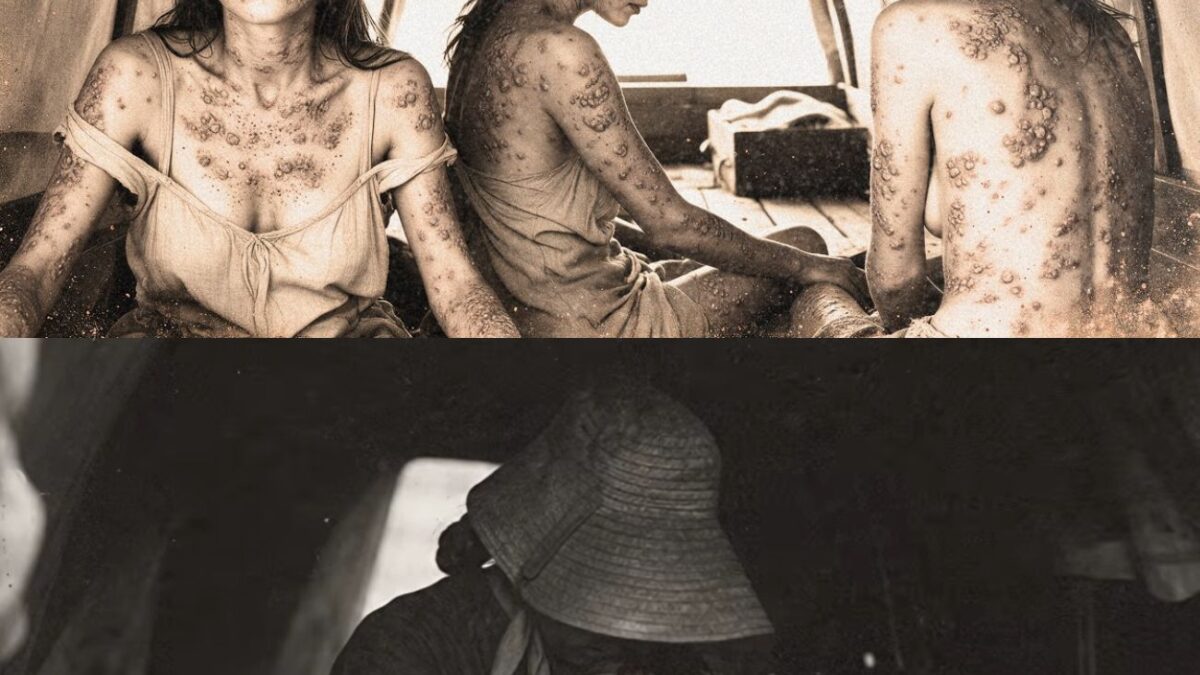
In the summer of 1852, a woman named Lodisa Frizell walked the sun-scorched Platte River Road and counted fresh earthen mounds. She forced herself to stop tallying after passing fifty newly dug graves in a single afternoon, shaken by the sheer desolation lining the emigrant corridor. No military battle had swept through this desolate valley, and no armed ambush had fallen upon the passing pioneers.
Something far more insidious and unrelenting had claimed this western soil, moving silently through the ranks without a bayonet, musket, or bow. The afflictions that festered inside the canvas tops were more gruesome and lethal than any romantic myth ever depicted on the silver screen. Of all the unseen horrors that plagued the great migration, one central question remains: which condition was the true, undisputed killer of the Overland Trail?
The answer begins deep within the everyday squalor of trail life, rooted in an affliction pioneers dismissively termed camp itch. Scabies mites and parasitic lice were as certain as the choking alkali dust kicked up by the draft teams every sweltering morning. Weary emigrant families wore the same sweat-stained garments for grueling months on end without ever laundering their stiff, grimy clothes.
Trail travelers routinely slept shoulder-to-shoulder under shared woolen blankets that were never washed, aired out, or purged of creeping vermin. Water on the vast arid plains was far too scarce and brackish to waste on the simple luxury of personal bodily cleanliness. Drinking was the absolute first priority, cooking claimed the meager second portion, and personal bathing was entirely forgotten along the grueling western march.
Microscopic scabies mites burrowed deep tunnels into inflamed skin, while swarms of body lice nested in the coarse seams of every shirt and bonnet string. Men scratched their sunburnt limbs until raw blood welled up, and exhausted women tore at their arms in the darkness of the wagons. Children woke up screaming throughout the night from the sheer torment of the ceaseless irritation across their small, unwashed bodies.
Camp itch alone rarely took a life outright, but it transformed every wagon company into a fertile breeding ground where fatal infections flourished. This perpetual filth became the physical foundation upon which catastrophic wilderness epidemics thrived throughout the summer journey across the high desert. The lice harbored lethal pathogens within their microscopic guts, turning an annoying daily misery into a quiet conduit for devastating biological ruin.
Farther along the trail, a seemingly simple tooth abscess could swiftly escalate into a terrifying death sentence under the brutal prairie sun. There were no licensed dentists practicing between the frontier outposts of Missouri and the fertile timberland of the Willamette Valley. A emigrant traveling two thousand miles of wagon ruts could not find a single trained practitioner capable of treating an impacted tooth correctly.
A cracked molar caused by biting down on rock-hard army hardtack or dried beef jerky could transform into a throbbing abscess within mere days. The aggressive bacterial infection migrated directly from the rotten root into the jawbone and rapidly entered the general bloodstream of the victim. The only frontier remedy was a pair of dirty blacksmith pliers, a stiff slug of corn whiskey, and several men holding the patient down.
If the internal decay had already traveled deep into the facial tissues or marrow, pulling the tooth did absolutely nothing to save the emigrant. The virulent infection kept swelling through the neck, closing the throat and spreading poison through every vein in the frantic patient’s body. Pioneer diaries frequently recorded tragic trailside deaths attributed simply to what they called an incurable inflammation of the swollen face.
Modern dentistry routinely clears such dental infections in an hour, allowing a patient to walk home cured with a mild prescription of antibiotics. Back then, a cracked molar was a brutal wager between weeks of blinding agony and an unmarked grave dug beside the winding path. Many young pioneers were rolled into the dry prairie earth with their locked jaws still swollen tight from rotting teeth and untreated poison.
Physical trauma inevitably brought the terrifying specter of gangrene, which trailed every catastrophic accident that the rugged wilderness could produce. Heavy ox-drawn wagons lacked brakes, and a leg crushed beneath an iron-rimmed wheel could instantly pulverize bone and tear open living tissue. A traveler’s hand caught in a spinning wheel spoke while navigating a treacherous river ford could be shredded beyond all hope of repair.
Even a minor gunshot wound or an accidental axe slip, left dirty in the heat for twenty-four hours, invited aggressive anaerobic bacteria. The mangled flesh surrounding the injury darkened into a putrid, weeping rot that turned soft, spongy, and utterly dead to the touch. The sickening stench of decaying tissue carried across the evening encampment long before the wagon company captain even realized a limb was lost.
The solitary wilderness remedy for advancing gangrene was immediate, crude amputation conducted with whatever tools were packed in the communal chest. It was performed with a coarse carpenter’s bone saw, zero sterile technique, and hands that had not seen clean soap in weeks. Sometimes four grown men knelt across the writhing victim’s chest, shoving a thick leather wagon strap between their teeth to stifle the screams.
The ragged stump itself frequently turned black and foul within days, ensuring the horrific procedure had bought the victim no real survival. Most travelers who underwent a battlefield amputation along the Overland Trail succumbed to shock or sepsis before reaching the distant western mountains. The fortunate casualties perished quickly from blood loss, while the unfortunate lingered in agonizing delirium as the rot crept steadily toward their vitals.
Equally terrifying was tetanus, known universally along the frontier by the chilling and profoundly descriptive name of lockjaw. A driver stepped down from the wagon tongue onto a rusted discarded nail, or grazed his sweaty palm against a corroded axle cotter pin. The tiny puncture closed over within a day, and the busy traveler dismissed the minor scratch as an inevitable nuisance of wilderness labor.
About a week later, a strange stiffness seized the hinge of the jaw, rendering chewing difficult and making ordinary speech clumsy and painful. The deep muscular rigidity spread downward into the neck, shoulders, and spine until the patient’s entire frame locked in excruciating, uncontrollable spasm. The back arched upward off the dirty blankets like a wooden bow drawn to its breaking point, leaving only the heels and head touching.
The suffering pioneer remained completely conscious through the horror, feeling every agonizing cramp as the muscles tore themselves apart from the inside. Mercy arrived only when the spasms seized the diaphragm and intercostal muscles, suffocating the conscious victim in the back of the moving wagon. The wagon route was an ideal incubator for tetanus, with miles of soil deeply enriched with the excrement of thousands of livestock.
Iron wheel bands, discarded hardware, and draft gear rusted under the wet spring rains, shedding oxidized flakes into the deeply churned prairie mud. Punctures were bound with filthy strips torn from soiled petticoats, introducing deadly spores directly into oxygen-deprived tissue beneath the skin. There was not a single medical remedy on the frontier capable of halting the lethal spasms once the neurotoxin invaded the spinal cord.
Whenever the wagon trains reached the great waterways, severe respiratory illness waited to strike the exposed families who dared to wade across. The swollen Platte River ran wide and deceptively shallow, while the icy Snake and Green rivers ran swift enough to sweep oxen away. Men and women stood chest-deep in glacial currents for agonizing hours, desperately bracing livestock against the powerful rush of the mountain runoff.
Reaching the muddy western bank offered no reprieve, as dry clothing did not exist and timber for warm campfires was often impossible to find. Wet wool coats and soaked trousers remained pasted against shivering skin for days while the wagons rolled into the relentless western wind. Violent chest rattling and deep, agonizing coughs emerged before the week concluded, signaling the arrival of what pioneers termed lung fever.
Infants and the elderly were invariably the first to succumb to the severe bacterial pneumonia that swept through the cold canvas enclosures. The disease claimed its heaviest toll during the bitter rainstorms of Missouri and the premature autumn blizzards of the rugged Blue Mountains. The harsh topography demonstrated no sympathy for the calendar, punishing any wagon company that lagged behind schedule with ice, mud, and frozen lungs.
Farther west, the total absence of fresh vegetation inflicted the slow, agonizing systemic collapse known since ancient maritime history as scurvy. Families traveled for consecutive months on a grueling diet limited strictly to salted pork, dry flour, parched cornmeal, and bitter black coffee. Without essential ascorbic acid, the collagen binding the human body together gradually disintegrated, causing the entire physical frame to deteriorate in progressive stages.
Pioneer gums blackened and swelled over loose teeth that rattled in their sockets before dropping out into tin soup plates during supper. Old childhood wounds, frontier knife scars, and healed fractures from years prior suddenly dissolved and broke open as if freshly inflicted that morning. The connective tissue failed entirely, allowing deep internal hemorrhages to pool beneath the skin until limbs became blackened, heavy, and grotesquely swollen.
A man could press a thumb into his own aching shin and watch the deep indentation remain embedded in the swollen flesh for hours. Joints seized with internal bleeding, transforming every step over the rocky volcanic ruts into an exercise in excruciating, tooth-grinding physical agony. The remedy was widely known—wild prairie greens or rose hips—yet the scorched desert between the Platte and Humboldt yielded nothing green for weeks.
In the blistering stretches west of Fort Laramie, emigrants encountered a deceptive geographical hazard known as alkali water poisoning. The parched landscape was dotted with shimmering, crystal-rimmed pools that appeared crisp, inviting, and wonderfully cool to travel-weary eyes. Yet these stagnant reservoirs were heavy with caustic sodium carbonate and mineral salts that burned the throat and wreaked havoc on digestive tracts.
Unwary travelers who drank deeply from these bright mineral pools suffered violent chemical burns throughout their stomachs, collapsing into severe intestinal cramps. Draft animals suffered the worst, dropping in their harnesses by the dozens along the dry, punishing stretches flanking the desolate Humboldt Sink. Pioneer Alonzo Delano documented vast swaths of the Nevada trail lined with the swollen, rotting carcasses of oxen poisoned by these mineral sinks.
The sight of shimmering water in the desert heat drove desperate animals and men toward the deadly shallows despite knowing the fatal consequences. The pungent stench of mineral brine mingled with the decomposing livestock that lay bloated under the relentless sun beside the sparkling mirage. It was a cruel irony of the desert trail that travelers were driven mad by thirst while surrounded by water they could not touch.
When the wagon trains pushed into the lush river bottoms, another unseen predator struck emigrants through the stealthy vector of the tick. Rocky Mountain spotted fever, then categorized vaguely under the general umbrella of mountain fever, began with an unremarkable bite in the river brush. The emigrant brushed the insect away without a thought, entirely unaware that a lethal rickettsial organism had been injected into their bloodstream.
About a week later, severe chills, blinding headaches, and debilitating joint pain brought the hardy traveler down into the bed of the wagon. A dark spotted rash erupted upon the wrists and ankles, rapidly creeping inward toward the torso like an ominous, unstoppable purple stain. Frontier physicians had no grasp of tick-borne transmission, misinterpreting the physical symptoms as an excess of bile or a sudden climatic shock.
Their standard medical intervention was to administer massive doses of calomel, aggressively dosing the failing patient with toxic mercury compounds. This disastrous treatment destroyed the kidneys of patients who desperately required hydration and complete rest, turning survivable infections into painful fatal events. The natural habitat of the wood tick overlapped precisely with the lush grazing lands every wagon train had to utilize for survival.
Childhood contagions found fertile ground within the tightly packed wagon companies, where quarantine was impossible and daily life was shared entirely. When mumps entered an emigrant company, the viral infection swept through the families with terrifying speed, striking both children and adults. The painful swelling along the neck and jaw made swallowing difficult, while high fevers kept drivers flat on their backs for weeks.
While mumps was rarely fatal to the young, the true menace it introduced to the Overland Trail was the devastating loss of time. A company halted by widespread illness burned through precious flour reserves while draft animals depleted the limited grass along the trailside camp. Lingering beside the trail in August meant risking an encounter with murderous snowstorms in the Sierra Nevada or Cascade passes by November.
Every experienced wagon master knew that the calendar was a far more ruthless adversary than the rugged terrain or the roaring rivers. A two-week delay spent nursing swollen faces along the Sweetwater could easily translate into freezing to death in the mountain passes. On the transcontinental trail, a prolonged illness that simply stalled forward momentum proved just as deadly as an acute and violent infection.
Even more heartbreaking was the terrifying sound of whooping cough echoing across the sleeping encampments under the cold prairie stars. The respiratory affliction manifested as relentless, violent coughing paroxysms that completely deprived young children of the ability to draw air. After each spasm came the agonizing, high-pitched stridor—the desperate, whistling whoop as tiny, straining lungs fought frantically to pull in oxygen.
The infection mercilessly claimed the lives of infants and toddlers who lacked the physical stamina to endure the exhausting, unending spasms. Frantic parents sat awake in the pitch darkness of crowded wagons, cradling blue-faced infants with no medical relief available for hundreds of miles. When the violent coughing finally ceased in the early morning hours, the child often lay limp and lifeless in their mother’s arms.
Grave-digging became an agonizing sunrise ritual, with grieving fathers carving shallow resting places in the hard clay before the wagons moved out. Decades after the migration ended, elderly pioneer women confessed in their journals that the sound of the desperate whoop haunted their dreams. The harrowing echo of their dying infants gasping for breath in the prairie night followed them into old age, entirely impossible to forget.
Scarlet fever arrived with equal stealth, disguising itself initially as an ordinary sore throat accompanied by a faint flush upon the cheeks. Soon, an aggressive sandpaper-like rash erupted across the torso, and the child’s swollen tongue turned a frightening, deep strawberry red. The high fevers caused terrifying delirium, followed in later stages by large sheets of dead skin peeling from the hands and feet.
The speed with which scarlet fever consumed young siblings left even the most seasoned frontier travelers completely stunned and spiritually broken. A mother could bury her youngest daughter on a Tuesday morning, only to lower her eldest son into the ground by Friday afternoon. She dug their shallow graves with hands that had soothed their burning foreheads, weeping into the dust before climbing back aboard the wagon.
The inexorable forward march of the company could not be halted for private grief, for pausing jeopardized the survival of every other family. The vast western wilderness showed no regard for a broken heart, forcing weeping mothers to abandon their children’s graves to the prairie wolves. The wheels continued to turn through the dust, rolling away from fresh mounds that would never be visited or seen again by kin.
Measles struck the wagon trains with an intensity magnified by the complete lack of immunity among families raised on isolated backwoods homesteads. While urban emigrants often possessed childhood antibodies, rural pioneers collapsed under raging fevers, severe conjunctivitis, and total physical exhaustion. A settler weakened by measles who subsequently drank from a contaminated alkali ditch was virtually guaranteed to succumb within days.
The tragic path of measles extended far beyond the wagon ruts, devastating indigenous populations who had lived along the rivers for generations. In 1847, the virus carried by westbound immigrants reached the Cayuse people residing near the Whitman Mission in the Pacific Northwest. Having zero historical exposure to the Old World pathogen, the Cayuse perished in staggering numbers while watching white settlers survive the outbreak.
The resulting suspicion that the missionaries were intentionally poisoning the native population culminated in the famous and bloody Whitman Massacre. This historical tragedy demonstrated how a microscopic pathogen carried aboard a covered wagon could alter the geopolitical landscape of an entire continent. The westward migration transported more than plows, livestock, and dreams; it unleashed biological devastation upon people who had never encountered such plagues.
Equally vicious was erysipelas, an acute streptococcal infection that pioneers referred to with fearful reverence as Saint Anthony’s Fire. A minor abrasion caused by a splinter from a wagon box or a friction blister from walking in coarse boots was enough. The bacterial infection took hold in the broken skin, spreading across the limb as an angry, bright crimson wave of severe inflammation.
The blazing red margin of the infection advanced visibly over the course of hours, hot to the touch and agonizingly tender. Without modern antibiotics or sterile dressings, the bacteria easily breached the deeper tissues, flooding the emigrant’s bloodstream with fatal systemic sepsis. Frontier remedies like bread-and-milk poultices did nothing to check the spread, merely serving as warm incubators for the raging bacterial invasion.
To make matters worse, trail practitioners often attempted bloodletting, deliberately draining vitality from a patient who was already sliding toward cardiovascular collapse. Saint Anthony’s Fire was an insidious trail killer that modern history books often overlook, despite its frequent appearance in pioneer diaries. It took full advantage of the unending scrapes, splinters, and blisters that accompanied the physical labor of driving teams across a continent.
Perhaps the most agonizing pediatric nightmare of the overland migration was diphtheria, an upper respiratory infection of unimaginable cruelty. It began with an ordinary sore throat and low fever, but soon produced a thick, fibrous, gray pseudomembrane across the tonsils. This leathery membrane adhered tenaciously to the living tissue, creeping steadily downward into the trachea and gradually sealing off the windpipe.
With no sterile surgical tools or anatomical training to perform a tracheotomy, parents were forced to watch their children slowly suffocate. In sheer desperation, mothers and fathers reached their bare fingers down their children’s throats, attempting to rip the tough obstruction free. The horrific intervention caused massive bleeding that choked the child anyway, while the canvas wagon rattled relentlessly over the unforgiving trail ruts.
The mortality rate of diphtheria along the trail was staggering, leaving strings of child-sized graves along the Platte and Sweetwater rivers. The diary entries following these devastating outbreaks were often brief and chilling: a child’s name, their age, and a blank space. A routine childhood vaccination prevents this horror today, but in the 1850s, parents possessed nothing to combat the gray membrane that stole life.
Meanwhile, tuberculosis, historically known as consumption or the Great White Plague, traveled openly inside the wagons across the plains. In the mid-nineteenth century, it was the foremost killer in North America, slowly consuming the lungs and vitality of its hosts. In a tragic twist of medical ignorance, eastern doctors actively urged dying consumptives to undertake the grueling overland trek for their health.
Popular medical consensus held that the arid atmosphere of the western territories possessed miraculous restorative properties capable of healing diseased lungs. Pamphlets assured wealthy and poor invalids alike that embarking on the journey across the mountains would reverse their terminal diagnosis. In reality, sending frail, feverish patients coughing blood into the harsh realities of wilderness travel was a virtual death sentence.
These terminally ill travelers rode for thousands of miles alongside their families, sharing tiny enclosed spaces, drinking cups, and bedding. They coughed microscopic bacilli into the stagnant air beneath the wagon covers, inadvertently seeding the fatal disease into their own children. Many of these consumptives perished before seeing the Rocky Mountains, leaving the surviving family to continue westward with infected lungs.
From the very beginning of the journey, malaria waited in ambush along the humid river valleys where companies initially assembled. The low-lying bottoms of Missouri and the swampy banks of the lower Platte were notoriously thick with swarms of mosquitoes. Many pioneers carried the protozoan parasite inside their red blood cells long before their wagon wheels made their first turn west.
The illness manifested in recurring, predictable cycles of violent shaking chills followed by torrential sweats and burning, delirious fevers. The chills were so intense that a grown man could not keep a tin cup of water from rattling against his teeth. While quinine was an effective treatment, it was prohibitively expensive and frequently exhausted at frontier trading posts along the early trail.
Peter Burnett, who crossed the plains in 1843 and became California’s first governor, noted that malaria was an almost universal condition. He observed that a traveler who did not suffer from the violent shaking ague was considered an absolute rarity along the road. The constant physical exhaustion caused by recurring bouts of malaria left emigrants dangerously vulnerable to the deadlier plagues that lay ahead.
The microscopic vectors multiplied as typhus, historically known as camp fever, exploited the profound lack of sanitation among the trains. This deadly organism was carried directly within the guts of human body lice, thriving wherever hygiene was totally abandoned. When an emigrant scratched at the irritated bites, the insect’s infective feces were rubbed directly into the broken, bleeding skin.
Once inside the bloodstream, typhus produced raging, continuous fevers, profound delirium, and a dark petechial rash across the torso. Delirious pioneers became unmanageable inside the jostling wagons, thrashing violently and babbling to hallucinations while refusing all water and food. The wagon train could not afford to halt its march for a raving invalid, forcing families to endure the terrifying spectacle.
Frontier doctors frequently conflated typhus with typhoid, lacking both the diagnostic understanding and the laboratory tools to differentiate the two fevers. Yet the lethal outcome remained the same, filling shallow roadside ditches with the bodies of men broken by the delirium. The unassuming body louse was ultimately more lethal than any wild beast or hostile party the emigrant encountered across the journey.
A closely related horror was typhoid fever, a bacterial infection that turned the precious water sources of the trail into liquid poison. Every natural creek, fresh spring, and muddy seep along the crowded highway was utilized by thousands of emigrants and their livestock. The bacteria spread through water contaminated with human excrement, entering the mouths of pioneers who possessed no means of boiling water.
The onset of typhoid was deceptive, beginning with a dull headache and a persistent fever that climbed incrementally higher each evening. By the second week, severe abdominal cramping set in, accompanied by characteristic faint rose-colored spots across the patient’s abdomen. The disease caused severe intestinal ulceration, leading to catastrophic internal hemorrhages or fatal perforations that killed the patient through peritonitis.
Dr. Israel Lord, a physician traveling to the goldfields in 1849, documented countless fatal cases along the foul, brown Platte River. He watched travelers dip their drinking pails directly into stagnant shallows laden with animal offal and the runoff of previous camps. With no antibiotics available, trail doctors relied on toxic doses of mercury, inadvertently accelerating the dehydration that claimed the patient’s life.
Yet beneath all these notorious killers lay a far more pervasive, humiliating, and relentless destroyer: dysentery, known as the bloody flux. This miserable affliction was an unavoidable constant, present in every single company, across every season, along every mile of the road. It resulted from the inevitable ingestion of amoebic or bacterial organisms through filthy hands, shared tin cups, and contaminated food supplies.
The symptoms of the bloody flux were agonizing, characterized by violent, non-stop purging that drained every fluid reserve from the body. The intestinal lining sloughed off in bloody mucus, reducing robust frontiersmen to hollow-eyed, emaciated skeletons within a matter of days. Young children were particularly vulnerable, dying swiftly from severe dehydration while their helpless mothers looked on in utter despair.
When dysentery struck, well-meaning physicians compounded the catastrophe by administering calomel, a potent purgative that tore through the ruined intestines. The mercury compound aggravated the bloody lesions in the gut, ensuring the victim lost what little fluid remained in their system. They attempted to counter the purging with raw opium, which briefly dulled the pain but ultimately failed to halt the collapse.
The bloody flux was so common that emigrant diaries ceased treating it as an extraordinary event, recording it with grim, resigned brevity. It did not produce the dramatic, cinematic terror of sudden epidemics, yet it steadily emptied the wagons week after week. While famous plagues made headlines back east, dysentery claimed a steady toll of lives that went completely uncounted in official histories.
Then came cholera, the undisputed monster of the nineteenth-century trails, which transformed the Overland Route into a continent-long burial ground. An emigrant could eat a hearty breakfast of bacon and bread at dawn, feeling robust, energetic, and perfectly capable of heavy labor. By noon, the first sudden watery evacuations struck, followed immediately by severe, agonizing muscle cramps throughout the extremities.
By mid-afternoon, the victim was purging continuous rice-water stools, shedding gallons of vital bodily fluids and electrolytes in mere hours. The blood thickened to a dark sludge, the skin turned a ghastly blue-gray, and the eyes sank into their sockets. The voice faded to a dry whisper, and by the time the sun dipped below the prairie horizon, the traveler was dead.
The Asiatic cholera epidemic collided with the overland trails in 1849, the exact moment the California Gold Rush inundated the routes. Tens of thousands of fortune-seekers from every corner of the globe crowded along the same river paths, drinking from the same pools. They deposited their waste along the riverbanks, unwittingly creating a continuous ribbon of deadly infection that extended for hundreds of miles.
Gold-seeker William Swain wrote home describing a macabre highway where fresh cholera graves appeared every few hundred yards along the Platte. The air around the popular camping sites reeked of human waste and decomposing corpses that had been buried too shallowly. Catherine Haun witnessed panic-stricken wagon companies driving their teams at a frantic gallop, refusing to stop for the dying who begged for water.
Historian Merrill Mattes documented extensive stretches of the Platte River Road where consecutive miles were bordered by closely spaced graves. Bodies were hurriedly wrapped in blankets and covered with a foot of dry dust, barely deep enough to discourage scavengers. Following wagons had no choice but to roll their iron-clad wheels directly over the fresh graves, as the ruts permitted no detour.
Yet looking beyond the sudden terror of the cholera outbreaks reveals a surprising historical reality regarding the true nature of trail mortality. Cholera arrived in explosive epidemic waves, ravaging the migrations of 1849 through 1852 before abruptly receding from the Great Plains. The trail continued to carry tens of thousands of homesteaders through the 1850s and 1860s, long after cholera ceased to dominate the route.
Throughout those later decades, dysentery continued its deadly work, never taking a single season off or sparing a single passing company. The bloody flux was an enduring reality of wilderness migration, claiming lives quietly while the dramatic epidemics received the historical attention. Cholera was a terrifying seasonal catastrophe, but dysentery was an inescapable trail condition that claimed victims across the entire era.
Compounding this tragedy was the reality that frontier medicine itself was frequently just as lethal as the pathogens it opposed. When a traveler fell ill with cholera, typhoid, or dysentery, the standard medical response was to administer calomel—toxic mercurous chloride. This chemical stripped the epithelial lining of the intestines, poisoning the kidneys and finishing off patients who might otherwise have survived.
Physicians routinely drained pints of vital blood from patients who were already dying from acute dehydration and profound hypovolemic shock. They forced raw whiskey down the throats of feverish infants, hastening their demise under the mistaken belief that stimulants restored vitality. The medicine bottle and the waterborne pathogen worked in tragic tandem, filling thousands of unmarked graves along the great western trail.
Popular cultural memory deliberately erased this grim, unglamorous reality, replacing the truth of trail sickness with romanticized frontier mythology. Hollywood Westerns constructed an enduring narrative centered on heroic gunfights, dramatic cavalry charges, and hostile ambushes in scenic desert canyons. John Wayne never portrayed a desperate pioneer wasting away from the bloody flux in the back of a canvas-covered wagon.
Historical data compiled by the National Park Service reveals that for every emigrant killed by violent human conflict, roughly ten perished from disease. The true frontier adversary was not an archer behind a boulder, but the microscopic pathogen thriving in the bottom of the water barrel. The motion picture industry chose to ignore this reality because agonizing illness and systemic filth did not make for heroic entertainment.
The tragedy was further exploited by patent medicine manufacturers who grew wealthy peddling toxic nostrums to fearful families heading west. Charlatans marketed miraculous cures composed of raw alcohol, concentrated opium, and mercury compounds directly to vulnerable pioneers at staging grounds. These fraudulent mixtures did nothing to cure disease, dulling the senses of the dying while line-item profits accumulated in eastern banks.
The true legacy of the Overland Trail is not a romantic legend of conquest, but an authentic testament to human endurance. It is the story of terrified families moving forward through a landscape of death, burying their children in the dust and continuing on. They walked because turning back offered no salvation, facing the grim reality of the trail with unmatched, heartbreaking courage.
While cholera rightfully earned its fearsome reputation as the fastest single killer, dysentery was the true, relentless destroyer of the western migration. The bloody flux quietly claimed thousands of lives across three decades, demanding no fanfare, no headlines, and no historical monuments. It remained the constant companion of the covered wagon, doing its lethal work without interruption from the Missouri River to the Pacific.
Today, modern travelers cross those same vast western distances in climate-controlled comfort, carrying pure drinking water in clean containers without a thought. The monumental distance separating modern civilization from the pioneer era is measured not in geographical miles, but in sanitation and clean water. That progress was purchased at a terrible price by the forgotten thousands who laid down their lives in the roadside dust.
Along the quiet banks of the Platte River, countless unmarked graves remain hidden beneath the blowing prairie grass, lost to living memory. There were no granite headstones erected in the wilderness, only shallow trenches, a rough woolen blanket, and a family forced to move on. The wild prairie winds smoothed the earth flat, leaving behind a vast and silent cemetery that keeps its secrets forever.

