20 Brutal Truths About What Happened Inside Wagon Trains At Night
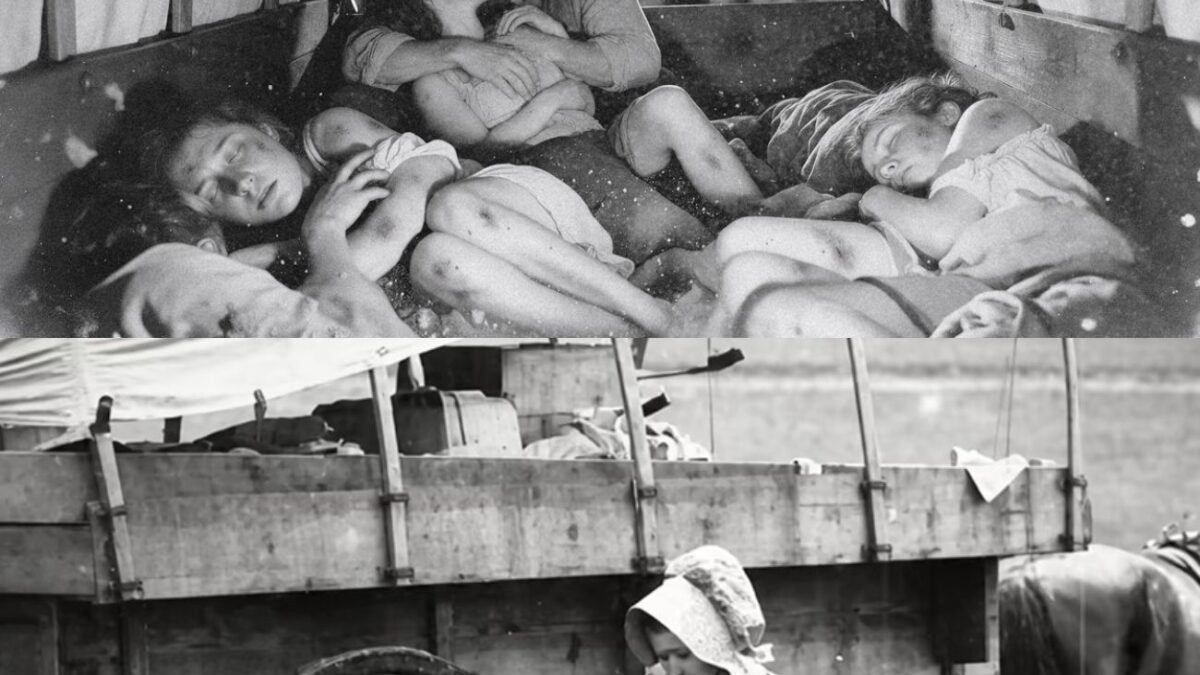
Somewhere along the Platte River Road in the blistering summer of 1849, a woman lay awake inside a covered wagon, staring upward into the suffocating gloom. The coarse canvas snapped violently overhead against an incessant prairie gale, while outside the heavy wooden bows, the oxen shifted, groaned, and rattled their heavy chains upon the picket line. Through the thin fabric wall, she could clearly hear a man coughing up blood three wagons back, a child weeping in the pitch darkness somewhere ahead, and another dreadful sound that she would dare not name in her diary until the following morning.
She wrote around the horror, carefully softening the brutal edges of her experience, just as nearly every other traveler chose to do when facing the unforgiving Western trail. The wagon train at night was fundamentally nothing like the idyllic oil paintings portrayed to a fascinated and misinformed American public. The very moment the sun slipped beneath the flat horizon, the great overland migration transformed into an entirely different, menacing country where civilized rules collapsed.
The things that transpired inside that desperate circle were the harrowing realities that emigrant families never dared mention in letters sent back home to the East. Buried deep beneath decades of romantic folklore and whitewashed memoirs lies a singular, unvarnished truth about the nightly ordeal of the Overland Trail. The question remains whether modern readers are truly prepared to confront the actual psychological and physical terrors that haunted these pioneers once the campfires turned to ash.
The first enduring lie told by classic landscape paintings is the peaceful illusion of vast, pristine prairie silence. A standard overland company comprising forty wagons carried several hundred head of unruly, semi-feral livestock including oxen, draft mules, saddle horses, and temperamental milk cows. At night, penned tightly or picketed near the defensive circle, these terrified animals never slept quietly, keeping the entire perimeter in a perpetual state of churning, nerve-wracking agitation.
Huge oxen bellowed endlessly into the cold night air, and weary mules kicked viciously at their worn leather hobbles whenever a phantom shadow moved. Heavy draft horses stamped the hard ground and snorted violently at every sudden shift in the prevailing wind, while iron chains rattled against the wagon tongues like jailers’ irons. Half-starved dogs snarled and tore at each other over discarded grease scraps along the perimeter, and through every waking hour, the canvas covers popped like loosening sails in an unrelenting storm.
Pioneer Amelia Stewart Knight recorded in her 1853 diary that along the Platte, the auditory assault was so continuous and deafening that she could rarely distinguish between thunder and a braying mule. Catherine Haun, traveling the California route in 1849, described an eternal, agonized groaning of heavy timber wagons intermingled with frantic animal shrieks that made deep sleep an absolute impossibility for weeks on end. Modern people close their insulated bedroom doors and enjoy silent sanctuary, but trail families possessed no doors, enduring an unyielding cacophony every single night for five agonizing months.
Popular cinema routinely depicts pioneer families tucked cosily into their wooden wagons, transforming the vehicles into quaint, mobile bedrooms. In harsh reality, emigrant wagons were never designed as living quarters; they were brutal, tightly packed, unyielding cargo holds engineered purely for freight transport. The typical farm wagon measured merely ten feet long and four feet wide inside, crammed right up to the sideboards with heavy barrels of flour, rancid bacon, blacksmithing tools, and heirloom furniture.
Most family members could not squeeze inside the bed at all, forcing them to sleep directly on the bare dirt beneath the carriage or out in the open brush. They laid themselves down on vulcanized India-rubber cloths or coarse, flea-infested buffalo robes spread over rough stones, thorny weeds, and muddy depressions. Lucretia Frisbie recalled in 1852 that her entire household slept flat upon the hard ground for several months straight, completely exposed to the elements and wandering prairie vermin.
During heavy cloudbursts, sheets of dirty water surged beneath the wagons, thoroughly soaking their bedding, their woolen clothing, and every cherished possession they owned. Those unfortunate few who did manage to squeeze inside the wagon bed slept wedged tightly between crude wooden crates, resting awkwardly upright with feverish children draped across lumpy sacks of flour. A family of five was compressed into an enclosure far smaller than a modern closet, completely devoid of privacy, thin partitions, or safety from the rough strangers bedded down six feet away.
Guard duty was a nightly ordeal that systematically broke the physical and mental health of the men assigned to stand it. Every single evening, several exhausted travelers were forced into rotating armed shifts to patrol the exterior rim of the sprawling wagon circle. The assignment was completely unpaid, strictly mandatory under company charters, and fundamentally terrifying for men who were already pushed to the brink of utter collapse.
A laborer who had tramped fifteen brutal miles through choking alkaline dust or driven stubborn oxen under a scorching sun was expected to stand perfectly alert for hours. He paced alone in the freezing darkness, straining his bloodshot eyes to detect hostile movements in tall, rustling grass that was utterly impossible to penetrate visually. Major J. Goldsborough Bruff recorded in his 1849 journal that he routinely found his nighttime sentinels dead asleep on their feet or slumped unconscious against the wagon wheels.
No company captain could reasonably enforce military punishment for these derelictions, because disciplining every slumbering guard would have meant punishing half the men in the outfit. Frantic, sleep-deprived sentries regularly discharged their rifles into the darkness at stray livestock, fired wildly at one another, or emptied their weapons into rustling tumbleweeds. The psychological ruin was catastrophic, as men assigned extra watches grew extraordinarily volatile, paranoid, and physically crippled long before they ever reached the foothill passes.
Nighttime stampedes erupted without the slightest warning, carrying a sudden, devastating potential for indiscriminate carnage that outstripped nearly every other common trail hazard. The most catastrophic danger haunting the overland road was rarely an organized attack from an external enemy, but rather the very animals the emigrants owned. A sudden clap of thunder, the distant yip of a coyote, a snapping greasebush, or an unseen phantom would send hundreds of cattle and mules bolting blind through the sleeping camp.
Pioneers resting on the bare earth were violently crushed beneath hundreds of pounding hooves before they could even untangle themselves from their damp bedrolls. Heavy wagons were flipped on their sides like matchboxes, their contents obliterated and their wooden ribs splintered against the trampled ground. Forty-Niner Alonzo Delano vividly documented a night stampede near the Humboldt Sink that demolished two wagons and left an unfortunate teamster with a shattered leg that never mended.
Historian John Unruh carefully calculated that total livestock losses caused by nighttime panics significantly surpassed all confirmed losses from native skirmishes combined during the migration’s peak. The subsequent morning recovery process was a nightmare in itself, requiring exhausted men to fan out across endless miles of unfamiliar plain in search of missing draft animals. Many teams were never located, leaving stranded families completely helpless and marooned in the wilderness until another passing company gouged them for exorbitant replacement fees.
The romantic image of the roaring trail campfire, around which pioneers allegedly gathered each night to sing hymns and trade tales, was a total fabrication. Once an emigrant company traveled beyond the Missouri river timberlands, natural cordwood completely vanished from the vast, treeless expanses of the open plains. From the vicinity of Fort Kearny westward, the primary fuel available to cook meals and provide light was the dried excrement of migrating bison herds.
Women and young children spent the final grueling hours of daylight gathering these dry buffalo chips into dirty aprons and coarse burlap sacks. The dung burned rapidly with an unsteady, flickering flame, discharged an eye-stinging, acrid smoke, and generated an exceptionally poor, fleeting thermal yield. By the time a meager kettle of cornmeal mush or salted pork was boiled, the weak fire was already suffocating and dying in its own powdery ash.
Catherine Haun noted that cooking over bison chips yielded a smoldering, sullen heat that barely illuminated the bubbling lip of the iron pot. The reality of the trail was that total darkness descended over the entire camp almost immediately after the evening meal was consumed. Denied both warmth and ambient light, the migrants were cast into a pitch-black void where accidents, panic, and violence festered in the shadows.
A wagon company operated fundamentally as a cold commercial enterprise and a mutual transit compact, entirely devoid of charitable patience for the infirm. When an emigrant fell desperately ill with mountain fever or Asiatic cholera, the company could not and did not suspend its relentless forward march. The afflicted were forced to ride inside unsprung, wooden wagons during the day, enduring eight to ten hours of bone-jarring torment across rutted, stony trails.
At night, the dying were laid out upon the damp grass or quarantined inside stuffy canvas enclosures where family members breathed their tainted breath. Asiatic cholera was capable of taking an otherwise healthy adult from robust vigor to sudden death in less than twelve agonizing hours of dehydration. Pioneers frequently went to sleep beside a companion who seemed only mildly indisposed, only to awaken at dawn next to a cold, contorted corpse.
Gold seeker William Swain wrote harrowing letters home detailing the nighttime atmosphere of cholera camps along the Platte River, describing them as places of unimaginable horror. The night was filled with the dreadful moaning of the doomed, punctuated by the rhythmic scraping of spades as men dug hasty graves before first light. Bodies were buried in shallow trenches dug directly into the trail bed so the morning wagon wheels would pack the earth down, hiding the scent from scavenger wolves.
One diarist grimly recorded watching an impoverished father hollow out his young daughter’s grave using an iron frying pan, as the train’s single shovel had snapped. The desperate man laboured by feel through the freezing midnight hours, scratching desperately into the hard-packed clay until his bleeding hands gave out. By sunrise, the pathetic trench was barely deep enough to cover the small shroud, yet the bugle sounded, compelling the broken father to drive his wagon directly over the mound.
In the disorienting blackness of an open prairie camp, small children constantly wandered away from the safety of the wagon circle and were swallowed by the plains. A circle containing forty wagons, several hundred agitated beasts, and countless discarded ropes presented an impossible maze for a sleepy, frightened child. Diaries are littered with terrified accounts of toddlers straying into the darkness while following camp dogs, sleepwalking, or simply losing their bearings once the fires died out.
A youngster who drifted beyond the outer perimeter of picketed mules could find themselves lost on the trackless sea of prairie grass within mere minutes. With no visual landmarks, no stars visible through thick summer squalls, and no protective fencing, a child had virtually no hope of finding the encampment unaided. Search parties formed at daybreak, yet while some weeping children were recovered miles away, many others simply disappeared into the wilderness forever.
Amelia Stewart Knight recorded several nights of unvarnished terror when her children momentarily slipped out of sight into the encroaching prairie gloom. The long route from Missouri to the Willamette Valley became flanked by hundreds of tiny, unmarked cairns containing remains that were far too small to belong to adults. Not all of those small graves resulted from waterborne epidemics; many were the tragic resting places of lost children claimed by cold, predators, and exposure.
The greatest threat to an overland family’s survival goods and dwindling life savings was not an opportunistic highwayman lurking in mountain defiles. The real thief was almost invariably the man sleeping twenty feet away, sharing the protection of the very same circular corral. Most trail companies were hasty alliances forged between complete strangers who met only days before at chaotic staging towns like Independence, Saint Joseph, or Council Bluffs.
Men who had never crossed paths previously shook hands, signed rigid articles of association, and naively christened their fragile collective a unified traveling company. Fundamental trust eroded almost immediately, and under cover of darkness, precious rations of salt pork, hardtack, and white flour mysteriously vanished from supply crates. Essential toolsets disappeared, and working oxen were occasionally discovered yoked to a neighbor’s wagon at dawn, their rightful ownership brands deliberately smeared with drying creek mud.
Improvised trail tribunals were held on the trampled grass beneath sputtering lanterns to adjudicate bitter accusations of theft between furious overland partners. Sentences handed down by these ad-hoc courts ranged from enforced restitution to immediate, dishonorable expulsion from the protection of the train. Being banished alone onto the boundless plains without transport or companionship was essentially a lingering death sentence, stripping away any lingering pretense of mutual pioneer solidarity.
Many wagons headed west carried fifty-gallon barrels of distilled whiskey, intended either as lucrative trade goods for frontier outposts or as private medicinal supplies. Once the grueling daytime trek ended and supper was finished, heavy drinking became widespread among the unattached young men and the hired teamsters. Reckless card games commenced by the dying embers of the buffalo chips and stretched long into the cold night hours beneath the draft carriages.
Predictably, vile insults inevitably accompanied the liquor, swiftly followed by flying fists, bared hunting knives, and cocked percussion-cap pistols. Alonzo Delano detailed an 1849 incident where an argument over a drunken game of monte concluded with a man being viciously stabbed straight through the arm. The perpetrator quietly slipped away into the ink-black prairie night, and the company made no meaningful attempt to track him down or apprehend him.
The wagon train possessed no iron jail, no recognized magistrate, and no surplus personnel to waste guarding a dangerous prisoner across mountain terrain. Furthermore, the company could ill afford to sacrifice a skilled teamster, meaning justice after sundown was dictated solely by raw intimidation and violence. Modern citizens take their nighttime security for granted behind heavy deadbolts, whereas the overland emigrants slept exposed, protected by little more than thin fabric and anxious prayers.
A structural failure occurring at twilight, such as a fractured hickory axle, was an absolute catastrophe capable of destroying a family’s entire life. Wagon repairs demanded broad daylight, specialized blacksmithing tools, forge equipment, and seasoned replacement hardwood, none of which were readily available on the treeless plains. An axle that cracked upon a hidden boulder in the evening could rarely be repaired before the relentless company bugle signaled the dawn departure.
The wagon company possessed a rigid timetable dictated by the looming threat of Sierra or Cascade winter snows, meaning the column never halted for individual misfortune. A family whose running gear collapsed was heartlessly abandoned on the trail, left with only what meager possessions they could carry on their shoulders. The overland route soon became a catastrophic outdoor museum of cast-off wealth, shattered wagons, abandoned cast-iron stoves, and family trunks picked clean by following parties.
Fine mahogany bureaus, heavy iron safes, and even imported parlor pianos were dumped into the sagebrush where their music was permanently silenced. In the darkness of camp, the sudden, sharp crack of seasoned timber under a shifting cargo load sounded the immediate death knell of a family’s fortune. Everything these emigrants owned had been liquidated to fund their enterprise, and a single broken axle abruptly terminated their dream of starting anew in the West.
Women endured the excruciating agonies of childbirth inside swaying, unhygienic wagons, and the grueling company never paused its relentless daily march for their labor. Expectant mothers in the final stages of pregnancy traversed the entire two-thousand-mile trail, either walking on foot or enduring the violent jolting of unsprung axles. Parturition occurred whenever nature demanded, often during the dark night hours inside cramped wagon beds by the flickering, smoky light of tallow candles.
Sympathetic female travelers rallied to assist the laboring mother, working without sterile water, antiseptics, surgical tools, or professional obstetrical knowledge. Amelia Stewart Knight gave birth to her eighth child while crossing the trail in 1853, an event her diary notes with chilling, matter-of-fact brevity. Her journal entry simply records the infant’s delivery nestled squarely between mundane observations regarding bad weather and the rocky condition of the wagon tracks ahead.
Maternal and infant mortality along the overland corridor was extraordinarily elevated, yet the historical record preserves a conspicuous, haunting silence regarding this female suffering. Pioneer women deliberately suppressed the graphic realities of frontier labor in their memoirs, omitting the visceral trauma that Victorian decorum deemed utterly unmentionable. What these women could not bear to put into ink survived only in the blank white spaces between their brief, exhausted journal entries.
Accidental firearms discharges constituted a rampant, self-inflicted epidemic that claimed scores of lives throughout every single overland migration season. Nearly every male pioneer who ventured onto the trail was armed with an array of cheap pistols, muskets, and heavy sporting rifles. However, the vast majority of these greenhorn travelers—clerks from Boston, farmers from Indiana, and tradesmen from Philadelphia—had never handled lethal weapons before.
They purchased surplus military arms at staging depots, primed them on day one, and kept them fully cocked inside their bouncing wagons for months. At night, panicked sentinels and jumpy emigrants routinely discharged their weapons at the slightest nocturnal sound, firing blindly into the surrounding blackness. They shot stray draft oxen, perforated neighboring canvas covers, and repeatedly gunned down their own companions returning from relieving themselves in the brush.
Historian John Unruh’s painstaking demographic research reveals that accidental gunshot wounds caused vastly more fatalities than all indigenous combat encounters combined. Careless travelers regularly shot their own limbs while hauling loaded rifles out of wagon beds muzzle-first, or accidentally triggered hair-triggers while stumbling over picket stakes. In the suffocating darkness of camp, an army of frightened, exhausted men handling unfamiliar firearms posed an infinitely greater threat to their families than external hazards.
Prairie wolves, coyotes, and massive timber wolves shadowed the slow-moving wagon trains constantly, functioning like a patient, terrifying siege force. These canines were drawn inexorably by the ripe scent of dying draft animals, discarded offal, slaughtered cattle, and fresh, shallow road graves. At night, the pack crept to within spitting distance of the camp perimeter, their eyes catching the faint gleam of the fading embers.
Their unearthly choruses of high-pitched yelps and guttural howls systematically unhinged the picketed draft stock and terrified small children huddled beneath the canvas. Frantic guards frequently fired volleys into the surrounding gloom, but their lead balls met nothing while the wolves merely circled back into the shadows. Major Bruff detailed harrowing nights when hundreds of wolves pressed so close that the camp mongrels barked hysterically until morning, completely depriving the emigrants of rest.
The predators never launched dramatic, massed charges against the wagons as popular western artwork frequently suggested, preferring to employ relentless patience instead. They lingered quietly in the darkness, waiting for a weakened animal to collapse, an inattentive guard to nod off, or an unsecured grave to be abandoned. Every human soul lying on the damp grass was acutely aware that sharp, ravenous teeth were pacing just beyond the reach of the lantern light.
Sexual exploitation and violence were pervasive realities along the trail corridor, yet the surviving documentary record almost entirely conceals this abuse. Female travelers slept in extremely tight, compromised quarters alongside rough teamsters, unvetted hired hands, and predatory male companions attached to the outfit. Historian Lillian Schlissell analyzed hundreds of overland diaries and highlighted the absolute, conspicuous silence regarding sexual crimes within the ranks.
She persuasively argued that this profound silence did not indicate universal safety, but rather underscored an overwhelming sense of shame and utter legal helplessness. A woman attacked in the dark of night, five hundred miles away from the nearest operational courtroom, possessed no institutional recourse or physical escape. She was condemned to remain trapped within the same forty-wagon perimeter as her assailant, seeing him across the morning fire every single day.
The exceedingly rare references to these assaults are preserved only through oblique metaphors, tortured phrases, and diary entries that break off abruptly mid-page. The traumatized authors would leave gaps of several days before resuming their journals with a detached, profoundly altered psychological tone. If one listens closely to the unspoken nuances within these yellowed pioneer pages, the deafening echo of unprosecuted trauma rings through.
Whenever severe crimes occurred, improvised vigilance committees convened under cover of darkness to dispense summary frontier retribution without judicial oversight. When a majority of armed men deemed an individual intolerable, they did not waste precious traveling time waiting to deliver him to a frontier fort. Informal courts gathered around lantern-lit toolboxes, operating on no formal jurisprudence beyond the raw passions and prejudices of the assembled company.
Penalties dispensed by these midnight tribunals included brutal public floggings with teamster bullwhips, heavy property confiscation, drumhead hangings, and immediate nocturnal banishment. Historian John Unruh chronicled numerous instances where suspected thieves, insubordinate laborers, and violent brawlers were marched away in the dead of night. Being cast out alone on foot onto the hostile plains without an escort, firearm, or water supply was functionally identical to an execution.
The company leadership never formally recorded these expulsions as homicides, comforting their collective conscience through bureaucratic linguistic maneuvers. The condemned individual was merely expelled from the articles of agreement, left to wander into the dark where exposure and wolves finished the task. By dawn, the wagons were rolling westward once more, leaving the nameless ashes of their vigilante assembly behind in the blowing prairie dust.
A wagon train was entirely a voluntary compact, and like all fragile human associations forged under intense pressure, it was prone to violent fracturing. Simmering disputes concerning daily travel pace, grazing rights, water distribution, leadership arrogance, and deep-seated personal grudges routinely detonated at night. Embittered factions packed their wagons in furious silence, uncoupling their gear and abandoning the main circle hours before the break of dawn.
Every sudden internal division cut the collective strength of the company in half, instantly halving their armed guards, spare axles, and teamster labor. These midnight schisms left vulnerable splinter parties terribly exposed to catastrophic hazards at treacherous river crossings and high mountain ascents. Families who had shared bread and traded vital assistance for hundreds of miles turned into venomous enemies overnight, refusing to acknowledge each other’s existence.
The idealized trail community promised by booster manuals proved as brittle as dry pine, shattering beneath the unrelenting psychological strain of the journey. Some ill-fated companies splintered four or five times before ever sighting the Rocky Mountains, progressively reducing their survival capacity at every rupture. The infamous Donner Party did not meet catastrophe solely because of early winter blizzards, but because its human bonds had disintegrated long before reaching the pass.
The dead were frequently interred in absolute secrecy in the dead of night, buried beneath the very dirt road out of sheer horror. Pioneers learned with sickening speed that traditional graves excavated alongside the trail were promptly excavated by packs of starving wolves. A traditional wooden headboard merely signaled the presence of human remains, leaving previous traveling companions exposed to the elements within hours of burial.
To prevent this gruesome desecration, companies dug clandestine graves directly into the central wagon track beneath the cloak of total darkness. The dead were lowered into the hard earth without coffins, wrapped only in a threadbare blanket or an old canvas wagon sheet. The pit was refilled, and when the bugle sounded at sunrise, the entire caravan of heavy wagons was intentionally driven across the burial site.
Hundreds of iron-shod wheels and thousands of heavy hooves pulverized the churned earth, packing the soil rock-hard and entirely erasing all visible traces. Other parties built their evening cookfires directly over the freshly filled trench, using the heat to bake the clay and mask the scent. Consider the profound, soul-crushing agony of an emigrant husband deliberately driving his own heavily laden wagon over the freshly buried body of his wife.
He could leave no carved stone, erect no wooden cross, and harbor no realistic hope of ever relocating the sacred spot in the future. Within two days, the grinding wheels of subsequent emigrant companies would obliterate the tracks, rendering the site indistinguishable from the rest of the road. To this day, the preserved trail ruts of Nebraska and Wyoming conceal the forgotten remains of hundreds of pioneers that will never be uncovered.
Modern archaeologists utilizing ground-penetrating radar along the Oregon Trail corridor have verified numerous anomalies beneath the trail ruts consistent with clandestine human burials. Most of these subterranean graves have never been disturbed by trowels, and they will remain undisturbed forever beneath the waving bluestem grass. A young mother lies sealed under the deeply incised wagon road her family helped forge, and not a single living descendant knows her resting place.
Cold-blooded homicides took place within the tight perimeter of the wagon circle, and the perpetrators rarely faced formal justice for their deeds. Not every corpse lowered into the prairie dirt along the North Platte or the Humboldt was a tragic casualty of waterborne disease. The overland trail functioned in a complete legal vacuum, totally devoid of professional investigators, magistrates, or formal coroners to examine sudden deaths.
A traveler found cold and lifeless in his bedroll at dawn was conveniently cataloged as having succumbed to sudden fever, heart failure, or snakebite. John Unruh documented multiple suspicious deaths within traveling parties where zero formal inquiries were conducted because the company could not tolerate the delay. In other instances, the primary suspect was an indispensable teamster whose livestock skills were critically required to navigate the wagons through the upcoming mountain passes.
The thick curtain of night provided every operational cover a murderer required: utter blackness, howling gales, physical exhaustion, and an absence of law. The only presiding authority was the elected train captain, who was himself reliant on the votes and firearms of the men he governed. While the officially documented murders in trail journals are relatively few, historians concur that the actual number of violent, unpunished homicides was substantially higher.
Popular American cinema has long conditioned audiences to believe that the primary peril haunting the overland journey was the dramatic, full-scale indigenous ambush. Hollywood crafted an iconic, recurring visual tableau: a tight circle of burning wagons, shrieking warriors on horseback, and heroic frontiersmen firing their rifles. The reality documented in thousands of authentic pioneer diaries reveals that actual nighttime engagements were completely different in frequency, scale, and character.
Native combatants almost never launched direct, suicidal charges against fortified wagon corrals, because such tactics were extraordinarily costly against heavily armed emigrants. When indigenous warriors did operate against the companies after dark, their primary military objective was almost exclusively the capture of loose grazing livestock. Skilled parties slipped through the outer perimeter with incredible stealth, cutting picket lines and stampeding valuable horses and draft mules into the blackness.
These raids were swift, highly professional economic operations designed to acquire valuable trail resources while intentionally minimizing human casualties on both sides. The nighttime chaos that ensued within the encircled camp was predominantly caused by the terrified, uncoordinated reactions of the emigrants themselves. Panicked sentries emptied their weapons blindly into the dark, shooting their own draft oxen, wounding their fellow travelers, and trampling their own gear.
The true historical record bears no resemblance to the sweeping, heroic engagements romanticized by twentieth-century western filmmakers like John Ford. Instead, the surviving diaries preserve scenes of trembling, greenhorn pioneers cowering beneath wagon beds, shooting wildly at shadows, and inadvertently killing their own livestock. The physical threat was certainly present, but its actual nature was economic devastation, not the theatrical, heroic bloodbath popularized by Hollywood studios.
The supreme, paralyzing horror that haunted the overland emigrants after the sun went down was never an external beast or a foreign adversary. The most brutal truth about life inside the wagon train at night was the slow, systematic death of basic human trust. This psychological disintegration did not happen in an instant; it was a slow, agonizing unraveling that advanced relentlessly over months of travel.
Pioneer journals chronicle this collapse with haunting clarity: common courtesy vanished first, followed quickly by mutual cooperation, and ultimately by fundamental human empathy. By the time an expedition reached the arid, alkaline wastelands of the Great Basin, companies were bound by nothing save collective fear. Lying awake in the suffocating dark, listening to the coughing sick and the bitter quarrels nearby, emigrants confronted a chilling, unvarnished realization.
The individuals traveling beside them were no longer supportive neighbors or heroic comrades; they had degenerated into an alliance of desperate strangers. A man who gladly shared his fresh well water during the first week in Missouri would violently refuse a dying woman by week eight. A mother who had tenderly helped deliver a child along the Platte would pass that same mother at Fort Laramie without speaking.
Kindness evaporated like morning mist beneath the harsh sun, leaving behind a cold, ruthless arithmetic of survival and desperate self-preservation. Lansford Hastings, whose wildly inaccurate 1845 guidebook promised an idyllic, orderly journey filled with fraternal harmony, had completely omitted this psychological collapse. No commercial guidebook ever prepared families for the silent horror that was meticulously recorded across hundreds of distinct, trembling diary pages.
The people with whom an emigrant had linked their family’s earthly destiny were transforming into alienated competitors whom they could no longer trust. Every other trial along the trail—the cholera, the stampedes, the wolves, the broken axles—could be overcome if the company remained united. But when mutual trust died in the darkness, the company ceased to function as a defensive unit, leaving every family utterly alone.
The historical record left behind by historians like John Unruh strips away the comfortable mythology surrounding the great westward migration. The hard arithmetic of trail mortality demonstrates conclusively that disease, accidental shootings, and interpersonal violence accounted for the overwhelming majority of overland fatalities. The trail at night was undeniably lethal, but the lethal element was concentrated almost entirely inside the circle of wagons, not outside it.
The journals kept by pioneer women present an especially heartbreaking, subterranean record of this agonizing psychological and physical unraveling. Lillian Schlissell observed that the most profound historical data in women’s diaries often exists in what the writers deliberately refused to record. The sudden blank pages, the interrupted sentences, and the abrupt shifts from expressive prose to cold, emotionless recitations of mileage speak volumes.
These women did not chronicle the horrific events of the night as they transpired; they merely documented the bleak, traumatized mornings that inevitably followed. Meanwhile, fraudulent guidebook authors like Lansford Hastings grew wealthy selling a sanitized version of the frontier journey to credulous eastern families. These commercial publications read precisely like modern real estate brochures, describing a paradise that never existed and downplaying the fatal hazards of the passage.
The pervasive myth of the glorious American overland migration was systematically manufactured by four powerful, self-serving cultural forces. First, the unscrupulous guidebook writers deliberately suppressed the harrowing realities of trail life to drive profitable book sales in bustling jumping-off towns. Second, the cheap dime novelists of the late nineteenth century transformed genuine human tragedy into sensational, action-packed melodramas of masculine frontier conquest.
Third, celebrated landscape painters like Albert Bierstadt presented an Edenic, sun-drenched wilderness, completely omitting the squalor, the cholera, and the shallow road graves. Finally, twentieth-century Hollywood cinema permanently calcified these picturesque lies into the global imagination, creating an iconic western myth devoid of the true historical horror. The film industry required a recognizable external enemy, because the unvarnished reality—a slow, internal disintegration of human community—offered no comforting cinematic resolution.
The supreme terror of the Overland Trail was the sickening realization that civilization had dissolved, leaving families completely exposed among desperate, untrustworthy strangers. The wild beasts, the fatal pestilences, the broken running gear, and the nocturnal panics were survivable trials if human solidarity held firm. But when that sacred communal bond disintegrated in the dark, the wilderness triumphed, consuming the pioneers one broken promise at a time.

